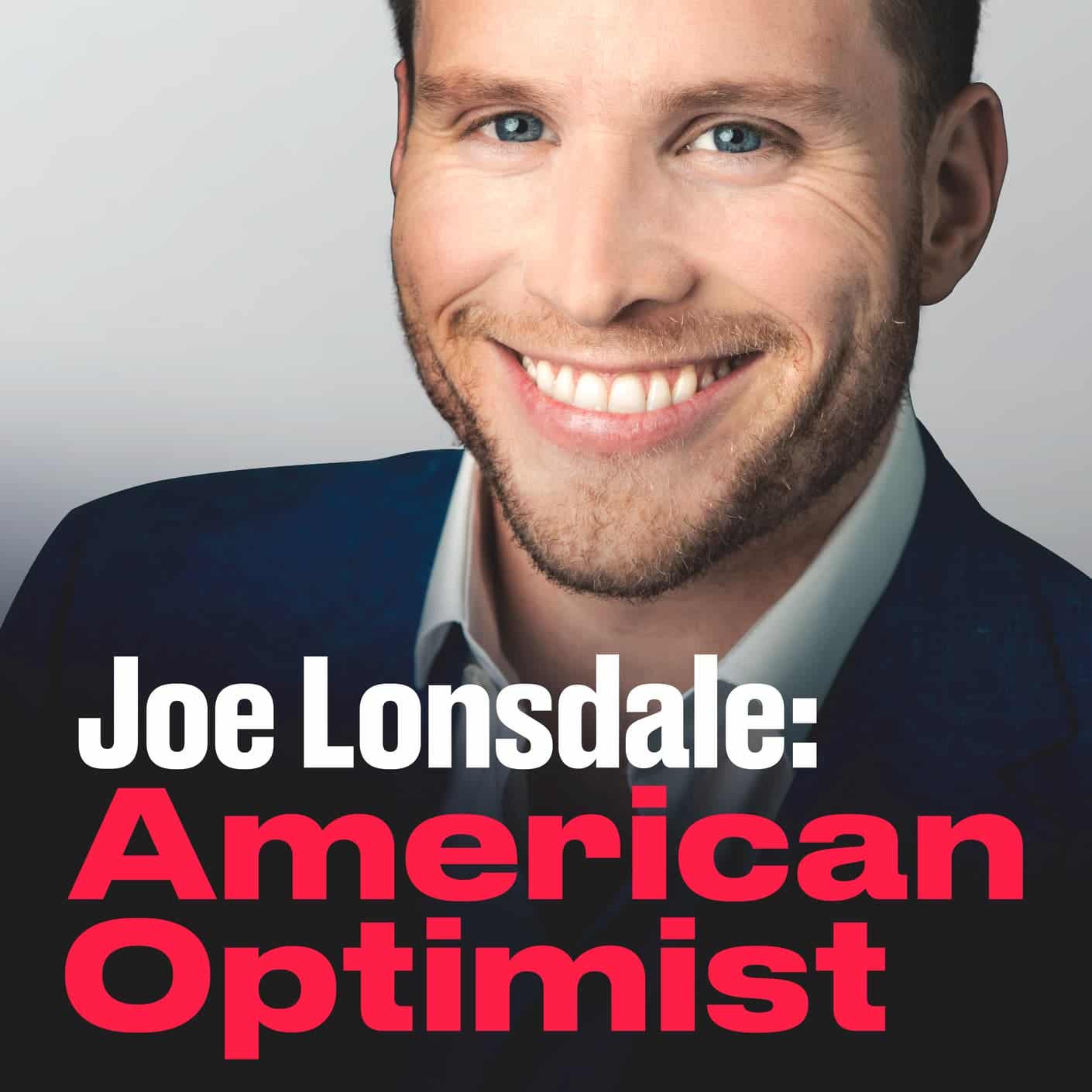
Joe Lonsdale: American Optimist · 2026-06-18 · 39 min
Key moments - from our scoring
Substance score
47 / 100
Five dimensions, 20 points each
Blend processes roughly 20% of US mortgages and home equity loans across 300 financial institutions, but faced severe headwinds when rising interest rates crushed mortgage demand from 7-8 million annual mortgages to 4-5 million in 2024. Ghamsari attributes the company's over-expansion in 2021 - acquiring title companies, launching home insurance, adding income verification - to a lack of focus when capital was cheap and multiples sky-high. The inflection came when Rocket Mortgage's Super Bowl ad forced conservative banks to modernize, but the subsequent crash taught him the Buffett principle: focus on your unique alpha generator. Now, with most-deployed AI agents in financial services (launched two months ago), Ghamsari sees agentic AI as transformative - creating an infinitely scalable workforce that will force every industry to re-architect. He's optimistic the 2030s will be the most booming decade in 100 years, powered by AI-driven productivity gains that traditional software couldn't deliver.
Blend processes approximately 20% of US mortgages and 20% of home equity loans and lines in the country across 300 financial institutions.
The stock collapsed when interest rates rose sharply, crushing mortgage demand from 7-8 million annual mortgages to 4-5 million, combined with the company being overleveraged and over-diversified into acquisitions and new product lines that diluted focus.
Blend launched its AI agent autopilot two months ago (approximately November 2024), and the company now has the most-deployed agents in financial services, enabling automated mortgage processing and verification workflows.
Ghamsari played online poker professionally at Stanford, earning $150,000 in his first month before leaving to join Palantir as a new grad, where he worked on data analytics and learned customer-outcome-focused culture.
The company expanded too quickly into multiple new products - acquiring a title company, launching home insurance, and starting an income verification company - instead of focusing on its core strength in mortgage origination workflow automation.
Our reviewer’s read on each dimension, with quotes from the episode.
There are genuine operational nuggets buried in the episode - Autopilot mechanics, engineering productivity doubling, specific market share data - but they are diluted by extended poker backstory, origin-story nostalgia, and generic AI boosterism that fills large stretches of the 39 minutes.
our average engineer was doing six pull requests per month in December...That's already doubled. Four months later.
they took their mortgage closing process...took it down from 29 to 21 days. Like just with the first version of Autopilot.
The Autopilot product description and the banking-regulatory moat argument offer modest freshness, but the broader AI framing - infinite workforce, every industry re-architected, 2030s as a boom decade - is entirely recycled from the current AI hype cycle; no contrarian or first-principles reasoning appears.
imagine a world where you have an infinitely scalable workforce
I think the2030s are going to be the most booming decade in 100 years
Ghamsari is a genuine practitioner who founded and rebuilt a regulated-industry public company through a severe downturn, giving him real operational credibility; however, this is a mid-market turnaround story rather than a top-tier scale operator, and several claimed milestones (most deployed agents in financial services) go unchallenged.
we're about 20% of those...we've expanded into whole other suites of products because we have 300 banks and lenders on our system
we were profitable last year. So you're profitable with light profit in Q1 and then it ramped up over time
The episode scores above average on specificity - named models (Gemini 2.5 Pro), concrete revenue (~$120M), market cap (~$350M), Autopilot pipeline ($10M+), closing-time reduction (29 to 21 days), and productivity metrics (6 to 12 pull requests/month) - though some claims lack corroboration and the host never probes for verification.
we did in the, you know, in the, you know like the, the high 110s, 120s range last year
we already have Double digit million, 10 plus million of pipeline
The host is a long-standing investor and former board member who repeatedly signals his bullish position mid-interview, asks almost exclusively setup questions, finishes the guest's sentences approvingly, and never challenges a single claim - rendering this a thinly-disguised investor promotional conversation rather than an adversarial or even genuinely curious interview.
I'm not. It's just that's my view. I'm biased. Total disclosure, I'm obviously involved. I've been invested for, I think we said 14, uh, 14 years.
I love it. Well, you know, you'd think that a company that has that regulatory protection that's proving it's on offense with AI
Computed from the transcript - who did the talking, and the words that came up most.
Nima Ghamsari was a top talent at Palantir before founding Blend Labs to digitize the mortgage process. Blend became one of Silicon Valley’s hottest SaaS companies until the mortgage industry came to a screeching halt in recent years. Now, the AI wave has Blend poised for a comeback. What will the future of home buying look like? Why is Nima all-in on AI agents? And how can AI supercharge established tech companies with the will and talent to rethink things from scratch? In this episode, we’re joined by the Founder and Head of Blend, Nima Ghamsari. We begin with his parents immigrating from Iran to the U.S. in the 1980s and how Nima made his way to Stanford. He quickly made a name for himself as a talented online poker player - winning millions of dollars and famously showing up to Palantir as a new hire in an Aston Martin. Learn about the lessons Nima brought with him from Palantir into building Blend, and how he took on the ambitious task of bringing the outdated, cumbersome mortgage process online. Next, we dive into Blend’s meteoric rise and fall as the U.S. mortgage industry hit the skids in recent years. Now, Nima believes AI has the company poised for a comeback.
Transcribed and scored by The B2B Podcast Index.
Speaker A: I don't think there's a deep enough understanding of what agentic AI can and will do. Imagine a world where you have an infinitely scalable workforce. Every industry has to be re architected.
Speaker B: You famously showed up to Palantir as a new grad with an Aston Martin DB9.
Speaker A: The reason I joined Palantir is because you're working with the smartest people in the world.
Speaker B: In 2012 you launched Blend.
Speaker A: We started this company with the idea that you could have a fully self driving mortgage.
Speaker B: Became one of the kind of hot SaaS companies in Silicon Valley, value billions of dollars. The mortgage industry crash.
Speaker A: That Warren Buffett saying about, you know, when the tide goes down, you can see he's not wearing any pants.
Speaker B: You launched two months ago. Your AI agent autopilot.
Speaker A: We definitely have the most deployed agents in financial services right now. I think the2030s are going to be the most booming decade in 100 years. Before we begin, a quick disclosure. Joe Lonsdale has a long standing personal and professional relationship with Blend and its CEO, including having been an early investor, advisor and board member. Joe is a principal of 8 VC and its managed funds currently, currently hold shares of Blend. American Optimist is Joe's personal podcast. This episode reflects Joe's personal views and is not investment advice or a recommendation to buy, sell or hold any security.
Speaker B: Nima Gamsari was one of our stars from Palantir. After graduating Stanford, I was the first Investor in Blend 14 years ago. He's now in the middle of an Act 2. It's one of the act twos. I'm really bullish on taking a great core company that already had a lot of success in its industry, in this case the mortgage industry, adding in most advanced AI and AI agents and having it grow a lot faster and serve the industry better. Nima is also an optimist on AI and on what's possible now in America. And he's an exciting entrepreneur to hear from. Welcome to the American Optimist. We're here with my friend Nima Ghamsari today. Nima, thanks for joining us.
Speaker A: Thanks for having me.
Speaker B: We're old friends. You studied computer science at Stanford right after me. And uh, we worked together at Palantir for a long time. Some fun stories from there. You know, originally I think your family immigrated to the US from Iran. Uh, tell us about your upbringing.
Speaker A: Yeah, I was, I was born in Iran in the 80s, right after the revolution. And we came to America, you know, to first to the Midwest, first to Michigan and then to Ohio and My parents were professors there and I was in Ohio until I was 18. Then I went to Stanford and studied computer science.
Speaker B: What were your parents professors of?
Speaker A: My dad is a professor in math and physics and my mom was a chemistry professor. Awesome. Uh, so all of the sciences.
Speaker B: All the sciences. Did you always want to do computer science or was that like, did that come from your parents?
Speaker A: You know, it's interesting. My parents are a little bit more old school. You know, they wanted me to be reading books and doing math proofs. But I loved computers as a kid in the, in the mid-90s when the computer boom was happening, I would be locked up in my room building computers, you know, coding in basic and learning the latest and greatest, whatever the most cutting edge thing was. And it was super controversial because the Internet was getting going and I would spend all my time then on the Internet playing these text based games, uh, that I was trying to learn how to also code myself. And it was not the most, uh, alignment. You know, it's like they came from a different generation where the Internet and computers were not a thing and so they didn't understand what it was going to become. And you know, so it was a little bit controversial, but I enjoyed it ever since I was 8 years old.
Speaker B: And you were playing text based games and building them. You also. I remember playing online poker and making a lot of money on that. Was that a college thing?
Speaker A: That was a college thing. This, the, the story there is. I remember this so vividly. I was a freshman at Stanford. I was in this dorm called Donner and I was getting ready, I was going, interviewing. Even though they get, you know, Stanford is really good about financial aid for people who don't, for families don't make a lot of money. And they'd offer to cover our full tuition with financial aid. What they didn't cover though was room and board and books and you know, those kinds of things. And so I had to go get a job and I was going to go, got a job at Starbucks. And I went, interviewed at Starbucks. And they're like, well you did, you had a job at Starbucks back in Cincinnati, so of course we'll hire you. And I had a job offer. I shouldn't say a job offer, but like, yeah, a job offer from them. And my, I was talking to one of my dorm mates and he said, you're gonna go work at Starbucks. Like you should like try this online poker thing. You don't even need to be good. You just have to be good enough to play hands without losing money. And the poker sites were trying to garner up interest, and so they would pull. They would just pay out monthly sort of, you know, money to people who could play enough hands and keep the tables busy. Not a huge amount, like a couple grand, but that's all I needed. And then that, uh, that got me on the. On the poker career, and I ended up, um. One other cool story about that first week. They gave you $25 to sign up. Yeah, I had no money in my. I had literally no money in my bank account, like, negative $6. And I started playing on this. This poker site. I lost the $25 within 24 hours because I'd never played poker in my life.
Speaker B: Oh, no.
Speaker A: And then that Friday, every Friday, partypoker.com had a free roll tournament for all the new players, thousands of new players that week. And I somehow lucked my way into third place and won 700 bucks, which was the most money I'd ever seen in my life. And my friend was like, oh. And I was like, oh, how do I protect this? And my friend was like, okay, if you want to protect this wealth that you've accumulated, you have to go and read all these poker books and get on these poker forums. And so that weekend, I started reading all these poker books and getting, uh, on these forums and asking questions, trying to understand the psychology of poker. And I ended up, uh. I remember it was September when that was going on. It was just my first month of Stanford. By December, I had already made, like, 150 grand playing poker. I turned out I was really good at it.
Speaker B: I love it.
Speaker A: And then made a lot more money after that.
Speaker B: You famously showed up to Palantir as a new grad with an Aston Martin DB9, which we were very skeptical of. Why is this kid driving a DB9? But, uh, you know, he's good at poker online. What can I say, right?
Speaker A: You and Carp made me not bring it to the office because you thought it didn't reflect well on the culture of Palantine.
Speaker B: Well, the culture. Well, I mean, do you agree, looking back like that, what. The culture was like a monastery, right? Where you're all working hard and you're not living well, you're not throwing money around. Right? I don't know. It's.
Speaker A: Yeah. There may or may not have been beds in the office to sleep there. Uh, there's like, the most money people had were these magic cards that were all over the office, and we were early mining Bitcoin. And so, yeah, it was a different culture. And I had to Adapt to it, which I really enjoyed. Actually.
Speaker B: I want to get to Blend, uh, which you launched in 2012, but was there anything you took with you from Palantir into building Blend? Uh, now, you didn't have as many magic cards at the Blend office, I noticed.
Speaker A: Yeah. Well, I will say that the thing that I loved about Palantir is that we always. I was the reason I joined Paler instead of continuing with online poker. I mean, I still played a little bit at nights and weekends when I had time, but it's because you're working with the smartest people in the world. Um, and it's like, you know, obviously you're very smart, but it wasn't just you. You recruited the best people in the world that you could find to come and work at this company that nobody had ever heard of. And we were a small company at the time and. But it was so fun working with the smartest people ever. And then. But the even bigger learning, which was a big learning for me, but the even bigger learning for me was we were deployed in the field and focused on solving customer problems, which was sort of the. Everyone talks about companies and software companies being success oriented, but not in the same. People don't understand what success oriented is until you go and you see how Palantir approaches success orientation, where it's like the customer's outcomes, the software doesn't matter, the quality of the product doesn't matter, the APIs don't matter. It's just like, did you deliver that hundred million dollar outcome for them or not? And that's all that mattered. And that was such a unique experience. I'm so lucky I had that early on.
Speaker B: I love it. Well, we all learn a lot from it, Nima, and you add a lot of value there. So in 2012, you launched Blend. You're a co founder, the CEO. Uh, tell, uh, us about the mortgage industry. How does it work? Like, how big is the mortgage industry? How many mortgages are you guys processing per day now?
Speaker A: Yeah, there's, there's about, you know, at the time when we started the company, the mortgage industry was coming out. 2012. You think about the timing of when that was in history. 2008 was a big crisis caused by the mortgage industry, where a lot of people were given mortgages that they weren't able to pay because there was a recession and the government basically had to step in and say, we're going to find a way to make it so that 20% of Americans don't get their homes foreclosed. That would have been like a disastrous outcome. And Palantir was knee deep in that. And I left that experience with Palantir and starting Blend, thinking there's got to be a better way the system should work for the American consumer so that this doesn't happen again. This kind of thing doesn't happen again. And like, leveraging the latest trends of like, you know, most of these banks and lenders that were doing this were not digital yet. They weren't even working in a digital way. So you couldn't get real information. And like, it was kind of like a trust me thing versus a verify thing, verify everything workflow. And that that shift had to happen because of the crisis. And so that was kind of the core concept of blend. So how do you make it so that you can verify everything in the mortgage and give the people who can afford mortgages and should get mortgages. Mortgages, but build a better system around it, Build a better system around that. And that was the origin of Blend. I left with a few other, um, colleagues at palantir. Um, and 2012 started blend, had some great early investors. And, you know, we just started, uh, we just started running out of the 100 miles an hour and had no idea what we were doing.
Speaker B: I was your first, uh, outside board member. Was you four founders and me, I remember. And I was also an investor, so I'm a proud investor.
Speaker A: You were an early advisor, you were an early investor, early board member. Had a lot of fun.
Speaker B: I remember the old offices together, going there, and we had pivoted a little bit. But, uh, the mission. The mission was, uh, the mission, obviously, was a really important mission. Very inspiring mission. So how many mortgages do you process on a daily basis now? How big is the market?
Speaker A: Yeah, so the market this year, it's like the mortgage market is at, like, a historic low right now. Um, and it has been since 2023. Ah. And so in a typical year, there will be something like 7 or 8 million mortgages. There's about 4 to 5 million mortgages happening this year. And blend is about 20% of those. Maybe just under 20% of those. Um, and, you know, the, the, the mortgage industry is something where it is, it is dependent on a lot of other factors. Housing affordability, rate sensitivity, uh, to, you know, interest rates because people can't afford mortgages if the mortgage rates double. Um, and so I think as that market's evolved, we're still about 20% of the market. We've expanded into whole other suites of products because we have 300 banks and lenders on our system now that do home, um, equity lines of credit and home equity loans, which is super important for debt consolidation. If the consumer starts to get less financially healthy, that's a great product that's getting a lot of traction.
Speaker B: So home equity lines of credit is like a second lien beyond the mortgage, right?
Speaker A: Yeah, exactly. So if you have a $300,000 home and you have a hundred thousand dollar mortgage, you know, our customers can give you a hundred thousand dollar home equity line of credit which you could use for renovation or college or starting a small business. But you could also use it for online poker. But I wouldn't, wouldn't recommend that because it's a lean on your house, but it's up to you. But uh, but you can also use that if you're revolving on credit card debt, which a lot of consumers are.
Speaker B: Yeah. So you shift your credit card debt to your house, it's much lower, much lower, uh, interest rate obviously if you're, if you're responsible about it going forward.
Speaker A: Yeah, the interest rate is like almost a third of what it would be on a credit card. And so it's a big difference for consumers. So we've, we branched out into other. We're also 20% of the home equity loans and lines in the country as well as being about 20% of the mortgage market. And yeah, I think it's been a, uh, and uh, then we've also extended, we do a lot of personal loans and we work with 300 financial institutions across the country powering the origination workflows for these products.
Speaker B: And so how do you go back a little bit to the early on? So banks, obviously banks are very cautious. Right. I think of like I think of Mary Poppins when I think of the banks, which is probably not, not right either. But, but they're very, they're not known for being innovative and taking risks. They're a lot of them are still a little bit stuffy or very slow, which is maybe a good thing. You don't want places with your money to throwing stuff around. How do you win these places over? Like why do they start using blend?
Speaker A: It started with skepticism from the banks. And by the way, we're seeing the same thing now with agentic AI. So it's like a perfect analog for that time. Yeah, but you uh, start with early skepticism because people are saying, well, are people going to really apply for a mortgage on their mobile device and then upload all these documents on their mobile device? And at the time it wasn't a foregone conclusion that mobile would even be a thing. And I remember these conversations where I'd be trying to convince these people, hey, you've got to be digital. You got to be mobile, because that's where the consumer is going. And that will also help you get the process done faster with the right documents, with real documents, so you can actually document this. Hundreds of thousands of dollars changing hands. And it was an uphill battle.
Speaker B: When I think of a mortgage, I just think of a really painful process that takes forever and is a mess. And it's like it's. In the old days, it was just this crazy manual thing with like, it stacks of paper and you're signing stuff and you have no idea what's going on. Like, how do you even know where to start? There's a G process.
Speaker A: Yeah. Well, I'd say knowing where to start came from a little bit from. You know, we had. We had a vision that we could digitize and automate this whole process, and that would lead to a safe. A whole. A safer ecosystem around mortgages. And so we started with the very first touch that a consumer gives to a mortgage, and we started pitching that to our customers or prospects, I should say. And it was interesting because, you know, some of the things I still have the early demos from 2013 that we were making for customers and the product. The concept of the product hasn't changed. And now there's this big technological leap. Obviously that's happened with the gentic AI, but. But the concept hadn't changed. Hasn't changed because it makes sense that as a consumer is going through the process, things should be really amazing and simple and frictionless for them. But then the processing of that, because a lot of money is changing hands, you have to look at these documents. You can't just trust that Joe is good for a $500,000 mortgage without knowing that Joe makes enough income to pay that back, and without knowing whether or not Joe has a bankruptcy recently or without checking the title on the property to make sure that if they do even get that mortgage, that they're clear and they could own that property outright. And so there's things you have to check. And our vision was, let's make this as. We could fully automate this and have a consumer go through it in a matter of minutes, be ready to close that mortgage. That was the vision from day one. And you know, it was. That is where we started. And I remember we actually got kind of got lucky because in 26, January 2016, there was these rumblings of what was called Quicken Loans at the time, now it's called Rocket Mortgage that was going to launch something called push button get mortgage. And everyone was kind of like, oh, like, is that even possible? It seems like marketing spin. And in February 2016 during the super bowl, they spent millions of dollars on this really cool ad that was somebody pushing a button and getting a mortgage.
Speaker B: Mhm.
Speaker A: And it's funny, we had early customers at that time, some good banks, First Republic bank, which is no longer around. We had some good mortgage companies,
Speaker B: but
Speaker A: all these other banks who are kind of, to your point, slow and cautious, had been talking to us for a couple years. And then all of a sudden they had this catalyst where they were like, crap, we gotta get our stuff together quickly. And I, it was funny, the following week, I remember this so vividly. We had this big bank that we'd been talking to for two years. And the guy who ran the mortgage business there called me Monday after the super bowl and he says, nima, I know the timing of this looks suspicious because we've been talking to you for so long and I promise it's not a reaction to this super bowl ad that Quicken just did yesterday. Well, we want, we're ready to move forward. This is one of the biggest things in the country. And I was like, and I was like, michael, I don't have any view or care of why you're doing it. Let's just do it. It's time. It's a good thing for your customers. And as they're, you know, then it's sort of like snowballed from there. I mean, there's a little bit of luck, I think, in every business. Um, you need some things to bounce your way and then sometimes there's bad luck, which is what we're seeing with the mortgage industry right now, with where rates are.
Speaker B: So this business really accelerated in 2016. Uh, it became one of the kind of hot SaaS companies in Silicon Valley. Values of unicorn value in the billions of dollars. Uh, you went public in 2021, which was a little bit of a bubbly time in tech, where their valuations were quite high. You were growing really fast. Um, you're spending a lot of money at the time, which didn't really matter because you're growing really fast and the market didn't care. Uh, and then the entire market changed. Right. So basically you had this inflation from all the COVID money handed out. We're now seeing a ton of. It was fraud. When you give people free hundreds of billions of dollars that spent fraudulently. You get inflation rates, Rates go up in the economy. Uh, when rates go up, people don't take as many mortgages. So all of a sudden everything slows down massively. And, you know, your stock price got slammed. In fact, I think this is actually a company I'm bullish on while we're doing the interview as well. Uh, but the company, uh, price lost like 90%. Right. Of the value or even more than that at one point. And, uh, yeah, more. Tell us why it happened. I guess the mortgage industry crashed. Are there things you. Are the things you would have done differently going into it? You know, if you go back and do it.
Speaker A: Yeah. You know, the thing that, that I didn't appreciate at the time was how far off I was from knowing how to run a business. And it's made me now, every time I look at it, even myself, even today, I'm like, what could I be doing differently that I'm not thinking about today at Blend as an example. But, you know, to your point, everyone was kind of spending a lot of money and multiples were super high and capital was very cheap. And I think a lot of us, myself included, lost sight of the fact that the interesting and important measure of a business is how not how much it gets done in an absolute sense, but how much it gets done. And like, ideally with a smaller number of like per person, basically, if you can have a great impact on the world and you can do it with a small number of people. And now you're seeing this with some companies that have. That have been started since then that are super interesting, amazing companies that, uh, that are a small number of superhumans doing that, I think we lost sight of that. And we probably. On the other thing that I'm. I would, you know, sort of fall in the sword of is I got us into too many pies at once. Instead of saying, this is our bet, this is what we're going to go all in on. And we were. We had bought. We had acquired a title company, we had started a home insurance agency. We had been doing. We'd expanded too many product lines too quickly. An income verification company. You know, it's like there's too many things we were doing instead of the thing that was like, what's the big alpha generator for our customers and for us that we could do that we're so uniquely positioned to do. And I wasn't doing that at the time in 2021. I mean, it's almost, you know, it's like the Warren Buffett Saying about, you know, when the tide goes down, you can see he's not wearing any pants. But um, in a lot of companies I think were caught by that. But that was a big learning and now I view everything and uh, you know going back to that is like one focus so important, doesn't matter how big of a company you are. Uh, what is your bet? What is your unique thing that you're so uniquely positioned to do and how do you put all your energy behind that thing?
Speaker B: I love it. So you would have done a lot fewer things. Maybe like, maybe there's ways you weren't really paying attention as much to some of the expenditures. I remember there, there's some people didn't seem like they needed to be there. So you're more disciplined on that now, which is good. And you always had amazing talent. But I think if you have amazing talent plus people you don't need to hire. It's like a fat times now you focused in. If you're not allowed to say anything then don't say it. But I'm curious to ask, so what was revenue last year now in 2025, like what did you guys do last year?
Speaker A: Yeah, we did in the, you know, in the, you know like the, the high 110s, 120s range last year. And we'll be you know, growing roughly call it. Well we, there's nothing public that we've shared here but the analysts have us growing at roughly 10ish percent this year.
Speaker B: Well, the analysts have it going 10% but then, but then you launched two months ago your AI agent autopilot. So you could potentially grow faster than. But you haven't shared any of this yet. Obviously you gotta be careful.
Speaker A: Yeah, I gotta be careful. But I'd say you know, autopilot, we've shared some numbers around this. We launched this thing in um, in March, early March. So about almost exactly two months from.
Speaker B: And what is Autopilot?
Speaker A: And Autopilot, it sort of takes the vision that I talked about earlier to completion. Meaning we started this company with the idea that you could have a fully self driving mortgage. The problem was that there's so much unstructured information and there's thousands of pages of rules and humans were stepping in because you can't actually build a high quality working system that can manage those thousands and thousands of pages of rules and those thousands and thousands of pages of documents and every single consumer's individual situation.
Speaker B: Well, it was too hard without humans until this year. Now with agents you're saying and so
Speaker A: with what Autopilot does. It's an agent that's deployed alongside a mortgage. And it as soon as a new piece of information, a new piece of data, a new document comes in it and it has full context of the rules, full context of what that specific financial situation is for the consumer. Full context of everything that's happened on that loan. Could be at 2 in the morning, spins up an agent, does the work on that one additional piece of information in the context of everything else and spins it down just like a human would do at a lender. And so that moves our customers, humans, the team members there more of air traffic control, making sure the agents are doing the right things across hundreds. It basically gives them infinite workforce to then have their team manage these like hundreds or thousands of agentic things that are running, uh, in real time as the consumer is doing work. And it's really cool to watch it because the agent picks it up and it's like, oh, I see that you just uploaded your, your pay stub. Oh, I noticed that you have a bonus in your pay stub. I need to get into your pay stubs and ask the consumer in real time. Oh, your end of your pay stubs came in. Great. Now I need to look, calculate your full income with the end of your pay stubs or your income is your pay stubs say that your bonus is declining. So I have to take your lower, lower one. It thinks like a human. Yeah, Autopilot thinks like a human. It's just not a human. And it does that work. So by the time the lender gets it, it's like pretty good to go. And we launched this thing and I was skeptical because last year, I don't know exactly what it was, there was a fear from our lenders that agentic AI or AI would whether it was hallucinate or have data. It was kind of like the cloud to me where people were so worried about it.
Speaker B: Yeah, the cloud was too scary at first.
Speaker A: Yeah, exactly. And then, um, we launched it. We made it really easy to turn on. It's one checkbox and you suddenly had agents watching everything that's happening in your mortgage. And we made it and now we have 70. This is, we said this publicly. We have 70 lenders who have turned it on already. Out of our 300 or so lenders.
Speaker B: Are you charging, are you charging them for it yet or what? What's the idea?
Speaker A: So yes, and we talked about this in the earnings. Well, we gave them a three month period because they were all going to be skeptical. Give Them a three month period to try it.
Speaker B: Wow.
Speaker A: And our overwhelming response from lenders is like, thank goodness that this technology leap happened. And thank goodness that BLEND is on the forefront. Even though, you know, maybe BLEND is, you know, we're long in the tooth in the age of AI. It's like we're on the forefront. We definitely have the most deployed agents in my. At least from everything I know the most deployed agents in financial services right now. And they're the coolest agents too. They're not just like shitty agents that are looking at one paste up and saying here's the answer. It's like it does everything.
Speaker B: So a lot of people believe NIMA in efficient markets. I do not believe in efficient markets. So I just want to go over the numbers one more time because I think the market. Nor do I. Yeah, missing us. Our experience is not. You, uh, were probably overvalued in 2021. You were probably undervalued now. Um, I'm not. It's just that's my view. I'm biased. Total disclosure, I'm obviously involved. I've been invested for, I think we said 14, uh, 14 years. You started ago, so.
Speaker A: 14 years.
Speaker B: 14 years. So. So this company publicly, it did 120 million revenue last year. How much did it burn last year and what's the cash? Can we say that? Are we allowed to say that?
Speaker A: Yeah, no, actually we, we from the learnings that I mentioned earlier, we were profitable last year. So you're profitable with light profit in Q1 and then it ramped up over time and now the profit is even still increasing.
Speaker B: So you're profitable with increasing profit. The analysts already, before they understood the AI agent autopilot work you're doing already thought you're going to grow 10%. I'd hope you grow a lot faster. Now you're not saying that officially and your market cap actually, and we're recording this, uh, uh, recording this maybe a couple weeks before it comes out. But your market cap is in the range of 350 million. So you're literally trading it less than three times last year's revenue, despite having probably uh, as much AI deployed as anyone in this sector and hopefully going to accelerate profitably. So is this frustrating as a CEO and you're like, I'm building this thing and it has all this revenue. I mean start a startup with your numbers, by the way, if you like look at the AI startup with your numbers would be valued at like 3 or 4 billion. Right? So it's crazy.
Speaker A: Yeah, well, actually even Just the auto. We gave some, some numbers on our last earnings call. Where we we from just the early pipe. We have about 10 million of early pipeline for autopilot 1 and we only priced it this past month in, in April and started our salespeople actually talking to customers who have turned it on. We already have Double digit million, 10 plus million of pipeline. We told the street that we're going to have 10 to 15% incremental growth on top of whatever we projected from Autopilot. And somebody was, one of our investors was making fun of me. They're like, man, if only Autopilot were a separate thing. It'd be worth a lot more than Blend is worth today. Just as a standalone. Put aside the other crazy, which is
Speaker B: crazy because Blend actually helps a lot grow faster by being this company that exists, uh, revenue.
Speaker A: So I, so is it frustrating? I would say, you know, the other thing that I've learned and this, this came from my poker days is to your point, there are no efficient markets. Sometimes the ball bounces your way, sometimes it doesn't. There are some things in your control. There are some things that aren't the poker tables. I would go, I was one of the best players in Limit hold them in the world in 22,000, uh, five to 2010. And I would have years where I'd make millions of dollars and then I'd have months where I'd lose money playing hundreds of thousands of hands. And like you kind of, you can't get mad at the world for not having everything go your way. You just have to. And now that you know blend 2022 rates started going up and rates are going up again, by the way.
Speaker B: Um, it's because we're attacking your former country. So we're, it's like, you know, you
Speaker A: don't have to make this political, um, podcast, but rates are going up again. But, you know, the best thing you can do is, is focus on the thing. The best thing I can do is focus on the things in my control and deliver on those things. And I can, we can build Autopilot, we can distribute Autopilot, we can build other really cool agentic products. I think every bank needs to have a truly elastic workforce of workers that do all this unstructured work. And none of them have it today. Yeah, none outside of maybe a few cases like Blend. And maybe they've done a partnership with Anthropic here or there. But it is not a pervasive technology yet. Uh, we are uniquely positioned to do this and that is what we should focus on, make sure our customers come out the other side as these really powerful elastic workforce agents doing all this work behind the scenes for them, ambient intelligence, and they're not there yet today.
Speaker B: You know, I want to ask you a little bit, Nima, about how AI is changing, like, how you manage and build these things inside the company and what's possible now that wasn't, like, how much more efficient and productive are your engineers, first of all, like, what's. What's real there and what's hype?
Speaker A: I'd say, you know, we actually track this on a pretty granular level because I am such, um, just like out in the early days of my life, I was the biggest proponent of the Internet and computers and. And, you know, it's like the same thing with agentic AI. It's such a technological leap that, you know, if there was an AI czar at Blend, it would be me. And, you know, but I don't think. I think companies that hire AI czars like, kind of a joke, to be honest. Either it's run like that top down or it's not. Yeah, but we trek this because I'm so passionate about it. And, you know, for example, end of last year, you know, our average engineer was doing six pull requests per month in December.
Speaker B: Yeah.
Speaker A: You know, something like that. So six major contributions to the code base a month. Not bad. Probably pretty standard. Not great. I mean, we have a big regulated customer base, but not bad. Yeah, that's already doubled. Four months later. Doubled, uh, in eight between December and April. And we are about to launch something internally. I think the bigger story of Blend is the culture internally and how we're building these things internally, where we have these agents that just like, I want our customers to have ambient intelligence. I want ambient intelligence for Blend, where as soon as anything comes in, new ticket from a customer, new revenue, new revenue task that comes in from, you know, a new report of, you know, some new revenue, you know, billing from a customer, uh, and, you know, an email. It could be anything. Spins up an agent, if that. Let's say that, that, you know, that, uh, outside input contains something that references a bug in our platform. The agent knows how to fix the bug. The agent goes and fixes the bug and then opens a pull request on our engineering team to say, hey, we just fixed this bug. Go and approve this so we can merge and this, this issue doesn't happen again.
Speaker B: That's cool.
Speaker A: And I think that my view is that. And I see this today with the Blend engineer I mentioned it's doubled already, but the haves and the have nots are like the best. People are doing 80 to 120 pull requests a month and there's still a lot of people who are learning how to use these AI tools. But if you now make it ambient and you do it in the background, everyone gets the benefit of that. And so I think we're going to see acceleration of that, uh, over the next 6 to 12 months inside blend and that our customers are going to feel that the market's going to feel that. And I think that's even a bigger story than Autopilot because that's the engine that creates the next 10 autopilots over the next couple years. But, um, Autopilot obviously is really cool because it has real tangible value to our customers today.
Speaker B: So what does this mean for shipping products and trying new things? Like, can you just like prototype and iterate way faster? Like, what's going on with that?
Speaker A: Yeah, new product idea comes in. Um, even for one, I'd say the small enhancements to the products which used to have to go get bugs, you used to have to go get prioritized by a product manager and then put on a roadmap and oh, I'm doing this Sprint or next Sprint. That was the way that we built product at Blend for a long time. Now those things will get handled in an ambient way. They're just going to get solved in real time and then they're going to get pushed to an engineer who's playing air traffic control and saying that's good or not. So the small things, I think are going to get moved to this world of ambient intelligence. And then the big things, what are our swings like? Let's say we wanted to go and build something totally different, uh, or totally new for our customers. That happens. The coolest story about Autopilot is that it was only even a concept in December, because I don't think the intelligence was really there for something like Autopilot to exist until mid last year. Yeah, um, but it's only a concept in December. The team picked it up in January and by end of March, or sorry, beginning of March, it was live in production with real customers.
Speaker B: I don't think it would have even worked until maybe the November releases to really well.
Speaker A: Right.
Speaker B: Because these things are getting so much better, we forget it probably works much better now than it would have in December. Right. It's crazy.
Speaker A: Much better. Ah, much better. And actually Gemini 2.5 Pro, which came out in 2024, was quietly. Really good. Nobody was using it. Um, but it's. Now everything has that level of intelligence built into it. And you know, obviously we use a variety of models and we actually bench. I kind of want to release this agentic banking index to the market because we have a whole set of. We have so much historical data that we test this against and we can see where Autopilot would have been right or wrong in those cases. And we can see how it's different by model and how fast the models are and how much they cost. And so I kind of want to release that because it's really cool to see that progression over time and see what models are good at, what things
Speaker B: you should, you should. Well, well, this, well, this comes out in a bit. We can feature it for all of our, all of our listeners. If we have some graphic to show them. Maybe we'll ping you on that and see what's allowed to be shown here. You could put it out. It's. It does. It would be interesting to see. So I imagine it's the. You just measure what percent of the time it's wrong and it's just probably getting much better each. Each release. Right? Yeah.
Speaker A: And every new. I want to put an update to it every new model that comes out. So that a new model comes out, let's say Gemini. You know, there's. There's this rumor that Google is going to release something@google IO next year or next week, I should say. And we'll see. We'll put it out, we'll run it against our evals or hundreds of evals and we'll see, you know, what is it better or worse? And does it cost as much? Is it fast? Is it slow? Like those are things that really matter. Um, but you know, it's like we're in a unique, unique position to, to, to prove that out really quickly and then see if we have to deploy.
Speaker B: I think you should be a thought leader, Nima, because it makes the market realize you're a thought leader. Because right now, right now they're still nervous about, about, uh, about the company from, from five years ago. I guess the other thing they're nervous about, just to circle back to that is probably the general idea of the SaaS apocalypse. I think a lot of investors like, oh, SaaS from 15 years ago when they were started, they aren't worth anything now because AI is just going to build them or replace them. Like, what's your, what's your general view on that and your specific view with what you're doing well.
Speaker A: I do. I. My view of any technological advance is that we're going to lead. Just like I mentioned internally, there's haves and have nots even in Blend today. And I'm sure in the market of who's really adopting and using AI and you know, these AI agents to do work for them and who's not as much. It's the same thing with companies. Um, there are going to be companies. There were companies in the 90s that didn't make sense to exist in the 2000s and didn't evolve. And there are companies now that aren't going to evolve and aren't going to build an autopilot and aren't going to focus on how do you make agents the primary user of any platform and utilize the capability of agents in the best way possible and rethink like the whole in every industry has to be re architected. Ah, right now, yeah. Starting 22. Because to your point, November was the moment and you know, when Opus 4 point, uh, uh, uh, five or six came out, there was, there's some moment there where all of a sudden everyone was like, oh crap. Yeah, our whole industry can be turned upside down. And so every industry is going to get turned upside down is an incredible opportunity for every company, whether you're a tech company or you're, you know, an insurance company, or you're a bank or your health care company. And who's going to rethink that? And there are going to be haves and have nots and there are going to be new entrants. And so my job is to make sure that Blend is a have and not a have not. And actually, because we're in such a regulated space, we have the additional affordance of not having to worry about somebody just ripping us out overnight. And we're processing really regulated things and we're doing a lot of work on these files just with our core flagship platform, putting aside Autopilot. So we have the affordance of time, but I'm not going to take that affordance of time. We're going to make sure we're out there on offense. The best offense here is just going out and building really cool stuff and making sure it helps your customers drive real outcomes. Going back to the thing we said about Palantir, it is so important that companies in our position, or even companies that are 100 years old to rethink things from scratch. And we have.
Speaker B: I love it. Well, you know, you'd think that a company that has that regulatory protection that's proving it's on offense with AI that uh, has the palsy or DNA. And you know, actually, I think something about the low stock price is actually, it's actually a positive signal in the sense that you're dealing with a lot of adversity because you're having to run this thing in something in an adverse situation where they're making you trade a less than three times revenue and yet you're still innovating and still staying on the cutting edge. Like having lived through that, I think is a very positive thing for this company. Only makes me more bullish on the culture, uh, and what you could do as you, as you start growing again, as you start to become the star again. It's just, I guess you have to remember these times when the market was, was, was nasty to you. But when you're flying high again. Nima. Because this is not, it's not, it's actually not healthy to be too loved. It's actually good for. You have to prove yourself, you know.
Speaker A: Yeah. And by the way, that is definitely pervasive in the culture where we hear. It's like a tale of two cities. We're over here. We hear what our customers are saying about us and these cool products that we're delivering and how it's helping their business in ways that, you know, the one of the first customers that roll out Autopilot, we did an analysis with them, um, of how it impacted their operations. They took their mortgage closing process, which includes a lot of things in blend and some things out of Glenn, like the appraisal took it down from 29 to 21 days. Like just with the first version of Autopilot. I mean it was, it's like, it's so, it's so cool. So it's a tale of two cities where the market, if you think of the market as our customers, they're like, oh man, this is the coolest stuff ever. And then you look at the market like investors. I mean, we're also a smaller public company. You know, we were doing much more revenue when we were, when we went public because the mortgage market was a lot bigger. But you know, so there's. There, I think there's some of that, but there's. I think the investors view it differently and I think there's a lot of investors sitting on the sidelines because they're just not sure how the SAS apocalypse is going to play out. And as much as I think they should take their bets and have some conviction and do and, and, and figure out who they think the winners and losers are. I don't think there's a deep enough understanding in every case of what agentic AI can and will do to make that bet for a lot of them.
Speaker B: Well, I'm sure you're going to show them, Nema over the next year or two. You know, we started this podcast to push back on cynics and doomers. There's a lot of people who are skeptical about AI and data centers, and they're like, what's the. What's your best case for optimism for AI and optimism for America right now?
Speaker A: It's funny, I was, I was having this debate at a dinner last weekend with. With some of my friends and colleagues, and I am an incred. I am incredibly optimistic around AI. There's not a single company. I don't care if you're. If you're a consumer goods company or you're a tech company or whatever it is. There's not a single company that in the history of the world has said, my roadmap is done, hang up the cleats. We're not going to do anything new. Everyone's been short on roadmap in terms of the ability to go and do all the things they want to do. And now imagine. And these things are all. They build off each other. So you do one thing, it unlocks two new opportunities, and that unlocks four new opportunities, and it compounds. And so now imagine a world where you have an infinitely scalable workforce that, uh, your team can manage a hundred times as much stuff as they could manage before. We didn't have the capacity, we didn't have the, um, capital to do all those things. And so these things are going to build and compound over time. And I think that the economy in the 20. I think the2030s are going to be the most. It's going to be the most booming decade in a hundred years. It's going to be one of those decades where there's so much opportunity created. Like all the new things that we can't even think about today because it was a compounding series of events that led to them are going to. Suddenly we're gonna have so much more. So many more things that humans have to be able to ultimately be air traffic control for that. I can't wait for that world.
Speaker B: I love it.
Speaker A: And I know it's early days in AI. I know we're six months in since November, and we're three years in since probably the first ChatGPT launch, but it's going to be really cool to see that and the world is going to benefit from it. It's going to lead to lower cost of everything for consumers. It is which is so good for consumers. It's going to lead to new parts of the world being positively impacted. From infrastructure perspective think about energy solar think about you know machines building housing, machines repairing things, machines building bridges like the thing uh robotic machines powered by gentica like the amount of thing infrastructure and technology the opportunity there is in the world is massive. We just haven't had the capital or the time to go and do that and now those things can happen a hundred times faster which is I'm so excited for it.
Speaker B: I love it. Well Nima, I share your optimism. I'm bullish on America. It's going to be an amazing decade ahead and um, I'm bullish on blend. Thanks for joining us.
Speaker A: Thanks for having me.
Other episodes covering the same guests and topics, from across The B2B Podcast Index.
 The Best Digital Lending Platform: MeridianLinkSourceForge Podcast · on Home equity lines of credit79 / 100
 Will AI Take Your Job? Dag Kittlaus Separates Hype from RealityDigital Disruption with Geoff Nielson · on Palantir78 / 100
 S8E4 - Five Minutes to Fifty Years: Two Futurists on What's Actually Coming - Brett King and Andrew GrillDigitally Curious · on Agentic AI agents77 / 100
 AI in the Engine Room - How Is AI Impacting Business Operations?The Marketing & AI Podcast: The MAP · on Agentic AI agents75 / 100
 Why AI Companies Are Buying Presentation SoftwareChatGPT and Beyond with Fexingo · on Palantir74 / 100
 AWS Goes Forward Deployed: The $1 Billion Bet to Embed AI Engineers Inside the Enterprise - July 3, 2026DX Today · on Palantir73 / 100
 Ep 160: Box CEO Aaron Levie on Silicon Valley's AI Problem, Evidence for AI Job Creation & What Doomers and Accelerationists Get Wrong88 / 100
 Ep 159: Aaron Cannon Is Building the Leading AI Customer Research Platform; It's About to Upend a $140B Industry
 Ep 157: Scott Nolan on the AI Energy Crisis & America's Nuclear Renaissance
  Ep 156: Coleman Hughes Takes on America's Most Contentious Debate: the Legacy of Slavery
 Ep 155: Eric Scott on the Biggest Missed Opportunity in Venture Investing