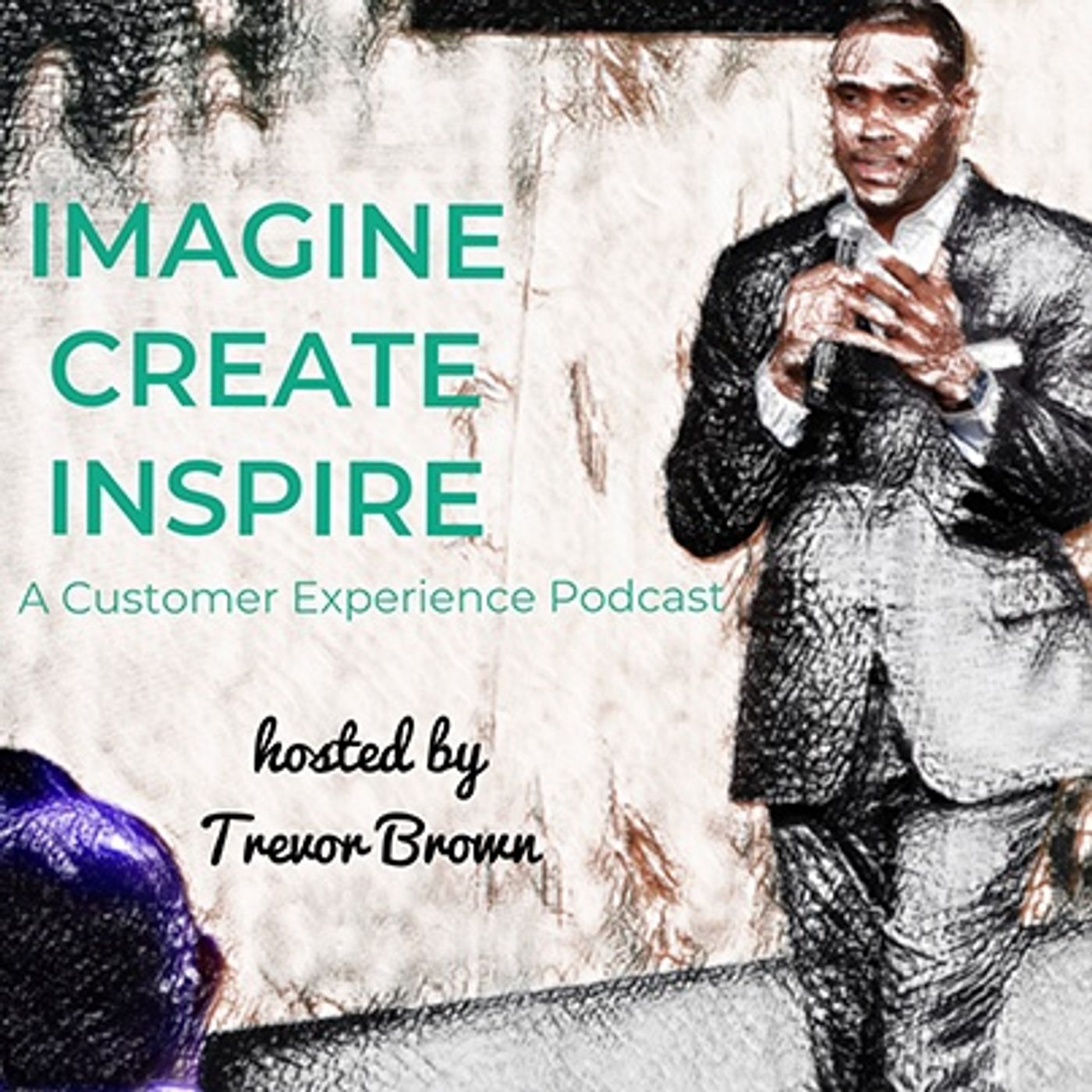
Imagine Create Inspire · 2021-03-23 · 52 min
Key moments - from our scoring
Substance score
40 / 100
Five dimensions, 20 points each
Geoff Thatcher brings two decades of experience designing immersive brand experiences, from theme parks to corporate visitor centers and museums. After being unexpectedly fired in June 2017, he and his wife founded Creative Principles with a focus on creative leadership - the ability to transform big ideas into reality through persuasive execution. Thatcher emphasizes that creativity without leadership is "just silly," which became the philosophical foundation for his firm's brand. During the pandemic, he pivoted to publishing The CEO's Time Machine, a business parable co-illustrated by his daughter Zoe in just five weeks, featuring an Elon Musk-type CEO who teaches his protégé about a secret time machine that allows leaders to start with their desired future and work backward to validate their vision through historical moments. The book draws inspiration from work with the History Factory and philosophy-driven client relationships. For B2B operators, Thatcher's insights apply to building emotionally resonant brand experiences across hospitality, retail, and entertainment verticals, with practical frameworks for translating vision into memorable consumer interactions.
Creative Principles is a creative firm specializing in brand experiences including theme parks, museums, corporate visitor centers, and consumer experiences worldwide. The firm focuses on taking big creative ideas and turning them into executed reality through creative leadership.
Thatcher was fired from his previous job in June 2017 in an unexpected meeting. After discussing it with his wife and praying about it, they decided to start Creative Principles together, choosing the name to reflect their belief that creativity must be paired with leadership principles to turn ideas into reality.
The CEO's Time Machine is an illustrated business parable about an Elon Musk-type CEO who invents the future and must teach his protégé his secret before retirement. The protagonist uses a time machine as a metaphor for starting with your desired future vision and working backward to find historical validation for that direction.
During the pandemic lockdown, Thatcher decided to publish The CEO's Time Machine with his daughter Zoe (an illustrator and designer) rather than delay it. They completed 43 illustrations, editing, and design in approximately five weeks and published to Amazon in both hardcover and Kindle format.
Thatcher advocates for intentional engagement even with limited time - he calls it "hashtag research" - believing that even five or ten minutes of focused observation in a museum or attraction is valuable and worth stopping for, rather than rushing through experiences.
Our reviewer’s read on each dimension, with quotes from the episode.
The episode contains a handful of genuinely useful points - the 'insert experience here' critique and the free-pitch defense argument are practical - but these are buried under extensive small talk, personal anecdotes, straw complaints, a lengthy Veronica Mars tangent, and mutual commiseration. The experience model framework (attract → trust → inform → emote → act) is the only structured idea, and it arrives very late.
I hate it when people design experiences and they don't talk about the story. I literally have seen architectural plans where, uh, you're looking at a hotel lobby, and they literally have drawn a circle around a portion of the lobby and said, insert experience here.
you only value what you pay for. And if I give you these ideas for free and you go present them to your boss and your boss doesn't like them, you're not going to defend these ideas because it didn't cost you anything.
The central experience model (attract, trust, inform, internalize emotion, call to action) is structurally identical to decades-old AIDA and narrative journey frameworks; the creativity-through-connections insight is Steve Jobs territory. Nothing presented challenges conventional wisdom or offers a counterintuitive first-principles argument for B2B operators.
I do believe that the very best ideas, the most creative ideas, most often come when people make connections, when people see one thing and connect it to something else.
once you have that story, once you know what you want people to experience, then the way you bring that experience to life is first you have to attract them... build trust... give them the information... hit them with the powerful emotion... ask them to do something.
Thatcher is a legitimate, working practitioner with verifiable international project credits - Nakheel in Dubai, a King Abdullah Foundation touring exhibition in Saudi Arabia, five years on a Singapore project - and a credible creative firm background starting at JRA. He's not a career podcast guest, but the conversation barely scratches his real expertise.
October 2008. And I'm standing in the Atlantis Hotel on the Palm Jumeirah in Dubai. Our client is Nakheel, which is a big real estate developer in Dubai.
I wrote, um, uh, flying back and forth to Saudi Arabia while working on a touring exhibition for the King Abdullah Foundation.
Thatcher does name real clients, locations, and some dollar figures, which lifts the score above average, but his strategic advice is almost entirely abstracted from measurable outcomes - no ROI data, no conversion lifts, no timeline-to-result figures. The numbers that do appear are small production costs rather than client business results.
give my favorite copy editor $500 to help us edit it and give my favorite graphic designer $2,000 to help finish the graphic design
my daughter did 43 illustrations in three weeks
The host consistently uses vague, open-ended questions ('give us a little bit of understanding'), repeatedly redirects to his own personal anecdotes (his wife conversation, his canceled event, never visiting Disney), and never once pushes back on or stress-tests a claim. A multi-minute Veronica Mars / high school mascot detour represents the low point of the craft.
if you could just kind of give us a little bit of understanding what uh, creative principles is all about and you know, some of the things that uh, you've done to put into creative principles to get it where it is today.
So I was stalking you online on your LinkedIn page, and I saw that you went to high school with Veronica Mars.
Computed from the transcript - who did the talking, and the words that came up most.
Geoff takes us behind the art and design of experiences as they relate to emotional connections. As Chief Creative Officer at Creative Principals Geoff gives insight on luxury events, world renown museums, and theme parks that lead the world in experiences they create.
Transcribed and scored by The B2B Podcast Index.
Speaker A: Foreign. Welcome, listeners, to Imagine Create Inspire, a customer experience podcast. I'm your host, Trevor Brown. Through my journeys as a hospitality professional and customer experience consultant, I've learned that the right experience at the right time can impact positive change on a person, a brand, and potentially the world as we know it. During this podcast, you'll hear insight from myself and guests who occupy and have occupied roles at major brands, as well as entrepreneurs and business owners. This podcast allows listeners to hear key customer experience tactics, strategies, and success stories that have been proven to elevate brand experiences across many different industries. So, without further ado, let's imagine create and inspire. Hello. Hello, everyone. Welcome, listeners. Thanks so much for tuning in. Again, this is, uh, your host, Trevor Brown, and welcome back to Imagine Create Inspire. I hope everyone's having a fabulous, um, productive start to their week. Um, we like to let you get through Monday and, uh, you know, release our podcast on Tuesday so you have something, uh, to fall back on and get you through the rest of the week and hopefully have something to share with, uh, your teams and really inspire your teams and yourself to, you know, elevate your, your mindset to creating, you know, better experiences for, you know, what your clients out there really deserve. So thank you again for joining us. If you don't already know, please, uh, subscribe to our podcast. You can get, uh, you know, weekly updates. We're available wherever you get your podcast through Apple. Uh, podcasts and Spotify are the, you know, two head honchos. But thank you again for joining us to be inspired for me and our guest. As I said, um, great start to the week, and it's even a greater start to our week over here because we get to go further down that journey of creating experiences for consumers, clients, uh, the team who surrounds you on a daily basis. Today we, uh, get, uh, some insight, we get some great conversation from a gentleman who has had, um, a rather extensive level of experiences with creating, uh, um, events, uh, working with teams, building culture, more importantly, creating luxury experiences for clientele. Uh, this gentleman is the author of the CEO's time machine. Let's welcome in founder, Chief Creative Officer at creative principles, Mr. Jeff Thatcher. Welcome in, Jeff.
Speaker B: Thanks, Trevor. Love the applause. Thank you so much. Thank you.
Speaker A: Yes, absolutely. Stan and O, how you doing, man?
Speaker B: Oh, I'm doing great today. How are you?
Speaker A: I'm doing good, believe it or not. I am reporting, uh, live from New Orleans, so one of the greatest food cities in the world. How about yourself? Where about in the world are you?
Speaker B: I am coming live to you From Springfield, Missouri.
Speaker A: Springfield, Missouri.
Speaker B: Happy to be on the road. Springfield, Missouri. I was telling someone the other day, the first, you know, the last three trips I had before the pandemic started were to Gothenburg, Sweden, to Singapore and Abu Dhabi. And my first three trips this year were to Fort Wayne, Indiana, Springfield, Missouri and Waco, Texas.
Speaker A: There you go.
Speaker B: But I'll take it. I will take it. Hey, I'm loving it.
Speaker A: It's a change up, uh, but you know what to be out of the house. Oh my God. I remember getting the email from someone, you know, asking it like, hey, this client is ready to receive, you know, in person visits again. Is that something that you are okay and feel safe enough to do? I don't think I could hit reply fast enough to say, yes, absolutely, I will go wherever you need me to go. I need to get out of this house. So I can definitely understand that. So, you know, let me just ask you first off, how is your 2021 overall starting? How, how's it feel and how's business?
Speaker B: Well, I have to tell you, December of 2020 was scary because I felt like it was just so dead and no one was making decisions and no one was doing anything. And then on January 4th, I went up to Fort Wayne, Indiana and, and immediately closed the deal. And then two weeks later closed another deal. The week after that, closed another deal. So the year really started out great and I'm really happy with the momentum. I'm really happy. It just feels like things are getting back to normal. Uh, and uh, I'm not a huge fan in the phrase new normal. I'm a big fan in the word change. I think there's always change. But, but I do believe that things are moving back to normal. At least it feels that way to me.
Speaker A: It does. It definitely. I can get a sense of that too. And I think it's about the confidence of our communities, obviously our government and all those who fall in between. So I'm with you. I get a sense of positivity, um, and hopefully short term future that is, um, a lot back to what we're used to. So I'm excited though, and so are the listeners out there excited to learn more about creative principles. You know, you're the founder of creative, uh, principles and you know, if you could just kind of give us a little bit of understanding what uh, creative principles is all about and you know, some of the things that uh, you've done to put into creative principles to get it where it is today.
Speaker B: We're a creative firm that specializes in experiences. Those uh, experiences are with brands. You, uh, know, corporate visitor centers, brand experiences all over the world. We work with museums and we work with theme parks. And so, uh, whether it's an entertainment experience, a consumer experience, a brand experience, uh, that's what we work on. And that's really what I've been doing since I was a 14 year old cleanup boy at Lagoon Amusement park in Farmington, Utah. And uh, uh, went from cleanup boy to train engineer, stuntman, stage manager, had a brief flirtation with journalism before getting my lucky break and getting a job as a creative writer for a company called JRA out of Cincinnati, Ohio.
Speaker A: Okay.
Speaker B: And uh, they at the time were doing theme parks and museums and corporate brand experiences. And I'm still doing it, uh, all these years later.
Speaker A: That's amazing, man. That's amazing. So you know, you bring up theme parks and you bring up museums. I just got to ask you, have you ever been to the Guggenheim in Barcelona?
Speaker B: I have never been to Barcelona. Um, I've been to Sevilla. Uh, I took a road trip through Andalusia with my wife. Uh, but we decided to go, and I'm probably going to pronounce the name wrong. We decided to go to a town called Roca, which is up on this plateau and there's cliffs all around it. Uh, uh, instead of going to Barcelona.
Speaker A: Okay.
Speaker B: But it's, it's uh, uh, but I have been to the Louvre in Abu Dhabi, which is really cool.
Speaker A: Yeah.
Speaker B: And I love it's beautiful design and what's real. My favorite part of the Louvan Abu Dhabi was uh, tucked away in this dark room in this beautiful gallery. You walk in and they have these beautiful artifacts that represent uh, all of the faiths of the world. So you have the Quran that represents Islam. You have scripts of like Dead Sea Scrolls and old, you know, copies of like, you know, the, the Old Testament written by someone, you know, thousands of years ago, representing, representing Judaism. And then they have these incredible New Testament, you know, scriptures from, you know, medieval times, if you will, that represent Christianity. And then of course they had some Hindu and, and Buddhist texts as well. And you know, sometimes, um, you know, people say, oh geez, you work in the Middle East. They're so intolerant. And I'm like, no, literally, you find this right in Abu Dhabi, uh, right in the Middle East. And it's really, really cool to see that type of museum exhibit in Abu Dhabi. Um, and um, so anyway, that's a good one. Never been to the Guggenheim though, in Barcelona.
Speaker A: Just from that experience. That you just laid out the visual of it. It just feels like you get lost in time for a minute walking through something like that. Did you get a sense of that? Do you get, like, just chills seeing things like that?
Speaker B: Um. You do? Um, I. Unfortunately. Sometimes they'll go through museums way too fast. You know, I'm the type of person that, like, would go up to the Mona Lisa and look at it for, like, 10 seconds and go, okay, I've seen it. Let's go and move on.
Speaker A: Yeah.
Speaker B: Um, I should probably take more time to see things, but one of the things I'm a big fan of is, is experiencing stuff even if you don't have very much time. Uh, we call it hashtag research in my company. And even if you only have five or ten minutes, take the time, stop and see it. Run through it really quickly, and it's always worth it. Um, um. But sometimes my heart gets stopped, and sometimes I sit, enjoy the moment and
Speaker A: take it all in. So on that side of the museums, what about on the, uh, theme park side? Do you have any favorites to experience for yourself?
Speaker B: Oh, wow. Um.
Speaker A: Or is that an unfair question? Do you m. Need like, a top two or three?
Speaker B: No, no, no. Well, you know, probably it's best. I'll talk about my most recent theme, uh, park experience, uh, which I went, uh, to Rise of the Resistance, uh, at Disney's, uh, Hollywood, uh, studios in November. Um, in November is usually when their big theme park convention is. And it was canceled this year because of COVID And, um, I basically said to my wife and my kids, I'm like, we're going. We're going to go support the industry. It's very sad to see Orlando right now, see hotels shuttered, and I drive completely empty. And so we went and we went to Rise of the Resistance. And, oh, my goodness. Is it an amazing ride? It is an amazing attraction. Attraction. And there's this. There's this, you know, and, uh, what's great about it is, you know, the Disney employees. You've been to Disney, right, Trevor? I mean, so here's the hospitality industry.
Speaker A: I know. You know the crazy part? I know everyone out there is going to listen, like, is he serious? I have not been to Disney yet.
Speaker B: Okay, but you've been to a Disney hotel. Please tell me you've been to a Disney hotel.
Speaker A: I have not gone to a Disney hotel. Isn't that crazy? I have not yet, Trevor.
Speaker B: All right, after this call, email me. We're going to set up a time. We're going to book it but you do know, because you're in the hospitality industry, that Disney employees are fantastic at customer service. Uh, I mean, they're so nice. They're fantastic. They make you feel wonderful. But when you're on the rise of resistance, the Disney employees are actually imperial, you know, soldiers. They're like, you know, they're like the bad guys. Uh, and you're a rebel. A, uh, rebel that's been, you know, you're a prisoner that's being taken up into the Star Destroyer, and they don't treat you very nice. It's really cool to have a Disney employee look at you and say, I literally, I walked out of. Of the, you know, the transport, and I was a prisoner. So I put my hands up on my head like I was a prisoner. And this Disney employee said, put your hands down. You look like an idiot. I loved it. It was awesome.
Speaker A: Well, just so you know, and just so all the listeners out there know, I literally just wrote down that by the end of, you know what, by the. Before Q1 of 22 ends, I will make a trip to Disney. I'll make sure I bring my wife and my kids with me to Disney, because, you know, you. You said it, you know. Yes, I definitely know about, you know, the. The staff and the talent at Disney. But, you know, I look at them as so much more of a, you know, customer experience, you know, than a customer service because of, you know, the memorable and the. In the feel that everyone I talk to who goes there, they just. Emotion takes over them, you know, and you can really feel the way that, um, the experience was laid out to them at any of the theme parks. I mean, even the way they talk to you in, like, the Disney stores in the mall, it is an extension of the culture, you know, it really is an extension of the culture. And, you know, speaking of culture, Jeff, um, I feel like. And looks like you're into, you know, brand. You know, brand storytelling and brands having a story behind them. You know, I'd really like to take a walk in your shoes for a minute, and I want you to give us a little bit of insight. What brought, you know, your brand about, you know, what was the, you know, backstory or what was the, you know, road to your creative, uh, principle?
Speaker B: Well, I wish I had an incredible story to tell you about the creative principles brand, but In June of 2017, uh, I walked into the office, and it was completely empty and, like, nobody was there. And my CEO had scheduled a meeting that said business development. That was the name of the meeting. And I walk in to go to this meeting, and, like, the office is completely empty. It's 11am and, like, literally everybody's gone. And then all of a sudden, my CEO waves to me from the conference room that doesn't have a window. It's the only conference room without a window. And I'm like, oh, I'm getting fired. And I get fired. And so I know I'm supposed to say, we parted ways. I moved on to better things. I'm supposed to use a, uh, euphemism, but I share this with you because sometimes the very best things that can happen to you in this life is adversity. And I got fired. I was scared to death. And, uh, you know, my wife was, you know, worried as well. Of course.
Speaker A: Yes.
Speaker B: And we said, well, let's maybe start a company. And again, you know, you're married, and, you know, it's not an individual decision. It's a family decision. And, you know, um, you know, my wife came back, uh, and we're. We're people that we believe in God, and we pray and we try to be faithful. We don't want to shove it on people. But my wife went and prayed about it, and she came back and she nodded to me and said, let's do it. And I was nervous. But to have her confidence, to have her faith, to have her believe in me and say, let's do this, even though it's scary. Um, and so then when we decided how to brand our company, we immediately knew that it should be about creative leadership. And, you know, creative leadership is taken, so I couldn't call it creative leadership. But, I mean, I love coming up with big ideas. I love creativity. Uh, but without leadership, creativity is just silly. You have to be able to persuade people to lead people to take them from a great concept and then evolve that concept into something that turns into reality. And so that's why we called the company Creative Principles. And that's what our brand is all about. We're not just about big ideas. We're about taking those big ideas and making them reality.
Speaker A: You know, that's an amazing story, man. And I say that because I can empathize with you. I know what it was like for me to leave an actual job where you were getting a W2 and you knew you had a job to go to. And, uh, obviously it was different because our. The ways we parted were different. But when I decided to go out, you know, on my own, you know, just as, like, independent. I remember that same conversation, you know, I had with My wife, that you did yours. And like you said, it is scary. It is not something that you're like, all one of you is going to be pumped up, and one of you is going to be like, uh, are you sure? So I kind of. I know exactly how that feels. But at the same time, um, you know, your creative side comes out, your sink or swim side comes out. And it's an amazing, you know, maturation of yourself, you know, of a brand you want to create. So I think that's amazing. Did, um, any of that have any kind of, um, inspiration on, um, your book, uh, the CEO's time machine?
Speaker B: You know, the book is something that I wrote, um, uh, flying back and forth to Saudi Arabia while working on a touring exhibition for the King Abdullah Foundation. And I was, at the time working for my previous company, and our client was a company called the History Factory. And the CEO of the History Factory has this whole philosophy about, you start with the future and you work back, you decide where you want to go, what vision you want for the future, and then, and then you look back and you try to find those moments in your history, or in the client's history, in this case, that really validate where you want to go. And as I got thinking about that, I started thinking about time travel. And so on these flights back and forth, I decided to just write on a whim, the CEO's time machine. And then, like the majority of the passion projects that we have in this life, that just sat in my file folder on my computer, uh, for a couple of years. And then when the pandemic hit. When the pandemic hit, uh, last year, I mean, like, you, like all of us, we had no idea. I, you know, I didn't know how long it was going to last. I did have a couple of projects that immediately went on hold. And I said to my daughter Zoe, who works as a designer and illustrator for us, I said, hey, you know that book I wrote, um, a couple of years ago, we've talked about doing? And she said, yes. And I said, you know what? Let's, let's, let's have that done and published before the pandemic ended. And so I had another book deal I was working on with a publisher. So I called the publisher and I said, hey, listen, we want to do this book. We want to do it and get it out right now during the pandemic. And he said, let's go for it. And so my daughter did 43 illustrations in three weeks. Uh, we got the book to a copy Editor. We sent it to a book designer, and it took us about five weeks. And we had the book up on Amazon and published and both Hard Copy and Kindle, uh, an ebook. And it was so rewarding to actually do something. And it was also rewarding. You know, it wasn't a lot, but it was really, really rewarding. In March, when all that was falling apart in March and April, to just, you know, give my. Give my favorite copy editor $500 to help us edit it and give my favorite graphic designer $2,000 to help finish the graphic design and, you know, give somebody else a little bit of money to help us with marketing and pr. And so it was great to actually put people to work, uh, on the book. And it was scary because it's like, oh, we should be saving our money. We shouldn't be spending it. Uh, but it's been great. And, you know, I mean, you have to have low expectations when it comes to books. Uh, you know, because, you know, you know, people think, oh, I'm going to be a millionaire. We're going to sell 5,000 million copies. And, you know, that doesn't really happen to very many people. I'm sure it'll happen to you someday, Trevor. Uh, but what's been great about it is it's really been well received. It's gotten great reviews. It's a business parable, and so those are a little different. And it tells the story of an Elon Musk, type of CEO who invents the future. And he's retiring, and before he retires, he has to introduce his protege to his secret. And his secret is his time machine. And so that's. That's the story.
Speaker A: I love the concept. So I'm big into audiobooks because I travel a lot. So at time, it's hard for me to, you know, sit and open and read a book, but this definitely sounds like something I had to put on the list.
Speaker B: Well, you know what? Uh, it's on our, uh, list to get it on Audible.
Speaker A: Okay.
Speaker B: It's a short book and it's illustrated, so we never thought it would really go well on Audible because it's illustrated. Uh, but, uh, actually, I was just talking to my daughter about doing that, and my daughter, who is more shy than I am, said, you know, you shouldn't be the one that reads it. I should read it because the protagonist is a young woman, and so I think she's going to read it.
Speaker A: So the funny thing is, Jeff, all of us, we, during the pandemic, became home improvement experts. But you decided to go inspire people and write a book. I love it. I'm sure you know someone out there who thought they were a home improvement expert. And all my friends, all the people I know, they're doing something to their house or they're trying to. I'm like, when did we become home improvement experts? Would. You went out and you actually wrote a book. I love it. I love it. Um, and you know what? I know that same feeling again, you're bringing full memories because I can empathize with you. Also, I was in the middle of an event that I was, um, working on. It was a, um, customer experience event. It was a two day, excuse me, three day event out in Detroit. And I literally learned that it was canceled as I, like, walked off the stage. Like, at the end of the day, we had more, you know, events set up for future weeks. And again, everything came to a halt just like that. And, you know, everyone starts thinking differently, you know, especially when it hits you home.
Speaker B: Yeah.
Speaker A: Um, you know what? I want to put you, though. I want to put you back in the. In the consumer shoes. Yes. No, to. To say the least, it's. It's been a, uh, crazy. Crazy. This is the year of. Hey, if anything crazy happens, it shouldn't be news like you should expect it almost. So, uh, I want to. I want to do something that really quick, or not quick. Excuse me. I want to put you, you know, back in the role of a, Of a consumer or client, uh, you know, a customer. And I want you to think about a time where, you know, you were going to have an experience. It could have been a brand experience, could have been a restaurant, it could have been, you know, retail space, hotel, uh, wherever, you know, but you were going to have an experience with a specific brand. And if you'd like to tell us who the brand was, that's cool too. We'd love to hear it. But, you know, what you had to imagine, you know, prior or you found yourself imagining what this experience was going to, you know, necessarily feel like. Do you remember a time when you had to kind of, in your mind, run through or imagine what a brand experience was going to be like prior to it happening and did it meet those expectations or not?
Speaker B: When I think of putting myself in the role of a consumer, the one experience, the one event that comes to mind is October 2008. And I'm standing in the Atlantis Hotel on the Palm Jumeirah in Dubai. Our client is Nakheel, which is a big real estate developer in Dubai. And Uh, their tagline used to be where the vision of Dubai gets built. And we were announcing some big new developments. Um, you know, uh, it was crazy. But as you know, in the final weeks up to this event, the global economy collapsed. October 2008, you were there, right? You remember it? It's like, bam. Everything's crashing.
Speaker A: Y.
Speaker B: And we also had a crazy client who liked to yell. And, uh, you know, I had been away from home for, geez, three or four weeks. And, you know, it was the first, very first event in the Atlantis Hotel. And it was, you know, it's not all glamour. It was rough. It was rough, uh, leading up to this event. And then I'm standing stage left, off stage, and the event opens with our client, uh, Rashid Al. Ah, Wadewi was his name. I probably pronounced his last name wrong, but Rashid. And it opened with Rashid standing on the stage, uh, you know, in his thobe, his dish dash, if you will.
Speaker A: Mhm.
Speaker B: And we had this beautiful projection mapping behind him of Islamic design patterns. It was gold and white, just gorgeous. Um, and Rashid opened the event with a prayer, a chant, if you will. He sang a prayer, um, about the future. And it was beautiful. It was really beautiful. It was very emotional. And then right as he's singing this, right in the middle of it, I get a text from my wife saying, hey, I just want to let you know that I love you and I appreciate all you do. And I just looked around me, I heard this song, this, this prayer to the God of Abraham, which is also my God, I believe, and these beautiful Islamic design patterns that represent the symbolism of connectedness and, you know, um, you know, the circle of one. And then I looked at this text and my wife is saying, I love you and I appreciate all you do. And I just started bawling and crying right there stage, stage left at the Atlantis Hotel. M. And at that moment, I became a consumer. Because we did want people to have an emotional connection with what we were trying to communicate. And unbeknownst to me, that emotional connection was going to happen to me.
Speaker A: Wow. It's, um, I think any listener out there right now who's had any type of experience anywhere, the ones you remember all the most are the emotional ones. When you have that emotional connection, um, you. It makes you remember everything that was going on, but more importantly, what really mattered in that moment. And it sounds like for you, Jeff, at that point, it was kind of the perfect combination of ambiance, of feeling, uh, of the mood of your loved ones. And it was just like all at once. Like, it was, like, too much for you, or not even too much. It was, like, perfect, if anything.
Speaker B: Yeah, it was. And then the client came up to me and yelled at me right back to reality.
Speaker A: They walk up to you like, hey, snap out of it. Like,
Speaker B: chop, chop, chop, chop.
Speaker A: This is not what we pay you for. That is hilarious. Um, that's hilarious. Well, you know what? I'm glad you kind of transitioned us to a funny type of mood, because that brings us right into our, um, favorite segment, which is called, you know what I really hate.
Speaker C: You know what I really hate? You know what I really Hate?
Speaker A: Uh, that's right. It's called you know what I really hate? Yes. Yes. Um, you know, you've had an opportunity, Jeff, and still have opportunities to, you know, do a lot of traveling, traveling the world, and you've had the chance to see a lot of experiences, and I'm sure there's something that happens. It doesn't matter if it's when you're eating. It doesn't matter if you're checking into a hotel, wherever, uh, you could be. It. It doesn't matter. But you have something. Something someone can do out there will drive Jeff crazy, or if you, you know, see it being done to someone else. Is there any big experience pet peeves that you have?
Speaker B: Well, they are, but I have to give you a silly one first, because this is my. What I call my celebrity pet peeve. If I have handlers that would run ahead of me and say, oh, Mr. Thatcher wants this. Mr. Thatcher wants that. I hate it when people put straws that are tiny little straws that you can't, like, into a diet Coke that's in a glass with ice in it. Like, give me a straw when I have, like, a styrofoam cup and a lid on top.
Speaker A: Yes.
Speaker B: When I'm in a restaurant, you throw that straw in. Like, stop giving me straws. I hate. I just. I, uh, can't stand straws. But. But there's. There's two things that I really hate. All right? I'm serious. I really hate them. I hate. I hate working for free. Too many, um, events. Too many corporations want ideas for events for free. And what they fail to realize is that nothing is free in this world. And you can go to a fabricator and you can have them give you a bunch of ideas for free, but it's not free. They're charging for it in shipping and drayage and upcharges and markups. It's not free. So if you want Great ideas. Come to a company that specializes in creativity, and guess what? We'll give you some amazing ideas, and then we'll pick the right fabricator, the right event company to actually produce the event. Because I hate it when they want free ideas, because nothing in this world is free. So that's number one. And number two, I hate it when people design experiences and they don't talk about the story. I literally have seen architectural plans where, uh, you're looking at a hotel lobby, you're in hospitality, you're looking at a hotel lobby, and they literally have drawn a circle around a portion of the lobby and said, insert experience here. It's like, don't design the lobby first and then say, insert experience. Why don't you let us come in early so we can have influence over what the lobby actually is? Because we don't even know if there should be an experience on this wall in the lobby. So that's my other pet peeve is, I mean, yes, if we're brought in late, we'll still come up with a crazy idea for you. It'll be a great idea. It'll be awesome. It'll be a great experience. But it would be really nice if you brought us in earlier so we can help craft what that experiences be and have some influence over the architecture and the design.
Speaker A: Absolutely.
Speaker B: Those are my two pet peeves.
Speaker A: Absolutely. In the personalization to it. And as far as that second one that you said, I think, uh, any listeners out there who are either entrepreneurs or, you know, the head of any company out there, I think that also comes into play about knowing your value. You know, you. You need to know, you know, not only how you bring value, but more importantly, what it's worth. So, you know, doing things for free, like you said, you're. You're actually decreasing, you know, your value in a lot of different circumstances. And, man, as far as the straws, you know what I hate, Jeff, are the metal ones. I don't know if you've been to a restaurant yet and experienced the metal paper.
Speaker B: The paper even worse.
Speaker A: Oh, I know the metal ones, they catch you off guard because if you're not looking down, you know what a straw looks and feels like, you just go. And I'm. I'm actually a straw kind of biter kind of guy. I kind of bite my straws a little bit. So my wife and I were at a restaurant once, and, man, they. They put these metal straws in without me seeing it. I bit down and I almost freaking broke my tooth. I was so Annoyed. But yeah, I, I, the metal straws, and you're right, the paper ones that are like, hurry up and drink before it's a spaghetti, uh, noodle hanging out of your drink. Pretty much.
Speaker B: It's the worst. And listen, I, I love turtles. I love turtles. I love sea creatures. I do. But please, no paper straws. No metal. There's a, there's a, there's like a, it's plastic, but it's kind of dissolves. Uh, I forget it's made out of, like, algae or something. I don't know. But yeah, I think actually I, straws. And then, you know, the free thing, though, too, is, you know, I mean, what I like to say to people who want me to work for free is I say, listen, uh, you only value what you pay for. And if I give you these ideas for free and you go present them to your boss and your boss doesn't like them, you're not going to defend these ideas because it didn't cost you anything.
Speaker A: That's right.
Speaker B: If you spent $30,000 to come up with these ideas or even $10,000 to come with these ideas, you have to defend them because you have to defend the money you spent on them. So, you know, I, I don't, I, I hate working for free. I hate it.
Speaker A: I'm, um, with you.
Speaker B: I hate it.
Speaker A: Um, I'm with you, brother.
Speaker B: I hate it because I hate it.
Speaker A: You and a whole lot of people out there listening. And for those out there listening who need, uh, a little bit of help creating those experiences, I want you to listen in on this next commercial, uh, we got coming up. We'll be right back.
Speaker C: Does the brand image of your company rely on the employee culture as well as experiences provided to everyday customers, clients or guests? If so, you should experience us. And if it doesn't, you really need to experience us. We at Experience Us are a CX relations company. We have a dedicated team of customer experience experts. Our team specializes and prioritizes elevating the customer experience to exceed those expectations of your consumers. To learn more about how we can elevate your brand experiences, contact our concierge at 678-280-8947. Again, that number is 678-280-8947. You're also welcome to visit us at createyourexperiencewithus.com Again, that's create your experience with us dot com.
Speaker A: Okay. Welcome back, listeners. Thank you for staying with us. Thank you for, uh, diving into this amazing, uh, episode with Jeff Thatcher. Jeff, how you Feeling.
Speaker B: I'm feeling great. You know, I have a question for you, though, before we move forward. Is that. All right?
Speaker A: I would love to. For you to ask me a question. Absolutely.
Speaker B: So I was stalking you online on your LinkedIn page, and I saw that you went to high school with Veronica Mars. So Neptune High School, The Pirates. What was that like, going to high school with Veronica Mars?
Speaker A: Oh, my gosh.
Speaker B: Do you not get this? Every single podcast, people asking about Veronica Mars and Neptune High School. And did you know she did.
Speaker A: You were the first person who would ever say anything who's ever said that. That is hilarious, man. You're the first person who ever. I mean, promise you, you're literally the first.
Speaker B: That's you in high school. I'm sure there's, like, a mug on. On your desk that has, like, the parrots on it. It's the Pirates. Go Pirates. Veronica Mars, you. Did you go to school with her? Did you, like, know that she was such an incredible. I mean.
Speaker A: So the funny thing is. The funny thing is it was another movie. It was a, um. It was like a Nicholas Cage movie. Uh, it's some movie. It's Nicholas Cage. He's, like, in, like, Atlantic City or something like that. I'll never forget. But he references Neptune High School, too, and I think that's hilarious that you would catch that and see that. But, uh, that you're. You're the first man. So far you've had.
Speaker B: I can't believe you don't get that. Asked that every single time. But what? Well, so two questions.
Speaker A: Yes.
Speaker B: Um, are we supposed to put our high school on our. On our LinkedIn page? Or is Neptune High School, like, seriously so cool that you have to put your high school on it? I'm just asking.
Speaker A: No, no, I think. Okay, so first of all, now, thank you, because I feel like everyone's going to be running to my LinkedIn page. But, um, no, I think it's been so long since I initially set up that profile. I just naturally put on the stuff that was, I guess, like, freshest to me or most, I don't know, recent, but.
Speaker B: And what was your mascot at Neptune High School? Like, for real? The real Neptune High School you went to, what was your mascot?
Speaker A: So the real. The real Neptune High School is in, uh, Neptune, New Jersey, which is, uh, right next door to Asbury Park, New Jersey. I'm born and raised. I'm a Jersey boy. And we were actually the Neptune Scarlet Flyers. The Neptune Scarlet Flyers. So anybody out there, Big ups to you if you attended Neptune High school, especially class of 2001 with me.
Speaker B: That's an interesting mascot. Not as interesting. I was the Davis Darts, like the pin darts, like the darts you throw in a British bar and pub.
Speaker A: Where did you go to high school?
Speaker B: Not as cool as your mascot, but still.
Speaker A: Where did you go to high school?
Speaker B: Davis High School in Kaysville, Utah. Kaysville, Utah. Davis High School in Kaysville, Utah.
Speaker A: Kaysville, Utah. What's the closest city?
Speaker B: Haysville, Utah. Davis starts.
Speaker A: What is Kaysville closest to? What's the closest?
Speaker B: Uh, halfway between Ogden and Salt Lake. We were. We were halfway. We were halfway between Ogden and Salt Lake City.
Speaker A: Oh, my gosh. Veronica Mars. That's. I got. Oh, you got me on that one, man.
Speaker B: Well, let me ask Veronica Mars. Listen, you're famous. You went to high school with Veronica Mars.
Speaker A: Now, now, now I gotta ask you something here because, again, um, our podcast is all about, you know, experiences we create for people, clients, consumers, even our internal, you know, staff and colleagues. Um, can you give us a little bit about, you know, what go. You know, what your thought process are? What's your checklist, you know, what are some of the, you know, thoughts that go through your mind when you're creating an experience, you know, for a client?
Speaker B: I'm a great believer in formulas. I think there are formulas that work in this world. And, you know, you see it in entertainment. Uh, you see it in a variety of businesses. And I believe in something called the experience model. And I don't claim to have invented this, but once you have that story, once you know what you want people to experience, then the way you bring that experience to life is first you have to attract them. You have to draw their attention. You have to have some type of iconic element that sucks them in. Then once you've drawn them into the experience, you have to build trust with them. You have to help them kind of step into the journey and have a moment of trust. Then you have to give them the information they need to move forward in their journey. Once you've done those things, then you can hit them with the powerful emotion where you internalize the experience, and then finally, you have to ask them to do something. And what most people recognize this model in is the very traditional theme park ride, you know, like, had nothing to do with the design of it. But, I mean, let's look at, uh, the Harry Potter attraction at Universal Studios. What's the attract? What's the icon that brings people in? Well, it's. It's the. It's the Hogsworth. You know, it's the castle, it's Hogwarts. And then you literally are walking through this castle that makes you feel like you're actually in the hallways. When I went through it for the first time, my 14 year old daughter who now works for us, uh, said dad, this is legit. Trust established. And then you go into the pre show and Harry, Ron and Hermione come out and they tell you what's going to happen next. They give you the information you need to move forward in your journey. Then of course you hop on the broom and you feel what it's like to ride a broom. You internalize the experience, it's the main attraction. And then you exit through retail where they want you to buy something. But I contend that the very best experiences at the end of theme park rides aren't simply about buying something. Because what happened to our family as we stood there in the retail store exiting the ride at Hogwarts and we had a conversation. Which one of us are Gryffindor? Which one of us are Hufflepuff? That's my daughter Zoe. Okay, Gryffindor is my, my wife and my daughter Mia. Uh, who's Ravenclaw? My son Joel. And then who's Slytherin? Unfortunately me, I'm Slytherin. But we became part of the story. That's, that's, that act at the end is really becoming part of the story. And whether it's a museum, whether it's a theme park attraction, whether it's an event, that same formula works. You have to attract their attention, you have to draw them in, you have to build trust, you have to give them information, internalize the emotion and then actually ask them to do something. You have to call them to action, you have to make them part of the story. So that's what I think great experiences are all about.
Speaker A: You know, when I look at these experiences that you talk about and combining it, um, partially what you spoke about earlier, you know, your experience you had from your wife sending the text and the event is about to start. You know, I'm big on creating experiences that have an emotional connection to them. You know, when feeling is a key driver, I feel like it's a memorable experience. So I would ask you, you know, if you could choose one word that describes a feeling or you know, one feeling that you would want a client to have after, you know, doing business either with you or your brand, what do you think that one word would be? I know it's tough to narrow it down to one.
Speaker B: I want clients to feel creative okay. No, it's really not. I want my clients to feel creative. And, you know, a lot of people don't feel creative. They don't feel like they're very creative. And I want them to feel creative. And, uh, I think at least what we try to do is. I mean, people ask me all the time, you know, what's the secret to creativity? You know, how do you do it? How do you come up with great ideas? And, you know, and a lot of people think it's just an intangible thing where it's like, oh, you're just more creative than other people. And, you know, I think great ideas can come from anyone. But I do believe that the very best ideas, the most creative ideas, most often come when people make connections, when people see one thing and connect it to something else. You know, when they see, for example, you know, walking through an aquarium and they say, oh, well, that's really cool how they're using bubbles to bring that up. I wonder if we were to take bubbles and, you know, we don't need an aquarium in our hotel lobby, but I wonder if we were to do bubbles in that thing that we were talking about last week with. You know, it's just about making connections. And so one of the things I try to do with clients, whether we do it in person, hopefully soon, uh, or whether we do it through benchmarks and great brainstorming sessions and workshops, is I try to share with them a lot of cool stuff, a lot of cool ideas, a lot of cool research that allows them to make the connections. If I'm facilitating a brainstorming session, I want the best ideas not to come from me. I want them to come from the people that are in the room. I want them to help me come up with, uh, the great ideas. I mean, that's. I mean, I just had the experience here in Springfield, where we had, I thought, a really good idea, but the client came up with an even better idea for it. And that's what I want more than anything else. I want my clients to feel creative.
Speaker A: I'm so with you on that. And I think, uh, you know, if there's listeners out there who are, you know, uh, consultants or leaders among their team, you all, that's also part of facilitating. You don't want to be, you know, necessarily the smartest person in the room or have to come up with the idea. You want those who you are working with to come up with these ideas because then they feel like they have skin in the game. You know, once they can come up with an idea that is, uh, you know, personal to them or something that they feel like, hey, I want to see this succeed because I'm the one who came up with it. You know, it's different for me. Just taking, you know, advice from Trevor or taking advice from Jeff or whomever, you know, that's great. But, man, if they can know, inspire me to, to be creative and come up with an idea that I know that has a personal connection to me, well, I want to see it through and I want to see it be successful. So I, I think that's a great approach. Um, speaking of those, you know, I, I, I'm sure you get a chance to work with leadership teams a lot, and I'm sure you get a chance to work with, you know, owners and managers. And one of the things that I find, and you kind of hit on it earlier, and I'm paraphrasing, but you were mentioning that, you know, the experience pretty much means nothing without the leadership behind it or on par with it. And I'll let you explain that a little bit more here. But how do you inspire those around you, whether it's those on your team, whether it's those, uh, you're delivering experiences to? What's your key behind inspiring them to create these experiences? And you went into it a little bit on that last conversation.
Speaker B: Uh, well, and it really goes to those connections. But, you know, uh, the way I like to inspire people is the same way I like to inspire myself, which is to do stuff, which is to go out and experience the world. And, you know, again, I think I mentioned this earlier, we call it research. And, you know, there's practical reasons why we have to go out and do the experience. I mean, I'm going to pick on you a little bit, Trevor, but you're in the hospitality and experience business. If you've never been to Disney, I'm sorry, you have no credibility.
Speaker A: I know.
Speaker B: Seriously, I mean, you have to go experience. When you said, oh, you've been to the Guggenheim in Barcelona, and I had to say no, instantly my, my peg of credibility goes down. You have to go out there and experience the world. You do. You have to go out and experience things. And if you're in a meeting and somebody says, oh, you know, I loved how they did this, you know, at, uh, the, you know, you know, the Peterson Museum in Los Angeles. And you're like, oh, yeah, I've driven by that five times. Never gone inside. Or they're like, oh, where are you from? Oh, I'm from Savannah, Georgia. Oh, man. You know, I love Fort Pulaski. Oh, uh, sorry. Never been. So if I'm going to talk about inspiration right now, I'm going to tell everybody who's listening, you know, whatever it is in your hometown, there is an experience there that you've driven past and you've never done it. Go do it. Even if it's like. Even if you have like a 30 minute window. Go experience stuff. Go on that tour. Go visit that museum. Go to that theme park and ride the tallest roller coaster. Go experience life. Because the best way to get inspiration is to go experience things. If you've never been to In N Out Burger, you know, uh, in Los Angeles, uh, go to In N Out Burger. You know, if. If you've never, you know, been to New York City and caught a tab cab, A cab, a taxi cab at lax, go experience it. I'm joking about that.
Speaker A: Please.
Speaker B: I prefer Uber over or a taxi experience in lax. But no, you've got to experience things. And, you know, it's. I'm so embarrassed when somebody says something to me like, oh, well, have you done this? And I have to say no. Um, I worked on this project in Singapore for 5 years and I never went to the top of that casino that has a swimming pool on it. It's a little embarrassing. So go experience life. Go experience experiences. That's what this is about, right? Experience us. Go experience us. Go experience stuff.
Speaker A: Absolutely. Absolutely. Jeff, I can't tell you what an inspiration you've been to the listeners, to myself, uh, my producer, Troy mc, who, you know, I can never do this show without. He does such an amazing job. You've been, um, I can't wait to have you back on for one. And are you in, um, Savannah, Georgia? Is that where you reside?
Speaker B: That's our. Yes. I'm technically just outside of Savannah, but yes, our business is in Savannah. Um, and that is where we are based.
Speaker A: Okay. So here's.
Speaker B: It's a beautiful city.
Speaker A: Here's the crazy thing about it, Jeff. I'm actually flying to Savannah on Monday. I actually have some business in Savannah, so I will be there for a couple of days and now I have to look you up and hopefully we can. We can link up.
Speaker B: Okay, so I'm embarrassed to tell you, on Monday I'll be in south beach, so I missed you.
Speaker A: But don't be embarrassed.
Speaker B: Do a walking. You got to do a walking ghost tour. Okay. Book a walking ghost tour. And you got to go to something called Scad Story.
Speaker A: So I.
Speaker B: And then of Course you can't. You can't go wrong with the food. So just go eat food anywhere you want.
Speaker A: It's okay.
Speaker B: Where are you staying? The JW Marriott, the new one on the river.
Speaker A: So I love staying at, actually, the Cotton Sale. So the Cotton Sale is, uh. Yeah, cotton Sale. Right downtown. I gotta ask you. So, um, we're gonna. We're gonna go foodie for a minute here. I visit Savannah, you know, pretty much every quarter. You know, I do some business down there. Um, have you ever been to a trailer park?
Speaker B: I don't think I have. And now my credibility is going down even further.
Speaker A: I know it sounds crazy, but they are very, uh, innovative in the way they create, uh, all these different, uh, cuisines. And if anyone is in Savannah, Georgia, go to trailer park and get the, um. So they have this thing. It's like a. They have, like, these fried chicken, um. What is it? So it's. So it's fried chicken. It is, um, garlic. No, I'm sorry. Uh, chipotle aioli, strawberry, uh, salsa. And it's wrapped in a pancake taco. I can't tell you all the flavors you get at the same time. So go try it out. But, Jeff, it truly has been a inspiration.
Speaker B: I will go and try it out.
Speaker A: Please do, please do.
Speaker B: Let me know when you come to Savannah.
Speaker A: Absolutely.
Speaker B: Yeah. Yeah, do let me know when you. When you come to Savannah and we'll go out and get some good food.
Speaker A: I would love that. Jeff, there's going to be a lot of people out there who are going to want to contact you and collaborate. Give, uh, them some channels on how they can reach out to you.
Speaker B: Well, probably the easiest way to get a hold of me is just my name, G, E, O, F F. Thatcher. Jeff Thatcher, of course. Uh, ceotimechine.com is the book's website. You can also get us@creative principles.com but really the best way is just, you know, message me on LinkedIn, Instagram, Facebook, whatever your preference is.
Speaker A: Nice. Nice, Jeff. Thank you again. I hope you have a productive rest of your week. And, um, thanks for all your time, man.
Speaker B: I gotta go put my high school on my LinkedIn page, so thank you. That's my next to do list.
Speaker A: Look, you will be back on this podcast, okay? We're not gonna go forward without having you back on. Uh, I'm telling you right now because you.
Speaker B: All right. I appreciate it.
Speaker A: You've been amazing, man. Thank you so much. I hope everyone out there has a great week. Thank you for listening.
Speaker B: Thank you.
Other episodes covering the same guests and topics, from across The B2B Podcast Index.
 AI in Experience Design: Creating Meaningful Connections with Geoff Thatcher of Creative PrincipalsAI, Government, and the Future · features Geoff Thatcher90 / 100
 Advancing Marketing Strategies with Christopher Rubin of BrandMultiplierEvolving the Enterprise · on Creative Leadership63 / 100
 CMOs Are Hiring Fiverr Freelancers? Find out why.Marketing Trends · on Creative LeadershipA Wholistic Living Experience with Naya Powell"Personalization is Universal" with Arthur Keith"Experience Matters" with Trevor BrownA Refreshed Experience with Holly O'Donnell of Sloan Solutions.