
HD in HD · 2025-12-08 · 1h 30m
Key moments - from our scoring
Substance score
59 / 100
Five dimensions, 20 points each
Airwallex has positioned itself as a digital-native alternative to incumbent global banking infrastructure, competing directly with traditional correspondents like HSBC and Citi. Jack Zhang explains how the platform enables businesses to open bank accounts in nearly seven countries, manage treasury, make vendor and employee payments, issue corporate cards, handle online checkout, and manage payroll - all at less than 10% of traditional SWIFT and correspondent banking costs. The platform now serves over 1,600 employees across 23 offices and turned cash-flow positive in 2023. Zhang's personal narrative reveals formative experiences that shaped his entrepreneurial mindset: he started his first business at 13 (a student magazine that generated $100,000 in profit, which he donated to build a school basketball court), moved to Australia alone at 15, worked multiple jobs through university including dishwashing and lemon farming, and grew up with banker parents he largely avoided due to their demanding work schedules. These experiences inform his infrastructure-first vision for Airwallex - building the "railways" of global payments, not just point solutions.
Airwallex is a software-infused global digital bank for SMBs and global businesses that provides bank accounts in nearly seven countries, real-time treasury management, cross-border money movement, corporate cards, online payment checkout, invoice management, and global payroll - all at less than 10% the cost of traditional correspondent banking or SWIFT.
Airwallex has over 1,600 employees across 23 offices, processes over $100 billion in annual payment volume, has surpassed $500 million ARR, and turned cash-flow positive by end of 2023.
They invested based on Airwallex's vision to build the largest money movement network in the world to completely displace SWIFT, viewing the company as building foundational infrastructure ("railways") for global payments.
Yes, Stripe made an acquisition offer to Airwallex in late 2018 when the company was growing nearly 100% month-on-month, but Zhang declined and continued building independently.
Zhang was born in a small Chinese city, moved to Australia at 15 to attend high school, worked as an algorithmic trader at an investment bank, and started Airwallex in Melbourne in 2015; his parents were both bankers in China.
Our reviewer’s read on each dimension, with quotes from the episode.
The episode contains valuable tactical insights about building a global fintech platform, raising capital under uncertainty, and managing cross-cultural teams, but is diluted by extensive biographical narrative that, while colorful, adds limited operational learnings for B2B operators. The core business lessons (infrastructure vs. product, API-first positioning, geographic expansion strategy) are present but scattered across 90 minutes of storytelling.
infrastructure is like the railways. You still need a train to carrying stuff on the rails, to making money
we just couldn't get enough Merchant because the SMBs are uh, very less profitable
While the biographical details are unusual for a B2B podcast, the core business frameworks and insights (pivoting from failed products to API-based model, the infrastructure-first thesis competing with SWIFT) are not particularly novel. The Stripe rejection story is interesting but the reasoning is fairly standard (good traction + founder conviction = don't sell). Most lessons about scaling, fundraising tactics, and building globally rehash well-known startup playbooks.
because of 2021, you'd be like uh, oh, even that's kind of how every business value them. You should be worth like multiple billions, which is not the reality
I think what China is really good at is engineering at scale and the execution, intensity and velocity that no other economy, um, I've seen
Jack Zhang is the founder and CEO of a unicorn fintech platform ($5.6B+ valuation) that has shipped real products at global scale and achieved product-market fit after multiple pivots. He has direct operating experience across infrastructure, payments, and cross-border fintech, has raised from top-tier VCs (Sequoia, Tencent), and has meaningful defensibility through FX and payment rails. This is a legitimate operator, not a consultant or thought leader. His only limitation is that the host doesn't deeply probe his actual current business challenges.
we just surpassed um, 500 million ARR and 100 billion in payments volume
we got an offer at $1.2 billion in total, so about 800 million on the cap table and 400 million on the stock retention
The episode includes concrete numbers (500M ARR, 100B payments volume, $1.2B Stripe offer, $80M Series B, 1600 employees across 23 offices) and specific customer examples (High Guide, Easy Transfer, MasterCard). However, the host rarely pushes for comparative metrics, unit economics, or granular operational data. Much of the growth narrative relies on qualitative anecdotes (100x volume in 2018, but without baseline context) rather than the specificity expected from a substantive B2B conversation.
500 million ARR and 100 billion in payments volume
we had 100 times the volume in a year
The host (Henrique) asks biographical questions effectively and builds rapport, but rarely engages in the kind of sharp, challenging questioning that a B2B-focused interviewer should employ. Follow-ups are warm and affirming rather than probing. For example, when Jack mentions the first two products failed, the host doesn't deeply explore why the P2P model failed or what specific product-market fit indicators led to API success. The conversation is conversational but lacks the rigor needed to extract actionable lessons.
Were you good at school?
Tell me more about that. Like what's the burger chain story now?
Computed from the transcript - who did the talking, and the words that came up most.
Jack Zhang landed in Melbourne at 15 with no money, no English, and no one to lean on. By 30, he was turning down a billion-dollar offer from Stripe. In this episode of HD in HD, I sit down with the co-founder and CEO of Airwallex to trace his zero-to-borderless journey - from small-town China to building one of the biggest tech stories ever to come out of Australia.
Transcribed and scored by The B2B Podcast Index.
Speaker A: At this point you're already raising like a series A from Sequoia, Tencent and like, why do you think they invested?
Speaker B: The vision I was talking about is building the largest money movement network in the world to completely displace Swift. The infrastructure vision is very big. Infrastructure is like the railways. You still need a train to carry stuff on the rails to making money. We know it's a big idea to build a railway, but we just don't know what product you can carry on the train. So we spent 2017 to build out a product. We got a tuition company, we got a few travel companies. Then the volume from zero to a billion in that year. So we had 100 times the volume in a year. And then you middle of 2018 we raised another $80 million from Sequoia and Tencent again. And the end of 2018 we were kind of growing almost 100% month on month. And Stripe made us acquisition offer.
Speaker A: M
Speaker C: this episode is brought to you by Brex, a brand I'm proud to have co founded and one that's shaped by the same journey many of you are on. Brex has everything startups and fast growing companies need to make every dollar count. From modern corporate cards, banking and treasury to accounting, automation, travel and expenses. Over 25,000 companies, including DoorDash, Scale, AI and Anthropic. Spend smarter using Brex.
Speaker A: Hey Jack, thank you so much for coming over. Really appreciate it.
Speaker B: Thanks Henrique to invite me for this podcast.
Speaker A: Yeah, super excited to have you here. So, um, Jack is the founder of Airwallex. So Jack, why don't you tell us a little bit and say in simple terms what Airwallex does and tell us a little bit about the business before we kind of jump in.
Speaker B: Airwallex was founded in 2015. Um, so our uh, vision is to build the best, uh, financial and payments platform, uh, for global businesses. To inspire entrepreneurs and business builders, uh, to connect with borderless economic opportunities around the world.
Speaker A: So tell us, how big is the business? What products do you guys do today? Just to give everyone a very tangible sense of where you guys are at.
Speaker B: Um, now we have over 1600 people globally in about 23 offices. Uh, we just surpassed um, 500 million ARR and 100 billion in payments volume. Uh, last month we turned cash flow positive, um, at end of 2023 and the business still um, scaling very fast and expanding to uh, many uh, new geographies. And the easiest way to understand Airwallex is like with this uh, uh, software infused global Digital bank for SMBs and then Global businesses, uh, think about traditional world incumbent like Citi or hsbc. Um, airwall is basically building a competitive product, but in a sort of digital native, uh, fashion.
Speaker A: So this makes it very tangible. What products do you guys like? So you have global bank accounts, right?
Speaker B: That's like we can help uh, businesses, uh, to open bank accounts globally in close to seven countries. Real time will allow you to manage your treasury, moving money globally, paying out, uh, to your vendors and employees globally using the local, um, payment method or infrastructure so that uh, it's less than 10% of the cost of the traditional correspondent, uh, banking or swift system. We give you a corporate card and allow you to manage expenses. We give you uh, the capability to do managing online payments so you can check out, uh, you can allow your customer to do checkout globally, uh, to sell to uh, your customer globally, whether it's B2C or B2B. We allow you to sending invoices together with the payments product and we allow you to managing your workflows and financial operations in a company as well. Like managing multiple entities globally, managing the treasury between those different entities, uh, and then do your payroll for your employees around the world as well.
Speaker A: Makes sense. So if you operate a global business, any kind of financial services from payments, corporate cards, money movement, paying, invoice, receiving money, everything you can do in air wallets, multiple currencies, multiple countries in one place, right?
Speaker B: Correct.
Speaker A: Yeah. Amazing. So, um, super impressive. Like 100 billion volume is like crazy, right? That's the size of. It's larger than many, uh, GDPs of many countries, kind of like around the world. You know, I'm very curious to understand, right. Like kind of like the, your background before starting this business. I think it's. You have like such a fascinating story. Um, so tell us a little bit like, you know, where were you born? How was it like growing up?
Speaker B: I was born in a small city in China. When you call small Cities still have $8 million, 8 million population. Um, and uh, I moved to Australia when I was 15, uh, by myself, then stay with a homestay they call it, uh, in the Australian family.
Speaker A: Ah.
Speaker B: And I spent my high school and college there in Melbourne and um, later on worked in London and Hong Kong, then back to Australia. Um, started many businesses but also worked as an algorithmic trader in the investment bank. Then founded airwallocks in Melbourne, 2015.
Speaker A: So we'll go back and deepen each of these parts. I'm very interested. So tell us, how was it growing up in like a small town in China? Like, what was it like?
Speaker B: Just a lot of nature. Um, just hang out with friends every day, you know, go fishing, go hiking and didn't really, um, use much technology. Kind of live in a very sort of original way of life. And there's not much of a restaurant. I mean, it's just a very small city.
Speaker A: What were your parents do?
Speaker B: My dad is, uh, executive in, uh, a bank in China. My mom, uh, also a banker in, uh, China. Construction in, uh, bank of China.
Speaker A: Oh, interesting. Well, it's funny that, like, both your parents are in banking and you ended up doing like a. Yeah. Do you think there's anything related or. No, No.
Speaker B: I actually hated, um, banking because my parents are so busy when I grow up and they never really spent time with me and I kind of hated banking is a job. And I didn't think there's any sort of technicality in that job because I just see my dad hang out drinking with customers and just building relationships all day long. And there was not much of technical stuff where I grew up. Always, uh, like, anything technical, mechanical, things like that. And I never thought about going to doing anything in the banking finance industry. And my dream job was getting to a company like Google or, or Microsoft when I was in college. Many reasons.
Speaker A: Were you good at school?
Speaker B: Yeah, I was very good at school growing up.
Speaker A: Um, because good in school in China is really hard, right? To be one of those.
Speaker B: Yeah, I was a math Olympian. I did a lot of. I really like all the math and physics stuff. Give you an idea that when I, uh, went to the senior high school in China, I was the number four in the city.
Speaker A: What did that, like, meant? Like, did you just study a lot where you're like, naturally just like, smart, like, or, you know, how were you? It was both, you know. Like, what. Because at least from our perspective, like, it seems that, like, things are very competitive in China. Right. To be like number four in your city, it's like really, really competitive.
Speaker B: I think it's more about the proud, um, just like a very few I want to feel proud of, you know, the, the result or the outcome. I don't know if necessarily I actually like to study. I actually don't, like, study at all. And I don't study that hard. Uh, only try to, you know, those students just try to crash it before the exam. And I'm kind of one of those. Just study really hard for a week before the exam, try to get good result. Yeah. Never truly sort of enjoy the, you know, study the textbook stuff and like,
Speaker A: if you think if you ask your teacher, you know, like, let's say pre, you moving to Australia, hey, is this kid going to be, like, super successful in the future? Like, what do you think your teacher would have said?
Speaker B: Yeah, they actually said, um, one of my teacher, um, actually said, I think this guy gonna be quite successful because I always, I never really, uh, obeyed the rules.
Speaker A: Did, uh, you get in trouble in school?
Speaker B: A little bit, but not that much. I mean, I don't do crazy stuff. It just really. I always try to find the, uh, easiest way to solve a problem and do things that other people not there to ask the question. I'm always ask the question, hey, why can't we do this? Why can't you do that? Um, it doesn't make any sense. I think thinking about it now is probably just a lot of first principle thinking.
Speaker A: When you were in this smaller city, did you think you were going to move outside of the country already, or did you think you're going to go to a bigger city? Pre moving to Australia, what was your vision of your future?
Speaker B: Yeah, so I was in a sort of village of this small city which has, you know, 8 million population. But then I moved from the village I grew up with my grandparents. I moved from the village to the city center of that city. And that's kind of a massive change already because my accent is a bit different. So all the kids, you know, don't like my accent. So I have to change to the accent they speak in. Uh, and when I moved from that city to Australia again, then my English was really bad, and I have to adapt the new language and try, uh, to be part of the society again, which is also very difficult.
Speaker A: So why did you move to Australia when you were 14?
Speaker B: Well, my family just, uh, stayed in China.
Speaker A: Oh, m. So you moved by yourself?
Speaker B: Yeah, I went there by myself.
Speaker A: When you're 14, 15, who do you live with?
Speaker B: I live in, uh, Australian family. So this guy worked for the Australian Navy, so he doesn't even at home that much. And I live with his wife and kids.
Speaker A: Uh, like a host family. Yeah, but it's supposed to be like an exchange program or. They knew you were going to stay forever?
Speaker B: Uh, yeah, they knew I was going to stay for two years. Um, so that was, uh, quite an interesting series. I remember that when I arrived and they tried to cook some, uh, Asian food, and they have no idea how to cook Asian food. And, uh, they got this, like, weird fried noodles for me, and, uh, I literally puked.
Speaker A: Oh, my God. Oh, my God. And then, like, Your parents, like, you know, did you miss them? Like, were you like, or you're super chill. You're happy to like not live your parents, like, what were you feeling at that time?
Speaker B: Yeah, I was pretty happy not leaving with my parents and I can, I can, you know, go to kind, uh, of adventure myself. I'm. I didn't grow up with my parents. I grew up with my grandparents till I was maybe 10ish.
Speaker A: But like, your parents live in a different house than you?
Speaker B: Yeah, uh, well, dating a different sort of city or town and they very busy with work and you see them
Speaker A: like every weekend or something.
Speaker B: Yeah, you know, I stay with, grow up as parents, grandparents till I was maybe 10. Then I then went to boarding school. Um, yeah, so I'll only see my parents like once a week.
Speaker A: How was boarding school?
Speaker B: Was fun. There's a lot of, you know, interesting stuff happening and a lot of fights.
Speaker A: Oh, really?
Speaker B: Yeah, I was. Because it's not a, uh, it's northern China. It's not a very civilized sort of time, you know, like in the 90s.
Speaker A: What do you mean by that?
Speaker B: Because, you know, you just get beaten up by other kids a lot.
Speaker A: Oh really? So you get beat up a lot?
Speaker B: Yeah.
Speaker A: Oh, wow. Do you think that like built character or like. No.
Speaker B: Yeah, definitely. You know, if you get kind of bullied a bit, you definitely feel that you want to sort of rebel and
Speaker A: do you think like it like created motivation or something like that or.
Speaker B: I'm not sure. You know, obviously that you're always kind of not the strongest guy in the class or the school. It's less of a fight in your own class. It's all like almost like all sort of senior guy try to beating up the junior folks. You, uh, know, you play basketball and they just all of a sudden a bunch of people come and want to kick you out of this court.
Speaker A: Oh, wow.
Speaker B: Yeah.
Speaker A: And then, so, okay, so you got to Australia, you're living with this host family and you speak very little English.
Speaker B: Very little.
Speaker A: How did you learn English?
Speaker B: I started learning English maybe I was 10. But there was no one really speaking English. This is more of a task. Just learn the writing and then reading. It's more just vocabulary. Try to memorize it and yeah, I couldn't really speak a full sentence of English when I arrived. Australia.
Speaker A: Oh, wow. So then you just learned on the go, like.
Speaker B: Yeah, pretty much.
Speaker A: Did you try like any English school or course or like, you know, esl, anything? No, just hung around and like see if you got it from.
Speaker B: Yeah, yeah.
Speaker A: Wow, that's crazy. And then when did you think your English got, like, good?
Speaker B: Um, I don't think my English is very good even now. I got better after I started working. So throughout the college, my English.
Speaker A: So years. Years later, yeah. Oh, wow.
Speaker B: You know, when I started use a lot at work, because even in the college, I mainly sort of hang out with the people from Asia, uh, hang out with international students. So I speak English, but it's not a lot.
Speaker A: What were the main kind of like cultural differences you found from China to Australia when you moved? Like you got there in high school and you're like, oh, wow, this is different.
Speaker B: I think China is a very academic oriented sort of society. Like, if you are kids, if you study good, you get a lot of respect. But I don't think that's the case in Australia. I think people fail the kids that are more likable. Like the cool kids in the school that get a lot of friends and a lot of people want to hang out with them. Not necessarily you academic, the best student.
Speaker A: So in China is the most popular kid, is the smartest one?
Speaker B: Uh, yeah, well, definitely the most sort of respected one. Just being academically strong, you naturally have people gravitated towards you.
Speaker A: It's so interesting. Like, it's hard for me to imagine that because in Brazil, it's similar to what you're saying in Australia where, like, being academically strong is almost like a reason to get bullied, you know?
Speaker B: Um, that's definitely not the case in China.
Speaker A: Yeah, that's so interesting. But is it kind of more the case in Australia?
Speaker B: Oh, you don't get discriminated or anything. It's just that, uh, it doesn't. You don't get a academic result. Doesn't get rated very high in high school.
Speaker A: And do you feel that you got discriminated by being Asian in Australia?
Speaker B: Uh, a little bit. Especially in high school.
Speaker A: Yeah. How did that manifest? Like, people just didn't talk to you or like, what is it?
Speaker B: No, like, you get like, you know, crazy things. Like you have a girl just come to you and then kiss you, I think, because she lost a bet.
Speaker A: Oh, wow. So that happened to you?
Speaker B: Yeah.
Speaker A: Tell us that story.
Speaker B: No, it's just all that, you know, happened to me a couple times and all of a sudden.
Speaker C: A couple times?
Speaker B: Yeah.
Speaker A: You got like free kisses for bets a couple times?
Speaker B: Yeah. I mean, be like, what the hell is going on?
Speaker A: That's funny. Um, so you're just like hanging through the hallway and then a girl's like, can I Kiss you and you're like,
Speaker B: no, they don't even come to ask you. They just come to kiss you.
Speaker A: Oh really? Yeah. Wow, that doesn't sound that bad.
Speaker B: Yeah, I mean the first time it definitely will be shocking. You'd be like, what did I do?
Speaker A: That's funny. Were you good with girls in high school?
Speaker B: Not really.
Speaker A: No.
Speaker B: No.
Speaker A: Um, but you have a girlfriend or date or. No, you're kind of single Most of the time.
Speaker B: Yeah, I have a girlfriend or a date. When I was uh, in high school it was like 13 or 14 ish. And in China. In China. And um, I was reasonably popular. So I started like my first so called, like company or business when I was 13. Um, so called Urban Exploration. It's like a student magazine. So initially we, you know, I was in a student club in my high school and try to raise money for student activities. And we will go to the restaurants and the bars around the school and you know, the Internet bars and stuff like that. So they want to raise money and they say, hey, why don't you just send these flyers around for students? And nobody want to take flyers and we don't want to sitting there all day long just sending out flyers to get money. So we said, oh, why don't we just do something interesting? Then we build this booklet that we write comic stories, write student love stories. How do you play computer games better? Uh, then this booklet that we printed out of the school for free that eventually will become like a magazine that would distribute it to all the high schools in my city. And then we signed up like over 8,000 merchants on that magazine. So, um, that went quite well. And I would become uh, 8,000 merchants. Yeah. How it just go like, we just got a lot of people who want to read it and then, you know, because our school is kind of pretty good. And then yeah, a lot of people like it.
Speaker A: How did even the idea of starting a business come at like 13 for you? Like did you.
Speaker B: I didn't think it's a business. I was just like to do is the project that we started and just went viral and went quite successful.
Speaker A: Didn't you make any money?
Speaker B: Yeah, we made uh, over 100,000 U.S. wow. From that. I mean this is like late 90s
Speaker A: in China, which like was a lot of money in China.
Speaker B: It was a lot of money. Yeah.
Speaker A: Yeah.
Speaker B: We didn't know what it is, so we actually.
Speaker A: But is that profit or like revenue or.
Speaker B: Yes, profit. And then because without paying anybody.
Speaker A: Did you distribute between.
Speaker B: We, um. But before I left China, uh, I tried to hand it over the thing to somebody and no one want to take it over because everybody just want to go to college and get a good economic result. So that just died. The money we made, uh, we donated to the school to build a basketball court.
Speaker A: You donated the money when you were 14? $100,000?
Speaker B: Yeah, more than that.
Speaker A: Wow, that's crazy. Why didn't want the money?
Speaker B: I grew up in my family is actually quite wealthy, you know, not relatively in a sense to, you know, compared to the U.S. right. You know my family maybe have like you know, a couple hundred thousand US dollar but that considered very rich in China or it's in my, in my town.
Speaker A: Right, in your town in the time, you know, like in late 90s.
Speaker B: Yeah, yeah. It's not like today. Right. Today is nothing. And I didn't really had spending money like when I grew up. So I don't really need money. I can't really conceptualize money. I think when I was 13, 14 years old.
Speaker A: Wow, that's so good.
Speaker B: And I remember when I went to Melbourne afterwards I lost financial support from my parents when I was 16. I couldn't even afford to buy a $2.50 chocolate in 7 11.
Speaker A: Why did you establish financial support?
Speaker B: My dad just lost uh, his job I think just a year before I went to college, uh, in Melbourne. And you know they just lost all the money.
Speaker A: So it was more because they actually
Speaker B: couldn't afford it versus yeah, they basically couldn't afford it. And my mom resigned from her full time job in a bank which is a very good decent job but not making enough money that to become entrepreneur. So she started like a telecom business uh, just to try to support me.
Speaker A: Oh wow.
Speaker B: Yeah, so that was a very tough.
Speaker A: And how was the conversations like hey Jack, like so we have no more money so figure it out.
Speaker B: No, they actually never told me until the school holiday after my year, uh, 12. And I basically just went back to China. I have like a driver from age of 4 and all of a sudden no one picking me up in the airport. And then when I went home I just saw my dad is smoking, which my dad is not a smoker, uh, and they just told me like they can't really support me anymore.
Speaker A: And how did it feel?
Speaker B: It feels a bit hopeless. It's like how do I survive? I mean, you know, I'm an international student so I'm paying 24,000 tuition for my college and I have to pay uh, you know, living expenses. Probably like a 50, you know, 40 to $50,000 a year, Australian dollar. I mean that's a lot of money, you know. I was like, how do I even figured out to pay for this stuff?
Speaker A: So uh, you felt like, oh fuck, what do I do?
Speaker B: Yeah, I mean I thought oh, uh, if I have to leave Australia, come back to China, I've already left China for more than two years at a time and academically I'm not able to compete anymore because it's a very intensive uh, competition environment. Um, and I couldn't get into the best college anymore. So what do I do? So the only way is to figure out a way to leave I guess myself in Australia and then just, just work.
Speaker A: And how did you do, what did you start doing?
Speaker B: I um, initially started in the kitchen. So working in a Chinese restaurant and just washing dishes and stuff. But I just hated that Chinese restaurant. I quit it in a week. Then uh, I started working in uh, the Aussie restaurant, uh, just like the kitchen hand and washing dishes from like 4pm to 11.30pm but that doesn't seem
Speaker A: like enough money, right? Like washing dishes.
Speaker B: No. So I then during the holiday I went to work in this lemon factory.
Speaker A: Lemon factory?
Speaker B: Yeah, in um, a far, um, sort of the countryside of Victoria in Melbourne.
Speaker A: Um, how much were you making at this point?
Speaker B: I was making $14 hour but because the job I did was uh, not 100% legal because I only can work 20 hours a day. So it's like basically a day or a week A week. Uh, that's sort of taxable hours and that's what my visa allowed. But I can't survive with that. So I worked this cash job in this lemon factory. So I basically wake up at five in the morning every day to take the earliest train from 5:30 to uh, this countryside and take a bus at 7:30 and then work for another 30 minutes to get to work about 8:30.
Speaker A: But then where's school on this?
Speaker B: Uh, this is a holiday. This is during holiday, during like three and a half months holiday and then during. I basically just work like 12 hours a day and every day.
Speaker A: So you were able to make enough money from that to pay for like living expenses?
Speaker B: A bit of that. And um, and obviously my, my mom still, you know, like he should start a company. So she's still supporting me for part of my, my, my tuition and expenses. And I was making that. I was working in a computer shop, assembly computers. Uh, I work in a supermarket, um, like a petrol station slash supermarket, do like a night shift. So I worked till uh, between sort of 12:00am to uh, 8:00am so I get like 34 bucks hour.
Speaker A: Oh, because it's a night shift.
Speaker B: Yeah, it's a night shift. And then between sort of 4 to 11:30 I work in uh, later on. I mean it started like as a kitchen hand, but then later on I upgraded my job so I become a bartender in Westing Hotel.
Speaker A: And when you're like going through this, did you think like, fuck, I just need to get out of this thing?
Speaker B: Yeah, that's all I'm thinking. I'm like, I just need to really get out of this thing. And I remember I was working at Westingham and people getting married there and they probably throw in half a million dollar or whatever, like this ultra luxury wedding. And I saw these uh, conferences, like Goldman's Conferences or PwC's Conferences. Everybody wearing suits and stuff. I'm like, I really need to get a real job. And that's for the first time I was like, okay, maybe work in banking. It doesn't matter. I don't really care what job I do as long as I get paid the most.
Speaker A: And as long as you get paid and I can get out of this, like 18 hour shifts of like restaurant work or like.
Speaker B: Yeah, like 16 hours.
Speaker A: Yeah.
Speaker B: And then you have to study, you know, beside that working 16 hours.
Speaker A: And then you got into college in Australia?
Speaker B: Yeah.
Speaker A: Was it hard to get into college or.
Speaker B: No, for me it was no. I didn't really study that much in Australia because I accumulated so much academic kind of, you know, skill set of doing exams and stuff in China.
Speaker A: Uh, okay, so for you it was like easy to like in Australia and stuff?
Speaker B: Yeah, very easy.
Speaker A: And the English didn't matter?
Speaker B: Um, I got into Columbia in the US as well, but I couldn't afford it, so I didn't go.
Speaker A: Oh, uh, there's no financial aid that you're able to get?
Speaker B: Uh, no, I didn't get scholarships.
Speaker A: And do you have to choose your major before in Australia or uh, for example in Brazil you choose engineering and then you go engineering all the way in the US you can kind of flip around. How is it in Australia?
Speaker B: Uh, I did finance and uh, software engineering.
Speaker A: But um, do you have to choose that when you applied?
Speaker B: Yeah, so that was the case when I applied, but later on they changed it.
Speaker A: Oh, really?
Speaker B: Yeah.
Speaker A: Oh, interesting. So you just said finance. Is it two majors?
Speaker B: Yeah, so it's like a two degrees. But I didn't finish finance and I ended up just doing three and a half years of college. And I want to start working earlier than making Money.
Speaker A: And then during college, were you still working?
Speaker B: Yeah, I would work. Like, basically the stuff I talk about is all throughout the college. Like, uh, yeah, uh, I work 15, 16 hours a day.
Speaker A: And then you were like studying software engineering and finance. And finance?
Speaker B: Uh, yeah, yeah. Which I didn't finish.
Speaker A: Yeah. And then. But like as you were studying software engineering, did you like know enough to go get a software engineering kind of job?
Speaker B: Because I sort of worked so many random jobs outside of college and I didn't really spend enough time study, so I actually wasn't very good at writing code. Um, I only sort of start getting the, you know, like become a decent engineer or programmer, uh, after I started working because I just never had code enough.
Speaker A: How do you know that coding was a good idea?
Speaker B: When I was in high. So the final year of high school, they have this science calculator to get academic result. I basically tried to program in a calculator for a bunch of formulas and that kind of gave me really good result in the exam. And I was like, okay, that's kind of cool. And I kind of like coding.
Speaker A: How do you code the calculator? Like, how did you even do that?
Speaker B: That was just like, uh, a specific language that you use to code, like putting in formulas and stuff.
Speaker A: And how do you find out how to use that language?
Speaker B: Just Google it.
Speaker A: Oh, interesting.
Speaker B: Yeah.
Speaker A: So Google was already like a big. Which year is this?
Speaker B: This is, uh, 2003.
Speaker A: Okay, so Google is.
Speaker B: Yeah, yeah, it's doing well.
Speaker A: And then. So okay, so you finished college and throughout college, how was personal life? Did you have any time to go out with friends and do anything like that or no, you're just like working?
Speaker B: No, I didn't really do much. My college life sucks.
Speaker A: Yeah, there wasn't like a full college experience or going out, uh, to parties, like none of that.
Speaker B: I was talking to my friend. I mean, if you asked me to kind of give up everything I have today and travel back in time to college and I just have a normal college life, I would just do it. No brainer.
Speaker A: Oh, really?
Speaker B: Yeah.
Speaker A: Interesting. Tell me more about that.
Speaker B: I just feel like there's like a 10 years of life gone missing between my, sort of when I was 16 to 26. I didn't do anything fun. All I do is work, work, work.
Speaker A: And it wasn't even like fun work, right? Like it was.
Speaker B: Yeah, no, nothing fun.
Speaker A: It was like shit work.
Speaker B: Surviving.
Speaker A: Yeah, yeah, yeah. Well, that definitely built character, right?
Speaker B: Yeah, I think, um, I would definitely not do what I do today without going through that 10 years of struggle.
Speaker A: So you got out of college, what do you do? What's your first thing?
Speaker B: I, um, intern at Goldman. Uh, then GFC happens.
Speaker A: So you're able to get an internship at Goldman?
Speaker B: Yeah, but I didn't get a job after the uh, gfc. Right. So then I then went to London, worked for this insurance company called Aviva in the investment side, basically building the investment strategies, investment platforms for the money that uh, Veeva managed, which is about $500 billion.
Speaker A: Um, and then what was the job exactly like, what did you do day to day?
Speaker B: I wrote code to uh, allow the investment managers or the traders to trade assets, um, different assets and pricing, um, sort of work, um, for the insurance premiums, uh, basically as an engineer. Then later on I become um, algo trader, uh, in an investment bank.
Speaker A: How do you think that your kind of like Chinese background, Australian background, kind of, you know, went in your success or culture? You know, at this point, like, you know, obviously it seemed there's a, like a hard work and focused concentration that you learned in China. What did you learn in Australia that
Speaker B: you think like the life I grew up is, you know, academically, you know, very competitive. So you learn this very competitive personality. So you always want to win. Um, I think that's a very strong character. And you see people working so hard and including my parents, you know, my mom and you know, resign from full time job and just to, you know, start building a business when she's like 40 something. Right. So you just learn a lot of grit from that. And you know, Australia people are very kind of curious and you know, always ask the question, um, and you kind of get a lot of this curiosity and you know, in mindset and also in Australia there's a lot of space to do stuff and the study was not that intense. Then you have a lot of time to kind of think and I don't know, I mean naturally I was very focused on building relationship, uh, when I was in the college, even though I was very busy at this work and I think I was always hanging out with the best student, um, in the college. And mostly a couple of them become co founders in Airwallock. So I think that's super helpful.
Speaker A: Okay, so you went to this insurance company to write software, um, then you became a trader. Um, and then what did you do
Speaker B: after that on the side? I was starting businesses. Uh, I think I was in Morgan Stanley, Hong Kong for a bit, sort of.
Speaker A: That was after the insurance company?
Speaker B: Yeah, after the insurance company I went to Hong Kong Um, so you're in back.
Speaker A: You know, Hong Kong's not exactly China, but you know, kind of.
Speaker B: I've never been to Hong Kong at that time. Just like taxes low, make a lot of money, um, so you just win
Speaker A: because you found a job there, not because of anything else.
Speaker B: Yeah, as a trader. Uh, I started as sort of in front of office essentially like doing market risk and uh, trading at the same time.
Speaker A: Got it.
Speaker B: Um, and I built a software called currency overlay in my job, uh, that we made um, a bunch of money for the bank. And I basically thought I will be able to lead that business because I created a product with another, um, guys on the trading desk. Uh, but they then later on move someone from New York to lead that business. And I was pretty pissed. So I was like, okay, I'm going to resign and start a company doing that. Um, and I think I didn't know why people are buying the product. I think mostly because the brand of the bank instead of the product itself. And when I build the product, I try to sell the product myself, um, to those mutual funds and hedge funds and I just couldn't sell the product. And I realized people are buying the product not because of the product itself, it's because it's Morgan Stanley. And then I thought maybe entrepreneur is not my thing. I went back to Australia and then just found a job in uh, one of the big four bank in Australia and become like this, um, front office algorithmic trader and engineers.
Speaker A: Were you making good money at this point?
Speaker B: Not a lot. I was making like $250,000. It's not a lot.
Speaker A: But then how old are you?
Speaker B: Um, that was 25.
Speaker A: I mean 250k in Australia at 25, like that seemed like a lot I imagine right when you're going through it compared to what you had before.
Speaker B: Yeah, uh, I guess it's not bad.
Speaker A: Um, how many other kids your age you knew they were making?
Speaker B: I mean I would definitely consider like doing a decent job. Um, but I started multiple businesses on the side. When I went back to Australia, I started a, uh, real estate development business. I started. Like, how did that work? Uh, I mean it just really buying land and building properties.
Speaker A: How did you learn how to do that?
Speaker B: I don't think it's that hard. I mean, you're just buying land and then, I don't know, I think it's
Speaker A: like, which land do you buy? Like, are you overpaying? Are you underpaying? You know, like, what do you build?
Speaker B: Like, yeah, I guess you're Just developing. You just go check out houses every weekend and um, see the auction price and try to understand the price in that suburb and try to figure out the council uh, rules of what the land can do. Like can you subdivide to, can you combine the land and to build multiple property, build apartments and stuff.
Speaker A: So no one was teaching you this. You're kind of learning by yourself.
Speaker B: Yeah. And I partnered with uh, uh, a friend, uh, Max, uh, who is architect. So he knows a little bit about design but he doesn't know the developer part. And we sort of just landing together.
Speaker A: And how do you have the money to buy the first land?
Speaker B: Yeah, so I think in 20. When I um, worked in my first insurance job in 2008, uh, I made $30,000, um, like a bonus, uh, not just savings from my salary. And uh, then the GFC happened so global financial crisis and the house price went down massively. I leveraged 90% to borrow a loan and um, I used that money to purchase the first property in Australia. That property appreciated 30% within 12 months in 2009. And so that kind of made 150ish thousand dollars. Uh then I refinanced the property. So I got more than $150,000 out. And I just keep doing the same thing again. Buying a bunch of properties and price go up again. Are uh, leveraged ridiculously.
Speaker A: Uh, if there's anything on the side of your job.
Speaker B: Yeah, if there's anything happen, I will basically bankrupt because I was leveraging so much at the peak I was making 200 something thousand dollars. I borrowed more than 10 million dollars from the bank.
Speaker A: No. Really?
Speaker B: Yeah.
Speaker A: And the banks are totally fine doing it. Yeah.
Speaker B: Because uh, it's a property backed finance. Um, uh.
Speaker A: Oh, but like in the US it's hard to get.
Speaker B: Yeah, I don't think you can do that in the US and I can get 95% leverage finance when I was uh, as an employee of the bank.
Speaker A: Wow. Uh, oh, so that's like a reason why you also kept the job because you can get better leverage.
Speaker B: Yes. Ah.
Speaker A: Uh, so interesting. Yeah.
Speaker B: And at one point I was making a couple million dollars on the side from my real estate business. From my um, you know I started burger chain. I started a coffee chain.
Speaker A: Burger chain. Tell me more about that. Like what's the burger chain story now?
Speaker B: It's called Tuck and Co. So it's kind of together with my coffee business and Coffee.
Speaker A: We didn't talk about that. Let's talk about the coffee business too.
Speaker B: Yeah. So we started Sort of residential development. We were like, oh, how do we get into commercial real estate? That's an area that we never really touched. And at the same time, also reading the, uh, they call like a Telstra, which is the largest telecom in Australia. This is like a Telstra. Fast 50 companies. It's like the fast growing 50 companies in Australia. And I look at the 50 lists, about a third of them is in retail. It's like in food, F and B retail businesses. I'm like, okay, it seems like that's a very good business to be making money and let's just get into that and then maybe we can look at how to do commercial real estate at the same time. Um, yeah, we started build the first shop and we built the coffee business. And that's kind of how we've started Airwallex effectively. And it's because we were importing beans from Brazil, from Indonesia.
Speaker A: How do you even know who to import beans from? How do you find a supplier at that time?
Speaker B: Uh, we just uh, go to different coffee shop to ask, uh, just make friends.
Speaker A: Oh really? So you just went to different coffee shops and we're like, where do you get your beans? I want to start a competitor.
Speaker B: I mean the barista work in the coffee shop is not owner, right? You just be friends with the barista. Then you go to these competitions, you just make friends with the most famous, uh, barista. So when we open the coffee shop, our barista is actually a world champion, World champion of making coffee.
Speaker A: Really?
Speaker B: Yes. It's a competition. There's a whole kind of very big industry there. Uh, and I become friends with the most famous baristas in Melbourne, which considered probably the best coffee in the world. Um, then we were importing bins and stuff and packages from China. We were making payments using Western Union and then banks. And we're charging us four and a half percent more than $500 for a $15,000 transaction. We're like, this is a ripoff. And my co founder's name is Max Lee. And then his name is on the OFAC blacklist, the same name. Um, but because how the swift works is it doesn't reduce the false positive because the middle bank doesn't have the name and address. Uh, sorry, the name, address and the, the date of birth and all that. So they can't really reduce.
Speaker A: So they think he's like a terrorist called Max Ley or something like that.
Speaker B: And every time he's sending money to Brazil just goes through multiple correspondent bank. His money just gone missing for a month. And bounced back. And he kind of keep complaining to me. He's like, hey, you know, this is terrible. Uh, you know, you, you work in a bank. Can you do something about it?
Speaker A: And the whole time you're still working at the bank. Yeah, but like, it just didn't take a lot of time from you. You can do all this.
Speaker B: I didn't work very hard.
Speaker A: Yeah, and you're making like, okay, so you had a real estate development business, a coffee shop business, and then a burger business.
Speaker B: I also have a trading business. Trading, uh, wines and olive oil.
Speaker A: Trading wines and olive oil.
Speaker B: Yeah.
Speaker A: And you just started all this? And I said, did you have people working for you? Like, how do you have time to manage all these businesses?
Speaker B: I just work harder. I work every day, 15 hours a day. Like, uh, I basically worked more than 15 hours a day from the age of 16 till last year.
Speaker A: So how much, how much money were you making at that point? Uh, in time?
Speaker B: A couple million Aussie.
Speaker A: A year. A year. And then you split it to your co founder?
Speaker B: Uh, myself. M. I was making a few million dollars myself.
Speaker A: Just yourself? Wow, that's crazy. And this is like, what until, how old were you when you started airwallex?
Speaker B: I was 30.
Speaker A: 30. So this is from 23 or something after college, 24 until 30. You're like 30 year old making a couple million dollars a year. Life is good.
Speaker B: Um, yeah, life is not bad. Eventually we start building 50 million, uh, Aussie project, which is considered decent, but I want to build 5 billion dollar projects. You know what I mean? I want to build the highest building in Australia. I was like, okay, this is my project.
Speaker A: Why do you even think you could do that? Where did that ambition come from? Do you think? Like, wow, yeah, I'm going to be the guy that's going to build a 5 billion dollar tower in Australia.
Speaker B: I don't know where that come from. I remember when my, um, my ex wife, her father wanted to build a hotel. Like, you know, getting into the hotel business. And then he's like, oh, why don't we just buy a hotel? And I basically like, hey, why, why do you want to buy a hotel? I, you know, we can build one from scratch. And he sort of laughed at me. He's like, how do you know even how to build a hotel? I'm like, super simple. I mean you can just figure out things, you know, just go to like 20 different hotels, try to understand how they operate and you can build a hotel.
Speaker A: I don't know.
Speaker B: I just have to always have this mentality, like nothing's that hard. I mean you can always figure it out.
Speaker A: You always learn stuff.
Speaker B: Yeah, I built like a house myself by my own hand. Um, I was a carpenter, I was a plasterer. I was the one who built the foundation of the house when this, working at banks. Okay, I want to get into real estate. Like getting serious about real estate. I was like, okay, I really need to understand how to build stuff. Build stuff and how to do construction. Uh, so I basically just started sort of demolishing my own house. While living in there. I basically demolished M75% of the house and then kind of built it like I just contracting people to teach me how to do it. And I built the own house like over three years.
Speaker A: Interesting. Okay, so you have all these businesses and then when did air wallets come along? So you're at 30.
Speaker B: Yeah. So, um, I had my daughter, um, back then and I remember, I look at her when she was born. I was like, I wasn't really doing anything. Make you proud. Uh, that's kind of the moment I realized even the life is comfortable. But um, I'm deeply feel, um, unpleasant about my achievement.
Speaker A: But what does that mean that you're like where I'm not achieving enough?
Speaker B: Yeah, I'm like, I look at my daughters like, what did I do to make you proud?
Speaker A: I mean, and then you think that like being, I mean, like I'm doing
Speaker B: real estate development, doing like burger stuff. I'm doing coffee shop. What, what does that even mean? I mean, I'm not leveraging my core skill set which is product engineering is writing code. I'm not doing any scaled business. I'm not impacting any people's life. I'm not creating any scaled impact because you know, real estate is not, I mean building coffee shop is not a skill set.
Speaker A: But did you have any role model that you were looking to even compare yourself? Because I imagine comparing yourself to like your college friends who are doing great.
Speaker B: Not really. So I had a lot of peer pressure as well at that time. So there's a very few Chinese students in my college and everyone become entrepreneur.
Speaker A: Oh really?
Speaker B: Yeah. Um, there's a guy who we were close with and later on try to steal my girlfriend and the relationship broke up. But he um, was an algorithmic trader as well. He built the first Hufferson trading house in China. Made 120x in the first year.
Speaker A: The first what, sorry?
Speaker B: Made 120x of the fund. He started with $5 million and made 120x of that $5 million just doing high, uh, frequency trading.
Speaker A: Doing algorithmic trading.
Speaker B: Yeah. High, uh, frequency trading, like basically arbitrage.
Speaker A: Oh, high frequency trading.
Speaker B: Yeah.
Speaker A: That's crazy.
Speaker B: Yeah. Then that's one guy, another guy also in real estate, but he's got family money, so he built like more than 100 million projects.
Speaker A: So at this time, like, you were looking at your friends and you didn't feel the most success with your friends.
Speaker B: You feel like I'm the. Probably the least successful among my close friends.
Speaker A: That's so interesting. You know, like, I actually had the same experience that, like, you know, when I was growing up, I had so many friends that were doing such amazing things. They were getting into, like, Harvard and MIT and like Stanford and all these schools. You know, this is like when I apply to college and I was like. And winning math Olympia, physics Olympiads and building robots and doing all this, and I was like, oh, shit. Like, I'm so unachieved compared to these people. I need to go more and more. Yeah. Uh, you know, the kind of, like, more successful your friends are, the more successful you want to be too, in comparison to them. Right. Like, even though if you compare yourself to the general public, you're like hyper successful. Right.
Speaker B: I'm the same in the college because I didn't study that much. And, you know, I used to be this very good student academically, and I just become an average student in college and all my friends around me, like, they writing better code, they study better. I just feel a lot of pressure throughout the college. And then also later on, all these people starting businesses. And when guy that did computer science with and, you know, he did like full degree in five years, and then he found like a fashion business after graduation.
Speaker C: Wow.
Speaker B: Uh, and then, you know, now it's also like a billion dollar company and you have a lot of people like this around you.
Speaker A: And these are like, also Chinese or. No. Yeah, so it's interesting too. I also had, like, my crew was people who were Brazilian but applying to colleges in the US that was like my. You were like the Chinese immigrants in Australia.
Speaker B: Yeah.
Speaker A: Um, and you created community from that.
Speaker B: Yeah.
Speaker A: And so, okay, so you look at your daughter and you're like, I haven't done enough, you know, to make you proud. So what came after that?
Speaker B: I basically, at that time, um, you know, my co founder Max was complaining about this, you know, money gone missing type of stuff. And I said, maybe I should just resign and forget about all this business, try to go into technology, which is, I always wanted to do and were
Speaker A: you like reading about startups and stuff like that?
Speaker B: I was talking about startup for a decade at that time. Right. Age of 20 to 30. I'm always figuring out ideas to do startup.
Speaker A: Like were you aware of like TechCrunch and Facebook and Google and venture capital and like all that stuff?
Speaker B: I wasn't super close to venture capital, you know, like I was. Every time I'm reading the news, I feel this is so far away. When I'm reading Facebook, you know, like, uh, you know, like at that time there's like before Facebook, there's like Friendster.
Speaker A: Yeah.
Speaker B: You know, that type of stuff. And I haven't really, uh, understand what is technology company and how do you build a technology company? I never even think about building a technology company. Just over the years I'm obsessed with reading these stories and then always try to do something. And my co founder Jacob started multiple startups in China at the time and all failed. He failed like five different startups.
Speaker A: Oh, um, wow.
Speaker B: Uh, and I was, from graduation, I was pitching to J. Cole was like, hey, let's start business together. Because he's considered the best engineer of my college. Um, and I know I'm not the best from a coding perspective. I always want to partner with the best to do something together. But he always wanted to do his own thing with other friends. And only until I was 30 that he failed five startups and he finally said yes.
Speaker A: And then you decided to start a company of him?
Speaker B: Yeah, I think in 2012. Um, I wanted to. So I remember NFC came out. I was a trader at that time and I feel like, uh, the speed of moving to cashless society going to speed uh, up because nfc, uh, you know, the people can do NFC payments.
Speaker A: And was Alipay and wepay like huge already at this point?
Speaker B: No, it was still pretty small. And I was like, I was obsessed with nfc. I wanted to start like a point of sales business, like a payments business, um, in 2012. And I did a prototype with Max, which is another co founder and we do everything together. Jacob, my CTO just said, uh, no, he thinks the idea is shit. I mean, Qi is taking over the world and uh, he thinks the QR is the future because that's when Ali and V. Chape started really getting popular and he doesn't really believe in NFC payments. We could build a bigger business if we uh, started in 2012.
Speaker A: And so you decided, nope, NFC, let's move on from that.
Speaker B: Well, yeah, well, I couldn't do it myself, so he didn't want to join me? So that we basically, um, gave up the idea and just keep doing real estate.
Speaker A: Oh, interesting. So then that wasn't the start of Airwallex.
Speaker B: No.
Speaker A: Interesting.
Speaker B: I waited for another four years before I started Airwallex and just doing real
Speaker A: estate, coffee shop, uh, etc.
Speaker B: Yeah.
Speaker C: Uh, this episode of HD and HD is brought to you by a brand that's close to my heart, Brex. When we started Brex, it wasn't just about creating another financial product. It was about solving the real gritty challenges that founders and startups face face every day. Building something from the ground up is hard enough without having to navigate clunky legacy banks with endless fees. That's why Brex is the financial stack that scales with you no matter where you are on your journey from maximizing Runway to earning yield on your cash. Brex was designed to make every dollar count so you can focus on what really matters, building your dream. So whether you're just getting started or you're ready to take on the next big thing, Brex has your back. Check it out and see why the world's most innovative startups like Anthropic Scale AI and Robinhood Trust.
Speaker A: Brex, how did Aerolux start?
Speaker B: Yeah, so after my daughter, we talk about this money movement issue and then, um, we had difficulty of paying, uh, suppliers in these countries around the world. Um, and we're paying very expensive fees to the banks in Western Union, to paying packages to China. And then we were like, let's just start a payments business to solve this problem instead of. Because we hate coffee business. You know, like at that time, you know, we, you know, it's like, you know, retail is like a heavy human operational business and you just work with a lot of people that, not super responsible. You know, like, you come in, you want to open a shop, and, uh, the receptionist disappeared. Uh, you try to call them, they don't respond and you literally worry about them, Are they safe or anything. And after like a couple of days, you saw them partying, posting party pictures on Facebook, you'd be like, what the hell is going on?
Speaker A: Right.
Speaker B: I just don't want to work with those type of people anymore.
Speaker A: Yeah, so you're like, look, I can't do this retail situation. I want to go into like a kind of more white collar business. Did Airwallex start in parallel to all these businesses? Or like, what happened?
Speaker B: No, Airwall is probably the first business. I basically give up all the other business.
Speaker A: How did you give them up? Did you just sell them? Did you Just like, give it.
Speaker B: No, it's just, uh, it's all personal. I don't need to do anything about it.
Speaker A: M. So you just kept them?
Speaker B: Yeah, just kept them. And just generating cash flow makes sense. Yeah, but I stopped doing any new real estate project. I was just, like, maintaining the existing ones.
Speaker A: And at this point, you didn't have any financial worry either. You knew you could always have monies from these businesses. And it's okay to quit your job.
Speaker B: Yeah. So quitting a job was not that hard. But I feel deeply insecure because I wasn't achieving anything.
Speaker A: That's so interesting. And so then you started Air Wallets to solve the problem you're having in these businesses.
Speaker B: Exactly.
Speaker A: So how do you meet your co founders?
Speaker B: College. Um, my co founder, Max and Jacob. All, uh, uh, how many co founders do you have? I have three. Uh, well, actually four, technically.
Speaker A: Ah, so four including you, or excluding you?
Speaker B: Excluding me.
Speaker A: Okay, so five founders total.
Speaker B: Five founders. There's Max, um, who is like our head of product design, um, who I started the coffee shop, the real estate, you know, everything together. We've just been just working together. And Joe Jacob, my cto, that was a guy that. That was a guy that failed five times in China and moved to Australia when I started Air Wallace. And there's another guy called K Lock, uh, who is a, uh, Aussie that, uh, I met, uh, at at work. Uh, so he's like the smallest co founder. Uh, we gave him 5% of the company we started.
Speaker A: Was it hard to decide how much each capped in percentage?
Speaker B: I didn't know anything about how to run a business. But the thing I know is that from, uh, I grew up is you always need to share, uh, a fair amount of interest and upside with people you work with. I don't know how I understand it. I just naturally intuitive about it, and I just share half the company with my co founder. So I basically, when I started the company with, you know, Max and J. Cole was like, okay, you guys, 25% each. Then we diluted together to give Kelok 5, um, percent. So he's more like a first employee, last co founder. And Lucy is actually very interesting story. So when we, um, started a coffee shop, um, you know, we, you know, I was working a bank. The coffee shop was like, literally downstairs my bank, so I can come down to drink coffee. Uh, and that's kind of why we started in that location, because I know the location so well, so I know there's underserved population, uh, especially coffee. And I know the Traffic.
Speaker A: Yeah, because you're working there.
Speaker B: Yeah. Ah, I work there. I know the location, I know it's a very good place. And we were drinking coffee one day on the Friday afternoon and this girl called Lucy just showed up in a coffee shop and resigned from her imagine, uh, banking job in Hong Kong and China and wanted to return to Australia. And that is the first time I met her. And um, she asked me what I do, I said I work in the bank and blah, blah, blah. Why don't we just uh, have dinner? So she's friends with Max and we just went have dinner the first time and during the dinner she asked me, what are you doing? And blah, blah, blah. You're going to expand the coffee shop. I was like, actually we're going to resign to start a company called Airwall, uh, to do global, uh, money movement. And she just, oh, tell me more about it. And then we just talk about it. And then she's like, how are you going to do it? I was like, oh, we're going to go back to Hong Kong and raising venture capital. And she's like, how much money are you raising? I was, oh, going to raise, uh, you know, one or two million dollars and maybe start with a million. And then she's like, why don't I give you $2 million for 40% of the company that you don't need to raise anymore. I mean this is like a 20, you know, three 24 year old girl that you met the first time and
Speaker A: you had money from family.
Speaker B: I didn't know at that time. Right. So basically this uh, is on Friday. And uh, then she just keep talking about it and getting a bit serious. She's like, hey, why don't we just meet up in law school back in Miami uni tomorrow morning, 8 o' clock and we talk about this seriously. So she basically had a few million dollars from her parents and her husband's parents, uh, and they want to buy a property in Melbourne. So this is the money that we want to use to buying properties. And then we basically talked from 8:00 clock to uh, 11:ish. Um, and even her husband really against her investing us. And we basically got a verbal term sheet agreed she will invest a million dollar at $5 million post for 20% of the company. And on Monday. This is all before I even started a company. I haven't even resigned. Um, on Monday, 11 o', clock, I got a million US dollar wire to my personal bank account.
Speaker A: That's crazy.
Speaker B: There was nothing signed, no company incorporated.
Speaker A: That's Crazy.
Speaker B: It's like a girl I met the first time.
Speaker A: Insane. And that wasn't your first million though, right? Because none of that was your money. It was company money. But you had made more than a million at this point.
Speaker B: Yeah, I made a lot more than a million. But number one, I don't think I can take the money out because my relationship with my ex, uh, and also it's a lot risky, the probability of the money going to be disappear. So I wasn't prepared to putting up like a million US dollars into the business.
Speaker A: Yeah, that's crazy. So she invested, but she can work for the company. How did that work?
Speaker B: Yeah, because I feel kind of bad that uh, I took her money. Then I was like, what about if this goes to zero? And I was like, maybe I can invite her to work for the company. So that even went to the zero, which is 99% of the chance. And she at least knows that we worked like 200% so that we're not wasting her money.
Speaker A: And did you actually believe it? Kind of more likely than I was going to go to zero if in your heart you thought it was going to work.
Speaker B: 99% of the chances are going to go to zero.
Speaker A: Interesting.
Speaker B: Yeah, interesting because I have no idea how to do this thing.
Speaker A: Yeah. Okay, so you raise the money. And what was the first product, their first insight?
Speaker B: The first product, uh, has completely failed. Essentially that to do global money movement, we have to solve FX first. Uh, and then to solve FX we have to get the best price. And the idea was to do peer to peer. So for example, if I have a bunch of people in Australia paying people in Brazil, and I have a similar amount of people in Brazil paying Australia, I can net it off, I can market making. But in reality when we do the algorithm simulating, I think when you have more countries, you have multiple dimensions that increasing the number of matching in an order more attitude. But when we actually write the code, did a simulation. This is after we raised money from Lucy and we started raising a $2 million more from Venture capital in Hong Kong. And we realized algorithm never going to work to get to the trading volume that we needed to actually do matching within a day so that the payment's not so late. We need multiple billions of dollars of trading volume in this very concentrated corridor, which is never going to get to work. But we're still leveraging the idea to raise an extra $2 million at $10 million post while knowing the idea doesn't work.
Speaker A: And why did you move to Hong Kong?
Speaker B: This is After I raised the $3 million, 1 million from Lucy and $2 million from the city, investor called Gobi Partners, uh, and they are Hong Kong based um, vc. Um, they basically told us that the opportunity in China is quite big. There's a lot of companies exporting from China and doing uh, e commerce and maybe there's opportunities there. You guys should check it out. And that's how we were moving to Hong Kong. And uh, because the company also failed the first prototype which is a peer to peer.
Speaker A: But did you actually build it or just the models?
Speaker B: We built uh, the core algorithm and we do the simulation and we just realized the simulation from the simulation result, we realized the algorithm never going to work. So we have to do something new.
Speaker A: But did you spend any of the money at that point or very little?
Speaker B: Uh, we spent probably a quarter of the money.
Speaker A: Oh wow.
Speaker B: Yeah.
Speaker A: And at this point you're saying you're raising the money. You kind of knew it was not working, but let's just keep going.
Speaker B: Yeah, well we kind of know it doesn't work but we still want to raise money so that we can keep building the new idea that going to make it work. So the second idea is, okay, so we're just going to get interbank liquidity from a bank. Then um, build a few payment corridors and Australia and China being the first corridor. Australia, Hong Kong and Sri and China being the first corridor. We hope there's enough trading volume to
Speaker A: kind of where was the customer product? Like what were they seeing?
Speaker B: So we built an invoicing product.
Speaker A: Invoicing.
Speaker B: So basically any merchant in Australia, they sell to China. Uh, and at that time, you know, China sort of middle class is booming. They're buying a lot of product from Australia. Like cosmetic, uh, product, uh, you know, uh, house, uh, product and honey and all that type like milk powder. A lot of people from Australia selling E commerce product uh, to China. And then we basically want to build an invoicing product to help the merchant in Australia to get paid. And that also failed. We just couldn't get enough Merchant because the SMBs are uh, very less profitable. We don't have enough. At the time we raised $3 million. We couldn't get uh, product market fit at uh, scale. Uh, there's just not enough people want to get paid from Australia to China.
Speaker A: Interesting. So the two first products failed completely.
Speaker B: But we're leveraging the second product to raise more money. Okay, so we're leveraging the first part failed the product to raise three and then we're leveraging the Second failed product to raise from uh, Sequoia and Tencent and MasterCard, which is the tanning point.
Speaker A: Oh, interesting. So at this point you're already raising like a Series A from Sequoia, Tencent and I guess why do you think they invested?
Speaker B: I think because the vision I was talking about is building the largest money movement network in the world to completely displacing Swift M. So the infrastructure vision is very big. Even though I was building a product, I don't even know whether it's going to work or not actually getting the volume because you can keep building infrastructure but still you need like infrastructure is like the railways. You still need a train to carrying stuff on the rails, to making money. So just at that time, uh, we know it's a big idea to build a railway, but we just don't know what product you can carry on the train.
Speaker A: And how do you meet Sequoia and
Speaker B: uh, um, one of the um, senior ambassadors, Gobi Partners, uh, knows Stephen, uh, uh, who is a partner of Sequoia China, live in Melbourne. So that's kind of um, a coincidence that ah, he just happened to be living in Melbourne and that's kind of how we got introduced to him.
Speaker A: And then Tencent was, you know, also, that also came together and then, you
Speaker B: know, Tencent was just a, uh, friends of friends introduction and we also got.
Speaker A: And how much money did you raise in this round?
Speaker B: I think we're raising about $13 million from um, Tencents of Coin MasterCard in that round.
Speaker A: And that was a turning point. Like, okay, now I have like, I've raised like $16 million. You know, we should, may be able to make a product that works.
Speaker B: Yeah, there's a lot of story in that $16 million or the $13 million because there's no product market fit and we know the product doesn't have product market fit. We really need the money from Tencent and Sequoia to keep building this infrastructure business to uh, find product market fit. And then we passed the investment committee of Tencent in September 2016. But when they actually this is like a small check, like a $6 million from Tencent is a very small check. And the investment committee passed and everything. Then when they actually submit approval for Pony, the founder of Tencent, to sign off, Pontius said no and basically asked the team, why can't we build it ourselves? And the team didn't know how to respond. And this is September 2016, uh, when I talking to Sequoia, the idea, I sold it to Sequoia Is Tencent going to lead the investment? And when Tencent invests, we're going to able to power the WeChat Pay global money movement. So Sequoia is like we're only going to invest if Tencent invests.
Speaker A: Yeah. Because like if you're going to have Tencent's global business, that sounds like a great business.
Speaker B: But in fact I know that Sequoia doesn't know I actually got rejected by Pony.
Speaker A: So the whole thing can fall apart.
Speaker B: Yeah, the whole thing falls apart. This is September 2016, 2016. I was having so much anxiety. Um, and the Tencent guy's like, there's only one or two person in Tencent can change Pony's mind. So either Martin or James Mitchell, the president or the Chief Strategy Officer. I basically just waiting for a meeting for three months. I couldn't get a meeting with either of them. Uh, and then by sort of December 27, 2016, uh, James Mitchell having a uh, holiday in Melbourne in a winery in the Peninsula. And I basically just tried to get a meeting to meet with James while he's on holiday for three weeks. I couldn't sleep for every single day in that three weeks because James, I'm just checking, like can James meet today? No, no, no, no, no. Because he's on a holiday. Throughout the entire Christmas of 2016, I didn't able to meet James even East Melbourne. Then, um, finally meet James, um, and subsequently Martin on the 5th of January in 2017 in Hong Kong. And that's where we had the meeting. And I was able to convince uh, James to invest. I think James just have a sort of picture of memory. So he remembers when he did the IPO for PayPal back in the day is when he's uh, at Goldman, I think more than 40% of revenue, PayPal coming from FX cross border transaction. He just felt that's a very big market. And it seems like I have the background because I was a trader and I've built FX technology before to have the right skill set to tackle this problem. Uh, and he asked for a demo, end of the meeting. Uh, we did a demo and when we this is the invoicing product actually going to fail. Uh, and then when we actually do the pay button, there's a page called 404. There's an underlying bug in a code because our payment partner in China is a very bad technology company. And I just made up a reason like oh, maybe it's the 5 or Tencent blocked us. But uh, yeah, so James was able to convince Pony to Proceed with the investment. Uh, in February. Uh, at that time we had um, six weeks of money in the bank.
Speaker A: Wow, so you're almost going under.
Speaker B: Yeah, I leveraged Tencent to go to Sequoia.
Speaker A: Um, did you have a plan B? No, no, there was no plan A
Speaker B: or plan A. I was trying to have plan B. But think about it as like a part of pre revenue. You want to raise $30 million and you have this best investor in the world that so close to you. Are you really going to settle for less? Uh, I was just all in on these twin investors and leveraging MasterCard on the side.
Speaker A: So. And then did you eventually get, did you get the Tencent global business?
Speaker B: Not until three years later.
Speaker A: Oh really?
Speaker B: And we make no money. Oh wow. Uh, that was a story that we sold to Sequoia.
Speaker A: Got it, got it, got it. So Sequoia invested and Tencent, uh, invested. You raised this round and then how did it build from that? What was the next product?
Speaker B: Well, the P2P failed and the invoicing product failed, but finally raised its money. We were like let's just build an API product uh, to helping larger Internet company to moving money globally. Uh, so travel companies, paying tourist guy drivers, um, marketplaces, paying sellers around the world, uh, and that business took off and it's like an API based uh, FX and payout product globally. It's a mass payout product. Um, and we got a large customer like High Guide, which is one of the largest sort of travel, uh, OTA in Asia. Then we got Easy Transfer which is one of the largest sort of tuition payment company.
Speaker A: And who were your competitors at this time?
Speaker B: Uh, there was not much competition in apac which is really the only competitor is banks, the Citibank.
Speaker A: So there wasn't like any global platform or anything?
Speaker B: No wise was a consumer business back then. New hadn't even started. So we early mover in that sense got it.
Speaker A: How fast did it grow? How long did it take to get the first 10 million in revenue?
Speaker B: I mean we don't even think about revenue for the first couple years. The whole benchmark is volume. So we spent 2017 to build out the product. The first customer we onboarded is MasterCard who also invested and promised they're going to give us more than a billion dollar volume to power MasterCard Cent, uh, they call Homesend at the time which is a cross border remittance product instead of the billion dollar volume they promised. We spent the whole year building product for them. We got less than a million dollar volume a month. Uh, and it's all high risk transactions because it's like aggregator of aggregator and we essentially have to take the product to sell to somebody. And we thought we're going to sell it to MasterCard, but that completely fell apart. But what we actually able to achieve success is from January 2018, we got the tuition company, we got a few travel companies, then the volume from zero to a billion in that year. So we had 100 times the volume in a year. Um, then we made 2.2 million in revenue that year. And we got acquisition offer from Stripe at end of 2018. So it's like in one year we went from zero to process 100x volume. Uh, and in the middle of 2018, we raised another $80 million from Sequoia and Tencent again, and plus a bunch of other really big investors like Hugh House and Horizon Ventures and blah, blah, blah, blah, blah. And the end of 2018, we were kind of growing like almost 100% month on month. Uh, and Stripe made us acquisition offer.
Speaker A: How do you meet Stripe?
Speaker B: Uh, they reached out to us, so we owed the CFO at the time and uh, reached out through Sequoia.
Speaker A: So how much was the offer?
Speaker B: Uh, it's 1.2 billion in total, so about 800 million on the cap table and 400 million on the stock retention.
Speaker A: And how much is Stripe worth at the time?
Speaker B: Nine billion.
Speaker A: Nine billion. So this is all, this is like almost 10% of stripe.
Speaker B: I think they try to do equity swap at 20 billion. They, uh, I think they are signing a term sheet with Tiger and DST for, uh, a $20 billion offer at a time.
Speaker A: Wow, crazy. So this is like three, not even three years in and you get a billion dollar acquisition offer.
Speaker B: Yes.
Speaker A: That's crazy. Like what was going through your mind?
Speaker B: I feel this bit unreal, um, because at that time the first two products all failed. What we are really building is only building for two years. 2017, 2018. And we only have business for a year. And the business is not that big. We just build this bunch of rails around the world. A lot of the rails that haven't even materialized yet. I mean we built integration with all these banks around the world, but we haven't, uh, had a volume gone through these banks. So I feel it's almost like a lack of confidence. Number one, why we worth a billion plus dollars. Number two is I only started to taste the scale, the success of the fun part of building a startup. It's only two years of in feeling the winning. Yeah, like you feel what you're winning. It's only three years in the business. Like 2016, 2017, 18 how is kind of real. And I want to keep building. You know what I mean? It just feels so short if I sell the business.
Speaker A: And why do you think they wanted to buy it?
Speaker B: I think Stripe Build is the most successful payment business in the US uh and a bit of Europe. I mean 90% was us at the time and most, I mean 90% of our business is Asia Pacific. So from a market point of view there's no overlap. And they were going to build the money movement business. Uh, and at that time Air Wallets built a money movement business. But we also started building the payments business and the issuing business which are going to lay out the foundation for us to become a global digital bank for businesses. And Stripe also thinking that global banking business is kind of interesting. So it's like a 100% um, synergy on product and a future product roadmap. Um, and also market doesn't have any overlap.
Speaker A: So tell me about you got the offer. How was the process even to get the offer?
Speaker B: The process was quite straightforward. So um, they invited us to San Francisco with my entire co founder and leadership team. We spent a week there. I spent a lot of personal time with Patrick and Michael, uh, Mars. And uh, later on they uh, went to Melbourne to did a whole week of due diligence. Actually started Patrick visiting Shanghai. So I actually met Patrick the first time in Shanghai and he met me. M and my co founder J. Koban. They really liked us. Uh, then we traveled to San Francisco. Then they did DD in Melbourne. Then he also invited me to Singapore to spend a lot of time with him personally. He was traveling there. Then he invited me again to San Francisco and that's when he made the offer on the term sheet. Um, and Will is the guy who negotiated the term sheet with us.
Speaker A: And did your investors think you should sell?
Speaker B: Uh, Sequoia didn't think Sequoia China didn't think I should sell uh, because the business was growing very fast. And I think the main reason they didn't want to sell is not because of um, the businesses, because they're getting the 800 million and they only just invested it at 450 a few months ago.
Speaker A: So it's going to be just 2x.
Speaker B: It's like a 2x. It's not a big thing.
Speaker A: Yeah. So they didn't think you're going to say about Tencent and uh, other investors.
Speaker B: Tencent basically, um, saying it's kind of up to you.
Speaker A: What about Lucy?
Speaker B: Lucy didn't want to sell because she likes the job. She likes the job.
Speaker A: So no one wanted to sell really.
Speaker B: Um, Max, um, actually said he wanted to sell, but he's not the core sort of decision maker in the founding team. And my CTO didn't really want to sell because he's not the most sort of commercial Savage co founder. Right. He's a technologist and um, he just feel that we still very young as a startup.
Speaker A: Wow. Um, so you said no in the end.
Speaker B: Yeah. After two weeks. Um, uh, was it a hard decision? Very hard. I basically couldn't sleep well for two weeks. Just walking around the San Francisco park, uh, on the street for two weeks. Didn't work that much. And then I fly back to Melbourne. I made my decision when I actually, um, back to Melbourne, I was like, okay, that number one, that, you know, I don't know if I'm going to able to fully invest the five years in Stripe. I don't know if I'm going to last that long. Uh, number two, there's just so much happening in this company that I want to see through.
Speaker A: Looking back, was it the right decision?
Speaker B: Knowing how hard it's going to be for the sort of next five, six years, I probably think is not the right decision. But since we are already kind of gone through these tough periods, um, you know, it's probably the right, like if
Speaker A: you knew how hard it was going to be, maybe not. But you know, that you already been through it, you know, now it's great. Yeah, I think that's true for like, you know, a lot of entrepreneurship. Right. Like, if you just knew how hard it was going to be, you know, you probably wouldn't have done it. But the ignorance is a bliss. And a lot of times like that, no Air Wallix now is worth way over, uh, 5 billion. And uh, obviously, uh, will still be a great financial outcome for everyone. Okay, so you got this acquisition offer really early on and said no. And at this point the business was APIs for, um, large merchants to move money around in APAC.
Speaker B: Uh, around the world.
Speaker A: Around the world, Yeah.
Speaker B: I mean, 50% of the money movement is still in the US and Europe.
Speaker A: Okay, yeah, got it, got it. And then you had this issue of China, um, and you're like, okay, I need to build a real global business because this is too volatile.
Speaker B: Yeah. At that time, 90% is Hong Kong, China. Fast forward into today. Hong Kong, China is less than 50% and China is less than 5% of our business.
Speaker A: Makes sense. And what were the main customers at this point?
Speaker B: We also kind of, uh, um, started with the API for large enterprise or platforms. But in 2019 we started building this SMB product which is kind of a software, um, uh, and infrastructure layer on top of our own money movement, Rails. Then we start building kind of card issuing as well and also start building payments which start competing with Stripe, uh, and that payments, uh, and issuing business went from zero in 2019 to now more than 50% our gross profit in 24 and more than 60, 70% of revenue. Uh, and the SMB business used to be like less than 5% of our business and now become 80% of our business.
Speaker A: So you went from having this API business for platforms to now having direct relationships with the merchants?
Speaker B: Yes.
Speaker A: Wow, that's so interesting. So tell us about the funding. So you raised this money from Siftcore450. So you kept raising money. What was the history of fundraising in the company?
Speaker B: We leveraged the Strap acquisition offer to raise money, uh, from DST at 1, uh,.1 billion in end of 2018. Uh, we got a lot of term sheet at the time because people was like, oh, who is this company that Strap tried to buy? Goldman gave us term sheet and Hox give us term sheet. Eventually we pick up dst, um, because we already thinking about going global. So we want to have a global fund that leading our round. And the next one is sort of Hidosophia led the next round at 1.7. Then Grand Oaks led another round at 2.6. Then Lone P led another round at uh, 4 billion and 5 and a half. So we kind of overall now raise about a billion now.
Speaker A: So where are your employees at this point?
Speaker B: Um, my employee was in Melbourne and Shanghai to get started, but now, um, really spread around the world. Right. So about 200 people in UK Europe, 200 something in Singapore, 300 in Australia, 150 in the US, 100 something in Hong Kong. So really sort of spread around.
Speaker A: Uh, so I'm curious, like, what was the experience like managing people? What's the cultural differences between us, uk, Australia, China? How is managing. What's different about hiring and managing people in these different geographies?
Speaker B: Yeah, the biggest sort of conflict is coming from Australia and China, right? Because, uh, Australia is quite a relaxed, um, country and where China is very intense and that's kind of Shanghai and Melbourne was where we started the business is very kind of high contrast in terms of the intensity we operate in and some of the mindsets, uh, we operate in.
Speaker A: How does it manifest Day to day,
Speaker B: um, it was very challenging. There's a lot of firefighting, uh, there's a lot of culture crash and there's a lot of stuff turnover. I was used to joke to my friend, uh, and I really scared of getting a long haul flight because every time I get off the plane it's like three people telling uh, me they're resigning. Um, yeah, culture was a real issue uh for the first six, seven years of building the business. Huge amount of turnover.
Speaker A: But why did the turnover happen is
Speaker B: because they uh, we have a very high um, sort of requirement on work intensity and we just couldn't get the workforce in Australia working the intensity we wanted.
Speaker A: So what did you do?
Speaker B: We eventually just realized that is the wrong strategy to try to build a um, sort of Chinese way of working in Australia. Just doesn't work. You basically have to looking at what the Australian workforce are good at and try to leveraging the strengths rather than the weakness.
Speaker A: So what is the Australian workers good at?
Speaker B: They're good at building software. So we end up putting all these engineers in Australia building our software product rather than the infrastructure product.
Speaker A: And then China built the infrastructure.
Speaker B: Yeah. Then we later on uh, sort of expanded that infrastructure team to Singapore and uh, Netherlands as well.
Speaker A: In the beginning you had this thing around. The motivation was hey, I want to get my daughter to be proud. Right. Uh, how do you think the motivation kind of evolved over just different stages of the company?
Speaker B: I think the early days was so hard because I built this business out of Australia which have no mentor, no one tell me how to build a startup. I have this culture clash between China and Australia workforce, just nothing really work. Things uh, always broken down, I have to fix it. Just so difficult. Kind of later on it's almost become like the early employees have put so much blood and sweat into this company. Uh, I just cannot let them down. The investors we raised failed. Two part of the investors still believe in me to give me money to build it towards this vision of the best money movement uh, and payments financial platform in the world. Um, I really need to deliver for them so there's a lot of this obligation become my motivation.
Speaker A: And um, how did the money aspect play into it over the years? Did you feel motivated by it? Not motivated by it. Obviously made money along the way. How did it all you think about that?
Speaker B: The money um, wasn't really a motivation factor until I met you.
Speaker A: Tell me more. So you think that until you just didn't care about it for the longest time?
Speaker B: Yeah, I mean I always had enough Money and I didn't. I live in a very sort of simple and basic life. And uh, until 2022, what changed besides us meeting? Yeah, I mean really the only thing changed is us meeting.
Speaker A: Oh, wow. Okay. Um, and you know, but how did it impact you?
Speaker B: Well, I feel like, oh, you know, there's the entrepreneurs in the US Live a very different lifestyle. I could have lived a better lifestyle and that, that's something kind of really, uh, a fresh perspective for me.
Speaker A: Oh, interesting. So you're like, look, you know, I'm working so hard, like you know, I might as well, um, whenever I'm not working, enjoy a little bit more.
Speaker B: Yeah.
Speaker A: And you know, tell us about the future. Like when you think about now. How old are you now?
Speaker B: 39.
Speaker A: 39. So you're getting into your 40s soon. Like what do you want your 40s to be that was different from your 30s?
Speaker B: Well, first we're going to celebrating my birth in Antarctica.
Speaker A: Yes, I'm m very excited about that.
Speaker B: That's very cool. One thing I started doing is investment. So I raised a VC fund in 20, uh, 21, um, called Capital 49. And I'm kind of, you know, spending a bit more time with the early uh, stage entrepreneurs and figured out you know, how to give back to this, uh, my knowledge and you know like, you know, how I building the experience, how I'm building a startup back to the early stage founder and uh, also try to get energy from those early stage founder to get more motivation and also learning from the latest technology, the AI and uh, all this cool stuff these early stage founders are building. I'm still trying to figure out if I'm actually a good investor or not. Um, it's been uh, really hard to deploy capital in the last couple of years. Uh, the only thing that is hard is AI and the valuation is insane. So it's very difficult. So I haven't really figured out how to scale that business yet and I'm not spending a huge amount of time either. Um, and all the last three years it was very tough, um, from a macro environmental point of view. So I focus a lot of my energy on getting more efficiency out of the business, how to turn cash flow positive, how to kind of managing a more streamlined um, process to scale the company further in a sort of cost effective way. These are the things that are necessary for the company but not the most exciting stuff for a founder like me. I wanted to figure out how to build $100 billion business uh, in the next decade of what are the new Product we're going to innovate in. Are we going to, um, get into merchant record? Are we going to get into tax? Are we going to get into lending? All this new product is something I'm excited to build. And I also been travel crazy in the last 10 years. And now I'm thinking about how to settle down. Do I want a family again? Um, you know, I don't want to sort of leave 200 days on the planet anymore. Right. So that's kind of. And I need to focus on my health, you know, because it's not a spring, it's a marathon right now. A lot of kind of things are going to be for the next decade. I think it's going to be focused on my family, my life, uh, my house, um, my friends. And, uh, also kind of focus on building brand. You know, I realized, you know, first decade of building a business is probably product market fit at scale. The next decade is probably just really increasing the brand equity and then try to build this, um, brand that people trust and, uh, business and entrepreneur trust to be partnered with. Uh, and then very few things in life can create compounding value over a decade longer. I think relationship and brands, um, are, uh, two sort of most important part of that and also your relationship, including your life partner as well. So hopefully that you can find your true life partner that, um, build a very strong, uh, relationship for the rest of your life.
Speaker A: So kind of like the first decade of Airwallocks was this massive sprint to get it off the ground, and now it's in a path to compound. So I think a lot of the questions for you, from what I understand is like, okay, how can I compound this for a long time and how can I keep doing this job for a long time in a way that if it keeps compounding for the next 10 years, it's obviously become massive. If it's compounding even at 20, 30, 40% a year. Um, that's super interesting. You talked about 2021 and I'm curious, the ZIRP era, how did that feel for you? And tell us a little bit about that experience and how did it change till today? I think all of us went through it.
Speaker B: Yeah, it's very unreal. Right? So in January we did around at 2.6. In mid of the year we did a round at four. And in September we did a round at uh, five, uh, point six. And in December we got an offer at eight. It's kind of ridiculous. I actually didn't accept the $8 billion offer because I thought the company going to grow triple, uh, next year we're going to be a $15 business. Why would I take an offer for 8 but then obviously didn't know that the market going to crash. The multiple is not real. Uh, we went from 100x of revenue, uh in terms of our multiple to 13 14x of gross profit. That's not like very different. It's like a more than 95% compression in terms of multiple in the last couple of years. But that's the reality. That's every company has gone through and as I said we just have to uh, have the resilience and build efficiency and uh, hands down, keep scaling.
Speaker A: When you're going through that, you believe you were worth 8 billion.
Speaker B: Yeah, at that time I thought I actually worth more.
Speaker A: Yeah. It's crazy right? Like how to go through these things. It's that kind of thing. When you adjust a certain lifestyle or mindset, it's very hard to come down versus like you've never came. Right. Like if someone told you 10 years ago that Airwallex is going to be, I don't know, $5 billion business or 6 billion, 7 billion after 10 years, you would have probably been really happy, right?
Speaker B: Yeah. The best outcome of um, my initial sort of idea I thought about building airwallocks is $100 million. I actually told all my co founders it would be great if we can get 100 million in three years time when we started the business. But uh, we obviously got acquisition offer at a billion after three years, which we were feel like just shocked, you know what I mean? But then because of 2021, you'd be like uh, oh, even that's kind of how every business value them. You should be worth like multiple billions, which is not the reality.
Speaker A: No, totally. And now obviously having to come down from that is always hard. Right? Like, and thinking, hey, as you said, like multiple compression and all that, you say you grew so much and you did the business did so well. But because of multiple compression, you know, um, still you're anchoring yourself to the benchmark of the eight that you had the offer or whatever it was.
Speaker B: We're not even there yet. Uh, we're barely growing out of our 5.6 and um, hopefully we'll get to uh, 8 sometime next year.
Speaker A: Yeah, exactly. And now almost a decade in. Right. You hire people and build things around the world. What do you think are some of the lessons that you think, um, you learned from the Chinese world that you think other entrepreneurs around the world should learn? And what do you think are some of the lessons you learned from around the world you think the Chinese entrepreneurs should know?
Speaker B: I think what China is really good at is engineering at scale and the execution, intensity and velocity that no other economy, um, I've seen. So I think for global entrepreneurs, especially in Silicon Valley, figure out a way uh, to leveraging these great engineers in China would be kind of a huge advantage. I think Zoom did that and we did that. Um, Stamp had a team in China and uh, a lot of Microsoft have more than 10,000 engineers in China. Not many people talk about it, but that kind of become a huge uh, productivity uh, boost for all of these global companies. And the key to operating is that you hire the engineering leadership in the US or Australia, then you kind of relocate them back to China. You have the kind of a consistent culture and then just try to uh, the Chinese engineer are very good at execution but not the best sort of innovators, um, and just try to leveraging the strengths, not the weakness. I think just overall I've been seeing a lot of the Chinese entrepreneurs, they're just working extremely hard to the extent that's almost not much of a lifestyle. And that was kind of how I've been operating for a long time. But until I've been hanging out with entrepreneur in the US everybody have a lot of family, a lot of life, lot of focus on their health, building uh, sustainable lifestyle while you're doing this business, which I think is probably a better or more sustainable way of building a business. It's not right or wrong, it's just that your life shouldn't be just about work and just about intensity and execution. Uh, so now I'm probably in the middle of obviously you need to work hard and executing with intensity, but also you need a more balanced sort of lifestyle and you need relationship and friends. Uh, I think for Chinese entrepreneurs what they uh, wanted to do is always try to enforce that Chinese culture, work culture, intensity to the west, uh, and globally. Which is what I try to do in Australia early on actually doesn't work because fundamentally the culture is different. You cannot build a culture in a country which is fundamentally have a, ah, crashed value.
Speaker A: If you try to do the opposite, it wouldn't work either.
Speaker B: Yeah. So what you really try to do is try to hire local people and empower them to build a uh, local culture, uh, and figured out effective framework to communicating between the engineers and the team in China with the rest of the world. Um, I think as the geopolitical situation getting worse, I think a lot of the people are thinking about just completely decoupled China and the US or the rest of the world? I don't think that's the right way, uh, of building business. I think there's still a lot of great, uh, engineers in China that people in the US can leverage. There's still great entrepreneurs in China that there's a lot of global opportunities they can pursue.
Speaker A: Makes sense. And you talk about the hard work and the balance, but just so people know what you mean, what you think were you at in the Chinese way of hard work? Um, where do you think a lot of US CPO are? And what's the middle look like in terms of, I don't know, work hours or lifestyle? How do you materialize that transition?
Speaker B: You know, I used to like, you know, work till like 3, 4 in the morning or 5 in the morning and get up at like 8 and 9 and just started work again. And I did that for seven, eight years.
Speaker A: Oh, wow.
Speaker B: Uh, no weekend at all. You know, probably you put in like 110, 120 hours a week. I don't think that's sustainable. And obviously, you know, I had the, you know, anxiety issue I told you about last year. Uh, and maybe it's just because that you cannot just run that intensity forever. Your body just cannot cope for it. Because I also don't exercise. I think to build like, you know, like a, uh, business for a decade and beyond, I think you need put, you know, a bit more time on your personal relationship, your health and exercise, and just building a more balance. I don't think like 110, 120 hours makes sense in probably like 70, 80 hours still kind of. Yeah, you can do, you can do a long time, A much longer time.
Speaker A: Yeah. Yeah. Well, we'll wrap it up here. Um, but it was really awesome hearing your story and learning more about it. I knew some of it already, but as a lot of details I didn't. So it was great to spend some time together and I'm sure everyone's going to enjoy the episode.
Speaker B: Thanks, Henrique.
Speaker C: Thanks to our friends at Atomic Growth for helping with production and distribution.
Other episodes covering the same guests and topics, from across The B2B Podcast Index.
 Mastercard CEO: AI Shopping Agents, Machine-to-Machine Payments, and the New Infrastructure of CommerceMotley Fool Hidden Gems Investing · on cross-border payments88 / 100
 €1.7B Defence Tech Supercycle Hits EuropeSecurity Sutra · on Sequoia Capital80 / 100German Startup News - June 2026: Europe's €1.7B Defence Capital SupercycleStartup & Tech News from Germany, Austria, and Switzerland by Startuprad.io™ · on Sequoia Capital78 / 100
 Why This LP Is Staying Consistent in an Unpredictable Venture MarketSwimming with Allocators · on Sequoia Capital77 / 100
 Stablecoins, Africa & the Future of Moving Money | With Josiah SenuVentures from The Valley · on cross-border payments76 / 100Europe's Defence-Capital Supercycle & Its Capital-Markets SignalFinTech Germany · on Sequoia Capital76 / 100
 How Prosus CEO Builds Winning Tech Culture | Fabricio Bloisi76 / 100
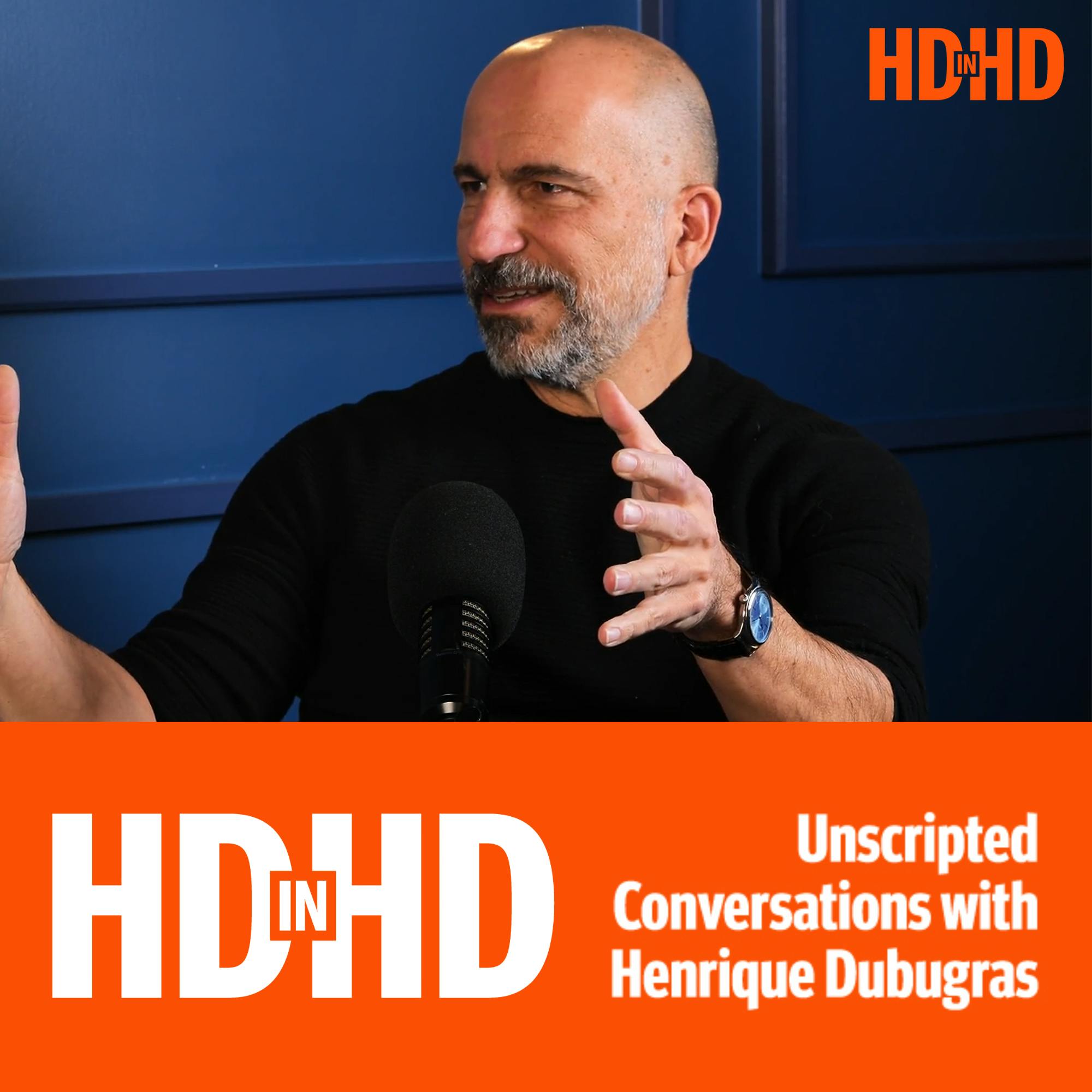 From Iranian Refugee to Uber CEO | Dara Khosrowshahi
 How Max Levchin Built the System Behind 90% of U.S. E-Commerce
 How Deliveroo Got Acquired by Doordash for $3.9B | Will Shu
 How Alex Bouaziz Built Deel Into a $17B Giant | Alex Bouaziz & Deel