
Founders Future · 2026-05-12 · 14 min
Key moments - from our scoring
Substance score
32 / 100
Five dimensions, 20 points each
Adam Quiney transitioned from a law career to found Evergrowth Coaching, where he works with smart, high-performing professionals in demanding fields like law, medicine, accounting, and corporate leadership. His ideal clients are those who learned early to suppress their emotions and operate purely from logic to avoid disappointment, which made them excel professionally but left them feeling unfulfilled despite significant success. Quiney helps these leaders explore what's actually driving their ambitions - often discovering that surface goals like doubling revenue or gaining staff autonomy mask deeper desires for fulfillment and spaciousness. His approach rejects traditional advertising and lead generation tactics, instead building relationships slowly and organically while maintaining the integrity of his message. Rather than chasing vanity metrics, Quiney focuses on who he gets to be in his life, aiming to fill 35 spots in a May intensive and enroll coaches in a year-long training program while creating an experience characterized by strength, delight, and spaciousness.
His ideal clients are super smart people with big hearts who learned early that emotions are a liability, so they bypass their feelings and operate purely from logic. This makes them excellent at handling crises and complexity in careers like law and medicine, but leaves them feeling empty despite achieving significant success.
He builds relationships slowly and organically, paying attention to what will serve each person regardless of whether they become a client. He avoids traditional lead generation because his high-commitment, high-transformation coaching requires deep relationship and trust, which advertising fundamentally undermines.
He aims to fill 35 spots in a May intensive and enroll participants in a year-long coach and leader training program, but prioritizes creating an experience of spaciousness and strength over hitting specific revenue numbers.
Most advertising relies on hooks and psychological manipulation rather than truth, which conflicts with his core mission of helping clients connect to their deeper truth. When he tried it, the lack of personal integrity in the ads caused a breakdown that made them ineffective.
When confronted with fear or pushback, he tends to either shut down and give up or abandon his internal experience and push harder - both of which close him off. The challenge is staying open and curious in the tension rather than reacting into either extreme.
Our reviewer’s read on each dimension, with quotes from the episode.
The episode contains recurring abstract concepts (spaciousness, heart vs. head, transcendence) that are restated multiple times without concrete breakdown or actionable methodology. While the framing of high-achievers burning out is recognizable, there is minimal novel insight beyond the basic premise that success without fulfillment is hollow. The guest offers platitudes like 'stay open in the tension' without specifics on how.
My people are super smart, really big brains, really, really big hearts... they learned early on in their lives that having a big heart is a liability
what I see most people do is they put their attendant... people make their tube, they're exhausted
The core thesis - that high-achievers sacrifice fulfillment for success and need to reconnect with emotion - is well-trodden territory in coaching discourse. The ontological framing of 'head vs. heart' and the pendulum metaphor (work too hard vs. sit idle) are conventional tropes. No contrarian viewpoint, first-principles argument, or data-driven finding distinguishes this from dozens of similar coaching narratives.
they learn early on in their lives that having a big heart is a liability. So if you're one of these sort of people you learned start to bypass your heart and go to your head
people make their tube, they're exhausted and then they swing the pendulum to the other side... they're just all spacious, sitting on a hammock
Adam Quiney has a relevant background (lawyer, software developer, project manager managing $450k budgets) that shows operational experience, but the episode provides no evidence of scale or material business success. He is primarily a coach/thought-leader rather than a practitioner with recent, verifiable wins. No client outcomes, revenue figures, or measurable impact data are offered to validate his methodologies.
A former lawyer, software developer, uh, and project manager who managed budgets up to 450,000 at UH refractions Research
he now helps clients eradicate stress and good enough thinking to achieve the impossible through face to face or phone coaching worldwide
Almost no concrete examples, named clients, metrics, or timelines are provided. The guest mentions an intensive with ~35 spots and a year-long coach training program, but shares no enrollment numbers, revenue, or client transformation stories with specifics. Statements remain abstract ('create spaciousness and strength,' 'felt nourished') without case studies or measurable proof.
I'm running at the end of May weeks or so out that I'd like to bring in. Probably fill about 35 of those. Um, we have a year long program
Creating those results. But from results is one of uh, feeling nourished where there's a lot that I'm doing but I don't have an
The host asks surface-level questions ('What motivated you?', 'Who is your ideal customer?') but rarely probes deeper or challenges vague claims. When the guest gives abstract answers (spaciousness, heart-centered work), the host either nods along or mirrors the language back rather than requesting specifics. No follow-ups on business metrics, client results, or the gap between the coach's philosophy and measurable outcomes.
I see. So you're more focused on the fulfillment side of things, making sure that your experience is more fulfilled and you're more focused on the impact that you have
So you're more focused on the fulfillment side of things... Like 100%. That's so much. I've never like thought about it that way
Computed from the transcript - who did the talking, and the words that came up most.
In this episode of Founders Future, with host Natalie Borovska, Adam Quiney shares his unconventional journey from law to executive leadership coaching, revealing how high-achieving professionals often operate from logic while disconnecting from deeper fulfillment. Adam unpacks his approach to transformational coaching, helping leaders move beyond surface-level success into meaningful impact by addressing internal patterns, emotional awareness, and authentic self-expression. He also discusses why traditional marketing and sales tactics don’t align with his philosophy, emphasizing relationship-driven growth, integrity, and long-term transformation, while redefining success as a balance between external results and internal experience.
Transcribed and scored by The B2B Podcast Index.
Speaker A: Welcome to Founders Future, a podcast powered by Closers IO where we explore the journeys of uh, innovative entrepreneurs and the road ahead for their company. I'm your host, Natalie Borowska and in each episode we uncover the stories behind impactful ventures, the challenges faced, the lessons learned, and the strategies fueling today. I'm thrilled to be joined by Adam Quiney, who is the executive leadership coach and founder of Evergrowth Coaching Incorporated, where he guides high achieving executives, leaders of leaders and professionals from their zone of excellence into genius level impact. A former lawyer, software developer, uh, and project manager who managed budgets up to 450,000 at UH refractions Research, he now helps clients eradicate stress and good enough thinking to achieve the impossible through face to face or phone coaching worldwide. I'm so happy to have you on the podcast today.
Speaker B: It's great to be here m. So
Speaker A: I'm super excited for the conversation that we're going to have. And what I like to do at the start of every podcast episode is I like to journey back in time. So take us back to before you started Evergrowth Coaching. What were you doing at the time and what motivated you to start your business?
Speaker B: Um, well, I was in law school and I was about halfway through and I was confronting a couple of things. One of them was that I, um, I found studying law really fascinating. The practice of it I found kind of rote for me and very perfectionistic. And it was a lot of really, really, really long. And I didn't meet a lot of lawyers that really thrilled about what they. A lot of them, I would ask, do you love your job? And they go, well, here's the thing. They would give me like a long lawyer and. Which was not what I wanted. Like, that's not how I wanted to show up around my career was like kind of giving a long explanation why I ought to like my job. And so I started to look for alternative careers and met someone. You know, I, I founded a startup with a friend, which is still going, probably because I left pretty early on. I, um, looked into public speaking for a while, but I found my way into this career when I met someone who used to be an attorney, now a coach. Started talking to him about his work and then was like, this sounds awesome and really right up my alley. And then that was the, the humble beginning of what I do now.
Speaker A: I see. And did you always know that you were going to be a business owner or was it something that you kind of fell into?
Speaker B: Definitely more than like if you went back 20 years ago and told Me that I would be an honor. I would have completely you because I, I had real uh, issues or like anxiety I guess we would call it selling traditionally we'd call it selling more accurately would be like enrolling clients in the possibility of working with me. All of that stuff was like way. So I had zero compulsion or belief
Speaker A: that that's what I would 100 so it was kind of your like I guess your anxieties around selling which would just make you be like oh no way. Like no way am I doing that as a full time job.
Speaker B: That was one of parts of it. Yeah. For sure. Like it just didn't seem like who I was. Like the way I related to myself did not occur. Like entrepreneur. It just didn't make sense of my family. Like all of that was kind of angled so it's quite out of character. Or maybe it was a big step into the unknown.
Speaker A: Yeah but it's all about like um, what's the word? It's all about getting like getting over that and really making sure that like your values are in place. And it's, it's all about whether like you find like passion for the job. So it sounds like you do. So it's all about learning with all parts of it and just being able to get over those humps in the road. But also I want to dive into the business today. So who would you say is your ideal customer?
Speaker B: So I would, I would describe them ontologically which is to describe how they in the world. So m. My people are super smart, really big brains, really, really big hearts. And they learn early on in their lives that uh, having a big heart is a liability. So if you're one of these sort of people you learned start to bypass your heart and go to your head because that way you don't have to feel the degree of heartbreak, disappointment, of let down, betrayal, et cetera, et cetera. That is kind of be part of your birthright. And so what happens is as you do that you get really, really good at making um, clutched moments of crisis. You get really good at pull of chaos, predicting trend, whatever. So these sort of people are really, really skilled in careers. They're at like law, which is where I found myself, medicine where you're making really challenging in the moment. Accounting, corporate executive leadership, entrepreneurs are all positions that reward operating from the logic of the head and bypassing the heart. But then it's not just those people, it's also that those people reach up to my people. The costs of that way of being start to make Them and that looked. Culture feels elusive. Relationships feel challive not just with other people but also with ourselves. We sort of like instead of feeling what we feel, we think about what we. And it just leads to all of the results in the world. A lot of success but sort of this who cares. And I should be feeling happy about what I. But I don't. And then we're left even worse off because we're like it's not even okay. Those are sort of like. That gives you a bit of the picture of like.
Speaker A: I see. So people who are more logic driven as opposed to being really connected to like their heart center. Uh and then what you. What you specifically help them with. Is it like helping them get connected with like their heart or like what does it look like to work with you specifically? Mhm.
Speaker B: Well the nuance I would put on is not necessarily that they are logic then it's that they have and learn become. They learn to adopt. And in terms of like what am I helping them with? Well usually where we meet someone in their journey is. It's rare that or someone like this like boy I wish that my heart would like that's just not where we're looking. We would start with like I want to double my revenue or I want to increase my profit. Want more time off and I want my friggin staff to be able to handle that. So we have to meet people they are rather than. So we start there. But as we explore that look what is it going to create a resectable for them? Usually there's.
Speaker A: I see. Awesome. And then so when it comes to like client acquisition what are you doing in terms of lead generation to really be able to attract that client?
Speaker B: Well the sort of work that I do is pretty. You could almost call it allergic to traditional approaches to lead generation. So as you can probably imagine I get pitched and stuff by but the kind of work I'm doing people is high commitment, high transform. And that kind of work requires a lot of and a lot of financial somewhere from mid to high five figures a year long. And so typical approaches generation just aren't going to really. They're not really composed about relationship with someone. So back to your question. What I typically do is a lot of building relationships and doing so slowly and organically and really letting this person in more putting attention on what's going to serve this person exactly where they are regardless I'm a client.
Speaker A: I see and I think. I think a lot of business. Business owners can relate to what you just said that they get pitched constantly in the DMS on LinkedIn and only like the outreach was actually good, you know. And I love that relationship first approach because especially with the type of work that you do, I think that that's much better and you have a, you do have a little bit of a slower burn, but really making sure that you do have that value upfront will just help even maybe like potentially fast track the process. So I love that approach. And then so have you yourself like worked with ads in the past and found that it wasn't like the right thing for your work or like what's the journey with that?
Speaker B: Yeah, sure, yeah, I've tried that. Um, in part because where there's, there's usually something explore in, in my line of work, the lineage of work I work with. Um, and I've of course, um, like all of us in earlier days worked with teams that you know, promised stuff through media. My experience with that is that one what I'm really in is supporting people to come closer to whatever their truth happens to be deeper selves expressed into the space. And most advertising is not about truth about uh, hooks, it's about how do I get a hold of this and how do I create some. And you can try to bring truth in on the backside of that but the priority is that top part. And I have zero interest in like personal. And so my experience in the line of work I'm in is generally that when we lose the integrity, meaning when I'm for example trying to put out an ad that I personally clone NOID that was showing up, there's a breakdown that just happens there and it doesn't work. And so um, that's been largely my journey with ads.
Speaker A: I see. So just really making sure that yeah, you have the truth. So really make sure that that's like the number one and that's just part of your values. I mean that makes a lot of sense. And then so with the business, so we're at the start of 2026. So when you think about your vision for the next 12 months, like what are your goals, what are your targets, what milestones are you really looking to achieve in the company?
Speaker B: Yeah, I don't, I don't put, I'm used to, in the early days of my work, I put a lot of it on those sort of metrics. A big part of showed up to my work especially coming from like a background in law where it was very numbers based and metrics and stuff like that. There's not, is my goals are a little more I guess esoteric would be the word. I'm more interested in who I get to be in my life and so the things I'm really committed to creating. I'll give you some numbers. So there's an intensive I'm running at the end of May weeks or so out that I'd like to bring in. Probably fill about 35 of those. Um, we have a year long program that we run where we train coaches and leaders that I'd like to registered in that. But more important to me is that I create an as I lean into that and an ex like strength and delight. And if those two things fall away, then, then number.
Speaker A: When you say spaciousness, like what do you, what do you mean? Like specific.
Speaker B: Mm. Well, it's kind of like an experience as opposed to like quantitative. So I can give you examples of how that might look. But like it's overall maybe an experience where you wake up and you've probably had day to day and you're like where you finish your day and you're tired. That's the opposite. And I'm talking about the experience I would have or that I'm creating in my life. Creating those results. But from results is one of uh, feeling nourished where there's a lot that I'm doing but I don't have an. Does that make more sense?
Speaker A: So you're more focused on the fulfillment side of things, making sure that your experience is more fulfilled and you're more focused on the impact that you have. Like when you're counting like the numbers of people that you want to be like, want to be working with rather than like the specific revenue touch them.
Speaker B: Yeah. I mean what I see most people do is they put their, their attendant. They lose sight of their experience. And so that, you know, people make their tube, they're exhausted and then they swing the pendulum to the other side. Like I don't want to do that again. They're just all spacious, sitting on a hammock. But then there's a part of them that's bored and feels like a hamster and a hamster.
Speaker A: Ah.
Speaker B: Uh, there's not more to what I want. I'm, I'm committed to creating the transcendence of both of the results. But also more importantly is who do I get to be my Life as?
Speaker A: Like 100%. That's so much. I've never like thought about it that way. But you really want to make sure that you're not swinging on both sides of the meat that you have like that nice harmony and so I like that so much. And then what do you feel like are going to be the biggest challenges to achieving that?
Speaker B: Well, once I start to get scared, which I will because I'm a human. Or maybe a better way to put it is like once I get confronted a nicer way to talk about fear. I guess what is predictable is that I'll do one of two things, which is I'll get to ah, whatever you know, and just let off the. Or I'll um, forego my internal experience and then just put my head and my nose and like try to. The challenge is in being able to stay open in the tension of the moment where I feel pushed in those two ways, like where I'm confronted because both of those options is shutting down in that moment. And instead like what. What do I actually moment? What's going on? Usually, man, the last five people I invited all kind of shut up. Just feeling kind of closed about that. What is there for me to actually do? Just pushing and harder. What do I actually resource myself. I'm back.
Speaker A: I see. So just really looking a layer deeper. Uh, and not, not I guess like acting upon those first initial emotions is just really making sure that you go in deeper and make sure that you have like a better understanding of yourself.
Speaker B: Yeah, I would, I would say even like especially like you said Natalie, like not reacting to that and instead sitting in. Because the thing about our reactions is they eliminate close that then we don't have to feel the discomfort of like whatever it's driving up. People don't want to my party. It's a common story. My fear is playing out in my head and can I actually stay open with that feeling rather than makes a lot of sense?
Speaker A: Yeah, I like a lot. And then so with the final question before we puke, it's one thing to your younger self. What would that one.
Speaker B: Well, I'm laughing because, uh, no matter what I said to my younger self, that guy wouldn't have said he was very close to any advice or anything like that. So I think the thing I would tell him is like, you're doing amazing. And I would, I would just acknowledge him for who celebrate because those. And as much as I would like to or whatever, my experience and all of the 15 in this line of work is that it doesn't work that way. We have to find only, only, only find. So I would tell that guy, like, man, you're crushing it. Keep doing what Life just keeps getting better.
Speaker A: I love that so much. And yeah, thank you so much for coming on the podcast today. If our listeners want to find out more about you, where would be the best place to find out?
Speaker B: My website is an easy one. That's Adam Quiney.com and then they can also check out my podcast which is called the Transformational Leader with Adam Quiney. Um, my last name. Those are usually the two best places I'm on.
Speaker A: Awesome. Thank you so much for coming on the podcast today.
Speaker B: It's my pleasure. Thanks for having me.
Speaker A: And if you are a business owner and you're looking to scale your business and you really want to enhance your self marketing efforts, visit Closers IO to hop on a call with our team and discover how we went from 0 to 30 million per year in less than 3 years. Until then.
Other episodes covering the same guests and topics, from across The B2B Podcast Index.
 E56 Stop People-Pleasing, Get Fear-Optimized, and Finally Set the Boundary You Have Been Avoiding, with Amy GreensmithLead with Spark · on Executive leadership coaching71 / 100
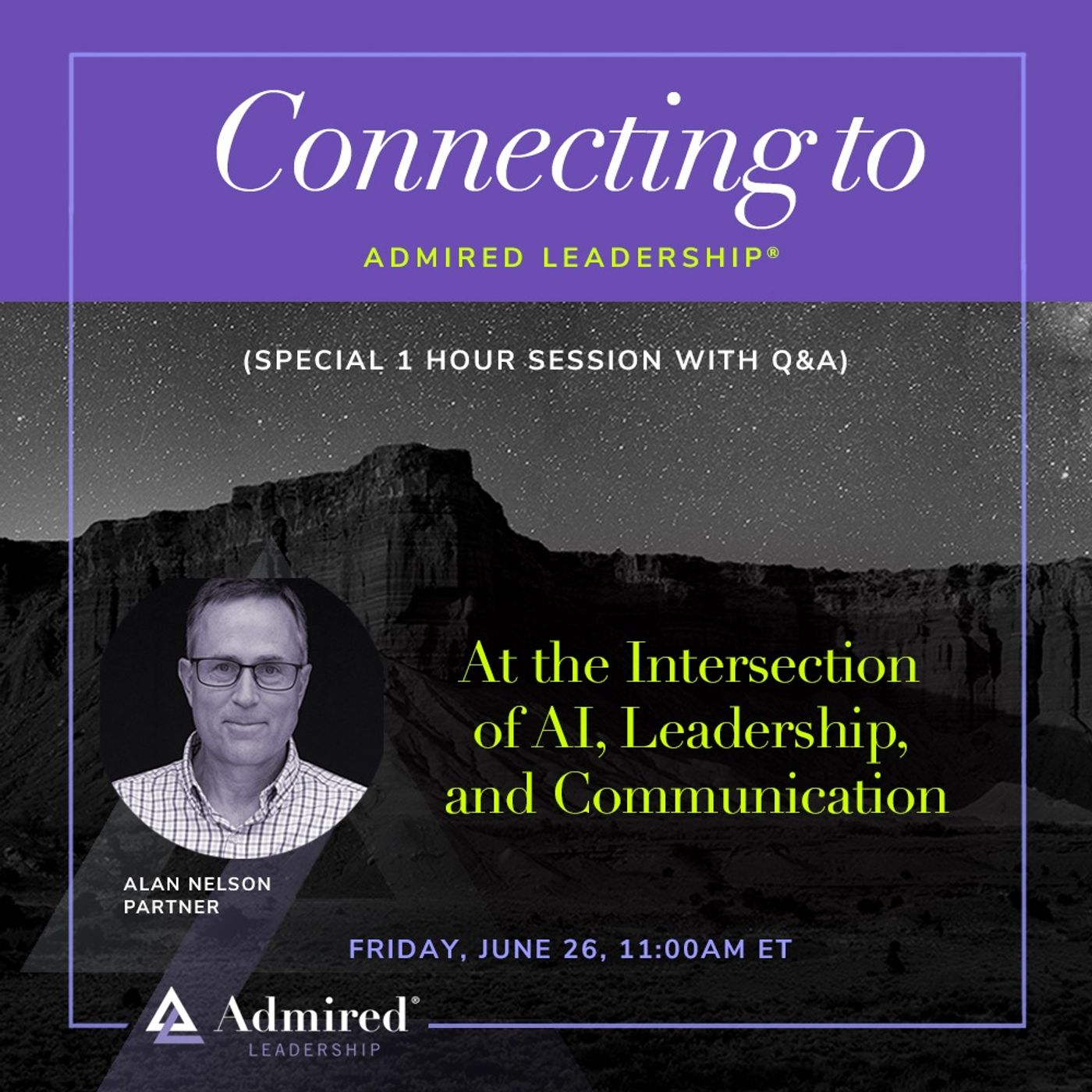 At the Intersection of AI, Leadership & CommunicationConnecting to Admired Leadership · on Executive leadership coaching68 / 100
 Stop Reciting Your Greatest Hits: The Real Reason High Achievers Get Passed OverWomen in Sales Leadership · on Executive leadership coaching61 / 100
 139: Why Black Women Leaders Get Overlooked (Even When They're the Most Qualified in the Room)Leading Her Introvert Way · on Executive leadership coaching59 / 100
 Why Top Salespeople Stop Selling (And Start Solving Problems Instead)The B2B Revenue Executive Experience · on Executive leadership coachingFrom Bulimia to Business: Rebecca Rectoric’s Journey to Healing and Entrepreneurship46 / 100From Agriculture to Agency: Chandra Spangler’s Marketing Journey39 / 100Erica Powell on How to Attract High-Ticket Luxury Clients41 / 100Jeffery Lamont on Building Wealth Strategies for Lawyers and Scaling to 8 Figures55 / 100Patrick McGuire on Building Trust Funnels That Scale Startups Faster