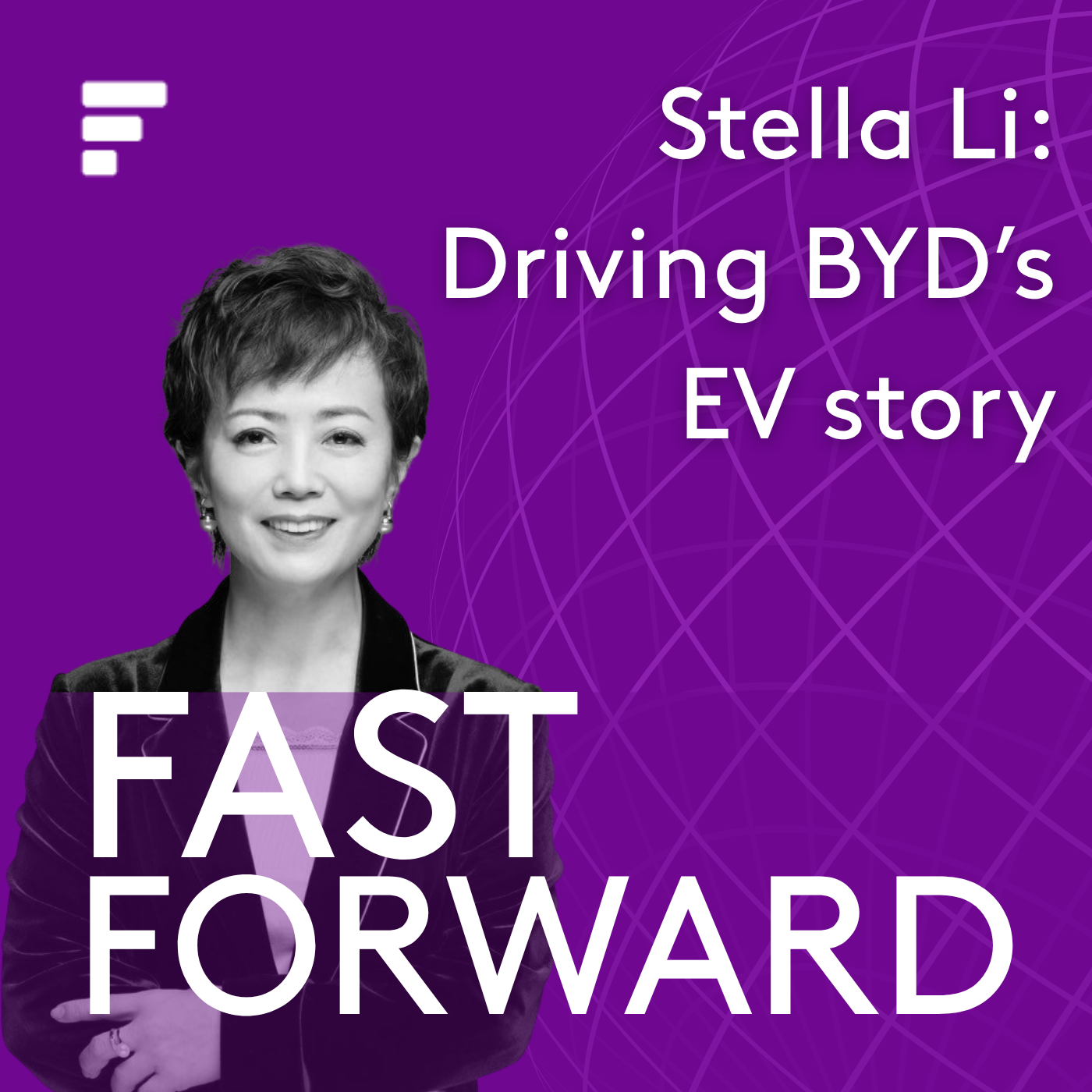
Fastmarkets’ Fast Forward podcast · 2026-06-30 · 41 min
Key moments - from our scoring
Substance score
47 / 100
Five dimensions, 20 points each
The battery and critical materials sector faces a pivotal moment as governments, mining companies, automakers, and defense contractors converge to reshape supply chains for the energy transition and national security. Audrey Robertson of the Department of Energy emphasizes that American competitiveness won't come from replicating China's integrated supply chains, but from innovation in battery chemistry, processing, and recycling - alongside long-term contracts rather than government mandates. Rio Tinto's Jerome Pocrass discusses why the company entered lithium as a later player, highlighting that transforming a resource into a business requires scale, permitting, infrastructure, and processing expertise. The demand picture is broadening beyond electric vehicles to include stationary energy storage, critical for grid stability with renewable energy. Stacey Newsted from Lockheed Martin frames critical minerals as a national security issue akin to insurance - something that requires cross-sector collaboration between government and commercial industries, though they operate on different timelines. The episode underscores that success requires companies combining scale with agility to navigate volatile markets, while bottlenecks increasingly shift to production ramp-up timelines rather than simple supply constraints.
The DOE focuses on American innovation in new battery chemistries, processing methods, and recycling rather than replicating China's supply chain model. Success depends on forming partnerships across the US and allied countries, supported by long-term contracts that enable profitable and durable supply chains.
A lithium business requires obtaining permits, building at scale (often multibillion-dollar projects), developing supporting infrastructure for power and logistics, and producing chemical products with stringent specifications - not just extracting raw material from the ground.
Energy storage is becoming a critical second demand leg alongside electric vehicles, driven by the need for grid-scale storage to support renewable energy deployments. This diversification strengthens long-term demand and provides more resilience through market cycles.
Beyond current supply bottlenecks, the critical vulnerability is production ramp-up timelines and throughput velocity - how quickly new projects reach full capacity to meet projected demand, often a multi-year process that isn't getting enough planning attention.
Cross-sector collaboration is increasing due to mutual recognition of interdependencies, but different customer dynamics and planning timelines complicate coordination. The current administration's push for long-term multi-year contracts is helping commercial companies plan production years in advance.
Our reviewer’s read on each dimension, with quotes from the episode.
There are a handful of genuinely useful framings - the throughput gap between announced capacity and actual delivered supply, the home insurance analogy for critical minerals, and the 'two legs' demand thesis - but much of the runtime is filled with broad industry observations, optimistic platitudes, and the host-analyst debrief repeating points already made in the interviews.
one thing that I think is going to become more of a topic of discussion is the period of time it takes to ramp up to full capacity
I almost view it like home insurance. It's not a great deal, but it's one you can't afford not to do
The home insurance analogy and the throughput-vs-capacity framing are genuinely fresh, but the core arguments - US should compete on R&D not replication, energy storage is the second demand leg, China has a head start - are now standard conference talking points that circulate widely across the industry.
We don't have to deal with a large existing battery ecosystem that's designed to produce only one type of battery. We are able to design different types of processing
What assets our adversaries are purchasing, it should give us a window into the future
All three guests are genuinely senior and operationally relevant: a sitting Assistant Secretary at DOE, the executive running Rio Tinto's lithium and aluminium businesses post a major acquisition, and a 20-plus year materials strategy practitioner at Lockheed Martin bringing a rare defense-sector lens - not a typical podcast circuit lineup.
we bought Arcadium more than a year ago and Arcadium had decades of expertise in lithium
I've spent time as an entrepreneur and understanding what it takes to try and pull together something that is daunting at the outset
Named entities appear - Arcadium, Argonne National Labs, Lockheed Martin, the Project Vault Initiative, Argentina, LFP vs NCM chemistries - but hard numbers, timelines, price data, and volume figures are almost entirely absent, leaving most claims at the level of assertion rather than evidence.
We have dozens of companies involved in different parts of the battery ecosystem, whereas we had almost nobody five or six years ago
Arcadium more than a year ago and Arcadium had decades of expertise in lithium
The host opens the Lockheed interview with the pointed 'what are they getting wrong?' and pushes on whether US innovation is a genuine edge or a placeholder, showing some genuine craft; however, the Robertson interview is almost entirely unchallenged PR-speak, follow-ups frequently restate the guest's answer rather than probe it, and the closing debrief is largely mutual agreement with no tension.
when you walk into a big conference like this one, full of miners and traders and battery materials people, my question to you is, What are they getting wrong?
do you think that's a genuine strategic advantage for the US or a bit of a placeholder while the hard work of infrastructure and everything else catches up?
Computed from the transcript - who did the talking, and the words that came up most.
In this episode of Fast Forward, Andrea Hotter reports from the Fastmarkets Global Lithium, Battery and Critical Materials Conference in Las Vegas, exploring how the sector is shifting from an EV‑led growth story to a broader ecosystem spanning energy storage, AI and national security. Featuring voices from the US Department of Energy, Rio Tinto and Lockheed Martin, the episode examines supply chain vulnerabilities, scale‑up challenges and the growing role of long‑term contracting and innovation in securing future supply. Tune in for a concise look at how geopolitics, demand shifts and industrial strategy are reshaping critical minerals markets. Fastmarkets is your source of critical minerals and battery raw materials market analysis, forecasting and price data, keeping you ahead of the competition. To discover more about our products, visit
Transcribed and scored by The B2B Podcast Index.
Speaker A: M Las Vegas, a city built on big bets. For most people, that means neon lights, casino floors, and fortunes won or lost on the turn of a card. And yes, the Strip is still doing just fine. But right now, the high stakes game in town isn't being played at the blackjack table. It's in the conference hall. That's because more than 1100 industry leaders from 55 countries have descended on the desert for the fast markets. Global Lithium Battery and critical materials conference. Miners, refiners, automakers, investors, traders and policymakers all in one place, all asking the same question, where does this industry go from here? And it's quite a moment to be asking it. Lithium has been on a wild ride. Boom, correction, uncertainty, um, opportunity, Nickel, cobalt, graphite, manganese, rare earths. The entire battery and critical materials value chain is being repriced, rerouted and reimagined. Supply chains that look solid are being stress tested. Investment theses that seemed certain are, uh, being rewritten. There's something fitting about doing this in Vegas. It's a city that understands sky scale speed and what it means to make a big call with serious money on the line. Because the decisions being made in the rooms here this week on supply, on investment, on policy, won't just shape a market. They'll shape how the world moves, stores and powers itself in the years to come. The biggest bets in Vegas this week aren't on the casino floor. They're on the future of supply chains. Andrew, I'm Andre Hotter and this is Fast Forward. This isn't just an industry story anymore. Governments are in the room and firmly at the table. Supply chain security, critical mineral strategies, trade policy. The politics of battery materials has never been more intense. So given the role the US Department of Energy is playing in critical mineral strategy, from domestic production to securing long term supply chains, I thought I'd talk to Audrey Robertson, the department's Assistant Secretary for Energy, about how Washington is approaching that challenge. Let's hear what she has to say. Assistant Secretary Robertson, welcome to Fast Forward podcast. Great to have you here.
Speaker B: Thank you so much, Andrea. I really appreciate being here.
Speaker A: Okay, so let's get stuck in. Uh, what do you think has changed most in your view about the battery materials ecosystem and the challenge that lies ahead for the sector?
Speaker B: It's a really important question as it relates to the needs of the country, how at the Department of Energy, our mission, our statutory authority, and what Congress essentially funds us to do, how that's changed the way we look at batteries. I think in the first Trump administration you saw the, the Beginning of real investments in taking battery technology to the next level. We've always had a, uh, big presence in the battery space from an R and D perspective and that's been part of the Department of energy for 30 years. But where we are now is a, ah, focus on the entire battery ecosystem. Not just for EVs, which I think was the focus of the Biden administration, but for new battery chemistries that can enable all kinds of different applications. Specifically areas like solid state batteries for managing intermittency of different types of power gen batteries that can help enable and regulate data center draws on the power grid. We are in an entirely new era. The AI revolution is going to change whether people like it and vote for it or not. It's here and it's going to change the world. Understanding and managing power through batteries is going to be critical and we're spending a lot of time on that as well. So what's changed the most, I'd say really our focus on the future of the battery ecosystem and how the Department of Energy is working to enable success on so many different fronts, not just focused on EVs.
Speaker A: Absolutely. And that conversation has absolutely changed so much. What's your assessment of where the US is today versus where it actually needs to be to meet those demands and to create that ecosystem?
Speaker B: Where we are today is significantly better than where we were five years ago.
Speaker A: Right.
Speaker B: We have dozens of companies involved in different parts of the battery ecosystem, whereas we had almost nobody five or six years ago. So this, uh, industry is firing on all cylinders. Where I wish we were is with a fully integrated supply chain and every component of battery manufacturing was here and all battery recycling was efficient. But we're a very large country with very diverse interests and lots of opportunity to build more. Um, I'm excited to see where we are in five years.
Speaker A: We'll have to have you back and we'll have this conversation again. That ecosystem you talked about, now China has definitely been building that out as a country for decades.
Speaker C: Really.
Speaker A: And it doesn't leave it further ahead. Where do you think that the US has an opportunity to catch up or maybe even a competitive advantage?
Speaker B: I don't think the strength of the United States is in trying to replicate the supply chain in China. That's not how we're going to compete. That's not how we will win this game, if you will. We're going to be successful by having different components of the battery supply chain in some circumstances in different places, and then aggregated to build batteries here in the US Whether that's onshore or offshore. We're going to have vertically integrated companies and companies that are already vertically integrated, like Tesla and others who are both at the front end and the back end of batteries. But the real advantage is going to be in American ingenuity and R and D, the new chemistries. One thing that's very difficult to change is the way a large plant operates. So we don't have to deal with a large existing battery ecosystem that's designed to produce only one type of battery. We are able to design different types of processing and we've seen that happening. We're able to extract lithium from multiple sources, not just using one source of lithium or one type of battery pack. So I think our advantage is going to be in the invention and application of new ways of doing every step of the process, from mining all the way through to recycling. That's America's strong suit. That is our competitive advantage in this marketplace.
Speaker A: You mentioned lithium there. I mean that's been going through an extraordinary cycle. Very much boom, bust back to hopefully now a little bit of stability. But I'm just curious how the DOE thinks about supporting supply security when you are seeing that massive variation in price signals and they vary so dramatically.
Speaker B: They do. It's a volatile market that is not an efficient market in that we have state actors and others that control pieces of that supply chain, that by pushing product into the market or pulling product out, they can severely and significantly impact price. That's part of being in a commodity business. Lithium is lithium. And yes, there are different grades and different purities, but within the commodity markets you have volatility of price. That's just part of it. It's what you accept when you're in the industry. In oil and gas, in coal, you name the commodity and there's going to be volatility. So I think it's about, do we have enough supply within the United States or with our allied partners that we can assure and sign long term contracts? OEMs, um, can they sign long term contracts at a price that allows everyone to be profitable and creating a durable supply chain, creating the durability which is really underpinned by long term contracts, not by government mandates?
Speaker A: Yeah, yeah, very interesting. You've spent a lot of time talking with the companies, with the investors, with other policymakers and the broader communities across the ecosystem. In your opinion, what's the most interesting conversation that you've had recently that without revealing too much, might have changed the way you think about the challenger that the sector, uh, is facing?
Speaker B: I get to have a lot of really interesting conversations. It's one of the very best parts of this job is the opportunity to talk to people at every stage of innovation and execution. From some of the brilliant scientists that I had the opportunity to talk to that are designing new battery chemistry, that are pushing the envelope on what is possible, that are taking down all of our prior assumptions and recreating different types of batteries. I am so excited by those scientists and our Advanced Battery Labs. So I would say I always am, uh, fired up after I come back from Argonne National Labs and the Advanced Battery Lab there. But in terms of companies, investors or policymakers, I would say spending time with companies who are innovators in this space is really exciting. I wish I had more time to spend with them because those are the entrepreneurs that are trying to move this industry forward. And uh, maybe it's just because I've spent time as an entrepreneur and understanding what it takes to try and pull together something that is daunting at the outset, which it is for many of these companies for sure.
Speaker A: I keep hearing the word innovation coming out, so I can tell that's very important to you.
Speaker B: I really think that is how we're going to be successful. And so in terms of any one conversation, I honestly don't think I could
Speaker A: pick one that's a very good problem to have. One last question before I let you go. I, uh, mean this is a sector where decisions are being made today that aren't um, going to pay off fully for years, sometimes decades ahead. What part of the work that you're doing is giving you the most optimism when you think about where the industry is heading?
Speaker B: I think you actually kind of said it for me. I mean, these are very long duration projects. We're building smelters, we're building refining capacity, we're building different stages of the battery ecosystem. Those are big industrial processes that are not going to be built overnight. It takes years. But that means they're also not going to go away. And so when I look at the long term strength of the United States and the re industrialization that is required for our economic security and our national security, these are projects, these are companies, these are industries that will have the durability. If you can build it quickly, it can go away quickly too. The reason these are difficult projects for me personally is that I'm sure I will be long out of Washington when a lot of them, um, come to fruition and open their doors. But I know that they're there providing real value to both the American people to the battery ecosystem and contributing in meaningful ways to our national security.
Speaker A: Assistant Secretary Robertson, thank you so much for joining us.
Speaker B: It was my pleasure. Thanks so much.
Speaker A: Few companies have a view across the critical materials landscape quite like Rio Tinto, spanning lithium, aluminium, copper, nickel and beyond. So I sat down with Jerome Pocrass, who runs Rio Tinto's lithium and aluminium businesses, to find out what drew one of the world's biggest mining companies to lithium, whether being a later entrant is actually an advantage and what it really takes to turn a lithium resource into a lithium business. Jerome, welcome to Fast Forward. So this is your first time attending a lithium conference. You've spent years operating across global commodities, but this is a market that is still relatively new territory for Rio Tinto. What struck you most from conversations here? What are you hearing from the industry about where lithium goes next?
Speaker D: I would say what strikes me versus other conference in other sectors is a sense of optimism. People recognize there are challenges, there is volatility, but the confidence about the strength of demand and the pace at which people want to come to develop new projects is quite unique to lithium.
Speaker A: Okay, that's interesting. Do you think that the industry is more focused today on the next growth opportunity or on trying to work out how to deal with the lessons from the volatility that they saw in the past few years?
Speaker D: I think probably the former, taking lessons of the later. But everybody recognized that volatility in lithium is here to stay. But the priority now is how do I capture the growth and how do I adapt to the change in the market demand?
Speaker A: It sounds like the conversation shifting from the excitement around lithium demand to the harder questions now about building supply at scale.
Speaker D: Yes. And how do you turn resource into product and announcement into tons?
Speaker A: Yes, absolutely. Well, that's a big question, isn't it? Because Rio Tinto is operated in some of the world's biggest mining businesses for generations. And lithium is a very different market to copper or aluminium or iron ore. It's younger, it's faster moving, it's got a different value chain. So what did Rio see in lithium that made it decide this is a business worth building?
Speaker D: I think it's two things. First is the growth dynamics in the market, because we see not only a market which is going to grow sustainably, but a market which is critical to the new electrified world of tomorrow. Like some other metals that we do, like aluminum or copper, we see a market which is becoming more complex and a product that is becoming strategic. So we like that equation. And the second Thing is, we see a market in which we can bring something as Rio Tinto, that we can create value with the assets we purchase and help the market probably to deliver these stones faster that we are talking about.
Speaker A: That's interesting because you did come into the market a little bit later than some of the existing players who were already pretty well established. So do you think that has given you an advantage being a later entrant?
Speaker D: I think it gives us still a requirement to keep learning and be humble. I think there are things we think we bring in, particularly the ability to develop large projects on time, on budget, the ability to develop partnership with communities, government and customers. But it also brings a requirement of humidity because we don't know everything we leverage. I think excellent team that we bought with arcadium. As you know, we bought Arcadium more than a year ago and Arcadium had decades of expertise in lithium, um, with very skilled teams of people. But still we need to adjust to the market movement and be aware that there is still a lot that we need to learn.
Speaker A: And in terms of learning, have there been any lessons that you've learned that you brought to the sector from your other businesses, from copper, from aluminium, from iron ore or from other projects?
Speaker D: I think the ability to work in partnership with communities, the ability to form partnership with customers, because I think that's going to be critical in a very volatile market. That's probably two examples that come to my mind. And then the importance of infrastructure, it's not only about developing singular mining projects, it's also about how do you run them. Leveraging some infrastructure for power supply, for logistics. I think that's important. Sometimes people see mining project in isolation. They are part of uh, a bigger infrastructure project. And in Argentina, for example, that's how we are thinking about the hub of assets that we have and that we are building in that country.
Speaker A: Yeah, that scaling up piece is really important, isn't it? And a lot of companies can identify the resource, but far fewer can actually take them to deliver them to these large scale businesses that the industry definitely needs. So what do you think separates a lithium resource from a lithium business?
Speaker D: Many things. It's first, getting a permit, which means that you are able to manage environmental constraints, get approval from communities, work with government. Second, build at scale because some of these projects are multibillion dollar projects that require a lot of expertise. Third, as uh, I just said, the infrastructure on this project. And fourth, the fact that in lithium, getting tons out of the ground, be it hard rock or brine, is just one Part of the equation. The second part is to produce a, uh, chemical product with very stringent requirements every day of the month and deliver it to your customers. And that's a processing part of the lithium equation, which make that business also relatively unique and brings a lot of specific challenges.
Speaker A: Yeah, very interesting. Let's talk a little bit about the demand side as well. I mean, the conversation had previously been dominated by electric vehicles, but energy storage is now a much bigger part of the picture and the discussion than it previously was. How do you see that demand mix changing over the next decade?
Speaker D: I think EV will continue to be a big part of the story, but energy storage is going to be a second important leg. And I think when you look at how the renewable energy business is developing across the world, you understand why storage is becoming almost a mandatory requirement for new energy projects and why storage is going to become a great source of demand for lithium going forward. So I think the demands now will be a story of two legs which will balance each other, and I think that's very good for the market because it will provide more support to the future growth of the industry.
Speaker A: Do you think the industry expects this? Do you think they've underestimated how big a demand growth story there will be from the stationary side?
Speaker D: I don't know if it was underestimated, but it's now becoming a very strong reality for sure.
Speaker A: And before I let you go, I did want to ask you, Lithium has attracted a lot of companies and a lot of capital. So what in your mind, do you think is going to determine who actually succeeds in this sector?
Speaker D: I think it's companies who succeed will be the company who have two things. They will have the scale to be relevant and resilient through the cycles, and they will have the agility to adapt to the cycles and the change of demand and the customer. So I think the two attributes that you will need to succeed will be scale and agility.
Speaker A: Great. Okay. Jerome, thank you for joining me.
Speaker D: Thank you. It was a pleasure.
Speaker A: One of the recurring themes at the conference has been security of supply, not just for the energy transition, but increasingly for national security as well. So I thought I'd talk to Stacey Newsted, Materials strategy and Risk Manager at, uh, Lockheed Martin, who's spent more than two decades working across various parts of the supply chain. Let's get her, huh? Perspective on how the conversation around strategic materials is evolving. Stacey, welcome to Fast Forward. It's great to have you here.
Speaker C: Thanks for having me on.
Speaker A: Excellent. Well, look, Stacey, you've sat on multiple sides of this sector, uh, government and industry, energy, minerals and defence. So when you walk into a big conference like this one, full of miners and traders and battery materials people, my question to you is, what are they getting wrong?
Speaker C: I think everybody's working hard to solve the problem, doing everything that they know how to do. And I think the one way we could progress the conversation, progress the solutions, is to marry the solution with the problem. We've begun to talk about critical minerals as a national security issue. Not a lack of supply or a lack of demand, but a national security issue. And then I think if we maintain that perspective, our solutions can mirror that. And I almost view it like home insurance. It's not a great deal, but it's one you can't afford not to do.
Speaker A: That is a fantastic analogy. I love that. Never heard that one before. Are these worlds, do you think, the government side, the defense side, the commercial industry that's here, are they getting more aligned? Are they actually starting to talk to each other when it comes to supply chain security that you just mentioned, or do you think they are still operating on fundamentally different timelines and priorities?
Speaker C: Andrew? I would say yes and yes to both of those. So, uh, there's definitely cross conversation going on between the sectors because we recognize that we have to work in concert with each other. There's reliances between the sectors overlap. However, when you say operating on fundamentally different timelines and priorities, we have different customer dynamics, commercial and defense sectors. And so I think that as we implement solutions or we ask to aggregate demand, there has to be an understanding about how our different sectors operate. And that's where we need to figure out. Is there a way that we can collaborate even though we have different lifestyles?
Speaker A: Yeah. That's interesting because you just mentioned there are many different industries now. So you have the defense side, the technology side, the industrial side. So how does that change how we plan for future demand? Presumably it changes everything.
Speaker B: Yeah.
Speaker C: So in defense, often your demand is based on scenarios that may or may not happen. In the commercial sector, typically you're counting on certain demand being realized. Under the current administration, we've seen an effort to have projected demand materialize and be reflected in long term, multi year contracts. I think that's very helpful in allowing companies to be able to plan for production seven years out.
Speaker A: So tell me then, with all of that in mind, was there a specific moment, I've always wondered, like a contract that couldn't be fulfilled or a, uh, material that you couldn't source where the defense community realized that they had a Genuine problem. And this was a real vulnerability, not just a theoretical one.
Speaker C: I think the defense community has known about this vulnerability for a significant amount of time. The folks are aware, folks are smart read into the situation. I think what happens is you can only address things as they become top priorities. Right. Each of us individually, we don't have the bandwidth to work the top 200 priorities every single day. So I think there was probably a moment where people realized this is something that we need to start taking action on now. Again, the knowledge was present for a long time. I think the COVID pandemic brought a lot of supply chain vulnerabilities to, to light on commercial commodities. Um, and I think it allowed people to start prioritizing critical minerals in our domestic supply chains at that time.
Speaker B: Yeah.
Speaker A: And in terms of bottlenecks, because we hear a lot about where people think the supply bottleneck is. I can tell you where I hear about it most. But I'm curious what you think. Is there a bottleneck that you don't think is getting enough attention? One that you think is going to define the crisis rather than the next crisis rather than the current one we're in?
Speaker C: I think if you go through different material supply chains and material and chains everybody can identify. Here's where we feel that the constrained supply is or the bottleneck in processing. But one thing that I think is going to become more of a topic of discussion is the period of time it takes to ramp up to full capacity. So you have a lot of projects with planned capacity that will meet projected demand. But what is the timeline for those projects to get to full capacity? So I'll kind of couch that concept as throughput.
Speaker E: Mhm.
Speaker C: Mm.
Speaker A: Yeah, no, it's true. And we were talking about this earlier today in some of the sessions about. It's one thing to say you've got the project is taking it all the way through and getting it through to being that certainty supplier. That's really important. So with all of that, what material would you say the one that perhaps nobody's at the conference is talking about enough. Which material is the one that keeps you up at night the most?
Speaker C: The ones that I see are adversaries securing access to to. I think if we look at critical minerals and we view them as long term actions that need to be taken and we look at what assets our adversaries are purchasing, it should give us a window into the future.
Speaker A: And I guess also the ones that they produce that we don't. Presumably.
Speaker C: Yes. I think those, those keep me up at Night. And those are being discussed. So the ones that I think that we need to start planning for are the problems that you can see coming.
Speaker A: Yeah. And in terms of resilience, that's a word that's become a real buzzword in the industry. It seems to be one of their favorites. When you hear it, what does it mean to you? What does it mean in practice?
Speaker C: It means that the orders I have in place are fulfilled on time in a manner that meets quality performance specifications and that if I have an interruption to that supplier, they go down for some reason, that there are others in the market that I can turn to and tap into on an as needed basis. And then that is a very hard ask for industry.
Speaker A: It is, it certainly is. I know there are some efforts to kind of provide some backups, the project vault initiative and so on, but uh, yeah, that supply chain resilience is something completely different. It also costs more. Secure supply chains cost more. Domestically produced materials do. So if that resilience does carry a premium, someone clearly has got to pay it. So do you think there's actually the will to pay it or are we building strategies that assume that we can get the security without having to pay more?
Speaker C: I do believe in certain sectors there is a will to pay. If you look at the. We have a recognition that the cost of not delivering the end item, the system, the platform, is too large to avoid paying a higher cost to secure material. I think the challenge comes in when you look at how complex these supply chains are. Is the entity that's actually the material purchaser in your supply chain, can they afford to pay the premium?
Speaker E: Yep.
Speaker A: And that comes down to you as well at the moment, yes.
Speaker C: As the end user we see the value and we view it as not necessarily a premium for the sake of a premium, but the cost of ensuring access. So you talked about resilient supply chains. We also see it as secured supply chains.
Speaker A: Right. And something else that's interesting. Obviously commodity markets, they think in cycles, but defense planning that operates on decade long horizons, which is completely different. I'm assuming this leads to a very different view of critical minerals as a result, is that right? It does.
Speaker C: In that uh, you do a lot of work to break into the defense market. So we're asking a lot of our suppliers to become our suppliers. However, what that results in is a stable, reliable customer that you can serve over a long period of your planned business. Yeah. I think that one thing that many businesses are learning post COVID pandemic is we don't want to be Transactional with our supply chain. We want to build relationships with them so we can count on them.
Speaker A: They can count on us. Yeah.
Speaker C: That's a shift I do see seeing
Speaker A: in the market and presumably lessons there that the rest of industry should be learning from, too. And just one last question for you before I let you go. Do you think that the market still views these materials that we've been talking about primarily through the EV lens, even though their strategic importance is so much broader, or do you think the conversation has finally moved on?
Speaker C: I think the conversation has finally moved on. I think EV was a great starting point because it had demand numbers that everybody could get behind. And now people are deciding to talk about, well, what's the demand from stationary storage? What's the demand from AI data centers? And that's really all these aspiring suppliers need to see is a market to justify the investments that they're making and the capacities that they're planning. So I think everybody looks at it through the lens of the products they make.
Speaker A: Yeah, very true. Very true. Stacey, thank you so much for joining the podcast.
Speaker C: Thanks so much for having me.
Speaker A: I appreciate it. That's all from Las Vegas. I'm heading home now, and when I'm back, I'll, uh, be catching up, uh, with fast markets. Will Adams, to unpack some of the key talking points from our guests.
Speaker E: Hi, Will.
Speaker A: How you doing?
Speaker E: Yeah, good, thanks. More to the point, how was Vegas? How was the conference?
Speaker A: Oh, uh, it was fantastic. I have to say. It was a spectacular event. If anybody is ever thinking of going, they should not hesitate. It really was quite outstanding. The team does a really amazing job. So many people there. It's really broadened out. And it was an incredibly interesting time as well. I think so, yeah. I had a very enjoyable time. Even though it was really hot in Vegas. I know it's very hot in Europe as well at the moment.
Speaker E: Yeah, it is. Well, I imagine quite a lot hotter out there, but, yeah, good. I mean, certainly lots of things happening in the market, so it must have been really interesting getting everybody together and, uh, hearing people's views straight from the horse's mouth, so to speak.
Speaker C: Yeah.
Speaker A: Ah, it was interesting. I think that the conversations, in a way, felt a little bit less speculative than they did a couple of years ago. It feels like lithium, but also the other battery and critical materials that are represented there. It felt like they're growing up as an industry. There was a version of this week in Vegas that was about the industry sort of binding its footing again after a rough couple of years. With, you know, we all know the story. Lithium prices down, project timelines stretched, that easy optimism of the boom replaced by something a lot harder and complicated. And that was definitely part of what I heard, a bit more realism. But I did feel like there was something underneath it, a sense that maybe the stakes had genuinely shifted and that now you've really got a huge representation at ah, that conference of not just miners and traders and car companies trying to work out the next price cycle. They were sitting alongside defense planners and government officials who were thinking in decades, not quarters and had a very different definition of what it means for a supply chain to fail. So that was a really noticeable shift, I feel just a maturing sector overall, not mature by any means, but it's gone out of its baby years into definitely late teens, I would say.
Speaker E: Yeah. And I suppose you've also got the lithium which has, as you said, has been up, has been down, has been up. You've also got a bit more on some of the other ones like on uh, nickel and cobalt. More sort of government intervention. Whether it's the quotas in the DRC or whether it's the mining quotas in Indonesia and how they tweak those quotas also has a big impact on prices as well. So there are many different facets to the market. Very difficult to keep on top of these markets.
Speaker A: Absolutely. And there was a real sense as well, I think, that national security has entered the room. We often used to frame critical minerals as a supply demand issue and then an energy transition issue. There was a lot of framing of the sector, very much more around national security. And I really loved, from the conversation with Stacy Newstead at Lockheed Martin, her home insurance analogy, I thought that captured it really well that critical minimal securities like home insurance is not a great deal, but one you can't afford not to have. I really thought that was an interesting analogy because it does represent the way that I think governments, but also now increasing the actual supply chain is viewing the sector as well.
Speaker E: I think that's a really important point. And I thought one of the other themes I picked up from the three speakers was also that it's all about lithium ion batteries, but it's not all just about EVs anymore, it's much broader than that. They all mentioned that it's lithium ion batteries for a battery ecosystem. And I think Jerome mentioned having two legs, having the EV and having the energy storage leg as well. So that can help balance the market out. And then Stacy also mentioned how, huh, its EVs were the starting Point. And then you had energy storage, but you've also now got the AI and the data centers. And to your point as well, all the defense side, all the drones and everything else, which all need the lithium ion batteries, but all different types of chemistries as well. So we have this situation where on the EV side, if you went back five years, it was all about, okay, there's lfp, but we're generally moving into NCM type batteries. And then over the last few years you've seen a big swing back to LFPs. And then people are questioning about NCM. But I think when you take into account all the other types of applications, then you're still going to need this wide range of different chemistries as well.
Speaker A: Yeah, absolutely. And the Assistant Secretary Robinson also reinforced it from the policy side, talking about the new battery frontier. She talked about data centers and grid management as well. I really wonder though, because it was interesting, Jerome, um, said that the industry may have underestimated how fast the energy storage side, this second demand leg is growing. Do you think will that the market's fully priced that in yet on the lithium side?
Speaker E: Yeah, I remember quite a few years ago thinking, actually the ESS side is an unknown size. We know how big the EV market is because we know how big the traditional vehicle market is. But when you come to the whole global energy generation and all the power, it's potentially much bigger than the ev. And I think that is something which has started to sort of dawn on the market. And a lot of the renewable energy, a lot of the heavy lifting on that is going to come from solar and from wind and therefore they're going to need that battery storage as well. But also, as you mentioned, it's all about the grids and balancing the grids and now the data centers. So I think that side is just much, much bigger than people probably initially thought. And certainly more recently we've seen a lot more focus on energy storage side. We've seen how, huh, the energy storage side has come almost to the rescue of the market in the times when the EV side has hit a slow patch or whatever. And more recently in the last year or so, ESS has definitely been a real driver for lithium. And I think that's only going to continue. So yeah, I think it might have been underestimated, but I think it's going to see very strong growth in a potentially bigger growth over the years.
Speaker A: Yeah, we split the streams out. So there was an entire energy storage stream at the conference this year, separated out. So that's Obviously reflected exactly what we're discussing here, that it is a huge factor. One of the other themes that, ah, I think came out generally at the event, but also in those interviews, I think Assistant Secretary Robertson was very bullish on American ingenuity, almost as the competitive edge, that innovation side. I heard that a lot this week. What do you think? Do you think that's a genuine strategic advantage for the US or a bit of a placeholder while the hard work of infrastructure and everything else catches up? Uh, there is an acknowledgment of the gap, but it was reframed as a different race rather than a losing race that America's edges are and D and new chemistry.
Speaker E: I think it's really interesting because China has such a head start and they're not just sitting on their hands complacent with what they've got. So they're going to be building, investing in new technology as well and new ways. And at the same time, the west is trying to catch up with where China is at the moment. And given the long lead times that we all know about to, uh, bring up a new battery and then commercialize it can be 10 years or whatever. So there is a danger the west would always be trying to play catch up. And what they actually need to do is to leapfrog. So they do need to put this energy into new innovations, into new battery technology, so that they can jump ahead or can actually catch up without trying to just replicate what China's doing at the moment. So it's going to take time, but I think a lot of investment is going into that and has been going into that. So hopefully in time there won't be such a big gap.
Speaker A: Yeah, there was definitely a lot of optimism that it was achievable. But you're right, there is growth coming. There's an acknowledgement that the US and the west generally is behind, and that's seen as okay for now. But there has to be a focus on and prioritization as well, of catching up and continuing to innovate in the process as well.
Speaker E: Yeah, and maybe with more deployment of AI and things like that, there's the ability to use that to increase the know how, increase the rate of learning. And everything else will also play in the West's advantage as well. So, yeah, that could be another factor to look forward to.
Speaker A: And Stacy made a really interesting point about throughput. We were talking about scale and resilience and she was saying that the gap between an announced capacity and actual delivered supply can be quite broad. Jerome made a similar point. Assistant Secretary Robinson also kept coming back to durability mechanisms. There was the point when Stacy said, if your orders have to be fulfilled on time to spec, that's what resilience mean. And if your supply goes down, there are others that you can turn to. And she said, that's a very hard ask for industry. It was a bit of an honest gut punch to the sector, because she's absolutely right. It is very hard to have that resilience in place right now.
Speaker E: Yeah, definitely. And one of the issues is how long it takes to qualify different chemistries and different salts or different precursors or any part of the supply chain. It takes a long time. So if you've got your sort of routine supply chain, your suppliers, you almost need to have qualified other materials so that you can change over if needs be. But again, as you say, that's a big ask, especially when there isn't the capacity there in the first place necessarily. So, yeah, that makes it more difficult as well.
Speaker A: Yeah, I guess that comes back to the whole point the Assistant Secretary was making on competitive advantage. Don't try to replicate, but have the freedom to design from scratch rather than retrofit a legacy system and create new technologies, use ingenuity, innovation, et cetera. That definitely was a big theme at the conference.
Speaker E: Uh, I thought another interesting thing was Jerome, um, with saying sort of Rio, okay, they weren't one of the first. They weren't a junior miner. They came in, they bought, they acquired other companies, and they came in much bigger, even a bit later. And I think that's a really important point as well. And I think what we've seen over the last 10 years or so is, say, if we're just looking at lithium, with the cycle of the lithium price, how investment decisions have had to be put on hold because the price has been low and it's been difficult to raise the money. But as the market gets bigger and we need more mines coming in at a faster rate just to keep up with the pace, then it is important that you do have these mining giants in there who can deal with the whole part of the building up a new operation. And they can do that at scale, and they have the expertise, and they have the expertise to deal with government, with the local communities, and also to be able to simultaneously sort of invest in building up the mine, but building up all the ESG side of things, but also the logistics as well, and carry on working with potential customers and be able to run that all in parallel, does help speed things up. Even though it's still going to take a long time. So I think, yeah, having more big players in there, uh, is certainly going to help the west catch up as well.
Speaker A: Yeah. And to exactly that point on scale. His comment, the companies that survive the cycles will have to have scale, but also agility. And I think that tension between building big and then still staying nimble was a theme that ran through all three of those conversations as well. So it's a very interesting point.
Speaker E: Yeah. And also to be big enough to be able to meet the challenges that come their way, which inevitably you will come across. So, yeah, the market has, the whole industry has got that much more mature from back seven years ago or whatever and it is moving at uh, a bigger pace now. Mistakes have been made along the way, but we are learning from those mistakes and pushing forward. And I think again, the fact that it's not just about EVs now, it's against a much broader set of industries also provides some comfort, I think, for the investors and for the upstream who are. They're not just banking on supplying EVs, they're looking at a much bigger, broader set of potential customers.
Speaker A: Yep, absolutely. Will, that brings us to the end of this episode. Thank you as ever for your insights.
Speaker E: Well, thank you too. No, it's been very interesting subject for sure.
Speaker A: Well, the long form podcast is going to take a bit of a break for the summer, but Fast Forward we'll be back in your news feed in September and if you find yourself missing us in the meantime, there is a whole full back catalog waiting for you. So just head to the Fast Markets website or wherever you normally get your podcasts and dig in. And if you're enjoying the show, please do like it or leave us a review. It genuinely makes a difference in getting Fast Forward in front of more people. Fast Forward will be back soon and until then, take care.
Speaker C: Fast Forward is produced by Deleby Productions for Fast Market Market.
Other episodes covering the same guests and topics, from across The B2B Podcast Index.