
Ecommerce Coffee Break · 2026-05-27 · 26 min
Key moments - from our scoring
Substance score
57 / 100
Five dimensions, 20 points each
Mark Rubin, founder of Kasama Digital, explains that most ecommerce brands' struggles stem not from platform limitations but from poor data foundations, inadequate processes, and organizational misalignment. He argues that platforms have achieved substantial parity - whether Shopify, Salesforce, or others - and the real differentiator is implementation quality and understanding the distinction between data, information, and knowledge. For brands considering their tech stack, Rubin advises auditing current capabilities before replatforming, as many underutilize existing search, promotion, and content features. He shares concrete examples from working with nontraditional ecommerce businesses (death care, recycling, regulated industries, nonprofits) to illustrate how strategy depends on business goals. On AI, Kasama began using AI tools three years ago to accelerate development, documentation, and offshore team communication - and now clients expect it. Rubin's key recommendation: invest in a Product Information Management (PIM) system to prepare product data for AI-powered personalization and LMS capabilities, rather than rushing to replatform or implementing agentic AI before foundations are solid.
No - first maximize your current platform by auditing underutilized search, promotion, and content capabilities. Most modern platforms achieve parity within 6-12 months, so replatforming is rarely the priority unless you have a specific business need like international expansion or complex checkout requirements.
Data is raw; information is data presented meaningfully; knowledge results from actionable insights derived from information. Brands struggle because they focus on collecting data without converting it into information and knowledge, leading to analysis paralysis and poor decision-making.
Invest in a Product Information Management (PIM) system first. This ensures your product data is clean and properly formatted so AI tools and LMS platforms can use it effectively - this is more valuable than replatforming or implementing agentic AI prematurely.
Failure usually stems from people and process problems, not technology. Brands often lack internal resources, clear change management, or organizational buy-in. When teams are already stretched thin, adding a platform migration creates unsustainable stress regardless of agency quality.
Kasama works best with clients who know their business goals, understand why they're considering change, and are open to honest conversations about organizational readiness - whether traditional ecommerce brands or nontraditional verticals like death care, nonprofits, or regulated industries.
Our reviewer’s read on each dimension, with quotes from the episode.
The episode contains moderate substance on platform selection, data fundamentals, and AI adoption strategy, but much of it is delivered through generic frameworks (people-process-technology) and lacks concrete operational details. The most actionable insight - maximizing current platform before replatforming and investing in PIMs - appears late and briefly. Significant padding includes vague statements about platform parity, repeated reassurances that 'most platforms are good,' and extended anecdotes that don't sharpen the core ideas.
if you're looking at your budget for the rest of year and what to do, let's say make sure the year that you're maxing out your current site first, your turn out your current solution before you do anything else
unless you're on the absolute bleeding edge within 6 or 12 months, they're all going to be on the same again
The thinking is conventional and recycled: the people-process-technology framework is standard consulting boilerplate, the 'data vs. information vs. knowledge' distinction is taught in graduate programs worldwide, and platform selection advice (match to business goals) is ubiquitous. The contrarian point - don't replatform yet - is valuable but underdeveloped. No first-principles analysis or counterintuitive claims drive the conversation; it mostly confirms what operators already believe.
start with people and then process and then technology
the difference between data, information and knowledge
Mark Rubin is a relevant agency founder with demonstrable e-commerce execution experience (replatforming, Shopify/Salesforce work, unusual verticals). However, he is a service provider and consultant rather than a operator/founder who built and scaled a brand. His credibility rests on client work rather than personal P&L accountability. His examples are anecdotal (emergency hotfixes, Children's Hospital) rather than scaled business building, limiting depth of practitioner insight.
He started as one of the first demand developers and now this Kasama, where he helps brands build and scale across Shopify, Salesforce
we work with some of the best platforms out there
The episode is largely void of concrete numbers, metrics, or named case studies. References to 'over a billion in online revenue,' 'tens, hundreds, tens of thousands, hundreds of thousands' of products, and unnamed sporting/healthcare brands provide scale context but no specifics. The three AI tools mentioned (development tool, documentation tool, Grammarly) lack detail on implementation or ROI. Claims about platform capabilities and data importance lack supporting data or timelines.
doing well over a billion in online revenue
we use tool to help speed up development. We use tools to help with documentation. And, and the majority of our team are off shore. So we use an a simple tool called Grammarly
The host asks reasonable opening questions but rarely pushes back, challenges assumptions, or probes for specifics. Follow-ups are surface-level ('How does a strong ecommerce setup look?') and allow Mark to retreat into generalities. The host doesn't interrogate vague claims (e.g., 'platform parity'), doesn't ask for measurable outcomes from client projects, and doesn't challenge the consulting pitch at the close. The conversation feels more like a warm interview than substantive interrogation.
Now at Kasama, you're helping with the whole process, and it will bring you a little bit back to AI. Is AI something that helps with all of this, or is it too early to talk about AI and Replatforming?
Could you share some success stories? And you don't need to name the brands or case studies
Computed from the transcript - who did the talking, and the words that came up most.
In this episode, we dive into how to fix your e-commerce data and choose the right tech stack for future growth. Mark Rubin, Founder and President of Kasama, shares how brands can stop wasting spend from bad data and pick the right platforms amidst the ongoing platform wars. He also reveals what is real with agentic AI today, how to avoid failing replatform projects, and the exact steps to ensure your brand is set up to win. Topics discussed in this episode: How bad data leads to wasted e-commerce spend. What breaks when collecting and using online data. Why data gaps ruin daily brand decision-making. What happens when merchants ignore platform data gaps. Why picking the right platform is hard today. Where brands go wrong when choosing tech platforms. How platform wars confuse modern e-commerce merchants. What choosing the wrong platform costs your brand. Why so many brand replatform projects fail today. What agentic AI actually means for digital retail. Links & Resources Website: LinkedIn: LinkedIn: Get access to more free resources by visiting the show notes at I'd love your feedback. Tap the the link to send me a text.
Transcribed and scored by The B2B Podcast Index.
00;00;00;00 - 00;00;16;08 Unknown Like, maybe this isn't the year for you to replatform it's the year for you to maximize the investment that you have already, because it's only clients that come to us when they want to move from one platform to another, we going to be doing audit and say, like, you're not even using these search capabilities or these promotion capabilities or this content thing. 00;00;16;15 - 00;00;38;16 Unknown So I'd say if you're looking at your budget for the rest of year and what to do, let's say make sure the year that you're maxing out your current site first, your turn out your current solution before you do anything else.
Hello and welcome to another episode of the eCommerce Coffee Break podcast. E-commerce is moving fast. New tools, new channels, more data than ever. 00;00;38;16 - 00;01;02;22 Unknown But most brands still guessing.
And that leads to bad decisions and wasted spend. So the real question is, how do you know if your brand is set up to win in the future? To break this down, I'm joined by Mark Rubin. He's the founder and president of Kasama Digital.
Mark has been on e-commerce since the early days. He started as one of the first demand developers and now this Kasama, where he helps brands build and scale across Shopify, Salesforce and many more platforms. 00;01;02;22 - 00;01;26;03 Unknown So let's get started. Mark, welcome to the show.
Thanks for having me. I'm excited to be here. Mark, why do so many brands struggle with their data? Why do they struggle with data?
And Cassandra, we talk about the the way to solve problems. And so many people start with with technology as as technology is the way to solve a problem. 00;01;26;03 - 00;01;51;02 Unknown But then to start with people and then process and then technology. Jonathan, do you have the right people who don't have the right process?
They don't have the right time to do it. They don't. And it's not a priority. Like they just want to get one piece done and maybe it's there.
Maybe it's the it's it's the wider organization that doesn't think about how this data could be used outside of this one use case. 00;01;51;04 - 00;02;17;12 Unknown So if you're a company with, you know, a couple hundred products, it's fine. But but many of the clients that we work with have tens, hundreds, tens of thousands, hundreds of thousands, if not millions of products. And so it can be really, really difficult to to deal with your data.
So oftentimes if it's not ready, there's a, there's a paralysis of, of getting it ready. 00;02;17;15 - 00;02;39;11 Unknown Know, like analysis paralysis or like fear about the size of the project. But it's a it's not a thing that you have to fix in, in one day. Now every tool that comes out and that is in there has a dashboard has a lot of data to present it.
It's a, it's a sales argument for them that we provide the right data but the wrong data, bad data can lead to bad decisions. 00;02;39;13 - 00;03;02;07 Unknown What's what's your stand on that. Yeah. Also another three tier thing, on the, on the very first day of my graduate school and, and the teachers, if there's another thing, you know, like, you know, you know, like, everyone raised their hand and now now I have you put them down.
You know, like, half of you aren't going to be here in, in, like, six months. 00;03;02;09 - 00;03;25;07 Unknown And and by the time that you're done with this class, we want you to understand the difference between data, information and knowledge. And so and so, if you want to have a good data foundation, you can't use that information to help you gain knowledge. I like to explanation between information and data.
Data. It's definitely a difference there. 00;03;25;07 - 00;03;50;06 Unknown And knowledge basically results from all of this. Now you're working with a lot of very well known brands out there.
And I want to move a little bit in the direction of choosing the right platform because data is coming from platforms. Why is it so hard to pick the right platform to sell online? Oh, man. It's it's honestly like a lot of marketing at this point.
00;03;50;09 - 00;04;10;06 Unknown Like, we work with some of the best platforms out there, and there's so much parity with them. Like, I already and so, so you see, you know, like a few years ago, it was omni channel and everyone raised for omni channel and it's headless. And now everyone's facing towards AI and yeah, you know like LMS and data. 00;04;10;09 - 00;04;36;18 Unknown And in the end, unless you're on the absolute bleeding edge within 6 or 12 months, they're all going to be on the same again.
So what what I do love, at least in the current state of like the AI race is then is that people are it is is that if you have to move today, there are some platforms that are further ahead, than others. 00;04;36;18 - 00;04;55;10 Unknown But but I think they're all but but I think like the majority of the platforms out there are really good. It's really it's really going to be just, just, just what's best for you. Right.
You know, like, you know, if you have a really complicated check out what that may lead you to another one. If you if you've got, really strong international cases, it may lead you down there. 00;04;55;10 - 00;05;17;17 Unknown One, if you got a ton of apps and external things that may lead you to another one. So, there's really no no bad choices these days.
I would really say, kind of bad projects. Not not bad platforms. Okay, let's talk a little bit because we have listeners coming from all sorts. So we have online sellers, solo sellers, we have small and medium enterprises.
00;05;17;17 - 00;05;50;07 Unknown We have the big DTC companies listening to this podcast. What's sort of the normal journey or evolution of going from one platform to another? Can you give examples of what you have experienced in your life? I mean, yeah, yeah, it's it's interesting.
I've been in the agency space for a long time, but I've also been, like, after I sold my last company, I took some, some, bench time and then worked for, what they describe themselves as, like a ten year old startup, for a company that was selling or health care products online. 00;05;50;13 - 00;06;15;01 Unknown And, and they had a phenomenal engineering team that had taken this Microsoft product. It wasn't meant to do more than like a few thousand in sales and and were able to customize it to tens of millions in sales.
And so and so they were outgrowing it like they hired Accenture to come in and do an audit. And like Accenture was like, I, I can't believe that you guys are even able to make this happen. 00;06;15;04 - 00;06;42;08 Unknown And so, so even though I personally had had been involved in dozens of platforms and the groups that we ended up hiring and only to help us had done hundreds, it was still a mess. And and it's not for lack of, of of understanding.
It's just it's just that there are so many moving parts to these, things, and and I don't want to scare people. 00;06;42;08 - 00;07;08;08 Unknown Right? I mean, like, we do projects all the time that are not like, like messy, like, I would call them good. But it's still, it's it's still a lot of stress.
And, and one of the main reasons I think is and again, it's not the technology, it comes down to the people in process. You're someone who is in e-commerce, you've already got six jobs on your plate, and now you've got another job of trying to move platforms. 00;07;08;10 - 00;07;36;21 Unknown There's just often not enough time. Now I can imagine.
And change management in itself is a complicated, process now is it's hard. That's definitely side brings me a little bit back to where we started with was data. I mean, obviously with your replatform coming from, I don't know, you started with WooCommerce, you want to move to Shopify or any other platform is like, how is your, approach on getting the data from A to B? 00;07;36;23 - 00;08;01;18 Unknown Yeah, yeah.
And I think we yeah. Like your first question, I was really talking about like, product data. But it's more than just the product data. If we're looking at it from like a pure technical, point of view, about, about moving your, your orders, your, your customers, your content, your promotions.
Most of the platforms out there have, standard ways of getting them in. 00;08;01;18 - 00;08;28;17 Unknown So, so your agency should already have IP or at least, like processes to help you get the data back and forth. So it's, it's just a question of, of and as you're making this move, do you, do you also invest the, the time and and money to get the data in a better shape? I think, we talked about like analysis like paralysis earlier.
00;08;28;17 - 00;08;48;25 Unknown I think no one's data is ever going to be perfect. And like, it's just it's just the nature of it. But there is always a chance to make it better. So if you are doing a replatform, that is a good point for you to saying, let's spend a little extra time and figure out how to make this data better going forward.
00;08;48;28 - 00;09;10;15 Unknown Now, I mentioned before you, you have done a lot of Re platforms. You're working with big brands. How does a strong ecommerce setup looked like today? What's perfect about scenario?
Oh man head yeah, yeah I like and like you talked about like you or there's so many listeners here like perfect designing different for every one of them. 00;09;10;17 - 00;09;39;00 Unknown Some people are like some of our customers, like e-commerce is their only business and others e-commerce is, is merely a, a tool to help them get a, a, a human to pick up the phone. So, so, so you have to find the tools and technology that, that match your business goals. Right.
I mean, like all of the platforms out there can do a good job. 00;09;39;00 - 00;09;47;13 Unknown It's really just figuring out what. Yeah, like why you want to have this system running. 00;09;47;15 - 00;10;07;10 Unknown Now at Kasama, you're helping with the whole process, and it will bring you a little bit back to AI.
Is AI something that helps with all of this, or is it too early to talk about AI and Replatforming? Oh, yeah, it's it's definitely not too early. And if you're not talking about it, it's it's probably too late. 00;10;07;12 - 00;10;26;01 Unknown I like to say, that that we were one of the first people to kind of really be out about using AI.
Like over three years ago, we started introducing AI clauses into our contracts, saying that we're going to use AI to speed this up. And and like, mind you, this is time and materials and all that. 00;10;26;02 - 00;10;46;16 Unknown The majority of our products, time and materials, which means that for every hour we work, we get paid versus a fixed paid, where you say, I'll do this project for $400,000 and and that's just the price. So, so we were saying we are going to use AI to make things faster for you, which will make them cheaper.
00;10;46;19 - 00;11;09;02 Unknown And the majority of of our customers at at the time three years ago said no. Oh, and, and now, you know, like three years, which is like years in Tigard. Yeah. Like it's infinity and the AI age, we don't get hired if we don't use AI tools.
So, so we use so we use kind of three main tools. 00;11;09;05 - 00;11;29;18 Unknown We use tool to help speed up development. We use tools to help with documentation. And, and the majority of our team are off shore.
So we use an a simple tool called Grammarly to help our team speak more fluently in, in the region where they're doing their work. 00;11;29;21 - 00;11;51;25 Unknown And so that's in the end, that's just the day to day operations. Our, our, our clients can do phenomenal things with their own tools, whether on platform or things that are platform adjacent. Let's let's come to your clients.
Who's your perfect customer? I mean, I mean, like, my first answer is like the ones that pay their bills on time. 00;11;51;27 - 00;12;24;04 Unknown But, you know, it's it's interesting because we, we work with, you know, maybe Salesforce or Shopify, and they ask the same question. And with the the agency that were built for is your traditional ecommerce, your apparel, your footwear, your cosmetics, things like that.
But that is the least amount of customers we have, ones that we really, really enjoy are ones that are outside of that. 00;12;24;06 - 00;12;45;08 Unknown I don't want to say weird. I'd say like, your nontraditional ones, like we have we have multiple customers over the years that have dealt with, like death care, either like funerals or cremations or caskets and urns. We have, you know, like recycling clients.
We have clients doing pay per view. We have, like regulated industries. 00;12;45;08 - 00;13;07;14 Unknown I mean, one client I'm super, super proud of is America's largest, ministry for, for people who are in prison. And we connected, Shopify, with Salesforce there and, and like, that's not the kind of thing that a lot of the other groups can say that they've done.
00;13;07;17 - 00;13;25;28 Unknown It makes perfect sense. And I, I think you gave a good highlight, and I think we never spoke about this on the show is, as you said, when people think about e-commerce, they talk about fashion supplements. They usually do stuff, but there is huge businesses out there who are so very, very niche and they are making tons of money. 00;13;25;28 - 00;13;47;15 Unknown I spoke to a guy who was selling, replacement parts for scooters for old classic scooters as a massive business, but he also has like tens of thousands of SKUs, which makes it very complicated.
Could you share some success stories? And you don't need to name the brands or case studies of businesses that you have worked with and how you help them? 00;13;47;17 - 00;14;17;23 Unknown Yeah, sure. So, so a lot of our earliest reputation was coming in to, to clean up the mess and, and like we talked about like three platforms are often messes and, and it's not normally like it's it's rarely like the platforms issue.
It's it's typically the implementation. So in in our early days, we were introduced by one of our, bigger partners to a brand that was just moving to the platform. 00;14;17;23 - 00;14;39;20 Unknown And they had, big goals, you know, like doing well over a billion in online revenue. And, the relationship with their agency went so soured that they fired them.
I like, flat out like, we're often brought in to, to replace another agency and, and like, we've been in a place to it's just it just happens. 00;14;39;23 - 00;15;02;21 Unknown In this case, the agency had already been fired, and their production website was broken. We were able to come in on the very first day. We did our our our intro call at 9 a.
m. and at 11 a.m. we had a a production hotfix ready for them.
That's it's pretty much unheard of in our industry. And and I'm proud to say that we did it again. 00;15;02;23 - 00;15;23;22 Unknown One year later, a a friend introduced me to, to a sporting brand on Friday night. We talked Saturday morning and we fixed the site on Sunday.
I mean, there's a lot of resources out there you can do that. So. So that's kind of like flexing our our muscle. And I mean, it's it's hard because because we worked on so many other projects.
00;15;23;24 - 00;15;48;05 Unknown One that's always been, been a favorite of mine was, we worked and for the same dudes like Children's Hospital building out their, their online store. And we got to spend time with them on site at their headquarters or their main hospital in, in in Tennessee. That was a real chance to see, like the work that we were doing was, was, was truly getting back. 00;15;48;07 - 00;16;08;26 Unknown And very interesting examples.
And again, that shows how broad the spectrum of e-commerce is and what everything is. Yeah, basically involving in their it's real business, the e-commerce, the store side, that's just the smallest little thing that people see. But everything that works in the background, that makes it makes the business. Now walk me through a typical onboarding process.
00;16;08;29 - 00;16;41;22 Unknown What steps are involved? How long does it take? You guys just think so, but it can be very quick. And, what's what's, needed by the merchant.
Yeah, sure. And and, like, we kind of operate in three main areas, and it's, it's either building the solution, maintaining and growing the solution, or maybe you just need, an extra resource, like one of our customers hired us to, to help them work on, on making their website more, more usable for the disabled. 00;16;41;24 - 00;17;07;10 Unknown Like their flagship website. They also hired us to build out a team version of their of their website.
And someone else was going on, like, parental leave for a few months, and they hired us to do, to do some staffing. So each one of those requires different onboarding. In, in the best case scenario, like, I know we talked about like we came in, we did an intro call and we pushed code, like the next day. 00;17;07;12 - 00;17;33;25 Unknown That's that's the exception, not the rule.
So, so typically like we like to come in and, and like I said, at the top of the show, we like to learn about people in the process. And because the technology kind of comes last, you know, I'd be like to learn, you know, how they work, what they do in their day to day and like, how we can make the people that use the software, you know, like how we can make their lives better so they can focus on things that matter more. 00;17;33;28 - 00;18;03;09 Unknown And of course, these days that that involves, you know, like how we can introduce AI to help them, whether it's whether it's using a process or sharing some of our own internal tools or, or introducing other partners in the ecosystem.
So there's typically an audit, a discovery, if we're coming in for like a growth or maintenance piece, there's typically a partner in place and we're, we're generally friendly people. 00;18;03;11 - 00;18;24;24 Unknown And, and and we're all professionals. So, so we work with them to figure out how, how to get on board a properly to minimize risk as well as cost. Because oftentimes when we're doing that, the customer is now paying two agencies at the same time.
And so we want to get in as efficiently as possible. And it makes perfect sense. 00;18;24;24 - 00;18;50;11 Unknown Is there any kind of homework a merchant needs to do before they approach you? Yeah.
I mean, like, you got to figure out what you want and, like, why you're leaving. You know, people for the first few years came to us, because, because we were more of a value brand. And, and in the last few years, we've been really able to say, no, no, not only do you have more value when you hire us, we also do really good work. 00;18;50;13 - 00;19;17;09 Unknown So, there's sometimes when we're in, when we're in pictures, and, like, my head of growth likes to say, you know, like, if it's three finalists and, and there's us and maybe it's, it's Accenture and and like Publicis or something.
Yeah. Like like one of us doesn't belong and it's probably us. So, so so you need to find out, like what kind of group you want to work for and what are your goals? 00;19;17;09 - 00;19;40;24 Unknown What are your timelines?
You know, like, oftentimes, like, we've come in and, and we work with a group that has had maybe five, five vendors and five years and, and that's, that's when you have to look at. Yeah. Like, you have to look inside yourself and say, why have we had five vendors in five years win when all of them are are leaders in their space. 00;19;40;27 - 00;20;09;01 Unknown And so and and so we try to have these open and honest conversations with them early on to see if we're going to end up getting the same mistakes, because, because we're too small, to have a, a an f up, basically.
That makes sense. I think being honest and really getting an understanding of what the client wants and maybe even helping them to find out what they want if they don't know what they on is benefit. 00;20;09;02 - 00;20;32;26 Unknown Yeah, but sometimes you don't even know how to ask the right questions. Yeah.
You know, we were talking to someone last night who's who? Who hired a group to build a three of their websites. And, and I was trying to be as plain as I could, like they were, they were there, and, and and it's rare that I would say terrible. 00;20;32;29 - 00;20;58;09 Unknown It's it seems like the group that they're hired read the instruction manual of, like, how to install the the platform, not not how to make it work for them.
And so so I'm not really sure where I was going with that, but it's, it's just, and, and there's so many good groups out there and everyone and it's rare that we see those situations, but, but like when they asked us what we were six or. 00;20;58;09 - 00;21;14;06 Unknown Right normally, like, we have a list of maybe a top ten. And this one, we're like everything. It's just it was just it was just not good.
And we can see why they were coming to us and looking for partners because things just were not converting. Yeah, definitely. I mean, you should not switch to late in the process. 00;21;14;06 - 00;21;31;19 Unknown And then you need to fire firefighter, which you also can do.
But obviously that's not the best way to go forward. Back before a coffee break comes to an end today. So anything you want to share with our listeners that we haven't covered it? Man, I mean, you know, like, I think this is an exciting time to be in this space.
00;21;31;22 - 00;21;56;20 Unknown I keep, are quitting it back. And at shoptalk, I was a I was able to be in a room where where someone I really respect who who goes to a ton of conferences said that that the AI age and I'm paraphrasing here, like, the air is so exciting, right now for for the conferences because they're there truly is innovation going on. 00;21;56;23 - 00;22;18;11 Unknown And and at a conference last couple of years, I don't know where or how many you go to.
I go to a, a fair amount and it's, it's 90% the same content guide for, for a couple year cycle and you're not really learning much. But in, in this age when things are moving so fast, people who are normally competitors are like collaborating and trying to figure out how they can grow things better together. 00;22;18;11 - 00;22;49;05 Unknown And and that's really exciting for me. Yeah, I would say that then.
We published a white paper this year where we talked about, you know, like, maybe this isn't the year for you to replatform it's the year for you to maximize the investment. And, that you have already, because because it's only clients that come to us when they want to move from one platform to another, we go in and we do an audit and say, like, you're not even using these search capabilities or these promotion capabilities or, or this content thing. 00;22;49;07 - 00;23;17;08 Unknown So I'd say if you're looking that at your budget for the rest of year and what to do, let's say make sure the year that you're maxing out your current site first year turns out your current solution before you do anything else.
And I would also maybe the last piece is because like we talk about data, product data specifically for e-commerce is, is, is is probably the thing that we're the most concerned about these days. 00;23;17;11 - 00;23;49;19 Unknown And that's why if you look at, at like the Tim space, the keynote is this also is that cetera? They're all doing phenomenally well because they can help you get that data that you need in a format that, that, that, that, that LMS need, much faster than doing it by yourself.
And so I would say, like, if you are looking at spending money this year, to get your AI going, better if you're not using a PIM and that's what you should be spending your money. 00;23;49;26 - 00;24;11;26 Unknown And of course, we're happy to help you with that. But, but if not, that's what I would say. You should be spending your time this year.
Exactly. On that note, where can people go and find out more about you? Yeah, sure. So, we are kasama.
Our website is kasama digital.com or LinkedIn as well. And and we'd love to learn more. 00;24;11;28 - 00;24;32;10 Unknown Cool.
I will put the links in the show notes as always, and you're just one click away. Thanks so much. That was a very interesting chat and I agree that AI is right now I think the fastest moving thing that is there. I think in the first couple of years, people were trying to get their head around what it is and now it has really got momentum and things are moving fast.
00;24;32;12 - 00;24;51;29 Unknown And having someone like you and your team by your side to figure out how it works best for your business. I think that's a good business decision that, you know, yeah, you know, like these things should be used to start conversations, to start ideas, not necessarily do everything for you. That's absolutely right. I couldn't agree more.
But thanks so much for your time. 00;24;52;00 - 00;24;54;06 Unknown Hope to speak to you again soon. Thanks so much.
Other episodes covering the same guests and topics, from across The B2B Podcast Index.
 Turning AI Agents Into Revenue Workflows With OutreachTech Talks Daily · on Agentic AI83 / 100
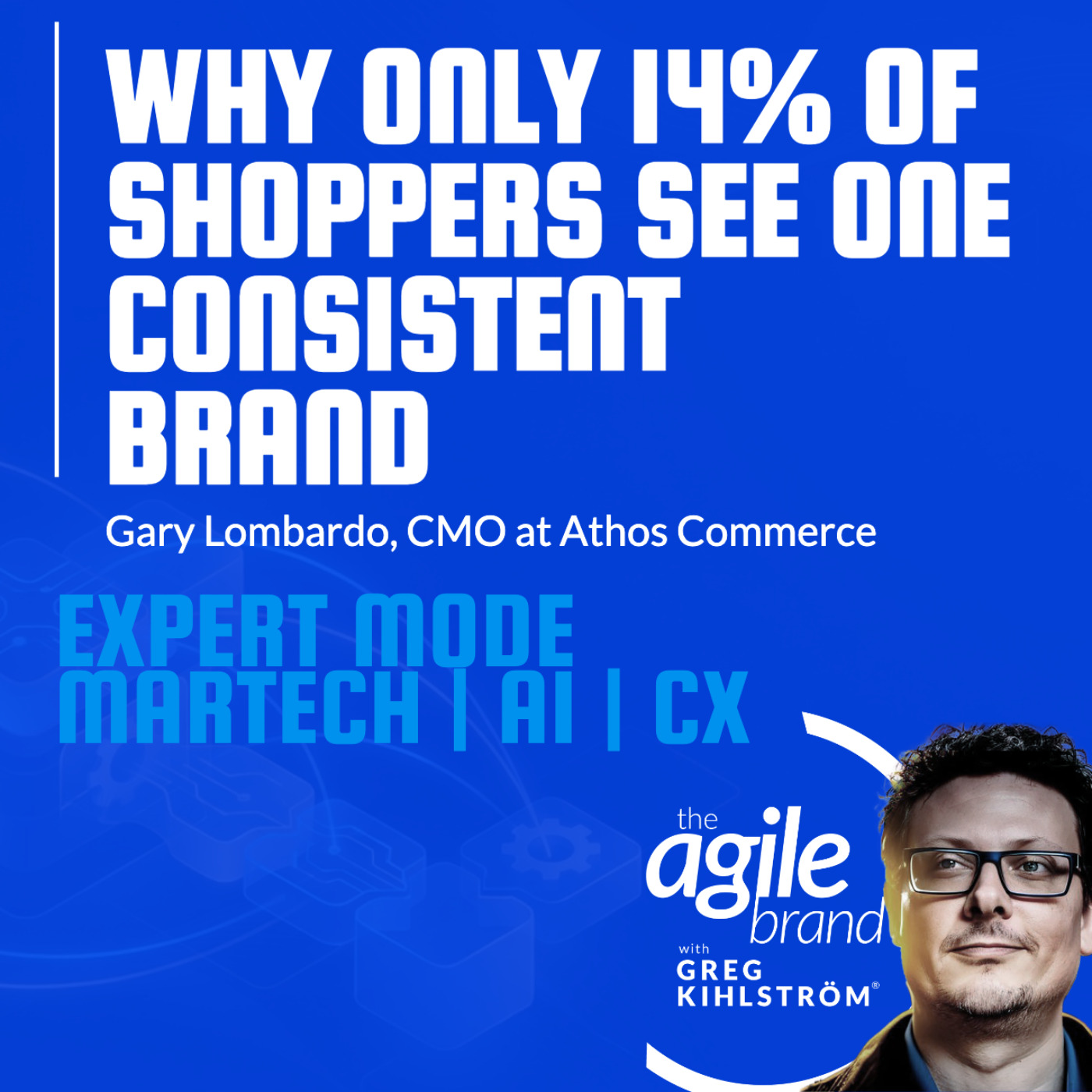 Athos Commerce CMO Gary Lombardo on why only 14% of shoppers see one consistent brandThe Agile Brand with Greg Kihlström® · on Product information management (PIM)80 / 100
 Will AI Agents Replace Your CRM?The So What from BCG · on Agentic AI79 / 100
 Mike Micucci: Tell the World Your StoryThe BreakLine Arena · on Salesforce77 / 100
 Meta Ads: Leverage UCP and First-Party Data for Meta Ads Success with Yiqi Wu, AimerceKeep Optimising · on Shopify72 / 100
 The Trust-First Approach Behind Carter Eve Jewelry’s Rapid RiseeCommerce MasterPlan · on Shopify68 / 100
 Why The Best Online Stores Are Quietly Building Remote Support Teams - Abbas Mohammed | Why Founders Become Bottlenecks, How To Find Business Bottlenecks, What To Delegate First, How Recruiting Scales Businesses, How Hiring Va's Works (#489)55 / 100
 The Secret AI Hack To Recover Failed Payments Forever - Matīss Maliks | Why Not Rely On Stripe & Shopify For Payment Processing, The Hidden Revenue Risks, Why Standard Gateways Fail, How AI Recovers Revenue, Why Global Sales Drop Approvals Rates (#488)75 / 100
 Stop Competing Blind: The Secret To Real-Time AI Pricing - Peter Sheldon | Why Delayed Pricing Hurts Sales, What Makes Product Matching Hard, How AI Agents Watch Competitors, Why Manual Scraping Tools Break, What Pricing War Mistakes To Avoid (#487)82 / 100
 The Only Way To Get Sub-1-Second Shopify Pages - Chris Igbojekwe | Why Site Speed Dictates Conversion Rates, How Slow Pages Trigger User Drop-offs, Why Major Technical Issues Delay Loading, How Behavioral Audits Find Leaks, Why Ongoing Testing Wins (#486)75 / 100
 How Google’s Conversational Commerce Is Changing Everything - Lucas Tieleman | Why AI Changes Search, How Conversational Commerce Works, What Product Feeds Hide, How AI Landing Pages Convert, Why Bad Data Fails (#485)80 / 100