
Demo Diaries · 2022-02-07 · 27 min
Key moments - from our scoring
Substance score
37 / 100
Five dimensions, 20 points each
Selling into Fortune 500 companies requires fundamentally different tactics than SMB or mid-market deals. Mike Shuretta draws on fourteen years of experience - seven at each of two travel management companies, where he managed complex SaaS integrations, payment systems, and risk management - to outline how enterprise sellers navigate decision-making committees spanning multiple geographies and departments. The core challenge is formulating clear, concise messaging that resonates across personas: end-users, influencers, contrarians, and C-level executives who may join late in discussions. Shuretta emphasizes creating battle cards for each attendee, frontloading demos to address executive priorities first, and treating every stakeholder with equal respect despite perceived influence differences. He stresses the importance of identifying the actual problem before having any conversation, building champion relationships within departments, and escalating to C-level contacts to create peer-to-peer connections. For B2B sales leaders managing enterprise deals, the episode offers practical frameworks for multi-stakeholder selling, psychology around managing performance dips, and tactical tips like always scheduling the next step before ending a call and injecting personality into business conversations to build credibility and trust.
Create a battle card listing each attendee and their specific concerns, speak to every individual by name during the demo, and frontload the most important C-level priorities in case they leave early for another meeting.
Not knowing the problem or gap before the conversation starts, and failing to treat all stakeholders with equal respect - influence is often held by people you don't expect, and ignoring them can derail deals.
Proactively communicate with your manager about the struggle, reflect on whether a pivot is needed, get more personal and creative with outreach (like using video), and manage your energy and psychology - people can hear desperation and anxiety in your voice.
Always schedule the next step before ending a demo or call; never leave it to chance with a follow-up later, as this kills momentum and forces awkward re-engagement.
Sales professionals work 50-60+ hours per week, so everyone prefers working with people who are fun to be around; asking about what prospects do outside of work builds trust and credibility faster than purely transactional business conversations.
Our reviewer’s read on each dimension, with quotes from the episode.
The episode contains a handful of practical, actionable tips - front-loading demos when C-level attendees may leave early, and drawing a physical seating chart battle card - but is padded with well-worn SDR advice and a lengthy host personal anecdote that consumes meaningful airtime. The ratio of novel-to-obvious ideas is low for a 27-minute runtime.
make a little battle card of like who's in there, the important things for them. So it's right next to my laptop, um, and I'll actually draw like if it's a big desk and I haven't met some of them, I'll like point with arrows to where those people are
no matter what the agenda is, you can propose that agenda upfront and say, this is what we were planning to speak about. Um, is there anything else? And just mention to the C level person, is there anything else that you wanted to start with in particular
The guest gestures at established frameworks (SPIN, MEDIC, GAP) only to dismiss them without offering a sharper replacement, and the episode's most memorable soundbite - 'sales is a transfer of energy' - is a recycled aphorism the host attributes to a mentor. No contrarian or first-principles arguments are developed.
Take that spin selling and use that on everybody. Everyone goes back to like, oh, well, I'm going to, I use medic, I use gap, I use all this, different terms, uh, throw that all out the window.
Sales is a transfer of energy.
Mike is a genuine practitioner with 14+ years of B2B sales experience moving from SDR to enterprise AE across two complex multi-stakeholder environments, which gives him credible ground-level credibility. However, his current role is lead sales strategist at an early-stage startup, and he presents no C-suite or VP-level vantage point that would elevate the strategic depth of his observations.
I spent seven years there. Um, first three years were basically SDR ing for four, um, AES and then moving up into team lead, moving up into AE territory
we had to demo 20 different SaaS products and understand the up and down integrations. Um, we had to understand payment, expense, booking policies
The episode is almost entirely abstract - companies, outcomes, deal sizes, win rates, and timelines are never named or quantified beyond rough activity numbers (50-60 touches per day, 4-5 enterprise deals per year). The travel management employers go unnamed, and no customer stories with measurable results are offered.
your target is four to five deals in a year
making 50, 60 touches a day
The host asks broad, open-ended questions ('what are the hardest aspects of sales?', 'how do you stay focused?') that predictably produce generic answers, and he consumes a disproportionate share of airtime with a personal anecdote about his own startup struggles. There is no meaningful pushback, probing follow-up, or challenge to any claim made by the guest.
if you were to sit down and have to think about what the hardest aspects of sales are, what would you say maybe one or two are
I was like in my buddy's apartment. I was running an ah, early stage startup and I was CEO, co founder, CEO. So I had to do the fundraising stuff and close and try to figure out how to survive every day for the team.
Computed from the transcript - who did the talking, and the words that came up most.
Sell Your Product With Your Product. Easily. Reprise is the only complete product experience platform for all teams. Create no-code custom demos & tours. ► TRY FREE: ► GET A DEMO: ___ 𝗪𝐇𝐀𝐓 𝐈𝐒 𝐃𝐄𝐌𝐎 𝐃𝐈𝐀𝐑𝐈𝐄𝐒? Demo Diaries is a podcast that focuses on interviewing top pre-sales, sales, marketing, and revenue leaders around demo best practices and related topics. 𝐀𝐁𝐎𝐔𝐓 𝐑𝐄𝐏𝐑𝐈𝐒𝐄 Reprise is the enterprise-ready demo/product experience platform for teams that need to tell product stories through demos and product tours to drive product-led growth and close deals faster. With Reprise, business teams capture the front end of their products and get full control to customize the product experience, add interactive guides, share or embed the experience, and analyze usage. ___ 𝐒𝐓𝐀𝐘 𝐂𝐎𝐍𝐍𝐄𝐂𝐓𝐄𝐃 Website: Twitter: LinkedIn: Facebook: Instagram:
Transcribed and scored by The B2B Podcast Index.
Speaker A: Set the expectations for every single meeting. Be solving a problem. If you do not know what the problem is, what the gap is, you have no business having the conversation. Um, that is creating the champion, understanding it, and then moving your way up. If there's a C level person in the room, get your C level person in the room with them. Make them friends.
Speaker B: Hey everyone. Thank you so much for watching Demo Diaries. Today I'm joined by Mike Shuretta, who is lead sales strategist at Squark. How are you?
Speaker A: I'm doing great. How are you doing today?
Speaker B: I am doing great. Thank you so much for your patience. Trying to get, uh, the pronunciation of a couple of things early. I appreciate it.
Speaker A: Yeah, my last name's not easy. We always knew when the telemarketers were calling when I was a young child. Um, so I get that. But thank you so much for having me. I'm excited to year.
Speaker B: Yeah, well, I appreciate it. Why don't you tell folks a little bit about your career background and how'd you get into sales?
Speaker A: Yeah. Wow. So after I graduate, I mean like, who is dreaming? And when they're a kid, they're going to be into sales. Right. But we kind of just fall into this and it becomes something, I think great. I graduated with a business degree and started recruiting actually, um, out of all things. And I was trying to place somebody at a company, um, it was um, with the lead generation team over there. And I, uh, came in, in person and pitched them on our great stuff. And uh, the manager said to me, hey, um, that's great. Um, uh, how about you? Are you free? And at the time I was kind of looking around, so I said, why not? Let's, let's talk about this. And I ended up placing myself into this role. Um, and that's kind of where it all kicked off into learning to be, uh, lead gen rep, but pretty much SDR if you will. And that was at a travel management company. I spent seven years there. Um, first three years were basically SDR ing for four, um, AES and then moving up into team lead, moving up into AE territory. And then I got an opportunity to move over to a competitor of theirs, um, as an ae. And uh, then I moved up to being, uh, EA into the enterprise, um, stuff. So seven years at one travel management company, seven years at another. And um, things were great. Um, I, I learned a lot. We had to demo 20 different SaaS products and understand the up and down integrations. Um, we had to understand payment, expense, booking policies. It was just risk Management, it is like one of the most complex things I've ever encountered. I'm happy I did it. Um, and then Covid hit. So no one's traveling. Well, they said, um, Mike, thanks so much. Um, you've been, you know, leading in sales and everything, but we just, um, we can't afford to have salespeople. You know, I think at that point the company was just down to the head of sales. Um, and I wish them well. I hope they're doing great. So I was trying to figure out what to do with myself during COVID Do I wait for this to come back? Um, and I was always into like the analytics side of things. That was really intriguing. Um, that was what I led with, um, when I was at that company. And so I said, I need to dive more into this. I need to educate myself. So I took some classes on Udemy, got the lingo down for what's happening in analytics, predictive analytics. And then I, I came across across Squark, which was very cool, um, startup doing some really innovative things, um, in predictive analytics and insights. And man, let me tell you, um, I'm more than excited, happy I'm here. So I started here in January and, um, not looking back, um, I don't know that I'll ever go back into travel. Um, and I'm very happy that, um, I now have one SaaS product that I need to talk about and learn. But I'll tell you, machine learning is, um, something in itself. So every day I learn something new.
Speaker B: Amazing.
Speaker A: That's how I got here today. I was long winded.
Speaker B: No, I appreciate the background. You sold mid market, you sold enterprise, sold the Fortune 500s. And to your point, when you're selling to a large, uh, organization, particularly these Fortune 500, there's a lot of different things that you can sell. There's a lot of different stakeholders that have to be involved. There are tons, uh, of use cases. How do you drive deals to a close within these massive organizations that are so fragmented at times and to get anything done generally takes a long time. The whole thing, as you know, obviously, as you know, like, it's startups, you know, a lot of the time we'll go after maybe like SMBs or mid market companies because they're easier to close and they have faster sales cycles. For the folks out there who are thinking about selling these enterprise deals, getting to these Fortune 500s, uh, what tips would you give them, ah, around getting deals actually done in a reasonable amount of time. And has Covid changed any of this.
Speaker A: Yeah, um, that's a really great question, um, because I definitely had my learning experiences moving into that large enterprise. You, um, could be dealing with, um, decision makers in India, Australia, the UK and the US all at the same time. Um, and so you need to really take what you've learned in SME and mid market and your lead gen. Don't forget any of that stuff because that all applies. Understand that this is typically a longer sales cycle. Do you even want to be what we call the elephant hunters? Right? Do you even want to be doing that? Because now you're focusing on, let's say your target is four to five deals in a year. Um, you'll be lucky that like you're creating these relationships over. It depends on the product and service you're selling, of course, but if you're looking at enterprise and looking at like something that covers the entire company, um, everyone's going to use it, um, like a CRM or something like that. Um, you're going to really have to create a ton of relationships. You're going to have to understand every user's needs, you're going to have to know who your coaches are, you have to know who your contrarians are and influencers. Take that spin selling and use that on everybody. Everyone goes back to like, oh, well, I'm going to, I use medic, I use gap, I use all this, different terms, uh, throw that all out the window. You just need to find the right people, create multiple levels of relationships and be prepared, know who your audience is. Because if you don't, you're going to find out the hard way. Um, and then they're going to, they're going to turn, they may not turn their head and ignore you, but, um, they, you may get ghosted at that point if you really don't understand, uh, what their needs are. So constantly ask questions and use the tools at your disposal. If you have something that's giving you information about their tech stack and all that, have, um, that at the ready come in knowing, um, it's hard because I know there's so many different products and services to really narrow that down into one thing. Um, some people will say, well, you can always get into one department and one division and sell it there. And then, uh, you hope that it spreads out to the rest, uh, of the company, which is another technique that we use in sas, um, that can work well. And then you don't necessarily have to deal with, um, the procurement folks all the time, which can be tough. And working through RFPs, um, you know, just be prepared, set the expectations for every single meeting, be solving a problem. If you do not know what the problem is, what the gap is, you have no business having the conversation. Um, that is creating the champion, understanding it and then moving your way up. If there's a C level person in the room, get your C level person in the room with them, make them friends. Um, and also lastly, I would say make sure you're treating everybody the same. Um, make sure that you're giving enough respect to, um, the person who you think may not have a lot of decision making power that you would for the CEO. Because you'll be surprised at the end of the day. Oh, I didn't know so and so was really that influential and you didn't pay a lot of attention to them. So that in a nutshell I think, um, will help. How has Covid changed that? Um, those all still apply in Covid, but you'll find that different verticals now are doing better. Retail pharma are really, really, um, coming up huge in Covid. And a lot of other companies are holding onto the purse strings. Their budgets are tight, they don't know what's going to happen. Um, look at what happened to travel cruises, hotels, um, are you going to try to sell your products to them? Only if it's going to help them find a challenge that has direct relation to Covid and what they're dealing with right now. So be cognizant of that and keep the relationship and momentum going with smart touches for those where the sales cycle has um, really elongated, where they're probably not going to make a decision until sometime September this year. Luckily we're all getting vaccines now in the US at least. Um, but that's something to just don't be overly pushy at this particular time and just be smart about your touches. So again, another long winded answer for you, Jorge.
Speaker B: Well, quick question. You mentioned C level executives and from what I've experienced myself, and then, um, you know, and then also talking to quite a few, uh, folks, sales, sales engineers, other revenue professionals throughout the year, uh, you know, it really has become apparent that the way people are buying and the decision makers are sort of shifting a little bit. They're pulling in more stakeholders, they're pulling in like a CFO folks who are a little more cognizant of finance and the books just because we've been in this really uncertain time. So that makes total sense if you were to think about like demos and how you were, you are to create a demo based on the Personas or the audience and let's say there are some C level folks in the room. How do you prepare for that and how do you sort of balance. You mentioned you wanted to treat everyone the same. Right. But at the end of the day, if you're speaking to a room of you know, half, let's say ICs or end users and then half decision makers, C level folks, and you're not, not hitting the mark, uh, certainly on the C level folks, they're going to tune out. Right, so how do you sort of like prepare to then present and what kind of demo do you generally create?
Speaker A: Yeah, so you're going to have your main point of contact is driving and scheduling the meetings. If that main point of contact is the COO or the C level person, then like you're doing fantastic. Um, you know that's already there. They may not, they just may need to run it by the users a bit and you might just have to demo for usability ease purposes and then you're in. But if that's not the case, which is usually what happens to most of us, um, where we have the contact and then, oh, I'm going to bring in, um, so and so who's our, you know, chief operating officer or whomever needs to look at the tool, always understand first, like what's the timing? Make sure that they are they on board with the same challenges. Are those the same challenges that your contact and the users are having? Make sure you're speaking to every single individual during the demo. So what I'll actually do for myself is make a little battle card of like who's in there, the important things for them. So it's right next to my laptop, um, and I'll actually draw like if it's a big desk and I haven't met some of them, I'll like point with arrows to where those people are so that I can look up and say, hey Jorge, this is the thing that I know that you're really worried about and I wanted to make sure I ease your mind, um, so that you know there's a, an API for this. I'm going to show you that it could be that. Um, and also with C level folks, what I've noticed in demos is they may not have the whole meeting time. Don't expect them to be there for the whole half hour, um, or however long it is, you might need to front load that and have a, ah, Q and A later with folks or they may have specific questions they want to ask. So no matter what the agenda is, you can propose that agenda upfront and say, this is what we were planning to speak about. Um, is there anything else? And just mention to the C level person, is there anything else that you wanted to start with in particular so that they don't necessarily have to leave for another meeting, which does happen. Um, and you haven't even answered the thing that's most important to them.
Speaker B: Um,
Speaker A: those are my tips on that.
Speaker B: Got it. And how do you know when you've lost an audience? When you're over demo or oversell and they're gone?
Speaker A: Um, it's funny, um, if you're in person. So is it strange? Right. In person versus web. Right now we're doing demos. Um, let's take this twofold. Let's say you're in person, which is not as often as we would like. Right now. Um, you're getting. I think the signs are obvious. You're getting them on there. They're on their. Checking their cell phone. Um, you know, or they're just glazed over, staring at the wall. I think it's important to always have a moment where it's like, you could just say, like, uh, oh, and Jorge, like, you know, what do you think of this? And then continue on with your demo. Keep on engaging. Keep on saying everybody's names that are in the room, um, so that they know that this is, you know, hey, you might. You might be calling on them for a question. They don't want to look dumb in front of their team either. You know, that's. That's not something they want. But with. With the web, it's tough sometimes. You'll be on a demo and there'll be three people critical that aren't even showing their cameras. They're not on video. Um, and it's kind of hard. You can't be like, hey, turn on your camera. You know, you hope that they do. So what are they really doing? You might hear typing in the background too. Um, so it is a fine line I would definitely use, um, calling on people's names during the demo and say, like, what did you think of that? Um, and hopefully that, that, uh, that resonates and tells everybody else, like, oh, okay, yeah, I gotta pay attention here. Um, that has worked for me. I'm sure there's a. There are other tips. Um, but that's what comes to mind right now. Yeah.
Speaker B: Mike, you sold for many, many years. And, you know, if you were to sit down and have to think about what the hardest aspects of sales are, what would you say maybe one or two are, uh,
Speaker A: man, I mean, I think it's that that front end of the SDR has been the hardest jobs, the hands down. Um, I did it for years. I'm still now like, I'm full cycle, end to end. We're a startup where I'm cold calling, I'm trying to make 50, 60 touches a day, and then I'm doing my demos and everything like that on top of it. So hopefully we grow, uh, and become the unicorn that we, I think we are, and we'll have some people doing, doing that as well. But I think that's the hardest part. Not only just doing that lead generation part of it, being an SDR and making the calls and doing the hard, hard work, but getting the message out there in a way that, do they even know what I'm talking about? You know, we're leaving. That's, that's it, Formulating that message. Um, you know, these large public companies, they have it down, um, pat. They know exactly. And they have the brand awareness for those of us who don't. Um, if we're not clear, concise, and short, I mean, we're going to lose somebody's attention after, what, 15 seconds? Is it, um, on the phone, if you're like leaving a voicemail, email, it's like those first three inches under the, uh, subject line. If there's anything more than that, they might glaze over. Um, so that's getting that message out there. Um, you know, just saying thanks to the SDRs, supporting them, if it's not you doing it and helping them along the way. Um, that's the hardest thing. Absolutely the hardest thing.
Speaker B: And how do you stay focused, like when there are those dips in performance. Right. Uh, especially if you let me take a step back, because I used to think that if I wasn't doing well, there was something that I was like, that was blocking me and that I was quite aware of what was going on. Maybe I was having a rough time with a significant other, or maybe I'm partying too much or something like that, right. Like, I could generally, the way I felt was like, I could generally figure it out. Most of it was my own psychology, right? If I was, you know, being negative or what I used, uh, to call throwing myself pity parties when things weren't going well. You know, that just dug me a deeper hole. Right. And so I found that my psychology was, was largely to blame when I wasn't having, uh, you know, reaching the potential or performing the way that I expected for Myself. What would you say you found in your career that's helped you through, you know, those rough moments that we all go through and, you know, keep persevering?
Speaker A: Yeah, I mean, um, it can definitely be tough. You have those dry patches. I mean, in sales. I mean, we all know closing that deal, getting that meeting, having a great demo, getting to the next step, that's the highest of highs. Like, we. It's like, we had a great day. We scheduled a meeting with a qualified customer. Oh, my gosh, it's fantastic. The SDR is super happy. The demo went well. Um, we're closing deals, and then you have that quarter that's like the quarter from hell. Um, and you're not sure what's going on. You're doing the same things that you were doing before that were successful, but it's just not hitting. And I think you really need to reflect and say, it's not necessarily just me. It could be that you might have to pivot and be creative. I say, one, this role, there's really two major things you need to do. It's a time to be really creative and have fun with some of your, uh, if it's prospecting or you have demos or you have a deal that might be going sour, um, it's time to get more personable with your contacts and be less business. Um, use things like video. Use things, um, that are. That are fun and that are different than what a lot of other companies are doing. Besides that, there is the anxiety there of, man, what does my boss think that I am doing or not? Right? So you be the first one as the employee to go to him or her to, uh, say, man, I'm having a tough time. I mean, you can see it. They know. But go there first and look at what you're doing. Um, are you making the same activity? Does something happen? Um, is there a change? Try to make a plan. I mean, they're your boss for a reason. Um, they're more strategic. They see things at a high level. They might have more experience and be able to really help you there. So I rely on my bosses when, uh, those things happen, and it shows that, um, you're trying to fix the problem. And once they know that and you're having that conversation, your anxiety will just plummet. You will be back to normal. And guess what? As soon as that happens, I bet things start happening for you, because people can hear that in your voice. They can hear desperation, they can hear anxiety. And if you're communicating that way, people don't Want to. People don't want to be with that person. You don't want to hang out with them or let alone do business.
Speaker B: Yeah, totally. That always, every time I have this discussion I always have a flashback. Well, in recent years to this particular moment, I was like in my buddy's apartment. I was running an ah, early stage startup and I was CEO, co founder, CEO. So I had to do the fundraising stuff and close and try to figure out how to survive every day for the team. And I remember there's one very specific prospect. I still even remember they were from Israel, they were a SaaS company and I hopped on, it was an inbound lead and I was beat up. I had plantar fasciitis from running too much and being stressed out. It was just awful. I remember uh, I had been doing Pride probably at this time, I was close to maybe 20 or so uh, VC meetings and they all passed and so I was beat up, right? And I got on this phone call and my energy was low and I remember just saying something like, he was like, oh, how's your day? And I was like, you know, it's good, life's life or something like that. Just something so simple. But I remember hanging up that call and going, what the fuck was that? Like, honestly like the uh, energy that I had, like, I just knew immediately that that person was not going to buy. Of course I did my follow up and I never heard back from them. And uh, you know, I just knew right away that I wasn't going to sell because my energy, my attitude, my psychology was so sideways and I ended up bouncing back and then had some. I think we probably had our best quarter, uh, the remainder of that time period. But I remember it was very clear to me to your point that people can hear that anxiety, they can hear that lack of energy. So uh, keep your energy up folks. I remember a mentor of mine told me, George Sales is a transfer of energy. Of course he said quite a few other things, but that was one of the things that he taught me. So, uh, you know, show up and. It's true. It's true. Well, speaking of like surprisingly sort of, you know, well executed strategies, if you were to think about one actionable tip that works surprisingly well, uh, to close deals that you would give folks, uh, out there, what would that tip be?
Speaker A: Oh, wow. Okay. Um, it may not be that like, wow, what an amazing tip. But I think it's something that is important to be reminded of. Like, it's like pointing out the obvious almost. Uh, one is like Always keep the deal moving. Um, never get off a demo or off the phone with your prospect without scheduling the next step. Sometimes things happen, but, like, like, you do your best to not just say, like, thanks, that was fun. Bye. And then you're like, wait, I gotta follow up, and hopefully I'll have another. Um, that's where you don't want to be. So keep that in mind. Um, a lot of the more experienced guys are like, yeah, of course I know that. But if you're new to sales, keep that in mind. Always have that next step to kill. Keep deal momentum. The next thing is something that people don't talk a lot about. Um, and that's never be all business. We're, you know, we're here. I mean, how many hours a week do we put in? No one's doing 40. People are doing 50, 50, 60 hours a week. There's so much time. And then we're thinking about it after work, like, what's tomorrow? What's the strategy? Like, we all want to work with people who are fun to be around. Like you said, transfer of energy. So ask people about what do they do outside of this. You know, um, before we started, ah, you know, our conversation here, you know, like, you and I were talking about music. You know, you can see that I'm m. Obviously into music. You look at my room here, um, you know, it's. It's a makeshift studio, right? And you have your guitars behind you. I love that. You know, that makes me want to, um, you know, know more about what, what you love, what type of music you listen to and everything. And, um, then doing business after knowing somebody better personally is so much easier. There's a trust as a credibility there in the relationship, so don't forget that, folks.
Speaker B: Well, Mike, thank you so much. I don't want to hold you up. I know you're a busy guy. If folks want to follow you on social or maybe connect with you for some advice or what are. What's the, like, the best channel to, uh, to reach? Um, I'm. I'm guessing LinkedIn, but sometimes folks will surprise me and say, actually, it's Instagram or something.
Speaker A: Well, I'm, uh, I'm on LinkedIn. Yeah. So you can find me on LinkedIn. Um, you know, come check it out if you have any questions or you just want to. If anybody likes any part of the conversation or wants to expand upon it. I love talking about this stuff. This is what I do. Um, you know, I'm on Clubhouse a lot too. I don't know if you've been on there yet, but yeah, ah, you know, I love it. Those have, those have great conversations, but yeah, pretty much, ah, find me on LinkedIn. We can always, uh, we can always continue the chat.
Speaker B: Awesome. Well, Mike, have a great, great afternoon and we'll talk soon.
Speaker A: All right, thanks.
Speaker B: Thank you.
Other episodes covering the same guests and topics, from across The B2B Podcast Index.
 Buyer Insight: You Didn't Lose the Deal. You Lost the Commitment.Impact Pricing · on Battle cards77 / 100
 Why distribution and attention are the real bottleneck in B2B SaaS | Pete Hunt @Dagstersaas.unbound · on Enterprise sales72 / 100
 5 Keys to Partner Account Management Success with Carmen SoriceSales Game Changers · on Battle cards71 / 100
 What Recruiters Actually Look for in Salespeople | Innovantage Podcast #55Innovantage Podcast · on Enterprise sales62 / 100
 HOW TO MASTER THE SKILLS OF B2B SELLINGThe Best of the Brutal Truth about B2B Sales & Selling · on Enterprise sales62 / 100
 HOW TO MASTER THE SKILLS OF B2B SELLINGThe Brutal Truth about Sales and Selling · on Enterprise sales57 / 100
 Demo Diaries: Ep 070 | "Playing the Long Game for a Mid-Market Sales Strategy"
 Demo Diaries: Ep 069 | Staying Relevant and Putting Customer Value First
 Demo Diaries: Ep 068 | Reimagining Sales Through Vision, Value, and Outcome
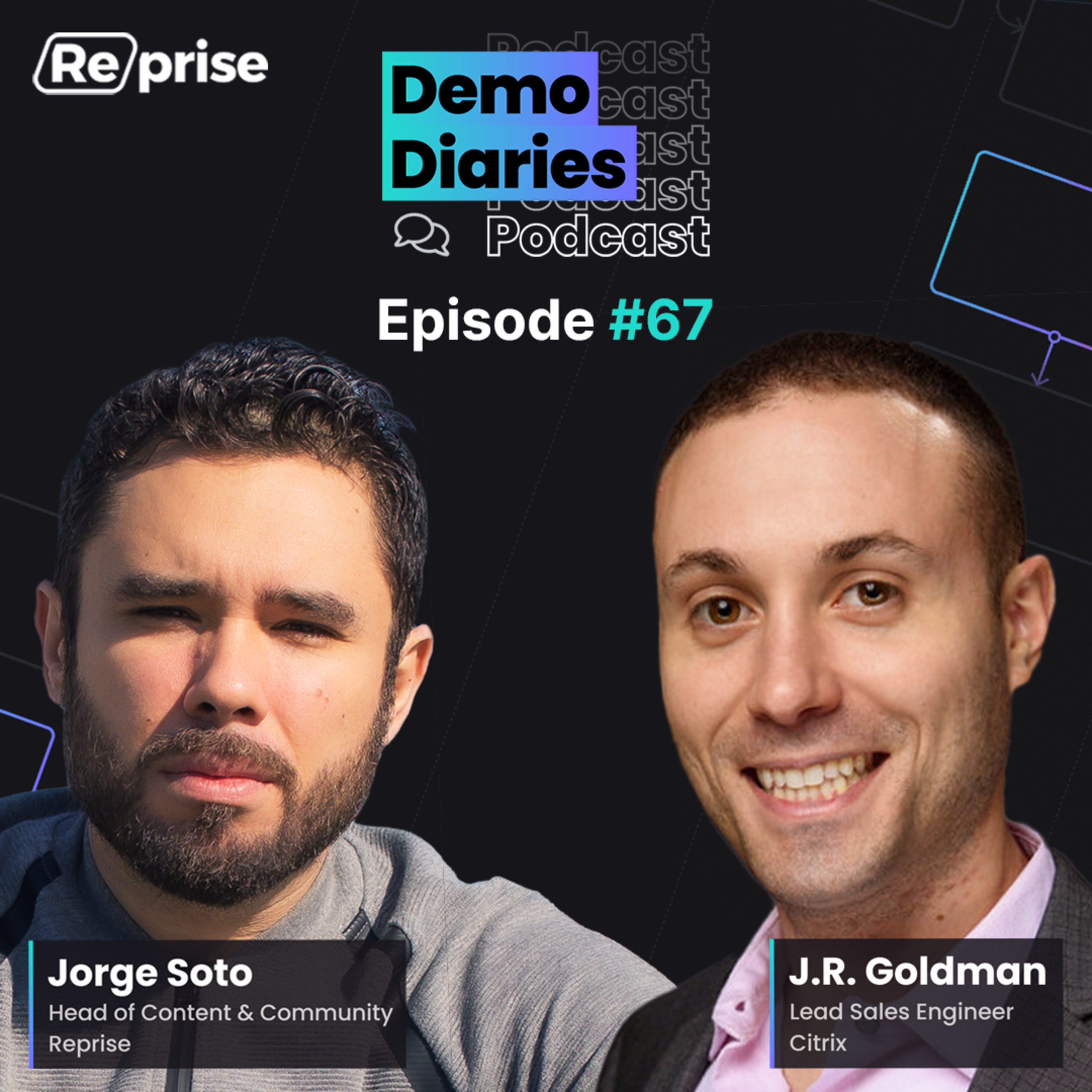 Demo Diaries: Ep 067 | The Power of Positioning in a Competitive Sales Space
 Demo Diaries: Ep 066 | Strategizing Sales Demos in Contemporary Healthcare