Deal Makers (& Fakers) Podcast · 2026-06-12 · 31 min
Denis brings a physicist's rigor to venture capital, having spent over a decade at 2BF Global Ventures analyzing thousands of startup pitches. His investment thesis directly contradicts the current AI hype cycle: while 95% of founders claim AI adoption, his fund specifically targets deep tech transforming legacy industries like construction, manufacturing, logistics, and utilities. These sectors offer superior unit economics (higher LTV, stickier products) and competitive moats rooted in industry expertise rather than technology alone - a combination rare enough to provide genuine differentiation. The conversation covers how the VC market has fundamentally shifted since 2014, from elevator pitches to massive late-stage rounds concentrated among top-tier founders. Denis argues that while early-stage funding has become scarcer for the 90% of founders outside the elite tier, deep tech actually offers better risk-adjusted returns precisely because it's harder to replicate and serves customers who want turnkey solutions, not platforms to build on. He explains how 2BF evolved from a pure climate-tech fund into a broader deep-tech investor across multiple industrial verticals, and why he remains optimistic about hardware and infrastructure plays despite current market skepticism.
Denis estimates only 5% of founders raising funding genuinely have AI as core technology; most use it as a buzzword without real implementation or value creation.
These industries typically want turnkey solutions and are willing to pay premium prices rather than building themselves, resulting in higher LTV, stickier products, and less price sensitivity than software buyers.
The market shifted from scarce capital requiring elevator pitches to mega-rounds concentrated in late-stage deals; early-stage seed funding dropped 30%, and the top 10% of founders now raise easily while the remaining 90% face much harder conditions.
Deep tech funding is actually growing (from 10% to 20% of venture activity) because AI infrastructure needs - data centers, energy systems, networks - require hardware and cannot be built purely in software.
LPs range from high-net-worth individuals and family offices to pension funds, development organizations, and strategic government entities; some are purely return-driven while others have policy or strategic technology mandates.
Computed from the transcript - who did the talking, and the words that came up most.
In this exclusive episode, we reveal why a $400M New York fund is passing on standard software loops to invest heavily in the physical industries building the future. A few days ago, Niclas Schlöpsna sat down with Denis, the visionary lead behind 2BF Global Ventures, a premier New York-based venture capital firm commanding over $400 million in assets under management. Drawing from his fifth consecutive fund and an impressive portfolio featuring market leaders like ServiceTitan and Fubo, Denis shares a contrarian investment thesis that directly opposes standard industry logic. As a former rocket scientist holding dual Master’s Degrees from the prestigious Moscow Institute of Physics and Technology, he has built one of the world's most foundational global communities for SpaceTech founders. What You’ll Learn in This Video Podcast?
Transcribed and scored by The B2B Podcast Index.
Speaker A: My guest today is Dennis. Dennis is a principal at 2BF Global Ventures, a New York based fund with more than $400 million under management. They bet across some serious different industries. Now Dennis joined 2BF as a young analyst, has spent over 12 years there and personally reviewed more than 11,000 startups in that time. His thesis is the opposite of what most VCs are chasing in 2026. Instead of pure AI plays, Dennis hunts for Frontier Tech, transforming what he calls the Boeing industries. Construction, manufacturing, logistics, utilities. He's also a former rocket scientist with two master's degrees out of Moscow Institute of Physics and Technology. And he co founded Space Ambition, one of the leading communities for space tech founders. Today we go DE on how he picks winners in unglamorous markets, what 11,000 pitch decks teach you about fundraising and why he thinks AI hits a turning point this year. Dennis, welcome to dealmakers and Fakers.
Speaker B: I'm super excited that you are here today. Dennis, thank you so much for joining the session. Actually this is our second session now with an investor and in the previous episodes did a lot of sessions and recordings with startup founders and other operators who talked about their journey, how to raise capital. So now it's getting even more exciting in my opinion because we look from the different perspective, from the investor perspective. And I directly have my first question to you. What would you say is the most overused buzzword you saw in pitch decks in 2026 so far?
Speaker C: AI.
Speaker B: Okay, but would you say that AI in the moment is something your fund is interested in? Probably yes. From, from what I saw on the
Speaker C: website, 5% of the founder which are raising funding say that claim that they are a company. So of course it's not about like just the buzzword for us. It's more about uh, looking into and understanding like does it really make sense to use it? Because for example at IWBF we invest in uh, so called transforming boring and unsexily industries. So whether it's healthcare, whether it's uh, construction, logistics. So what we look into is does it make sense to use AI agents or something? Or it's just the buzzword, people just use it don't really have any AI.
Speaker B: That's true. I actually also heard a podcast last week from Harry Stabling from 20 VC. Great podcast. Also by the way, they also spoke about the topic. So one example he mentioned was a company that is building AI agents in the insurance space. But why does every company now has to say agents or AI? Because in the end it's really more about what is Actually the value they provide. So maybe they make the claims process easier or stuff like that, but you don't always need to say AI. So I definitely agree, agree on that. I did a lot of research on you as a person and I, uh, think your profile is very interesting. So I saw that you studied a very interesting topic, space engineering. And now my question is, if you would not write checks right now, would you think you would do something like flying rockets or wanting a startup? Uh, right now? Like, what do you think?
Speaker C: 2006, when I was about 20 years old and I started as an aerospace engineer, I understood that I am not the person who is, uh, passionate about doing technology. I'm more like a person who likes to communicate to other people. And I've seen many smart people doing smart technologies, but, uh, they couldn't build business around it. So I decided to become someone who would be building business around technologies and earning money and then reinvesting it in fundamental and applied research. Could I be doing a startup? First of all, I tried and failed. Oftentimes I've thought, uh, like pretty thoroughly about it and I understood I don't want to build a startup myself.
Speaker B: So you work now for two BF for, um, quite some time. And I'm just wondering, do you have like, any specific industries you focus on? For my research, I saw you do a lot of deep tech. Um, so you are not only focused on like what you studied, basically you are a little bit broader and you focus a lot on the deep technologies that come in and land in the funnel for your fund or how does it work.
Speaker C: First of all, the reason I joined i2BF was their investment in a space tech company. And uh, so it was like a passion. So it was a company called Planetary Resources. So it was backed by Larry Page and Richard Branson in 2013, and they were going to Minasteroids. And back at that moment I was working in a bank. And, uh, you can imagine, like these guys are fulfilling your childhood dreams while you're sitting in the bank and doing, uh, boring Excel spreadsheets. So this is why that's, that's, that's
Speaker B: interesting, Dennis, because actually same applies to me. Like, I was also sitting in a bank. I did my apprenticeship there and I always thought, oh, wow, there has to be more. Like, this is so boring. And I, I even had lists then. And I had to call like, um, people and sell them stuff and bring them like to, to the location there. And I didn't really like that work at all. So I was then also super happy When I jump startup world. So I just wanted to say like we had the same history basically. I like that.
Speaker C: And actually I met many people uh, who work in corporates and uh, they actually uh, sometimes they say uh, they want to build their own startup but they try to escape from their boring job and oftentimes it's not doing a startup. And I sometimes navigate them. Uh, yeah. So uh, again uh, So I joined i2BF. Uh, I gained my expertise first of all through all sorts of industrial solutions, whether it's discrete manufacturing, like you know, energy sector, logistics, construction and stuff like that. So I went into like very sophisticated and we looked into solutions how we can you know, change those industries either using hardware, uh, or even some very sophisticated technologies like quantum computing for example or using like more basic solutions like IT solutions, IoT combination of both etc. Bringing value. Uh, initially as a physicist and as an aerospace engineer, I kind uh, of understand how those deep tech companies are. Tech investments are done and that's interesting.
Speaker B: And I think specifically deep tech is an industry where I see a lot of companies and founders struggle with fundraising first of all because you need a lot of money to be able to get some sales in. And in general like you don't have so many investors who focus on that industry now compared to like the average software business, at least from my experience. So we will speak about how you select these type of companies and run them through your VC funnel in a bit because I think that's a great topic in regards to the industries. I think I actually saw a quote from you where you describe basically or called the industries you work in as Boeing Industries, uh, which I think is quite interesting because many people always say that you have to go into these more established Boeing industries and there you can earn money. And I think this is so true because everyone is always hyped about, yeah again the passwords and working and operating in like sexy businesses. But I think there are a lot of industries that need way more attention and from my research it seems that you are exactly basically working in these industries. So that's amazing.
Speaker C: Yeah, and I want to expand on that. So uh, now in the era of AI, it becomes even more reasonable topic business strategy because AI companies and IT companies, they are the biggest adopters of AI for various applications. And uh, it's tough to sell to them. While if you sell to a manufacturing company or to construction company or like to farmers or so whatsoever they typically work want to pay for solution, turnkey solution, they don't want to build, uh, it themselves. So you end up having a more uh, sticky product, higher LTVs, etc. And now oftentimes VCs always say like what is the secret sauce? What's the barrier to entry? Why is not easy to replicate your product? And for those legacy industries there are many modes and they are not coming from the technology, but they're coming from like industry inside work search. So uh, going to those legacy industries makes sense. Now the other thing, why it's important you don't often meet in those industries. Combination of, uh, you know, person deeply understanding the industry and people in person deeply understanding like how technology it AI works. So um, if you're going to this industry, you probably will be dependent on the industry of course, but you will probably quite unique and competition could be not as crazy as in uh, some sexy industries.
Speaker B: And when you say legacy industries or in general, like is the there in the moment one industry where you would say okay, this is like the next industry where I really have a lot of attention on right now or where
Speaker C: my focus is, we actually look like from pretty wide. So I wouldn't say like one specific industry which uh, you know, you should definitely go after. Now what I see is that uh, people say okay, now you know, AI uh opens up more possibilities to developing solutions, making it more flexible. And let's like grab any industry and see like what we can do here, uh, and where we can replace like manual like tedious work with um, some solutions. And the other thing what's happening is uh, that previously for example, uh, in some industries, uh, the solution had lower penetration because it was pretty costly to develop them. M and now you could do it like at lower price. And the uh, penetration of this digitalization, automation AI, uh, uh, stuff is happening in wider spectrum of industries.
Speaker B: Perfect. I think also like a lot of people are always waiting for Y Combinator when they announce like their focus industries they want to invest in or they want to partner with or sometimes. That is also quite interesting.
Speaker C: Personally myself, I am a big fan of uh, Andreessen Horowitz rather than Y Combinator.
Speaker B: I have another question. So on my research, I saw that you started in the VC world in 2014, right?
Speaker C: Yes.
Speaker B: Okay. Now I'm just wondering from your perspective, is there anything that changed in these years? I mean it's already like quite some time. So it's now 2026, obviously. So do you see like big differences between 2014 to 2026 from a VC perspective?
Speaker C: Yeah, it is. Uh, so, uh, first of all, when I started working in venture capital it was a common um, concept of presentation in elevator pitch. So it meant that tension of the VC was so scarce so that founders uh, you know sneaked into the, into the elevator and they pitched their idea for 30 seconds while you were going up.
Speaker B: So that, that's amazing.
Speaker C: It showed that uh, you know founders were in such immense need of the funding and it was so hard to get that funding so that they had to like to do that.
Speaker B: But I like the effort. I like the effort. Like it's way. It sounds way better than just sending like cold emails on high volume to thousands of investors at the same time. To actually be there in the elevator and find the people, do the pre work and then go for the investors who might be perfect fit. But of course I understand like for the investors it's probably a little bit annoying but sounds definitely like a big difference to today.
Speaker C: This is where uh, like the other thing which, which started to change after the uh lockdown investors has become m much more open for this old reach out etc. Because the sector became like immensely big. So we like Andreessen Horowitz for example, they started in 2009. Now they have $50 billion or more under management. Like it's, it's, it's a financial monster. Uh, it's not a VC to be honest. All in all uh, and of course of course since 2014. So first of all investing in SaaS became sexy in 2014 it was not like that, such a wide trend. Now everyone invests in SaaS. Now everyone invests in the AI. But previously everyone was investing in SaaS. It became kind of like standard, like to do safe nodes. While previously it was more like about doing convertible notes also became um, the market standardized and see the rounds grew in the size and uh, VC started to require more revenue tracks. So uh, the seed rounds now or as we know them as we call them, they previously were seriesas. And uh, all in all what, what also changed? Uh late stage vcs invest in B, C, D, E, F like billions on tens of billions of dollars company investments uh in private companies that became extremely popular because uh previously it was not that much of a capital which you deployed. So for example if you look at Google before they went public they raised only $35 million. Like Uber raised like dollars before they went public. That's uh the change. Then um, many new entrants in the field emerged the secondary market. So for you selling like your location in the private companies to also grew immensely. Uh many new people came into the industry. So I Sometimes I call them tourists. All, all the industry was growing and like you're kind of indexing the whole growth of the market. So on this spray uh and pray uh mentality uh, where you just like your main goal is to put more by the spectrum of companies. It was more, it was like it worked even before because that's the power law which works in venture capital. It causes this. But it became like widely spread investments became more narrative based. Like you need to understand like we're at the end of this cycle. If someone thinks that it will be continuing that wave that way. No, uh, first of all like we've passed the peak around in 2021. Then it was like annual uh, investments in venture capital doubled comp to 2020 uh and uh, they dropped significantly in like tox to the pre Covid times. Now, now we see this you know, wave of AI startups raising money money especially those huge, huge startups. While the amount volumes of investments is growing now, uh, it's going to later stages, fewer companies. And if you look at the, the count of the early stage companies like the number is declining. So it dropped, dropped over the last couple of years or dropped 30% of those precedent seed funding. So for seed founders, like if you are top 10% of the founders, it's easier for you to raise funding uh, than the rest of the 90% because big funds will ship uh, a lot of capital in your company. But for the 90% of the market, uh, you're like in a much worse position than yeah that those stepped to top 10%. This transformation of the market correction in the market, it's going only up. It's illusion.
Speaker B: That's true and I think it's like a super interesting discussion because we of course also see that and when we look at the numbers here in Europe, we also see that a lot of the big funding rounds that are happening are all going to the same late stage companies. So probably at least like 60 to 70% if I'm not wrong. I even did a LinkedIn post about that where we analyzed like a lot of the last funding rounds and globally it's exactly also what you said. So Entropic and OpenAI they also count of course into the VC investments or venture investments in general. But uh, if you then look on the other market or the other numbers, it's not that high as it looks like initially just because of these very big AI companies and that's somehow making the market a little bit looking fake I would say because people think oh it's growing it's growing, it's growing. And yeah the numbers are growing but I would say the market is just getting way more selective and way more difficult. And also personally I'm very skeptical about a lot of AI software businesses as well just because of what AI can do. Now when we look at Entropic again or these other companies like they can replace most of the software companies so quickly these days if they want. But this is another topic. Before we open that up I would like to speak again about your fund because I saw that you are already now in the fund number five if I'm not wrong. So I would like to understand better the fund perspective also and what changed maybe between fund one, fund two, fund three. Like are there any learnings you had during that time? Any changes or pivots you made with the fund or focus areas that would be super interesting.
Speaker C: We initially started as a clink tech fund, an energy fund, uh then we expanded to a broader industrial applications and then we expanded to the more software, software play transforming this wider spectrum of industries. Uh but uh, it's always the case with VCS because the VC market changes and types of the startups which are back to the decade ago are not making that can't bring you those profits as you had previously. So you need also to change with the narrative. For example you mentioned that uh, deep tech startups is uh in bad position now. It's harder for, for them to raise funding but the percentage of those deep tech funding uh, is, is growing. So a decade ago it was only 10% of the companies, now it's 20. And uh, with AI actually when you can build many software which previously brought you a lot of you know, fast returns, can't do that. And uh, I believe that deep tech will be growing just because it's something uh, which is not easy to build and gives you a potential upside. The numbers ah, show that this uh, this thing is growing. For example like all we all talk about AI but AI needs data centers. To build the data centers you need a lot of technology in the data centers. You need energy for the data centers. You need like network uh the data centers. So you need a lot of stuff. Uh, it's not, it could be done by software, purely software. So this is why I'm a little bit more optimistic about deep tech and I see that uh, more funds emerge in Europe which are going after the deep tech topic. For example I visited uh, the biggest sustainability conference in Europe just a month ago and um, there are pretty many interesting conversations around various energy transition Technologies, both hardware and software.
Speaker B: Interesting. And I agree like I think Europe is quite good when it comes to deep tech. But does it mean like uh. You briefly mentioned that. So you see also a lot of investors who are now also changing their own investment thesis. Like is that what, what you currently also see, that they shift for example away from like pure AI or software and invest more into deep tech or like even like deep tech hardware companies. Is that currently something.
Speaker C: I wouldn't say that this is mainstream but definitely they diversify. So I see more people for launching like funds with focus on space tech or energy or something. The other thing which is changing, for example in Europe uh VCs are uh, you know have the main LPs for the VCs in Europe are government funding. And uh, sometimes they just require okay. AI is like, software is okay but probably we need to support some other technologies so which uh, are strategic, for example quantum computing. So. And uh, there is some pressure on the LP side which is also pushing uh, this direction. But still I wouldn't say this is like 50 or 70% but I see more interest to looking into some alternative solutions, not only purely software solutions.
Speaker B: And now you already mentioned LP so I would love to speak about that topic. Um, since we also spoke about uh fund number five now have you been involved actually in raising one of these funds and are you also responsible to manage relations with your own LPs?
Speaker C: Yeah, I did. Uh, and um, uh for those founders who listen to us, if you believe it's hard to raise funding for your startup, try to raise money for your vc. Because when you talk to us to a VC raising funding, you're talking to a person who's in charge like day and night deploying capital and their main job function is to talk to, to you. While if we talk about uh, you know, raising money from LPs uh these people, uh, like there's a wide spectrum of people who, and organizations who could be your potential sponsors, uh not sponsors for potential LPs uh, but they don't necessarily want to invest in, in the VC at all. So you need to persuade them and they are those people. They, they are professional finance financial people and they scrutinize uh, their decisions and uh, trying to understand like what which fund uh is better to back. And many VCs they look the same, have tens of thousands of VCs like they look the same how you pick between them especially given that they sell you the idea to invest in your company like in their VC like for a decade and uh, they say okay, we will give you the returns.
Speaker B: But it's probably difficult to have like a differentiator when you're raising for a few fund. There are like just a couple of options. Like you can say okay, we actually have access to the best and most high quality deal flow. Then you can of course also show, show like potential returns that you already got like with your previous funds. And then you can maybe say okay. But we are uh very technology driven and we have implemented a lot of AI processes help us to do. Yeah, exactly, exactly. And I just wanted to say so. Yeah. Or do you see like is there anything else you see apart from the these uh, two or three things.
Speaker C: So the differentiation of course is uh, like depending uh, on um, how you like how big is your fund, how long have you been in the market and what type of the brand have you built. Big funds of course they invest across the industries. But smaller funds they focused on some sub segments where I understand they understand best. Uh and uh, generally there are generalist funds which can essentially invest in everything. Uh and there are many funds like that in Europe. Just because uh, funds are obliged to, to invest in startups out of their country. Uh this is like LP limitation vertical VCs this VCs which understand some niche they could make better decision because they better understand what's happening inside one layer of differentiation. You go into specific niche or several niches and become the king of those niches. This is uh, adding uh, especially if you're working in a very sophisticated niche. So you try to add some added value with uh, business development and relevant network which could help you help your portfolio companies. Yeah all in all like uh, you diversity, you differentiate by the brands, the um, network you have, the reputation that you've built.
Speaker B: What are like the type of LPs that you currently have. Like are these people who are mainly high net worth individuals or like pension funds or is it like a mix general?
Speaker C: There are many types of real piece. I even once did a lecture and uh, dozens of potential LPs and types of LPs. It's high net worth individuals, family offices and groups, uh, funds of funds who are doing professional investments in various funds. Some uh, ecosystem building organizations and development funds, um, sometimes like military and special service units, etc. Some LPs are purely financial, uh, dreams driven. While some LPs main goal is to support some specific type of technologies because they need them for every reason and the returns is uh, the second reason they support something. For example, there are some LPs who support for example energy, uh, companies or it's strategically to be built like for example in Germany.
Speaker B: Perfect, let's move then to the next and most important topic. Obviously I'm quite interested to hear more about how your deal flow process looks like and how the first call looks like when I would now have a call with you. What is like your process when you speak to a founder? Uh, like how many page tags do you see per week and then how many of them actually make it to the first conversation with you?
Speaker C: So it varies from week to week, but these are like hundreds of pitch decks a month, I would say so thousands a year in various.
Speaker B: Do you actually go through all the slides or is there something where you
Speaker C: say okay now like there is a service doc, uh, docsend, uh, and they collect statistics. So the average time VC spent reading the pitch deck is about three minutes. So this is why like both your email, when you could reach out someone and uh, uh, the pitch deck, they should be like clicking the box, ticking the boxes, the market size, competition, what you're doing, stuff like that. Believe me, uh, the many emails which I read, founders wouldn't be reading themselves if they receive it because they are very generic like either like very long and you can click. It's difficult to figure out fast like what, what they are selling or it's totally irrelevant. For example, I do manufacturing and I'm getting uh, I'm getting emails about like cancer treatment. Oh wow, problem.
Speaker B: I heard that by the way quite often. So um, yeah, also like I received one email that was quite funny. I actually published that on LinkedIn and it got like 200k impressions or something where um, a person approached me and it was anonymous, like like already. That is quite weird. And they wanted to ask for like 20 billion colors. Um, and it was like dear sir or madam and completely out of nowhere, not even optimized for anything. I mean yeah, it's so easy to do like pre work but still a lot of founders, I understand why founders
Speaker C: do that to be honest. Uh, especially for, for niche solutions like industrial or energy or stuff like that. It's better to, to do this, you know, filtering and looking into a narrow, more narrow list of I don't know, 200 companies, 200 VCs rather than sending to 8,000 VCs. For example, if you're a German fund and you say okay, uh, I'm a German startup doing energy and you're doing energy and construction and um, energy and uh, industrial applications. So those VCs naturally don't have like tremendous pipeline, especially if you have a strong business background. So you're already in top 20% of uh, uh their funnel. So they will be okay. It's time to have a conversation with those people.
Speaker B: That's interesting. That's these are some very very good insights. And now Dennis, since we are moving to the end of this episode, I just have prepared a couple of very let's um say easy questions and I would love to get some quick answers on that. M. It's a lot about specific advice now. So if you would now think about the average deep tech company, like isn't there anything specifically in the pitch deck or maybe from a KPI perspective that you always want to see tells you okay this is now a high quality deal. I, I should do in like discuss in a call.
Speaker C: Now a lot of those pitch decks they are built around technology because typically they are done um engineers or scientists. Fewer of them are focused around the business actually. And I understand that like it's not uh immediate like that you will have this business in a couple of years but you know, stressing uh on, on your business perspectives and uh, ideally having a business Persona in a uh even if you don't have sales but only have mou, it will help you to stand out. Sometimes you're too focused on building the technology and uh, you say to yourself okay we will be figuring out the exact application like in two years for especially as I said like I am, I'm passionate about space and I talk to space founders and they are passionate about launching something into space. It doesn't always this makes sense just because the markets, uh, space markets are in their niche are non existent or very tiny. And what they don't do, uh, they don't look into potential applications uh uh for, for their technology here on Earth. And it could be like 95% revenue is coming from Earth while 5% is only coming from space. And uh, there are some unusual examples. For example there is a company producing orthopedic mattresses and they used the technology uh for from Astronau, uh was used for cushioning astronauts during the launch. Uh but they applied for orthopedic mattresses. And that's not the mentality you see often thinking outside of the box because like and finding like bigger niche, bigger market where you could adopt the technology.
Speaker B: Denis, I have one last question and uh, really appreciate already the great answer uh you gave me. That was great. What is like your biggest red flag in the first investor meeting.
Speaker C: Sometimes you get to the meeting and you understand that uh like during the email conversation, when you looked into the pitch deck, all the results were extremely exaggerated. And you get to the meeting and after two or three minutes you understand that it's not going anywhere because I'm doing like investments in startups which are, have this traction and the, the guys which I'm talking to, they are like a year and a half before that. So it means this conversation will make sense in 18 months. So it's not direct flag, but it's uh, it's uh, like you understand, like it will be a waste of time. Of course you listen, you ask questions and uh, it doesn't really make sense for, for the founders just because, you know, you waste your own time because there are VCs which are focused on you on your, on your, on your stage. And uh, you'd better spend your time talking to those VCs where the chance of closing the deal is higher rather than uh, talking to someone who will be a good investor a year and a half from now.
Speaker B: Denis, thank you so much for joining this episode. It was really a pleasure to have you here. Thank you for your advice.
Speaker C: Thanks for having me. It was pleasure to talking to everyone. Last but not the least, I wish all the best, uh, to all of you to succeed with building your business, raising your funding. And remember that fundraising like an investments is not the end of the journey, it's just the end beginning. The most important part is what happens after you get this funding and uh, what you do with this funding so that your company succeeds.
Speaker B: That's some great advice. Thank you. Dennis.
Speaker C: Sam m.
Other episodes covering the same guests and topics, from across The B2B Podcast Index.
 AI vs public sector jobsThe Business of Tech · on Quantum computing87 / 100
 The Prioritization Problem: Securing AI While Preparing for Post-QuantumThe Identity Thread by Entrust · on Quantum computing86 / 100
 52: AI Strategy for Consulting Firms: From Efficiency to Growth with Shawn YeagerThe Consulting Growth Podcast · on AI agents and automation83 / 100
 Lead-Lag Live | Christopher Gannatti, WisdomTree - The Quantum Computing Investment Case | WQTM ETFLead-Lag Live · on Quantum computing83 / 100
 What CISOs Must Do Now About Quantum? | Interview with Andrew GaultSecure & Simple · on Quantum computing83 / 100
 Demystifying AI Regulation, Innovation & the Future of Financial Services with Colin PayneDave and Dharm DeMystify · on Quantum computing82 / 100
 The $10B Playbook Most Founders and Fund Managers Learn Too Late78 / 100
 How Sam Raised Nearly $10 Billion in Private Equity (His Best Tool Is Networking)
 From a €15M market operator to a €30M VC - Secrets of a Venture Capitalist
 From academic research to raising €4.5M Capital for AI-powered Scent Tech
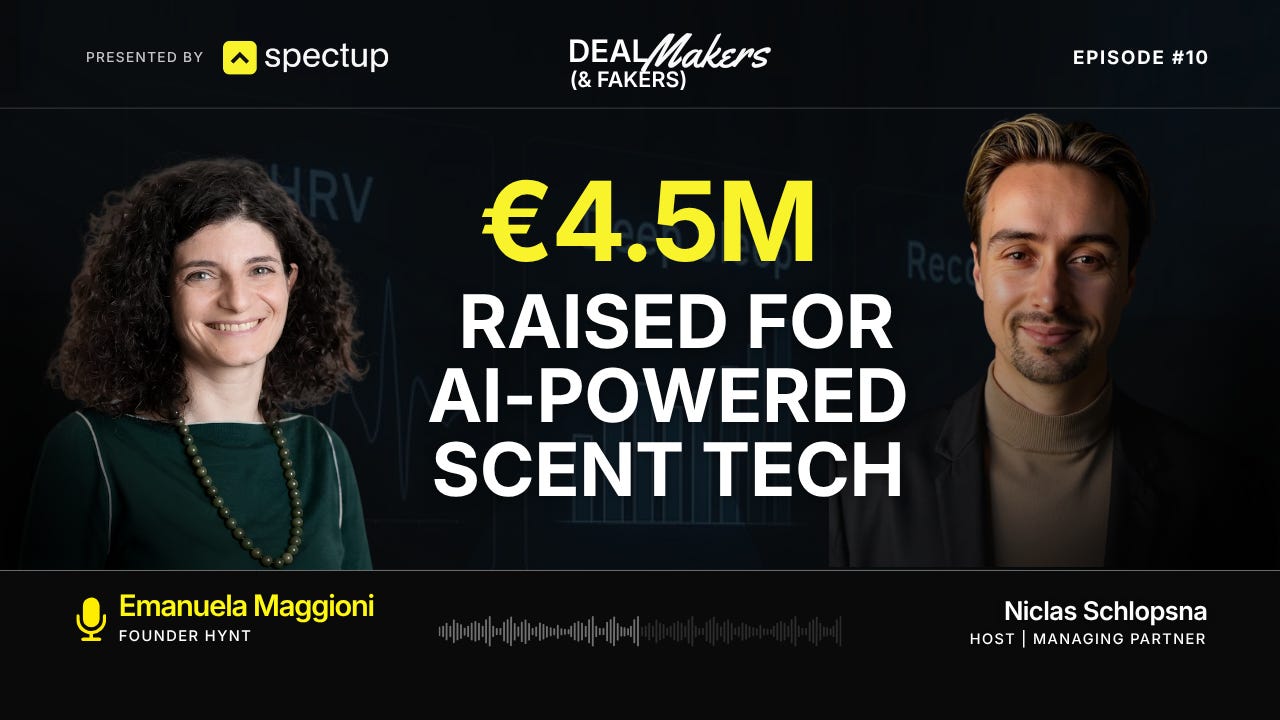 She raised €4.5M without giving equity.