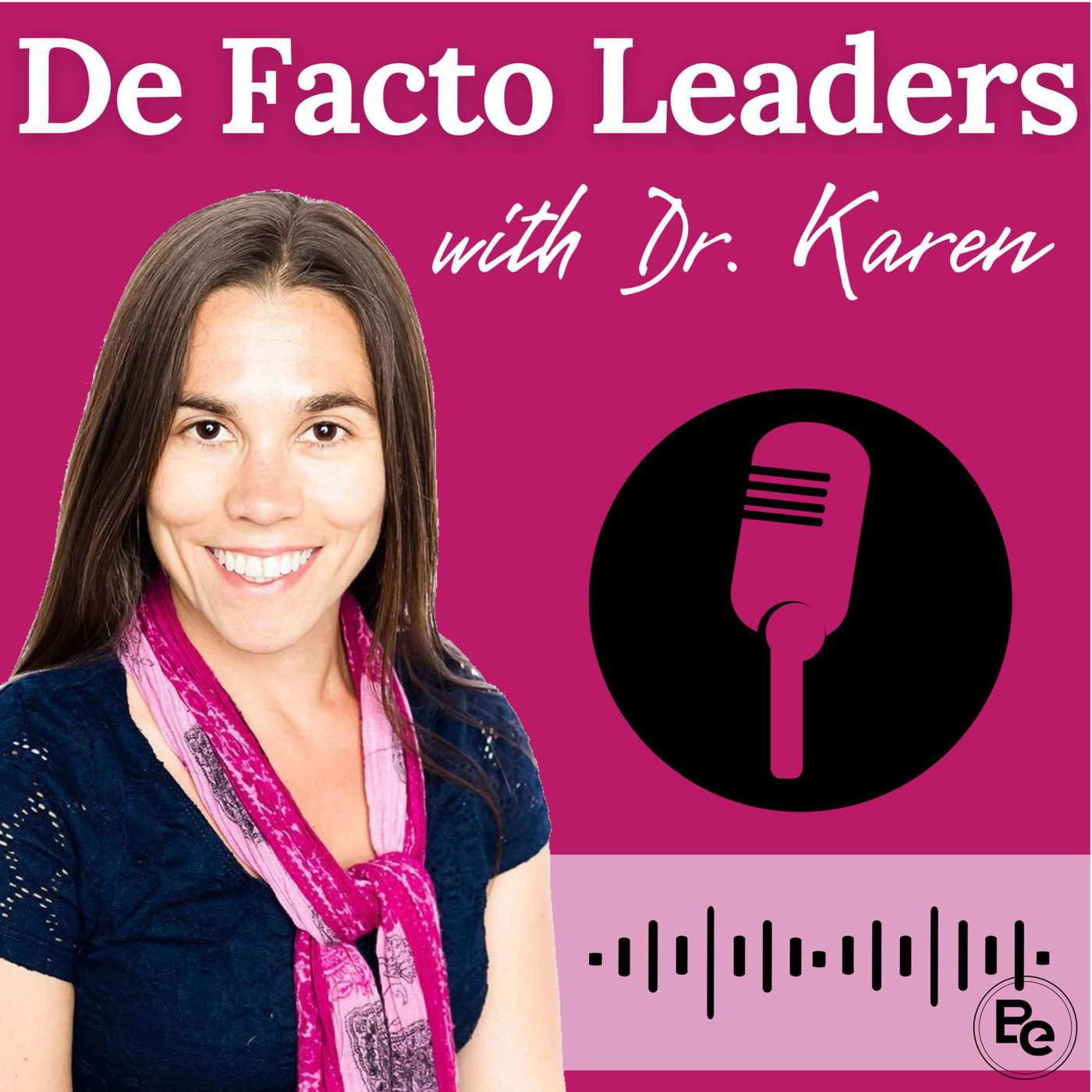
Hosted by Dr. Karen Dudek-Brannan
★4.9on Apple Podcasts · 34 recent reviews
On the De Facto Leaders podcast, host Dr. Karen Dudek-Brannan helps pediatric therapists and educators become better leaders, so they can make a bigger impact with their services. With over 15 years of experience supporting school-age kids with diverse learning needs, Dr.
267 episodes · publishes weekly · latest 2026-09-09 · ~39 min/episode
Rank
#3558
Substance
60.0
/ 100
Breakdown
Scored 2026-07
Updated monthly
Across the index
#3558 of 6203
Substance
Top 57%
outscores 43% of the index
De Facto Leaders ranks #3558 on The B2B Podcast Index with a substance score of 60.0 out of 100, scored across 1 recent episode. It scores highest on guest caliber and insight density. Jill Fahy is a credible practitioner with 22 years at a university, directorship of a real autism-support program, and clinical publication history - she is drawing on lived operational experience, not theory. The limitation is that Eastern Illinois University is a smaller regional institution and her lens is narrowly K-12-to-college transition, which reduces transferability for a B2B audience.
Averaged across 1 recently scored episode, with cited evidence.
The episode contains a genuine cluster of useful observations - especially the blurring of accommodations vs. modifications in IEPs and the downstream shock students experience - but it is padded with personal reminiscing, sponsor reads, and restatements of obvious points about scaffolding. Insight rate is moderate; a smart operator already familiar with coaching or talent development will extract only a handful of novel framings.
“What I see now are IEPs with modifications that are written as accommodations.”
“It used to be the norm that a student might come into college and they would have definitely written a five to seven page paper at some point in high school. That's not very common now.”
The core reframe - that well-intentioned over-accommodation actively atrophies the very skills it is meant to support - has genuine force and is developed with some nuance, particularly in the index-card metacognitive exercise. However, the scaffolding-should-fade metaphor and the 'allow natural consequences' argument are well-worn in education circles and not argued from first principles.
“if you take that 30 minutes and your goal is to instead model and teach and facilitate the student going through those thought processes, then this is a different outcome entirely”
“Coping seems to be. Let me get out of my own thoughts and I'm going to dive into this Other, um, on uh, my device and I keep getting hits of dopamine”
Jill Fahy is a credible practitioner with 22 years at a university, directorship of a real autism-support program, and clinical publication history - she is drawing on lived operational experience, not theory. The limitation is that Eastern Illinois University is a smaller regional institution and her lens is narrowly K-12-to-college transition, which reduces transferability for a B2B audience.
“I've been here, I think this will be the start in the fall of my 22nd year. And so I've seen a lot of changes over time in the college student”
“I sit down every Monday morning on a conference call with um, many different offices across campus, the dean of students, our student success center, academic support, um, counseling center, medical and health housing, even campus police”
Fahy provides a specific enumerated list of high-school modifications that vanish in college (attention check-ins every 15 minutes, test retakes, break cards, daily parent check-ins) and offers a granular 30-minute coaching scenario with index cards; she also cites that her program serves up to 30 students and that self-regulation walkouts now affect 3-5 new students per year. However, no peer-reviewed data, outcome metrics, or institutional comparisons are cited.
“I will have a teacher walk by my desk every 15 minutes to do an attention check in with me”
“it used to be maybe just one student might need some support with that. Now I would say say three to four, five new students every year”
The host frequently inserts extended personal anecdotes (the anemia story, the grilled cheese era, her sorority house) that consume airtime without advancing the guest's expertise, and she rarely challenges Fahy's claims or asks for evidence. Questions are open and friendly but function more as prompts to continue than probes that sharpen thinking.
“I remember I was anemic for the first couple months that I lived in an apartment and that was in grad school because I was in the dorms and then I was in the sorority house where they would bring in food”
“I think it's the blank canvas. Sounds appealing on the surface in a lot of ways”
First period on the Index - history builds from here.
1 scored on substance · 60 tracked in total.
This podcast is so informative!! I love listening to Dr. Karen! She’s helped me so much in my speech therapy sessions!
- Sean34514
Karen is so knowledgeable! I recommend this podcast to other educators frequently. There are so many great conversations that benefit many educators.
- Barb22222
Add this badge to your site - it links back here and updates automatically as you rank.

<a href="https://index.fame.so/show/de-facto-leaders" target="_blank" rel="noopener">
  <img src="https://index.fame.so/badge/de-facto-leaders/badge.svg" alt="Ranked #456 on The B2B Podcast Index" width="360" height="136" />
</a>Track De Facto Leaders's rank
Get an email whenever this show moves up or down the Index. Monthly at most, no spam.
Companies, products and tools that come up most across this show's episodes.
The themes that come up most across this show's episodes.

Founder-Led Sales Stories with Pete Kazanjy
Peter Kazanjy

The Secret Life of Great Leaders
TripleGoal

The Dental Economist Show
Planet DDS

The Centre for Army Leadership Podcast
The Centre for Army Leadership

Humanity At Scale: Redefining Leadership
Bruce Temkin

The Shift Code
Project Management Institute
