
Data Ideas Podcast · 2025-09-05 · 41 min
Evelyn Cates discusses her unconventional path into data analytics at Disney, beginning with a data entry role in resort revenue management before transitioning into her current role working with consumer data to understand how guests interact with Disney franchises and characters. Her career demonstrates the value of ground-level experience in hospitality operations - working at multiple resort properties, conducting guest research, and facilitating Disney Traditions training - in building contextual understanding that informs better analysis and stakeholder communication. She emphasizes the importance of bringing energy and emotional connection to data presentations, particularly when presenting to non-technical audiences like Imagineering teams and entertainment professionals. Evelyn's approach combines quantitative insights with qualitative research, regularly surveying guests in the parks to maintain direct connection to the human stories behind the data. Her advice for early-career analytics professionals is pragmatic: focus on getting your foot in the door at an organization, build domain knowledge across departments, and leverage internal networking to discover emerging roles that may not yet have established career paths.
She started with a data entry job in resort inventory management for revenue management at Disney, which she didn't initially realize was a specific career path. Attending Disney's internal Data and Analytics conference exposed her to how data was used across the company and inspired her to pursue analytics more deeply.
She works with consumer data to understand how guests interact with Disney franchises and characters, using those insights to drive business decisions about what will attract visitors to theme parks and cruise lines. She spends significant time presenting data findings to non-technical partners like Imagineering and entertainment teams.
Direct experience with operations - like working resort front desk, conducting guest surveys, or facilitating training - gives analysts business knowledge, understanding of operational processes, and empathy for the humans represented in the data, which improves both analysis quality and stakeholder communication.
Rather than waiting for a perfect data role, she recommends getting hired in any role at a target company, then using internal networking and meet-and-greets to learn about emerging data positions. This approach builds domain knowledge and connects you with mentors who can help you transition into analytics.
She pumps up enthusiasm and energy, incorporates music before and during presentations to set a positive tone, uses strong visuals rather than technical depth, and thinks about creating an overall experience for her audience rather than just delivering information.
Computed from the transcript - who did the talking, and the words that came up most.
Evelyn Cates discusses her career journey & working in analytics at Disney + her advice for practitioners on data storytelling & communicating insights! Follow Evelyn on LinkedIn here:
Transcribed and scored by The B2B Podcast Index.
Speaker A: Foreign. Mhm. Hey everyone.
Speaker B: Hey. Welcome back to the Data Ideas podcast. This is Dustin joined by Evelyn Cates. Uh, and we're going to be learning about uh, Evelyn's career journey and experience with Disney and data visualization and storytelling and all kinds of good stuff. Excited to have you here, Evelyn. Thanks for coming on.
Speaker A: Thanks. Yeah, I'm really excited to have this conversation tonight.
Speaker B: Yeah, this is awesome. And I have to get it out of the way. I'm jealous because, you know, I'm in Wisconsin, as you know, and Lynn works for this company called Disney that many of you have probably heard of and it's in Orlando, Florida. And uh, us from Wisconsin, that's like where we vacation, you know. And in the next few months Florida is going to sound really appealing.
Speaker A: Yeah. Just make sure you come after hurricane season. So I guess no Pepper. Ish.
Speaker B: Very cool. Yeah, I was telling my, my wife and kids that uh, you were joining what we're going to be talking about. They were excited to, to hear it too, so.
Speaker A: Oh, I'm excited. Nice to meet you guys.
Speaker B: Thanks again for coming on. I always start out with this question, um, of every guest. How did you first get into data and analytics? And you want to talk about just a little bit about your background?
Speaker A: Yeah, so I got into it in a really, really lucky way. I um, took a data entry job and it was for resort inventory management. And so it was in revenue management. And I didn't even know that revenue management existed at the time. Um, but it was just a job. I needed someone Saturdays and Sundays to do resort inventory. So that was my first introduction to that world. But it wasn't until I attended the Disney Data and analytics conference that I got to see how data was being used throughout the company outside of the scope that I was working in. And that was really what got me excited about it. And um, from there at that conference, um, one of the keynote speakers was Jeffrey Ma and he had the book about he was an MIT card counter and so like they would count the cards and go gambling and he wrote a book and that gave a lot of accessible information as far as like working in the industry. And that was super exciting. Like I remember I still have the book and I have a bunch of highlights and everything and it's a signed copy and I'm like, I'm never gonna get rid of this thing. Cause it was just very eye opening and like made it attainable to where I'm like, okay, this is something I could purs.
Speaker B: Cool. That's really interesting. And what what was it that first. So you're from the area originally. Um, you're from the Orlando area. But what was it that kind of intrigued you about Disney and brought you to Disney in the first place?
Speaker A: Well, really, it was just theme parks. It wasn't just Disney. So my high school is actually where. The high school that I went to is right behind Universal. And so, like, my high school is right here. Universal's right there. So I would see it every day. Yeah. So theme parks is part of my upbringing. And, like, I would hang out at CityWalk on the weekends and everything, so it's really second nature, you know, that's what we do. Uh, so I wanted to work at theme parks, and I applied at all three of them at the same day. And Disney's the one that called me back, so it was just really. Yeah, yeah. I applied at all three of them because I was like, I want to work at theme parks. And then it went from there. The rest is history 14 years later.
Speaker B: That's cool. That's awesome. And I love CityWalk. I was actually just down there in February, March of this last year. We always go. Whenever we go to the Orlando area, we stop in there because, of course, like, it's free to go into the CityWalk area.
Speaker A: Yeah, it's free. You have movie theaters, food. Everything is in one spot. Yeah, I love it.
Speaker B: That's cool. That's awesome. And so when you first got a role, um, at Disney, you got into theme parks. What did you start out doing?
Speaker A: Yeah, so I was an usher. So technically it's attractions at Finding Nemo the Musical, and I was an usher. So really just helping people where to sit and, like, making sure that people aren't laying down so we can get as many people in to watch the show as possible. I did that for, like, about a year and a half. And then I really. I ventured out because I was in such a specific area at Animal Kingdom, and I wanted to work everywhere. I, um, became a character attendant, which is like a security guard for the character.
Speaker B: Yeah.
Speaker A: And I got to work at all four parks. Um, all these crazy shifts and everything. And then, I mean, I can keep going. I worked in resorts and whatnot. Um, I also did guest research where I would walk around the parks and survey guests and, um. Yeah, get their inputs on, like, what they liked about the food, attractions or anything like that.
Speaker B: That's really cool. And we're going to talk a little bit more about, like, the advantages that that gave you as an analytics professional. Like, all of this kind of like firsthand experience, like working in customer facing roles for an organization. Because I think even though like this is really cool and unique experience at Disney, like the same, um, like can be true for other industries and organizations too. Like when there can be advantages to getting that firsthand experience, like kind of in non technical roles and that can help you down the road once you get into a technical role. So looking forward to talking a little bit more about that um, later in the episode. One thing I just wanted to do is take a quick pause. I see some folks joining. If you are joining the live stream. Just wanted to say hello and also um, let us know in the chat where you're coming from. You know it's always good to see who's joining us live. Um, and of course if you are listening to the recording, um, hello to you as well. But let um, us know in the chat if you're joining live, um, who you are and where you're coming from. So fast forward to today. Um, we just heard how you started at Disney. You've been with Disney for a long time. You've been in theme parks for a long time. What's your current role?
Speaker A: Yeah, so my current role is super interesting. So I work with consumer data and so what we do or what we want to learn from that data is really understanding how consumers are interacting with our franchises and characters and use that to drive business decisions. As far as like what's going to be a driver that they see in the theme park or in cruise lines that's going to make them want to come visit us. Yeah, so I'm really in that middle part of I work with the data and so I also like, I'm constantly presenting that data out to my partners and everything.
Speaker B: Cool. Awesome. And so obviously a little bit different role, uh, than what you started with. Um, very cool. Um, what's, I guess like do you like, what's it like, like working, um, in such a, like a fun area? Like an area that's so like just um, associated with like vacations and things like that. Like do you think about that in the day to day? Like is that like something that you and your colleagues talk about or like do you just kind of like not notice it or.
Speaker A: Yeah, honestly you take it for granted after a while and then you have moments where you're just like, oh, this is actually happening. Like one time, um, I went out for. It was my birthday. Um, my team surprised me with a birthday dinner and everything and then I'm driving home and fireworks are going on. As I'm driving home and I was like, oh, this isn't like an everyday thing, you know, um, so you have the moment where you're reminded, like, this isn't normal for the rest of the country, but you do take it for granted. It's just like, yeah, let's go to a magic. Like, I'm going to Magic Kingdom tomorrow. And I'm just like, okay, you know, like just another activity. Um, but yeah, I'm really excited. Like, I. Until I'm talking about it, I don't realize how fun the things are, you know, like my presentations and the types of things that I'm talking about is they're really, really exciting and they're products that I like watching, you know. So then it's like, oh, I understand it.
Speaker B: Interesting. Very cool. And in terms of the data and analytics community in Orlando, can you tell us a little bit about that or are you plugged into that? Um, what does the community look like there?
Speaker A: Yeah, so not as much because since data is so big at Disney, that's really where I have been plugged in and following and everything. And then I do so much online. Um, but it is growing for sure. There's a lot of like, uh, I know I joined a couple like Power Bi events and everything to meet in person, but I also have a toddler, so then I don't get out as much after work. You know, it's more of a process. Um, but. But yeah, there's definitely a lot of events and community around it. Cool.
Speaker B: Nice. That's awesome. Um, and I guess like, ah, kind of similar to Orlando in general. Like, Disney is super unique in that there's all these fun memories associated with it. Like, and you mentioned you like the products that you're doing analysis on yourself. What's, um, it like, just in general, you mentioned there's a lot of, you know, analysts that work there. Like, what's it like to work in analytics specifically at a place that like so many people know so much about? Like, I've. I feel like I've worked for some organizations that like, are pretty well known. But like, I don't think anywhere that's like as recognizable as Disney. Like, it do so like when people hear you work there, like, do they want to like, ask a ton of questions about it? Uh, just like, what is that?
Speaker A: Kind of like yes and no. So everybody gets excited when I tell them I work at Disney, but then when I'm like talking about my job or just data, then that's really where they'll Stop listening, because they just want to hear more of, like, the magic. You know, they want you to, like, spill the secret, talk about logistics and things like that. And I'm like, no. So, yeah, it's really interesting because they're just like, oh, okay. This isn't really what I want to talk about, unless it's someone who is into data. Then they're asked the specific stuff and things like that. Um, but, yeah, usually everyone always wants to know about it. Um, it's always very interesting. But then it's like I have to. I work with such proprietary information that I always have to watch what I'm saying.
Speaker B: Yeah, sure, that makes sense. Um, and so speaking of kind of the stuff that you're working on, knowing that you can't divulge too much about it, but can you share an example of a type of project that you're working on? I think folks would be really interested in hearing, like, just like, what kind of data projects would someone be working at at Disney?
Speaker A: Okay, so I'll say anything in the entertainment space. Um, so any type of entertainment thing I pretty much touch, which is really cool. But one of the funnest things I actually got to do last month was, uh, go into the parks and, um, survey guests. I really do love to do that because it's like that qualitative data that I don't always get to work with and just talking to guests directly about their experiences and everything. Like, people want to tell you what, what they liked and what they didn't like. And it's so beneficial to just get it right from the source and being part of it. It also reminds you, too, of, like, work that you're doing, because sometimes it's like you get caught up in the data. And then now it's like, oh, this is just. This is who the data is about. And so you're reminded of, like, who you're representing and, like, who you're trying to entertain through all the work that you're doing.
Speaker B: That's really interesting. I just wanted to give a shout out to a few folks joining live. So, um, someone's joining from Blackwell, Oklahoma. Um, due to security reasons, I can't see who this person is. It says LinkedIn user. But, um, hello from Oklahoma. And then, uh, someone's joining from Minneapolis. Uh, Lindsay, who was actually a guest on a previous episode, said she's joining from the Indianapolis area. And, uh, Irina says she's joining from Orlando. Yeah. And then, um, and then Marquis Warren joining from Polk County, Florida as well. So it looks like you've got some folks from uh, from Florida joining.
Speaker A: Yeah, that's my best friend.
Speaker B: Oh really? Okay, cool. Awesome.
Speaker A: We actually started working at Universal when we were in high school because back in the day. Yeah, yeah, when we were like 14, 15.
Speaker B: Huh. That's why.
Speaker A: Yeah. Theme park definitely runs deep in our blood.
Speaker B: That's cool. That's really cool. Um, and cool that there's so many like data roles in general around theme parks. Like I see a ton of, as you know and many of the listeners know, I post a posting um, on LinkedIn every Friday that kind of gives a rundown of all of the analytics positions that I see shared in my LinkedIn feed over the course of the week. And I do see a ton in entertainment and hospitality, but specifically in theme parks. I see a lot in Disney, you know, Universal, um, and recruiters for those technical roles. So um, it's really interesting that there's um, such a robust kind um, of data and tech community within the entertainment and theme park industry.
Speaker A: Yeah. And I think if anybody is interested in this type of industry, just always keep your eyes out. Because my first analyst role was in People Insights in corporate hr and I didn't really before I was interviewing and whatnot for it. I didn't even know that was a thing. And it is still relatively new. Um, but it's like Insights is still something that could be done, you know. And so it's like there's so many areas and like I'm in consumer Insights now so I went m from working from with people in the back end to people in the front end. So there's so many different roles that could be done. Don't let job titles deceive you because that's another thing.
Speaker B: And then hello to Carlos as well, joining from North Carolina. Um, if you are joining the Live, let us know um, who you are, where you're joining from. It's always good to see who's joining the live chat. And um, if you do have a question, toss it in the chat and maybe we'll have a uh, minute or two to get to a question or two at the end. But um, thanks to everyone that's saying hello so far. Glad to have you here in the Live. Thinking about some of those early experiences that you had. You know, you got to understand um, kind of things at an operational level. You know, you got that hands on experience early on like thinking about how that connects to your current position and the advantages it gives you. And working in data analytics, like can you talk a little bit about how that's helped you be a better analyst, for sure.
Speaker A: So I feel like every part of it has. But like the first one is, um, because I worked at resorts, so I worked front desk and concierge. And another thing, so there's like 20 Disney hotels and I worked at a lot of different ones. And so I had a lot of business knowledge as far as how resort resorts worked. And that gave me an advantage when I got my first data role because I already understood how resort inventory worked and so the management aspect of it. Uh, so that was like one of the first ones. And I did guest research. So I was going around the parks and just asking people if they would fill out my survey. And so that also kind of goes to my job now because I'm still working with consumer data and so that gives me a lot more insights into it. Uh, I can keep m going, but. But those are just like some of the biggest ones that really gave me a leg up. Um, I also was a tradition.
Speaker B: Feel free to keep going. Yeah, that's great.
Speaker A: Okay. So I was a traditions facilitator. And so everybody's first day at Disney, you basically have to go to like a Disney class. And it's like 101. It's an eight hour class. And so you're just learning about wall and from like the beginning to where we are now. And so I facilitated those classes. It was a script. And so, um, that really got me into like being able to public speak and everything.
Speaker B: Yeah, for sure. Wow.
Speaker A: And you have to be a little bit more magical and pixie dusty more and uh, like on top of it because you're on stage and everything. So that really just taught me how to like connect with my audience. And I actually also did those in Spanish and that was the very first time I ever did anything in Spanish in a professional setting. And that was also a different environment. So that was really like the beginning of learning, connecting with my audiences in different point of views. Um, so yeah, those were all things that I take now into my role.
Speaker B: That's really cool. And can you give an example of like, what does it look like to be more magical in a presentation or to add some sparkle to. Because I think like that's important. I feel like there's some like data presentations that lack that and like could benefit from that. So I'm just curious what that looks like.
Speaker A: Yeah, I guess very cheerful and just trying to get enthusiasm going and making you love everything that I love. Like, isn't that amazing? Like wasn't that Such a great video and you're just like it was a minute video from the CEO. So yeah, just really like engaging them and making them um, want to be excited for what they're do for what you're seeing. Cool.
Speaker B: And would you say that you bring like some of that pizzazz to like if you get like really excited about presenting a data project or releasing a new data product, like do you kind of bring that style or is it a little bit different?
Speaker A: No, I definitely do because my audience is non technical so I present a lot imagineering and they're the ones that are creating what's in the theme parks. Um, a lot of people in entertainment. So since that's my audience then I definitely pump up the excitement. Like before my presentations I always listen to music and so I'm like, okay, I need to carry that energy across because since it's my non technical audience then they're not going to be as excited about the data. So I really have to bring that energy, um, increase the visuals and things like that on my slides.
Speaker B: That's cool. That's really interesting actually. Um, I've heard like some folks that are really into public speaking and sometimes I find I do this myself before like bigger presentations or like large group presentations or if I'm going to be facilitating like a lengthy meeting or something. Like you do have to kind of like get yourself pumped up for it. And so like listening to music works for some folks. Um, you know, exercising your vocal cords. I know I've seen some podcast hosts like post like a, ah, um, like parody video, you know, of like them warming up their vocal cords before going on their podcast, things like that. But um, it really can be helpful just in terms of like getting loosened up and kind of like hyped up, um, to give a presentation. I think audiences benefit from that as well.
Speaker A: Yeah. And so I always listen to music. If I'm not listening to music, then I'm like, what's going on? Like it's part of my, my routine now. Uh, and I also try to incorporate music within my, my presentation. So you know like when everybody's first joining, like those two minutes are so awkward because you're waiting for people to join and then um, you're like, okay, you're just sitting here waiting. So I try to play music during that time because it also calms me down and it's like a really marker and then it gets people excited for what's to come. So those are just like another little interesting. Yeah, like make it, it's an experience. Right. Um, so I think about like, okay, what's going to be the experience even if we're online? Because it's like we all have so many meetings, there's so much stuff that you're constantly like in a cycle. So it's like, how can we make this a little bit more exciting in such a way that seems like easy, you know, make that emotional connection
Speaker B: very cool. No, those are good tips. Um, and so thinking about the fact that you are in a data role now, heavily immersed in a data role at Disney, and you entered in a very different role early on in your career, a non technical role, you know, uh, I'm sure you get asked these questions that I do as well. It's a lot of folks ask like, hey, like me or my son or daughter, you know, just finished a degree program and they're trying to get that first data role and they're really struggling and the market seems hard, you know, and things like that. Which is totally understandable to ask those questions. Um, I do wonder like, um, what do you think about like, would you encourage folks to try to like just kind of start at an organization, get your foot in the door whether it's a data role or not, and then kind of like maybe use your data expertise in that position or like just learn as much as you can and then try to like work internally into a data role like you did, or like what's. What do you think about how your experience translates to someone that might be uh, an early career stage in the job market right now?
Speaker A: Oh, I always recommend someone to just get started especially because you really don't know what is there. You know, like, even internally there are jobs that I don't even know about. So if you're able to get in and experience everything, then that's like the best way to learn. Because I didn't know resorts revenue management was a thing when I was 23. You know, like that wasn't what I was going to school for. And so it's like if you're able to get in, have these experiences, it's always going to be beneficial because even then I knew I was like, okay, I can now go work at any type of resorts. Um, and so it's like it also opens up the industries that you're able to work in. And like, uh, Disney has the college program M and so it's like you're in college and you can come and work in the theme parks for an internship. And it's also like a learning opportunity. And I'M like this is one of the best ways to, to get in because you just network and it's like we have an internal directory and you can email anybody in the company. And like meet and greets are so common and nobody really says no. So once you're able to get in, you can connect with anyone in the company. So I'm like always just try to get in. It doesn't matter if it's a data role and you never know what other roles you're going to learn about that are still developing. Especially the way that the landscape is now, so many new jobs are going to start forming that unless you're in that realm, you might not learn about it.
Speaker B: Yeah, totally. Um, and the, I was thinking back to like um, when I first like. Because a lot of times folks will be like, oh, like what did you go to college for to do the job that you had now? And it's like, well, I mean first of all when I went to college like there were no data science programs. And also you know, like, and so it's like I almost have to like, yeah, take a step back when I get asked that question because it's like so hard to connect, you know, the, what I did to what I'm doing now. But, and the path because it was not linear at all. But um, you know, it's. I kind of think back, I did the same thing. Like I took an internship just in business when I finished my mba and then I like took the most entry level analytics role that I could find the second that I had an opportunity to do it and then just kind of tried to do my best with it and work my way up from, from there, you know. But it started with a non technical role to get some respect, you know, and then you know, baby step towards like a really, you know, junior level role and then so on and so forth. Um, it's like I, and to your point, I had no idea that, you know, so I'm working data enablement now. Right. Like first of all that wasn't a field at the time, so there's no way I could have gone to college for that. Right. But also like I had no idea that this would even be a thing in 12 or 13 years down the road. So um, it does take just getting immersed and um, starting at square one and getting your feet wet. Um, so I like that advice.
Speaker A: Yeah, another point too, especially with data roles, you see stuff online where it's like learn to code in two days and then you're just like, okay, Cool. But some things also take. Development takes some time, you know, and it's like you want to learn to code in two days, but then like, you might not land a job in two days. So, like, you really can't get discouraged. It took me over two years to land my first analyst role. So it's like, get out there, learn, you know, it takes some time. Um, definitely do what you can with what you have and keep going from there. And you never know who you're going to meet or what you're going to learn.
Speaker B: Yeah, for sure. And, um, did just want to take a step back to let folks know. I do see some other folks joining. Appreciate everyone saying hello in the chat. If you are joining live, let us know who you are, where you're coming from. It's always good to, uh, see who's joining live and be able to say hello. Um, so you have, um, speaking about, you know, what did, what did, what did we go to college for? You actually got a master's degree in data science. Um, can you talk a little bit about. Did you do that while you were working full time?
Speaker A: Yes. So okay. On this, um, because it's always a story. Right. Um, so I was going out for analyst roles, um, and I wasn't. I, uh, had the business skills, but not the technical side. Right. And so, um, Disney paid for my master's degree up front. Aspire program. Yeah. So then I. But this master's program was very set up to where, like, if you've never done anything in analytics before, it was for you. Um, so I dove into that knee deep. Um, and yeah, I got my master's in data science, but it was also because they paid for it. And then I did that full time. Um, and then I also had a kid in the middle of that, so that was crazy time.
Speaker B: Gotcha. And so what do you have, like, do people ask you, like, do you think it's worth, you know, going back and getting a master's degree in data science, specifically if they want to get into analytics or move up or, um, how do you answer that? Or what's your thoughts on that?
Speaker A: Yeah, so it's a lot of thoughts. I only got my master's because my job paid for it. Honestly. I. And I also told myself after college that I wasn't gonna go for another degree if I didn't know exactly what I was going to get out of it, because I just went to college and picked a degree, you know, and so after gaining that knowledge, I was like, whenever I do go for A master's. If I do go for it, I'm going to know exactly what I'm getting out of it. And then I also didn't want to pay. And, um, so my job paid for it. So I'd say it's several answers to that question. Um, I do definitely don't need a master's degree to get into data, um, or data analytics. Uh, having the technical skills and really learning a business and like, what you can solve is going to. What's going to be helpful and networking. Um, so I think it really depends. But it did give me the structure that I needed because I was working full time and so it was like I had deadlines, right. So then I had to think of like, okay, when am I going to study? Um, because studying after work wasn't always feasible. So then I had to cut out my social life a little bit and study on the weekends. And then once my daughter was born, and that was a different ballgame as well. Um, but it definitely gave me a good structure. So if you're someone who needs a plan and a layout, it was helpful because motivating yourself can get old sometimes. And you're like, I don't want to keep doing this.
Speaker B: Absolutely, yeah, that's, um. And I finished graduate school while working full time myself. And it's definitely hard to do. Um, but, um, that's very cool. It's really nice when you do have, ah, ah, some employer, um, you know, tuition assistance or educational assistance, that's a big boost. And the ROI is definitely important to consider. Um, I mean, it's. And there's an investment of your time as well. But I mean, if your employer pays for it, I mean, that's, I mean, it's easier to get a good ROI if you're investing $0 in it, you know? Yeah, yeah.
Speaker A: And really, like, even analyze your time because I used to, uh, I would get an hour lunch and then I'm like, okay, that's five hours that I can dedicate to one class. So I started using my lunchtime to do homework every now. And so that would also make me feel a little better about cutting out some movie trips on the weekends or things like that.
Speaker B: Um, so you mentioned. So you have, um, you know, a pretty deep level of technical expertise. But you've, you've mentioned in a recent post on LinkedIn that you're spending most of your time communicating insights, telling stories with data. Can you talk a little bit about why this is so important and why you're spending so much time on that right now?
Speaker A: Yeah. So I'm pretty much the person in charge of the data on my team. Right. We're in charge of this consumer data. And it's so specific because everyone that is taking our survey is a theme park acceptor. So it's someone who wants to go to a theme park or any type of Disney experience. And so, uh, we're communicating that data out to, to our partners. And so this is what they're deciding as far as like, hey, which characters are we going to include in our theme parks? Um, what franchises are we going to promote? Um, whenever we have any advertisements coming up and so being able, like, you're the person who they're going to go to for the data. So it's like you have to know the data, but then you also have to present it in a way that's engaging and make sense for their line of business and what their business strategy is.
Speaker B: Gotcha. Okay, cool. And so you mentioned a little bit earlier in the podcast that, uh, you started out by doing some trainings that were not necessarily technical and that's helped you a little bit, um, in terms of presenting today in your current role. Like, do you feel like it's taken, like, practice to get good at telling stories with data specifically and like, communicating insights specifically from data? Um, has that gotten easier over time? Um, what are your thoughts on that?
Speaker A: Yeah, I feel like I'm constantly practicing, um, because there's a lot of times where since I'm so deep in the data, there's things where I don't even think are that impactful or like, I might want to dig too deep and really dive into that when it's like I need to just provide high level and then go from there. Um, yeah. And so I'm constantly, like, even when we got our questions, like, I'm writing down my thoughts and making sure that it's a flow and process and it's for someone without any context. Right. Because I'm reading this the whole time and then presenting it out. Um, so yeah, it's a lot of practice that goes into it and just a lot of like, making sure that there's value in this because it's like, I can tell you 25%, but it's like, what do I do with that? What's the value behind it and how does this really impact the business and help me make decisions from here?
Speaker B: And I think that speaks to just the importance of, like, preparation too, regardless of like, how seasoned someone may be as a data professional or even as a speaker. Like, I feel, um, you know, if I don't prepare for things, like, um, sometimes it goes okay, like, because my comfort is a little bit higher at this stage in my career, but also, like, sometimes I'm still pretty humbled, um, by how things go if I don't prepare for it. Right. And like, um, I feel like it's, um, um, just like taking, uh, that time before you present to think through kind of the messaging and the top two or three things that you want to get across for each slide. Going through that process mentally, sometimes I don't even, like, I don't even speak it out loud. I just think through in my mind on each slide, like, what do I want to talk to and what's the main takeaway I want to give? And, uh, just that process really helps when it comes time to actually deliver the presentation. Like, I've already thought through everything in my mind. I'm not. I'm not like, fumbling around with, thinking through on the fly what I want to draw the audience's attention to. I've already thought through that. Right. And it's interesting because right now, like, you're not reading from. From notes, even though you were very well prepared. I know, for. For this. Right. But you're just. You're just speaking on the fly, it seems like to me now.
Speaker A: Yeah. Yeah. But that's the thing too though, is like, well, for this time, I didn't do it. But for my work presentations, I have my speaker notes. And then as much as I hate it, like, I despise it, but I record myself giving the presentation and then I watch it. And so having to give yourself useful feedback, that's not like, you suck is so hard, but it definitely helps. As far as you're speaking too fast. There's too many ums in there. Uh, what did you even say? Like, what's the takeaway? You know, because there's some times where I'm like, you're just saying words, and I don't even know what my message is. So that really helps me clock in as far as, like, okay, this is what needs to be on the slide. And make sure that they remember these three things from here.
Speaker B: Right. And what, what. So you mentioned the recording, which is really, I mean, rigorous preparation, but I'm sure your audience ends up really appreciating that because it ends up, you know, being a really solid presentation that's audience focused, which is awesome. What do, uh, you have any other tips that you give to folks that are, you know, you must be Asked from time to time from folks, like, about, you know, before they. They might be getting nervous before presenting something in a meeting or whatever. Like, what. What tips do you give on presenting data, um, for folks to get better at it or maybe in the moment, like, maybe be a little less nervous or, like, what advice do you give to other people?
Speaker A: Yeah, the biggest thing is practicing. Just practicing and just getting the words out. Right. Because it's like, if you're only us reading it, it's like you have to feel the words in a way, uh, for lack of better terms, but it's just like the words that's adding the
Speaker B: magic, I think, that you were talking about earlier.
Speaker A: I know, I know. It's so engraved in you, you don't even realize it sometimes. But it's really like you have to go through the motions because it's like, I don't want to just sit here and read something out to you because that's not going to be engaging. And that's not how I want to watch presentations. So I also think of, like, okay, how if I have to watch this, how do I want to watch this? How is this going to be fun for me? And so, um, yeah, just getting it out. Um, I'm always, like, talking to my husband about it. He doesn't know any of it, um, but he's just forced to hear me talk on it. And so that just helps me. And that's also a good indicator because sometimes when I'm presenting to him, there'll be some things that stick out that I'm like, oh, so that was what landed. And then that helps me too, as far as, like, so this is good. Let me keep this and then let me add that in other points of the presentation. Yeah. So also, like, if you are practicing with family members and, like, they don't care, then it's like, wait, where did the tension go up? And things like that. That's another. Another trick I use.
Speaker B: No, that's really good because you mentioned that, like, he may. Maybe he. And it's a good test, too, because, well, I don't know. Is your husband a data practitioner? He's not, Right? No.
Speaker A: Um, he's a recruiter. Yeah.
Speaker B: Okay. Okay.
Speaker A: So.
Speaker B: And that's. And so in my family, it's the same thing. You know, I'm the only data professional, and that's. Sometimes I'll run things by, um, not only my wife, but also I'll share things with my kids just to get their first reaction, you know, and sometimes that really, like, just Initial reaction, like it tells you a lot, you know, whether it's intuitive or not. And um, that's a good point. I hadn't thought about that recently, but that has made me change how I think about presenting some things sometimes myself.
Speaker A: Yeah, and another thing, my daughter will ask me about my meetings and my presentations and she'll actually like, what did you talk about? So I use that for practice and I'm like, how can I tell her about this in a way that she'll remember terminology. Right. She's not going to know, uh, you know, the data points for theme park in Hong Kong, but she will know like if I'm talking about a franchise and the signal significance of it. And so I use that too as another indicator.
Speaker B: Cool. And just a couple comments to pull up here. Irina was saying, and I think this is when we were talking about, uh, like analytics not having formal degree programs around it, you know, until recently. But she says this brings back memories from early 2000s. It wasn't common, especially in the HR field. And that's actually a really interesting comment because HR analytics, people, analytics is really exploding field, you know, sub field, whatever you want to call it right now. Um, and I'm sure there's, you know, um, if not formal degree programs, lots of, you know, boot camps and things like that around that area specifically. Oh, for sure. Exactly. Yeah, yeah. Someone else joining from LinkedIn user. Sorry we can't see your name, but appreciate you joining from Lake Buena Vista. That's actually where I had my Airbnb, uh, back earlier this year.
Speaker A: So it was like 30 minutes from my house.
Speaker B: Uh, very cool. Um, I'll probably be looking at, at another one, uh, in a few months
Speaker A: from now, but I can give you some recommendations.
Speaker B: Okay, all right, cool. Yeah, I appreciate it.
Speaker A: Recommendations.
Speaker B: I bet. That's awesome. Um, and we did actually, when I went down there, uh, earlier this year, we actually went to Magic Kingdom. And I hadn't been there I was a kid, so it was really cool. Yeah, no, I thought it was awesome. And um, I went on. You know, my favorite part was the Tron, the new Tron ride. Well, newish, I guess. Yeah.
Speaker A: Uh, 23.
Speaker B: Okay. In 2023.
Speaker A: Yeah.
Speaker B: Mhm. Okay. Yeah. Yeah, my son, uh, he really wanted to go on it and I wasn't sure about like the 70 or 80 minute wait, but it was, I can tell anyone listening, it's well worth, worth it. Um, I also wasn't totally sure about the people like riding it upside down at 60 miles per hour, you know, above Me and behind me while I was waiting. Yeah, exactly. But it was very cool when it
Speaker A: takes off and then I'm always like, why did I sign up for this? Like, I'm like, I shouldn't have done this. But then afterwards I haven't gotten to go on it at night. That's definitely one of the, uh, one of the rides that I want to do is at night, but I got to go on it before it was open. Um.
Speaker B: Oh, really?
Speaker A: And so that was great because I've never waited any minutes for it. So that was fun.
Speaker B: That's cool. That's awesome. And it's. They make it where like you go through kind of like they kind of start the experience like halfway through your time in the line because you kind of go inside and they have some cool stuff going on there. So it's, well, it's definitely well done. Um, but I, uh, would recommend anyone to check it out. You go from 0 to 60 in like 2 point some seconds or something like that.
Speaker A: And you're like riding a motorcycle and you're like, why, why am I doing this to myself? I don't have to do this.
Speaker B: Yeah, I was glad I, I did it. And actually it was, it started early evening when we were waiting, so it still light up, but it was, it was like, it was, it was pretty dark out by the time we did it, so it was pretty cool.
Speaker A: Yeah, I want to do that.
Speaker B: Um, so this has been a really fun, um, discussion and um, definitely the first person that I, to be honest with you, first person I think that I've talked to that works at Disney. I knew a couple other folks we met, you know, I know we discussed in the pre meeting, but um, a couple other folks that work in the Orlando area for some other companies, but I don't think I'd ever talked with anyone at Disney for as many analytics jobs as I see posted there. Um, so this was really cool to hear a little bit more about what's going on at Disney and um, and get to know you a little bit.
Speaker A: Yeah, no, thank you for having me. I'm glad I was able to share it. It's so funny because it's like until you're talking about it, you definitely take it for granted. And I've been here for so many years that it's really just like second nature. Uh, so, yeah, really happy to share my experiences.
Speaker B: Cool. Awesome. And, um, how can folks follow your content or follow you on LinkedIn or where's the right place to follow you?
Speaker A: Yeah, I would say LinkedIn. I've been a lot more active on LinkedIn the past year. Uh, so follow me on here. I'm on it every day now. Um, so. So, yeah, follow me on LinkedIn.
Speaker B: Awesome. Very cool. So we will put a link to Evelyn's LinkedIn profile in the show notes, um, so you can click on that and follow her on LinkedIn. Um, thanks so much. I didn't see any questions, uh, in the chat. Um, and we're at the 40 minute mark here, so, um, again, thanks for coming on. It was fun talking with you, and, um, I'm sure we'll be in touch.
Speaker A: Yeah. Awesome. Well, so much. Thank you so much for having me.
Speaker B: Yeah, take care. Thank you.
Speaker A: You too. Bye.
Speaker B: Bye.
Other episodes covering the same guests and topics, from across The B2B Podcast Index.
 How SSW turned AI into ½ their pipeline - Ulysses Maclaren, COO of SSWSaaS Stories · on Power BI86 / 100
 Microsoft Fabric: The Platform That Turns Data into Competitive AdvantageLeading IT - APAC Insights · on Power BI85 / 100
 From Farm to FP&A: How California Dairies delivers 17 billion pounds of milk each yearFP&A Today · on Power BI85 / 100
 AI Is Already Changing Data Jobs: Why You Must Create More Value Now with Rob CollieThe FP&A Guy Network · on Power BI83 / 100
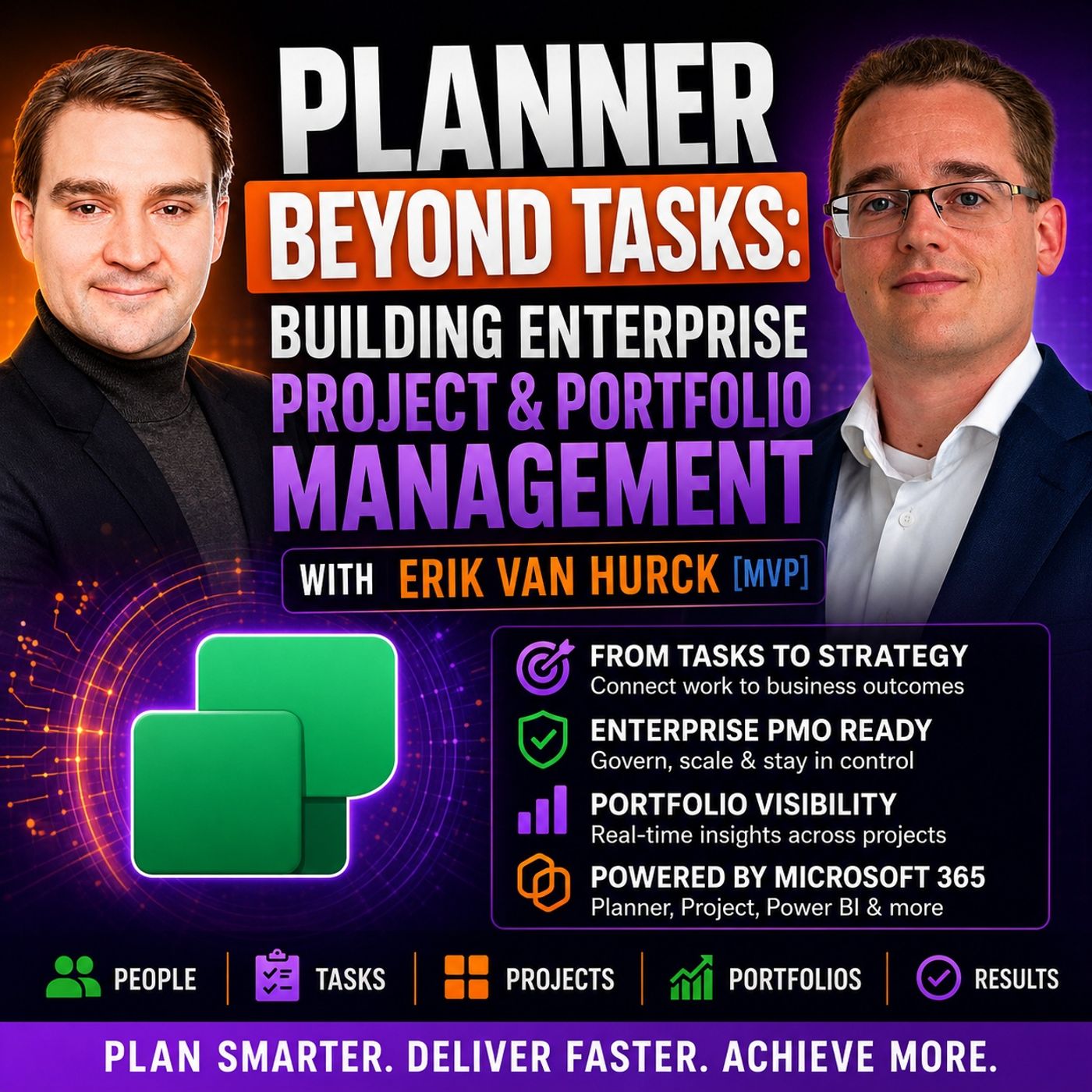 Planner Beyond Tasks: Building Enterprise Project & Portfolio Management with Erik van Hurck [MVP]M365.FM · on Power BI77 / 100
 Episode 1: When SIOP Gets Real: Capacity, Analytics, and Better DecisionsThe Manufacturing Edge - For Ops Leaders · on Power BI77 / 100
 Ep. 73 - With Seth Forbes (Breaking into Analytics with a Non-Traditional Background)42 / 100
 Ep. 72 - With Morgan Depenbusch, PhD (science-backed strategies to finally get your work noticed)
 Ep. 70 - With Michelle Dunivan, PhD (Best Friends Animal Society)
 Ep. 69 - With Brian Julius (Learning About Model Context Protocol - MCP)
 Ep. 68 - With Oliver Hughes (CEO @ Count, Getting Clarity from Data)