CC Pod · 2026-07-15 · 35 min
Key moments - from our scoring
Substance score
71 / 100
Five dimensions, 20 points each
Allo Atomics is building a fundamentally different nuclear power plant architecture optimized for rapid factory manufacture and deployment to AI data centers. Yasir Arafat, who previously led the Department of Energy's Marvel Microreactor program and worked on Westinghouse's advanced reactors, explains how Allo's approach combines five reactors with three turbines in a 50-megawatt modular unit that can be replicated to scale from 50 MW to multiple gigawatts. The key innovation is eliminating pressurized water systems in favor of liquid metal coolant, which enables thin-walled vessels that can be fabricated in under a week instead of 1-3 years through traditional forging. Allo's factory-as-product approach removes supply chain bottlenecks by using code-qualified materials and commercially available components, avoiding the "unobtainium" trap that delays most reactor projects. For AI data centers seeking 99.99% power reliability without grid dependence, Allo targets levelized costs of $0.03/kWh at scale - lower than natural gas - while maintaining rigorous nuclear safety standards across reactivity control, cooling, containment, and shielding. This episode is essential for founders, data center operators, and energy infrastructure investors evaluating next-generation power solutions.
Allo uses liquid metal coolant instead of pressurized water systems, eliminating the need for thick-walled pressure vessels that require 1-3 years of forging. Instead, they roll and weld thin plates in under a week, and designed their reactor components to use commercially available materials and machines rather than custom or code-unqualified technology.
Each 50-megawatt unit contains five reactors connected to three 25-megawatt turbines, allowing the plant to maintain 100% power output even when one reactor or turbine goes down for maintenance. This five-reactor/three-turbine design can be copy-pasted to scale from 50 MW to several gigawatts and fits on less than 2.5 acres per 50 MW chunk.
Allo targets $0.03/kWh at nth-of-kind scale, which is lower than natural gas. By their third production unit, they expect to reach under $0.10/kWh as manufacturing scale increases and technological improvements are implemented.
Because solving nuclear's speed and economics problem requires co-designing both the reactor technology and the manufacturing process; choosing technology that can be built with common factory machines, standard materials, and thin-walled construction that fits mass production economics.
Allo maintains strict nuclear regulatory standards on four fundamental safety functions - reactivity control, decay heat removal, containment, and shielding - and does not let speed compete with quality or safety. The company employs veteran nuclear industry experts and follows U.S. nuclear safety standards without lowering the bar.
Our reviewer’s read on each dimension, with quotes from the episode.
The episode delivers several concrete technical insights - liquid metal coolant vs. pressurized systems, power density improvements (7x), vessel construction timelines (1 week vs. 1-3 years), and the design philosophy around avoiding 'unobtainium.' However, significant portions consist of motivation storytelling (Bangladesh brownouts, Fukushima context) and high-level vision that pad runtime without new operator insights. A B2B operator gains useful specifics about manufacturing constraints and technology trade-offs, but not enough density to rank higher.
we can just bring in thin plates, roll it up, weld it down and build a vessel. Normally a reactor vessel takes one to three years. We can build them in our factory in less than one week.
What we have done is like, what is the ideal mixture where Something is available from raw, uh, materials. It has the best economics, it is transportable, and it can be, uh, built in a factory with common machines.
The framing of a nuclear reactor as modular, copy-paste infrastructure for AI data centers (rather than traditional grid baseload) is genuinely differentiated. The liquid metal non-pressurized approach and factory-as-product philosophy represent real departures from incumbent thinking. However, the core argument - speed through factory manufacturing, modularity, and customer-centric design - echoes established playbooks in climate tech and hardware startups. The originality is sector-specific, not universally fresh.
what market am I solving this technology for? Because if you create a nuclear generation, electricity generation device, technically anybody that use electricity, you can solve their problem... But if you're designing a product for everybody, you're not really designing a product for anybody.
we don't have a single reactor and a single turbine or two units and two turbines the way you normally see we. In our single power plant, you have five reactors that are connected to three 25 megawatt turbine.
Yasser Arafat is a heavyweight: 16+ years in nuclear, led the DOE's Marvel Microreactor program, Westinghouse experience, 14 patents, youngest Walter Zinn Medal recipient, and is actively building and deploying hardware (not theorizing). He has shipped a working prototype in 36 days and is weeks away from criticality - this is a practitioner, not a thought-leader. The only reason this isn't a 19-20 is the slight softness in the host's follow-ups and the lack of genuinely hard pushback on claims.
I worked on the AP 1000 gigawatt scale design, and then I worked on a small modular reactor design... And then I started one of the earliest, what is called micro reactor programs in the country
we built our first reactor, and the entire building took 36 days to build. The reactor itself was built in four weeks
Strong on technical specifics: 7x power density, 36-day build timeline, sub-1-week vessel construction vs. 1-3 years, $0.03/kWh target LCOE, 50 MW unit design (5 reactors × 3 × 25 MW turbines), <2.5 acres per 50 MW, 170-person team over 2.5 years, 40,000 sq ft first factory, planned 1M sq ft gigawatt factory producing 100+ reactors/year. Missing: specific cost of current units, customer names, actual grid reliability metrics (99.9% vs. 5-9), detailed fuel specifications, actual deployment timelines beyond rhetoric. Strong on hardware metrics, weaker on commercial proof points.
our nth of a kind target for our technology is 3 cents a kilowatt hour
The overall infrastructure takes only less than two and a half acres per 50 megawatt chunk
Host Noah Dermer asks reasonable setup questions and shows genuine curiosity, but largely allows Yasser to deliver prepared narratives without sharp follow-ups or productive pushback. Key missed opportunities: no challenge on LCOE claims or path to $0.03, no hard questions on regulatory approval timelines post-July 4th, no pressure on supply-chain resilience, no skeptical probe into the gigawatt factory claim (100 reactors/year = unprecedented scale), no discussion of capex per unit or payback logic. The conversation reads as collaborative rather than investigative; Dermer is a softball interviewer for a portfolio company.
Amazing. Yeah.
Yeah. And I'm curious a bit more about this scaling up, but want to switch gears for a second around safety.
Computed from the transcript - who did the talking, and the words that came up most.
This is CC Pod - the Climate Capital Podcast. You are receiving this because you have subscribed to our Substack. If you’d like to manage your Climate Capital Substack subscription, click here. Disclaimer: For full disclosure, Aalo Atomics is a portfolio company at Climate Capital. Our host is Noah Margo-Dermer, General Manager of Climate Capital’s Climate Angels program. CC Pod is not investment advice and is intended for informational and entertainment purposes only. You should do your own research and make your own independent decisions when considering any investment decision. But first: Network Fund & Climate Angels → Invest in the Network Fund . Large fund access with micro-fund minimums. → Join Climate Angels . Sessions w/ top investors, discounted carry, community & more. Don’t miss an episode from Climate Capital! On the latest episode of CC Pod, Noah Margo-Dermer joins Yasir Arafat , co-founder, CTO and President of Aalo Atomics , to explore the future of nuclear energy and Aalo’s vision for making reactors faster to build, easier to deploy, and ready to meet growing demand from AI and data centers.
Transcribed and scored by The B2B Podcast Index.
Speaker A: Welcome to the Climate Capital podcast where we interview founders who are tackling the most important and difficult decarbonization challenges in the world. Climate Capital, across our funds and syndicate is one of the most active funders of early stage climate tech globally. This episode is led by me, Noah Ah Margo Dermer, General manager of Climate Capital's Climate Angels program. Today we're interviewing Yasser Arafat, co founder, CTO and president of Allo Atomics and one of the leading innovators in advanced nuclear technology. Allo Atomics is building mass manufactured nuclear power plants purpose built to power AI data centers. Prior to allo, Yasser led the Department of Energy's Marvel Microreactor program and helped develop Westinghouse's eventually microreactor. He holds 14 patents, is the youngest recipient of the American Nuclear Society's Walter Zinn Medal and was recently awarded an ANS Presidential Citation for his contributions to the nuclear industry. For full disclosure, AlloAtomics is a portfolio company at UH, Climate Capital. CCPOD is not investment advice and is intended for informational and entertainment purposes only. You should do your own research and make your own independent decisions or when considering any investment decision. Yasser, welcome to ccpod. Really looking forward to the conversation today and digging into alo's unique approach to tackling nuclear power. We covered your extensive and frankly really impressive background in the nuclear industry in the introduction, but would love to learn m more about you. I guess what prompted you to work in nuclear the first place?
Speaker B: What really got me into this And I've been in the nuclear space for about 16 years. It all started, uh, when I was very young. So I grew up in, in Bangladesh. Uh, I was not, you know, I even grew up here in the US and it's a country that uh, has a lot of population and they didn't have enough electricity to go around. So what we would exercise every day was we would just have daily brownouts for a couple of hours a day. Electricity would go out because the utility company would have to switch from one neighborhood to another to distribute evenly. And in our neighborhood, every day the electricity would go out at nighttime. And I remember growing up studying in candlelight and that really like profound impact on me. And I remember when I was a kid studying and staring at the flame and I was like, why are we still using caveman technology to study? I mean we should have electricity 24 7. And that really got me into a career trying to solve the electricity and energy abundance. So those two things, abundant energy and how do we make energy clean? Those two Things really affected me growing up, and I knew I wanted to solve that problem. And so I came to, uh, the US for college, and when I found out about nuclear for the first time, and I was like, wow, this is so cool. This one technology can essentially solve both of those childhood curiosities that I've had. So I got really passionate about it. When I was graduating, I printed off one resume for a single nuclear company, and I just literally said, hey, you need to hire me here. And the rest is history.
Speaker A: Amazing. And back then, I feel like we see a, uh, new nuclear company, be it infusion or fission, being funded every day. Like, there wasn't the same breadth of companies. And certainly on the private side, I'm used to it. I live in Toronto, Canada. You know, we've got a lot of nuclear near here. The private companies working on nuclear like that, that just wouldn't have been as much of a thing at the time you graduated, right? Not like just volume of jobs and places to go and work?
Speaker B: Yeah, uh, well, when I was graduating, that was 2010, it was an interesting turning point in the nuclear industry in the US especially. And then a few months before I graduated, Fukushima happened. I don't know if you guys remember this.
Speaker A: In 2011.
Speaker B: That's right. So I went to, uh, you know, 2011 is when I graduated. December 2010 is when I did my internship at Westinghouse. And then I was like, oh, my gosh, what am I doing? And I was like, should I be going to this? And I realized, well, if there's something like Fukushima could happen in the nuclear industry, then there's a lot of room for improvement in how we design and build these reactors and make it better. Uh, so I got even more energized, my conviction became stronger, and I went straight towards the industry. You know, spend a decade and a half learning about all the various types of designs every single time, what was right about those systems and what we could do differently. Um, and so I worked on the AP 1000 gigawatt scale design, and then I worked on a small modular reactor design, which, by the way, nobody builds or have not even started building one, uh, in the West. And then I started one of the earliest, what is called micro reactor programs in the country, which is like, really answering the question, why is nuclear just designed for baseload power for large utility plants? What else can we do with it? So it prompted me to start looking into, like, where else could nuclear play a role? And this was back in 2012, 2013 timeframe part of that journey, you know, curiosity took me, uh, to very up north in Canada, in Nunavut, in one of the very remote community up, uh, you know, it was. And so I was like, well, if nuclear were to solve the energy problems here, what would that look like? I said, okay, no more building giant nuclear power plants. So all these things that we learned, uh, from what, uh, nuclear can do, we brought them back and those became the requirements of this new class of nuclear reactors called microreactors. We were one of the first programs to start it back in 2014, 2013 timeframe, uh, at a time when people didn't even know what a microreactor was. So that kind of spinned off an entire industry in the U.S. now you have like dozen companies using those same requirements and building the smaller reactors. So, yeah, pretty impactful work.
Speaker A: And talk to me how that led to founding Alo, Uh, I know you were at the Idaho National Laboratory. My sense is, m your co founder Matt, was looking to build something in nuclear after scaling a successful SaaS company. How did you guys meet and how does this lead to building a startup?
Speaker B: Uh, that's a fun story. Um, so I was, um, here actually in Idaho Falls, uh, working at the Idaho National Laboratory. It's like the nation's premier nuclear laboratory. So this is the prime ground where you build new technologies. So when I was working at Westinghouse, um, you know, Department of Energy and Idaho National Lab knocked on my door and said, hey, Yasser, look what you guys have done. Now there's a half a dozen companies building micro reactors. So we're building a program from the DOE to help all these companies get to market. I was like, okay, instead of helping one company here, I'll just help half a dozen. Let me make the move. Plus, part of me wanted to also move fast, which I could not do in a, um, you know, large organization. So I made the move and very quickly realized, hey, uh, we can't be messing around with another R and D program. We have to build something real. The industry have been very good at designing what is called slideware or paper designs, but nobody were taking that step to build a real device. So I said, okay, we're going to change that. Let's go build a small micro reactor prototype and show the world it can be made fast, that we can innovate quick and that, you know, how this operates. You know, there's no bad consequence. That's how robust the systems are. So let's prove it to the world instead of telling what a micro reactor should be. That was the origin of Marvel. And at the time when everybody was literally doing paper designs, uh, we were trying to build something real. And so naturally, it drew a lot of attention from all over the place. And a lot of people reached out to me saying, hey, you know, uh, you guys are actually doing this. I want to start up a company with you. And my ambition to start up my own company was for quite some time, ever since I was working on Infinity and Westinghouse, and I was like, okay, well, uh, you know, I've been wanting to start up a company of my own. So I've met a bunch of founders who would want to do this with me. It wasn't really a 100% click until I met Matt, who's my co founder. Uh, and then right away, we clicked. We were in it for the right reasons. We wanted to build a company, not just to do another startup. We really wanted to bring this amazing technology to the people. We had a very shared vision of what we wanted nuclear to be, and we hit it off. We found our skill sets very complimentary. I knew how to build a nuclear reactor. He knew how to build a company. And right away, we clicked and we said, okay, you know what? This is the right fit. The ride has been amazing. The one common thread that Matt and I have, which is very important as a company, is that both of us wanted to do this at a speed that no nuclear company has done. M And that is where we converged very early on. And if you look at it, the norm in the industry is building a nuclear reactor. It takes 10, 20, 30 years even sometimes. And we just built our first reactor, and the entire building took 36 days to build. The reactor itself was built in four weeks, and we've installed it another two to three weeks, made it completely, uh, complete. In an industry, when the norm is like 20 years, we were able to prove that you can do it under one.
Speaker A: Yeah.
Speaker B: And that is what, uh, we wanted to change when we started alo and we're doing it right now.
Speaker A: Yeah. And I want to dig more into the speed as we go along, but it sounds like they talk about finding a co founder is almost like finding a spouse or partner. Right. You're in it for the long haul. And it sounds like you guys were very lucky to have that complimentary skill set, the same vision for it, which I think lends itself really well to a successful company, but, like, also just feeling really excited about getting to work on something every day.
Speaker B: We have a significant amount of overlap, which is the beauty of it, right, because we can cross check each other's work, uh, significantly. So we have this very symbiotic, very uh, clear kind of responsibilities that we take ownership over. But then the beauty is like he is very technical minded and I also am very business minded. So we kind of like cover this unique intersect and then we bring in all this different experience from our past lives. And that that mix is, is what makes it truly unique. Right. You don't want somebody coming in completely fresh and you end up choosing a nuclear technology that is not ideal. Uh, but you also don't want the traditional mindset, you know, you want to have that mixture.
Speaker A: Right? Yeah. And that team I thought was really interesting and really important because you guys talk about two products. There's the reactor itself and I saw the factory as a product and I think is really interesting, but I'd love to pivot to the technology. So like yeah, what is unique to the approach at Alo? Uh, both on the reactor side and the factory side?
Speaker B: Yeah, uh, totally. And as you mentioned, you know, we look at our look, we look at our factory as a product as well. Because at the end of the day what you're solving for nuclear is the speed and economics issue. If you look at current reactors, it'll take more than a decade to build a gigawatt scale plant and all of the customers want it in two to three years. There's a big delta between the two. So if you're thinking about that problem set, you end up in a unique position on how do you pick your technology for your reactor and how do you pick your approach for scale up. So think about what market am I solving this technology for? Because if you create a nuclear generation, electricity generation device, technically anybody that use electricity, you can solve their problem. Like a small municipality or industrial factory or a data center, uh, or a military base, you can solve everybody's problem. But if you're designing a product for everybody, you're not really designing a product for anybody. Right. So we wanted to hyper focus on our first entry market which is AI data centers. And if you look into it, they're not just looking for electricity, plain vanilla, they're looking for other features. Like hey, I uh, want power that is 99.9% available today or 5, 9 reliabilities in certain cases. Right. Where can I get those? Right now the only answer is the grid. Without the grid you cannot get that high reliability. So everybody that's developing data centers, the only answer they know of is I have to be grid connected. I cannot be behind the meter. So what we are developing is like, well, can we, theoretically speaking, create a product that can meet the needs of A.I. uh, data centers in a way that they don't necessarily need to create anymore? And why is that important? Because the grid is not designed to handle this massive demand that we're seeing from AI data centers that are like, hey, they want 100 gigawatts over the next five years. The grid cannot handle that. It's impossible. So can we solve that problem? So when we designed our product, our power plant is kind of very unique from a traditional nuclear power plant design in the sense that we don't have a single reactor and a single turbine or two units and two turbines the way you normally see we. In our single power plant, you have five reactors that are connected to three 25 megawatt turbine. So the power plant is 50 megawatt. So if a reactor is down for maintenance or repair, or a turbine is down for maintenance or repair, your power plant itself is never down. It's always producing power at 100% capacity. And so what you do is like, for anywhere from 50 megawatt to, uh, several gigawatts, you can just copy and paste that unit over and over again and you get what the customer is looking for. And it's a very unique design in the sense that it's very compact. The overall infrastructure takes only less than two and a half acres per 50 megawatt chunk. Um, so it's very compact. You can essentially do a one to one replacement of a gas turbine, um, except you don't need gas. It's literally, you put fuel in and you forget about it and it runs automatically for a couple of years without the need for any maintenance or refueling efforts. So, yeah, we're trying to change fundamentally on the architecture level how nuclear reactors are designed and built. So that's the framework. But how does that fall back into the product of the factory and the reactor? They're kind of very connected. One of the first things you have to understand is not every nuclear technology is ideal for factory fabrication. Everybody will say, I built my reactors in a factory, but what is the ideal one that can give us that leg up? And the simple answer to that is not Building a pressurized system is step number one. So if you look at current reactors, they are water based reactors, they are pressurized systems. There are other concepts that are new and advanced that are also using gaseous fluid that can also give you a pressurized system. We use liquid metal coolant, um, to remove the heat from our reactor, and that does not require a pressurized system. It can operate very high temperature without needing to overheat and pressurize the reactor, which is a major advantage.
Speaker A: Quick question there. Like we're talking about, like the volume of water is just one of the main blockers here. Like in a typical reactor, is it volume?
Speaker B: Uh, and it's a great question. So there's a metric in nuclear reactors called power density is how much power you generate from a given volume of stuff. Typically it's measured in the core because that's what trickles down overall. But you got to look at the overall power plant as a whole. So what we are designing is seven times more power dense from a footprint perspective than some of the best reactors that are operational today, for example.
Speaker A: Amazing. Yeah.
Speaker B: So when we use a non pressurized system, on top of that you're building vessels that uh, does not have to be very thick walled. And if you have to build a pressure vessel that large with thick walls, you have to use what is called forging as a mechanism to build it. Right. We don't need forging because forging is one to three years long. It's very expensive, takes a very long time, and there's only few places in the world that can do forging. Right. So what we are doing instead is because we are a non pressurized system, we can just bring in thin plates, roll it up, weld it down and build a vessel. Normally a, uh, reactor vessel takes one to three years. We can build them in our factory in less than one week. That's a huge delta that we are talking about. So technology choice make a big difference into like how fast or how cheap you can make a, uh, certain component. And so every single technology choice we've made so far is answering one question. Do I have a supply chain or can I get the raw materials to build a reactor? Can I build it myself? Can I build it at scale and do I have anything that is what I call unobtainium. We don't want to have anything in our reactor that we cannot either make ourselves or buy it from a supplier. That's the common fallacy in the nuclear industry. They end up designing a beautiful reactor on paper. But for you to go build it, you either have to reinvent a new fuel or reinvent a new material that is not code qualified or set up a new supply chain for, for a component that has never been built before. That usually slows everything down. So what we have done is like, what is the ideal mixture where Something is available from raw, uh, materials. It has the best economics, it is transportable, and it can be, uh, built in a factory with common machines. So when we converge all of that, you get a very small intersect. And that is the technology that Allo is building.
Speaker A: Yeah, I think it's really interesting that you've designed it from your ideal customer profile. First you use that as the constraint. It's really a case of asking the right question and then finding the right technology for it. So you can build the reactors quickly, you can deploy them quickly, and meet like a real huge need for power, especially baseload power. Talk to me about economics on, um, power, because my sense is you guys think that it can be potentially lower in terms of levelized cost of electricity than any other source are pretty, pretty darn close.
Speaker B: Yeah. Like most new things, uh, you have to follow a journey from a first of a kind to nth of a kind. And the first of a kind of building anything doesn't matter what it is. It's generally expensive. But then the goal is, can you get to your end of a kind? Do you have a line of sight to get to an end of a kind where it's very low cost? So our nth of a kind target for our technology is 3 cents a kilowatt hour. That is lower than natural gas, lower than any energy form that you can find on earth. And how do we get there? Today we're starting off with a customer with a product that we are starting to scale up on our manufacturing level. But if you look at the economics, the main question that you have to answer today is, whatever we're building, is there a customer that is willing to pay for that, and is there large enough scale that they can order so I can come down the cost curve fast enough? And the answer is, our product today, even for the first of a kind, is well within the economics of what AI data centers are willing to pay today. And they are in need of search large amount of power that we are essentially not selling reactors anymore. When we talk to customers, they're saying, I want 20% of your production capacity, whatever you're making. And then customer number two says, I want 30% of your factory capacity. So they are really booking our factory capacities, not how many reactors we're necessarily building, because they know we have to go through our ramp up here. So the idea is when we hit the 80% mark in factory capacity, then we're going to build the next factory. And then as demand is growing up, you have to make sure that Supply is catching up with it. And that's really what the business model for scale up, really looking for. But to answer your question, you know, by the time we get to our third allopod, we can come down to less than 10 cents a kilowatt hour. And by the time we build hundreds of units, then we're getting very, very close to lower single digits. And then there's a lot of technological, uh, improvements we're going to also work on to really get to that next step of improvement that can truly get us closer to $0.03 goal. But ultimately we're shooting high. We want to make sure we're not only the cleanest and the fastest deploying technology, but also the lowest cost alternative at the end of the day.
Speaker A: Right? Yeah. And I'm curious a bit more about this scaling up, but want to switch gears for a second around safety. Uh, I'm sure this is the question that comes up all the time. Maybe you're tired of answering it. You're moving really quickly on something that maybe the average person in the public could be worried about. From a safety standpoint. How do you think through that, how do you make sure your approach is safe? Also, how would you explain the safety of what you're doing to someone who might be a bit skeptical of nuclear?
Speaker B: So there's multiple ways of answering this. But I'll tell you this. As a company and being a veteran in the nuclear industry, we take safety very, very seriously. That is not something that we negotiate with. It is our fundamental baseline that we establish. The United States nuclear industry have a very high standard in safety and that's what the regulators would expect from you. We're not lowering that bar whatsoever. That's a given, that's a minimum. So the way you should think about safety is when you think about a, from, uh, a regulatory perspective, this might get a little technical, but there's something called a fundamental safety function. And there's essentially four fundamental safety functions that normally we deal with. One is can you control your reactor reactivity control? Can you cool your reactor? Meaning, like when you turn off a nuclear reactor, the heat does not stop producing heat. There's like 1 to 2% heat that is still being generated. Small amounts. But if you don't figure out a way how to remove that heat, things will ultimately heat up and it's going to cause some failure of a structural material. And we've seen that kind of failure in, let's say, Fukushima because they were relying on diesel generator to remove the decay heat and the diesels getting wiped out. They didn't have a means to remove the heat and that's a problem. Right. Cooling is the next one. The third layer is called containing. Even if you're uh, doing the first two, you want to make sure all your nuclear materials are very well contained. No matter what happens inside the reactor or what kind of external events are happening, nothing should come out. And the fourth one is, is basically a shielding. Like you want to make sure you're protecting the workers on site and you're protecting the public from any kind of radiation exposure. So if you think about those four fundamental safety functions, we follow those things and our uh, regulator expect the same thing from us, nothing less. We don't let quality and safety compete with speed, ever. Speed and quality and safety, they're mutually exclusive. So we have really collected all the best m minds in the industry to figure out what is that ideal iterative learning way where we can get to the most important work all the way to the finish line. And that's what we focus on.
Speaker A: Yeah, I think it's like there's not a way to build a reactor without the regulators involved. I mean in theory, not really. Right. Like the regulator is like a mix of your go to market and building the product. And no one wants this to fail from a safety standpoint. And so uh, there's not like mismatched incentives here.
Speaker B: No, no, absolutely not. In fact, you cannot design and build a nuclear reactor and fuel a nuclear reactor today in this country without having any regulators involved. They are there to make sure we do it right, we do it safely and we follow the same gold standard. So for example, the first reactor we're building here at the Idaho National Lab, we're not going through the Nuclear Regulatory Commission, we're going through Department of Energy as the regulator. That's why we were able to move fast for our first of a kind reactor we're building here at the Idaho National Lab and it's being done. Um, but none of this is at the cost of safety and they're, they're making sure that every single thing, all the T's are crossed, all the I's dotted and we follow all of the safety functions. So it's been, the rigor is not going down. What was done as a result of the executive orders that President Trump have released last year, about literally a year ago, um, you know, it was, we just celebrated the one year anniversary. It was to remove some of the bureaucracy and red tape without lowering the safety bar. And that is what's enabling us for the first time in about 50 years to innovate fast enough that it's making sense for the industry. And both Department of Energy and the White House have worked tremendously to reshape some of those regulatory framework, both at the DOE and the nrc. And that's the big change we're seeing right now that did not exist 50 years ago.
Speaker A: And that, uh, executive order also came with a target date for reaching criticality. Like, can you talk to me about that, how that helped you push things along where you're at today for scaling up your technology?
Speaker B: Yeah. So at. Although we have always, we took pride in ourselves as, like, we're the fastest company in nuclear. And so last May, May of 2025, when President Trump signed four executive orders, and one of those basically said, we want three advanced re to be built and turned on. And that's where the term criticality comes in. He wants to have three reactors achieve criticality by July 4th of this year, which happens to be America's 250th birthday. And so at the time, literally from last May, Department of Energy was tasked to execute this. So they came up with a program called Reactor Pilot Program. By the time they released the program and selected the team, we were selected in August of last year. And by the time, uh, we were one of the 11 projects and 10 companies that were selected as part of that group to prove that we can actually build a reactor under 12 months and go critical, by the time we were selected, we only had 10 months, not even 12. And so most of the industry said, like, okay, that's not possible. There's no way that we can pull this off. But if you look at it right now, we're literally a month away from July 4th, and we have at least three reactors constructed and built and ready to achieve criticality in the next few weeks. And ALO is one of those three. So we have completed a construction and we moved it at a, uh, speed that the industry thought was impossible, but we proved them wrong. Right now we're here super excited. And that was a mission that, that really separated companies that have actually built something versus companies that have yet to build something. And that's an important distinction because things can look great on paper, but until you build and test your hardware, uh, it is very difficult to know what's going to actually work and how it's going to perform in the field. Things working the way you've designed it. Can you actually build it? Do you actually. Can you bake in all of the quality. Do you have the right supply chain to provide things in the right timeline that you need. Can you do all of the testing and commissioning on time? So all these realistic execution challenges that industry would face, we're tackling them all at once. We're weeks away from turning this reactor on.
Speaker A: How are you feeling at this point? You're weeks away. Like, is it excitement? I'm sure there's some exhaustion. Yeah.
Speaker B: I think everybody on the, on the team is pretty burnt out. We're all, you know, nobody has to tell the other person. We're all excited about this. We took full ownership of every single activities going on and we're excited to get to the finish line. Uh, we just can't wait to turn this on. Uh, one thing I will tell you, which is, every one of us, there's about 170 people right now in Arlo, and two years ago, we're just two people. We ramped up pretty quickly to make this happen. Everyone has life events going on and for me personally, we started the construction of the reactor last November, and that's the same time I had my baby. So we've had, you know, so literally in the same week, our baby was born and the reactor was born. So literally we broke ground and had the baby at the same week. And so it's like raising two children at the same time. Uh, one's a human, one's a machine. So it's been, it's been pretty, pretty interesting to see, you know, how our team has gone through this journey together. The most important is the learning process. How do we orient our team, how do we orient our processes, how do we orient our company as a whole to achieve a complex engineering of a product that can truly work the way we've designed it? That in itself, the biggest learning we've
Speaker A: had so far, the processes and the leadership needed to get to that common goal quickly, you would say, um, yeah,
Speaker B: it's a three Ps, right? The people, the process and the product. I think there's learning in all three of them and it really matured us in ways that we were not mature before. That sets us up for what's to come next. What's to come next is taking all this learning from this first reactor and build a full powered reactor. The first one is not full power. The second one will be. That is what's going to create 10 megawatt electric from one device. And that's the foundational building block of our commercial pod, which has five reactors. And so that project is already under construction. We're going to finish construction of that second reactor end of this year and by Q1 or Q2 next year we're going to turn that uh, reactor on commission, it make electrons and actually have a co located, co built AI data center next to it and show that how can nuclear and AI be co located and co built and show that how they can work together organically. That is what is the next big step here in our demonstration. And it's just a few months away and we're pretty excited. We've engaged a lot of AI data center companies. Who wants to be part of that story? Who wants to be part of that demonstration, uh, to see how we can solve this big looming problem that every AI data center company is worried about is where are we going to get this much amount of power? This is the first time we proved this out.
Speaker A: It's amazing and I'm excited to see the continued progress for you and the team. Quickly as we wrap up here. Curious, what's 30 seconds on? Maybe something else you're excited in climate and energy, be it around your core focus or anything, um, else.
Speaker B: Yeah, a big part of that story is how do we meaningfully scale up this technology so it can be ubiquitous, so it can really be deployed at a scale that does demanded from the market. Uh, we currently have a 40,000 square feet facility in Austin, Texas. That's our first factory we've built and it can only build one reactor at a time. It's not really uh, you know, designed to do more than that. What we are doing from there is this year we're going to launch what is called our first gigawatt factory, meaning this factory is going to be about a million square feet that can deploy at least 100 of our reactors every single year, year after year. So for you to get 1 GW you don't have to wait 10 years to get uh, a single plant. We can deploy that every single year. That's a huge delta. And by the time we roll this out, this will become the largest commercial nuclear manufacturing facility in the country. So that model of scale up has to be demonstrated. Right. So this would be the first time we would establish what we call the nuclear assembly line where we basically have multiple assembly lines to build all of these modules that can be cranked out of the factory. And that is something that the country is really good at. So we're leveraging a lot of that factory manufacturing efforts to really bring this nuclear uh, technology to follow that same model. And I think that's something that Nobody has achieved so far in nuclear at this scale and we're excited to be the first ones to do it.
Speaker A: Amazing. And then anything that we can do or our audience can do to help here. We've got a bunch of folks in climate tech VC generally listening to this.
Speaker B: So we're always in the search of the best talents in the world and we're very selective in who we pick to be part of our team. So if you know someone really stellar, a rock star in what they do, send them our way and would love to interview them and bring them in the company, that would be probably one of the biggest help you can do right now. You know, for us, you know, we're, we're doing pretty good on fundraising and to have that support from the investor community is pretty amazing. Um, we should continue that. But having the right people makes all the difference in the world and right now we're 170% company and we've done that scale up from a two person company and only two a half years. For us to really make this gigawatt level production capacity every year, we need to really scale up to like, you know, hundreds of people and we want to make sure we don't lower our standard in achieving that. So let us know if you know somebody really good and would love to talk to them.
Speaker A: Sounds good. Well, thank you for joining us today. Um, I'm going to be watching closely between now and the fourth of July, excited to continue following the journey from here. Um, it's, it sounds like you guys are really onto something that's going to solve a lot of energy and power needs for data centers and beyond. Thank you everyone for listening to our conversation with Yasser Arafat about his journey with Alo Atomics. If you would like to learn more about alloatomics or get involved with the work Climate Capital is doing, you can check out our website at, uh, ClimateCapital co. Uh, thanks again for listening and we'll catch you next time.
Other episodes covering the same guests and topics, from across The B2B Podcast Index.
 Are We Installing Too Many Home Batteries Too Fast in Australia?Your Energy Answers · on AI data centers86 / 100
 What's Next for Rising Energy Prices - with Sean Kelly from AmperonRenewable Energy SmartPod · on AI data centers80 / 100
 South Korea's $880 Billion Hardware Bet: Chips, Gigawatts, and a National Wager on the AI Race - July 2, 2026DX Today · on AI data centers69 / 100
 Tech Transforms: Episode 6ATARC Federal IT Newscast · on Department of Energy68 / 100
 Why VCs Are Betting on Energy Startups in 2026The Venture Capital Podcast with Fexingo · on AI data centers56 / 100
 Lessons from the Field LabPartnerships with Purpose · on Department of Energy47 / 100
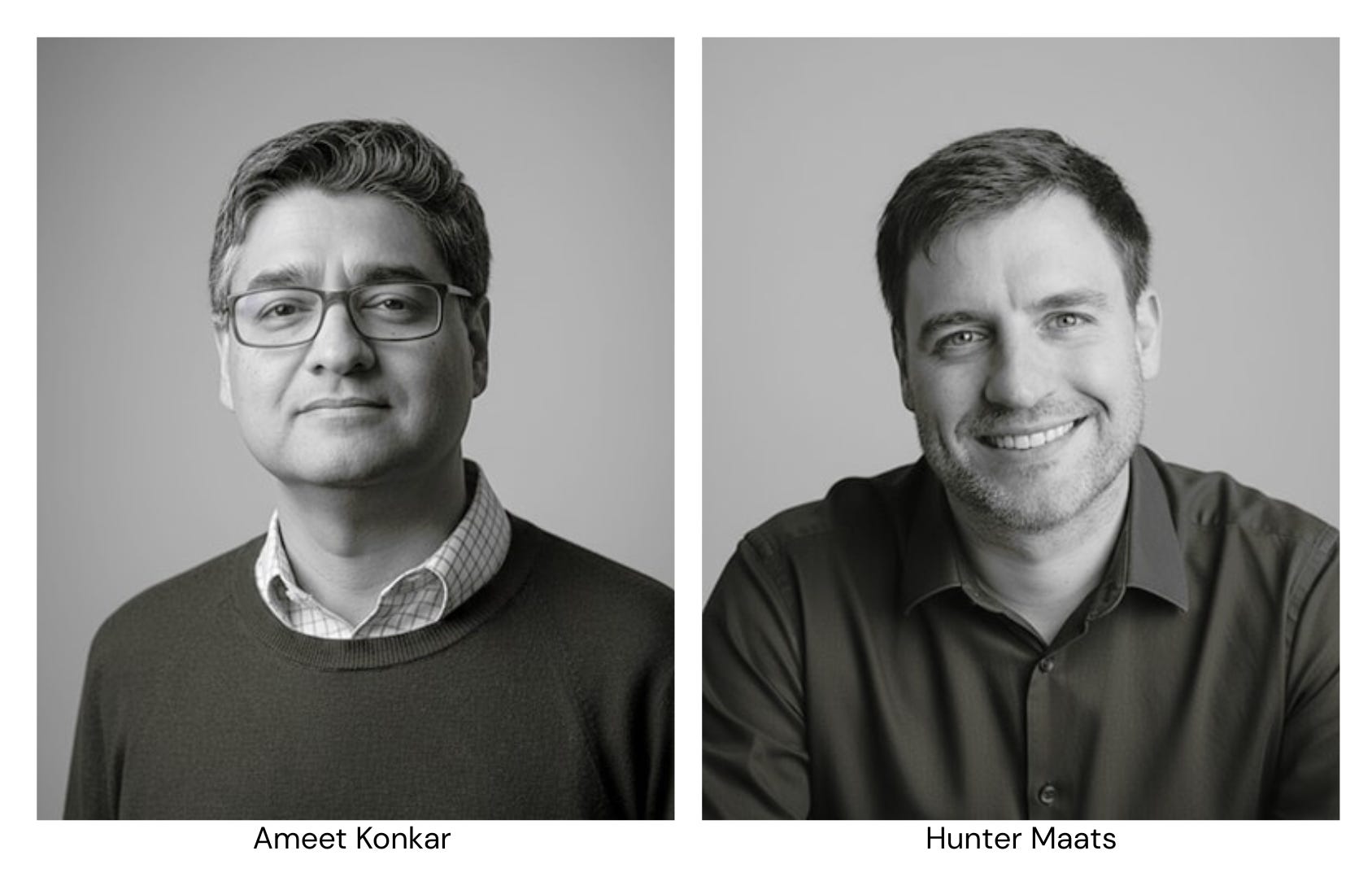 Resilience in the Built Environment: Unlocking the Social License for AI (with Hunter Maats and Ameet Konkar @ Resilience Investments)76 / 100
 Smarter Batteries for a Smarter Grid (with Cole Ashman of Pila Energy)
 Unlocking Climate Investing to 401(k) Retirement Plans (with Alex Wright-Gladstein of Sphere)
 EV Battery Repurposing for Grid Resilience (with Edward Chiang of Moment Energy)
 Recycling Critical Minerals from Electronics (with Alexander Olesen, Bradley Herrup, Grayson Shor, Nick Kumleben of Buckstop)