
CareTalk: Healthcare. Unfiltered. · 2026-10-30 · 36 min
Key moments - from our scoring
Substance score
55 / 100
Five dimensions, 20 points each
Color Genomics started as a way to make clinical-grade genetic testing accessible and affordable - bringing the cost down from $5,000 to $250 - but has evolved into a comprehensive virtual cancer clinic model serving large employers like United Airlines. Laraki explains that the real problem in cancer care isn't science or technology; it's fragmented clinical delivery and poor adherence to screening protocols. For example, despite being the leading cause of cancer mortality in the US, only 6% of high-risk individuals with significant smoking histories adhere to annual lung cancer screening. Color now operates a 50-state medical group, orchestrating virtual-first care that integrates genetic testing, risk stratification, screening coordination, follow-up on positive results, and survivorship support. The model works by embedding Color into employer benefits - employees can sign up in 30 seconds, complete risk assessments, and access everything from at-home screening kits to immediate clinical follow-up. For colon cancer, Color reduces the time from positive FIT test to colonoscopy from six months (during which disease can advance) to under two weeks. Laraki argues that traditional cancer centers only profit from high-cost interventions like surgery and infusion, creating perverse incentives that leave preventive care, mental health, nutrition, and financial counseling undersupported - services that a virtual model can economically sustain across geographically distributed populations.
Hosted by CareTalk: Healthcare. Unfiltered.. The show scores 85.0/100 on substance across its analysed episodes. See the full show profile.
The national adherence rate for annual lung cancer screening in people with significant smoking histories is about 6%, despite lung cancer being the highest mortality cancer in the US.
Color takes positive FIT test results down to colonoscopy within under two weeks, compared to the typical six-month delay that can allow cancer to advance a full stage.
Color provides access to genetic testing, risk assessment, home screening kits, and virtual clinical coordination to all employees; for example, United Airlines' 100,000+ employees can sign up in 30 seconds and access screening and follow-up care through Color's national network.
Traditional cancer centers only generate revenue from high-cost interventions like surgery, radiation, and infusion, so preventive care, mental health, nutrition counseling, and financial assistance actually lose money - a problem virtual models solve through different economics.
BRCA1 and BRCA2 are genes where mutations significantly increase risk of breast cancer, ovarian cancer, and other cancers; Color performs full gene sequencing rather than testing just a few specific mutations to catch the majority of variants that exist.
Our reviewer’s read on each dimension, with quotes from the episode.
The episode contains a handful of genuinely useful data points - 6% lung cancer screening adherence, ~50% FIT test follow-up failure rate, 3 - 8X ROI breakdown - but these are diluted by lengthy backstory, pleasantries, and conceptual framing that a healthcare operator would already know. The ratio of signal to filler is moderate at best.
The national adherence rate to that today is about six percent.
almost half of the positive fit tests never get a clinical follow-up
The structural economics argument - that physical cancer centers only profit from imaging, surgery, radiotherapy, and infusions, so everything else is undersupplied - is a genuinely useful framing. But the 'virtual-first care layer' thesis and the AI-will-fix-everything coda are well-worn health tech narratives.
Getting ex-smokers to get their lung CTs would have a bigger mortality impact than any single cancer therapy that we have introduced in the last like thirty years.
Everything else loses money, right? Like cancer centers might have like a mental health service, but they do that because they know it's important, but they lose money doing that.
Laraki is a legitimate operator who has run Color for 13-plus years through multiple pivots, operated at COVID scale, and secured named enterprise clients - he has genuinely done the thing. The conversation skews promotional at times and doesn't fully surface his deepest operational knowledge, keeping the score from going higher.
United Airlines is one of our customers. Um, so they have, uh, I think, what is it? Like a, about 100, 120,000 employees across the country, all 50 states.
we started about 13 years ago
The episode offers several concrete anchors - named customer, specific adherence rates, before/after timelines (6 months vs. 2 weeks to colonoscopy), and a direct vs. indirect ROI breakdown - but the ROI range (3 - 8X) is wide, self-selection bias is acknowledged but not quantified, and too many claims are left at the level of 'we cause like a drastic reduction.'
The national adherence rate to that today is about six percent.
We take that down to under two weeks.
The host does land a few useful follow-ups - pressing on ROI measurement and expressing genuine surprise at direct-cost savings - but he frequently answers his own questions, spends material time on the guest's personal backstory, and lets promotional claims about ER reduction and AI pass without scrutiny.
How do you measure that?
Oh, really? So you on, on, on, on, on the regular hard costs, you can drive an ROI?
Computed from the transcript - who did the talking, and the words that came up most.
Send us Fan Mail Only 6% of high-risk lung cancer patients get their annual screening. Nearly half of positive colon cancer tests never receive clinical follow-up. The cancer care system isn’t just expensive, it’s leaving patients behind at every step. Othman Laraki, Co-Founder and CEO, Color joins host John Driscoll to discuss how a virtual-first cancer clinic model is closing the massive gap between cancer risk and actual care, and why the biggest lever in cancer outcomes isn’t a new drug, it’s fixing the broken infrastructure between screening, diagnosis, and follow-up. ️️ABOUT OTHMAN LARAKI Othman Laraki is a technology entrepreneur, an investor, and the co-founder and CEO of Color Health. Othman was an early Product leader at Google, where he worked on performance infrastructure and client-side software, including the Google Chrome browser. After leaving Google, he co-founded MixerLabs, which was one of Twitter’s first acquisitions. At Twitter, Othman was the Vice President of Product, helping create the company’s first revenue products and grow the user base from 50 to 200 million users.
Transcribed and scored by The B2B Podcast Index.
Every person who has high risk, whether it's a, you know, someone like me with a, you know, BRCA mutation or someone with a smoking history, um, or someone with environmental exposure, like, how do they know that they're on the right screening plan and that they actually get their screenings done, right? Like, if you look at, for example, um, lung cancer is the highest mortality cancer in the US, a lot of it's driven by smoking. For people who have big smoking histories, they should be getting screened once a year.
The national adherence rate to that today is about 6%. Welcome to Care Talk, America's home for incisive debate for healthcare, business, and politics. I'm John Driscoll, the chair of the UConn System and co-host of Care Talk, and today I have the good fortune of talking to my old friend, founder and CEO, entrepreneur extraordinaire, Othman Laraki of Color Genomics. Welcome, Othman.
Well, John, good, uh, good to see you again, and, uh, thanks for having me on. So c- maybe we could get into a little bit of your background. We can go as far back to Morocco perhaps, as you'd like, but maybe tell us a little bit about your entrepreneurial journey. Your dad was an entrepreneur, is that right?
Yeah, yeah, that's, uh… In some ways I, I feel like my, where my journey's ended up has been, been a m- mix of my, my, my father and my mother. Um, but, uh… Yeah, so I was born in Morocco, grew up in Casablanca. Um, and yeah, if we go on video, that's a picture of, uh, one of my favorite cities in Morocco behind me to, is, which is Essaouira. It's an old Portuguese pirate port.
Um, but, um, but yeah, grew up there. Um, had a, um, honestly actually like a, you know- Through most of my schooling I was not that particularly good of a student, wasn't even thinking of going to college until about, like, I got, like, about 16 and started getting very curious about computers and programming and, um, went down kind of the, uh, programming rabbit hole and, um, ended up at, at Stanford for undergrad. Um, not even, you know, knowing what my plans were, but I was lucky enough that happened to be here during, um, uh, during the, the dot com era, so 1996, right when, you know, Yahoo had just launched, and Larry and Sergey from Google were doing their PhDs out here and everything.
Um, and that, uh, you know, really started me in my entrepreneurial journey and, uh, so kind of combining my love for engineering as well as, um, you know, discovering the, um, uh, the, you know, Silicon Valley entrepreneurial ecosystem. But yeah, like, you know, fast-forwarding, over time I started several different companies but, um, like you mentioned, my… So my dad was an entrepreneur in Morocco, like, so a very different kind of entrepreneurship, um, where, you know, it's like we didn't have venture capitalists, uh, there at the time, so, you know, to start a company you, you know, get a loan from the bank and it's collateralized against your house, so if your business goes belly up, uh, you lose your house.
So much higher stakes than, uh, than the, uh, than the coddled version of entrepreneurship we have here. Um, and, uh, and my, my mother was a, was a doctor, uh, her entire career and then she also, um, beat, uh, breast cancer twice. Um, you know, she, some of my earliest memories as a, uh, when I was three year, three years old was when she had her first diagnosis. Um, and so that was very much part of, you know, my life growing up.
And you had the good sense to join Google. Yeah, so and actually, so when, when I was at Google is when she had her se- my mother had her second diagnosis. Um, and at the, and that's when we discovered that she's a car- carrier of a mutation in a gene called B-R-C-A2 or BRCA2 that increases women's health of, uh, breast cancer and, uh, other cancers as well as for men. Yeah, the, the BRCA variation is, is, is devastatingly dangerous and is one of the clearest signals of, uh, increased risk for, you know, breast cancer getting, you know, taking you out.
I mean, it's a… And it's a, it's a very clear - It's one of the most important, you know, genetic mutations in terms of sending a very clear and dominant signal, given the fact that, you know, so many women will have bre- some form of breast cancer during their lives. Yeah, and it was striking at the time, you know, going through the experience and, you know, I got tested out here. Um, she, she'd gotten tested in France, and I got tested out here. Um, and, you know, as I started learning more about it, you know, that I knew nothing about the healthcare industry or, you know, never thought I'd work in healthcare.
But, um, one of the things that was really striking is, A, how expensive and inconvenient the experience was, um, but then also how actionable the information is, right? Like, when women know about it, um, you know, they can get screened earlier, they can catch their breast cancers early, completely changes the outcomes. Um, whereas the way we were using genetics was, like, to explain why bad things happen as opposed to try to, you know, manage and prevent them. Um, and so that's kind of like where w- when we started Color at the time, and that's, you know, that's what we called initially Color Genomics.
It was around, uh, making, um, clinical grade genetic testing highly accessible to people. So we started about 13 years ago, um, and You know, did all the things that a, uh, a software person who's n- knows nothing about healthcare, all the mistakes one would do which- Well, I don't, I don't think that's as fair … Othman, to be fair, people have been talking about curing cancer using genomics targeted therapies for, well, I mean, certainly for the last 30 or 40 years. And y- y- we've only really had the tests to kind of define where the, the, the genetic mutations are and where you, where you have higher risk.
And I actually think your timing was really good because the te- the cost of testing went from being tens of thousands to thousands to hundreds of dollars during that period, and the insights kept growing as well. And cancer still, I think, touches one out of every two women and one out of every three men. I mean, it's a, it is a hugely important disease to, to, to sort of screen and manage because if we can catch cancer early, in most cases we can turn it into a manageable disease to some degree.
Yeah. Yeah. Totally. And, you know, and maybe just kind of to quickly kind of summarize kind of like where the path that Color went through is that, you know, initially we started off in that where it was like all of a sudden it felt accessible.
Like actually we were the first to really make clinical genetics like highly accessible. At the time, everyone else's tests were like $5,000 and we put one on the market at 250 bucks, so literally a 20th the cost. Um, and also put it into a service model there we can get the orders done online, incorporate genetic counseling with it, et cetera. Like where it's so really what you think about- Just to dig in there, Othman, clinical genetics is, is what?
So that's, um, where you do, uh, deep sequencing, um, where you report, um, the, the results as an official clinical result. Um, where, you know, for example, with, you know, uh, genes like BRCA1, BRCA2, initially people used to get like just tested for two or three specific mutations. Initially it was the three Ashkenazi Jewish mutations that were the most common ones to get tested for. But when you actually… You know, for example, my, the one I carry is not one of those.
Um, and the majority that are in the, in, in the wild are actually outside of those three, so you have to do a full sequencing of those genes. So do a high quality next generation sequencing approach to completely characterize those genes as opposed to just reporting on a few mutations. And so we were the first, like, to really make that affordable at the time. Um, but the learning process we went through, which has actually kind of come full circle in the last few years, was realizing that, you know, initially I thought it was a science and technology problem, and that it was like, okay, if you get the cost down and you do the science properly, the market takes care of it.
But then, you know, that's what technologists who know nothing about healthcare think. And then when you get into it, you realize it's not a, it's not a software problem, it's not a data problem, it's a clinical and care delivery problem in many ways. Um, there is an important technology piece, but it is like, it's, uh, you know, um, necessary but definitely not sufficient to solve the problem for people. To be fair to you, it, it can take, you know, 15 to 17 years between the time something at the acada- at an academy level around a genetic mutation and a, and a path of care is identified by, you know, the medical oncology community between the time they identify it and it actually becomes part of community practice.
And so to some degree, if the insight is there and the technology's there, it can still take nearly two decades. And, and the amount- Yeah. Yeah, for sure … of medical knowledge we're creating is probably doul- doubling every two or three years, making, making the complexity for the o- the community oncologist, the doctor, the internist, the pediatrician, the OB, even e- uh, even a bigger burden. And so how do you solve for that with a, a service like yours, which maybe we can get into what the service- Yeah … provides.
And then how do you get Doctors and patients to use it Yeah. So, you know, we're, we're kind of like the… So as we were talking right before, you know, it came on air, you know, we were joking that Color is one of the, you know, m- most reinvented companies in, in health tech. Um, but you know, through that time, like I think the realization is like you need to deliver a complete and integrated service. Over time, we got more and more vertically integrated, and this is what's coming out of the, of COVID where actually, you know, we did some work together and that, and, and, and through the pandemic work, um, where, um… I used to be on the board of the American Cancer Society, and at the time I was spending time with the CEO of the ACS, and one of the observations we were making, um, was that, you know, we work with a lot of self-insured employers, and cancer was Accelerating faster than in cost than anything else.
Um, and, but there was no integrated solution, like how do you manage cancer holistically? And so we had this idea that's now become the core of Color's business, which was, uh, creating what we call a virtual cancer clinic. And the core concept behind that is like if you were to create a cancer center in the modern age, how would you go about it? Like most of the cancer centers we know today, whether it's community clinics or, you know, the NCI centers like Stanford, MSK, and so on, you know, are, have - are decades old, right?
And come from a very different era. If you were to start today, you would not go and buy buildings and put it physically somewhere. What you would do is that you would actually build a, a clinic with a, a national footprint that is virtual first, and that works with existing clinical providers. And that's kind of effectively what we set out to do, um, with the… And the core reason for that is that we realized that, you know, there is a very deep scarcity of clinical access for around cancer, whether it's from screening and prevention, during treatment, and also for survivorship.
Like a lot of people even forget about survivors, but that's actually an exploding part of the cancer surface area that is very heavily underserved. And in many ways, like what is scarce is not like MRI machines and surgery rooms and infusion seats. It's literally the clinical s- access service model so that, you know, every person who has high risk, whether it's, uh, you know, someone like me with a, you know, BRCA mutation or someone with a smoking history, um, or someone with environmental exposure, like how do they know that they're on the right screening plan and that they actually get their screenings done, right?
Like if you look at, for example, um, lung cancer is the highest mortality cancer in the US. A lot of it is driven by smoking. For people who have big smoking histories, they should be getting screened once a year. The national adherence rate to that today is about six percent.
So getting ex-smokers to get their lung CTs would have a bigger mortality impact than any single cancer therapy that we have introduced in the last like thirty years. Um, and so, a-and, and that's not a You know, you know, deep scientific problem. It is like an access and operational problem, and that's what this virtual cancer clinic model is really set to center around, so. So, so if, so for the app - So, so let's break the population into this.
So I don't know if I've got, uh, a pre- a predisposition to cancer. I'm otherwise healthy. Should I get my genome sequenced for cancer and, and other risks? So genetics is one of the, one of the variables for that, you know, put someone into a higher risk category.
But there are many of, many things that could put you in a elevated risk, right? Like it could be your genetics, it could be, you know, if you have a high PSA, you know, some people have an elevated PSA, they should be actively monitored. Doesn't mean they have cancer, but it's a different monitoring process or- PSA is a common test for prostate … for prostate cancer. Yeah.
And, um, or, you know- Yeah, exactly. And or, you know, uh, radon exposure, for example, et cetera. There's all these like var- you know, a variety of things that could have happened in your history or your life that, uh, for which there are risk-adjusted guidelines for screening. But the vast majority of people who have any of those risks actually don't know, or even if they do, they're not h- don't have the clinical care to manage them properly.
Um- So- Yes. But- So are you, are you saying… Yeah, are you saying that… So a- absent… So let's just talk about people with high risk. If you, if I've got, you know, one of my, one of my college roommates worked building a nuclear reactor and he REM'd out 'cause he got exposed at one point, he would be in that category of radiation exposure. You're saying even where people have a clear environmental or, or, or documented genetic risk, they're not getting screened?
The, the vast majority aren't. Um, and even in cases where they, they, they, they know about, about it, um, it's just hard to find a PCP who can manage it for you, right? Like, I mean, it is, you know, basically the case now that, you know, primary care in America is dead. Like, you know, there is no way out of assuming you're gonna have primary… everyone having a great primary care doctor who knows everything about cancer, about cardiovascular health, et cetera, and has all the time to know your case deeply.
Like, that, that does not exist for the majority of Americans anymore, right? Like, I, you know, I'm very lucky I, I have a PCP who I like, but it's- Yeah, you can have a primary care doctor, but they're no like, no longer… You know, we used, used to use the word, you know, primary care doctor and general practitioner in the same way, and they're, they're, the, the… it's the general that's long gone. Yeah. The practitioner's still there.
He's only got three to six minutes to talk to you. Exactly. Exactly. And so, and that's the, that's a reality, right?
Like, and so instead of, you know, pretending it's That's gonna be undone. I think in some ways we embrace the f- the, the, the reality that we're in, and we say, "Okay, like actually there is a more future-forward way to manage this," which is, you know, a virtual first model that has like this kind of national footprint where you can use software to dramatically increase the capacity of clinicians and be able to concentrate the expertise where it's really most needed or will have the biggest impact on patients.
And so, you know, and, and for what it's worth, that applies on the screening side, but it's very similar, you know, during diagnosis, during treatment, survivorship. Um, you know, there we see a very big spread in access to expertise and the quality of decision-making that is made or help or, or support that's provided to patients. And in some ways, I think we're all lucky that we're living through a window of time where through the AI revolution, that is also completely, I think, changing the quality, um, of expertise that we're able to make available to, to every single patient.
Um, and so, you know, to me, that's like the, the, you know, the, the value or the, you know, the real opportunity behind this virtual cancer clinic model. Well, step back a second, Othman. So, okay- Yeah … today, Color sells to employers, as I understand it, and works with employees. Walk us through the relationship of Color with an employer, and as an employee with some cancer risk in my family, how it might affect me.
Yeah. So, um, the way it works is that, um, you know, so Color, you know, is… Think of it as like there's all the software infrastructure, there's 50 State Medical Group, and there's all the diagnostics infrastructure that we've built over time. Um, to employees, I'll give you maybe like to take a concrete example, like United Airlines is one of our customers. Um, so they have, uh, I think, what is it?
Like a, about 100, 120,000 employees across the country, all 50 states. Um, for them, cancer is the number one cost spend. Actually, I think like United Airlines spends, um, you know, if you look at their stack of spend, I think it's literally, it's gas, salaries, then healthcare. And more, they spend more on healthcare than on planes.
Um, and cancer is the number one cost for them. And, um, and they have a very diverse workforce, blue collar workers, pilots, um, uh, a big blue collar workforce, if you will, like all the airport personnel and so on. And so the way it works there is like, you know, when they roll out, all employees have access to Color. Um, they can initially sign up.
It's literally like they can get an email, they can scan a QR code, um, takes them like 30 seconds to set up an account, and then you go through answering a few questions just to get a general sense of your profile, right? Like, you know, your basic demographics. Cancer history, like, you know, some basic cancer history in your family. Um, understanding also whether you're, you've never had cancer, you're current - you've had - you are a current patient, or you're, you've, uh, you're, uh, uh, you've had cancer and you're done with your treatment.
Um, and so based on that, like we kind of then route you to different types of services to, um, make those available to you. And so like if you take the screening example, um, literally people can be - they actually set up, uh, these, uh, sites in their major hubs where, um, if you've flown through Chicago, the Chicago airport, uh, you know where there's that really big dinosaur? As everyone has who flies, yes. Yeah, exactly.
You know, you know where there's the big dinosaur? From the Field Museum. There's a - Yeah. The m- for the, the example of the T-Rex from the Field Museum.
Yeah, exactly. And so the escalator be- below that, they set up this big kind of like, um, site a few times a year where any employees, as they're walking by, can, a, kind of like, um, come get, come meet, meet, meet up with a clinician. They can, uh, pick up kits. So for example, for tests that can be done at home, a PSA test, fit test for colon screening, et cetera, they can literally just like pick them up as they're going by.
Um, they can also do that online, so you can order online, and then within a few days you're set up for all of your screenings and all caught up on your screenings. If you have a positive result, that's also a key place where Color makes a really big difference, is that oftentimes someone has a positive result, but nothing happens or there are really long delays. For example, in colon cancer, um, almost half of the positive fit tests never get a clinical follow-up. So this is someone who has like a 5 to 10% chance of being diagnosed, and the ball gets dropped.
Well, I think one of the reasons for that is like, you know, the way in- payer incentives work is that they get rewarded for doing the test, not doing something with it. Uh, but you know, but in our case, like we see sometimes people will… You'd have a positive FIT test and get scheduled for colonoscopy six months later. During that six month window, you know, you have a, you know, you can have a whole stage advance, um, you know, that like so, so much can go wrong during that six month window.
We take that down to under two weeks. Um, and so just in managing that process for them, um, and giving them the clinical access with, in a very high level of immediacy, um, you completely change the trajectory for, for these cancer patients. The goal has literally gone from making testing cheap and available and insights to really a, a, a, a mix of virtual and in-person care that's, that's tuned for the, the, any of us who are, have ca- a risk for cancer. Exactly like for broad distributed populations.
Um, and you know, we work with all of the kind of like community clinics, with NCI centers, et cetera. So we, so we don't compete with them, but you, it's almost like realizing that actually there is like a very big gap w- for creating this like virtual first, like national cancer center effectively that- Well, you're effectively an intelligence and activity layer on top of a, a, a, by definition dumb system that's disconnected, you know, between diagnosis and care and follow-up and communication.
You're, you're kind of knitting it together. It's kind of, uh, you know, I, I guess, I mean, tr- it is virtual first, but it also is ti- it also is tying the whole getting the best of the system, honestly, when it works well Yeah, totally. Because, you know, uh, the, the, the thing that's, you know, we, we have - we are fortunate to have like, you know, incredible cancer centers in the, in the country, you know, et cetera. Like, we, we do have a lot of like really great physical clinical infrastructure, but most of our healthcare lives, 99% of our life is outside of the health setting, right?
And so this is really about, you know, taking the health setting to you, right? And, um, and that like completely changes the, you know, the equation for people. The other realization too that's kind of important in this is that the fundamental cost structure for a virtual model makes it possible to make services available that are completely impractical, financially impractical, um, in a physical setting. What I mean by that, like, uh, to give you some concrete examples there, you know, during treatment, you know, your, uh, nutrition is very, has a big impact.
Your mental health has a big impact. Financial toxicity, like literally are you able to pay your bills, has a big impact of whether you successfully go through cancer treatment. Um, your, like, survivorship post-treatment, like how that's managed is very consequential. But when you look at a cancer center, you know, they make money… The only things that really make money for them are like, there's like three things, right?
Like it's high-cost imaging, surgeries, radiotherapy, uh, and infusions. That's, I guess, four, right? Sure. Everything else loses money, right?
Like cancer centers might have like a mental health service, but they do that because they know it's important, but they lose money doing that. Or like high risk, like managing people with high elevated risk. Like every time I go to Stanford, I cost them money. Uh, but you know, they make money if ever I get diagnosed.
That's why, you know, that's kind of how that math kind of adds up. But the side effect is that all those, like everything outside of those four are very undersupplied in a physical setting. In a virtual first setting, you can dramatically increase the effective supply of these because you have just a very different cost structure. Like, you know, we are, you know- Our expert who helps us with like sarcoma cases, for example, we can amortize their skills, you know, na- on a national footprint.
Well, and you can leverage all kinds of online tools a- across a much broader- Yeah, exactly … I mean, it's, it's, it's, you, you got an advantage in tying things together, making them cheaper, and making them comprehensive. So what's the ROI for employers, and what's the impact for patients? Yeah, I mean, like, um, the, uh, across the board we're seeing like a, between a 3 and 8X return on the spend that they have with us. Um, and- How do you measure that?
Do you think about that in terms of savings or…? Yeah, so we measure it in two ways. Um, there's one which we call it like direct and indirect ROI. The direct ROI is literally apples to apples.
If you did that same thing through, you know, your standard plan, um, how much would it cost? Like, literally, like how much did it cost to do a PSA test or for a tumor board review to happen or- Oh, really? So you on, on, on, on, on the regular hard costs, you can drive an ROI? So you, you- Oh, by far, yeah … so a, a employer with or without you.
Interesting. I just assumed it was, it was, it was related to outcomes or total cost of care. No, so like, th- like there's a first like, uh, you know, there's a th- three, 3X, three to 4X of the ROI, like is all like direct ROI. It's like you take the thing that you would've done in a traditional fee for service model, um.
And again, like it, it actually makes sense when you step back because like there's so much overhead that's baked in to any of the standard like fee for service clinical- Access, which is like, you know, the, you know, overhead for the doctor, right? Like, you know, when you're literally, you know, your PCP going between, you know, visits for, for patients. Um, you have RCM, right? Like, you know, that's a 30 to 40% overhead of just, like, dealing collection.
You know, there's all this like, you know, costly value leakage that happens. Um, so that's one big part. And then there, the, what we call indirect is the side effect of having better clinical management, right? Like, what is the value of catching this cancer at a stage III instead of stage IV?
What's the value of… And there what we do is we compare relative to, uh, in, in each population we have, you know, we, we usually get in the first year about 20 to 30% of the entire population that uses Color. It's actually a higher percentage for active cancer patients and survivors, about 2X that. But like, if you look at holistically, and then we, we compare to other populations that are not u- not using Color, and obviously there's a self-selection bias there. But, you know, you, there at least you're seeing like, okay, for people who didn't go through Color, the time between a positive FIT test and getting colonoscopy is six months instead of, you know, three weeks.
I think you said that, like, you're 66% faster a- across the board in terms of from a, from a, from any kind of indication to the next step in, in care. I mean, the, the, the clock is against every cancer patient. I mean, t- time- Exactly … is literally l- life, life saved. So this, this is even before you get into health outcomes.
Yeah, exactly. And so it's, and it's very - those, those are very consequential, right? Like, for both the progression of the disease, obviously people's even like, you know, there's the psychological impact. Um, there's also additional costs that don't often get accounted for that we don't actually count in our ROI.
But for example, during those windows of time, people are also, like, seeking additional care, additional opinions. They're, you know, they're like, you know, oftentimes, like, doing their own, um, you know, random search as well that also is costly to the system. So when you actually just, like, take charge and make the right thing happen for people, you know, a lot fewer things can go wrong, right? And so, um, you know, uh, things like ER visits, um, we - I, I don't wanna give you the wrong number, but we, we cause like a drastic reduction in, in ER visits.
Um, and these are again, like, you know, there are times when you really should go to the ER, and there we, like, we tell you to go. But there are a lot of times where, you know, you're, you have some new side effect that you need to understand how to manage it. Or, you know, there's kind of these, a lot of these cases where you can actually manage someone, where the only reason they're going to the ER is because they just need to talk to a doctor to get some help. But you can't, you know, but it's gonna take two weeks to see your oncologist, right?
Like, and so just giving people rapid access, um, is a, you know, it saves a lot of money. Rapid access is something that it turns out to be a universally, uh, universal interest on the part of US healthcare. Maybe just to wrap, Othman, we could just talk, break the different populations and, you know, you're an expert now in this field, having survived it as a leader for, is it 14 years? Uh, yeah, it's- Yeah.
I think we're coming up on 14. Thirteen and then change. Yeah, yeah, yeah, yeah, yeah. So, um, okay, as a, as a, as a, as a founder of a pathbreaking cancer genomics testing and now a virtual care clinic, what's your, what's your, what's your advice to employers on what they should be thinking about that they're not thinking enough about in terms of cancer care?
I mean, I think one of the big unlocks, like the big ahas when we spend time with people, is making them realize that- Reducing costs and improving outcomes for cancer is a clinical problem. It's, like I think there'd been this kind of like wave of like, oh, it's all about navigation and incentives, right? Like cancer is not an elective surgery, right? Like I, I always tell people like, "I've never met a human being who wants to go get a colonoscopy or mammography who wants to over-utilize that," right?
Like those things are not like, you know, TikTok videos or iPhones, right? Like, uh, you know, the… And so, so i- but the, when you actually unpack like ca- And also cancer is expensive, right? Like a late stage, stage four cancer is gonna be expensive and it sucks no matter how you cut it. But when you look at, okay, here's a path that actually happened, and here are the set of things that could have made it, uh, given it better outcomes and made it cheaper, um, almost all of them are actual clinical, uh, choices and, and timing of access.
Um, and so that's the biggest unlock with employers is like, it is actually very actionable. And it's not about like rebundling, it's not about just navigation and giving people a ph- another phone number to call or something like that. It's actually literally like there's a missing set of clinical services that when they're there, you can make a big difference. It sounds like your advice to employers is cancer is a sys- cancer care is systematically failing, and we can create a system solution Exactly.
It's like looking at, take- taking a systems view to it. Um, and, you know, and, and to your point too, it's like it's not, there's no silver bullet. I think oftentimes people like get really excited about some new technology or something like that. Yeah, welcome to the valley.
Yeah, exactly. That's… And, and, you know, and, and, and those do add up, right? Like, you know, it's kind of like- Sure … detecting cancers earlier or new therapeutics, like the RevMed data that's been coming up, et cetera. Now, as a, as a cancer expert, what's your advice to families who think they've got a, a cancer problem?
Could be a risk, could be a recent diagnosis. What's your advice to families and patients? Um, I think there it's like, you know, um, sign up with a, um, a service that, um, can manage, um, elevated risk for you, um, and help you like understand it and manage it proactively. Like oftentimes there are like risk-adjusted guidelines and things that are actually have, are really proven to make a difference.
Um, and you know, if… And we do, we, you know, we currently, like you can't access Color if you're not part of an employee or, or payer population, but we do help a lot of people when they just like reach out to us. Like, we have like this really big like effectively friends and family, uh, you know, uh, community that we s- that we support just to do the right thing for folks. Um, so you know, if people have, you know, need help, like they can always reach out to us. We're always ready to help.
Um, and we just do that like, you know, for, for karma. And now, okay, we're- healthcare is going to be an increasingly central to the political conversation in America. People are disappointed, they're angry. There's a cost and there's a care problem.
If you're a policymaker, you, you've suddenly there's a, a, a, a new… You've got control of the, the House and the Congress and the White House. You're talking to the president. What's the one thing that we should be doing in DC on cancer care and cancer policy that we're not doing right now? The path to get FDA approval for novel therapeutics and for, um, cancer vaccines and so on, I think coming up with a strategy that is compatible with the AI era, I think like we're getting this explosion of discovery that's happening now.
And you know, if we can make policy choices that allow those discoveries to be helping patients at the bedside in the next like three years instead of next 30 years, right? Like the area under the curve for that is, is massive, right? Um, uh, I think that's, I think there's a whole like set of like how payer incentives work and et cetera, that really goes into like, I think, you know, the The entire, like, time horizon problem. Like, uh, for - the reason, for example, why we work with employers as a first basis is actually because they have a long time horizon around the life and outcomes of people.
Um, whereas, uh, most commercial payers have a much shorter time horizon, and that's actually a really big problem when you think about, you know, investing in cancer prevention and, you know, long-term health I think cons-consumers have noticed that many health insurers don't care. Yeah, exactly, right? Like it's so- But thank you for re- thank you for reminding us of that wonderful aspect of the US healthcare system. Uh, Othman, it's, it's been a pleasure, but I think we should wrap there.
Um, I'm sorry we didn't get deeper into your entrepreneurial journey, but I'm really happy we talked a lot about cancer care 'cause it affects so many families. So that's it for another episode of Care Talk. Um, if you like what you heard or you didn't, we'd love you to subscribe on your favorite service. I'm John Driscoll, the chairman of UConn Health, and thanks for listening to my friend, Othman Laraki, who is increasingly coming up with better ways to improve cancer care.
Thank you for everything you do, Othman. It's a pleasure. Thanks for having me.
Other episodes covering the same guests and topics, from across The B2B Podcast Index.
 Ben Bluml’s Case for the Connected Pharmacist There’s a Better Way · on healthcare89 / 100
 Navigating High-Cost Claims: Employer Strategies for Managing Complex Healthcare Cases with Dr. Christine Hale, Chief Medical Officer, US Benefits at GallagherThe Benefits Playbook · on healthcare85 / 100
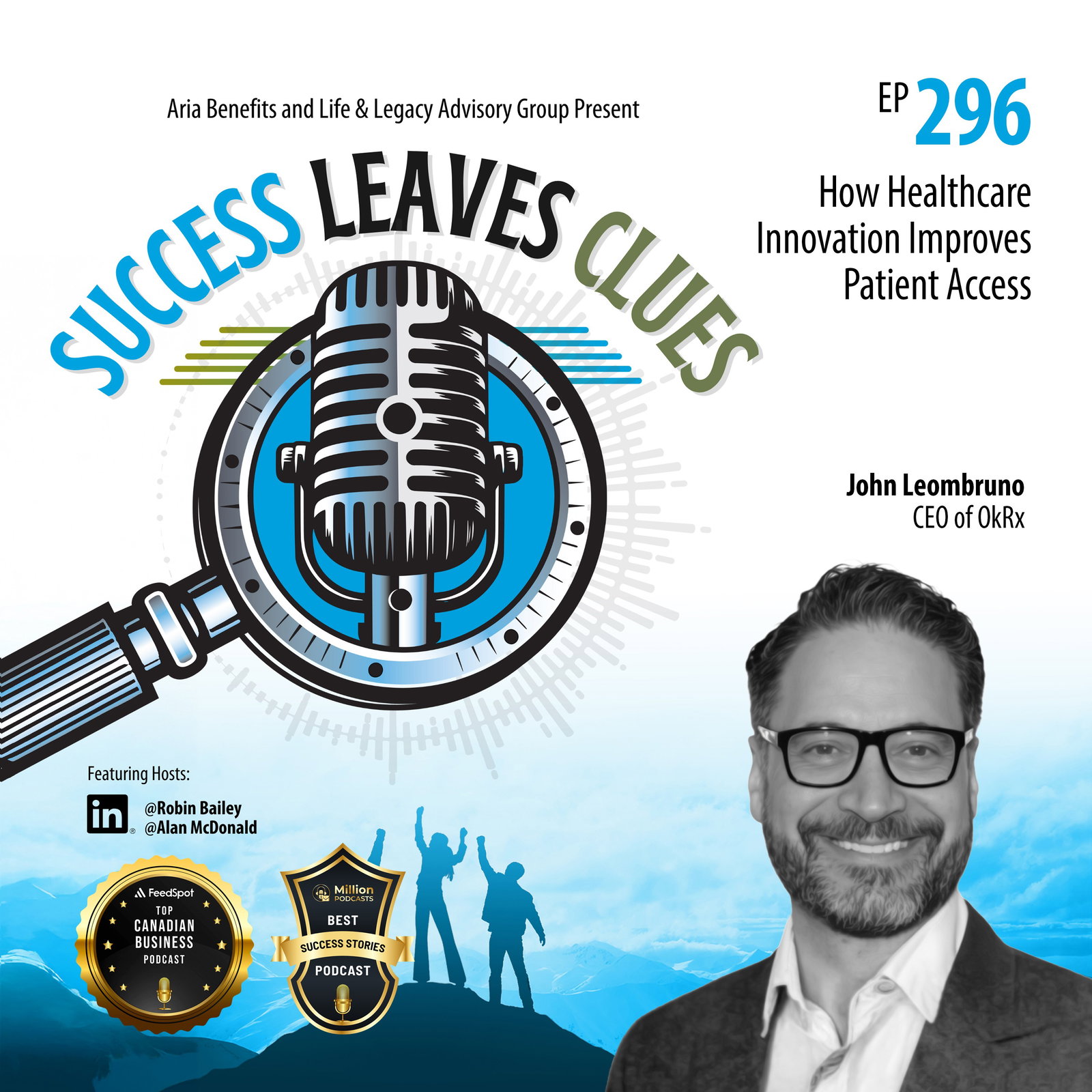 Success Leaves Clues: Ep 296 How Healthcare Innovation Improves Patient Access with John Leombruno, CEO at OkRx Success Leaves Clues with Robin Bailey and Al McDonald · on healthcare podcast79 / 100
 How Founder-Led Thinking Creates Faster AI InnovationStartup Builders & Backers · on Healthcare AI78 / 100
 What’s Next for Value-Based Care & Health Tech w/ Dr. Patrick Conway, CEO, OptumHealth Care Rounds · on healthcare podcast75 / 100
 Healthcare AI Is Failing And the Fix Isn't More DataSaaS That App · on Healthcare AI73 / 100
 How Consumers Are Defining Healthcare's Future w/ Dr. Daniel Kraft, Founder, NextMed Health81 / 100
 AI and The Future Of Behavioral Health w/ Alon Joffe, Co-Founder & CEO, Eleos Health88 / 100
 How Targeted Radiotherapy Is Changing Cancer Care w/ John Babich, President, CSO, Ratio Therapeutics94 / 100
 Preparing for the Pandemic We Haven't Seen Yet w/ Dr. Dan Barouch & Kris Brown, Vector Sciences87 / 100Mark Cuban on Why Patients Don’t Trust Their Medical Bills85 / 100
