
CareTalk: Healthcare. Unfiltered. · 2026-06-24 · 2 min
Key moments - from our scoring
Substance score
16 / 100
Five dimensions, 20 points each
This episode explores the business dynamics and clinical potential of GLP-1 drugs, moving beyond hype to examine realistic ROI expectations and broader therapeutic applications. The hosts discuss the fundamental tension in the GLP-1 market: these are expensive medications with proven efficacy for sustained weight loss, but adoption faces economic barriers unless patients and payers see short-term returns. A critical finding highlighted is the rebound effect - approximately 60% of weight loss achieved during treatment is regained within a year of stopping, a reality that complicates long-term cost-benefit analysis. The conversation positions GLP-1s not just as weight-loss tools but as platforms for broader indication research, with the hosts expressing cautious optimism about secondary applications. This is essential listening for healthcare investors, payers, pharmaceutical strategists, and operators evaluating GLP-1 commercial viability beyond obesity - including potential oncology applications suggested by the episode title.
Approximately 60% of weight loss achieved during GLP-1 treatment is regained within a year of stopping the medication, according to a study cited in the episode.
GLP-1s are expensive even at reduced costs, and sustained utilization growth creates a challenge unless patients and payers can demonstrate relatively short-term return on investment.
The hosts believe that success in weight loss will drive research and funding toward tuning similar GLP-1 formulations to address other medical indications, expanding their therapeutic use beyond obesity.
Our reviewer’s read on each dimension, with quotes from the episode.
In under two minutes the episode produces almost no actionable insight - one unreferenced rebound statistic and vague optimism about GLP-1 research pipelines. The signal-to-noise ratio is extremely low for a B2B operator audience.
I think the thing that's going to be tricky is these are expensive drugs even at the current reduced cost and the scale of the utilization is still growing
I'm a positive on this one
Every point made - GLP-1 drugs are expensive, rebound is a problem, future research is exciting - is the same narrative circulating in every mainstream healthcare outlet. There is no contrarian angle, no first-principles reasoning, and no novel framing whatsoever.
I do think that the, and the thing that's most exciting is you're going to see because of the success a lot of research and money go towards seeing whether this similar formulation can be tuned to solve other problems
There is no external guest; the episode is two hosts chatting with each other. They explicitly self-limit their expertise to 'the business side,' and nothing in the transcript demonstrates deep practitioner knowledge or operating experience at scale.
What I think that we're qualified to comment on is the business side of it, which I find fascinating
The sole concrete data point is a 60% weight-regain figure from an unnamed study with no citation, timeframe detail, or sample size. All other claims are purely qualitative and unanchored.
There was a study that showed about 60% of weight loss that was gained during treatments was regained within a year
The host questions are transitional and surface-level ('let's stick for another one more minute'), there is no challenge to any claim, and the exchange reads as two people agreeing with each other rather than probing for insight.
John, let's stick for another one more minute on the weight loss side of it.
But I think you know where you can get dramatic and sustained weight loss. I think you're going to see that Dave.
Computed from the transcript - who did the talking, and the words that came up most.
Send us Fan Mail GLP-1 drugs were designed for weight loss. Now they may be showing up in cancer research in a way nobody expected. In this clip from our episode “The Business & Science Behind the GLP-1 Boom”, hosts David E. Williams and John Driscoll break down what the 2026 ASCO annual meeting revealed about GLP-1s and their potential to reduce cancer progression in lung, breast, colorectal, and liver cancer. Listen to the full episode here ️️ABOUT CARETALK CareTalk is a weekly podcast that provides an incisive, no B.S. view of the US healthcare industry. Join co-hosts John Driscoll (President U.S. Healthcare and EVP, Walgreens Boots Alliance) and David Williams (President, Health Business Group) as they debate the latest in US healthcare news, business and policy. GET IN TOUCH Follow CareTalk on LinkedIn Become a CareTalk sponsor Guest appearance requests Visit us on the web Support the show ️CareTalk: Healthcare. Unfiltered. is
Transcribed and scored by The B2B Podcast Index.
you really more of an optimist about these drugs than I realized? Perhaps I've mislabeled you as a skeptic. What I think that we're qualified to comment on is the business side of it, which I find fascinating and then also the potential that they have for a lot of different indications and possibilities. And yes, I do find it very interesting and exciting but I don't want to get ahead of the trials.
I think the thing that's going to be tricky is these are expensive drugs even at the current reduced cost and the scale of the utilization is still growing to your point. So it's going to be a challenge unless people can see a relatively short term roi. But I think you know where you can get dramatic and sustained weight loss. I think you're going to see that Dave.
I mean I'm a positive on this one. I do think that the, and the thing that's most exciting is you're going to see because of the success a lot of research and money go towards seeing whether this similar formulation can be tuned to solve other problems. John, let's stick for another one more minute on the weight loss side of it. And we hear a lot about the GLP1 rebound rate.
Other episodes covering the same guests and topics, from across The B2B Podcast Index.
 Ben Bluml’s Case for the Connected Pharmacist There’s a Better Way · on healthcare89 / 100
 Breaking Open the Black Box: How Transparent PBMs Are Reshaping Pharmacy Benefits with Jake Frenz, Founder & CEO of SmithRxThe Benefits Playbook · on GLP-1 drugs83 / 100
 OUT OF SCOPE, Ep. 1: Hot Takes Roundtable with Tori Pastore (Soup) and Austin Campbell (Zero Knowledge)Validated · on GLP-1 drugs80 / 100
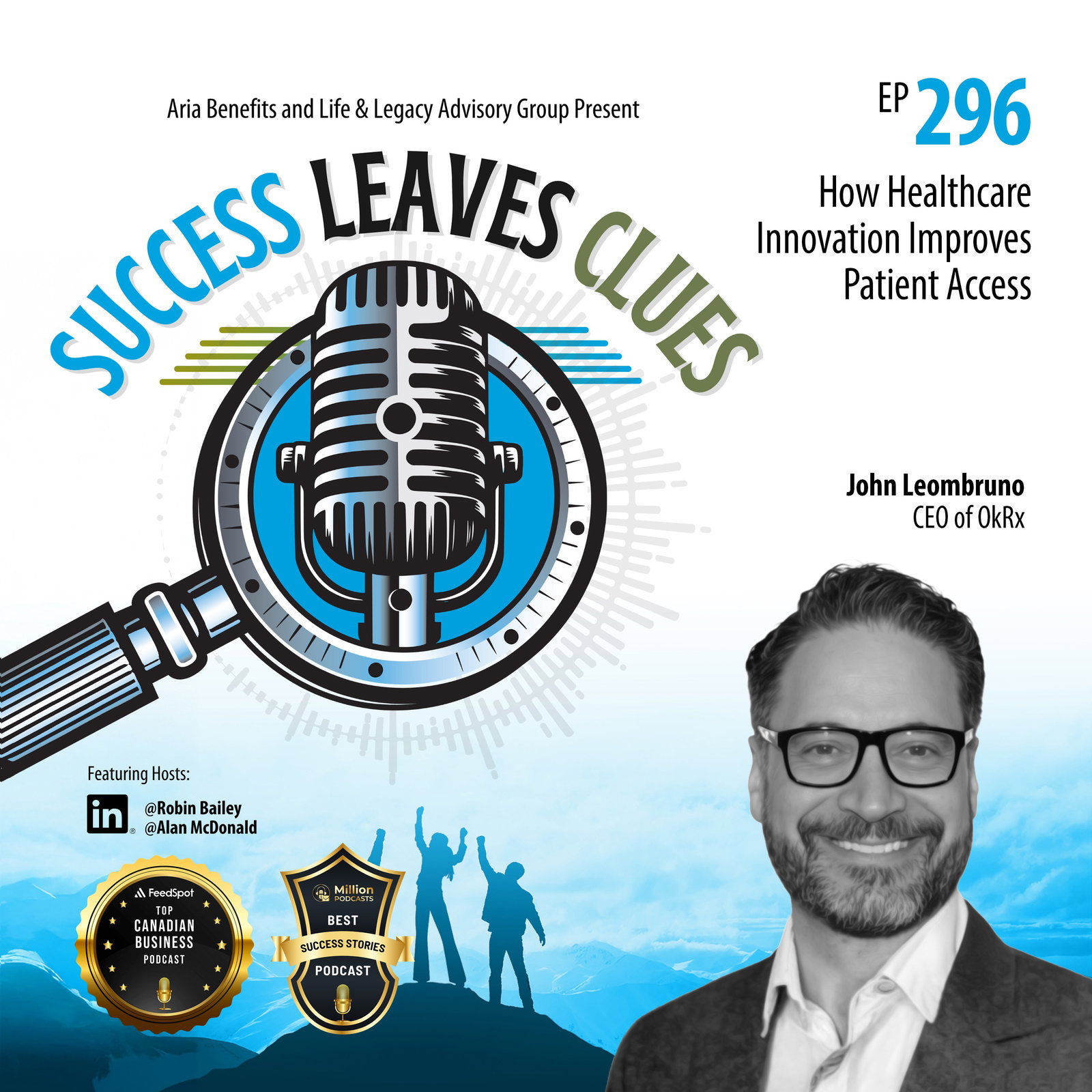 Success Leaves Clues: Ep 296 How Healthcare Innovation Improves Patient Access with John Leombruno, CEO at OkRx Success Leaves Clues with Robin Bailey and Al McDonald · on healthcare podcast79 / 100
 AstraZeneca's CFO on GLP-1 Drugs, AI, and MoreAt Barron's · on GLP-1 drugs78 / 100
 The Blood Test That Could Change Cancer Treatment Forever | Eric Matthews - General Manager, Biopharma, NateraProgress, Potential, and Possibilities Podcast / Show · on Cancer Research65 / 100
 How Consumers Are Defining Healthcare's Future w/ Dr. Daniel Kraft, Founder, NextMed Health81 / 100
 AI and The Future Of Behavioral Health w/ Alon Joffe, Co-Founder & CEO, Eleos Health88 / 100
 How Targeted Radiotherapy Is Changing Cancer Care w/ John Babich, President, CSO, Ratio Therapeutics94 / 100
 Preparing for the Pandemic We Haven't Seen Yet w/ Dr. Dan Barouch & Kris Brown, Vector Sciences87 / 100Mark Cuban on Why Patients Don’t Trust Their Medical Bills85 / 100