Cambrian Fintech with Rex Salisbury · 2025-11-05 · 38 min
Key moments - from our scoring
Substance score
61 / 100
Five dimensions, 20 points each
Nick Lin leads the charge into finance verticalization for Anthropic, the first industry-specific focus in the company's history. Finance represents 10% of global GDP and shares critical similarities with coding - both require complex logic, audit trails, and precision in regulated environments. The conversation explores why Anthropic picked finance over waiting for AGI, how Claude benchmarks against competitors (55% on the FinBench Finance Agent benchmark, outperforming GPT-4o at 48%), and the reality that current benchmarks only capture the 'retrieve' phase of analyst work, not the 'analyze' and 'create' phases that comprise most value. Lin, a recovering investment banker, demonstrates Claude's capabilities through real examples: building DCF models live, optimizing Excel models with goal-seek logic, and powering live artifact dashboards for comps analysis. BCI and Norges represent different deployment models - BCI leveraging Claude's flexibility for their diverse strategies through prompts and artifacts, while Norges built custom Snowflake MCPs before Snowflake's official launch, enabling 9,000 portfolio company queries daily. The ecosystem approach around Model Context Protocol (MCP) is driving rapid adoption, with FactSet, S&P, and PitchBook publishing MCPs within six months of the standard's release.
Claude's Sonic 4.5 model scores 55% on the FinBench Finance Agent benchmark (which measures data retrieval), outperforming GPT-4o's 48% and Opus 4.1's 49%, but this only tests entry-level retrieval tasks like pulling adjusted EBITDA, not the downstream analysis and presentation work.
Finance is 10% of global GDP and shares critical characteristics with coding - complex systems, regulated environments, and audit trail requirements - that make it foundational to building AGI capabilities through focused domain expertise rather than just maximizing generalist performance.
BCI uses Claude's flexibility through prompts and artifacts to build live dashboards for comps analysis across diverse strategies, while Norges, with a larger technical team, built custom MCPs (including a Snowflake MCP) and now queries 9,000 portfolio company records daily through their own internal workflows.
MCP is an open-source standard combining APIs with prompt templates that tells AI how to use external systems; major data providers like FactSet, S&P, and PitchBook published working MCPs within six months of launch, enabling enterprises to connect existing systems to Claude without lengthy API redesigns.
Yes - Claude can manipulate multiple interdependent cells to back-solve financial targets; for example, it adjusted store count and same-store sales inputs simultaneously to achieve a target revenue growth rate, completing in seconds what Goal Seek functions require minutes to calculate.
Our reviewer’s read on each dimension, with quotes from the episode.
The episode contains solid mid-level insights about verticalization strategy, benchmarks taxonomy (retrieve/analyze/create), and real customer deployment stories, but relies heavily on repeating three key talking points (10% of GDP, research-product-customer flywheel, three verbs framework) and lacks dense novel claims. Much of the conversation circles back to the same ideas rather than building incrementally.
Finance is 10% of GDP. It's a massive industry where I think we're just barely scratching the surface in terms of the problems that we can solve.
Everything starts with the research that we have to do and the data we have to gather downstream from that. We do qualitative quantitative analysis on that data and ideally we create outputs.
The framing of finance verticalization and the retrieve/analyze/create taxonomy are somewhat fresh for a podcast context, but the core thesis (models are getting better, companies need good data, AI won't replace humans but augment work) is standard industry wisdom. The Excel backsolving example is concrete but not particularly original thinking. Missing are contrarian takes, first-principles critiques, or genuinely unexpected positions.
We're not building vertical specific models. Our very firm belief is that there's a lot of cross learning across all these different domains.
The way that we think about building CLAUDE into the enterprise is really hoping to solve the problem of change management.
Nick Lin is a genuine practitioner with 8+ years in investment banking and private equity before Anthropic, now running financial services product at a top AI lab. He brings real domain expertise and is shipping products at scale (Deloitte's 450k employees, sovereign wealth funds). However, he's primarily a product/go-to-market executive rather than a researcher, and the conversation doesn't deeply leverage his banking background for novel strategic insight.
I am what I like to call recovering investment banker and private equity investor. So before anthropic, I spent my entire career in finance and in fintech.
I spent probably 75% of my time just doing this manual data analysis, PowerPoint creation, making sure that the text boxes really match the same exact shade of blue.
The episode includes concrete customer names (BCI $200B AUM, Norges $2T AUM, Deloitte 450k employees), specific metrics (55% benchmark performance vs 48-49% competitors), and real workflows (comps analysis via artifacts, Excel backsolving for Chipotle store counts). However, many claims lack specifics: no revenue figures for Anthropic's finance vertical, vague timelines ("three months"), no concrete adoption numbers beyond the three named customers, and limited quantification of productivity gains.
Norges of Norway, which manages over 2 trillion, making them in fact, the largest sovereign wealth fund in the world.
Sonic 4.5 outperforms our Opus 4.1 model, which previously topped the charts by five full percentage points. 55%.
The host asks reasonable setup questions and follows some threads (e.g., on benchmarks, data integration, design partnership mechanics), but largely conducts a guided product demo rather than pushing back or challenging claims. Few genuine follow-ups that probe assumptions; mostly asks 'tell me more about X' after the guest has introduced X. The interview doesn't interrogate potential downsides, timeline risks, or test Nick's claims with skepticism.
So talk some about the benchmarks for Claude on finance specific tasks.
What are the stories they're sharing with you about the things, the advantages they get now that CLAUDE is rolled out?
Computed from the transcript - who did the talking, and the words that came up most.
My Fintech Newsletter for more interviews and the latest insights: ↪︎ In this episode, Anthropic’s Nicholas Lin explains how vertical AI agents are reshaping financial services, from building real-time investment models to automating data analysis for some of the world’s largest funds. We explore why finance was chosen as Anthropic’s first enterprise vertical, the challenges and benchmarks in deploying safe, reliable AI, and how large organizations are integrating these tools across research and operations. Nicholas Lin also shares insights on the next era of AI adoption, collaboration with global partners, and the future role of financial analysts in an agent-powered economy.
Transcribed and scored by The B2B Podcast Index.
Speaker A: In July, Anthropic demoed their first ever AI financial analyst. In two minutes, it built a fully auditable, discounted cash flow model live on stage.
Speaker B: Here's where it gets powerful. Without needing to be prompted, she asked Claude to create an investment memo, all properly cited.
Speaker A: And now they're rolling out the financial analyst to two of the world's largest sovereign wealth funds. BCI of Canada, which manages over 200 billion, and Norges of Norway, which manages over 2 trillion, making them in fact, the largest sovereign wealth fund in the world.
Speaker B: The.
Speaker A: But it's not just investment managers they're targeting. In October, Anthropic also announced that they're rolling out Claude to all 450,000 of Deloitte's global employees.
Speaker B: I think again, we're still at, uh, the very beginning of this journey.
Speaker A: So today I'm interviewing Nick Lin, who leads financial services and product at Anthropic. We're going to talk about why they're going deep on the financial services.
Speaker B: Vertical finance is 10% of GDP. It's a massive industry where I think we're just barely scratching the surface in terms of the problems that we can solve.
Speaker A: And this is in fact, the first ever vertical they have launched. So why do they pick it over others? We also get into how the capabilities and use cases of these tools are rapidly evolving. Nick, it's so great to have you here.
Speaker B: Thanks for having me. Excited to be here.
Speaker A: So you guys launched a vertical AI agent, but the first question I want to talk about is like, why even bother going vertical in the first place? Why not wait for AGI or asi?
Speaker B: Yeah, for sure. So let's talk about what Anthropic's mission really is. Right. We're fundamentally a research lab that's really focused on deploying our models as safely as possible to solve what I would say are the most complex and hardest problems. Where I think getting things wrong have real consequences and that's why safety really matters. Right? You know, the world knows that we're fantastic at, uh, coding. 0.5% of the world are software developers. But I think coding is a fantastic starting point for us to think about how to solve some of these harder problems. Right. Coding is so foundational to every single company out there. Right. And these are complex systems where we really have to understand logic, parse data and do things in a structured and logical way. So a lot of what we trained into Claude, as a model, we believe can also be really foundational in solving some of these harder problems across other industries as well. Now you might ask why finance? Finance is 10% of GDP.
Speaker A: Right.
Speaker B: It's a massive industry where I think we're just barely scratching the surface in terms of the problems that we can solve. What you all saw back in July is just one sliver of that problem for investment analysis. Right.
Speaker A: So to summarize, it's basically we want to solve real world large problems. Finance is a huge sector. Give us the timeline of anthropic two of like, have you done any vertical stuff before? Like, and why is finance one of the first, if not the first verticals to tackle?
Speaker B: Yeah, finance is probably the first vertical that we've really started tackling from a top down approach. So research, product and go to market. We're excited about it because again, finance is 10% of the world's GDP and I think it shares a lot of similar characteristics to code. Right. Very complex systems in regulated industries where understanding the logic, having audit trails is really important to be able to trust these systems. Right. And accuracy is ultimately extremely important. That's what we really mean by you
Speaker A: have a domain specific language, you know, for coding, you have coding languages. For here you have accounting and a bunch of others.
Speaker B: 1,000%.
Speaker A: Yeah, yeah.
Speaker B: So I think building that expertise in the model intelligence layer is extremely important. How do we get to AGI? We get to AGI by tackling these problems. Right. And focusing on building clause intelligence in these domains. So I think it's very much a part of our journey toward AGI and asi.
Speaker A: Yeah. And so tackling these verticals gives you some of the momentum into some of these categories. Let's go a little bit deeper on understanding the finance versus vertical specifically and why you launched there and how good Claude is at those verticals. So talk some about the benchmarks for Claude on finance specific tasks.
Speaker B: Yeah, for sure. I think it's also important to think about what benchmarks really serve in terms of their purpose. Right. You see a lot of published benchmarks that are just more academic representations of what these things could do. In theory. I would always encourage all of my enterprise customers to use those benchmarks as reference, but really think a lot more about what problems they're hoping to solve internally in developing their own versions. Having said that, public benchmarks is a great starting point. Right.
Speaker A: And you had this great thing about breaking down the benchmarks into three buckets and we really only have benchmarks for the first, arguably least interesting, but foundational buckets. So, like what are those? The taxonomy. And then let's talk about those actual, um, benchmarks yeah, for sure.
Speaker B: You know, our job at Anthropic is building virtual agents or collaborators that are fully autonomous and that can own decisions and projects end to end. There's three verbs I like to think about in terms of what these agents could do very similarly to what we can do as knowledge workers at podcast hosters, at ah, product managers. Right. And that's retrieve, analyze and create.
Speaker A: Mhm.
Speaker B: Right. Everything starts with the research that we have to do and the data we have to gather downstream from that. We do qualitative quantitative analysis on that data and ideally we create outputs that can be shared with others in the form of word documents, spreadsheets and PowerPoint documents as well. So the one benchmark that's picked up a lot of steam in the industry, published by our good friends at VALS AI is, is called Finance Agent. Finance Agent really only covers the first
Speaker A: bucket, which is the retrieve and research.
Speaker B: It's asking entry level finance analysts questions like what does adjusted EBITDA look like for Apple and how did that grow over the past 10 years?
Speaker A: I pulled a few sample questions. So like what is the total number of Common Talk shares repurchased by Netflix? What is the percent of revenue that AWS derived in each year in the three year category? So yeah, like very much retrieve the data, do a little bit of funging with it, but it's mostly just pure research as opposed to.
Speaker B: Yep, a thousand percent. And you know, downstream from that. What do you do with that information? Yeah, you have to put it into a spreadsheet to build a discounted cash flow model, do a lot more sensitivity analyses and then present your findings in the form of a pitch deck or investment memo to be shared with others. Right. I think all of the steps downstream there isn't really a good benchmark to capture performance there.
Speaker A: And that's super interesting. This is something I want to keep hitting on, I think for this conversation is how early we are in all of this stuff. Like AI models are relatively early, but verticalization, you guys are three months in and then the benchmarks you're in, it's really just this first research benchmark, not the analyze components. But talk about that research benchmark, what it is, how you guys perform compared to some of the other folks and the performance gains you've seen between models.
Speaker B: Yeah, so I think the benchmark does a solid job of capturing some of the entry level finance analyst sort of retrieval type tasks. So as you mentioned, things like digging into SEC filings to do some, you know, surface level, qualitative and quantitative Analysis. I think it is a good starting point and we've done some specific training on this benchmark as a part of our Sonic 4.5 launch as of a few weeks ago. And even just from that level of focus, Sonic 4.5 outperforms our Opus 4.1 model, which previously topped the charts by five full percentage points.
Speaker A: Yeah. So I think it's 55%. I think 03 is at like 48% right now.
Speaker B: Exactly. And Opus is just about a little bit.
Speaker A: It's like 49 or something like that. Yeah.
Speaker B: So I think that just goes to show that there's a lot of low hanging fruit. First of all, 55% is the best on the benchmark, but still, of course not at 80, 90%. That sweet bench is at today. Right. And we've invested in this in the past few months and already saw 5 percentage point gains on that benchmark. So I think there's a lot that we can do here together, even on this one benchmark that captures a sliver of what the whole.
Speaker A: And I think on one hand you might listen to this and say, oh, 55% is not very good. If I'm going to ask Claude to go find uh, like fully diluted share count for a public company and 40% of the time it's wrong. How useful is that? But the flip side is these are the worst the tools have ever been or will ever be. And you've really only been working on improving them for three months.
Speaker B: Exactly. Yeah. And I think the way that we think about how we improve these capabilities in the future. There's a term we use internally quite a lot, the research product and customer Flywheel.
Speaker A: Mhm.
Speaker B: Again, ultimately anthropic. We're a research lab. My belief is that the product features that we build give our customers access to these model capabilities. Not everyone is a developer that is comfortable talking to Claude. Just bare bones within the terminal. Right. You have to build tools, integrations and surfaces to make these model capabilities actually useful for you. So um, we want to do that. That's my main job. Right. Build these model capabilities and product features so that my enterprise customers can interact with Claude and they let me know where things are working and where they're not. And we bring all of this feedback back to our research teams.
Speaker A: Yeah. And I want to revisit that for later in the conversation because I feel like we have the model component but like the viewer and the controller, what that even means? Totally up for grabs. Just like in the 90s, we didn't even know that you could have a graphical browser. Right. Like, that's a whole new UI phenomenon. We're still early on that for verticalized agents. But back to the benchmark things, I was like, okay, here's some quantitative benchmark stuff. 55%, you guys are doing really well at that. Give me some qualitative sense of like, why these models feel intelligent at, uh, doing financial work. Like, when was the time you used one of these models? Like, this is interesting, surprising and useful because you used to be an investment banking analyst.
Speaker B: Yeah, we didn't really cover this, but I am what I like to call recovering investment banker and private equity investor. So before anthropic, I spent my entire career in finance and in fintech. So a lot of these problems we're hoping to solve are just so near and dear to my heart because I spent probably 75% of my time just doing this manual data analysis, PowerPoint creation, making sure that the text boxes really match the same exact shade of blue. Right. So there's a lot of manual work that goes into what analysts do every single day. We want to start unloading some of that so that we can focus on, on what really matters. Right. Building relationships, actually understanding the business model of the company without spending all day looking into these data sources that are hard to verify. So what I've been really spending a lot of time thinking about is how can Claude be much better for what I do on a daily basis as an analyst, which is building spreadsheets and Excel models. And I've been really encouraged by the fact that I think a lot of the intelligence on the coding side, the logic and the reasoning really translates over. So I was just playing around with our Excel agent the other day. You know, one of the things that I frequently do in finance is having the models backs off what an outcome needs to be. Right? So say that I need to increase, you know, revenue growth rate from 15% to 18%.
Speaker A: Yeah. And that sounds simple, but like imagine a single cell in Excel. Well, it might actually the trail might go to like 15 or 20. So it's a pretty complex optimization problem to understand how all these things tie together. So anyways.
Speaker B: Exactly right. So very simple example, revenue growth is broken down by the number of stores that you have. This is for say chipotle and the same store sales growth. Right. Even within an example, Claude needs to manipulate these two inputs so that the end output is 18%. It did exactly that. It held same store growth constant so that it can vary what's probably more within control for chipotle which is the number of restaurants and it backs off to get to 18%. So I was really genuinely impressed by this. Just one little nugget of intelligence I am starting to see.
Speaker A: Yeah. So you see like this one little thing in this cell change, but really it's tweaked like 18 inputs in the back end to figure out exactly what that looks like. Which if you're an analyst and you're like ripping apart an Excel model and you're trying to do that and it's not already set up in the right architecture, you're like, oh man, this is going to take a long time.
Speaker B: 100%.
Speaker A: Yeah.
Speaker B: You know, we have this goal seek function within Excel that builds a ton of logic behind it and would probably do this in four to five minutes. Right. But Claude is doing this fairly instantaneously just with its intelligence.
Speaker A: Yeah. So I think that's a great example. Let's move on to your customers and why they're using it. So you announced, uh, Norges and bci. Let's start with bci, the Canadian sovereign wealth fund. Why did they decide to start using Claude? What are they using Claude for? What types of advantages do they have now that it's live?
Speaker B: Yeah, for sure. BCI has been a fantastic, what we call design partner for us. As I mentioned before, everything we do, we cannot exist without very close partnership with our enterprise customers. So we share ideas as well, early as possible with folks like BCI so that we get feedback and validation on. Hey, these are the problems we're solving and this is the right approach to solve it. So they've been really closely partnered with us for quite a few months now. I would say. What's really interesting about BCI is that we know they're not the largest sovereign wealth fund in the world. Right. 800 billion in Au n. But they move really nimbly. So they've also started to recognize a lot of problems internally where they manage a large number of different strategies. So every single team has slightly different requirements. That's really hard to satisfy with any generic AI solution. I think what really got BCI excited is the flexibility of our platform. Right. We're able to connect to a number of different integrations and MCP servers. We're able to tailor specific workflows for privates versus publics. And I think one thing that's really encouraging for like BCI is that there's a strong top down motion as well that encourages experimentation and adoption. So, you know, Ben, our main champion at bci spends a lot of time just creating these really interesting, sophisticated prompts for their team to follow. So I'd really encourage all of my enterprise customers to think about how to drive that bottom up adoption.
Speaker A: Uh, when I think about a sovereign wealth fund like BCI being an interesting design partner, one thing I immediately think of is, you know, they have $200 billion in assets, they only have 200 people, so it's not a lot of people, but they actually have a tremendous amount of data they need to analyze for all of their investments which are spread around the world. And so you need that tooling to your point, you need to have all these NCP M servers, et cetera, to actually get some of the analysis. What was the work that BCI had to do as a design partner to even be in the position to get any value? Because you can't just show up with a model, you actually have to do all the integrations. So did they already have a data lake? Did you have to help them build a data lake? Did you help them? Did they already have MCP servers? Did you give them guidance on like, how do you think about building and architecting MCP servers? What was it like to get AI ready so they could even start to get some of the value from these tools?
Speaker B: Yeah, for sure. I don't actually think a lot of integration work really needs to go in to derive value from these systems because they're so flexible and so powerful. M as long as you know what problems you're hoping to solve. Right. Even without MCP integrations, these systems are great at looking at public data sources and identifying trends. And you can upload a lot of things into CLAUDE as well. We have a 1 million token context window, which is some of the largest in the market as well. So a lot of these core foundational capabilities in the model are extremely useful for our customers. Having said that, we want to start thinking about how do we extend those Model M capabilities even further with tools like mcp?
Speaker A: Mhm.
Speaker B: The beauty of MCP is that it's really flexible. It's basically an API plus a set of prompts of how to interact with those APIs. Right. So anything you have available as an API layer, you can build into mcps. So I think that's why BCI is quite excited about this as well. They're not a very large organization, so they can move nimbly and I think they had a lot of their data structures in place already. But even without those, you know, manual uploads, web search can already give Claude a lot of capabilities. To work with.
Speaker A: What are the stories they're sharing with you about the things, the advantages they get now that CLAUDE is rolled out and that the AI analyst is rolled out?
Speaker B: You know, it's really interesting to think about how they're changing their way of work as well. For example, comps analysis is something that all analysts do very often every day. Very tedious, very manual. You have to identify the right basket of prompt of comps. You have to pull the relevant information from smp, you dump it into the static spreadsheet and then you create graphs out of it. Right. I think all of us can probably relate to that workflow. There's a feature within CLAUDE AI called artifacts.
Speaker A: Mhm.
Speaker B: Artifacts are essentially a way to connect information and allow CLAUDE to use what it's the best at, which is coding. CLAUDE uses code, renders code in real time to display a ton of information. So instead of using these static Excel sheets As comp sheets, BCI is integrated against S&P and FactSet and built live artifact landscapes for themselves for their managing directors to interact with. Even their MDs are talking to these artifacts on a daily basis instead of having to ask analysts to rerun calculations. So I think we're sort of seeing how ways of working is changing with AI, which is really exciting to me.
Speaker A: Yeah, it is interesting. Like why would coding make you good at finance? It's like, well, you need a view layer and you can write HTML and CSS and you can have live dashboards that are pulling live data from real time sources. I want to talk about the data piece too, so. Sure. Public data, easy to access, internal data, some integration. But MCP servers are pretty flexible. But you also have other sources like factset. So what does it look like for or a finance organization to get all this data into the right place? Like how do you work with a FactSet who's a third party, but they might have licenses.
Speaker B: Yeah, for sure. You know, I think the really interesting thing about our approach to AI is that we want to foster and build an ecosystem around anthropic. So everything we do is open. Right. MCP as a concept is an open source protocol. We really want to encourage the world to think about how to connect systems to AI. Right. Because of that, MCPS can be built in a few different ways. We will have our own MCP servers. We just announced today that SharePoint as a server just came out. Obviously really useful for most of enterprise customers. Our partners themselves are thinking about how to integrate with AI systems. This is one thing I've been Really encouraged by is the ability for Anthropic to also coalesce the market and help push the industry forward. MCP, um, as a concept has existed for six months. Even within these six months, major players like SMP Factset, PitchBook have published functional working MCPs that are getting really good feedback from our customers.
Speaker A: That is remarkable to think about how many of these just getting an API period from some of these organizations took many, many years and then they had like an XML API and getting that upgraded to a modern like restful JSON hasn't happened for some of these people. And then MCP servers come along and in six months. And part of that is due to the flexible nature of how you even architect these systems. But part of it is just the willingness of enterprises to adopt right now, which is fascinating. Let's talk about Norges. So how is Norges different from BCI and therefore how is what they're doing with you different?
Speaker B: Yeah, for sure. Norges is the largest sovereign wealth fund in the world, I believe, with over probably 2 trillion assets under management. And you know, the beauty of Norges is that they're really technical and they have a technical set of champions who are builders within our ecosystem, which is fantastic to see. Right. Ultimately, Anthropic, we're not just a chat application, we're not just a set of APIs, we're not just cloud code. I think the beauty of working with Anthropic is that we have all of these product services for you to really adopt based on your needs. And our API and our cloud code makes it really flexible to build your own internal solutions as well. Whereas our application service makes it super easy to adopt with very little integration effort. What Norwegis has done is that they've constructed their own internal workflow. For example, they built their own Snowflake MCP even before Snowflake has announced their MCP server. And I believe daily today they're having their portfolio managers query probably 9,000 different portfolio company information. So I think we're sort of seeing how the ability to have an opinion and build on your own also really encourages adoption in your organization.
Speaker A: Yeah, it is interesting about BCI, about 200 employees, I don't know the size of their engineering team, but I imagine it can't be more than 20 and it's probably more like 10 or something. Whereas Norges, 2000 people, they probably have ah, at least 100 engineers somewhere in there. Right. That's a sizable team for you guys to work and collaborate with and learn from.
Speaker B: And I Think Norges public, uh, team is also a lot larger, so more technical quants and traders as well, who are really empowered to build into their own workflows.
Speaker A: Yeah. And they're coding with their quant and doing a lot of this kind of stuff. M. And so what do you feel? So they're doing a lot of queries. What do those queries look like? Are they like, doing the comps analysis thing? Like, what are the specific things you think they're getting value from?
Speaker B: We see a big set of adoption across their public market use cases where they are going much deeper into structured data within Snowflake, I think Norges has also done a really good job of. They spend a lot of time making sure their data lake is, to your point, up to par and ingesting all of the core data sources. That's where, of course, on the public side you need to have, uh, cohesive strategy around. But I think a lot of the similar research use cases that we see. Right. Really understanding, picking up trends within these large data sets, that's really easy to miss. And that's ultimately where alpha comes from. Right?
Speaker A: Yeah.
Speaker B: It's not just about process the data faster. I think it's doing it better too. Right. Spotting some of the insights you might have missed.
Speaker A: Yeah. And this is kind of a minor point, but it's very important. A lot of financial services institutions have not built great data lakes. Right. And so, like, oh, I need to have an AI strategy. And like, well, have you talked to Snowflake yet? And like, have you built? And so there is this huge impetus and some of the big winners I think right now are going to be the folks who are helping those organizations just build the data layer before they can even apply intelligence on top. Um, but you put those two things together, be very, very powerful. Um, for Norges, how do you think about engaging with them just generally to integrate their product feedback? Do you have four deployed engineers? Are you doing weekly standups with current. Like, what is the shape of collaboration between you and some of your design partners? Because that's a question a lot of founders have. It's like, how do I build with design partners generally in finance, financial services?
Speaker B: Yeah, for sure. So for all of our deployed customers, we have four teams of customer success managers and applied AI that really supports their daily workflows. So that really just is our standard deployment and support model for all of our enterprise customers. I would say if we're building specific product capabilities, we are much more intentional about who are the customers we're hoping to Target and how to bring them into the product development life cycle. I think there's a misconception that design partnerships need to be very programmatic. It doesn't really need to be as long as you have regular touchpoints with your customers. So I have a weekly standup with bci, for example, where I share all of these ideas in my head and it's really important for us to just get validation from them. I think the beauty of these AI systems is that it is not determined, necessary. You can have a set of hypotheses of the problems you're hoping to solve, but your customers might find completely different use cases for these systems. So I think getting in front of your customers as early as possible to really share your ideas and getting feedback, even with designs, even with mocks and prototypes, is something that I would really encourage.
Speaker A: Yeah, I want to move on from talking about some of the customers. I guess one thing to just orient though is you guys are three months into being verticalized. They're like 3ish months into deployment. And so there's just a lot of room for how things change. Do you have a sense of how you expect things to be changing? Do you have this is the next big thing that we're excited about working on or seeing our customers unlock?
Speaker B: Yeah, I think I would probably go back to the three verbs that we talked about. I think research and, uh, retrieval agents have been the most mature in the market and has obviously seen great product market fit. But downstream from that, analytical agents, spreadsheet agents, PowerPoint agents, very early. Yeah, we really want to start closing the loop across this entire value chain and really make sure that our agents can be fully functional, autonomous, um, sort of coworkers within our enterprise customers.
Speaker A: Yeah, and if you think that first batch get the research like, definitely like the Norwich's public team is getting the most use. And those are mostly public data sets, sometimes augmented by third parties. But then it's like, okay, next is probably the privates within that. And then you start to really get deep into the analyze thing as you've gone vertical. How do you anthropic think about competition generally? Because of course you do have OpenAI and other foundational model companies, but now you also have your own customers, like a Hebia, for example. If you go to their website, it also says AI financial agent. So how do you think about what it means to be competitive in different dimensions than you used to be before you launched? Yeah, that's critical.
Speaker B: You know, again, anthropic is ultimately a research lab. What we really care about is delivering the highest quality model intelligence to the industries that we really care about. And my goal is for CLAW to just be the backbone for the financial services industry regardless of how our enterprise customers want to adopt.
Speaker A: Yeah, right.
Speaker B: As we all know, enterprise is not winner take all. Right. Financial services is a 3 trillion plus dollar uh, market. So some enterprises would prefer to work with anthropic as their one stop shop because we can cover their needs across from front office investment banking to back office, KYC reconciliation to middle office and even cloud co software development lifecycle transformation as well. But others might have very specific needs and need to go a lot deeper for particular workflows like investment banking and PIP and SIM creation. We'll want to make sure that CLAUDE is the best model for all of the above. But in terms of your preference for specific UI and workflow, um, that's being built on top of the models. We're sort of an Oxley as long as CLAUDE is powering those.
Speaker A: I think you have a mantra which is Claude everywhere. So what does that mean and how does that relate?
Speaker B: Yeah, for sure. The way that we think about building CLAUDE into the enterprise is really
Speaker A: hoping
Speaker B: to solve the problem of change management. Right. AI adoption is happening really quickly. Even if these model capabilities, product functionalities are fully capable, fully functional today. It doesn't matter.
Speaker A: Mhm.
Speaker B: If our users have to significantly change their behavior to use these model capabilities.
Speaker A: Yeah.
Speaker B: And where are enterprise customers spending time today? It's within Excel, within PowerPoint.
Speaker A: The Microsoft Office Suite is a large
Speaker B: part of the answer or you know, Slack and Google Suite for our digital native businesses as well. Right. We just announced a few weeks ago. We also uh, have a Slack integration that's bidirectional so you can talk to Cloud directly within Slack. Ultimately we want Cloud to fit feel like another one of your coworkers that you can talk to in all of these different services that you work in and really understand context across these different services.
Speaker A: Yeah. I think Microsoft recently announced Satya said that CLAUDE is now available inside of the Office suite and they're building AI tools and you can toggle between different foundational model companies. Um, within there one company we didn't talk about, Deloitte, very different from the sovereign wealth funds. What's the story behind Deloitte and what are their kind of use cases is looking like?
Speaker B: Yeah, for sure. So Deloitte was actually one of the first cloud for enterprise customers. We signed maybe about a year and
Speaker A: a half ago already.
Speaker B: And you know consulting firms are really Interesting, because one, they have multiple arms, right?
Speaker A: Yeah.
Speaker B: They have integration arm, they have management consulting, they have four deployed engineers. So um, I think their needs are quite discrete. Spare it across the whole organization.
Speaker A: Totally. Yeah. And they have 450,000 employees. And management consulting is very different from implementation. Consulting is very different from accounting. And those are all big businesses among several others inside of Deloitte. But you're live with all 450,000.
Speaker B: Exactly. So, you know, I think the flexibility of the platform itself is ultimately what's really important for these enterprise customers. As long as we can have the core competition components that really power these use cases. That's why again, I always go back to the three verbs.
Speaker A: Right, yeah.
Speaker B: Retrieve, analyze and create. That's not only for bankers, that's also for consultants, that's also for tax and accountants as well. Right. But how do we take those capabilities and extend them and tailor them to specific workflows, that is through implementation with things like MCPS and tools and workflows and UI components that we can build on top. But ultimately, you know, I also get this question a lot. Are you all building vertical specific models?
Speaker A: Mhm.
Speaker B: Right now we're not. Our very firm belief is that there's a lot of cross learning across all these different domains. And you know, being great at code translates really nicely to being great at finance. And you know, these analytical capabilities in finance also translate nicely to consulting and other functions as well. So I think this set of flexibility of being a full horizontal layer is really important for us.
Speaker A: Yeah. Um, something else I want to touch on, I guess with Deloitte too, is thinking about six months ago I researched what percentage of bankers have access to AI tools at work. And the nearest answer I could get is 1% about six months ago. Where do you think we are today in terms of number of bankers, consultants, you know, large enterprise companies that have access to AI?
Speaker B: You know, I would probably still say it is in the single digits.
Speaker A: Yeah.
Speaker B: I think again, we're still at the very beginning of this journey. A lot of what we haven't talked about is how do you actually deploy these solutions safely within the enterprise? And safety has a few different layers. Right. Number one is making sure that from a data security perspective, this is systems we're building is bulletproof. Second is understanding that the answers that are being produced is accurate for use cases. Third is making sure that humans have a way of actually trusting these accurate answers with auditability and citations. Right. I think we think a lot about all three of those components as a safety research Lab and I would say we're getting pretty good at two and three. But number one, it still takes time to go through these compliance processes, rip out your existing solutions and just think about that usual 6 to 12 month plus enterprise sales cycle. Having said that, I think we're really starting to see big areas of adoption happening. As you mentioned, Deloitte rolling it out to 450,000 um, employees globally. So I think we're at the beginning of that journey, but starting to see the tide change.
Speaker A: Yeah. And it's going to be like I think we'll go from 1 to 10% in 12 months and in the 12 months after that, if Microsoft starts pushing out, you can get pretty high pretty quickly, which that's an incredibly rapid adoption of enterprise of a new platform versus some great stories in other interviews. What it looked like to adopt email inside of like an RIA and like how hard it was. You're like, oh my gosh, just email. Um, I want to zoom out a little bit and think more about the broader social implications of having an AI financial analyst. Right. Or people think about are we automating jobs? Is the job of the financial analyst going to go away? Are we going to have unemployment in the financial services industry? Like what does it mean now that we have these tools that are doing some work that people used to do?
Speaker B: Yeah, for sure. You know, ultimately these are still tools and systems that you're interacting with. Right. Our core focus area right now, as I mentioned before, is really starting to peel away all of this mundane rote work that probably analysts spend 60 to 70% at least of their time doing.
Speaker A: Yeah, right.
Speaker B: You know, rebuilding the model from scratch every single time and relinking all these cells, making sure that you have all of the circular references, you know, all checked out and error free. And again, all of the PowerPoint creation as well, which I think mostly is just about formatting and translation and making sure that uh, the font sizes and the colors really match. Right. So there's so much manual work that goes into analysts do on a daily basis.
Speaker A: Mhm.
Speaker B: But what should analysts really think about and focus on and what are they passionate about? They're passionate about understanding markets, they're passionate about understanding business models, and they're passionate about specific spending time with founders and their investee companies to understand those business models much more. So we want to really start freeing up the time to do all of those things that actually really matter.
Speaker A: Yeah, it's definitely going to change the jobs. I think when people have been investment banking analysts like Both you and I look at this. On one hand you're like, wow, that's amazing. On the other hand you're like, what's going to happen to financial analysts generally? Uh, I want to switch topics just to some more light, fun questions. So first question is, like, what AI tools have you really enjoyed using recently, especially that have something to do with finance but are not Claude. And we can cut this out, but the thing that you'd mentioned to me before was just the shortcut, uh, tool, because that's a fun thing that people can, um, use themselves too, to get some of the stuff up.
Speaker B: Yeah, for sure. I think I am an Excel nerd because I spent eight years of my life purely living in Excel every single day. So starting to see innovation in Excel is super exciting to me. One of the customers that we work with really closely, uh, Fundamental Labs, they've built an Excel agent called Shortcut on top of Opus. They've actually reconstructed the entire Excel application interface in the browser and has honestly done a tremendous job of replicating a lot of these capabilities and building clause intelligence into the product itself. So I've seen some really just awesome results by, um, playing around with some of the early prototypes.
Speaker A: Yeah. So if you want to try Claude and Excel, you can check out Shortcut. I have a friend who runs Source Table and Source Table is pretty awesome. It's an AI native spreadsheet. Does a bunch of other stuff too. So that's one of mine.
Speaker B: Question.
Speaker A: Um, SF versus New York. You've lived in both?
Speaker B: Oh, man, I, um, love both. I've spent a long time on both coasts, but I am east Coaster at heart. I grew up in Asia, so very used to, um, the hustle and bustle of city life. Uh, it's great to be able to spend a lot of time on both coasts. Um, I think New York just has an unmatched level of energy I haven't been able to find anywhere in the world. So I love New York, but being able to come back to San Francisco, you know, seeing my friends here, being able to run up to the palace of Fine Arts, down to the Marina, I think these things.
Speaker A: What are your favorite things to do when you do come back?
Speaker B: Oh, man, I am a big runner, so I love being able to run up the San Francisco hills, actually, which is probably unpopular, but I used to live in Japantown, so I would run up to Alta Plaza, down to palace of the Fine Arts, across the Marina, and then back home. Solid six miles. That was probably my favorite thing to do every weekend.
Speaker A: Yeah, if you're a runner. Flat is boring. Hills are fun.
Speaker B: Thousand percent.
Speaker A: Yeah. Um, also, what announcements might you have coming up? Because we're only three months into this verticalization of what Claude and Anthropic are doing, so what should we be paying attention to in the future?
Speaker B: Yeah, for sure. You know, this is a evergreen motion for us. And as we mentioned, financial services is probably one of the most important verticals at Anthropic. And expect to see a lot more improvements from us on the three dimensions that we covered today. Model intelligence. We're spending a lot of time with both pre training and post training to make sure that models are really good at finance tasks. Product layer. So we're building services and tools and differentiated UI for finance workflows as well to really reduce the barrier of adoption of these use cases. Right. I think, ultimately, I think of the job of the product to be making the model capabilities accessible to the world. And then the third is just thinking about the ecosystem. Right. How do we continue to push the industry forward? How do we work with more partners like S and P and Faxa to build integrations and think about how their business needs to evolve with AI as well? So I think all three of those components we're continuing to work on and I'm excited about what's next.
Speaker A: Yeah, I'm excited for your next demo, your next product launch. Maybe we'll have to have a short conversation, uh, when that happens.
Speaker B: I love that.
Speaker A: And meantime, thanks for coming on. It's great.
Speaker B: Thanks for having me.
Other episodes covering the same guests and topics, from across The B2B Podcast Index.
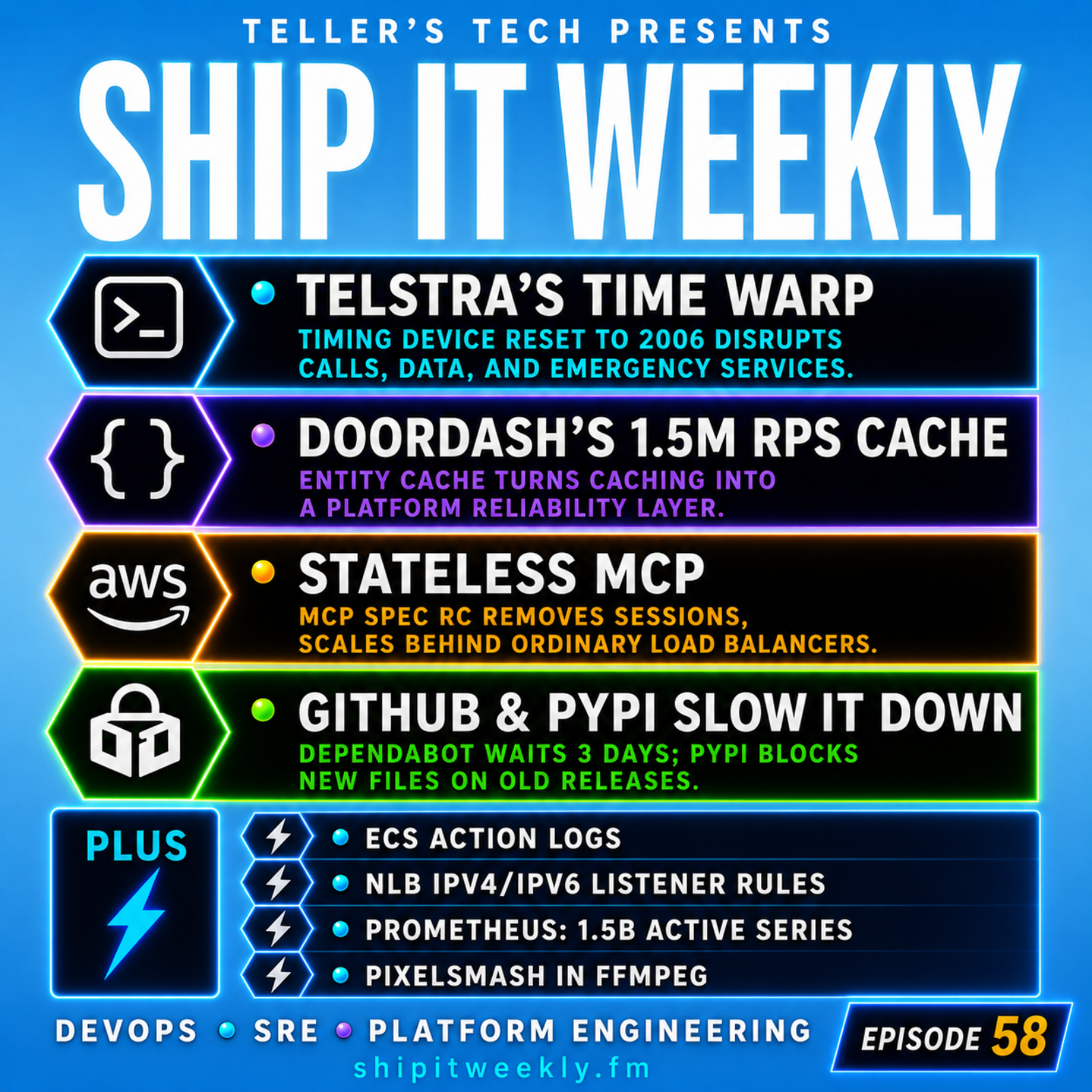 Telstra’s Time Sync Outage, DoorDash’s 1.5M RPS Cache, Stateless MCP, GitHub and PyPI Supply Chain Delays, and Why the Quietest Infrastructure Often Has the Biggest Blast RadiusShip It Weekly · on Model Context Protocol (MCP)97 / 100
 Episode 023 Deepfakes and the Liar's DividendAI Tools for Practicing Lawyers · on Claude AI96 / 100
 The End of Software as We Know It: How AI Agents Are Rewriting HR, SaaS, and Organizational DesignAI First with Adam and Andy · on Model Context Protocol (MCP)81 / 100
 Digital CX with Real Impact: Kat Kenny on DAP, AI, and Customer Education | Episode 108The Digital CX Podcast · on Claude AI80 / 100
 Boilerplate in Seconds: AI Handles Setup, Engineers Handle Logic - Klaudia Dussa ZiegerSoftware Testing Unleashed · on Model Context Protocol (MCP)80 / 100
 DevOps and observabilityNext in Tech · on Model Context Protocol (MCP)79 / 100$70B Nubank Eyes US Banking (Co-Founder Reveals Strategy)81 / 100Why AI will NEVER Replace Your Sales Job! - Stevie Case CRO @VantaFigure CEO Reveals: How the World's No. 1 Tokenizer of Real World Assets Leads (Michael Tannenbaum)How Ryan Petersen Rebuilt Flexport Into an $8B PowerhouseWhy He Turned Down $1.2 Billion from Stripe to Build Airwallex (CEO & Founder Jack Zhang)