
Building Efficiency Podcast · 2026-06-05
Key moments - from our scoring
Substance score
35 / 100
Five dimensions, 20 points each
This episode provides an insider's view of private equity's growing influence on the energy services and infrastructure sectors. Both Ryan McGussian and Trevor Morrison, who have spent 13-14 years recruiting for Nenni and Associates, share front-row observations of how PE ownership is consolidating what was once a fragmented market of regional independent ESCOs into national platforms. They detail how PE firms find the energy sector attractive due to both founder succession planning (the ESPC model is 35+ years old) and the opportunity to professionalize and scale regional contractors into multi-state operations. The discussion moves into hiring implications: PE-backed organizations require different talent profiles than traditional corporations. Rather than 30-year veterans comfortable with stability, these companies need coachable, adaptable professionals who embrace ambiguity and changing strategies. They explore how energy savings projects have evolved beyond traditional ESPC into design-build, DBOOM (design-build-own-operate-maintain), and CPACE models, creating more complex sales roles and deeper demand for energy engineers, project managers, and site superintendents. The conversation emphasizes Patrick Lencioni's framework of the ideal team player - humble, hungry, and smart - as a universal hiring requirement across company sizes.
PE firms target the energy sector because many ESCO founders are retiring after 35+ years since the ESPC model's creation in the 1990s, creating acquisition opportunities; additionally, PE can take proven regional contractors and scale them into national platforms using operational sophistication and capital they bring.
Beyond traditional ESPC (energy savings performance contracts), companies now offer design-build, DBOOM (design-build-own-operate-maintain), and CPACE models tailored to different markets and facility types, making sales roles more complex and requiring deeper expertise rather than entry-level positions.
They prioritize humble, hungry, smart professionals with high coachability and adaptability, as strategies and organizational structures change rapidly; they often avoid hiring veterans from rigid corporate environments who may struggle with the pace of change.
PE firms typically retain existing leadership and ownership in the short term to preserve relationships and business stability, but define a fixed window for how long they stay and often transition them to different roles as systems and processes are professionalized.
No - regional independent ESCOs are at their lowest levels historically, with most being acquired by PE groups, larger ESCOs, or merging with competitors, making standalone regional platforms increasingly rare.
Our reviewer’s read on each dimension, with quotes from the episode.
There are a handful of actionable observations - PE-driven consolidation eliminating regional ESCOs, the succession-planning dynamic attracting PE, the 'say-to-do ratio' as a candidate quality signal - but the episode is padded heavily with generic recruiting wisdom and small-talk that buries the substantive claims. The ratio of novel-to-filler is low.
our client list as a company is probably somewhere around 75 private equity owned
a lot of the industry, uh, founders are on their way out, they're transitioning out, they're looking at secession planning, they're selling off businesses
Almost every framework invoked is explicitly borrowed - Patrick Lencioni's 'Ideal Team Player,' 'fail fast,' 'control what you can control,' 'building the plane as we're flying it' - and the remote-vs-office debate is thoroughly exhausted territory. There is minimal first-principles reasoning or contrarian argument throughout.
that's fallen in. Right. We need individuals that are hungry, humble, smart
Fail fast, right? Fail fast. And the faster you fail...the faster that yes comes
All three participants are long-tenured colleagues at the same executive recruiting firm; there are no external operators, PE partners, ESCO executives, or practitioners who have actually scaled companies. The episode is functionally an internal team discussing their own observations, which limits the authority and range of perspectives.
Jim hired me at Nenny and Associates, believe it or not, 2012
I myself have been here going on 13, 14 years
A few concrete data points appear - the ~75% PE-owned client stat, the $30 - 40M to $100M scaling framing, the $1,200/month remote stipend example, and the 35-year maturity of the ESPC model - but no named companies, PE firms, or verified metrics are cited, and most claims rest on anecdote and vague 'we're seeing' language.
our client list as a company is probably somewhere around 75 private equity owned
say both organizations are offering $100,000 base salary, but one has, uh, you know, 1200 bucks a month in Internet, uh, Internet reimbursement
The host redirects topics competently and introduces useful framing questions (candidate vs. hiring manager gaps, red flags on both sides), but there is zero pushback, no challenged claim, and the collegial dynamic produces a comfortable marketing conversation rather than a probing interview. Rapid-fire closing questions are entirely generic.
I'll ask the same question to you. Hybrid remote in office. What are your thoughts?
are you prepared to see maybe a lower quality talent pool because of that metric?
Computed from the transcript - who did the talking, and the words that came up most.
For the first time on the Building Efficiency Podcast, Jim turns the mic on two of his own colleagues - Nenni & Associates recruiters Ryan McGushin and Trevor Morrison - for a mid-year "state of the energy industry." Both came up the same way: Northern Illinois University, then straight into the recruiting grind, where they've spent a combined ~27 years placing talent across energy services and the built environment. The throughline is private equity. Roughly 75% of the firm's client base is now PE-owned, and that capital is rewiring everything downstream: which companies scale from regional to national, how fast they hire, and what they screen for. Ryan and Trevor get specific on the modern hiring bar (humble, hungry, smart), the in-office-vs-remote tug-of-war and its hidden compensation math, what an A-caliber candidate sounds like on the phone, the red flags that make a recruiter walk away, and why interviews really go sideways.
Transcribed and scored by The B2B Podcast Index.
Speaker A: Hey, everyone. Welcome back to the Building Efficiency Podcast. Today we are sitting down with two very, very, very special guests, Ryan McGussian and Trevor Morrison. So you will. The audience, I think, will recognize that I have two of my close colleagues here, and this is something a little bit different for the podcasting format. So this is the first time in the Building Efficiency Podcast history where I have two guests here that are here against their will. I told them they had to come on, they had to do this. And we're going to be talking about the market, what we're seeing, what's going on in hiring. We thought this would be a good time to do kind, uh, of a state of the energy industry. We're about halfway through the year. We're sitting here and halfway through May. This would be a good time to talk about what we're hearing, what we're seeing in the market. But before we get into all of that, I want the guests here to introduce themselves. So, Ryan, tell us a little bit about your background, where you grew up, and just kind of, you know, what you're doing here for Nanny and Associates.
Speaker B: Thanks for having us. Jim, what is this Year six of the Building Efficiency Podcast? You're on a. You're on a good. You're on a good streak. So, uh, let's roll, uh, out six
Speaker A: years in, still rolling.
Speaker B: It took this long for the invite, though, which, um, maybe we could talk about later. No, we're good. My name is. Yeah, my name is Ryan Magussian. So Jim. Jim hired me at Nenny and Associates, believe it or not, 2012. So, um, I've learned a lot from Jim over the years. And, uh, yeah, I've been with Nenni and Associates ever since. So we're going on close to 4 years, 14 years in total. A little bit about myself. Graduated from Northern Illinois University. Born and raised, Chicago suburbs, you know, families, all, all local. Met. Met my wife at NIU as well. And, um, yeah, I've transitioned upward here at Nenny and Associates from being, you know, a lowly intern making cold calls to, uh, now leading a small team and kind of developed me in my own book of business that we recruit, uh, for. So I work a little bit in kind of our common industry of energy services. But, uh, a lot of my book has taken me into some specialty contractors. Did a lot of work in, like, the lighting and solar world, kind of through Jim, in a sense. And, um, yeah, kind of excited for the future of the organization. And again, Jim, thanks for having me.
Speaker A: Well, lowly intern with Tremendous potential. You should have seen this. You should have seen this guy 15 years ago. That's pretty, pretty incredible what uh, Ryan was doing back in the day.
Speaker B: Thanks for seeing the potential.
Speaker A: Yeah, oh yeah, that's, that's who we hire. I mean, hey, look, we're going to touch on that, you know, industry speaking as far as what clients look for, what candidates look for and some of the intangibles that we're talking about, potential and the ability to do the work, the ability to show up and some of the table stakes items that can oftentimes get taken for granted. You showed a lot of those things. Right. And those are transferable skills which we're, we're going to certainly cover a little bit later. But Trevor, tell us about you.
Speaker C: Yeah, ah, I'd say not all that different from Ryan's come up story from Nenny and Associates. So I myself have been here going on 13, 14 years. Also went to Northern Illinois University where I met Jim and actually two other of our managing partners that are still here employed today. So been uh, in the day to day recruiting grind for 13, 14 years. Very similar industry. I know Nanny and Associates are bread and butter. Has always been energy services built environment. And I got my start in that very early, starting on, early on, uh, energy engineering searches now still focus. That's probably the focus of my business. My book of business would be energy savings performance contracting providers design, uh, build contractors, some specializing in alternative procurement methods and stuff as well. So I was also raised southwest suburbs of Chicago, been in the area the entire time, went to school at Northern Illinois University, met my wife, have four beautiful children, a couple pups, one that is uh, in the office twice a week with us. Many an association. See it's uh, team dog. Yeah. And enjoy the opportunity to sit down and talk a little bit industry with you, Jim.
Speaker A: Yeah. Yeah. All right, so all through this next segment, we're all going to share stories from college that we have never told anybody before. There you go. Just kidding. All right, let's talk, uh, let's talk about the industry. So one of the most common questions that I'll get, if I'm talking with candidates and I'm talking with clients, they'll ask, hey, what are you seeing in the marketplace? And when I get that question, I start reflecting on uh, okay, what type of hiring trends are we seeing? What are the vertical market trends that are we seeing? What are clients, clients looking for? What ah, are candidates looking for? What involvement does private equity have? Where is AI coming into play there's a lot of different avenues that I start to explore and start to go down and have these discussions really just kind of organically with folks that we're talking to in the market. So I thought this was really the idea behind having you two on. You all are getting the same types of questions as well or the same question in your conversation. So Ryan, I'll start with you. When you get asked a question, hey, what are you seeing in the marketplace? How do you respond?
Speaker B: Yeah. And that obviously that response would sound different today than maybe it did six months ago or a year ago. But some of what we're seeing most recent and even kind of wrapping up 2025, like our client list as a company is probably somewhere around 75 private equity owned. Right. We have many of our, uh, growing organizations, growing clients have some type of investment capital behind them to, to hire and move into new markets and continue acquiring add on, bolt on businesses and new geographies. So private equity has been huge for, you know, the growth of Nenni and Associates and obviously the growth of our clients of which we support. So I think there's a lot to be said from, uh, way back when there was a lot of utility owned organizations, privately owned organizations, publicly traded organizations, and now I think the common theme lately is private equity owned organizations. So yeah, that, that spawns hiring quickly. Right. They need sales, they need operational support, they need sales leaders in new markets. So huge trend for us and it's taken us into some, some fun industries too that aren't our quote, unquote core business. So a lot of service platforms around infrastructure in general that have been fun to support.
Speaker A: Yeah, yeah. I mean it's um, it's interesting. So just, you know, when I think about private equity, whether it's in our industry and energy and infrastructure or just in general, there's always common threads or common themes that private equity groups typically look for. Right. One of them is always like ongoing residual income and a, uh, pipeline that's robust and an opportunity to receive, you know, guaranteed annual. What's the best way to put this? Revenue, uh, revenue streams.
Speaker C: Right.
Speaker A: Consistent revenue streams is probably the best way to put this. But our industry doesn't necessarily always have that. Right. You might have H Vac companies that have service contracts, for example, but if we're talking about energy performance contracting, it tends to be very project oriented. So Ryan, just stay there for a second. Like when you think about private equity's involvement with some of your customers, what do you think they're seeing? Just kind of big picture Holistically, what do you think they're seeing in these types of companies in this market that makes it so attractive? Because you're right, you know, we're seeing the same. I'm seeing the same thing as well. Broadly speaking, there's a lot of private equity involvement and interest, a lot of money sitting on the sidelines. Still looking to get in.
Speaker B: Yeah, I think a little bit of it. There's a lot of blue collar industries and there's just a level of like professionalism that private equity could equip these companies with that then bring to market. So how do you separate XYZ company versus Bob's electrical contractor that's been doing the same thing for decades? Right. So I think it's the level of professionalism and sophistication is a word I'll use sometimes that private equity could pour into, you know, uh, a local company at times.
Speaker A: Yeah, that's fair. Trevor, what about you? What are you seeing in the market?
Speaker C: Yeah, and I would say it's probably not too far off from Ryan's. And on that private equity note, one of the reasons I believe our industry, our core industry has been such a target for private equity is twofold. First, our industry, at least the performance contracting industry, everybody would tell you they would credit themselves for coming up with the legislation in the 90s. Right. But either way, whoever did it originally, um, we're coming up on that 35 year old mark. Right. A lot of the industry, uh, founders are on their way out, they're transitioning out, they're looking at secession planning, they're selling off businesses. So I think there's just in general, um, an opportunity for these private equities firms to enter now. Um, but the other thing I would look at is, um, a lot of the organizations we've partnered with over the last decade that I've been here have had really regional focuses. Right. Something private equity is really good at. Right. Buy an organization that's already profitable, look at their core skill sets, the foundation of their operations and implementation team and be able to scale those into A, newer markets, B, newer geographies. Right. And have the capital to be able to do that, the vigor to be able to do that, and we're seeing a payoff coast to coast. We're seeing organizations that are historically two, three state, regional design build contractors now going on national platforms. So yeah, I think that's kind of a common thread we're seeing. Right?
Speaker A: Yeah, yeah. And I said, you know, I was a converse. I was having a conversation earlier this week reminiscing on the same thing where it's the number of like regional independent ESCOs that exist today I think is probably the lowest that it's ever been. We just typically don't see it. Right. Uh, not anymore. There are the ones that are either getting, you know, acquired by a private equity group, acquired by a larger esco, merging with another esco. So it just seems like that environment of the small regional ESCO that's doing performance contracting in a couple different states, I mean it's really few and far between. So I'm seeing something very similar. Trevor, I want to go back to you. Trevor. You mentioned the maturity of the market, right. This ESPC model being around for, you know, over 35 years. So a very mature business model. You know, what have you seen recently as far as like maybe the evolution of ESPC. Right. Cause all the ESCOs still exist. There's kind of a baseline model of energy and infrastructure and guaranteed savings and all of that. But I'm also seeing and hearing a little bit of a shift. So what do you see in the way of just kind of the evolution of espc?
Speaker C: I would tell you, even at Neni and Associates, we use it as a little bit of an umbrella term. Right. There's been significant amount of branches off from different scopes and different conservation measures that might not be necessarily traditional performance contracting. So we're seeing that. And I think one of the biggest changes is a lot of these states that might not have as favorable legislation towards the procurement vehicle of energy savings performance contract. They're looking at, um, design build models or D boom models or even maybe it is taking a little bit of that ESPC play, incorporating it into a commercial industrial end user where it's technically a little bit more Cpace. Right. So we're seeing that industry that was born 30 years ago spurred off a ton of different offspring that are more applicable to different articles and different, uh, facility types. So that's been fun to watch. Is uh, just kind of the transition of what we see now we've almost had to oversimplify to energy savings projects because there is such a diverse diversification nowadays.
Speaker A: Yeah. Would you say there's a concentration, you touched on kind of the vertical market differentiation. So when we look at kind of the traditional, you mentioned D boom design, build, own operate, maintain. We talked about ESPC energy savings performance contracting and you're talking about a more ubiquitous term of just energy savings projects. So as you look at that entire landscape and you start reflecting on, okay, do these models are they more receptive in the municipal market versus K to 12 versus private higher ed versus public higher ed. So if you look at kind of the diversification of the financing mechanism, at the end of the day, are you seeing one concentration of a vertical market versus others?
Speaker C: Yeah, yeah. And they all of these contracting vehicles have their own specific vertical fitment. Right. So yes, we're still seeing performance contracting in K through 12 schools. We're still seeing them um, in municipalities. Right. State and local government agencies that might not necessarily have a ton of capital, a ton of room to invest, just pay out of pocket. You know, they're going to be looking at, uh, really with a fine tooth comb, energy savings, uh, the guarantees, the measurement and verification, making sure that these implementations are performing long term and looking for that guarantee. But to your point, we're seeing a lot of energy as a service offerings or design build offerings. One of the big touches that we're seeing lately is um, kind of that D boom model, specifically in the mission critical space with hyperscale data centers. Right. They can't provide their own power. They'll go find an Esco that's capable of, you know, a new construction central plant, by the way, they're going to maintain it, they're going to own it, they're going to operate it. Because that's just not, you know, that's not Amazon's job. Right. They're not as efficient at it. So there's just, it seems like the sky's the limit where all these different technologies for the last 30 years that have been growing are applicable. And uh, that's what's been most exciting for us and why we've probably seen so much growth into other horizons.
Speaker A: Yeah, let's stay there for a second. Ryan. Yeah. Ryan, I'd be curious to get your opinion on this.
Speaker B: Yeah, I think some of the challenge it creates is it's harder to sell now. Right. Uh, a lot of these K through 12 schools, somebody's already came by trying to sell a traditional performance contract with lighting and H vac. You got all these creative contracting vehicles, these new markets to enter. It creates a talent gap in a, in a way because sales reps need to be better and it's not an entry level sales job. Uh, you need somebody who's equipped, professional, could get up and running quick and adjust to market trends. So I've, I've caught onto that from some of our clients, trying to challenge them a little bit of like exploring some new industries or maybe explore somebody more junior. And it's not that easy because they really are asking salespeople to do a lot more and be better in a way.
Speaker A: So, Ryan, let's stay there for a second. So this is, you know, part of where I wanted to go with this. So you touched on account executives, you touched on their need to do more and be better in the marketplace. But let's just kind of look across this entire backdrop of the industry and what we're seeing as far as, you know, we're talking about different financing structures. You can take this whatever direction you want. But when you think about hiring. Right. Some of the conversations that you're having with your clients, you know, what are those conversations sounding like in the way of types of profiles, types of hires, types of individuals, what are you seeing on just the recruiting and hiring side?
Speaker B: Yeah. There's still like a level, uh, of coachability that everyone's looking for. Adaptability, coachability, you know, willingness to adjust, you know, and even tying this back to the, like, the private equity world, things, strategies could change within a week and people need to be on their toes and ready for it and not all grumpy because, you know, sales leadership made a change. So that's been called for a lot. Right. So sometimes, you know, the 30 year veteran that's been at a major manufacturer doing the same thing, while, yes, that is an attractive profile, if they're doing well consistently, some hiring managers will look at that and say, hey, we're gonna, we're gonna. You know, it might be overwhelming to them, right. To come into an environment that's ever changing all of a sudden. But yeah, a lot of conversations lately, especially in a sales capacity. But, you know, I guess it could apply to operations and engineering as well.
Speaker A: Yeah, yeah. One of the terms that some of my clients will use and this will fall under like just kind of the private equity backed. You know, maybe it's an Esco, maybe it's a consulting firm, maybe it's an engineering firm. You know, the term that you'll often hear used to say, we're building the plane as we're flying it. And I think just embracing that, and that's part of it too, you know, I guess as, uh, an organization, you're a hiring manager, you're looking to hire like the. One of the worst things you can do is present the company and present the opportunity. Like, hey, we got it all figured out. And then you hire a candidate and then they're there and everyone's frustrated and everyone's misaligned. So we can certainly get into that a little Bit more later. But I, I thought of that when you were talking about that. Ryan. I think that's one of the best things that they can do is just like embrace it. Like, hey, it's going to be a bit chaotic. Tell me about a time when you had to embrace chaos. Right. If you're coming from a large corporation and everything's structured and everything's put together and everything has strategy, everything has resources, like, you know, this is going to be a really tough environment for you. So that, that almost goes into, you know, part of our role and the pre qualification process. So. So Trevor, I'll put it to you. You know, I'd asked Ryan about just, you know, typ and you know, what he's seeing in the recruiting side. What are you seeing?
Speaker C: Yeah, and I'll elaborate on Ryan's point first and then kind of walk through actual positions. Right. Those of you, uh, that listen to this regular probably know that Jim's a little bit of a bookworm. Right. Um, so we've got the Nanny and Associates book club. We do books monthly. I think what I'm hearing more and more out of my clients and even um, you know, potential competitors is that idea of the perfect team player, the ideal team player. Right. Um, that's fallen in. Right. We need individuals that are hungry, humble, smart. And that plays to Ryan's point on like adaptability. Right. Especially when, you know, we're talking about private equity and some of the procurement strategies changing up. Some of these individuals that have been caught in corporate America and done things a certain way, um, they're not as applicable to some of the strategy that's outlaid by some of these faster moving firms. So I'll digress on that. But in terms of opportunities, uh, themselves and hiring of positions, I would still say it's a candidate's market. If we have somebody that sweeps the floor all the way to a high level CEO and they've got the good mentality and the strong capability to, you know, be able to be a self starter. Um, there's probably a place on a bench for some of these firms. Right? I mean, mostly right now I'm looking for energy engineering, project management, site superintendent, a lot of the block and tackling, that being said, uh, strong sales executive, strong leaders. Seems like those doors are open pretty much across the board as well.
Speaker A: Yeah. Yeah. So, um, I think what you touched on there is Patrick Lenciotti's work and the ideal team player. Right. You know, we're always looking for people who are humble, hungry and smart and Those are like indisputable qualities and characteristics. You know, you talk about small company, medium large corporation. Every hiring manager is looking for somebody who's embodying those characteristics, whether they have language for it or not. You know, that's something that we've seen and heard, is that, you know, every company is looking for somebody who has humility, who has hunger, and has intelligence. And it's probably worth mentioning too, the smart portion isn't necessarily T scores and, you know, somebody who has a degree in engineering, necessarily. It's more like self awareness. Right. Can you read a room? Can you have intelligent conversations with people? Can you listen more than you talk? So that's something that, yeah, uh, we've certainly adopted internally at Nenni and Associates and, uh, you know, externally and having conversations and qualifications for candidates. So let's go back to the private equity piece that both of you touched on and the involvement that they have. Right. So typically, what happens, you have an acquisition. All right, now we have this business. Now what are we going to do? Naturally, there's always growth. Hey, we want to grow, we want to grow. Uh, how are we going to do it? So when you guys have those conversations, maybe it's at the private equity level, or maybe it's at the company that was being acquired. You're talking with the C suite, you're talking with the private equity team. What's most important to them? Are they looking to come in and say, hey, we want to stabilize leadership, we want to lock them into contracts, we want to lock them, uh, up for the next two, three years or whatever so we can maintain their wisdom and maintain their relationships before they transition out? Or are you seeing more like, hey, thank you for growing this business. Now we need to hire an executive. It might be a little bit of both. But I'd be curious, Ryan, just kind of what you've seen at the C Suite after an acquisition?
Speaker B: Yeah, I guess more recent examples where they're maintaining, you know, existing leadership team and existing owners just in different functions, it seems like maybe there's a defined window of how long that person will stay aboard. Yeah, I guess it just creates like an interesting dichotomy.
Speaker A: Right.
Speaker B: Somebody was A President, Owner, CEO For 25 years, they sold their business, and now they're, uh, you know, an acting general manager of some sort or a sales lead for. For what is now considered to just be a local office.
Speaker A: Right.
Speaker B: So, yeah, I feel like more oftentimes than not, you do see them trans. Transition out eventually. But I will say, you know, stabilizing and then keeping them aboard to start is maybe the, uh, the initial goal.
Speaker A: Yeah, no, I've seen something, um, I've seen something similar. Although I would add, it's usually like there's a, there's a gap between what that person's skill set is and where the private equity group wants to go. And usually it comes down to system, process, strategy. Right. You know, let's say It's a, uh, 30 to $40 million business today. Well, how the heck are we going to get to $100 million business or close to that 90, $100 million business? And usually it is hiring an executive who can really formalize structure and set a strategy moving forward. And that might look like different types of hires in addition to, you know, the executive that they want to bring in.
Speaker B: Yeah, it kind of, it just creates like overlap of responsibilities too.
Speaker A: Right.
Speaker B: And maybe egos get in the way at times too. Like I've had much more responsibility overseeing this whole business and now my responsibility has shrunk. Yeah. It's a, uh, it's an interesting one to deal with at times. And not to mention just like culture of the office.
Speaker A: Right.
Speaker B: Like everybody wants to maintain the culture and they say that's like their highest priority. But inevitably it seems like something changes or at least the narrative around an office can change now that there's a different ownership group. Yeah. I don't, I don't envy the position of everybody that's involved with trying to manage those situations. Yeah.
Speaker A: Trevor, what are you seeing?
Speaker C: Yeah, and I would tell you the, uh, I think the most integral part post acquisition is that integration portion. Right. Like we've seen some of our partners do it poorly. Right. And it has kind of nipped them in the bud a little bit. And then we've also seen organizations where it's gone very smoothly.
Speaker A: Right.
Speaker C: Where there was, uh, a president of an organization, original founder, $40 million business, sells to a private equity backed portfolio company, still involved day to day. And in many cases we actually see them get demoted from a title perspective. Right. Where maybe they do go down to a sales leadership position. Private equity then brings in somebody from another organization that might be more capable of scaling growth. Call it from a major OEM or uh, a publicly traded Esco. And that's been successful. And it really boils down to that leader's ego and ability to understand their strengths and weaknesses. Most of these regional leaders, they have a really strong capability to motivate their team. Right. Maintain uh, those relationships. But there's a reason they're in two states right now and not seven. Right. So being able to kind of check the ego at the door and understand when you're about to sell your organization that, uh, the integration process is really about how do we better the team, how do we better the entire organization? And that's going to be, you know, a net benefit, a net positive for both parties.
Speaker A: So we could probably spend more time talking about private equity. But let's just pivot for a moment. So when we look at the candidate market and the client market, usually there's a gap between what the candidate's expectations are if they're going to consider making a move, and what the client's expectations are when they're looking to make a hire. So that might fall in lines of resources, compensation, overall expectations, ramp up time. So let's just stick with sales. We've been talking about account executive roles. Let's stick with account executive executive roles for a moment. Ryan, you know, what's the biggest, what are the gaps that you see between an account executive's expectations and a client or hiring manager's expectations?
Speaker B: My initial thoughts were something other than sales. And, uh, I'll go there first if that's fine.
Speaker A: Take it whatever direction you want.
Speaker B: The biggest, like mismatch is being in office versus being hybrid slash remote. Right. All of our, almost all of our clients want some type of in office presence. Some want it Monday through Friday, fully in office. And it's been a challenge. And you know, I think Covid created some of this when everyone was almost required to work from home. But now, generally speaking, candidates have that expectation when pursuing, uh, a new role. So there's a big separation between, uh, employers, you know, wanting people in the office. And I'll say employees not wanting to go, uh, in the office, or rarely wanting to go in the office, we'll say, or not wanting to commute 30 minutes. So, yeah, that, that's been a big, big separation. I think we've all tried to, we've all been challenged with, as a firm the past two to three years post Covid.
Speaker A: So, Ryan, let's just look at those models, right? You got a full hybrid, or you got a hybrid, you got remote and you got in office. Right. You got three different options that candidates and clients can evaluate. So what's your opinion on it? What do you think works best?
Speaker B: Yeah, I put a poll up on LinkedIn, geez, maybe six months ago to try to get some feedback around this. The most votes came for a hybrid model. Second was fully remote, and third was Fully in office and that that might be the solution is having some type of flexibility to do both. I think it's super important to contribute to a company culture and learn by being around people. I don't think fully remote is the answer. Especially if you're newer in your career, you're, uh, not just going to absorb the right information and you're not going to be interacting with enough people to I think, be fulfilled and excel.
Speaker A: We'll see. Ryan, what you just did right here, someone's going to clip this. Some hiring manager is going to clip this and he's going to send it to his team member and he's going to see. Even the executive recruiters think you should come into the office. So come on in, buddy. There you go.
Speaker B: And we'll clip Trevor's about, uh, his council on leaders exiting after buyout.
Speaker A: We got all sorts of clip content here, so I guess we all need to be careful on what we say.
Speaker C: Gotta watch out for the YouTube shorts.
Speaker A: YouTube shorts. All right, Trevor, I'll ask the same question to you. Hybrid remote in office. What are your thoughts?
Speaker C: I would tell you, um, I could tell you that what's easiest to sell, right, is that work from home or a hybrid model. That's usually, even when I'm doing an intake, there's almost a sigh of relief with that. Right? Versus, hey, they've got to be in the office in some middle of nowhere town in Illinois. Sometimes that's harder. And one of the things I do with my hiring authorities is I do coach them, is, hey, are you prepared to see maybe a lower quality talent pool because of that metric? Right. And again, to Ryan's point, like, I don't think the answer is full remote. I think as an individual that chooses to come into the office every day, I think there's a ton of value to be learned and a value, uh, of being in the office, even just from like an energy perspective and just the buzz. Right. I think most individuals I know that work from home still choose to try to see their team pretty frequently. So I think that's probably the option I would lean towards. But yeah, we're seeing a big dichotomy even between, you know, we've talked about specialty contractors here. You could have a mechanical contractor in Texas that requires an estimator to be in office five days a week right down the road. Mechanical contractor in Texas has an estimator that's fully remote. Right. Uh, there is that dichotomy right now. Right. So I think the best approach is a Little bit of flexibility, maybe call it hybrid. And then um, you know, as that individual deter ends up uh, progressing in their career and growing a little bit more, um, a little bit more self sufficient, maybe that increases a little bit, the freedom increases a little bit to turn into a uh, true work from home type employee.
Speaker A: Yeah, yeah. Well, just like most things, I'm asking a general question that, that needs nuance to it. So when I think about this, I, you know, I was reflecting on uh, what Ryan said, you know, and I would lean towards if you're early on in your career and you think it'd be awesome to work from home and those are the only opportunities that you're evaluating, I think you're really selling yourself short. That's an environment, that's a situation. If you're early on in your career, I would lean heavily towards being an office frequently. Right. Four or five days a week. Learn, absorb, build relationships. All those things are extremely important. You know, if you're, if you're an early career individual. And then yeah, you know, I think I'd lean towards more of a hybrid type of environment. So you know, as somebody who works 100% remote myself, you know, I see, I certainly see the value right. In going back to the office and sometimes I uh, miss the, in office collaboration. So I think for each person it just comes down to, you know, what's important to them, how are they weighing the being in office, the benefits that come along with that. But of course you got some of the drawbacks associated with that as well. So that's why I'm leaning towards the hybrid model as being the best one. Uh, especially for someone who's mid career and beyond now there's exceptions to every rule as we continue to talk about. I think that's just all the conversations that I'm having, you know Trevor, to your point, you know, when we hear, when we do an intake call and we hear, oh, it's 100% remote and you only have to travel 20 to 25% of the time, that tends to be a pretty attractive opportunity. And I think as hiring managers listening to this, companies that are evaluating the talent market. Trevor, you brought up a really good point. You can have your viewpoint and your philosophy, but who are you competing against? Right? Your direct competitors. If they're saying, hey, you don't have to come into the office or it's hybrid and they can pay 10 to 15% more and they don't have to come into the office five days a week, like just know, like you can have your philosophy, you can have your culture, all of that stuff is maybe a non negotiable for you. But just know that can affect you in recruiting.
Speaker C: And you do start to see a discrepancy in pay too. Right. You know, say both organizations are offering $100,000 base salary, but one has, uh, you know, 1200 bucks a month in Internet, uh, Internet reimbursement or stipend. Right. And then there's no tolls, there's no gas, there's no depreciation on a personal vehicle. Right. So candidates will weigh that. Right. And say, hey, this is actually. They're both $100,000. This one's actually $120,000 in value up front. So, you know, something to be aware of is maybe that there does have to be some sort of stipulation to be able to increase that compensation or that bandwidth, that midpoint per se for an individual that is required to be in the office.
Speaker A: Yeah, especially engineers. I mean, how many spreadsheets do we get from engineers. Yeah. Calculating their compensation mileage. And on vehicles, 1K match, 4% versus 5%. And what that's going to mean compound interest over the next 27 years.
Speaker C: Big old amortization tables.
Speaker A: Yeah, yeah, we've seen all, all that. Ryan, it looks like you were going to say something.
Speaker B: Well, I was just starting to think if you were in the office every day, like how many pull up contests you would win or lose or ping pong matches you would potentially, uh, lose. Right, That's.
Speaker A: I would lose all the ping. I'd lose all the ping pong matches and probably win all the pull up contests. There you go. So I'm really all or nothing in those two categories. Yeah. All right, so let's uh, let's talk about, let's talk about the top performers in our space. Right? And then again, you guys can think about this from an executive level, from a direct contributor level, maybe from a management leadership level. You know, when we're having candidate conversations and sometimes like we call it like, I uh, call it like a recruiter instinct, like the gut instinct of like, man, I have an A. I have an A on the phone, right. I have somebody that I can just feel it in my recruiter bones.
Speaker B: Spidey senses. Spidey senses.
Speaker A: Spidey and his amazing friends senses. What is guys? When like I, I know what it is, I might have a hard time putting it into words, but like when you have an A talent, a caliber person on the phone, what are the things that you're hearing that you're listening for that. Confirm that.
Speaker B: I'll jump in clarity as to why they're looking and why they're taking a conversation.
Speaker A: Right.
Speaker B: When you feel good about the reason why you're on the phone with them, I think that's a great starting point. They know the blend of when to talk and when not to talk. You know, if, if they could ask better questions, you know, versus talk, overpower the talking, I think that's huge. And then, uh, being like a good storyteller and charismatic and kind of like, you know, you know, when you talk to those people where people like being around them, I think that always stands out. And you just kind of again. Yeah. Your, your senses start tingling a little bit.
Speaker A: Yeah. Trevor, what about you?
Speaker C: Yeah, and I would say it's. It's funny because it is hard to elaborate on, but you do know it. Right. Like you just. Something hits the line and you're like, oh, that's a big fish. Right. You know, it feels good. It feels right. So I would say to Ryan's point, like, there, there is, um, a certain level of. I know Jim uses this term a lot. Motivational congruency is just making sure that the reason they're on the phone with you in the first place checks out. Right. It makes sense. It feels good because that is, I think in our job, a lot of what's overlooked as a partner is making sure that we aren't necessarily passing along things that aren't going to work out long term. So we are looking for our client's best interest and then also the candidate's best interest. So you should kind of get a feel for that. Right. Um, and what that looks like is usually those individuals are going to be pretty vulnerable with you. Right. And kind of be strategically vulnerable, walk you through why they're looking, what's changed? Um, I don't know about you guys, but I don't often call complete strangers and complain about nanny and associates. Right. And why I might.
Speaker A: There's nothing to complain about.
Speaker C: Yeah, we're batting a thousand here. But it's an odd conversation to have, especially with individuals that have been at the same employer for 10, 15, 20 plus years. So I think being able to read into that now, the other things to Ryan points, there's a few things that, um, I'd say like our intangibles, education, capability, listening skills. Right. Uh, I also, I put a lot of stock and there's. I've got an industry mentor that always told me, hey, there's a key to a good Individual and it's making sure that they have a say to do ratio of one. Right. Um, so after the conversation they say hey, I'm going to follow up with you by this time or you'll have this documentation by this time. And they do follow through. I just, my confidence in that individual does increase. Right. So that might be not necessarily to your point, what on the phone gives me it, but that also starts to give me a little bit more uh, you know, I'll say increased confidence after the conversation.
Speaker A: Yeah. And I would, I would add too, I know we're, we're all describing it in our own ways, but I, I think I'd bring it back to somebody who's humble, hungry and smart. Right. Those, this a caliber person that we're talking about. I, I believe they're going to be off the charts in humble, hungry and smart. And that's what makes it attractive. Ryan, to your point, that's what gives them a gravitational pull. Most people are attracted to people who have humility, who have a drive. Right. And also too, a couple of things that I would add is it's usually comes down to their track record as well. That's one of the ingredients of what makes a really, really good candidate is somebody who does have a consistent track record. Right. They don't jump around every one to two years. And oh by the way, when they do move or as you guys are talking about the motivational congruence, the reason that they're talking about leaving is not negative. It's not negative. They're not saying anything negative about their current boss, a previous boss, the current company or anything like that. They have a way of uh, they're reason for looking that's more forward facing. Right. That's more neutral at worst and then positive as far as what they're looking for that maybe they're not getting today. So Ryan, to your point, the articulation of why they're looking to leave or what they would consider tends to be very attractive versus like negative. Like we'll usually use the term like what are you running away from versus what are you running towards? And I think when someone can clearly articulate what they're running towards versus what they're running away from, it tends to be more attractive. It tends to, tends to be a better story. It tends to make them more interesting for us to have conversations with which consequently will be more attractive to our clients.
Speaker B: Yeah, you kind of think how often, how often you ask somebody like why you're looking to leave the uh, more than 50% of the time, it seems. They say, well, I'm not actually looking.
Speaker A: Right.
Speaker B: And then it kind of comes out.
Speaker A: They say, more than 50, but yeah.
Speaker B: Yeah. And then it comes out in the conversation. Well, actually, they are, and here's why. Yeah. And I don't shame them for using
Speaker A: that response to start, but it's a reflux. It's a reflex.
Speaker B: It is, it is. And, uh. And then you find out that there. There is a legitimate reason of why they're looking and there's more behind it. And sometimes you need to navigate that conversation carefully of how to get the truth.
Speaker A: Yes, yes. And I think people don't do that because they're lying or they're being deceitful in any way. I think it's just human nature to not show all your cards on an initial conversation. You know, I go back to the example of, like, the couple that walks into a furniture store and the salesman walks up to him and says, hey, folks, what brings you in today? Today? Oh, nothing. Just browsing. It's like they walked into a freaking furniture store. They're in there for a reason. So it's the same thing with us, right? You know, it's like, oh, I'm not looking, but they're on the phone with you. They're having the conversation. So that's. That's part of our goal. That's part of our job here, is to identify. And some. Sometimes it's legitimate. Sometimes someone's like a 10 out of 10 career. They love their job, they're being compensated well. They have absolutely no reason to leave. They work from home, they're blah, blah, blah. Those candidates do exist. So if someone's listening to this, just know you're probably in the 0.1% of the job population if you have all of those things. So congratulations. So let's go, um, let's go on the flip side of that. So we talked about the qualities of an A candidate, a caliber candidate, and those are, we'll call them, green lights along the way. Wow. All right. They have humility, hunger, intelligence. They have a good track record. What would you guys say are some of the red flags that you might be listening for? When you're like, oh, I don't know if I can represent this person, what do those conversations sound like? What are you listening for?
Speaker C: Yeah, I can. I can hop in first on this one, Ryan, if you want.
Speaker A: Yeah, I'm doing a bad job of prompting you guys, so thank you, Trevor.
Speaker C: No, you're good. I just figured he took the Last one you threw a meatball down the, down the plate. I'll take a swing.
Speaker A: So let's go.
Speaker C: One of the things I look for is uh, discrepancies, especially a lot of our individuals. And I don't know if all of our clients would understand this, but we're trying to have multi, multiple conversations with an individual, really be comfortable with that individual before we ever present them to a client. Right. And so, so I'll look for discrepancies. And Ryan and I are coming off a fresh one today where an individual got pretty late into an interview process and we started to sense some discrepancies between maybe it's sales volume, maybe it's sales figures, maybe it's clientele, maybe it's potential, uh, non compete issues where there's differing information. Like that's immediately a red flag to me. Also we talked about like that motivational congruency. Don't get me wrong, I know moving an individual from a career to a different career financials are going to be a huge role, right? The individuals that are always the most successful and truly dictate what an A player are, are usually not as worried about the financials up front. Right? It's like, hey, I want to make sure we got a good cultural feel. I want to make sure that uh, we've got growth and development for me long term and I'm also bringing value. Hey, if we're both interested, we'll figure out the money. On the flip side, those types of individuals that might maybe aren't a caliber individuals or maybe sees, right? Uh, that seems to be the one and only initial upfront concern. Right? It's like, hey, don't waste my time. Time. What do they pay? Well, hey man, I get it. Pay is an important thing. And frankly the goal here is to make sure that you're walking through the door with a big smile on your face and this is a better situation for you, your family and my client. We'll get there and I'm always pretty confident that we can. But showing that up front is an immediate red flag where I've just got to understand more. Right? Um, yeah, and that's what I'm going to try to dig into it more. Right? Just to make sure that that's a valid concern versus just kind of a brush up off.
Speaker A: And Trevor, I think this brings up a more accentuated point around an A candidate because an A candidate, yes, money's very important to them too, but they're more interested in the longer term, bigger picture, conversation, relationship, And I think that's something that we've always really stressed here at Any and associates is being relationship driven. So even if the opportunity, we'll eventually find out, hey, is the money going to work or not? But at that point, we're building a relationship with them, the candidates, seeing the value and what we're bringing to the table. And that's part of what makes an A candidate as well. They're willing to have these broader, bigger picture, long term relationship driven conversations versus what you're talking about there. A B or a C candidate. Say, don't waste my time, I'm, uh, making X. What does this position pay? Yes, it's important, necessary but not sufficient. But I think that highlights kind of the nuance between an A or a B or a C. But Ryan, you had something.
Speaker C: Go ahead, go ahead, Ryan. I was just going to say the Michael Many adage, right? Like we've probably beaten this over our head for the last decade, all of us. But, but hey, a, uh, career transition shouldn't be a transaction, right? And that's the red flag, right? Does this feel very transactional in that person? Go ahead. Ryan cut you off.
Speaker B: Yeah. I've learned this more so through training. Internal hires, right? New recruiters that we bring aboard where they're trying to be fully equipped with all the details on a new position before they bring it to market or bring it to potential candidates. And what we're a code. We're oftentimes telling them like, hey, if you have the right person on the phone, phone, they're gonna. And you have an A on the phone. There are, uh, they understand what you're trying to pitch, right? If, if you're able to get to a point to share the name of the company and what that company does, they would likely know them in a ways and then they would be asking the right questions. And you don't have to worry as much about 30 second elevator with your pitch about this client hiring an account executive. Um, candidates are already asking the right questions and have an understanding. They're not just saying, hey, what is it? What is it?
Speaker A: Yeah, yeah, yeah. Well, let's stick with the, um, let's stick with the red flag conversation for a second, but let's go to the candidate side of things, right? So we talked about top performers, we're talking about a candidates. What are red flags that they're listening for when you're presenting an opportunity to them? Let's say they're stable, they're good, they're in a good place, they're successful, they're making a good income, but yet, you know, they're open. Right. They're keeping their ears and eyes open for an opportunity that could be better. One of the sayings or one of the phrases that I like to use is you don't have to be sick to get better. So that's one of those things where you can entertain an opportunity even if you're in a good spot. But Trevor, I'll throw it to you. When a candidates are listening to red flags, reasons for them to say, no, thank you, what's coming to mind for you? What are they listening for?
Speaker C: I'd say, um, transitions amongst leadership team. Right. I think reputation matters, especially when we talk about, uh, relatively small niche industry where a lot of the competitors are aware of who the other competitors are. Changes in, uh, you know, I'll say, um, a lot of, uh, swaps that the leadership does raise red flags. And also, I think one of the biggest things that I think is important for us in order to, you know, not discourage potential candidates from interviewing is making sure we've got alignment with our hiring authority. Because every time, you know, like it or hate it, every time you hire Nunny and Associates on a search, we are a branding marketing engine for you. We're an extension of that organization. So if you have an internal talent acquisition individual that's calling on that role and pitches it slightly to different than we pitch it, there's already, you know, even if it's subconscious, subconscious, uh, there's just misconstrued. And a human has, you know, kind of the ability innately to pick out discrepancies between stories and start to look at it in a little bit more of a conservative light anyway. So that's one thing I think is just making sure that story strategy, understanding a culture, understanding a role, all that stuff is in alignment with anybody else who that would be doing that proactive outreach.
Speaker A: Yeah, yeah. The analogy that I always use, Trevor, with that is like we have internal HR talent acquisition, we got executive leadership or hiring managers, and then we have us, right? It's like the triangle offense going back to the Chicago bulls in the 90s, right? We all gotta be on the same page. We all gotta be congruent. We all gotta be communicating and talking to each other, and that's when great things can happen. To your point, we have alignment, we have congruency. We're all working together. We're all on the same page. We're all on the same boat. So we're. So I think that's super important. Ryan, go ahead. What do you think?
Speaker B: Or, uh, it leads me to say, like, why. Why? We're oftentimes steering away from searches that have other recruiters involved. Right. If you add another recruiter into the mix, then those candidates in the market that you're trying to be strategic with are getting approached by more than one person with different types of messages. Um, and it's ultimately not a good look, as you might.
Speaker A: Confusing.
Speaker B: Yeah. And confusing. So we talk about, like, a red flag from being in a candidate's shoes. You know, you're on the phone with somebody, oh, I've already gotten a call about this role, or I just got a LinkedIn message about this role yesterday from somebody else.
Speaker A: Right.
Speaker B: You're all. You're. You're behind the eight ball from the jump. If, uh, if that's something that's getting shared with you.
Speaker A: Yeah, no, that's. That's a good point. I didn't even think about that going into this. But, yeah, that is. That is. You're right. If we're the third recruiting firm getting brought to the dance, there's a really good chance we're going to say, no, thank you, for that very reason. And they'll ask why. I was like, well, it's very confusing in the marketplace. It's not very strategic, and it just create a really difficult. You know, you talk about Trevor, we become extensions of the brand. Well, what does your story sound like? And if you have internal plus two other external firms calling the same candidate pool, I think you start to have significant diminishing returns at that point. So you guys got anything else to add there? Any other red flags that candidates are listening for?
Speaker C: Uh, no, I oversimplify it. Like, congruency. Right.
Speaker A: Okay.
Speaker C: And even one of the things that we're able to overcome frequently is maybe there it has been, like, a questionable track record. But if we can speak with a hiring authority that's a leader and understand the vision, a lot of the times we're able to kind of overcome that concern because we're in alignment with kind of the strategic vision. Like, hey, you know what? Yeah, we. This division was a turd for the last eight years. Here's why it's not going to be right. Here's why they need you. Even that's receptive. Right. I think, um, you know, just a lot of the concern we have is lack of congruency between hiring authorities and other hiring authorities or hiring authorities and us. Right. Like, if you ask a chief revenue officer and a CEO to put down Your five non negotiations for a candidate for the same position, those might differ. And that's important for us to go through together. Do the thought exercise and say, hey, what. What are actually non negotiables. You guys come up with them together. That way we're. We're congruent. Right. And the, the brand messaging makes sense.
Speaker A: Yeah. So let's go to, um, let's go to the other side of this equation. The other side of the interview table. We got a hiring manager who. We bring somebody, or it doesn't necessarily need to be us. But a candidate shows up in interviews poorly, you know, we've done collectively thousands, tens of thousands of candidate debrief interview calls with, uh, hiring managers, with candidates. And Ryan, I'll just put it to you for a moment here. When you hear about an interview going poorly, and one of the themes here is humble, hungry, smart. So I'm going to ask you to embrace a little humility here. If you think about a time when an interview didn't go well, well, or consistent theme on why interviews don't go well, what do you hear from hiring managers?
Speaker B: Talk too much, talk themselves out of a job. Told stories that didn't apply to the question being answered. Right. Anything along those lines of just overpowering the conversation and the interview. It's either that or, um, and maybe this is shame on us in some cases, but just winging it. Right. Not taking it seriously enough because they're professionals and they've been in the industry for 20 years and they understand and where they're interviewing and then they're just going to go into it like a general conversation and kind of figure it out? Usually. Usually doesn't end with a success.
Speaker A: Yeah. Trevor, what about you? What's the face palm moment when a candidate or hiring manager calls you and say, hey, Fred didn't really show up very well today. What are you hearing?
Speaker C: There's two. Right. One, one is, uh, technological issues. Right. Didn't have their camera on. Weren't prepared. Were wearing something crazy. Right. I, uh, couldn't hear them. Joined five minutes late. That's one where I just face palm. Cause I'm like, I know we went. I know you had the invites. I know you know, I know we've done a little bit of a dry run. Um, the second goes back to an earlier point in our conversation. You're going to get asked, why are you looking? Why are we having this conversation today? A lack of readiness. Uh, and to Jim's point, a lack of a politically correct answer is the number One reason I have candidates dismissed. Believe it or not, we coach this all the time. And we believe that there's mutual congruency here on why both parties should be connecting. And a candidate will still, you know, just kind of yolo it and say, hey, I'm not looking. Trevor said to take a call.
Speaker A: Yeah, I would, I would maybe even Trevor. I would maybe even offer a replacement to politically correct. I think that might be a charged word. I would just say clear.
Speaker C: Yeah, right.
Speaker A: They need a clear answer. They need something that's clear, that's concise, that ties their pain point, whatever it is, to what our client can offer. And when that's not clear and concise, people get confused. And that all weaves together, Ryan, with your point about talking too much. Like I would say, that's the number one thing that I hear. And I've Even done some YouTube videos on this if someone's interested. You could go back to 2020 in the middle of COVID when I was putting out stupid videos on YouTube. That was one of the things that we covered, uh, was the number one reason why interviews go poorly. So, yes, candidates end up talking too much, which is usually brought out of insecurity. And the insecurity comes from a lack of preparation. Lack of preparation. You know, it's just kind of this domino effect. When someone's not prepared, they're going to talk too much, they talk too much, they get nervous, they get insecure, and it's just this perpetuating cycle. So if we have candid candidates that are listening, that are getting ready for an interview, the number one way to combat this fatal flaw is by doing research, doing homework, asking good questions. And it has to be sincere. It has to be genuine. Sincere, genuine questions are going to be able to position the interview for, I'll say neutral. At worst. It doesn't mean you're going to get the job, but it's going to go relatively well if you're, if you show up with sincere questions and a sincere interest in the.
Speaker C: Jim, what about. But, uh, what about like testing the non negotiables of travel and in office requirements? I see that frequently, right. Where I'll tell an individual, hey, this is an in office position. Their entire division is in office five days a week and they'll go in and I need two days from home. Well, all right, that's a waste everybody's time, right? Or, uh, hey, we're going to be looking at 40% travel on average, right? Well, I can't really do that. But they tell Me, they can do that. And then in the hiring, uh, the interview with the hiring authority, it's like, oh, that's a lot of travel.
Speaker A: The truth comes out, the harsh truth comes out.
Speaker B: Yeah.
Speaker C: And you can. And not that they're not genuine, but, uh, we can avoid a lot of those situations if they give actual thought to it. Right. And this is part of the preparation and part of the, uh, you know, making sure that we've got expectations covered before. Before engaging in an interview.
Speaker A: Yeah, yeah, guys, we've been, uh, we've been on for 50 plus minutes here, so. So I think we gotta land this bird before all of our listeners tune out. So we're gonna close. We're gonna close out. I'm gonna ask you all a couple of rapid fire questions here and I wanna get your thoughts. So, Ryan, I'll start with you. What's the best career advice that you've ever received?
Speaker B: Control what you can control. The simple stuff, right? Be on time, be present, have good energy, be positive. The rest could fall into place, but control what you can control. Do the little things, right?
Speaker A: What's the most underrated skill in leadership?
Speaker B: I'm learning this still, but I would say recognition. Uh, of employees. Even the humblest or most, you know, even employees with the most humility still deserve recognition, even if they act like they don't like it. Some people want more money, but everybody in their core does want to be recognized.
Speaker A: What's one thing that you wish every hiring manager understood?
Speaker B: Urgency. Probably that time is of the essence. The longer things sit, even if you think the candidate's only interviewing in one place, things change, I think. Keep a cadence and keep things moving along.
Speaker A: What's one thing that you wish every candidate understood?
Speaker B: That you're constantly being evaluated, even in areas that you probably don't anticipate. Appearance, LinkedIn, presence, social media, Facebook, whatever. You're being evaluated from the start of them hearing your name and seeing your resume all the way to the end.
Speaker A: That's awesome. That was really good stuff.
Speaker C: Stuff.
Speaker A: Trevor, what's the best career advice that you've ever received?
Speaker C: First of all, I'll say, I feel this, like. Like this is fast money. I gotta try not to repeat Ryan's answers.
Speaker A: Everyone already thinks you're the same person anyway, wearing the same polo, growing up in the same area, going to the same school. But yeah, just go ahead.
Speaker C: Yeah, it's hard to make our intros different, but, uh, yeah, best career advice. Fail fast, right? Fail fast. And the faster you fail, you know, it's One of those kind of like age old sales adages, like the, you've got a certain amount of no's to get to a yes. The faster you get through those nos, the faster that yes comes.
Speaker A: What's the most underrated skill in leadership?
Speaker C: Yeah, for that I do believe it's, uh, expanding the relationship outside of the workplace and like actually understanding who a person is, what their interests are, uh, allowing them to kind of grow internally but also being able to just like support some of their external goals. I think that helps breed loyalty across the board.
Speaker A: What's one thing that you wish every hiring manager on? Understood.
Speaker C: Just be transparent with me, right. That I'm a human. Like, I understand completely. I'll make some mistakes. We get feedback oftentimes that is loaded and very gray. And it's very hard for me to pivot right and call an audible if we're working in that gray, murky area. Right. I'd rather them just be extremely direct with me. I'll be extremely direct back and we're going to win faster together.
Speaker A: What's one thing you wish every candidate understood?
Speaker C: Yes. I think this one is, uh, I think this one is that ego can be dangerous. We're constantly talking to some of the best candidates in the country here. So being able to check yourself and understand that you do have valuable skill sets, but there is also areas that we can help progress your career is something that I wish everybody knew and understood.
Speaker A: Well, guys, I think this was a phenomenal episode. I think, uh, we've accomplished a lot. So I'm going to bring us all the way back to the beginning and I'm going to ask you to tell us something that you've never told anybody else in your entire life.
Speaker C: Life.
Speaker A: And close this thing out. No, once again.
Speaker B: Kidding.
Speaker A: I'll go first. Nice. Uh, all right, well, back in 2007, you wouldn't. All right, so, uh, let's close things out. Anything, any parting thoughts, comments? You know, how do you want to close this thing out? Anything you want to add or maybe tell the audience where they can connect with you?
Speaker B: LinkedIn is probably the best. Right. That's where we're trying to stay at.
Speaker A: That's where we're living on the most present.
Speaker B: So track us down. Heck, subscribe to the podcast. I'll say that for you, Jim. Right.
Speaker A: Shameless plug.
Speaker B: Yes. Stay connected to the firm.
Speaker C: I was going to say shameless plug. Right. Connect with me on LinkedIn. Ryan on LinkedIn. Jim on LinkedIn.
Speaker A: What?
Speaker C: Maybe it's apparent from this conversation is we really enjoy the recruiting aspects. We also enjoy industry, um, conversations. Right. So if you're curious about. Curious about trends, if you're curious about organizations, what we're seeing, give us a call right there. I think that's one thing that maybe that's a better answer for the previous question. Something I wish every candidate can know is, I'm not going to try to move you every second I talk to you. Right. I, um, welcome the relationship. I welcome the industry chatter. It is nice to have an individual that really knows kind of the big macroeconomic picture of where the industry is going. And it's always good to kind of have those relationships and that professional networking opportunity.
Speaker A: Guys, this was fun. Thanks for coming on.
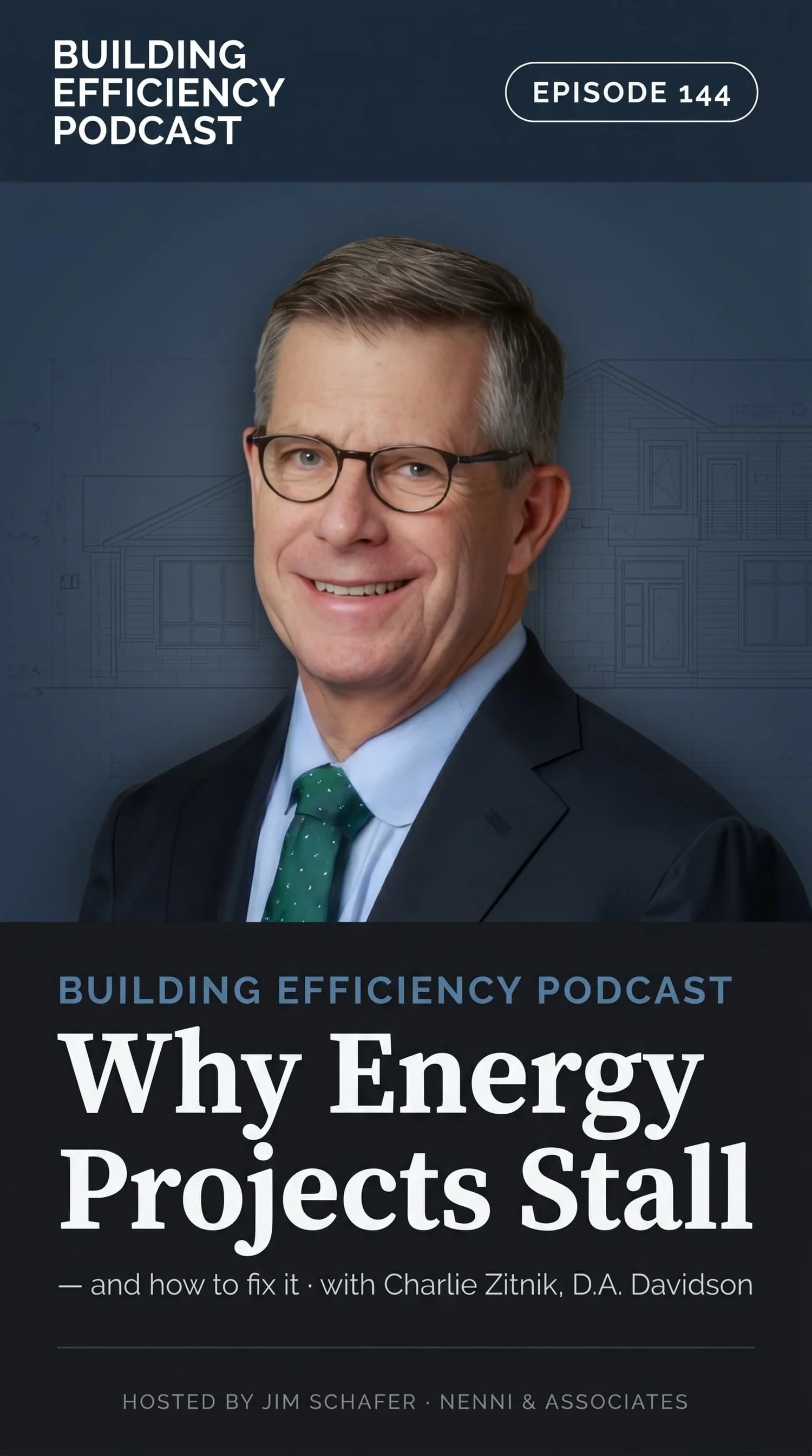 #144 Why Energy Projects Stall - and How to Fix It.
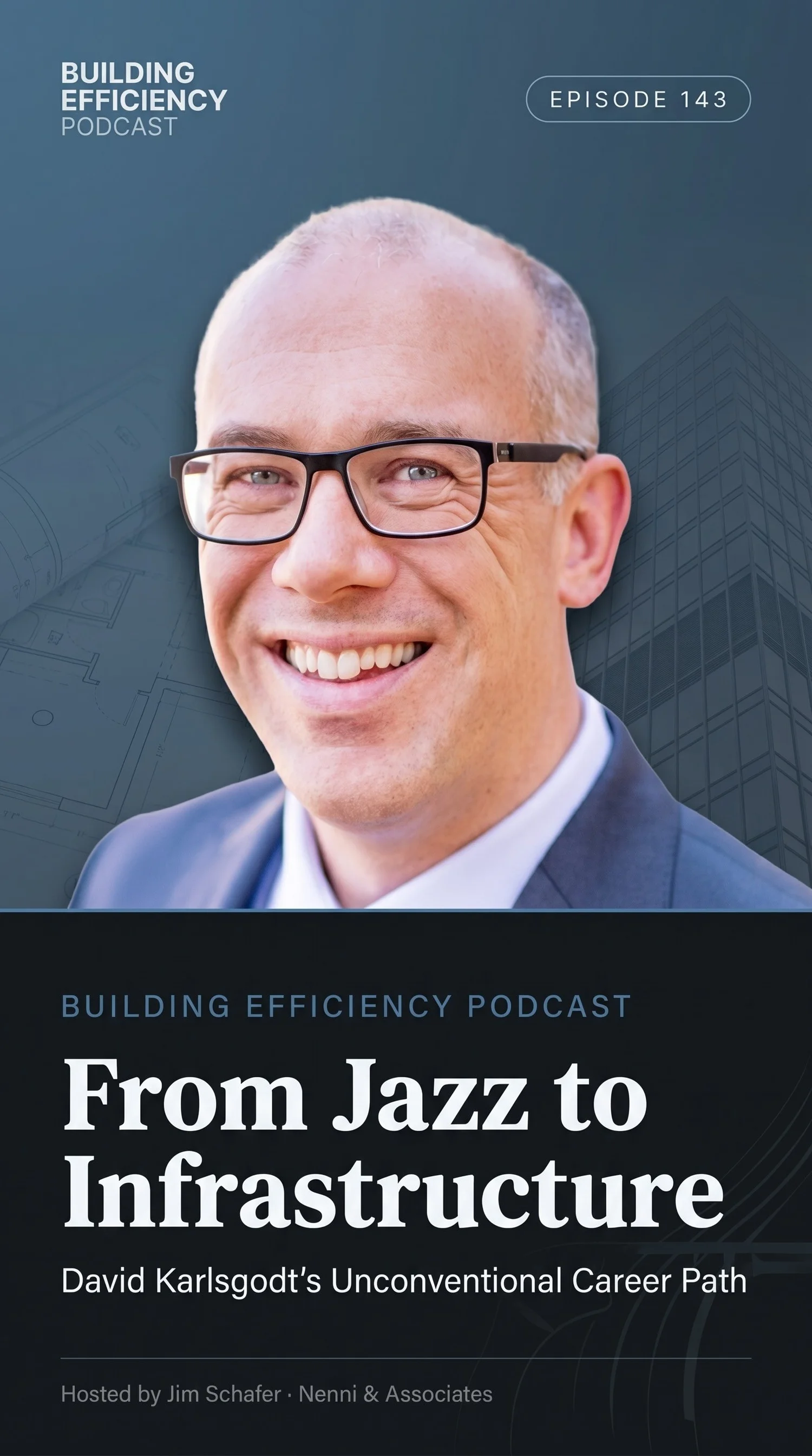 #143 From Jazz to Infrastructure: David Karlsgodt’s Unconventional Career Path
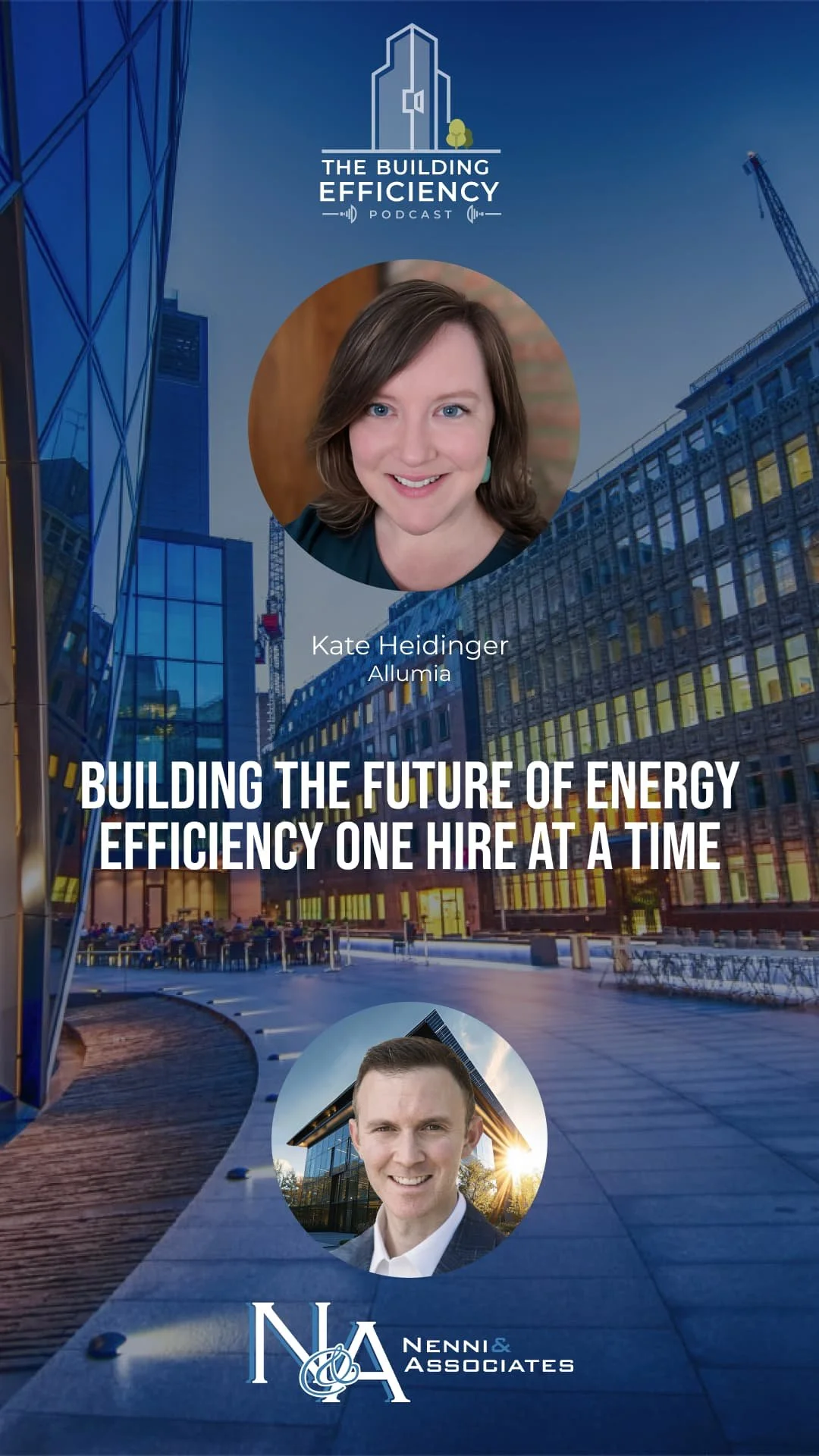 #142: Building the Future of Energy Efficiency One Hire at a Time
 #141: Entrepreneurship, Energy, and Leaving Things Better Than You Found Them
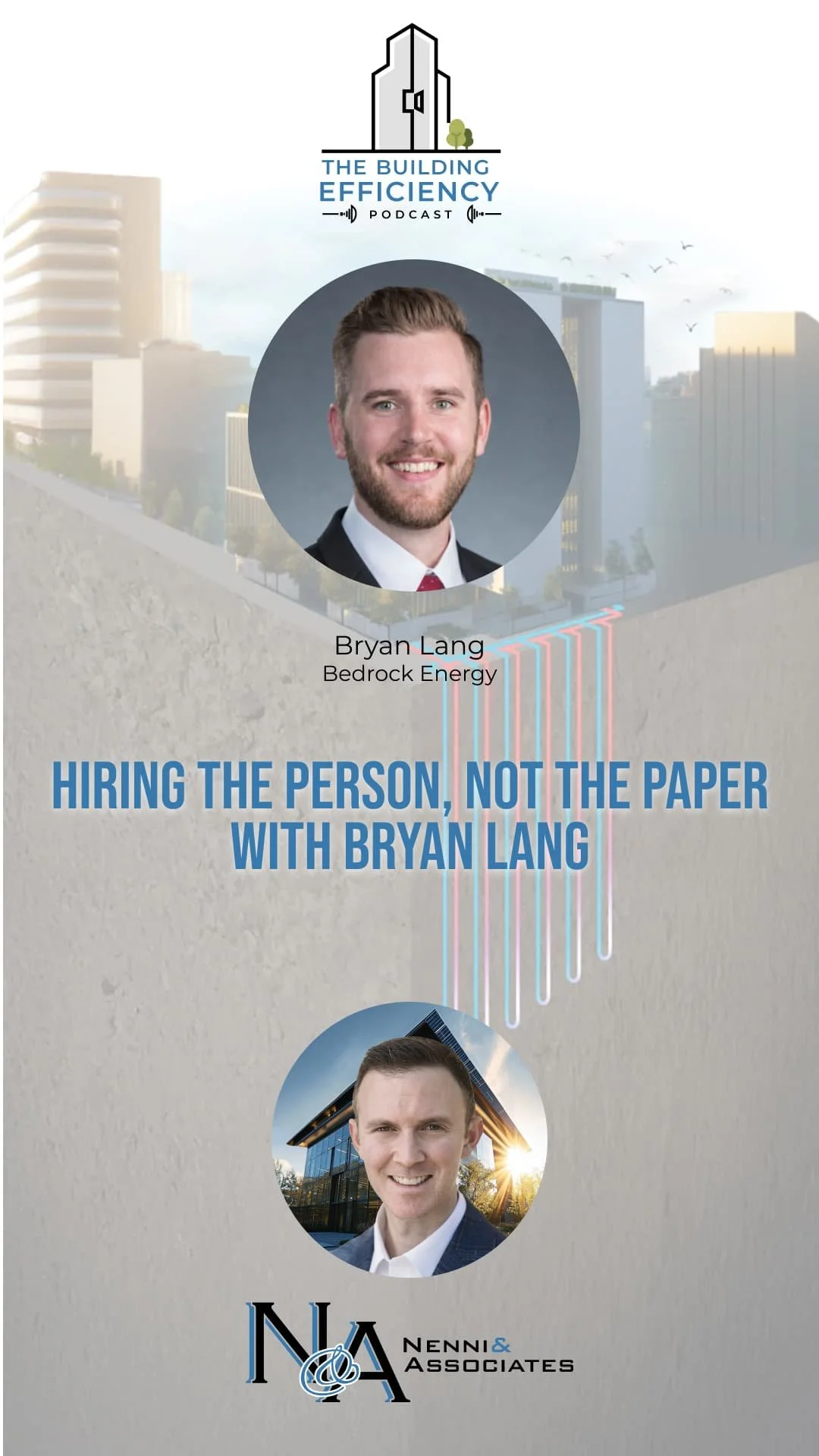 #140: Hiring the Person, Not the Paper with Bryan Lang