
Biology Matters · 2026-06-17 · 49 min
Key moments - from our scoring
Substance score
48 / 100
Five dimensions, 20 points each
Steve Gardner and Rowan Gardner, CEO and Chief Investment Officer of Precision Life respectively, establish the case for why healthcare systems urgently need to shift from reactive treatment of chronic disease to precision medicine and prevention. Chronic diseases now drive the majority of healthcare costs globally, yet remain poorly understood because they involve multiple interacting genes, lifestyle factors, and environmental variables - unlike single-gene disorders like sickle cell anemia where precision medicine has succeeded dramatically. The hosts explore why this complexity hasn't attracted the same innovation momentum as oncology, citing both technological challenges and systemic inertia: healthcare pathways are built around observational diagnostics (like MS classifications that don't reflect molecular reality) rather than stratification tools, and investment decisions are constrained by what's already known to work. They examine emerging bright spots - Singapore, UAE, and consumer-driven US healthcare - where integrated genomic and patient records are enabling early prediction and prevention. The episode argues that solving chronic disease requires not just technology and money, but a fundamental societal shift in how we think about health as a personal responsibility combined with visionary healthcare leadership.
Cancer success stems from identifying molecular profiles and using molecularly targeted therapies, whereas chronic diseases are polygenic and involve multiple interacting genes, lifestyle factors, and environmental variables - making them far more complex to untangle and stratify patients for treatment.
Monogenic diseases like sickle cell are driven by a single gene mutation with direct disease correlation, making them easy to diagnose and target; chronic diseases involve many mechanisms speaking different 'languages' simultaneously, requiring integration of multiple data types across a patient's lifetime to understand what's driving individual disease.
Healthcare systems organize pathways around what is known - observational diagnostics developed over 100 years - rather than molecular stratification tools, and there's limited track record of successfully bringing precision medicine products to market in chronic disease, making companies reluctant to invest despite the 80% of healthcare that complex chronic disease represents.
Singapore and the UAE are integrating primary and secondary care records with whole genome sequencing and using legislation to support data sharing across primary care, secondary care, and digital health apps, enabling real-time projection of patient data through all healthcare levels for early prediction and prevention.
Healthcare leaders must change incentives away from measuring success through symptom management (like waiting times) toward population health metrics; this requires both societal shift in viewing health as personal responsibility and visionary political commitment to invest in prevention rather than just acute interventions.
Our reviewer’s read on each dimension, with quotes from the episode.
The episode contains pockets of genuine substance - particularly the polygenic disease complexity analogy, the MS diagnostic label critique, and the ME/CFS genetic work - but is heavily padded with standard healthcare-reform commentary and intro framing typical of a pilot episode. Novel ideas are present but diluted by familiar talking points about unsustainable healthcare costs and the promise of precision medicine.
we have all these different labels for within ms, like relapsing and remitting and progressive, and the problem with them is none of those descriptions actually have any relationship to the underlying molecular pathways
now we are working with groups around the world who have interest in particular genes that have already been studied in other diseases and already have drugs that work that have been prescribed in many cases for decades
Most of the conceptual territory - precision medicine good, reactive healthcare bad, data governance matters - is well-trodden. A few moments stand out as genuinely contrarian or under-discussed, particularly the dismissal of the whole-market excuse as lazy and the claim that data itself is essentially worthless without analytical infrastructure, but these are not developed into fully original arguments.
I think the rationale about companies preferring to argue for a whole market rather than m half a market is a really lazy argument
Data itself is actually worthless, pretty much. There are some applications that bringing it together will enable, but it's really in the analysis of that data
Both speakers are genuine practitioners with credible track records - Human Genome Project contribution, 30+ drug discovery projects, NHS board service, and ongoing ME/CFS genetic research - but this is a co-founder podcast where the two hosts interview each other, which limits independent challenge and introduces an inherently promotional dynamic. No external guests appear.
contributed to the Human genome project, over 30 drug discovery and development projects, and developed and brought multiple healthcare and AI technologies to market
we've understood the genetic basis of those diseases at a resolution that's never been achieved before
The episode includes a solid spread of concrete figures - healthcare GDP percentages, GLP-1 drug class size, genome sequencing costs, and ME/CFS economic burden - alongside named institutions like Sidra, Decode ME, and the UAE's genomic programme. However, several substantive claims are left vague ('a number of fully integrated US healthcare systems,' 'an obvious example within IBD') and the Bruce Booth report is cited without any specifics.
it has been consistently growing for decades at, uh, 1.5% faster than GDP
65 million living with long Covid more in me. And more to the point, cost a trillion dollars per year in lost economic output
The format is two married co-founders lobbing largely set-up questions at each other, which produces a collegial but rarely challenging dynamic. There is one genuine moment of pressure ('You ducked my question') and one pushback on a framing ('that's a really lazy argument'), but most exchanges are confirmatory and the conversation never seriously stress-tests its own thesis.
You ducked my question. So who's doing it? Well, all that's true, but who do you see as doing it well?
You're pretty much agreeing with what I said.
Computed from the transcript - who did the talking, and the words that came up most.
Transcribed and scored by The B2B Podcast Index.
Speaker A: I think the rationale about companies preferring to argue for a whole market rather than m half a market is a really lazy argument.
Speaker B: Chronic diseases are different. This is like being in that same room. You've got a whole bunch of different people speaking at the same time, but they're speaking different languages. We're getting older as a society, we're getting sicker. Uh, as a society, how do we change the incentives that are around treating people once they've become sick to allow for wellness and the increase of health span, um, to be central to the delivery of healthcare? Welcome to Biology Matters, the podcast exploring how a deeper understanding of biology can transform healthcare at a time when it's becoming globally unsustainable. Chronic diseases affect billions of lives, placing enormous pressure on health systems around the world. Yet they remain poorly understood, difficult to manage, and lacking effective diagnostic tools and treatment options. In this podcast, we speak with leaders across the healthcare and life sciences industries to discuss how new biological insights are driving precision medicine and helping us to solve chronic disease. The future of healthcare is here. I'm, um, your host, Steve Gardner. Let's get into it. Welcome to Biology Matters, a podcast exploring how a deep understanding of biology can transform healthcare. Uh, I'm Steve Gardner, CEO and co founder of Precision Life.
Speaker A: And I'm Rowan Gardner, Chief business and investment officer and co founder of Precision Life. Steve's a serial entrepreneur, uh, in life sciences and informatics, and over his career he's helped build multiple companies, raised many millions in venture funding, and contributed to the Human genome project, over 30 drug discovery and development projects, and developed and brought multiple healthcare and AI technologies to market.
Speaker B: And Rohan spent more than 30 years working across health tech, digital health, deep tech, high performance computing and biotech, helping innovative companies with their, uh, funding, building partnerships and turning breakthrough science into fantastic real world impact.
Speaker A: And so why do we need another podcast? And why should you care about the questions that we're going to be asking on Biology Matters? And what can listeners expect from this podcast? We created this podcast because we're choosing to live our lives in a way that places unfeasible demands on healthcare. Simply, we're older and sicker. Uh, and that's not just us two. Being married for as long as we've been, chronic diseases now drive the majority of healthcare costs affecting billions of lives. And yet, too often, healthcare is designed to wait until we're sick rather than intervene earlier to prevent sickness when it's less costly to treat.
Speaker B: So in this series, we'll explore why that is and what needs to change. We're gonna speak to leaders across healthcare, research, biotech and policy to uncover how mechanism based biology can help us to predict disease earlier, personalize treatments, and more importantly, prevent illness before it takes hold.
Speaker A: And for our pilot episodes, we're starting with the big picture, where the health system can change why chronic disease remains so difficult to solve for, and how understanding biology offers a better path forward.
Speaker B: So if we want a future that's built on prediction, prevention and precision, it all starts with understanding what's really driving these diseases.
Speaker A: And so let's start at the beginning. Steve, why are you spending all your time at the intersection of computing and biology and healthcare? I know this, I've been married to you for 30 years. But people listening don't.
Speaker B: So when I was very young, I was absolutely captivated by DNA as a molecule, the structure of it and the intersection of the form of that molecule with its information carrying properties. So this ability through generations to have heritable information that is driving every aspect or influencing every aspect of biology in our lives. And I wanted to spend more time understanding that and then in more recent years trying to figure out how this relates to the delivery of better solutions that can keep people healthier, but also can find new ways of treating especially complex diseases. And to that extent, we're very much almost at Gen one of our understanding of DNA and how it relates to human health. Really at the end of Gen1, I should say so about 25 years ago, there was big announcement across the Atlantic, transatlantic collaboration around the announcement of the first Human Genome Project. And that was a massive milestone for science and us understanding what we're made of, how our biology works, and in many cases, uncovering new ways to intervene in the biology of those diseases, finding new therapies. And that has been incredibly useful over the last 25 years, particularly in cancer and in rare genetic disorders. So, I mean, you're aware that that first generation of pioneers of the Human Genome Project, unfortun, uh, are uh, starting to pass away. And we've had recent news around Craig Venter, for example.
Speaker A: Yeah, that was really sad to hear yesterday that Craig has passed on. He was one of the absolute legends of the space. He held everyone's toes to the fire. Those who were in the genomics field at the millennium, maybe at GSAC in Miami, would have seen Craig striding through the Fontainebleau Hotel with a whole gaggle of people behind him, hanging on every one of his words. And I think he wasn't prepared to let the academics behind the Human Genome Project go at their own planned pace. He was somebody who held his concept of celerity because that was the inspiration for celera very close. And he was always looking to go further, go faster, be, uh, effective. And I saw Bernadette Toner's write up in Genome Web yesterday. We're all still reading Genome Web as we were then. And she sort of quoted one of Ventnor's comments to her in a video interview from last year, where he said, it's hard to identify a pharmaceutical drug whose development wasn't impacted by the Human Genome Project. He said, but a lot of heritability is still not understood. So progress and lack of progress are pretty astounding. And I think that quote probably resonates for us. It's very much the inspiration for Precision Life. You touched on it just now. Those simple genetic features that can have catastrophic consequences for people with rare disease or who receive a cancer diagnosis, where the disease progression is very firmly driven by one gene, have seen tremendous progress. And it's wonderful to see how much that part of what the Human Genome Project has been able to reveal to us has actually gone all the way from the laboratory to the bedside. It's real world healthcare today. But in other areas it hasn't. And I think, Steve, you might want to talk about your view of the problem and what inspired the Precision Life vision.
Speaker B: Yeah, well, we were in equal parts inspired, but also frustrated by the output of the Human Genome Project. Inspired because, as you say, it's had profound impact on the survivability of cancer. We've turned that from a disease that was defined by the site of onset of a tumor. So if you had breast cancer, it was because you had a cancer in your breast cancer. Now we look at it, what is the molecular profile? What is the DNA of that tumor? How are different cells expressing different genomes? How are they changing? And what are the therapies that are directly targeting those individual changes? And so we've gone from just the anatomy, the observation that it occurs in a particular tissue, to a whole palette of molecularly targeted therapies which are, ah, specifically designed. And this is precision medicine. This is us using knowledge of what is driving disease to select a therapy that is most likely to be effective against that particular tumor. The problem is we haven't had that same level of progress in complex chronic diseases. And chronic diseases, almost by their nature, have many other things going on. If you think about rare genetic disorders and many cancers, it's a mutation in an individual gene, especially in the portion of the gene that codes for A protein product that has an impact on disease. An absolutely classic, we call these monogenic diseases. An absolutely classic disease is sickle cell anemia. Basically, if you have a particular mutation in one DNA base, one of the little nucleotides, it changes the amino acid on the B chain of haemoglobin, which makes a little sticky patch. And that sticky patch means that lots of hemoglobin molecules stick together. They form fibers which deform the red blood cells, which then don't allow oxygen to be transported properly. That's a really direct correlation of a DNA change to a disease. And it's almost one to one. It's like being in a big room and there being a speaker saying something that is directly relevant to you, and it becomes easy to spot and easy to listen to. Chronic diseases are different. They have lots of different things going on. They're driven by interactions across multiple genes. You have maybe interactions with lifestyle, with your environment, with pollution, with diet, with other diseases, all of which need to come together in order to be able to understand what is going on for an individual person. What is this form of disease that a particular person is getting, so that we can understand which therapies are most likely to work for them.
Speaker A: So you explained the biology in a lot of detail there, the sort of molecular level and breaking a gene causing a disease. But I think the piece that, uh, quite often we miss when we're thinking about complex chronic diseases is there can be stacks of different mechanisms playing their role. So they're polygenic to your point, They've got multiple genes, and actually every individual patient has probably a different set of those mechanisms driving their disease. So the population's heterogeneous, and that makes that a much more difficult problem to get your head round.
Speaker B: So this is like being in that same room and instead of having one speaker, you've got a whole bunch of different people speaking at the same time, but they're speaking different languages. So now you've gotta find the people who are speaking French, the people who are speaking German, English, and start to listen for what they're saying. It's really hard to pick that out of a general hubbub of conversations going on backwards and forwards. But it's absolutely essential to understanding what's driving complex diseases. And that really was why we founded Precision Life, to address that complex challenge. We realized that there was going to be more and more patient data available, it was going to be of much higher quality, it was going to be of many different types, it was going to cover the whole of their life in many cases. And we would have at least the substrate from which to be able to infer all of the things that you were just describing and, um, to put those into clinical practice.
Speaker A: So why haven't there been more companies like Precision Life going at that challenge? Because complex chronic disease is 80% of healthcare. That is a big market. Why have many of the AI companies that are either in healthcare or in drug discovery essentially sought to optimize an existing process that's well understood and use information more efficiently, rather than recognize that the information just isn't known and therefore isn't available to train systems on, do you think? And how well is that challenge appreciated with the people that you speak to?
Speaker B: So I think there's a bunch of different things going on. Number one, it's really hard to do. Very easy to go listen to one person speaking in a room. It's way harder to listen to 50 different speakers and pick out the message that you're interested in, especially if it's in a different language. So technology had to come a long way. And still, even though we've got AI and we've got machine learning and all of these kind of tools, the problem space, the sheer complexity of the problem is too big to make it easy for these type of solutions to find answers. The second piece is more to do with money. Quite frankly, to this day, many pharmaceutical companies would rather say that they are addressing the whole market rather than a fraction of the market. Now, the reality is their drug is only going to work in a certain number of people, a certain proportion of patients that it's given to. But admitting that means putting a lower forecast on the drug's potential. I mean, you know this. You spent years helping scale companies fund innovation. Why do you think the chronic disease businesses have struggled in some cases to get that traction and perhaps get the level of support from investors and partnerships that we've seen in other areas of healthcare?
Speaker A: I don't think they have. I think when they've brought precision medicine approaches, they've exited at a huge premium. Ah, there's an obvious example within IBD that I'm sure everyone is familiar with. I think that's a really lazy rationale. I think the rationale about companies preferring to argue for a whole market rather than half a market is a really lazy argument as well.
Speaker B: For sure.
Speaker A: And I think it's more fundamental. I think it's. We have a whole industry that gets up and goes to work every day to develop products in biopharma or to deliver medicine. And health care to improve people's lives. Right. These are talented, well meaning, very driven people. I think the bigger issue is actually there's not a huge track record of being able to do this well. And so what tends to happen in big companies, or what tends to happen in healthcare, is policies. And, um, pathways are set by what is known, and what is known is how to bring medicines to market through a clinical process. In complex diseases, there isn't that much visibility to the tools for stratification. And in healthcare, I think it's a slightly different challenge because the products haven't come to market that require stratification. We're still managing our, uh, healthcare pathways according to the sort of observational diagnostic processes that have served us well. Well served us maybe not well for getting on for 100 years. I had a conversation with an innovator working in a biopharma company who is thinking about taking an asset into clinical development in Ms. And we were talking about the particular mechanism and how we might find responders. But actually, Ms. Is a really good example of this. We have all these different labels for within ms, like relapsing and remitting and progressive, and the problem with them is none of those descriptions actually have any relationship to the underlying molecular pathways.
Speaker B: It's a big so what issue exactly?
Speaker A: So the whole way we think about care is defined by what we can see and, um, visualize through X rays. You can talk to. And the person I was talking to was saying, yes, I can talk to patients who have a progressive Ms. Diagnosis, who can feel themselves flaring a, uh, behaviour much more associated with relapsing, remitting, and you'll have, you know, a similar patient with an opposite label talking about the same thing. And so we know that individuals don't sit well in these labels, but that's how we organize pathways. And to the bit about funding, I think the time when it was easy to fund oncology drugs and make a return is gone. And it's very clear, you saw it in Bruce Booth's report at the end of last year, very big appetite, in part delivered by the success of the GLP1s into those big, complex chronic diseases that are shortening all our lives.
Speaker B: So there's two challenges there, uh, really that you've touched on. Number one is getting those drugs approved. So having successful clinical trials and we've managed a lot of the things that make it to the market are really the survivors of an existing process of simply selecting patients for that clinical trial on the basis of their observational diagnosis that you described. What changed in oncology is that we use the molecular definition of the disease to then go and select patients who are more likely to actually respond. So, I mean, obviously that's the Precision Medicine manifesto from a, uh, drug discovery and development perspective. But what impact, I mean, you've sat on the boards and funding groups for healthcare systems as well. What are the practical limitations at the moment? What are the challenges involved in bringing some of these more precision. I'll come back to preventative, but the more precision approaches to medicine in the real world.
Speaker A: So I think in the real world there are two big kind of rules, precepts that define how healthcare is planned and delivered. And the first comes down to the medical imperative, first, do no harm. So some of it is about experience, data, evidence of better patient outcomes that could support a change in care. Uh, and then I think the second challenge, and I'm speaking from somebody who sat on a board in the NHS in the uk, where you come under quite a lot of political pressure to focus on the kind of concerns that we all have as users within the system, but politicians in particular get measured on, which is that, uh, six o' clock news kind of. Sorry, Health Minister, this particular waiting time for a, uh, procedure is getting longer and unfortunately that puts the focus on, in my view, the wrong things because it's a symptom of the problem. So what you end up doing is you manage the symptom in trying to shorten a waiting list. The sustainable way to shorten a waiting list is to stop people joining the back end of it by improving the health of the nation and delaying the point to when they need that intervention or perhaps avoiding it altogether. And very little money goes into those population public health type measures and services. What happens is money gets allocated to more hips and knee replacements because that's measurable. And they're the sort of challenges that politicians face similar challenges for different reasons in other health systems. But I think the expectations of the past, again, what we've been used to and what we expect from healthcare haven't really kept pace or our expectations are not well projected into healthcare. I think you're seeing an increasing appetite for wellness solutions.
Speaker B: Absolutely. So healthcare in the UK is about 11 to 12% of GDP. In the US, it's over 18, projected to hit 20%. Those are huge numbers. It's over a $10 trillion industry around the world. The biggest stat that I can see is that it has been consistently growing for decades at, uh, 1.5% faster than GDP. In other words, it's getting year on year as a proportion of spend, it's getting more expensive. Now, obviously, there are more of us, we're getting older as a society, we're getting sicker as a society. And that sort of plays into this agenda that you're describing. We've recently seen reports where the length of time, the length of life that people in the UK and the US particularly live without serious disease is starting to go down. Oh, uh, and profoundly so, and really, really quite quickly when you start to reflect on that with a healthcare lens on, um, how do we change the incentives that are around treating people once they've become sick? And from a population perspective, living our lives in the expectation that the NHS or other health system is going to come in and fix you. How do we change those incentives to allow for wellness and, um, the increase of health span to be politically and culturally central to the delivery of healthcare?
Speaker A: So I think that's an excellent question and I personally believe that does require a shift, a societal shift, so that we start to realise that health isn't something that's done to us, is something that we have agency and responsibility for in combination, I think, with real visionary thinking from healthcare leaders around the world. And so change doesn't happen neatly, that everyone kind of does a software Upgrade from Health 1.0 to 2.0 or however you want to think about that. But, you know, you are seeing healthcare systems around the world change, either in a very planned way or responding. So I'm thinking about the work that you see in Singapore, where there's a definite governmental commitment to using data better, trying to understand complex disease and the consequences for their population, and to some extent starting to invest in innovation to solve that. The UAE would be a standout for me. You know, I think the way that the government of the UAE has gone very intentionally towards understanding because of specific population needs within their country, building a very intentional integration of primary and secondary healthcare records alongside a whole genome sequence and how they're using that and changes in legislation to support that is world leading. And really the UAE and the Gulf, uh, more widely is a part of the world that is leading on this, I think, which is really interesting. And you've also seen change in the us, right? So the end of the Affordable Care act and the consequences of that, uh, for pricing of health care insurance has some really, I think, for British people, some really intolerable consequences.
Speaker B: So it's up over, uh, $13,000 per person per year for a basic plan,
Speaker A: which for, uh, someone in the uk would sort of, you know, stop people in the street.
Speaker B: Well, to be fair, it does cost US almost 4,000 pounds per taxpayer per year.
Speaker A: Yeah, free at the point of care, baby. So, different perspective. But what you're seeing in the US is an absolute blossoming of consumer based healthcare. Much more proactive, starting to see increased use of diagnostics, availability of very high quality genomic sequences. Credit card $400. I could get a 30x whole genome sequence and a whole repertoire of genetic testing. You're seeing.
Speaker B: And much cheaper for other less expensive technologies.
Speaker A: Yeah, exactly. And a real kind of commitment to keeping themselves healthy because. And it loops around to your original observation, which was as the cost of healthcare exceeds gdp, then we're all getting poorer. Right. So what that says is poor health will drive your quality of life, not just from a healthcare perspective, but from a wealth perspective. And in the US it's absolutely the case that those increasing costs of health insurance have made people think twice in terms of how they're going to manage their health. Because very directly choices are being made to try and maintain the wealth with them and perhaps plan to pay out of pocket. Now, that's not ideal, but that's how you're seeing change happen.
Speaker B: So I think it's really interesting you touch on a whole variety of points that are, uh, subjects of individual podcasts by themselves. You touched on Singapore and UAE getting integrated patient records updated in real time alongside the whole genome, um, data perhaps. Another angle on that is that they're looking to project those data through all levels of the healthcare system. So primary care, secondary care, out into tertiary specialties, into digital health apps, into avatars that people can use to manage their own health. And I think that's the intersection of AI and technology to enable consumers at that point, not even patients, consumers, to manage their own health is a whole trend that we're going to be seeing more of. The other side of that, of course, is that those territories and many others around the world are treating those patient data as key sovereign assets. And they're doing that for a number of different reasons. Number one, so much money is spent on healthcare that if you improve the clinical efficiency, if you get more patients through the system diagnosed more accurately, quickly, as you said, if you prevent them from ever being in that position, if you get them on the right medication so their diseases don't progress, there are billions and billions of dollars of savings that can be made there. But also they're using it as drivers of economic activity. And you know, we're seeing countries around the world Insisting that if you want to use data from that territory, you should have at least a base and collaborations in that territory. And that's a stimulation of economic activity, innovation, a whole ecosystem of growth in what is the largest industry on the planet, 20% of GDP. There's nothing else that really touches on that. So this is obviously things that we're going to talk to protagonists in the space. But I think it is fascinating that we've gone from a human genome 25 years ago that cost $10 billion and was immediately made free to the community to now starting to get that same data. I mean Health Data Research Service is aiming to bring together 68 million patient records from the four nations of the UK and make that into a research enabled data set. And again, half of the strategic goal of that is to stimulate UK bioscience and the role of the UK as a global leader in developing new precision and preventative medicines.
Speaker A: I think this is fascinating. I could wax and wane on this for forever. I think we speak to healthcare systems around the world, we have some fabulous conversations. Every nation, they're not the only nation seeking to do this, I think. Yeah. Having to analyze data and territory, working co producing together with nations those innovations to benefit their populations is absolutely right. The devil may not wear Prada. Maybe they do wear Prada, but the devil is in the detail of how you do that. And it's not simply about the scale of data that you have. So it's not necessarily 68 million is the reason to come and collaborate with you. Right. It's the quality of the data, the intentionality of how it's being collected. And increasingly the idea of having a whole genome sequence alongside an integrated care record actually is not going to be economic barrier. I think we were hearing the other day that the Sanger team were working with one of the new high capacity platforms. I'm gonna be very fair and not name which one. And I think they were quoting $40.
Speaker B: They would prefer to think of $80 as the.
Speaker A: Are you sure? But you know, it talks about the Moore's law that we've been talking about in genome m sequencing costs actually hitting a point where it's gonna be cheaper to have a whole genome sequence as part of the healthcare record, which enables you to take a more personalized risk approach to an individual and start to think about delivering a preventative, personalized health care plan to the population. That's the prize, that's actually the economic development opportunity. Rather than getting paid to access data or bring a clinical trial to a Healthcare system, the opportunity of what I described in terms of getting on the front foot and proactively, it massively outweighs, uh, any of those opportunities. And, you know, I don't think some of the mindset is quite there. Uh, and I think the other thing is we ought to reflect on what it takes to get to a point where you've got integrated primary secondary healthcare being updated in real time.
Speaker B: Of course, you've lived this experience, uh, where the owners of those data are, uh, different health boards who have perhaps different views on data protection, different views on research use of those data, different capabilities of collecting it, structuring it and communicating it in real time or as near real time as we can. It's no small undertaking to do that.
Speaker A: No, obviously not. And I think that's where you really will see the winners in global healthcare achieving a step change. Because in order to do that, well, two things probably need to happen. One is you've got to be thinking very carefully who the partners are who are storing that data and what they will allow you to do with that data once it's in their system. Whose data is it at any one's time? No need to get into discussions about one supplier versus another. But I think that's really important for our systems to think about. And then the second is how we organize our healthcare systems. So the us, we have hipaa, huh? We very well understand that different organizations may need to come together to deliver healthcare practice. We think about privacy through that, delivering healthcare, and we set the information governance up through HIPAA to deliver that. You look at Europe with European GDPR or UK gdpr, it's got a different mindset. It's much more about protecting the information than thinking of. We need to deliver health care and information needs to flow.
Speaker B: And that's even just at a healthcare level, not at a research level, exactly, which is a whole other lens. But that's where value gets created and innovation happens.
Speaker A: And so the reason I contrast the two is because it brings a different mindset to your information governance. And, um, I do think the information governance is a bit of a competitive advantage muscle that we are not necessarily focused on. When we go to, say, a genomics conference, there'll be discussion of who's being able to access certain data. Will academics remain competitive when increasingly industry has access to more data? I don't see the same focus on how do we not so much gain access to data, because I think gaining access to data is well understood for research purposes, but how do we hold that data responsibly how do we think, what are the challenges that you see sitting on multiple boards around the world? And I think We've got over 60 odd data access agreements at precision life around the world. Who's doing it well?
Speaker B: So, uh, well, that's a great question. Who's doing it well? The ones who have the most motivation for change, the most appetite for change, I think, are doing it well. I think if you really want to do that well, it's about a string of different things that need to be in place, not just access to data. Data by itself is one of the great fallacies of the nhs. Data itself is actually worthless, pretty much. There are some applications that bringing it together will enable, but it's really in the analysis of that data, the creation of innovations from it, uh, the creation of change where you can create value for the NHS and its patients, for example. But in doing that, you've got other aspects to the system. It's not just enabling that even that research to happen, that innovation to happen. You've then you almost certainly need clinical validation. So you will need to be able to recontact those patients, to put them in a clinical trial. You will need a regulator, uh, who is set up to do that, and you will need a hospital system who is facilitating those types of clinical trials. Then you will need a, uh, payer who is leaning forward and saying, yes, we recognize that this might be, for example, a prevention intervention that gets priced on a very different way from changing the current healthcare pathway. And then ultimately you need a hospital system that will actually buy the thing. So you've got to string together a lot of different pieces. And I mean, you've mentioned the uae. I think one of the most compelling advantages there is the connection of the regulator, uh, with the healthcare system in a way that is very proactively designed to enable those sort of clinical trials to gather the evidence clinically and from a healthcare economics perspective, that this intervention is actually making a tangible difference.
Speaker A: Yeah, you ducked my question. So who's doing it? Well, all that's true, but who do you see as doing it well?
Speaker B: So I think you've mentioned some of the groups that are probably, uh, furthest advanced in doing this. So I would. Yes, I think UAE is a good example. Singapore has many aspects. Aspects. Although translation into the clinical setting is early, as it is everywhere, that is absolutely no criticism. I think they're doing a great job. I think some of the US healthcare systems are actually doing a really good job and particularly those that are almost fully integrated, where uh, you have the financial imperative to improve patient flow, to get people on the right medicines at the right time. That's where, you know, it isn't this. We are just the people who treat sick people. We don't enable research. I don't see what point there is in sharing data. They get that because it is the lifeblood of that system. Yes. Obviously everybody would like to see better outcomes, but the thing that drives that is are they going to save money in delivering better health care and then secondarily, can they actually make more money by getting more patients that they can treat through the system? There are a number of fully integrated healthcare systems in the US I would say are really leading the charge in this alongside some of those other national players.
Speaker A: Yeah. And I think you said something in passing which is probably worth making explicit, which is everyone would like to see better outcomes. So you have to question it when you don't see outcomes being measured in health data sets.
Speaker B: Well, that's always been one of my frustrations with how we work in this country. Yeah.
Speaker A: And unfortunately, if we're not going to move into the sort of many steps of change required to do this. But one of them is actually the change that is about committing to being part of the ecosystem because no one aspect of the ecosystem is going to be able to do this. Committing to be part of the ecosystem and flexing to make yourself relevant to the ecosystem.
Speaker B: I think one of the things that we're seeing is we can talk about GLP1s and their potential impact on health in a number of different directions. They've now reached pretty much close to $100 billion drug class. This is where things really start to get very front and center, uh, in terms of who should be on these drugs. How do we find that out? What are we prescribing them for, what are we reimbursing them for at that level? I think some of those more advanced, more economically important examples will lead the way. You can build use cases and economic cases around them that will be such a no brainer, uh, to deploy out. I think some of the other things will take a lot longer to come through the system because we just don't have, uh, almost. The current healthcare pathway is recognized as imperfect, but it's good enough for now.
Speaker A: I don't think it's. Whether it's good enough for now is the real issue. I think it's not obvious what it should be different. So you can't just change a healthcare system for the sake of change. Right. So we haven't reached a critical evidence base. I always say healthcare is about trust. So as an industry, whether it's AI, informatics, biopharma, uh, the whole healthcare infrastructure, we haven't as yet got sufficient examples that are ah, deployed and worked through for long enough that gives everyone a confidence to change.
Speaker B: You're pretty much agreeing with what I said. Uh, I mean I think you're right. It's not whether it's good enough, it's whether you can be confident that you're going to get a benefit and do no harm along the way.
Speaker A: Yeah, it comes back to that do no harm piece.
Speaker B: So we've taken a lot of time over this introduction. I did want to ask you before we finish this, what's the coolest thing that you can see happening at the moment in precision and preventative medicine when it comes to complex diseases?
Speaker A: Well, we're going to certainly dig into women's health with our colleague Varanique in the next few weeks. So I think you're seeing tremendous recognition. I think recognition is, you know, it's a first accept. If it was a 12 step program it would be first admit you've got a problem. But I think in this instance it's first recognized there's an opportunity to do some really transformational work that serves the needs of that niche that is 50% of the world's population but also does the healthcare system good. Cause there's an opportunity to save a lot of money and it does society a huge amount of good because many of these women's health conditions that are so poorly understood and served the onset is just at the tertiary education or early career levels of many women when we kind of set their trajectory on their earning and wealth potential. Women pay taxes too. I haven't been able to get any relief for being perhaps less well served. The men in the company, I ah, still pay tax. So you know, I think there's a huge opportunity there. But I think the other bit is, and you were with me in Qatar last December at the Precision Medicine and Future of Genomics conference and I think there was some spine tingling work in terms of excitement of how Sidra, the tertiary hospital in Qatar, is delivering just phenomenal care and research that is profoundly changing children's lives.
Speaker B: Yeah.
Speaker A: So I'm excited by that. I'll be even more excited when we see those types of capabilities, you know, moving beyond the region and into other areas of healthcare. And you.
Speaker B: Well, I mean I've got so many answers. I think this is a fabulous time to be around but I'm gonna go back and reflect on what we've with the community have achieved in me, CFS and Long Covid. When we started on those diseases, Long Covid wasn't a thing. And me CFS had been studied for 30 years and there had been no reproducible genetic assessment associations. We've now there's, our, uh, most recent paper is just coming out. But we've understood the genetic basis of those diseases at a resolution that's never been achieved before. But the bit that gets me excited is not that uh, science bit. I mean it does get me excited, don't get me wrong. I can go on about it for hours, as you know. But what really excites me is the so what Question. So now that we have a whole series of novel genes which we would call targets in the pharmaceutical world, targets of drug discovery, we can start to do something interesting with those. Uh, so these diseases have been thought to be too complex. They have too many symptoms, they affect too many tissues. They're just too hard to think about from a pharmaceutical development perspective. But now we are working with groups around the world who have interest in particular genes that have already been studied in other diseases and already have drugs that work that have been prescribed in many cases for decades. So they're understood to be safe and we know how to dose them. And we have the genetic biomarkers that allow us to pick patients who are most likely to respond to those drugs. And we can start to do this at scale and that offers the real opportunity that within a very short space of period of three, four years as it's been so far, and maybe another one or two, we can start to see therapies that are actually going to benefit subgroups of patients within those patient populations.
Speaker A: I'm excited and I also want to sort of acknowledge what it's taken to do that because those are conditions for which care pathways are very immature or don't exist. And really it's been the organization and just phenomenal support that, that ecosystem, whether it's care providers or patient groups, patient advocacy groups who've lobbied very effectively the MRC funding the Decode ME cohort up in Edinburgh. And I am going to just include that. Uh, they've also funded the prime program, which is very much about organizing the go forward research on this condition, both to dive deeper into the genetics of the conditions, but also the translational research as well. And that really is those small groups showing that success can be delivered. I think that are the first spots of light in terms of transforming all of healthcare. So we're sort of three steps up the ladder. Yeah, still a bit more to go, but that's meaningful progress for a mere. How many people around the world that last count, 300 million?
Speaker B: Well, 400 million lives affected, 65 million living with long Covid more in me. And more to the point, cost a trillion dollars per year in lost economic output. So that's 1% of global GDP that we could be treating better, uh, with very minimal inputs into running clinical trials on existing medicines.
Speaker A: Those lives effective. I haven't met a patient in the various conferences I've been fortunate enough to attend who haven't wanted to participate more fully in life, be more economically active, more independent, just wanting to participate and, uh, live a better quality of life
Speaker B: and to enable the research that will find solutions that will enable them to do that.
Speaker A: So I'm looking forward to those individuals being, uh, wealthier and out there, partying hard and spending money. I think everyone benefits when that happens.
Speaker B: Fingers crossed. Well, thank you for joining us for the first episode of Biology Matters.
Speaker A: And today we've explored some simple but urgent truths. That chronic disease change in how we deliver care will only happen, um, when we become more proactive.
Speaker B: Yeah. And real progress is going to be driven by understanding the biological mechanisms that drive disease, that drive resilience against disease, which is something we'll pick up on. So we can predict risk earlier, we can intervene, we can pick medicines that are actually going to work for individuals, and we can improve outcomes and, um, the economics of the delivery of health for everyone.
Speaker A: So if this conversation sparked any new ideas for you, share the episode with someone who's working to improve healthcare. And we hope that you'll come back to future episodes.
Speaker B: Yeah, and be sure to follow Biology Matters on your favorite podcast platform so you don't miss future conversations. We're gonna be interviewing the leaders who are actively, uh, reshaping medicine. So to learn more about precision Life and our work, please visit precisionlife.com and otherwise. We'll see you next time. If this episode changed the way you think about precision medicine and chronic disease, share it with someone who should be part of the conversation. For more discussions on how a deeper understanding of disease biology is reshaping healthcare, follow Biology Matters wherever you listen. You can also learn more about precision Life and the work of that we're doing@PrecisionLife.com and remember, the better we understand disease, the better we can predict, treat and prevent it. Biology Matters. Until next time.
Other episodes covering the same guests and topics, from across The B2B Podcast Index.
 Building the Internet of Medicine: How AI Could Transform Children's Healthcare | Dr. Timothy Chou - Founder, Pediatric MoonshotProgress, Potential, and Possibilities Podcast / Show · on healthcare innovation92 / 100
 How AI is Transforming Cancer Care with Amber Simpson | Approximately Correct PodcastApproximately Correct: An AI Podcast from Amii · on Precision medicine91 / 100
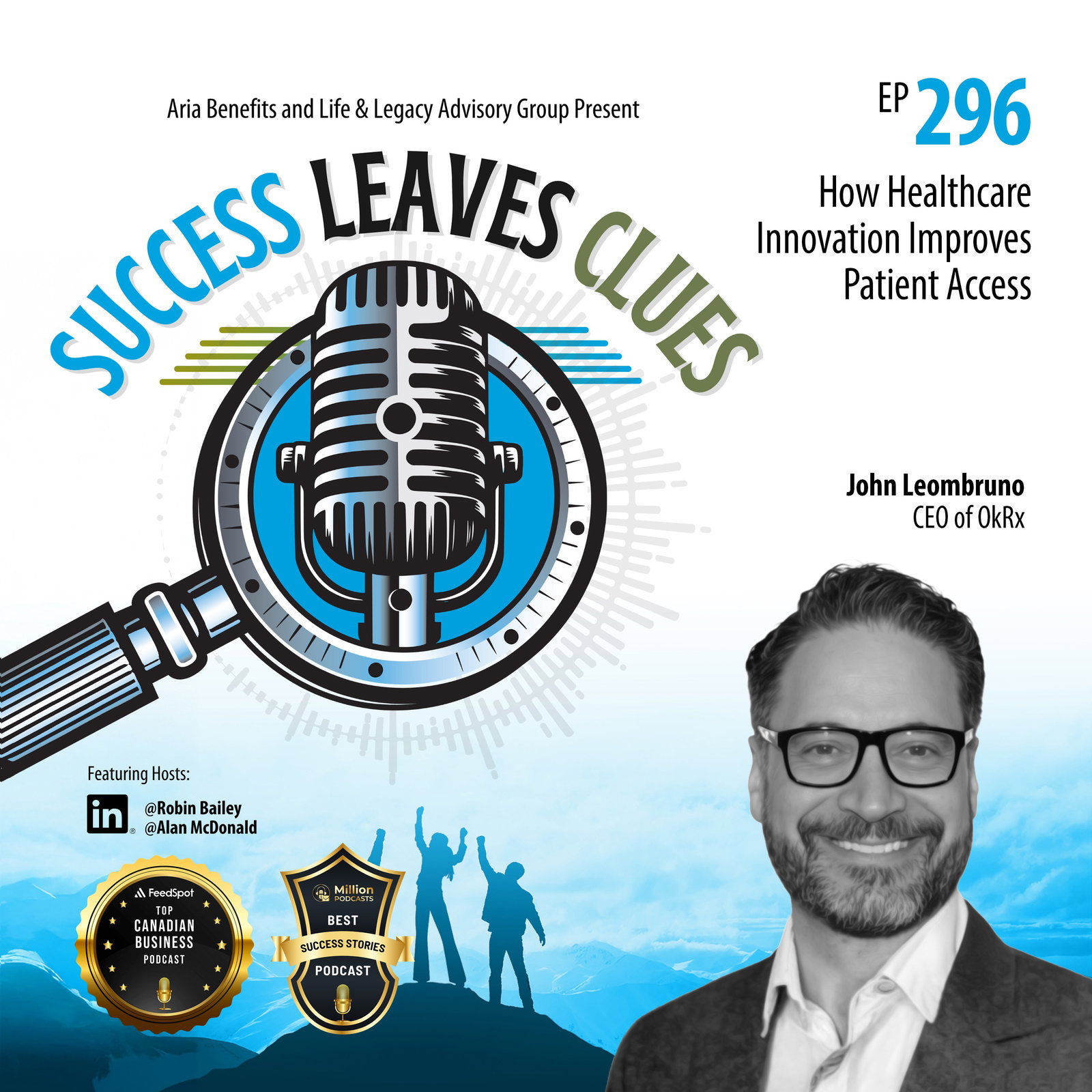 Success Leaves Clues: Ep 296 How Healthcare Innovation Improves Patient Access with John Leombruno, CEO at OkRx Success Leaves Clues with Robin Bailey and Al McDonald · on healthcare innovation79 / 100
 US Pharma Deals Midyear Outlook 2026: Why Dealmakers Are Leaning Into GrowthPwC's Next in Health · on GLP-1 therapeutics76 / 100
 Healthcare AI Is Failing And the Fix Isn't More DataSaaS That App · on Precision medicine73 / 100
 The Business & Science Behind the GLP-1 BoomCareTalk: Healthcare. Unfiltered. · on healthcare innovation64 / 100
 What’s Holding Back Women’s Health?81 / 100
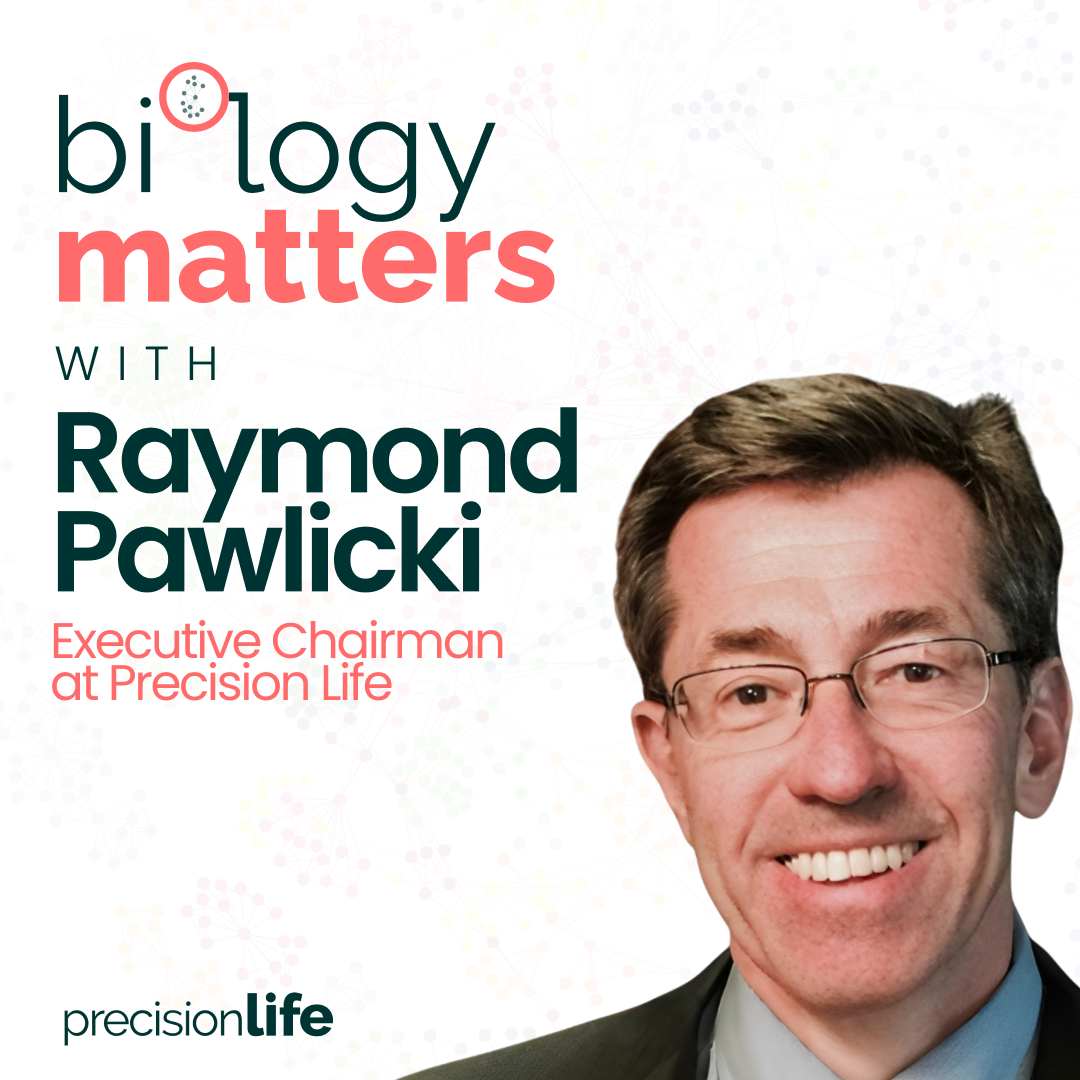 How Healthcare Moves from Reactive Care to Preventive with Ray Pawlicki83 / 100
 Biology Matters Trailer31 / 100
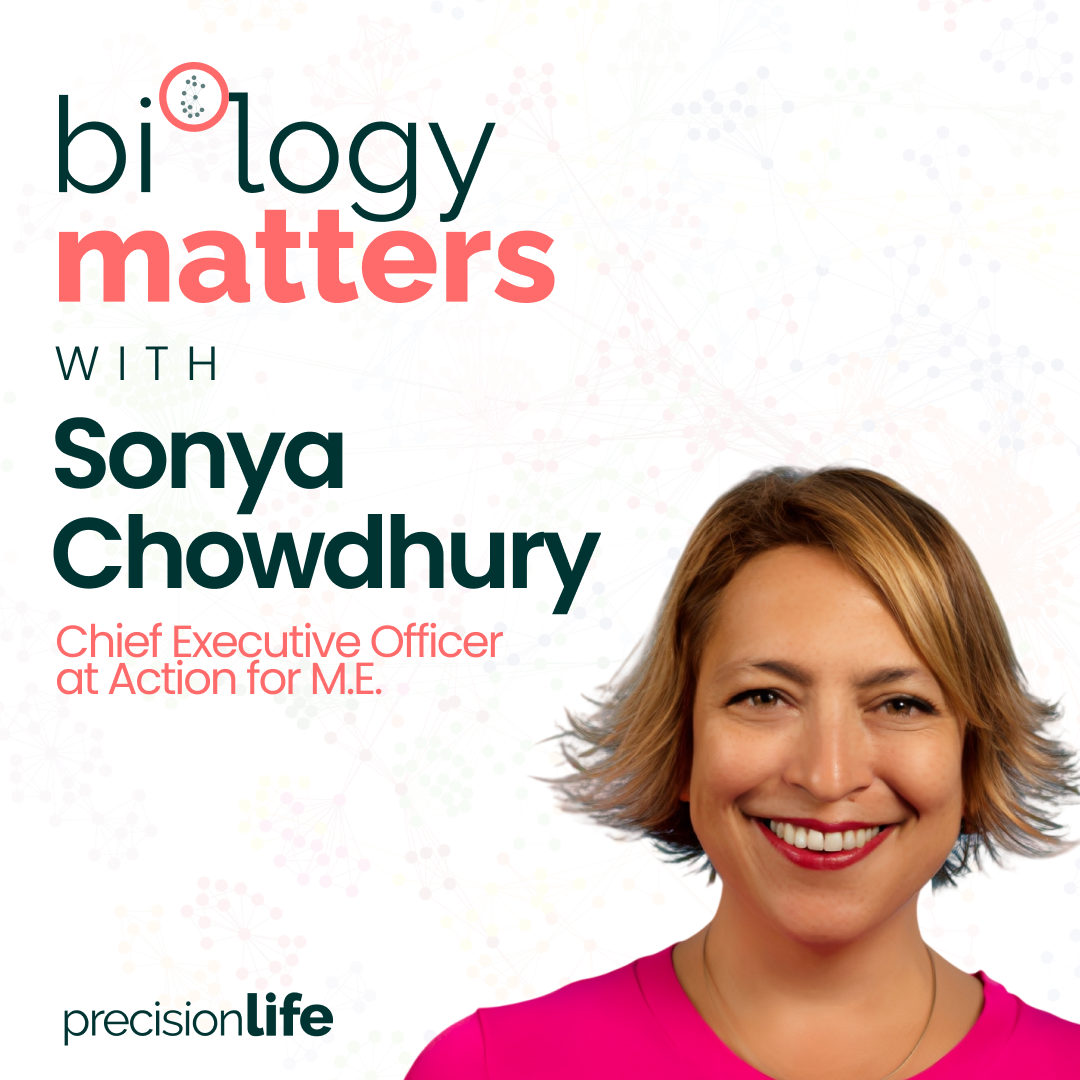 Why ME/CFS Has Been Neglected for Decades - And Why That's Finally Changing