
Beyond The Road · 2026-04-28 · 35 min
Key moments - from our scoring
Substance score
36 / 100
Five dimensions, 20 points each
Justin McNary, a Class 2 oversize/heavy haul driver at ATS with over 224,000 miles in just over a year, walks through the mechanics of recap hours - a Canadian-specific regulation that allows drivers to manage their weekly hours differently than standard DOT regulations. He explains how poor hour management by the third week forces drivers into 34-hour resets, a practice mandated every two weeks in Canada. McNary emphasizes that recap hours are entirely driver-discretionary, not something managers should enforce, and that taking them on unnecessarily adds stress without benefit. The conversation pivots to his critical mistake: missing an exit while hauling an 8-wide permitted baseball field load in New Jersey, which dropped him from Class 2 back to Class 0 (legal freight only). However, McNary's immediate call to dispatch and willingness to contact local police to safely execute a U-turn in the intersection - rather than attempting to navigate through residential areas or find alternate routes - demonstrated the integrity that saved his employment. He emphasizes ATS's culture of owning mistakes and accepting constructive criticism, contrasting it with other carriers where drivers hide errors and risk catastrophic outcomes like bridge strikes.
Recap hours are a Canadian-specific regulation that allows drivers to manage their 70-hour weekly limit differently than standard DOT rules, but poor management by the third week forces mandatory 34-hour resets; in Canada, drivers must reset every two weeks regardless.
If you miss an exit on a permitted load, you can be downgraded to a lower freight class (McNary went from Class 2 to Class 0), but calling dispatch immediately and working with local police to safely correct your route can save your job, while attempting to find alternate routes without reporting risks hitting structures and termination.
No, McNary states it's something he hadn't heard of from other companies or drivers before joining ATS; it brings drivers in small groups to discuss company goals, safety incidents, and gather feedback on systems like Platform Science e-logs.
While fuel prices don't directly impact company drivers' take-home pay, higher fuel costs reduce the company's margins on freight, which can decrease overall freight volume available and affect long-term earnings opportunities.
Cold Spring, a company ATS began working with in 1955 when founder John Anderson contracted to haul freight for them after returning from World War II.
Our reviewer’s read on each dimension, with quotes from the episode.
A handful of genuinely operational nuggets exist - recap hours math with exact timestamps, load-class dimensional limits, and weight constants for diesel/DEF/water - but they are buried under extended personal anecdotes, company promotion, and casual chit-chat that comprises the majority of the runtime. A trucking operator learns a few useful things; almost any other B2B operator learns essentially nothing.
go to Lordsburg, shut down, wait till you uh, wait till 3:30 in the morning, 3, 3:30 and you'll be able to make your delivery on time with about four and a half hours left in your clock
People think truck drivers are dumb. No, you have to know a lot of math, like how much diesel weighs, which is approximately seven pounds. DEF weighs approximately nine pounds. Water weighs 11 pounds.
The episode is almost entirely conventional trucking wisdom - call in your mistakes, integrity saves your job, help fellow drivers - with no contrarian framing, first-principles reasoning, or counterintuitive argument anywhere in the transcript. The recap hours walkthrough is operationally specific but is standard industry procedure, not a fresh framework.
My character development, me as an adult, that's integrity is my highest thing and that's saved my job.
Transport and not damage the load. That's the. That's the bare minimum of our, of our. What we're supposed to do.
Justin is a genuine frontline practitioner with real oversize-freight experience and demonstrated technical knowledge, which is credible for a trucking podcast. However, he has been with ATS just over a year, is a single company driver (not a fleet owner, ops leader, or builder), and his expertise does not translate to strategic B2B learning at any meaningful scale.
I've been with ATS since, uh, January of 2024
I've gotten 224 and change thousand miles since I've been here... I'm around 430,000 safe miles without an accident
The episode scores relatively well here: exact hours-of-service figures (04:59:03, 9:29:37), named routes, specific load weights, dimensional class limits, and named customers (Siemens, Hitachi Energy, Caterpillar, Cold Spring) appear throughout. The specificity is anecdotal rather than systematic business data, which limits its ceiling, but it is consistently concrete.
he had 04:59:03 left... Monday going into Tuesday he had 9:29:37 coming back
diesel weighs, which is approximately seven pounds. DEF weighs approximately nine pounds. Water weighs 11 pounds
The host asks open-ended, low-stakes questions, openly admits ignorance on the episode's central topic ('I leave that to the folks in operations'), and closes by handing the entire agenda to the guest with 'Anything else you want to talk about?' There is no follow-up probing, no pushback, and no challenge to any claim in the entire 35-minute conversation.
Anything else you want to talk about?
I know that I am not the expert in that area. I know what they are... I leave that to the folks in operations.
Computed from the transcript - who did the talking, and the words that came up most.
How recap hours work: Recap hours, missed exits, oversized loads, and real-life trucking decisions, this is what the job actually looks like. ATS driver Justin breaks down how recap hours really work, why they can make or break your week, and shares a moment where one wrong move could’ve ended his career, but didn’t. From hauling oversized freight across all 48 states to helping other drivers on the road, this is a raw look at trucking experience, safety, and integrity behind the wheel.
Transcribed and scored by The B2B Podcast Index.
Speaker A: I know we chatted a little bit this morning, but how you doing?
Speaker B: Uh, not too bad. Uh, just, uh, did my aip, my annual in person review with my secondary manager. My manager's out for the day and, uh, just rehashing with some of the other drivers what they're going through. Um, but, uh, here, chit chatting with your compatriots here, uh, you know, talking about the state of the world and gas prices as high as they are, and, um, telling him how I was helping another driver on Sunday, um, for his recap hours. He's been driving for 5 years m with another carrier before he got here. And, uh, he was having trouble understanding, uh, recap hours. And honestly, I understand it. I never did recap hours till I came here.
Speaker A: Yeah.
Speaker B: So, like, recap hours, it can be very tricky. If you don't manage your hours well by that third week, you're just not getting back enough efficient hours to operate. And that'll force you into, uh, doing resets. In Canada, though. Canada, you have to do a reset at least every two weeks.
Speaker A: Yeah, I was gonna say recap hours are a big deal here, from what I understand, compared to a lot of other places, thankfully.
Speaker B: So it's not something that's forced. It's definitely on the driver, if they're willing to do that and whether or not they want to. Um, I've met one or two managers that try and push that on some of the drivers, and I heard from one driver that that was specifically what that manager wanted them to do is like, look, they're not the ones driving it. You're the driver. You are the one that drives the truck. If you don't feel safe doing that on a daily basis, you're the one that operates that truck. You drive it safely.
Speaker A: Yep.
Speaker B: Uh, so, I mean, I've done recap hours often enough. I've gotten, I'd say, a decent working knowledge of working it. But it's. If it's, uh, if it doesn't make sense to me, why, why push that? Because at the end of the day, it's just more stress if I don't have to work it.
Speaker A: Yeah. You know, we got carried away in, uh, just starting this conversation. Tell me a little bit about who you are, what you do here, and how long you've been here.
Speaker B: Okay. Well, my Name's Justin, Justin McNary. I've been with ATS since, uh, January of 2024. Um, I have a friend that works here that I met through another way, uh, through a funny, uh, enough story. I Met him, his name is uh, he's at Heavy hall, his name's David. And I met him through another driver via cb, uh, radio in Wellington, Utah. Um, operating for my first company Flatbed. And that was for an owner operator. Um, but I've been here since 2024. Did um, my first oversize with this company probably June of 24 and then been picking it up off and on as I do there. And I uh, went from a Class 4 when I started to a Class 2, meaning I can pull up to 14 foot wide. 14 I believe 14 or 146 tall and up to 120ft long. Thankfully I haven't been that long before. Longest I've been is only 76ft. So just standard truck.
Speaker A: Nice. So what's your experience? You know, I don't know how well known it is in the industry about our career path program here. Um, career path I should say is company driver, um, you know, just business path or you know kind of how you grow your business as a contractor. Um, a, how, I guess how well is that known out there? And B, um, how does it stack up to what maybe your expectations were?
Speaker B: So that's in two parts. So the career path as in as a company driver versus like, like the experience that we can gain.
Speaker A: Just the, the ability, sorry, I should uh, the ability to kind of like you mentioned you started as Class 4, you've now worked your way all the way up to class two. Um, so you know, just kind of that ladder system and being able to haul bigger, heavier freight.
Speaker B: How has that been explaining, um, explaining the different levels and stuff?
Speaker A: Yeah, we kind of. What's that experience been like for you? Does it align with what you thought it was going to be? You know, how, how has that been so far?
Speaker B: Okay, so um, for, for those that don't know, class four is anything that is legal freight width of 86. Uh, that for height, for flatbed it is again another eight six step deck, that's nine six. And for lowboy, uh, for sorry for low pro step decks which is what we operate, that's 9 6. And then for low boys or double drops, uh, RGNs, that's typically 10 plus feet depending on the size of the freight. Um, and anything above that is class three which is up to 12ft. Um, sorry, class three is up to 10ft. Class two is up to 14ft and such. So ah, I had some people hold my hand and help me learn it. Those um, were generally other drivers and friends that I knew thankfully. Um, I have a manager that started in permits before she ever became a driver manager. And she's definitely been someone I help, I lean on at times, uh, versus other drivers because she's very knowledgeable in permits what they can and can't do. So if I have a question, I always just ask her or ask, uh, or ask any other managers that are in there or in permits division. As, um, far as the experience, I mean, I've hauled anything from a 14 foot, 24 foot long chiller, uh, 14 foot wide, sorry, chiller from Delaware, all, uh, the way to uh, Wausau, Wisconsin. So I've definitely gotten the width of the country and sometimes go more east and west than I do north on that load. Um, and then for heavy, I got to carry a 58,000 pound excavator from south of Houston to St. Louis. Um, that was interesting in traffic, uh, in Houston, in Dallas to say the least. So I mean from big to small, heavy to light, I've carried a lot of stuff. I enjoy it. Um, I got to mark off the last six states for the contiguous 48 states in the United States. I got to adjust my route coming back into the US From Canada, Canada to be able to cut across Vermont, through New Hampshire to get to Oxford, Maine. And that was, that was pretty nice. I came across in the, uh, during winter in January of 25.
Speaker A: Okay.
Speaker B: So that was pretty fun.
Speaker A: So all 48 you said you've been to?
Speaker B: Yeah, I've been to all 48. I've uh, I've gotten 224 and change thousand miles since I've been here.
Speaker A: Okay.
Speaker B: And I've gotten, I'm around 430,000 safe miles without an accident.
Speaker A: That's awesome. That's a big deal. That's a big deal. So I'm sure you've seen the Million mile Hallway. How much does you know, how important is that to you? And how much of a goal is that of yours to achieve, uh, with
Speaker B: ats, the Million mile Wall and the half moon wall and such, um, it shows how well you pay attention to yourself as a driver and what you're doing and how attentive you can be. Now that's not to disparage what the drivers may or may not have a control, because whatever, whether we have control of our truck, that doesn't mean that there aren't circumstances that are out of our control. When I was hauling that chiller across the country, I'm 14 foot wide. I'm barely, you know, I got half an inch of space on these barriers, but that's not going to stop these um, SUVs and cars from coming in from the sides and directly cutting over in front of me. So that's on me as a driver to pay attention and anticipate that. So I would have my escort behind me, blocking off the other half of that lane and then she'd shout out, four coming over, four coming over, 18 coming by, stuff like that. So, um, that's the experience with that. But as far as uh, the goal for that, I mean I would like to strive for that, but I understand that not everything is in my control. Sure. But I, I do hope to, to get to that million mile safe. Million mile safe marker. My dad is around 4 million safe miles without an accident and he's been driving for about 35 years.
Speaker A: Yeah, I was gonna say that checks out time wise. Yeah, that, that's awesome. And the fact that you're, you're cognizant of it, right? The fact that you're thinking of those kind of things, saying, hey, you know, I can't control everything but, but what you can control, you're working very hard to control M. That's how you get there. That's how you get on that wall.
Speaker B: As far as being safe. While driving. I pulled a uh, load of C and H tractors. So case New Holland out of Baltimore. Um, I chained down the tractors, came out, was taking my road, was uh, coming out East west on 76 and um, coming up the right lane and Traffic's pretty slow, 5, 10 miles an hour on my left. And this uh, Honda, this gray Honda CRV with Maryland plates bolted out in front of me so quick that I had to slam on my brakes and pull off to the side. And uh, because I, because of that, it jerked the rear chains hard enough, um, that they all rolled just like maybe an inch and it loosened all the, all the chains. And um, so I got to do my 50 mile, uh, chain check, my, my load securit check sooner than I wanted to. So I had to do that on the, on the uh, on the side of the highway. Because I had two chains. I'd come, yeah. Concerningly loose.
Speaker A: Yeah.
Speaker B: Because of how they had shaken up. They had slayed, um, they had slipped from the rubber that was uh, securing it padded and they had slipped a little bit forward and shifted the, the load point, the choke point for the chain. So I had to sit out there for like 10 minutes readjusting the chains to make them good.
Speaker A: Well, yeah, good, good to have thought of that. Right. And not just been like, well that Was scary. Let me just keep chugging along. Yeah, you decided to stop and I'd
Speaker B: rather, you uh, know, I'd rather take the onus on myself. I was like I'm, I've more gotten myself in trouble. I'd rather, I'd rather shoot myself in the foot than be fired for one. Lying.
Speaker A: Yeah.
Speaker B: Or um, saying I did or did not do something for that. So um, like I recently got in trouble. I'm going to, I'm not going to say I didn't do something wrong. I missed my exit on a, on a permitted load and it was, I was eight, eight wide. So not huge, not heavy. It was for a baseball team, for, for a baseball field being remodeled there in New Jersey. So um, unfortunately the, it was like one of those three stage exits where it's C, B, M A. Well, the exit from the highway to the exit I needed to be on, the exit that I was on went um, straight towards the B. But there was a car on my right that was coming up and he was slowing down at the exact same time I slowed down. I'm coming off, you know, 45, 40 miles an hour off the highway and they're slowing down the exact same amount. So I ended up missing my exit. I came down and I knew I'd, I immediately knew I'd missed it because I looked a lot, uh, to try and not miss my, my exit. And I still did um, because I was supposed to be coming off the cloverleaf and joining in on a two lane one way each way. Well, I came in, I came down and went on a two lane direct pass the firehouse. That's not my exit. So thankfully there was a turn lane that I was able to dive into and sit there. I did the self beat up myself. I missed the exit. Stuff happens, that's on me. But um, no one was hurt, no freight was damaged. I lost 20 minutes of my time.
Speaker A: Sure.
Speaker B: So I called in to my dispatcher, I let her know, I was like, hey, this happened. Um, she was like, well we'll go from there and what do you need from me? I was like, well I'm going to call local pd, see what they want me to do. And uh, thankfully five minutes later, ten minutes later, local PD showed up. He pulled up, he got my information and he asked me what I wanted to do. So um, I couldn't go in further in because it was a neighborhood that's a big no no for oversize. Um, I couldn't go left and come back down because that would uh, have Put me back on the eastbound side of the highway with another exit mile now. So I had him stop traffic coming down and this way. And, uh, I just did a big U turn in the intersection with his. With him stopping traffic. So no one got hit, no one got injured or anything. I got back up, came back on the highway, came right back down on the correct way. So I got knocked down from class two to class zero. So I'm back down to legal freight. But, you know, I take my looks where it is, and by calling it in, I saved my job.
Speaker A: Right, exactly.
Speaker B: So that's the big thing here at ATS is one as well. As long as you're willing to ask questions and take the constructive criticism and take your licks as you get them, you're gonna be fine. I mean, I still have my job. This is the second time this has happened to me because of. I missed an exit. But, you know, things happen. No one was hurt, no one was injured. But that's not to say I was wrong to do it. Things happen. I made an accident, took my licks. I'm still here.
Speaker A: Yeah, we've had other drivers that swallow, you know, don't swallow their pride, I should say. Keep m, uh, chugging along and try to find the next way to get back on route and um, inevitably probably run into a bridge. So that's the alternative, um, which absolutely would lead to your termination. So you did the right thing is, you know, again, you made a mistake, obviously you owned it. Um, but you did the right thing and how to fix it.
Speaker B: My character development, me as an adult, that's integrity is my highest thing and that's saved my job. So having the integrity and the, and the capability to admit my own faults, that's kept me in my job and kept me out of, for the most part, trouble. I take my licks as it is. So, you know, it is, it is what it is. We, we make mistakes and we try to learn from it.
Speaker A: Yeah. I want to rewind all the way back to the beginning you mentioned. What brings you into the beautiful town of St. Cloud, Minnesota, was annual in person, as we call it here, aip. Um, what are your thoughts on that process? I think it's somewhat unique to the industry, at least in how we do it. I'm sure that the process of what we do while you're here is somewhat the same, but what do you think about the annual in person process?
Speaker B: I would say that as a process, it's something that I haven't heard too much of from other Companies or drivers out there. Um, because prior to ATS I worked at Amazon for 6 months. Didn't especially like that. And then prior to that I worked for an owner operator. So as far as in person review yearly stuff, it's something new to me. I did it last year in February. But it's, it's something to help reiterate the company's goals, values and then show the drivers like look your fellow drivers mess ups are what's helping cause you know what we're able to get you as drivers for loads, for freight and these are the consequences. And they show the, they show um, some highlighted accidents and incidents of what happens and uh, that comes out monthly sometimes on the newsletters. Sure. Or if there's a particularly interesting incident that like uh, like what happened recently in Fredley that that is highlighted and there was a flash m. Flash message about that. So I mean that's one of the things that we go over is like look the consequences of all this, the lost production value, insurance claims that all counts against what everyone else makes both as a company driver and the manager. So we all get affected. Um, so as that happens that affects the value of freight that we can haul, how much money I can make. So ultimately other drivers actions affect your pocketbook just as much as what the company's and it helps bring the drivers in smaller groups to help address any issues that they may have as drivers. So drivers get together, we like to talk, we like to chit chat
Speaker A: and
Speaker B: uh, BS and tell stories but it also in that instance and it helps bring any uh, highlights any issues that they're experiencing especially with the new uh, E log system that we're dealing with with platform science. So we've had ups and downs with um, with the alerts ah, pushing through in sleeper mode. So that was something that was highlighted. I haven't personally experienced it but other drivers have so they'll be in the sleeper berth and they'll have that go off. Um other times uh, they're not able to utilize their messaging system correctly. So that's something that they're able to reiterate to uh, the IT and technology department and let them know it's like hey this is doing great but here are some issues that I'm currently happening with and sometimes there's issues with um, with new updates, sometimes I just have to reset it and it'll flash, it'll, it'll flash the new updates and stuff like that. So but overall aip, I um, would say it's a, a very constructive Criticism based opportunity to bring your, to bring anything forward. And uh, look at any of your incidents and stuff like that throughout the, throughout the year. Uh, to your knowledge, like, look, this is, this is what happened throughout the year and this is how we've progressed and you're doing better or worse from where they're. But I mean that's, it's what it's supposed to be there. It's constructive criticism. How to become a better driver for both yourself and for the company.
Speaker A: Right, Exactly. I think that's, I'm glad you said that kind of part right at the end too is uh, it's not just, hey drivers, here's all the things you're doing wrong and here's how to fix them. Right. Um, we want to hear from you guys too. We do our best to understand what it's like there out on the road, but we aren't out on the road. So we need that feedback so we can make your lives easier and stuff. And I don't know if you kind of hear it or not, but a lot of the times when I'm trying to do things within the department I work with, um, one of the first questions you often get asked is well, how is that going to improve the driver experience?
Speaker B: Mhm.
Speaker A: And that starts at the top. And so just how can you constantly be improving the driver experience matters? And for us, annual in person is a great way to get that information from you guys.
Speaker B: And one of the good things is like there's a lot of, a lot of former drivers that are, that are in there, in the, in the corporate structure here in ats. So uh, the safety, the safety man, the safety manager that was there this morning, um, he owned and operated his own company for 35 years. So he has a unique perspective that someone that may have been corporate for 30 years, but has never been on the private side or, or driver side period. May being a specific point of view. And uh, so that also leaves uh, another career path. So if I want to get off the road, you know, 10, 15, whatever years down the road, that's an option that I have. And you don't always get that at some companies, sometimes they hire purely off of, off of resumes and they may not allow that for drivers. So it's another career ladder that I could potentially climb.
Speaker A: Yeah, absolutely. Um, you're company, right?
Speaker B: Correct, I'm company.
Speaker A: So obviously the fuel prices don't really directly impact you, but um, you know, what's the chatter out there about fuel?
Speaker B: Uh, nothing good. Uh, so thankfully I AM company. So the fuel prices don't directly affect me, but they do affect um, the volume of freight because.
Speaker A: Sure.
Speaker B: So the higher the prices are, the more expensive it is to transport freight. So it's. While I don't see it on my side, the possibility of fuel savings from the company is a lot lower and that's going to directly reflect um, freight transfer. So the higher it is for some companies to transport freight, they may go with those lower bids simply to move their freight. So thankfully we have contracts and customers that we've worked with for decades and such that they value our driver experience and talent uh, to transport their freight whether it's van flat, specialized or heavy haul. And thankfully I've been able to work with some of those customers to do that.
Speaker A: By the way, I don't know if you knew this or not. Cold Spring just down the road. Did you know that was our very first customer?
Speaker B: I did, I did. Um, I made my delivery for ah, Caterpillar remanufactured mining parts. I pulled it from Chicago, uh, mhm. Elk Grove Village. And I took it over to uh, West Fargo where they do their remanufacturing out there. And um, on the way back the trailer manager asked me to drop my step deck there in Cold Spring.
Speaker A: Nice.
Speaker B: So I dropped it back there and it was kind of empty lot so didn't have really too much problem parking there. But yeah, I did know it was one of our first customers. Um, we, if I correct me if I'm wrong, that was who John uh, Anderson originally contracted for back in the 50s when he got back from World War II. And um, I believe at that time you could only haul for a company that you were contracted with. No outside contracting.
Speaker A: Yep. Prior to all the deregulation type stuff and all that. Yeah. But that was the. They worked together to kind of figure out how they could transport that type of freight and we've been working with them ever since. Yeah, 1955, Harold did that.
Speaker B: So I told my mom that I uh. My mom lives in Muncie, Indiana.
Speaker A: Okay.
Speaker B: But she's originally from California. M. And my dad's from Ohio, currently lives in Texas.
Speaker A: Okay.
Speaker B: So I told them that I've, I've moved gravestones and, and my mom was kind of freaked out about it because she's, she's a little superstitious.
Speaker A: Sure.
Speaker B: And she was like. Were you not worried about it? It's like. No, they're just stones. Uh, what? It's, it's interesting because I've moved three or four of Their loads, I mean, they're. They're sometimes time intensive because of the number of loads, number of stops you have. Um, but it's interesting because you can haul anywhere from urns to plinths to flagstones, and all the way up to mausoleums. So I've seen some drivers haul a mausoleum, and this thing was 10 foot long, 5 foot tall, and weighed every bit of 7,000 pounds.
Speaker A: Yeah, it's crazy.
Speaker B: And he was like, uh. And I saw him start to throw a chain strap over it. I was like, you don't want to do that. That's a family's mausoleum right there.
Speaker A: Right.
Speaker B: And it was personalized, so it had, um, like 20 open slots on it for drawers and stuff like that. And the drawers were next to it in their own crates. So he started to put a chain strap on it, and I was like, you really don't want to damage that. That's someone's personalized property right there. And so he was, uh, wearing. We worked around, and he put some rubber over the top of it so the strap wouldn't rub on the marble. Um, and he just put a regular strap on it, on the two straps on the top. And then we used, um. I helped him put a strap on the front and the strap on the back to help keep it from moving laterally as well as side to side. And, uh, that's. Some people don't like the loads. Some people like them. I like it. It's not too bad. It's. It's going to cemeteries or roadside deliveries to some of these. Monitor some of these, uh, gravestone producers is interesting, to say the least. It's. It definitely makes it challenging to get around there.
Speaker A: You know, it's funny, I kept hearing you talk. Well, kind of most of our conversation, but just there again, too. You know, I was helping him do this and, you know, help with this and all that. How much do you deal with that out on the road where, you know, flatbed drivers are helping other flatbed drivers? Or, you know, it could be different driver types, too, but I just picturing flatbed right now.
Speaker B: Most of my experience driving is flatbed. And for the most part, I see more flatbedders help each other out, um, than van drivers. But, I mean, it's. It's temperament. You. You're dealing with drivers from different areas of the country, different areas of the world. I mean, I've met Ukrainian, Russian, Georgian, Rwandan, and besides Mexican and Canadian drivers, I'm every flavor of American there is. So, um, if I don't know how to do something, I definitely ask for it. It's like I'm not too prideful to say I know everything out there. And if you meet the driver that says he does, you need to step back and reevaluate whether, whether you want his help because he may not give you the best advice or he may give you something that you're going to lose your load 10 miles down the street.
Speaker A: Sure.
Speaker B: So, um, but by and large, flatbedders do help each other out. Um, I was at Bland, Virginia at Hitachi Energy. There were two drivers that were, um, that had pulled out to get their load, uh, tarped. And um, there was a couple drivers that were standing around, um, waiting to see what they were doing, but they got their tarps over top of it. And I helped him, um, one of the drivers helped shuffle his tarp over. Um, and he was a contractor, so I helped him shuffle his tarp over, you know, 10 foot tall on either side and 4 foot tall and 4, uh, foot wide or whatever it was. But it's pretty heavy tarp. So we, we manhandled a little bit over and got it, got it over. Um, but I mean the faster I help someone do something correctly, the faster I can get loaded. And thankfully I had a preloaded trailer. I just had to wait for them to, to finish getting their stuff, uh, tarped before I could pull out, um, and point, uh, pulling on that. Um, the next day, uh, well, as I was leaving there was another one of our drivers, a female, um, that was there. And um, I met her. I ended up seeing her the next day. Uh, when I pulled into the pilot, do a load check and use the bathroom. Well, she was backing into a spot as I was coming out and I had to fix my tarp because uh, it had shifted with the wind. So I was out there helping her. You know, Instead of a 30 minute break, I was out there, I was, I was stopped for just over an hour, almost an hour and a half. And most of it was helping her with her tarp because it was, I don't know if she's not done it before, but images, images, image helps not only yourself but your company. And if you show, if you have a good image for your company, showing that my drivers can. My, my drivers know how to know how to help each other as well as to do their job correctly. It reflects on both the drivers as well as the company. So I was out there helping her as much as I could with her tarps to make them a little more presentable as well. As to cover the. COVID the cargo because they're transformers. And she was going all the way out to Quincy, Washington and we both know how windy it is across Montana and North Dakota. It's not stopping. So, you know, helping her out to get her tarp situated before she lost them out there in Dixon or Bismarck, North Dakota or Billings. So, I mean, it's uh, not uncommon for me to help other drivers out there. So, um, I'm not afraid to help them.
Speaker A: Nice.
Speaker B: Because they may not always know the correct way to do something, but there's not necessarily a fixed way on how to do something. To do it and not damage the load is the. Is our goal. Transport and not damage the load. That's the. That's the bare minimum of our, of our. What we're supposed to do.
Speaker A: Anything else you want to talk about?
Speaker B: Um, so, uh, what do you know about recap hours and hours of operation?
Speaker A: I know that I am not the expert in that area. I know what they are.
Speaker B: Okay.
Speaker A: But how to do it efficiently and all that stuff, I, I leave that to the folks in operations.
Speaker B: Okay. Uh, so, um, one of the topics that, uh, I recently helped a driver with was recap hours.
Speaker A: Sure.
Speaker B: So, um, uh, he was actually a brand new driver. Um, he pulled his first load for ATS out of, um, Elk Grove, not Oak Grove, but we pulled pallet racking out of Chicago and we took it down to Sumter, North Carolina, South Carolina. Sumter, South Carolina. And he's from the Asheville area. So the load was going right by the house, relatively speaking. Um, so he sent me a, uh, a text message, uh, on Sunday asking me, um, if I could help him, uh, do. How would he go about getting his load to Phoenix from Laredo? Um, because that's where he was at on Sunday. He was taking two transformers from Siemens to, uh, Phoenix to a crane company. Um, and he was unsure how he was going to get over there because he had to make his delivery by eight. So, um, he drove from Laredo from our terminal there and got to Van Horn, Texas. And then from Van Horn to Phoenix is about an eight and a half hour, almost eight and three quarter hour drive. And um, he had just under five hours left.
Speaker A: Okay.
Speaker B: So I told him, like, you can get from, um, from Van Horn to Lordsburg, New Mexico. I was like, you can either drive it straight, take a break, um, but you should be able to make it to Lordsburg. And he showed me a picture of his hours, uh, while he was stopped, of course. Uh, he showed me a picture of his hours that he had remaining and he had 04:59:03 left. So he had just enough to get there from Van Horn to Lordsburg. He had no hours coming back Sunday going into Monday, however, um, and Monday would be where he would drive that remaining five hours, four hours or whatever to get to uh, Lordsburg. However, Monday going into Tuesday he had 9:29:37 coming back. So he had enough to make his delivery. He was just unsure how to do it. Driving for five years, not everyone's going to have the same driving experience or knowledge or, or because some companies want you to do only recaps, some want you to not do recaps. Thankfully here it's, it's left up to the driver discretion. So I was able to explain it. It's like go to Lordsburg, shut down, wait till you uh, wait till 3:30 in the morning, 3, 3:30 and you'll be able to make your delivery on time with about four and a half hours left in your clock. Uh, Tuesday, uh, and then he's got uh, he had 11 hours and three minutes coming back Tuesday going into Monday. So he had, sorry, Tuesday going into Wednesday. So he had more than enough hours to come back and operate a full day tomorrow if he needed to. So uh, and I, he was like are you sure about that? And I was able to um, I just took a screenshot of the distance from Lordsburg to, to his destination in Phoenix. I was like, you can either go 10 and stay on the highway, it's lighted. If you need to take a rest break, there's plenty of places to pull over or you can go up through the reservation, but I wouldn't recommend it. Not at 3 o', clock, 4 o' clock in the morning. There's plenty of deer up there. You really don't want to have, have uh, a roadside injury with a deer.
Speaker A: Yeah.
Speaker B: So. But he was able to make his delivery this morning and uh, he, he sent me a message not too long ago that he's got his rel, he's going to Newark.
Speaker A: It's a lot of stuff you guys have to think about.
Speaker B: Believe me. People think truck drivers are dumb. No, you have to know a lot of math, like how much diesel weighs, which is approximately seven pounds. DEF weighs approximately nine pounds. Water weighs 11 pounds. So by water I transported a uh, nine and a half by nine and a half by 12 foot long concrete cube. It was a sump tank going into a warehouse that was being built in Lorena, Texas. What I didn't know was over the weekend, uh, when I stopped to make my, before I made my delivery is, well, there's about 7 inches of water sitting in it. And they had, when I got to the job site, they had to put in a portable pump to pump out the water because the crane wasn't going to be able to lift it because there was about 200 gallons worth of water in there that they had to pump out before the crane was going to be able to reliably lift it and drop it down in the hole.
Speaker A: Well, it's, uh, it's been fun chatting today.
Speaker B: Uh. Oh, we got stories for days. Yeah, exactly right.
Speaker A: It's been, it's been fun chatting. I appreciate you swinging in and, uh, yeah, it was good meeting you this morning and, uh, and I'm sure we'll be seeing each other around, so thanks for joining.
 How to Survive the Trucking Industry Ups and Downs
 Winter Trucking, Road Stress & Football Rivalries
 I Made 12 Cents a Mile When I First Started Trucking
 Breakbulk Americas 2025 | Trucking Industry Update
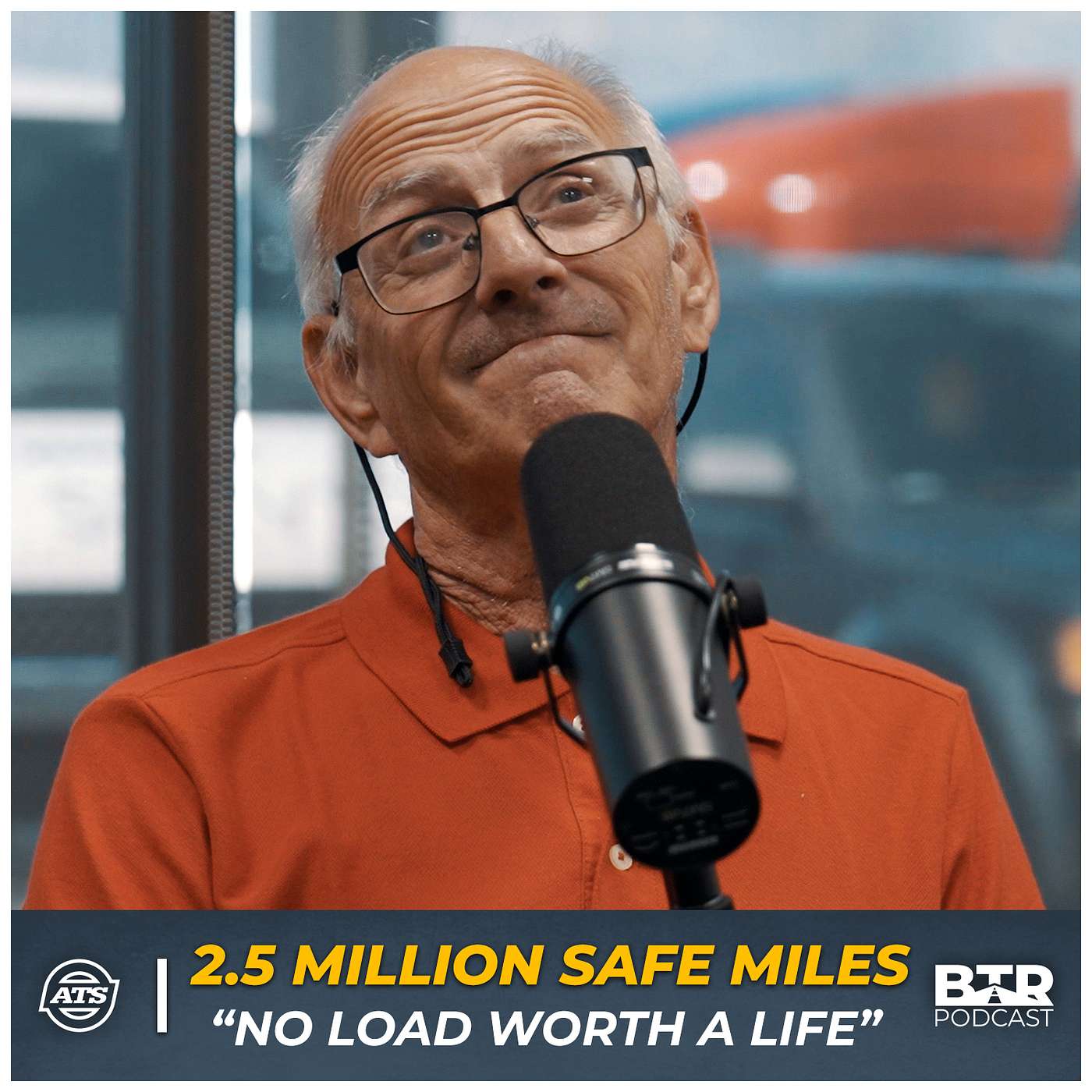 I’ve Driven 2.5 Million Safe Miles as an Army Vet Trucker