
Beer Stories for Private Equity · 2025-10-21 · 26 min
Key moments - from our scoring
Substance score
49 / 100
Five dimensions, 20 points each
Mavericks Private Equity operates in the growth equity space between traditional venture capital and leveraged buyout PE, targeting companies with proven product-market fit and a clear path to profitability. John Ruffalo explains that this segment is far less crowded in Canada than in the U.S., where larger pools of later-stage venture capital exist. His firm invests in tech-enabled traditional businesses across smart cities (sovereignty, energy resiliency, food supply, healthcare, financial systems) and smart enterprise sectors, with a roughly 50/50 split between Canadian and U.S. portfolio companies. Ruffalo frames recent U.S.-Canada trade tensions not as a threat but as a catalyst for Canadian business independence - a wake-up call after three decades of allowing critical sovereign industries to atrophy. He argues that Canadian entrepreneurs are relationship-driven (versus transactional in the U.S.), which proves advantageous during volatility. The private equity market in Canada is roughly 1/20th the size of the U.S. despite having 1/10th the population, creating both a capital constraint and an opportunity for well-capitalized, experienced operators. Mavericks' first fund was the largest first-time Canadian PE fund raise in history, though Ruffalo notes that scaling beyond Canada requires tapping U.S. and eventually international LP bases. For founders, operators, and investors watching the Canadian market, this is essential context on sector thesis, market structure, and the geopolitical tailwinds reshaping Canadian competitiveness.
Growth PE invests in companies that have achieved product-market fit and profitability (or near profitability) but are still in growth mode and need capital plus professional investor support. It sits between venture capital, which targets earliest-stage technology companies seeking product-market fit, and buyout PE, which finances mature, proven businesses with clear execution paths and minimal technology risk.
Mavericks invests in tech-driven companies reshaping traditional markets across two sectors: smart cities (focusing on sovereignty, energy resiliency, food supply, healthcare, and financial systems) and smart enterprise. The portfolio is roughly 50/50 Canadian and U.S. based, with minority equity stakes in businesses that leverage enabling technology to accelerate growth.
Canada's private equity industry is roughly 1/20th the size of the U.S. market, despite Canada's population being 1/10th that of the United States. There are far fewer PE firms operating in Canada, creating both a capital scarcity and an opportunity for established players.
John Ruffalo frames recent friction as a wake-up call exposing Canada's vulnerability in sovereign industries after three decades of outsourcing to the U.S. This has motivated Canadian entrepreneurs and investors to build independent, technology-enabled businesses, creating a decade of opportunity driven by fear and repositioning rather than complacency.
Mavericks' first fund was the largest first-time fund raise in Canadian private equity history, though it remains modest by U.S. standards, reflecting the size constraints of the Canadian capital market and the necessity for Canadian firms to access U.S. and global investors.
Our reviewer’s read on each dimension, with quotes from the episode.
The episode contains some substantive discussion of growth PE positioning in Canada and geopolitical macro commentary, but much of the runtime is devoted to filler: personal background stories, family naming conventions, sports talk, and beer breaks. The core PE insights (minority stake growth PE as middle market, Canadian capital constraints, macro thesis on regionalism) are valuable but sparse relative to overall length.
where growth private equity is and where we are playing, it's really minority. And what happens here is there's already the product market fit. This is a real company, real customers.
The real challenge is how do you grow your private equity funds of scale in Canada without seeking non Canadian investors. Very, very difficult to do so.
Ruffalo's thesis on regionalism vs. globalism and the macro shift post-Soviet Union is somewhat fresh in a PE context, but the core positioning - growth PE as a middle market strategy between venture and buyout - is well-established in the US and largely recycled here. The broader geopolitical framing, while reasonably articulated, relies on conventional narratives about US isolationism and supply chain reshoring.
we're going to revert from globalism to regionalism
if that was going to happen, what kind of businesses were going to be most important? Again, and that's the thesis that we've, we've really nailed right now.
Ruffalo is a genuine founder and operator - he built Omer's Ventures and now runs Mavericks PE, which he claims is Canada's largest first-time fund. However, he is not a household name in US PE circles, and his firm's assets under management are modest by global standards. He has relevant experience in both venture and growth PE, but the caliber is solid regional player rather than tier-one institutional figure.
founder and managing partner at Mavericks Private Equity in Toronto
it's happened to be the largest first time fund raising in Canada in Canadian history.
The episode lacks concrete deal examples, portfolio company names, fund sizes, return metrics, and specific timelines. Ruffalo mentions two fund vintages and roughly a 50/50 Canadian-US split, but provides no real numbers on capital deployed, portfolio performance, or illustrative deals. The macro commentary is largely unsupported by data or specific examples.
we have a, ah, two key areas that we invest in. Uh, we call it smart cities and smart enterprise.
For fund one, it was all Canada. For fund two, you'll see a bunch of US names, uh, on our, uh, list of investors.
Host Scott Markman asks reasonable foundational questions and creates a comfortable conversational tone, but follow-ups are generally soft. When Ruffalo makes bold claims (largest first-time fund, macro thesis on supply chains, market size comparisons), Markman does not press for evidence or specifics. The conversation reads more as a pleasant chat than a substantive interrogation. There is some gentle probing on Canada-US dynamics, but it remains surface-level.
Now are the businesses that are in your portfolio all Canadian based or is it a mix of Canadian, Canadian U.S.
Um, can you speak to that as a starting point, you know, help to inform our listeners as to some of these dynamics?
Computed from the transcript - who did the talking, and the words that came up most.
This podcast is powered by MonogramGroup ( This episode of Beer Stories for Private Equity is sponsored by Private Equity Professional, PE's news leader since 2007. Stay connected to the latest news, insights and trends in private equity at peprofessional.com. - Welcome to Beer Stories for Private Equity episode 24. We are joined by John Ruffolo, Founder & Managing Partner of Maverix Private Equity in Toronto. Among their beer stories, Scott and John discuss the distinct characteristics of Canadian private equity, his firm’s unique investing model and life in the great city of Toronto. We know you’ll enjoy their convo. - We are receiving great responses to our podcast, and have several guests scheduled for upcoming episodes. If you would like to be considered as a guest in our lineup, please email smarkman@monogramgroup.com. - Follow John Ruffolo on LinkedIn (linkedin.com/in/joruffolo).Learn more about Maverix Private Equity at maverixpe.com.
Transcribed and scored by The B2B Podcast Index.
Speaker A: Uh, welcome to Beer Stories for Private Equity. Join us for our weekly happy hour, tapping into 27 years of PE experience
Speaker B: one pint at a time.
Speaker A: This podcast is powered by Monogram Group. Find us@monogramgroup.com this episode is sponsored by Private Equity Professional, PE's news leader since 2007. Stay connected to the latest news, insights and trends in private equity@peprofessional.com welcome to episode 24 of Beer Stories for Private Equity. On today's show, we're excited to be joined by John Ruffalo, founder and managing partner at Mavericks Private Equity in Toronto. If you'd like to be considered as a guest in our lineup, please email us@podcast monogramgroup.com and for Monogram Group, here's your host, Scott Markman.
Speaker B: Please fasten your seatbelts. We are pleased to welcome our first guest from north of the border, John Ruffalo. John, welcome to the podcast.
Speaker C: Great. Thank you, Scott.
Speaker B: We always like to start off with a little bit of personal stuff. Um, kind of where you were raised, where you went to university, business school, background information about your career leading up to, you know, your firm.
Speaker C: Yeah, though I was, uh, born, raised and schooled in, uh, in Toronto. I've had a few different, uh, careers. I actually graduated and started with the firm, uh, Arthur Andersen, who, which is now, uh, gone. The team merged over into Deloitte, so started career number two with Deloitte. I joined Omer's pension fund, uh, after that and built out Omer's Ventures, and then subsequent to that built my own firm, uh, Maverick's Private Equity.
Speaker B: What was it about being your boss? Creating an entity that was attractive to you? Because I've been my own boss for now 36 years. And what I've experienced and observed is you're either cut out for this stuff or you're not. How did you sort of get to that inflection point and say, this is what I want to do to me
Speaker C: is a little bit different very early on because my family, and my broad family was a family of entrepreneurs here. It wasn't because they chose that path. Uh, the reason is that we were immigrants and, uh, you didn't have a choice. The construction trades was the most common, uh, in our family. And so I was always encouraged to be the one to break out of that and to be a professional very quickly. And I didn't really know it. I became intrapreneurial, uh, the greatest fun that I was having and again started very early on. My career was building businesses inside of A bigger business. And I started to discover, uh, that that's really where I had the greatest fun. Building something from scratch and being judged by the success or failure of that. After building Omer's Ventures and it was sponsored by a pension fund, uh, Mavericks was really the final result of. All right, uh, now I really know or feel I know how to build a business. It just gives you the greatest freedom from a creativity. Even though I've been in the longtime investment business, the one thing that I didn't do, uh, is fully investing in myself. And this is really the penultimate ego investment from my perspective.
Speaker B: I will, uh, share with you, John. And this is true. Once a year, I have a nightmare, and the nightmare is I'm working for somebody else. It's happened for decades. So, you know, if that's a window into my soul, then there you have it. Before we get into the meat of the conversation, I do want to do. We always do at Beer Stories. And this episode is sponsored by Kona Big Wave. Liquid Aloha. Um, in loving memory of our recently, um, departed mascot, Kona, my golden retriever, who was the best dog in the world. This, um, was the only beer I was going to have today. So. Ready, set. It smells delicious, and it will be now. What is that?
Speaker C: Is that a lager? Is that an ale? What is that?
Speaker B: Yeah, it's lager. So it's kind of yellowish.
Speaker C: Yeah. Cheers would drink up.
Speaker A: All right.
Speaker B: Um, so because of my brand person, I. I want to ask the origin story of the name Mavericks.
Speaker C: So when I was at Homer's Ventures, so I was there for eight years, we, uh, had a spectacular run. It was really the perfect timing from a venture capital perspective. The comment was, hey, well, what a great run. But I gotta tell, he goes, how long were you there for? And I said, eight years. And they said, eight years, man, that is, uh, way longer than I expected. And by the time my third friend said that to me, I said, hey, hold on a minute. Why you guys keep on being surprised that I was there that long? And he goes, oh, no, no, no. No offense, but you being inside of a large organization, I just thought it would frustrate you, uh, because you're a maverick. It was code for shit disturber, I'm sure. Uh, but that's what they meant after the, you know, the three of you said the same thing within 24 hours. I thought, what a better name. But, uh, and. And it. And the truth is, it was originally Maverick. There was a firm that had used that name in the United States. So I just basically pluralized it and used an X. And frankly I really wanted to say it's the team. The team are mavericks and, and that's who we're, we are seeking to, to find from an investment perspective.
Speaker B: That's a, that's a great uh, backstory. And um, you know, I have an equivalent for the name Monogram, which I picked by the way, when it was just me in a coffee table near o'.
Speaker A: Hare.
Speaker B: But I wanted it symbolically to be, if I built an agency at some point in the future, that it would be the mark of the individual in a collective context. Oh, uh, you know what a monogram. A, that is the culture of the agency and B, I'm thrilled for a lot of reasons why my name's on over the door because we have this, you know, this third party, you know, long term reputation and whatever and, and I'm very happy to be in the shadows. I don't want my name over the door. In fact, that would kill me. I don't. That's awesome. The guy behind the scenes. I like to be the ringleader as opposed to the frontman.
Speaker C: That's great.
Speaker B: So, um, for those that uh, don't know, um, John's firm, they invest in tech driven companies that are reshaping traditional markets and enhancing operational productivity, often via minority uh, stakes. As I understand it, in Canada the lines between venture and traditional private equity are a little bit blurred. Can you speak to that as a starting point, you know, help to inform our listeners as to some of these dynamics?
Speaker C: Yeah, so, um, you know, I'll use the environment in Canada, the United States, uh, it has a similar dynamic except there's just a far number more players uh, in the United States. Uh, but in Canada it's a little bit more extreme in that there is. You think of this as ah, um, kind of a barbell. At one end you have venture capitalists who are really investing typically at the earliest stages of execution of largely technology companies. But that's continued to expand quite widely over the last decade. Because the problem today is what is really a technology company is not so clear anymore. But call this earth earliest stage. You're really trying to seek the product market fit, uh, of a business. Take the other end of the barbell extreme is buy out private equity. And there it's really a financing transaction. You're not really taking any technology risk, you're not taking product market risk. You're really just taking execution in between those situations. Where I sit, we call it growth private equity, but it's distinguished from later stage venture capital in the United States where the pools of capital are much larger. In fact those two tend to be more blurred. But where growth private equity is and where we are playing, it's really minority. And what happens here is there's already the product market fit. This is a real company, real customers. There is a clear line of sight of profitability. In fact, the point that we invest typically the profitability is kind of flatish, so kind of past the point of venture capital, but yet not really ripe for prime time for the buyout folks. By the time we come in, we, we're the flip of the switch where we start to value based on its predicted profitability over the next number of years. And the reason why entrepreneurs will seek out folks like myself is they are still in growth mode, but they need some capital and they need the help of some professional investors to add value to the building out of their business. So that's the role that we play.
Speaker B: Now is that again a mavericks specific strategy or does that bleed outwards towards. That's a more common approach to things in Canada than there is in the U.S. yeah.
Speaker C: So from a mavericks perspective, you know, the reality is I was trying to model some great US firms that were doing it exceptionally well. And in Canada there really wasn't any firms on there whatsoever. In fact, when I was at Homer's, I was seeking out those great US firms and handing over the deal flow once I've invested in it. From a venture capital perspective, when I was a venture investing, I was investing specifically in the technology. Now I invest in traditional businesses that are leveraging that technology and making that business grow bigger, faster, better. So the issue is you better understand that traditional business, whether it's finance, health care, you name it, and you better understand how those uh, enabling technologies work in order to leverage that business. Because the key, even on those traditional businesses is what is your special moat? And it turns out that the adoption of technology is one of the best ingredients to enable the, the vast or the rapid growth of business.
Speaker B: Now are the businesses that are in your portfolio all Canadian based or is it a mix of Canadian, Canadian U.S.
Speaker C: it's a mix, it's a, it's a, it's basically 50, 50 Canadian U.S. so in Canada my team is very, very well known. Um, and we have a, a strong reputation. So we have a, ah, two key areas that we invest in. Uh, we call it smart cities and smart enterprise. It's the smart cities is becoming very hot right now. And this is an area that Frankly, I've spent over a decade, and these are businesses that are critical industries that a civilization rely upon. So these are things like sovereignty and control over data communications, energy resiliency, food supply, healthcare supply, the financial banking system. Big important things here that frankly matter. And with the world going through really a rapid change, our thesis was if that was going to happen, what kind of businesses were going to be most important? Again, and that's the thesis that we've, we've really nailed right now.
Speaker B: And is your capital all from Canada or again a mix?
Speaker C: Um, for fund one, it was all Canada. For fund two, you'll see a bunch of US names, uh, on our, uh, list of investors.
Speaker B: Sort of. Without getting into the political angle on this, certainly the relationship between our two countries last six months has been disrupted and kind of made uncertain. So have there been broadsides, uh, presented to you, you know, because of these recent issues?
Speaker C: When, when all of this call it non censor stuff is over, Canada should be sending a few cases of Kona beer over to Trump as a thank you. And I mean that sincerely. This is the misunderstood aspect of what's going on is everything that the US is doing has been an ongoing issue since about 1991 when the Soviet Union fell and uh, the US led triumph over communism succeeded. The US said, oh, well, what do we do now? Because the whole world was wired under Bretton woods with a US led order. And it frankly was the US allowing countries to trade freely into the US market and the US would protect global shipping lanes. And it was, you know, for lack of a better term, a big bribe to not to turn over uh, your country into communism. And it worked. And the US has spent the last three decades trying to figure out where you go from here. And the real moves started under Obama and you started to see the US retreat militarily in certain of the hot zones in the world. And the United States has a history of being isolationist. This is ingrained in the United States. And we saw all the signs that the US was going to retreat back to its natural state, but in doing so it was going to raise, rip apart supply chains and we're going to revert from globalism to regionalism. So this, so we laid this all out in a white paper except one thing. We thought as Canadians, that that would mean that we would end up with fortress North America and that Canada would have to tether its wagon even more so to the United States, why the rest of the world really went into a shitstorm. And that part we got Wrong. However, where Canada really messed it up was for three decades we allowed critical industries that were important for our sovereignty to in essence go away because it was more effective to buy it from the United States and because Trump was ripped off the band aid and pointed it at us. What Trump has done is expose our vulnerability. So, yes. Are Canadians angry? Absolutely. But Canadians need to look in the mirror themselves. And what Mavericks is doing today is saying, all right guys, presidents come and go and there's going to be shit from other countries, etc. But the white one thing you can control is building your own businesses so that you are always strong. And I got to tell you, it's been the greatest wakeup call to Canadian business that I have seen in my entire career. So the real question is, are we going to rise to the challenge? And if we do, I will send those cases over to Trump myself.
Speaker B: You know, I, I, I understand and appreciate and probably agree with what you're saying, but the way in which you capture that is, you know, obviously tongue in cheek and you know, humorous. Uh, but a lot of truth baked into, into that perspective. Our agency, I now have a, a senior person based in Toronto. I'll be there in a couple weeks actually.
Speaker C: Oh, great.
Speaker B: Learning about these dynamics is going to be critical for us to open up the Canadian market and to get, get a insider's perspective on these things. Because, you know, we've done business as relates to private equity, um, only in the US These dynamics and these subtleties and these perspectives and you know, relationships are, you know, meaningfully different. And it's um, a, it's a reflection of, you know, the broader issues. So where, where do you see, you know, the greatest risks and opportunities for Canadian private equity over the next 12 to 18 months?
Speaker C: So this is being talked a lot. There is tremendous Canadian entrepreneurs, but unlike the United States, and United States is rather unique, uh, in the world on this. The ability for your economy to generate massive amount of capital. You know, my fund is modest from us, from a US standards, you know, in terms of size. Well, it's happened to be the largest first time fund raising in Canada in Canadian history.
Speaker B: Oh, wow.
Speaker C: Um, uh, yes, we're proud about that. But it's also a, it shows you the size of the ability of, we're going to the United States to raise additional capital. If we don't do that, uh, our ability to grow the size of our funds if, if, if we wanted to, will be constrained by the size of the market in Canada. The real challenge is how do you grow your private equity funds of scale in Canada without seeking non Canadian investors. Very, very difficult to do so. So it forces us to globalize very quickly.
Speaker B: I was going to say, are you planning to sort of expand into, you know, England?
Speaker C: Yeah, eventually we will expand. But the reality is even in those markets in Europe, they're having the exact same, uh, situation. So it is going to be interesting. But this is, as an investor, this is what you love. Investors make money in times of volatility. And we, and you make money really only in times of greed and fear. We've had a decade of greed. We are going to now go through probably a decade of fear. And the fear brings opportunity. And this is what we're absolutely excited about is when people are fearful, they're running and they're selling and I'm buying. And so that's the dynamic that you want and you wait for as an investor.
Speaker B: Yeah, that is a fascinating take on things. If you were an American firm, your story would be very distinct. And then it becomes how quickly can you explain it and its advantages and uniqueness and that kind of stuff. But you're saying in Canada it's, you're a leader, but it's, it's, there are more folks like you because of the, I'll call it the market, you know, dynamics. Whereas, you know, there are, what are the four or five thousand firms in the U.S. i mean, what are the maybe four or five hundred in, in
Speaker C: Canada or oh, way, way less than that. All, uh, despite our population being, ah, basically a tenth the size of the United States, the private equity industry might be 1 20th now. Also there, there is a little bit of a cultural distinction that entrepreneurs in Canada really are very relationship driven. In the United States they're more transactionally driven. So both types work or have pluses and minuses in good times. Transactionally driven is fantastic because, you know, it's like, show me what you got. You're going to show me money. You're going to make me my boom bang. Here's the check, right? You fly. In times of fear, people start cutting you off left, right and center. And in Canada we are more patient when you're jumping off board as well too. So I've lived most of my career in both countries and frankly around the world, but I understand both cultures. In fact, I have to refine myself in Canada to not forget that I'm in a relationship driven country because I tend to be cut from a similar cloth in the United States to a large degree.
Speaker B: I, um, can relate. I spent nine Years doing business in China. Wildly different. And, you know, get to trust. Takes a long time before you do a transaction.
Speaker C: Correct. So Canada is kind of halfway between the two.
Speaker B: I want to start to wrap up. We always end with some, you know, fun, personal stuff. So any aspects of a description of your family, uh, place, love to travel, things like that.
Speaker C: So I have a love of wine and my first child, my son, I named him Camus, which was my favorite wine. Uh, and I had a massive collection of Camus wine. And then when my daughter came along, we were like, oh, Jesus, do we name her after our second favorite wine? And then she's gonna always feel she, uh, was second banana. So we said, no, no. So we'll give her a first name after our favorite city in the world, which is Rome. And then her middle name is named after my favorite Italian wine, uh, Sassakaya. We thought she would never be able to spell it, so we just cut the last four letters and her middle name is Kaya. So. Wow. So there you have it.
Speaker B: What's so cool is that you baked into your children beer stories. But they're wine stories.
Speaker C: Yeah, exactly.
Speaker B: They're going to be had. The most interesting backstory of anybody in a party. Right. Uh, let me tell you about that.
Speaker C: Yeah, yeah. They have a fondness for wine only because of their, uh, dad's love, uh, for wine.
Speaker B: So therefore we know the second question. Your favorite place to travel would be Italy.
Speaker C: Yes. Yes. So I, I am Italian. I was born in Toronto, but my parents, uh, and my extended family were all born in Italy.
Speaker B: Last question, maybe the most important question of the entire episode. What are the chances that the Leafs win a cup next year and break the 60 year drought?
Speaker C: Oh, yeah, you know what? We've stopped hoping on that, I gotta say. So remember, let's go back to transactional versus relationship. You will never see a more devoted set of fans, uh, and, and sold out stadiums for 60 years. And so we are approaching the 60th year. And I hope before I die that we'll see that they have a tremendous team. But we'll, we'll, we'll see. I'll keep my fingers crossed. And every year we hope, and, you know, you never know.
Speaker B: Anyway, John Ruffalo from Mavericks Private Equity want to say thank you for joining us today at, uh, Beer Stories and hope you had a good time. And we know that our listeners have learned something by our discussion.
Speaker C: Great. Thank you, Scott.
Speaker A: From all of us at Monogram Group, thanks for tuning in to Beer Stories for private equity. Episode 24 this episode is sponsored by Private Equity Professional, PE's news leader since 2007. Stay connected to the latest news. It's insights and trends in private equity@peprofessional.com don't forget to hit the subscribe button and you'll be notified as we release new episodes. Please check out the show notes in the description from today's episode. Our email is podcastonogramgroup.com Feel free to email us with any comments or questions and we'll try to answer them in our next episode.
Other episodes covering the same guests and topics, from across The B2B Podcast Index.
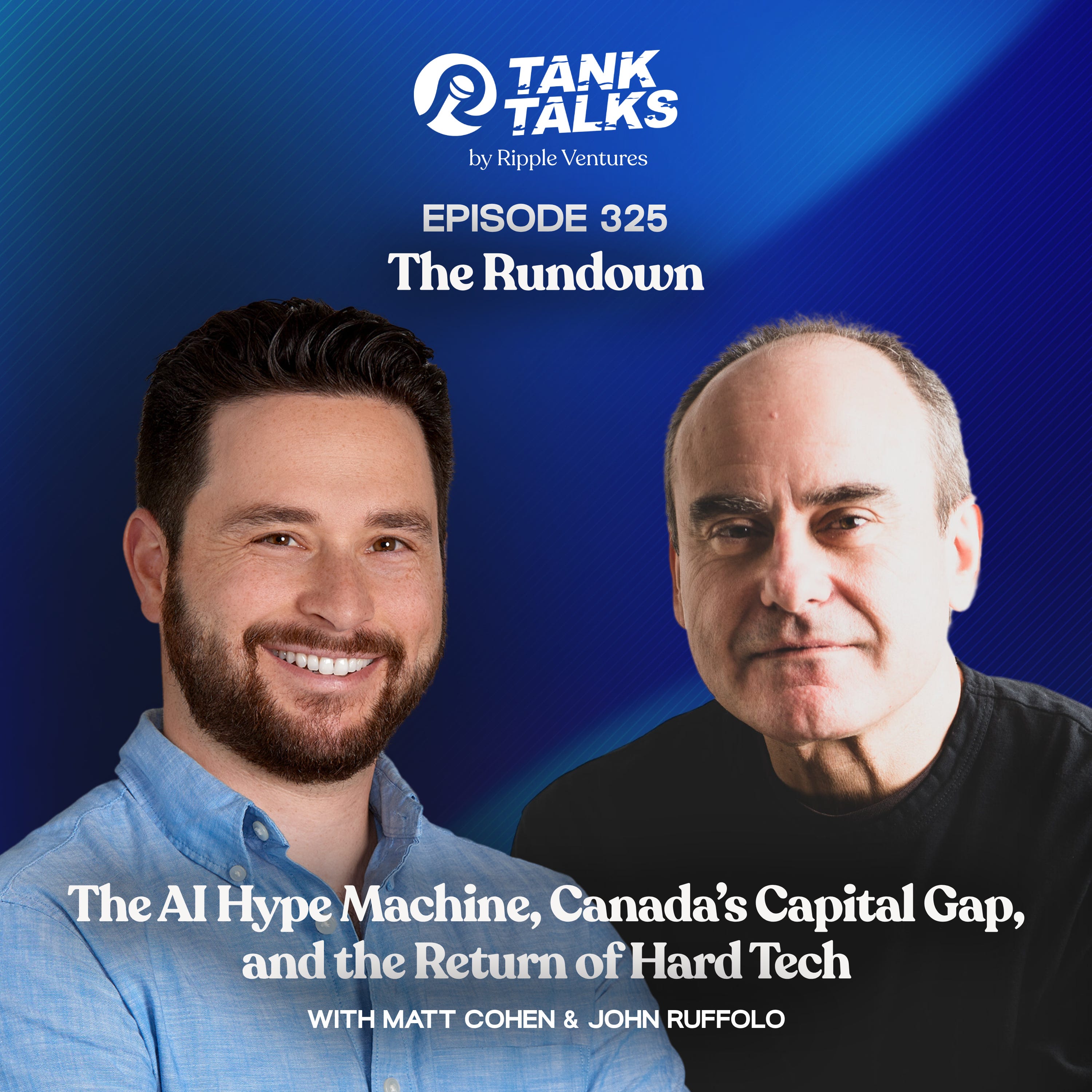 The Rundown 6/23/26: The AI Hype Machine, Canada’s Capital Gap, and the Return of Hard TechTank Talks By Ripple Ventures · features John Ruffalo79 / 100
 The Art of Building a Different Kind of Private Equity Firm - Bobby Ocampo on Raising the BrandRaising the Brand · on Growth equity87 / 100
 Pat McGovern - Bowery Capital - Where Vertical AI WinsCloud Returns · on Growth equity87 / 100
 Permira’s co-CEOs Brian Ruder and Dipan Patel: We see interesting opportunities for take-privatesDeal Talk: Interviews with Private Equity Leaders · on Growth equity85 / 100
 #204: He Sold a Majority, Gave Up Control, and Became Indispensable - Matthew BullisPractical Founders Podcast · on Growth equity84 / 100
 Liquidity Without Selling: Ian Leisegang on 3Spoke Capital's Structured Secondaries PlaybookATLalts · on Growth equity83 / 100
 Episode 29: Retiring into the Next Chapter of Impact.71 / 100
 "Evolving Industry" Takeover: Operationalizing Brand: The PE Strategy for Rollups66 / 100
 Episode 27: Dancing Between the Toes of Elephants: The Complete Guide to PE61 / 100
 Episode 26: Real Branding: Re-Inventing a Category63 / 100
 Episode 25: 1+1 = 3: A&M meets Harvard meets value creation with brand71 / 100