
B2B Commerce UnCut Podcast · 2026-08-10 · 35 min
Key moments - from our scoring
Substance score
35 / 100
Five dimensions, 20 points each
This episode explores the reality gap between AI marketing narratives and what B2B manufacturers actually deploy. Komalin Makija from Azalen - a company working with manufacturers on AI and commerce solutions - explains that customers don't ask for AI agents or flashy interfaces; they seek to solve concrete operational problems like supplier onboarding friction, manual inventory reconciliation, and customer service fragmentation. The discussion moves through several key insights: brilliant interfaces built on fragmented data deliver no value; serious AI investments focus on backend systems and intelligent automation, not user-facing demos; and organizations pursue AI for scalability and growth without overhead, not headcount reduction. Makija introduces the concept of "step zero" - data quality - as non-negotiable before any automation project, noting that AI simply exposes existing data and process maturity issues faster. The conversation covers agentic AI as the current frontier (still nascent, comparable to generative AI in 2021), Model Context Protocol (MCP) as a governance layer enabling agents to interact securely with multiple systems, and how mature deployments distinguish between low-risk decisions agents can make autonomously and high-risk decisions requiring human judgment. Finally, the EU's Digital Product Passport regulation emerges as a forcing function for manufacturers to centralize product lifecycle data - a compliance trigger masking a larger organizational data maturity challenge.
Manufacturers focus on solving specific operational bottlenecks: reducing supplier onboarding time, eliminating manual inventory reconciliation, consolidating customer service searches across multiple systems. They view AI as a tool to address pain they feel daily, not as a destination technology to implement for its own sake.
Disappointment rarely stems from model inadequacy; it comes from organizations expecting AI to compensate for years of fragmented processes and inconsistent data. AI accelerates whatever environment it's deployed into - if underlying processes aren't mature, it exposes problems faster rather than solving them. Data quality is step zero before any AI project.
Agents excel at low-risk, repetitive coordination: flagging delayed orders, responding to inventory changes, validating pricing, and triggering alerts. High-risk decisions involving commercial impact, compliance, or exceptions remain human-in-the-loop; the goal is letting humans focus where judgment adds value, not removing them.
MCP creates a structured schema and governance layer enabling agents to reason across multiple source systems securely and auditably - less about replacing APIs, more about giving intelligent systems a controlled way to interact with business systems without making numerous API calls and guessing at payloads.
It's fundamentally a data problem disguised as compliance; the regulation forces organizations to centralize and clean product lifecycle data scattered across suppliers, warehouses, manufacturers, and retail partners, answering whether they actually know their products well enough across origin, composition, and sustainability attributes.
Our reviewer’s read on each dimension, with quotes from the episode.
A handful of useful framings emerge - data quality as 'step zero,' low-risk vs. high-risk decision profiling for agentic AI, and DPP compliance as a hidden AI enablement opportunity - but these are surrounded by significant padding, repetitive agreement, and platitudes that dilute the overall idea-per-minute ratio.
data quality isn't step one, is it? It is a step zero
AI accelerates whatever environment you put it into. If the underlying process isn't mature, AI simply exposes that faster rather than solving it on the very next day
The framing of MCP as governance infrastructure rather than an API replacement is a mildly fresh angle, and the question about how SIs sell automation that reduces their own billable hours is genuinely novel territory; however, the bulk of the episode recycles standard 2025 enterprise-AI discourse about augmentation vs. replacement and the need for clean data.
MCP becomes an important conversation because it gives organization confidence that AI can interact with business systems in a governed, secure and auditable way. It's less about replacing APIs and more about creating a structured way for intelligent systems to use them
how do you sell will do less of what you pay us for and have people believe that? And this is a question I have not heard asked on a, on a, on an industry podcast
Komalin Makija is a genuine practitioner at a solutions integrator working with manufacturers on real AI deployments, giving him ground-level credibility; however, he is not a C-suite executive, not widely recognized, and represents a mid-market SI rather than a scaled enterprise, limiting the depth and authority of the insights.
AI probably last four or five years. And then it has been an evolution starting from Data first to ML, then to generative AI, now to agent
we see organizations with fantastic AI ambition discover that product data exists in six different systems. Customer records don't match, supplier information hasn't been updated for years
The episode is almost entirely abstract - no named clients, no revenue or ROI figures, no concrete case study outcomes; the only time-bound specific is the DPP February 2027 compliance deadline, and the one 'recent client' example is described in generic terms without any identifying detail or measurable result.
compliance is going to hit starting February 2027
take an example. If probably a uh, manufacturing hub is trying to automate a cycle that is between if based on the number of orders, how the shipping and inventory control needs to be done
The host surfaces one genuinely sharp and underexplored question - how SIs sell automation that reduces their own billable scope - and the DPP angle is topically well-timed; but the interview is undermined by constant unqualified agreement ('No, completely agree,' 'Absolutely, absolutely,' 'I totally agree') and no meaningful pushback or follow-up pressure on vague claims.
how do you sell will do less of what you pay us for and have people believe that?
Absolutely, absolutely. It's interesting. It's always the human
Computed from the transcript - who did the talking, and the words that came up most.
Kulmohan Makhija of Azilen joins Aaron Sheehan to talk about the unglamorous reality of implementing AI in B2B manufacturing and commerce. Kulmohan shares why buyers are shifting their focus from flashy interfaces to operational systems, explains how agentic AI and Model Context Protocol (MCP) are changing system integrations, and breaks down why clean data is the mandatory "step zero" before any AI rollout. Episode Highlights: 00:07 - Introduction: Meet Kulmohan Makhija & Azilen's AI Practice 02:13 - Interfaces vs. Systems: What Buyers Are Actually Willing to Pay For 08:04 - Why No Manufacturer Wants AI Writing to Their ERP (Yet) 08:45 - MCP Explained: From API Guesswork to Governed Orchestration 12:58 - Low-Risk vs. High-Risk: Where the Human Stays in the Loop 17:14 - The High-Speed Garbage Cannon: Data Quality as Step Zero 19:14 - Digital Product Passport: When Compliance Forces a Data Reckoning 26:04 - How an SI Sells "We'll Do Less of What You Pay Us For" 28:43 - What Happens to My Team?
Transcribed and scored by The B2B Podcast Index.
Speaker A: Foreign. Welcome Back to the B2B Uncut podcast sponsored by Oro Commerce. I am still your host, Aaron Sheehan. Um, and with me today is Komalin Makija. I may not be saying that correctly. Uh, from Azalen, a company headquartered. Where are you headquartered?
Speaker B: Uh, so we are headquartered in the US and operation globally.
Speaker A: Fantastic. So we've been uh, talking for. Gosh, I think we first met probably about eight or nine months ago. Um, and we were, of course we've been talking about AI for a lot of the conversations that we've had because the company that you work for does quite a lot in the AI space as well as commerce. So software for manufacturers, um, and general it. And one of the things that we've discussed is how there's a real gap between how AI gets talked about online and what manufacturers actually ask you to build. I know you're in those conversations. What's the biggest disconnect that you see?
Speaker B: Sure, I know before I answer to that, Aaron, thanks for having me on the podcast. And this has been a, uh, long standing thing. I know that, uh, while I have been following the way you have been trying to create genuine contents for business owners, this was uh, the most intriguing space for me as well to understand and not discover newer findings in the market. As such.
Speaker A: Thank you for being here.
Speaker B: Coming to your. Yeah, no thanks. I'm um, coming to the question. As such, I think the biggest disconnect is that online AI is often discussed as a destination. Right. Uh, in customer conversation, it's simply the other way around. Uh, they're looking to solve a business problem and for them AI is sort of a tool. So nobody has asked me for an AI agent because it's more fashionable. Right. They come up with something which is much more practical. Uh, can I reduce the time it takes to onboard a supplier? Can I, uh, stop my operations team manually reconciling inventory? Can my customer service, uh, team stop searching 5 different systems for 1 answers? So AI usually is entering the conversation once we have understand the operational bottleneck.
Speaker A: Perfect. So the CEO of Aelin, um, Naresh, he has a line I, I read yesterday in a Forbes article. He writes quite a lot for Forbes Business Council and he had a quote that stood out to me. Um, and he said interfaces attract attention, but systems create enduring value. Um, so related to that, when, when someone is coming to you excited about AI, are they chasing the interface or the system? And I probably for a services business, the important question is which one are they actually willing to pay for?
Speaker B: Sure, I know this is a line we go by in our consulting business, largely right when it comes to sketching solutions for our customers. So initially the clients are hugely attracted by the interface because that's what they experience, that's what they see, uh, they see copilots, conversational interfaces, AI search. But very quickly the discussion, no shifts to the actual outcome. They realize that brilliant interface, uh, sitting on fragmented data doesn't solve anything. The organizations that are investing seriously are asking how much AI fits into their operational system because that's where the long term return comes from. And in majority of the cases that I have seen, the most complex AI solutions sit behind the scene, uh, more silently. You do not look at their interface, you do not open them until nothing breaks. So if everything is working fine, you just enjoy the automation that and the intelligence that brings rather than looking at the interface.
Speaker A: Yes, I completely agree with that. That mirrors very much our philosophy in our, in our roadmap around where we are, um, adding AI. Uh, he also sort of framed AI as working alongside of engineers rather than replacing them. Certainly. I guess a hot topic is, is AI making people more productive or are your customers buying AI hoping to reduce headcount? I guess. And that goes to the where is AI, uh, fitting in the organization question.
Speaker B: Sure. So I'll come from our point of view, right? What we have seen in the business lately in the last two years or more since the AI bubble has now started to expand and is now getting into our day to day lives. Interestingly, very few companies actually begin with headcount reduction. Right. That's probably sort of the media narrative and the PF for a lot of AI platforms more than the boardroom narrative. Uh, what they talk about is scalability. They want the same team to handle more complexity, more orders, more product information, more suppliers without increasing operational overhead. So AI becomes an augmentation story rather than it becoming an automation story.
Speaker A: Exactly. Yeah. Growth without the overhead is definitely a part of the conversation that we hear and have regularly. I'm curious, you've been, how long has Azellan been working in the AI space?
Speaker B: I would say AI probably last four or five years. And then it has been an evolution starting from Data first to ML, then to generative AI, now to agent Care. But yeah, it has grown over the last four or five years now, right?
Speaker A: Yes, we, there's, there are many different flavors of AI. We've talked about that on previous, previous episodes. So you've, you've, you've been in it for long enough. I'm curious, have you ever Seen an AI project disappoint a customer. And if so, was it, was it the technology or was it something more human related or operational?
Speaker B: Uh, usually it isn't because the model wasn't clever enough. Right. There are certain cases where we see that uh, the implementation did not fulfill the business KPIs or the OKRs. But in our finding it is never usually to be blamed to the model. It's because the organization expected AI to compensate for years of fragmented process and inconsistent data. So what KPIs and OKRs you set as an expectation from AI has to be more realistic and has to be gradually increasing.
Speaker A: Right?
Speaker B: So AI accelerates whatever environment you put it into. If the underlying process isn't mature, AI simply exposes that faster rather than solving it on the very next day.
Speaker A: Yeah, I totally agree. You uh, mentioned agentic as sort of the, the latest iteration of what is AI, right? Through all of the different generations of that I know you know, AI is a big term and for what, what we found is that it's, it used to be sort of a weird black box. You could say the word algorithm and people would just like their eyes would glaze over. They not sure what you were talking about. It feels like to me the maturity of what buyers want is improving. You've said that AI is no longer kind of a black box. So they know what kind of automation they're looking for, they know what it's capable of to some extent. But agentic on the other hand, nobody yet that I have seen can quite agree on what the word means. So, so if people don't know what they don't know what is agentic capable of? What is it that they should be asking for that they don't know how to ask for?
Speaker B: Uh, I would uh, then again reemphasize that mature conversations today are around outcomes and automation, uh, things like document processing, customer support, inventory visibility, pricing assistance. Businesses understand that these are the areas to be solved because they feel the pain every day. Now agent is a bit more different. Uh, most customers don't arrive asking for agents. They describe an operational challenge. And together we realized that an agent could probably orchestrate this better because it has to deal with multiple systems behind the scene. So if I was to put it from a uh, comparison standpoint, consider this as generative AI in 2021, when people were not very sure of what this can do and the only capacity, everyone was considering that, okay, it might produce a few images and a few content here and there, but nothing beyond it. So agent TKI currently is being taken into account that okay, this might automate one workflow in one system, but the capacity goes beyond that. Making decisions, working with multiple systems, even where connections are not very well established, and then also uh, taking augmented decisions on top of data layer.
Speaker A: No, I completely agree. And the level of trust that I've seen manufacturers have in agents to make decisions. You know, we asked a question of our customer advisory board a few months ago and, and asked them, you know, in person. We had everybody in a room and how many of you would be comfortable with um, AI or an agent writing data to your erp? Nobody. Right. So it's very much an augmentation story and an automation story, but it's not yet a place where I think on the, on the, the manufacturing side or the distribution side, companies are quite comfortable with fully autonomous robots creating orders, creating fulfillments and all the rest of it. You'd mentioned we had spoken previously, you had a story about a customer running eight different source systems, trying to put a dashboard, um, on top of that. Um, and obviously there was some AI framing in there to some extent. Obviously dashboards have been around a very long time. We've had rest APIs and GraphQL APIs and soap APIs for a very long time. What is it about sort of the need to integrate that is now coming up as uh, well, we need mcp. There's an MCP problem now but Tim, because to some extent it's the same API problem that has existed for a long time. What's different about the AI lens on this integration story and the specific ask around MCP model context protocol?
Speaker B: Sure. Uh, so let us take the example that you quoted just now, right. Uh, while you were probably talking to people and they are not very confident that they would want autonomous agents to probably write right into their ERP or maybe take even uh, certain guided decisions, pre configured decision making steps and to reach there because the governance framework do not exist and you probably don't know whether the action that will be taken can be controlled, can be supervised, can be audited. So MCP helps in all of that in a nutshell, and I would not say it is an answer to everything, but it is the first step to build on the later stages. So I don't think customers wake up and come uh, asking for mcp. What they are really asking for is a secure orchestration process across multiple source system. MCP becomes an important conversation because it gives organization confidence that AI can interact with business systems in a governed, secure and auditable way. It's less about replacing APIs and more about creating a structured way for intelligent systems to use them.
Speaker A: That's exactly right. We have released McP coverage for ORO in the last several months and, and the way that we're describing it is we're giving something for an agent to reason across. It's like a building a knowledge graph for uh, a system whether that's a very single threaded agent trying to pull orders out or create orders or pull customer data out, learn something about the business. The NCP server is providing a, as you said, a schema and a structure for them to do it that doesn't require making lots of API calls and then taking payloads and then guessing what it's looking at. It's sort of telling the system, the third party system what you're looking at. And it does make I would say advanced integrations probably simpler and more effective than and ah, with less custom development I think required. No, I completely agree. It's interesting. We both I think started hearing it only from customers in the last few months. The MCP acronym. Um, and is it something that um, you said people aren't really asking for it but are you finding that buyers expectations have changed with what is possible?
Speaker B: Uh, I think so. Uh, there is a lot of education nowadays on AI and the possibilities and the newer use cases. Right. We see everyday contents being published in millions and billions around it and uh, the buyers are as well equally educated. I would not say that everybody understands MCP and Agent Aki, but usually let's say the innovation teams do. Uh, most customers do not anyway buy mcp. Right. They buy outcomes. They uh, want AI to work reliably across their erp, CRM commerce systems, operational systems. Whatever orchestration happens through MCP or any other architecture is often secondary to them.
Speaker A: Yep, yep, completely agree. There's. I am on LinkedIn a lot. You may be too. I don't know, possibly. I think it's part of the uh, industry that we're in and certainly I consume a lot of uh, thought leadership and speculation, analyst coverage around agents that are buying and selling autonomously. Um, I know I've been on multiple panels and webinars this year talking about this exact topic, talking with our customers. A lot of what you are seeing is not necessarily that you've talked about integration, you've talked about automation. It's the agents that are replacing manual work between systems but they're not running a full, full kind of end to end transactional cycle like completely on their own. When you see a mature Business, um, let's say a manufacturer deploying an agent inside their stack. What kinds of things do you see the agents doing? What kinds of tasks are they appropriate for?
Speaker B: Okay, so now I would agree that most enterprises are not asking for a fully autonomous or uh, entirely autonomous commerce largely let's say for that example they are asking to eliminate repetitive coordination if an order is delayed, if inventory changes, if pricing needs validation. Those are the exact kinds of decision where an intelligent agent can support. Now this is not just exchange of data between two systems. It also requires a certain sort of intelligence on top of it. And these are sort of minor decision making that you would want to probably second uh, to an agent today. I'm uh, not going to say that the world will not definitely move towards an area where everything is more headless and agents will communicate and do an autonomous process. But that's too far fetched of a future at least in my opinion. So currently what uh, customers are wanting is not just interaction between the systems but then an intelligent uh, decision layer to at least automate low uh, risk decision uh profilings. Right. So there are two levels of decision profilings in majority of the enterprises which is low risk and high risk. Wherever high risk is uh, involved there is a human in the loop circle. And then you have somebody validating what the agent wants to do, what the agent wants to automate. And for low risk you definitely believe that, okay, this can probably be passed through if you have your governance framework, if you have your auditability and scalability all placed right in the mcp, um, or the agent development.
Speaker A: No, completely. I think that makes a lot of sense thinking through that sort of like shipping and fulfillment and inventory management example. I like the framing of sort of like low risk, high risk and low risk. I can maybe let the AI, the agent reason on its own and make a decision on its own. Anything high risk. I, I flag I alert for a person to do something. We have very similar processes uh, for our Smart Order for instance in Oro works that way. And that's all configurable to some extent. Businesses can make their own decisions about what is low risk and what is high risk. Do you have any examples of a specific flow that might be that you've seen that someone would describe as either low risk or high risk? If we can make it concrete, what's a good example of that?
Speaker B: Sure, uh, let me take a reference of a recent client. Right. So we believe that wherever judgment matters that is more high risk situations where judgment decision uh, can probably change the Outcome of the business could have commercial impact, could have probably a compliance impact. That is where judgment is most crucial. AI is very good at gathering information, applying rules and recommending actions. So humans are still welter in handling exceptions, commercial negotiations and decision involving risk. Risk. The organizations we are working with aren't trying to remove people. They're trying to let people spend more time where human judgment adds value. Now take an example. If probably a uh, manufacturing hub is trying to automate a cycle that is between if based on the number of orders, how the shipping and inventory control needs to be done. Now you probably would want certain level of uh, agentic decision, uh making happening here. If let's say the order volume is exceeding a certain threshold, what is the inventory uh, threshold that you should be managing internally and how shipping is to be probably alerted to ensure that the delivery happens in the customer lifecycle values. Now in these particular cases there are two areas where humans will have to make decision because this will have commercial impact. You cannot hold a lot of inventory, you cannot spend on uh, shipping until the order does not reach a certain stage. And you are not withholding a certain threshold of inventory. So these sort of mixed scenarios is where we see automation coming in and also human in the loop come in completely.
Speaker A: And it's interesting too because some of those examples have been common in what you might call B2C E Commerce for some time where there's a free shipping threshold or there's some kind of logic around a free gift. When I add. But it's challenging in a B2B sales scenario because often the shipping cost, let's say the fulfillment cost isn't known at the time time that the items are going into a basket and then going into an order. And so it's downstream that that information is known and then a decision can be made about. Yeah, completely, completely agree with that. I know there's you you've mentioned actually I think from the very beginning of this, of this episode, data quality as a barrier to doing agentic anything let's say or automating anything. And I'm curious, a line I use often is that garbage data automated creates a high speed garbage cannon. Uh, how do you and Azalen think about data quality on an AI project? Is that a sort of a step zero or step one of your process? Do you ask those questions up front and maybe do your customers have an idea of what their data quality is before they try to automate it? You can take that from whatever angle you want. Sure. Yeah.
Speaker B: No, I would agree with you data quality isn't step one, is it? It is a step zero. Anything that you want to build, uh, in terms of AI, automation, machine learning, NLP's, uh, everything comes from structured clean data. I would say that now uh, clients are much more matured and much more educated in terms of why data quality is more important. And then you see within the conversation as well. Of course they are not very well aware on how to assess it by themselves. And that's where no companies like us or consultants like us help them understand, uh, with a certain audit and a certain review. But we have seen organizations with fantastic AI ambition discover that product data exists in six different systems. Customer records don't match, supplier information hasn't been updated for years. AI doesn't solve that, it simply encounters it faster. So the companies making the fastest progress are the ones treating data strategy, uh, rather than treating AI as a strategy.
Speaker A: That's so true. We've talked to many people around how data, data governance is a program, not a project like security. It's not something that is a one time project to clean up a particular set of spreadsheets and then you're done or a particular database and then you're done. There needs to be oversight continually going into improving and automating it. This is one place where on the product side I think Europe in general is taking a more, well it's common for Europe to be more regulatory than the U.S. i'll say that's, I think that's a fair statement. But there's uh, something that went online this month I think. Um, so the EU introduced a concept a few years ago called the DPP or Digital Digital Product Passport. Um, and that's been, it's been talked about for a while but the, the point of it is that it's a sort of a comprehensive digital record that talks about a product's life cycle, what materials that are in it, ingredients or, or components and environmental impact. Obviously this is part of sort um, of eco friendly regulation. But this has a huge impact for how manufacturers know what they're producing, how they describe what they're producing for then use further on down the supply chain, which is something that is often not well resourced I think at least, at least uh, in some, some industries. So I think the initial registries were set up this month, um, and then it's going to roll out by industry I believe over the next, the next couple of years. I know that um, often when we're having conversations with people around Digital product passport and data, it sort of Gets it's treated like a compliance theater. A little bit like a lot of I think Brussels, Brussels regulations. Arguably it's really a data problem. It's forcing you know, one authoritative record of what a product is. So all of that and most of them, many of them don't have that data. Is that true? And do you guys see digital product passport showing up in your practice at all?
Speaker B: No. I would agree with you. It is 100% a data problem. Right. So if you will talk to anybody in Europe right now because the compliance is going to hit starting February 2027 and the framework for it and the test environment and everything is out now of course this is going to be sort of a phase wise rollout. A couple of industries would be hit first and then the others. But the idea is that uh, all these sort of data sets were already existing with large scale manufacturers, but not centralized in a place not clean in a place. Certain with suppliers, certain at the warehouse level, uh, and the shipping providers, certain at their own manufacturing side and certain with their retail partners. Now uh, compliance is simply the trigger here. DPP is forcing organizations to answer a much bigger question. Do we actually know our products well enough? That includes origin, composition, suppliers, lifecycle sustainability attributes. Those question existed before dpp. The regulation is just making it uh, them unavoidable. And because this is going to hit them very soon, uh, we see a lot of conversations coming around this and people then equally being confused that all of this data is there scattered enough in different places, different people, different parties. Now how do I get it together and start making sense out of this?
Speaker A: No, that makes sense. Um, I think you ran a DPP event last month, was it?
Speaker B: Yes, in June.
Speaker A: Yeah, in June. Yeah, I know. The EU registry just went live. Are the conversations changing at all as a result of the, the calendar and kind of the, the, the regulations and what are you hearing? And apologies for all of our US listeners. This probably doesn't apply yet to, to us. I'm sure it'll eventually get here like most regulations do. Um, but this is probably right now I would say from a regulatory standpoint relevant in the eu. However, I would say hey US listeners, if you're manuf and you're listening to this, it's still a good idea to have this data and have an authoritative record of what you're maintaining. There are a lot of benefits to your future automation and expansion from doing this, but you're not going to get fined for it yet for that. So sorry, the question was has the tone of the Conversation shifted in the EU for you guys around dpp?
Speaker B: No, definitely. I think we have been very actively, uh, understanding and watching the DPP conversation as it has shaped up in that part of the world. And I would say 12 months ago the conversations were more educational. Today they are much more practical. Organizations aren't asking what is vpp? They're asking where do we begin? Uh, how much of our existing infrastructure can we reuse? That's a much healthier discussion because now it has moved to uh, an adoption level rather than an exploration level.
Speaker A: I think that's a really good framing. I'm curious, do you think that I kind of made this assumption, but maybe you can tell me if it's true or not. If a company does the work necessary to implement like a DPP platform of some kind and gets their data in order, does that open more agent use cases for them in terms of what they can do with that data?
Speaker B: No, I actually think that's one of the biggest hidden benefits. Right. Once you're invested in the structured trusted product data for dpp, you have already created the foundation for AI models or AI needs because now you have all the data needed for a product lifecycle, starting from the sourcing of material to the manufacturing to warehousing to the retail supply chain to the end of life cycle. Now that could be recycling or otherwise. Now, while you have all of this data set for a particular product and you have created a product password, imagine the amount of automation that can come in now, be it in any form. Now this could be, let's say simple RPA level automation that you can generate intelligence that you can generate from this for your business. And also AI level use cases that you can create out of this. This can help you in better supplier collaboration, better automation, better recommendations, better search. Right. So there are a lot of use cases this will uncover, um, as we go along the journey.
Speaker A: No, I think that's exactly right. I'm thinking back to something you said earlier around the low trust, high trust. One of the big, to me, one of the big limiting factors, one of the levers that a business can pull to move an automation from, you know, low trust, meaning someone has to be involved in that. We simply don't trust the machine to make these decisions. Decisions is data quality. I have seen many, many, many times, especially for B2B where product data is understood in people's heads, um, and m, maybe in paper catalogs or paper sheets or spreadsheets or digital files. They're scattered in a lot of places and there's a real hesitancy to automate any kind of quoting or sales or fulfillment or customer service inquiry simply because the data is not accessible to, uh, a digital system to automate it at all. And so what the automation becomes is a request comes in and I send an email to a person to pick up the phone and call that potential customer back and say, yes, this product will fit your use case. No, this product won't fit your use case. And the reason that that has to hit a person is simply because the data quality is not high enough to then, frankly, in a high trust way, automate any kind of processing around it. So that I can absolutely see that. So you're a. I want to go to some inside baseball here. A Zelen is a solutions integrator. You're in a digital engineering firm. You do a lot of work for companies, uh, around the globe because you're a services firm. You're selling AI that automates system to system integration, which SI means system integrator. So, um, I am curious, how do you sell will do less of what you pay us for and have people believe that? And this is a question, this is a question I have not heard asked on a, on a, on an industry podcast. This is not a question that I think a lot of people are openly talking about, but is absolutely a conversation that is happening, I think in every boardroom, in every meeting. How does that work for A Zelen? Right? How do you sell? We'll do less of what you're asking us to do, right?
Speaker B: No, I think you have asked the very critical question that majority of my SI partners and SI colleagues are facing every day.
Speaker A: Right.
Speaker B: Uh, so the nature of implementation work is changing. Customers aren't looking for more development hours, they're looking for measurable business outcomes. Uh, times have gone when people come up and then probably ask you for, uh, tech, uh, resources and then they will build it. They come up with a very specific business challenge. Either they have a KPI map to it and OKR map to it. And our role is becoming less about writing code and more about helping clients with building an operating model that are, uh, intelligent, scalable and adaptable. Right. That's much more valuable relationship in my opinion because now we are trying to solve a business outcome that will in turn give them a particular green signal, be it in terms of top line, in terms of profitability, in terms of whatever bottleneck it was solving. So now SIs are also measured from a standpoint of business outcomes.
Speaker A: Yes, exactly. I see this playing out in terms of the Billing for value delivery instead of hours logged. Right. As a big piece of it? Um, yeah. Does leading with AI kind of change your pricing model and how you're selling to it? Are you seeing the same thing?
Speaker B: Uh, I would say it has definitely changed it. Right. So the conversation increasingly now involves operations, digital transformation and business leadership, not just it. So with it, it was a plain vanilla pricing model that used to exist and now it is much more complicated because you have to be a subject matter expert, you have to understand their process, you have to understand the technology expertise as well. The clients will no longer come and tell you what technology to build it on, what model to use, and otherwise. So AI touches business processes. So naturally the discussion becomes much more broader.
Speaker A: Yeah, I totally see that. I'm curious when you, uh, if you're, you know, you're in the room with, uh, with, with, with a, you know, a, A firm and you say, hey, AI will hand, AI can handle this problem. They come to you with a problem, you say, AI can do that. What kind of reaction are you getting from people? Are they like excited about that or are they anxious about that?
Speaker B: I, uh, would say mix of both. Right. So you usually see both sort of reactions and different sort of situations and scenarios. The first question is often what happens to my team?
Speaker A: Right.
Speaker B: Because that sort of scare is still very prevalent in the market in terms of AI adoption. And the second question is, how quickly can we start? Organizations that do this, well, involve their people early and position AI as removing repetitive work rather than replacing expertise. So currently, uh, the initial start point is a mix of both reactions, but it usually transforms into, okay, how early can we start now? Because they understand the value it will bring to the table.
Speaker A: Absolutely, absolutely. It's interesting. It's always the human, uh, I think your CEO actually said that in an article which was the biggest variable in AI disruption isn't the AI, it's the human reaction component to that. Obviously, clearly you're seeing that if, if, if an executive is sort of listening and feeling like they are falling behind. And man, a lot of companies feel like they need to be doing something about AI, but they're not sure what the something is other than buying software. What's a good first step for, for someone who wants to be prepared for this more automated future?
Speaker B: Let me start with an example, right? What I have seen largely in 2025, uh, when the AI way was riding and the use cases were going, people crazily hop on to buying licenses of AI models, right? Somebody's using Copilot Somebody's using Claude somebody and give the access to larger teams. Okay, build, build, build. And let's see what automation can happen. And majority of those internal proof of concepts or MVPs failed horrendously. And that also scared off a lot of enterprises that. Okay, AI might not be right for me. So my recommendation is do not buy another AI tool immediately. Start by understanding your data landscape and identifying one operational process that is creating the most friction every day. If you can improve one meaningful business process using AI and trusted data, you'll build far more momentum, um, than trying to transform entire organization at once. And which is very random.
Speaker A: That is really good advice. And I would say the other benefit is that if you can solve one workflow or business outcome well, you've likely built the foundation to then solve the next one in less time. Yes. So, okay, one prediction then, um, 12 months from now, what do you think we will have stopped arguing about because it just like became so totally obvious.
Speaker B: I think we will stop debating whether AI belongs in enterprise formats or not, uh, which is still a larger, uh, conversation that I see with, uh, good quality folks. Right. And they still believe that tech is just an enabler to the business. But I am telling them that tech is now going to be driving the business. As much value as you put an emphasis on your manufacturing side of the business, you'll have to put it on technology and largely AI. So I think that's a debate that will end in the next 12 months. The question will disappear, the conversation will become much more practical. Which process should remain human, which one should go autonomous, and how do we govern both. Right, yeah, AI itself.
Speaker A: Yeah.
Speaker B: So AI itself won't be a differentiator anymore. Uh, it is how well the organizations will operationalize the technology.
Speaker A: I think that's, that's so true. I mean, we saw this with computing and the Internet. We saw this with the rise of cloud solutions. We've, we've seen this with adoption of, um, you know, API, API based integrations and all the rest of it. Things that started off as opinions and one way that you could do it have slowly, over time and sometimes very quickly over time, become norms that no one questions. So I, I really appreciate that. Um, come on. I really appreciate your, your time with us. This has been very interesting. I always end each podcast with a surprise question to all my guests, which is what is something that you have read or watched or a, uh, book, a novel, a movie, a TV show, a podcast, anything that you like that you would recommend to our listeners? And it does not have to be work related.
Speaker B: Yeah, uh, to be really honest, something that pops up to my mind is a book called Everyday Creativity which uh, I have just started reading and it gives us non technical ways of solving everyday challenges. Right now this does not have to be business, this does not have to be your operations. This does not have to be anything, anything in life that you face challenge with. There are tools and this comes from certain ancient methods that were used in Japan and the manufacturing era. Certain methods that are now being used in the US as uh, no board level decision making. And then you apply to your everyday problem statements and probably be bit more creative and objective in terms of solving and learning something. So I think that is one thing
Speaker A: I would recommend that sounds, that sounds very rewarding. Um, if you can um, send me uh, the link, I will put it in the show notes and we will, we will get it out and maybe we can move some product while we're, while we're at it. Yeah, Kalon, I really appreciate it. Uh, thank you very much for your time. And if people want to contact you and Azellan, what's the best way for them to do that?
Speaker B: Uh, the best is you probably can come to our website or probably drop me an email. You can find me@datazillan.com. while it is very hard to spell and pronounce, I'll probably have that know attached somewhere in the description or the notes and becomes easier for them to contact us.
Speaker A: Absolutely. We will put all of those links in the show notes. Thank you so much. Really appreciate your time. Um, and listeners have a great day.
Speaker B: Thanks Aaron and thanks for everyone listening.
Speaker A: Thank you. Have a good day. Cheer.
Other episodes covering the same guests and topics, from across The B2B Podcast Index.
 Radiology Can't Keep Up. Here's Where AI Actually Helps | Dr. Nina KottlerRethink Imaging · on Agentic AI96 / 100
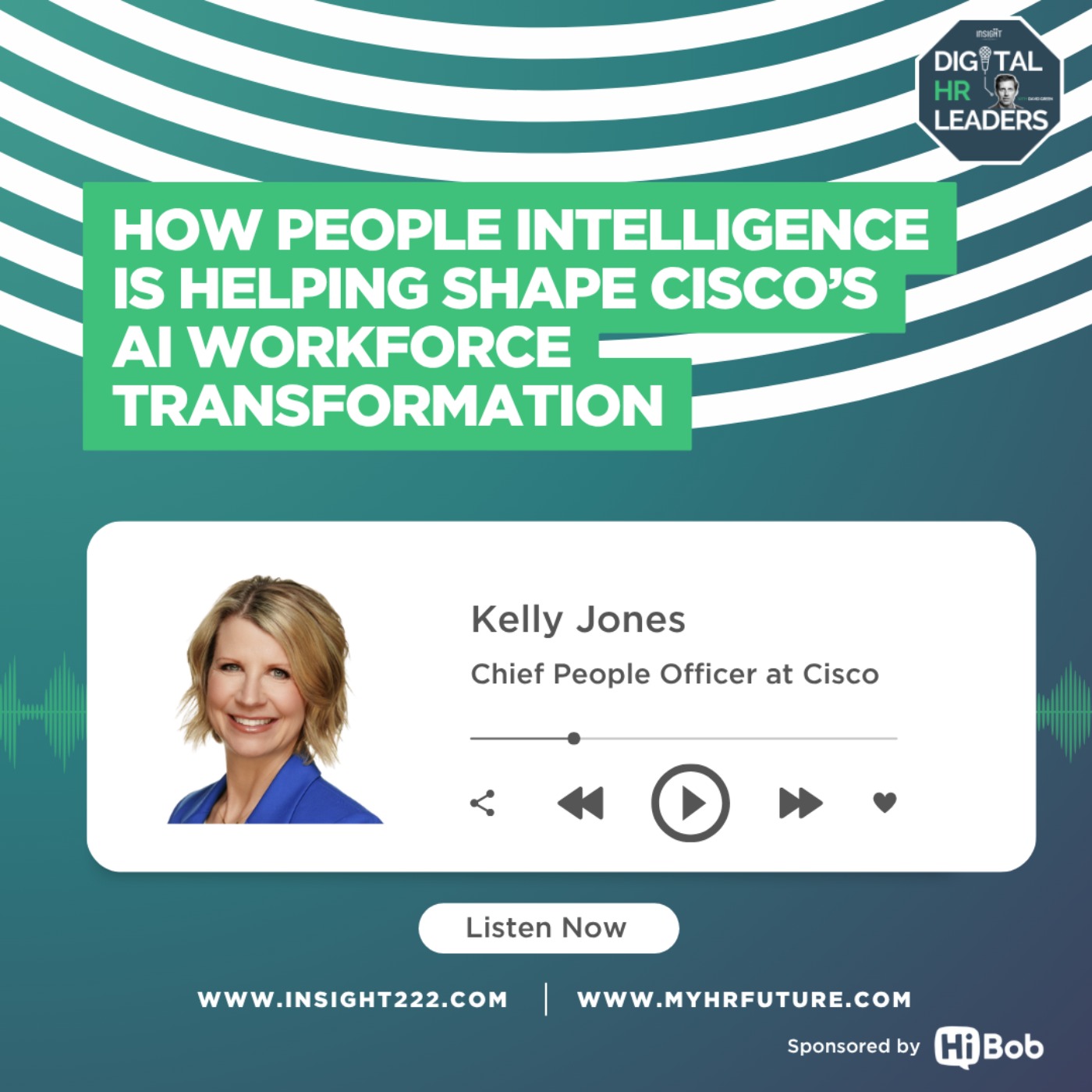 How People Intelligence Is Helping Shape Cisco’s AI Workforce TransformationDigital HR Leaders with David Green · on Agentic AI92 / 100
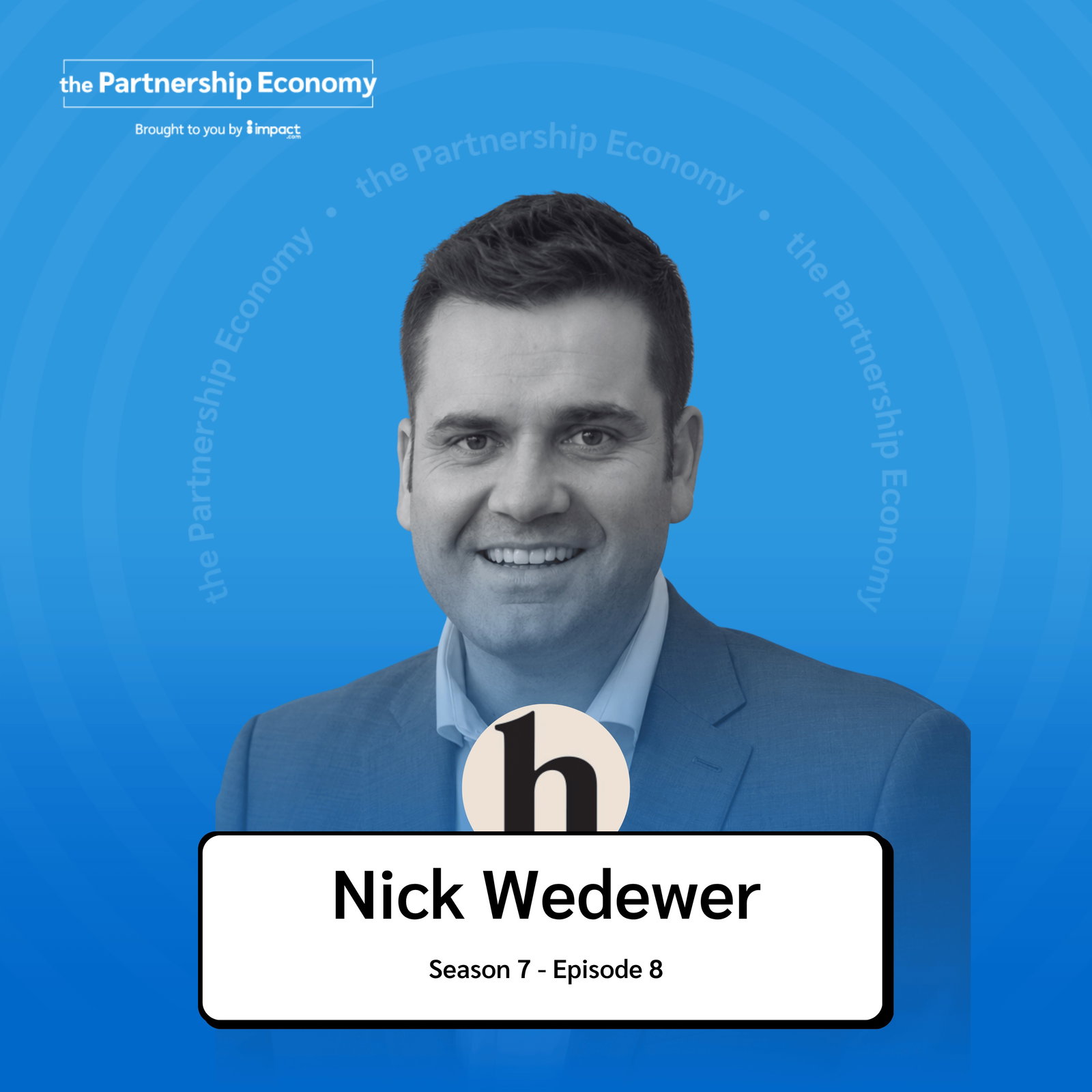 What Marketers Can Control When AI Changes Everything with Nick Wedewer, VP of Growth Marketing at Hims & HersThe Partnership Economy · on generative AI87 / 100
 Hiring top-tier talent, leveraging open source models, and staying competitive in the age of AI w/ Benny Chen #267The Engineering Leadership Podcast · on generative AI86 / 100
 Turning AI Agents Into Revenue Workflows With OutreachTech Talks Daily · on Agentic AI83 / 100
 Unscripted with Victor: Agentic AI, Fintech's Future, and the Death of the App EconomyVentures from The Valley · on Agentic AI83 / 100
 Why Data Culture Matters More Than Platforms: Sam Russo on Automotive Aftermarket64 / 100
 The Data Behind the Deal: B2B Distribution Through an FP&A Lens with Ryan Cosby65 / 100
 AI Hype Detox for Manufacturers and Distributors with Heather Hershey71 / 100
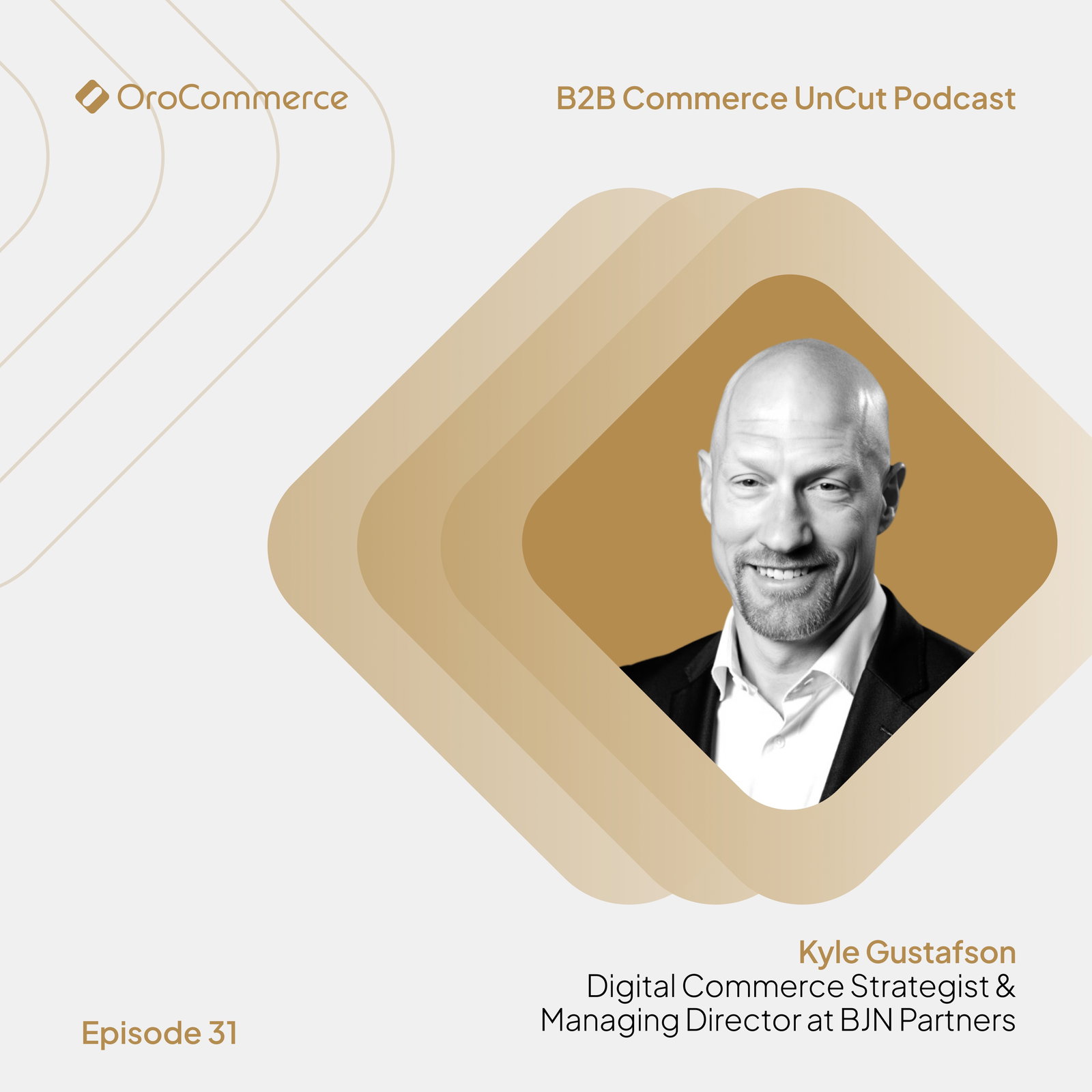 The Transformation Mindset and the Power of WIFM with Kyle Gustafson76 / 100
 People, Process, Progress: Inside ADI’s Continuous Transformation with Allie Copeland77 / 100