Auto Supply Chain Champions · 2026-04-13 · 22 min
Key moments - from our scoring
Substance score
45 / 100
Five dimensions, 20 points each
The hosts reflect on Q1's major theme: surviving sustained tariff uncertainty has revealed critical gaps in supply chain visibility and data accessibility. While manufacturers have absorbed tariff costs through flexibility and ingenuity, the real lesson is that having supply chain data "at your fingertips" matters - yet many companies still rely on spreadsheets, siloed systems, and manual processes involving individual employees rather than integrated, real-time visibility. Tom Roberts emphasizes that the industry's traditional playbook no longer works in an era of constant volatility; customs functions buried in back offices and reactive tariff management can't keep pace with 90-to-150-day changes. On AI, both hosts note it's moved from theoretical ChatGPT curiosity to embedded daily tools across procurement, supply chain, and operations. However, agentic AI requires careful collaboration between business functions and IT - domain knowledge is essential to map commodity codes, customer numbers, and transactional constructs across multiple ERP systems (common after acquisitions). Upcoming Q2 episodes will feature Cheryl Thompson on practical AI workflows and Klint Walker on cybersecurity threats to shop-floor manufacturing systems. The broader message: automotive supply chains must shift from systems of record to systems of action, empowering frontline workers with data and voice while maintaining human oversight in critical processes.
Tariff volatility has revealed that most companies lack real-time visibility into supplier and customer locations, relying instead on reactive manual processes (spreadsheets, cross-functional coordination) rather than integrated data systems; this reactive approach cannot keep pace with tariff changes occurring every 90-150 days.
Domain knowledge is essential because AI must understand data constructs, table structures, API security, and industry-specific rules - like how commodity codes, customer numbers, and transactional processes differ across multiple ERP systems; without this, AI cannot accurately return information or perform functions.
Systems of record store data reactively; systems of action enable frontline workers to not only access data but contribute to it and make decisions in real time, giving them voice and empowerment to solve operational problems.
The industry traditionally operated in silos and dealt with one crisis at a time, but now tariffs, geopolitical events, chip shortages, and plant disruptions occur simultaneously, requiring integrated, empowered decision-making across functions rather than sequential handling.
Cheryl Thompson will share practical steps for implementing AI daily across functions, and Klint Walker will discuss cybersecurity threats to manufacturing systems and shop-floor operations that many CIOs aren't currently addressing.
Our reviewer’s read on each dimension, with quotes from the episode.
The episode offers some useful observations about tariff volatility, AI implementation challenges, and procurement importance, but relies heavily on broad statements rather than novel insights. Discussion of data visibility, domain knowledge requirements for AI, and the tension between systems of record and systems of action are somewhat substantive, but the conversation often circles back to general principles without adding specific, actionable depth that a B2B operator wouldn't already grasp.
manufacturers don't have a data problem, they've got an execution problem
companies can go figure this out...But do they have that at their fingertips?
The framing of Q1/Q2 lookback is slightly novel for a podcast format, but the substantive takes are largely conventional: tariffs create supply chain stress (widely known), AI requires domain knowledge (standard tech implementation wisdom), and procurement is important (established best practice). The observation about 'systems of record vs. systems of action' is borrowed framing, and most insights recycle familiar industry challenges without contrarian or first-principles thinking.
The key now is to adapt to the world that we're in
Agentic AI is extremely powerful, but it's not something that you just flip a switch
This episode features no actual guest interviews - it is entirely a co-host retrospective. Tom Roberts is VP of Strategic Industry Development at QAD (a relevant software vendor), which gives him industry access but introduces bias. The episode references previous guests (Dr. Bryan Reimer, Sanjay, Marty Rathsburg, Zack from RedZone) and teases future guests (Cheryl Thompson, Klint Walker, a CIO) without substantive on-air contribution from any practitioner operator, limiting caliber assessment.
I'm Jan Griffiths, your host and producer, and I'm joined by my co-host, Tom Roberts, Vice President of Strategic Industry Development at QAD
We had Dr. Bryan Reimer on the show with Sanjay...That was an awesome discussion
The episode mentions tariff volatility timelines (90-150 days), references a 30,000-part vehicle example, and cites previous episodes (100th episode, Marty at Gemini, Zack at RedZone), but lacks concrete data, named companies, dollar figures, or metrics. Claims about AI prevalence and procurement importance are unsupported by numbers or case examples. The discussion of multiple ERP systems post-acquisition is illustrative but generic.
sometimes a finished vehicle has 30,000 parts in it
changes every 150 days or 90 days, or whatever it might be
The conversation is cordial and occasionally touches on substantive tension (e.g., domain knowledge requirements for AI, silos vs. collaboration), but lacks sharp questioning or pushback. Jan and Tom agree frequently and do not challenge each other's claims. The host asks open-ended setup questions rather than probing for specifics or evidence. The episode reads as aligned co-hosts promoting their ecosystem (QAD/RedZone) rather than investigative hosts testing ideas.
I'm so glad you saw the light, Tom
Well, I'm so glad that you understand procurement now at its core
Computed from the transcript - who did the talking, and the words that came up most.
The rear view mirror exists for a reason. Q1 is done. Jan Griffiths and co-host Tom Roberts look back at what Q1 revealed and look ahead at what Q2 demands. Tariff volatility. AI embedded in every executive's day. The domain knowledge gap that's quietly killing AI ROI. And a Q2 lineup built to help automotive leaders stop reacting and start acting. Over a year of tariff chaos has tested every supply chain in this industry. The companies that survived didn't just get lucky. They had data at their fingertips, not buried in spreadsheets or locked in someone's head. The ones still struggling? Still chasing Billy to find Susie's spreadsheet. And then there's AI. It's no longer theoretical. It's in everyone's day. But domain knowledge is the gap nobody's talking about. Commodity codes, customer master records, plant-level data inconsistencies. AI doesn't figure that out on its own. The humans who know the business have to be in the loop. In Q2, Jan and Tom are bringing in the guests who can help close those gaps. Cheryl Thompson on making AI practically useful for the average automotive professional.
Transcribed and scored by The B2B Podcast Index.
[Transcript] Jan Griffiths: This is the Auto Supply Chain Champions Podcast. We are on a mission to bring you real conversations with the leaders who are transforming supply chains in the automotive sector. These leaders are true champions of manufacturing, and we're here to share their stories. I'm Jan Griffiths, your host and producer, and I'm joined by my co-host, Tom Roberts, Vice President of Strategic Industry Development at QAD.
Tom Roberts: Great to be here, Jan. What I see every day is simple: manufacturers don't have a data problem, they've got an execution problem. This show is about how artificial intelligence, systems of action, and empowered teams can help close that gap. Jan Griffiths: Let's get into it.
This podcast is powered by QAD RedZone. Hello, and welcome to another episode of the Auto Supply Chain Champions Podcast. Let's check in with my co-host Tom Roberts. Tom, how are you?
Tom Roberts: Good, Jan. Great to see you. Great to be here today for this podcast. I'm excited to talk about what we've been doing over the last couple months, and who we've been interviewing, who we've been talking to.
Jan Griffiths: Yeah. What I like about this podcast, and this is something that we're gonna be doing throughout the year, we're gonna be putting a line in the sand, if you will, and say, okay, Q1, what happened? What happened in the industry, what did our guests bring to the table? And then, what are we looking forward to for Q2?
So, this is gonna be a slightly different episode, but I think it's important. So often, Tom, we get in the weeds of the day-to-day stuff and we don't take time to look back and look forward, and you've got to do that. In fact, there's a book by Dr. Benjamin Hardy called The Gap in the Gain, and too often we look at the gap and we don't look at the gain.
We don't look at what we've actually achieved, and it's so true, don't you think? Tom Roberts: I think it's absolutely true. Sometimes, people don't know how to quantify or qualify what they've done and maybe focus on things that maybe weren't as positive or beneficial, some of the other things that they did, so, yeah, absolutely. Jan Griffiths: Well, let's start off with a major accomplishment that we've all done.
We've all completed in this industry, believe it or not, we have survived over a year of tariff chaos. Tom Roberts: It's amazing. I can't say enough about the flexibility and ingenuity of the automotive industry to absorb some of those costs, the best ways that they could. So, it's been pretty amazing actually.
Jan Griffiths: Now, the tariff situation tested all of us, but what I really like about the tariff situation, believe it or not, there are some upsides to this, is it really shone a spotlight on the need to have visibility into your supply chain and have the data at your fingertips, didn't it? Tom Roberts: I think it does. I think your key term there is at your fingertips, because companies can go figure this out, right? They can figure out the locations of their supplier, sending locations.
They can figure out, where they're, the businesses that they're sending to, the customers that they're sending to are located. But do they have that at their fingertips? Do they have to go to this system and that system and this reporting area and this, talk to this person, they massage their Excel sheet. At your fingertips, I think is an absolute key for meeting these tariff challenges.
Jan Griffiths: Yeah. Are you still dealing with a lot of those issues, Tom? Are you still seeing a lot of companies out there with spreadsheets? Tom Roberts: Yeah, there's absolutely a lot, especially in the areas of foreign trade and tariff management.
So, they've got ERP systems, they've got other systems out there. They don't always look at foreign trade zones, and actually, some of those capabilities, bonded warehouses and so forth, are just kinda very reactive on how they deal with tariffs. Jan Griffiths: Yes. Tom Roberts: To be honest with you, and they don't always have that data at their fingertips.
Often, they go talk to Billy, and Billy will chase something down and then put it with Susie's, do a join on Susie's spreadsheet and there's a lot of reactivity, I think, reactive action. Jan Griffiths: That's right. Tom Roberts: And I think that's something I think companies can certainly improve on. Jan Griffiths: It's exposed the gaps, hasn't it?
The gaps in people, process, and technology. And yes, we've gone through a tremendous amount of pain, both in terms of just trying to figure it out and cost, and it's not going away, Tom. I mean, tariffs are here to stay. It's not going anywhere.
We seem to be in a bit of a lull right now, but I am pretty sure that that will change, particularly after the president visits with XI in China. I would expect that there will be something happening after that. What do you think? Tom Roberts: I think so.
I mean, and again, tariffs have been around for a very long time in different areas. It's the changes, I think, the volatility in tariffs that companies have to deal with and really have a handle on, what are their product classifications and what is subject to this IEEPA tariff or this particular thing. They need to understand those product classifications and they need to be able to deal with the volatility. I think it's the changes in tariffs that is the big issue, that rising and falling percentage that's causing a lot of the issue right now.
Jan Griffiths: Yeah. Well, there's no doubt that the level of uncertainty that we're living in today is unprecedented, but it's not going to change, and I feel that sometimes we're waiting for the certainty to come. It's not coming. Tom Roberts: I don't think so.
I think you're right. Jan Griffiths: The world. Tom Roberts: I think you're right. Jan Griffiths: The world that we lived in before, it's gone.
It's gone. You might as well forget it. It's gone. The key now is to adapt to the world that we're in, and I honestly believe, Tom, that the systems and processes that we have in place right now, the way that we do business, which I like to term our playbook in automotive no longer works.
Tom Roberts: It doesn't work. It's true. Where you have your customs folks maybe buried in supply chain somewhere and they're kind of a, back, back, back, back office function. You can't do that.
You can't do that with that process or the people, or the systems around it. They have to be tied to active data, real time data, because these things are changing every 150 days or 90 days, or whatever it might be. You've gotta have great data, accurate data right away. Jan Griffiths: Yeah.
Yeah, absolutely. And I love that we were able to get Dr. Bryan Reimer on the show with Sanjay. Tom Roberts: Yes.
Jan Griffiths: That was an awesome discussion because we talk about data, that's important. Transparency, putting the data in the hands of the people. But we've also got to think about AI, because the first quarter of this year, AI was front and center for almost every person in the auto industry, right? Tom Roberts: And it is, I mean, every company that I talk to, I've been at a few different events.
I've done webinars. I've had the chance to speak with a lot of manufacturers from a hundred billion in revenue a year to billions in revenue, and AI is a topic that generates interest from the word go. I could have a conversation with a CFO or I could have a conversation with somebody in procurement or whoever, and people want to talk. In fact, I had a call with a contact earlier this morning in automotive about AI and about what AI could do for their organization.
So, again, it's moving from kind of this theoretical thing from a few years ago. Hey, I did some prompting in ChatGPT, it was really interesting. To now, this is embedded in everybody's day. Jan Griffiths: Yeah.
Tom Roberts: And sometimes, people are using three or four different tools every day, not including some of the ones that are maybe embedded in other transactional systems that they have. So, it is prevalent, it is everywhere driving value. Some of them are, some of 'em are not driving value. Some of them just kind of are there, but yes, it's embedded in everybody's day.
Jan Griffiths: Yeah, you've gotta have the right mindset for it, and you've gotta use it the right way. Agentic AI is extremely powerful, but it's not something that you just flip a switch and you can eliminate a bunch of people and you're good to go. And I think that there is some of that thinking out there. I mean, it's a very deliberate, intentional, careful process.
You have to train these agents, you have to have a human in the loop at the right time, and maybe you back out the human at some point in time. You've gotta build trust. There are so many things to consider, aren't there? Tom Roberts: Absolutely.
I mean, in domain knowledge, Jan, it's important that when you're creating these agentic workflows. The person who's creating those, do they understand the data construct? Do they understand the tables and fields that you're going after the API structures, what kinda security is in there? You might have somebody who's really smart and they're starting to create different things in AI, but having that domain knowledge just is very difficult to replace, to understand, well, how does automotive work and how does procurement work and these transactions and month end close and all the different things that you have to do.
Domain knowledge is key in making sure that those things drive value and accuracy quickly. Jan Griffiths: So, you've really gotta have collaboration between the function, the function that wants the agent to do something and the IT person, like you say, to understand the data and the domain. And I hadn't really thought about that because my mind doesn't work the way yours does. You are the tech guy.
I'm not. I'm not. But that's why it's important. Tom Roberts: You sell yourself short.
Jan Griffiths: But that's why it's important, right? You gotta have the two. The two have to come together. And I think still, in this industry, we operate in silos and there's still a little bit of that thinking that AI, oh, well that's an IT thing, IT will figure that out, and that's not the answer, is it?
Tom Roberts: No, no, it's not. You still need people in the loop and you have to have, say that you have multiple different transactional systems as a foundation, and you know this from procurement. If you have commodity codes, primary and secondary commodity codes that don't match like you have, like you're not at steel isn't always the same thing in two different systems or cold rolled or whatever it might be. If you're addressing those with different primary and secondary commodity constructs, the AI is not gonna necessarily figure that out, and it is not gonna necessarily figure that out when it's trying to return to you information or perform some function.
There has to be a good data foundation or great cross-reference data and so forth to help map it for AI, 'cause AI just doesn't, out of the box, always figure all those things out. So, again, not only those primary and secondary commodity code constructs, but everything, what is a customer number? Well, sometimes people have little smart customer numbers. They might have an abbreviation in there, or some kind of prefix or something that they put in there to code something.
I don't always recommend that, but sometimes people do. And again, the AI needs to know that. So, you've gotta have somebody who has that knowledge, that domain knowledge, that can actually translate some of those things. Jan Griffiths: Yeah.
And particularly, if you're dealing with multiple plants with different systems that multiplies that. Tom Roberts: Absolutely. You've grown by acquisition. How many automotive companies have we seen that grow through automation or acquisition, right?
So, they see, they'll buy a plant here, they'll buy a plant there, they'll buy a piece of business from this supplier and a piece of business. So, you know, at the end you might have 10 or 11 different ERP systems and you have different, everything is different, like your chart of accounts, how you create your supplier master records, everything. You know, item master, all different financial classifications, all those things are different. So, AI is not gonna figure it all that out.
At least, I'm not aware of any AI that figures all that out today. So, again, you've gotta have the domain knowledge and be the one to help map that and make it valuable. Jan Griffiths: That's right. Well, we had Dr.
Bryan Reimer on, the MIT research scientist, talking with Sanjay for our 100th episode, and I felt like that was a more of a higher level discussion. And what I love about what we've got coming up in Q2 is there are many people like me, who play around with AI but don't really know how to take it to the next level. You can use it to improve a couple of things, but how does the average person take AI and make it useful, and I'm thrilled that we've got Cheryl Thompson coming on the show who has spent thousands of hours figuring this out.
She's got a whole bunch of workshops. She's got a new company that she's launching, and I can't wait until we can get her on the show to help us figure this out. What are some steps that we could take to really make AI work for us day to day? Tom Roberts: Yeah, absolutely, Jan.
And again, I've spent a lot of my career, decades in IT, in different areas, and you have to approach it from the spirit of a learner. Jan Griffiths: Yeah. Tom Roberts: So, I am really excited about talking with her, because I can learn more. AI is, again, it's so new, there's so many moving parts.
I don't know all the different tools. You know, I've got a number of tools that I use on a daily basis, but I'm sure there are ones that I could really benefit from. So, no, I'm really glad to have her on the show, to talk to her, and get some of that insight. Jan Griffiths: And we can't talk about AI without talking about cybersecurity, now, can we?
Tom Roberts: We cannot. I'm excited. Jan Griffiths: I know. Tom Roberts: So, Klint Walker is gonna be on the show, and Klint is just this great resource of knowledge and history, and he'll have stories about cybersecurity, about ransom attacks, about something he's gonna talk about is how some of these things are affecting manufacturing systems on the shop floor.
I don't want to give away the whole thing that I think he's gonna talk about, but I think it's gonna be really eye-opening for our listeners, the ones that are out there now, automotive manufacturing, because I think they're things that they don't talk about, even CIOs that are out there now. I don't know if some of these things are really front of mind. Jan Griffiths: Yeah. No, I think that's gonna be a good one.
And as we said many times, this podcast is all about giving our audience information and content that's useful for them. Tom Roberts: Absolutely. Jan Griffiths: And we still wanna hear from our listeners. If you have anything that you want us to bring on the show or topic you want us to discuss, a guest you want us to have on, then reach out to me or to Tom directly, and we'd love to talk to you about that.
Tom Roberts: Please. Jan Griffiths: It would be great, wouldn't it? To have that. Tom Roberts: Yeah.
We, I mean we don't know everything, and the more people that we have helping us contribute to our messaging, it just makes it more valuable. Jan Griffiths: Yeah, 'cause we're all in this together. Tom Roberts: We are all in it together. And automotive, is one of the toughest supply chains in the world.
I don't know. I don't know what could be tougher than automotive. When sometimes a finished vehicle has 30,000 parts in it and however many different suppliers, it can be daunting. Jan Griffiths: Yeah.
And I also love the fact that we had Marty on the show, Marty Rathsburg from Gemini, because this was, we talked about different subject matter experts, if you will, we bring people in on the show. But what I loved about this episode with Marty is that it's about his journey. He's heading up a purchasing supply chain organization at Gemini. He's new into the role and Tom and I had this idea that we would have him talk about where he is at right now in the beginning, and then we'll bring him back in six months and see how he's doing.
And I loved some of the things that he brought up in his interview. Tom Roberts: It was great. He talked to everybody in the organization, right? What are your challenges?
What are you facing every day? How do people think? What's important to them? I love the fact that he is trying to get his hands in the data, right?
Show me the data. I gotta get in there, I gotta figure out what I'm looking at. Do I have that foundational element that I'm looking for in my transactional process to drive the reporting I'm looking at for consolidated spend and everything else that you're trying to do? No, it was just, it was great to hear that.
And again, Jan, I said this before, I always miss, I think I misunderstood procurement for a long time in my career. And again, free bids in a buy and head to happy hour. It is not like that. And I had the opportunity to learn from some great procurement leaders in one of my roles in the past, I was the IT liaison for some of our purchasing leadership at Johnson Controls and, Terry and Mike, and Kelly and Jim, just some awesome procurement leadership and I learned a lot.
I mean, I learned a lot about the science of procurement. It is not just a feel good, kind of just go, let's go transact. There's a lot of thought, and a lot of science behind it. Jan Griffiths: I'm so glad you saw the light, Tom.
Tom Roberts: I saw the light. I mean, honestly, in automotive, how much of it is arbitrage of commodities, how much is based on the arbitrage of commodities? If you have 80% of your cost of goods sold is procured goods, so how important is procurement if that's the case? It's massively important because it's arbitrage, again, of those commodities you're trying to convert.
Again, mind blowing. Jan Griffiths: Well, I'm so glad that you understand procurement now at its core. Tom Roberts: Well, I understand a little bit. Jan Griffiths: Yeah.
Tom Roberts: But what I do understand, I certainly appreciate. Jan Griffiths: But this idea of following somebody on their journey, we're also going to expand into the world of IT. And we have a CIO coming on probably within four to six weeks, and we're gonna talk about his journey, and what I love about, and we will, we'll keep his identity secret for now, but what I love about his, the way that he talks as a CIO fairly new into the company is it's all about putting data into the hands of the people so that people can make decisions.
And I loved when we had Zack on from RedZone, because that's what Red Zone is all about. It's all about putting data in the hands of the people on the shop floor, but that's a massive culture shift, particularly for automotive, 'cause that means that you have to empower people to be able to do something with that data and make decisions. Tom Roberts: Right. To contribute to the data, and I think that's the biggest thing is on the shop floor, you're at your work center and performing your function.
If there's a non-conformity, if there's something going on, do you have a way to create data that helps solve those issues or contribute to the solution of those issues? And I really think that, like you mentioned, RedZone, I think, does a great job of that. Not only allowing somebody to see what data's going on, but to actually contribute to the data and show, hey, I've noticed this. Rather than just, I don't have any way to solve this, so I'm just gonna go about my daily work.
Well, now they've got a voice and that gives them a voice to contribute to that data to make it better for the organization. So, yeah, that is the key is putting data in the hands of the people, but also the creation of data and giving them a voice, 'cause really that's what it is. Jan Griffiths: Yeah. No, we've got a lot.
We covered a lot in Q1. We've got a lot of exciting guests and a lot more to cover in Q2, but we cannot end this episode without mentioning again, the world that we live in is a crazy world. Things are coming at us fast and furious, whether it's tariffs, whether we wake up one morning, there's a tariff on, the tariff is off. Whether there's a war.
Whether the Strait of Hormuz is opened or closed, whether there's a global oil crisis, whether there's a fire at a plant, whether there's a chip shortage, and I could go on and on and on and on and on, and we used to deal with one of those at a time every once in a while. Now they're coming at us so fast that our playbook in the automotive industry will no longer work. The way that we're structured in silos, the way we make decisions. And I am gonna steal your tagline, Tom, working with these systems of record and not turning them into systems of action.
We have got to do more of that and we've gotta change the culture behind it. There's so many things that we have to do, and Tom and I are gonna be right here with you every step of the way, providing the content and the information that you need, but we would love to have your input, tell us what we can provide to help you. What do you think, Tom? Tom Roberts: Absolutely.
There's things that we can share. We talk to a lot of people. Jan talks to a lot of people in the industry. I'm always talking with manufacturing companies, so I hear what they're talking about, what's important to them, what their pain points are.
There are things that we can help them solve, but it doesn't mean we know everything. The more inputs that I have, again, I try to put ego aside and approach it with the spirit of a learner. Again, we can only learn, right? And it only makes it more valuable if we have good information coming in, so.
Jan Griffiths: Yeah. Well, that's a wrap. That's a wrap for Q1. Let's launch into Q2 of the Auto Supply Chain Champions podcast.
We wanna hear from you, our listener. Tell us what are your challenges right now? What conversations do you want to hear across the airwaves on this podcast? Drop us a comment on our podcast website.
The link is in the show notes.
 Building the Next Generation of Supply Chain Leaders with Professor Leah Wolf62 / 100
 Turning Data Into Action on the Shop Floor78 / 100
 From Playing With AI to Putting It to Work: A Practical Guide for Supply Chain and IT Leaders73 / 100
 When the Hacker Changes a One to a Zero86 / 100
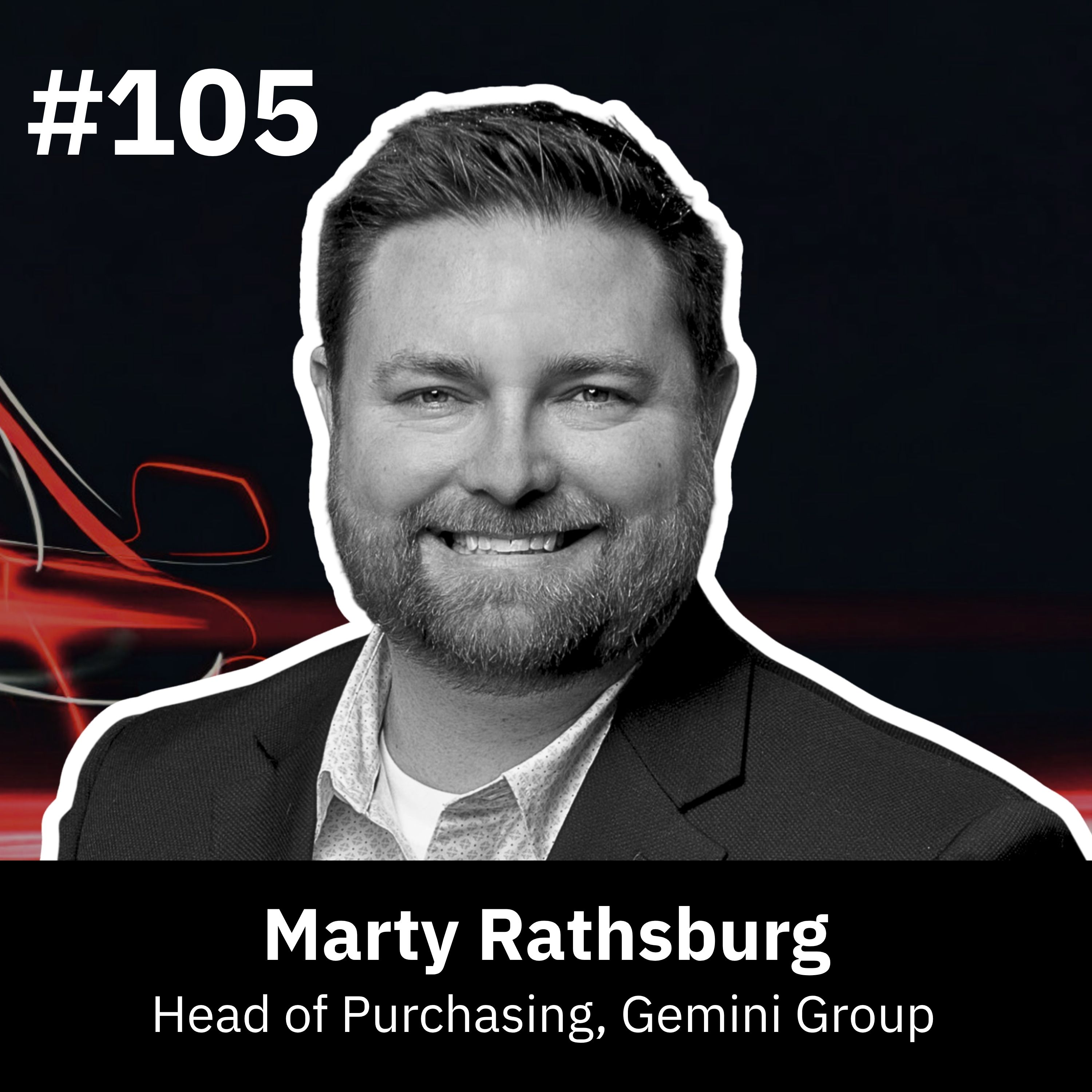 The First 90 Days: How to Take Over a Purchasing Organization and Win78 / 100