
AI for Good · 2026-07-13 · 21 min
Key moments - from our scoring
Substance score
50 / 100
Five dimensions, 20 points each
Good Combinator's Forward Deployed Engineer program represents a fundamental rethinking of technical education and credential validation. Rather than relying on seat time and theoretical certifications, the organization has created the Good Combinator Unified Platform and Forward Deployed Engineer Handbook - a rigorous operating document that mandates verifiable, real-world execution as the sole measure of competence. The FDE role is defined as someone who sits shoulder-to-shoulder with business stakeholders to identify problems, design AI solutions, build them, deploy responsibly, and measure outcomes - combining technical fluency with deep domain judgment. The program targets high school juniors and seniors in Florida as an intentional stress test: if 17-year-olds can deliver level-four validated outcomes (where actual business owners verify that deployed AI tools solved measurable problems), then scaling to universities and enterprises becomes straightforward. The evidence ledger - a governed, unfakable record embedded in the platform itself - tracks every artifact's origin, reviewer rubrics, and explicit AI contributions, preventing credential fraud while encouraging strategic AI use. Learners progress through four evidence levels (foundational, guided practice, real implementation, validated outcome) across eight competency domains (discovery, analysis, solution design, implementation, measurement, communication, professional practice, continuous improvement). The organization pursues four distinct funding pathways (family-directed education choice scholarships, CTE funding, dual enrollment, employer sponsorships) with surgical discipline, hiring a statewide representative compensated on durable partner success rather than contract volume. Growth follows a three-horizon model: Horizon 1 proves the Florida market by graduating 100 students with verified outcomes; Horizon 2 replicates the playbook to other states; Horizon 3 achieves national professional maturity.
An FDE is a practitioner who sits shoulder-to-shoulder with business stakeholders to identify real organizational problems, design AI solutions, build them, deploy responsibly, and measure whether they actually solved the problem. Unlike prompt engineers (who just trick generative AI into outputs) or isolated code-focused developers, FDEs require both technical fluency and intense domain judgment - they must deeply understand the business context they're helping.
The evidence ledger is an unfakable, step-by-step receipt of the entire working process embedded in the platform, tracking artifact origins, iterations, reviewer rubrics, and explicitly disclosed AI contributions. More critically, human mentors review the ledger and ask learners to explain architectural choices; if a student relied entirely on AI hallucinations without understanding the logic, the inconsistency is caught during calibration sessions with other mentors.
Older high schoolers represent the ultimate stress test for the curriculum because they're at a critical life transition point (deciding between college, apprenticeship, or business), desperate for differentiation beyond standardized test scores, and if they can deliver level-four validated outcomes (where business owners verify real impact), it proves the model is scalable to universities and enterprises.
The organization is testing four distinct funding pathways: family-directed education choice scholarships, career and technical education (CTE) funding at the district level, dual enrollment partnerships, and direct employer sponsorships. They hire a statewide representative compensated on durable partner success (not contract volume) who reads state appropriation bills, navigates administrators, and secures only three to five highly controlled pilots rather than trying to scale immediately.
Success in Horizon 1 is graduating the first 100 students with verified level-four outcomes, where business stakeholders validate inside the platform that deployed AI tools solved measurable problems. This sample size stress-tests mentor burnout, platform reliability, and actual employment or college placement outcomes - not vanity metrics like signup claims.
Our reviewer’s read on each dimension, with quotes from the episode.
The episode contains a coherent framework around competency verification (the FDE role, evidence ledger, four-level progression, eight competency domains) and makes legitimate points about the weaknesses of traditional credentials and the risks of AI-generated work. However, much of the substance is delivered as explanation of a single organizational handbook rather than multiple independent insights. The core thesis - that real-world execution beats seat time - is not novel. Filler appears in the form of repetitive clarifications and conversational back-and-forths that don't add density.
Evidence over opinion. That is their core operating maxim.
The deepest, most durable learning only occurs when concepts are applied in authentic settings with real constraints.
The episode reframes competency assessment around verifiable execution, which is a reasonable pushback against generic certifications, but the underlying ideas (learn-by-doing, portfolio-based hiring, mentor review loops) are well-established in apprenticeship, bootcamp, and capstone-based education models. The specific application to high schoolers in Florida and the 'evidence ledger' framing adds some novelty, but the episode doesn't present this as a novel insight - it's explaining an existing organizational document. No contrarian arguments or first-principles thinking emerges.
They don't care if you can define what a neural network is on a flashcard. They want to know, can you show what specific business bottleneck you addressed, how did you mitigate the data privacy risks, and what was the measurable financial or operational result of your deployment?
Evidence over hype. It aligns every single piece of execution to measurable reality.
The episode features no named guest. It is a two-speaker dialogue with no credentials provided for either party. The hosts discuss an internal 'Good Combinator' handbook but there is no indication that either host is affiliated with that organization, has executed similar programs at scale, or brings practitioner credibility. This appears to be two commentators analyzing a document rather than an operator who has built or run such a system sharing lived experience.
The handbook outlines a three horizon growth model
The handbook mandates something called a provider Readiness dossier
The episode is rich in structural detail about the FDE program (the eight domains, four levels of evidence, the evidence ledger, the three horizons, the four funding lanes). However, almost all specificity is drawn from a single internal document with no independent validation. There are no named companies, no real student outcomes, no actual measured results, no named mentors or school districts, and no external evidence that this program exists or works. The bakery inventory example is hypothetical. The concrete details are about the program's design, not its real-world impact.
The domains include discovery, which is identifying what the stakeholder actually needs, along with analysis, solution, design, implementation, measurement, communication, professional practice, and continuous improvement.
They are also testing career and technical education or CTE funding at the local district level. Okay, cte, they are looking at dual enrollment models through partnerships with post secondary schools and finally direct workforce or employer sponsorships
The hosts ask clarifying questions and request translation of jargon ('translate that into plain English for me'), which shows attentiveness to comprehension. Speaker A challenges the feasibility of preventing fakery ('how does that prevent me from just rubber stamping the AI's hallucinated garbage') and questions why high schoolers are chosen for such a risky role. However, the pushback is not particularly sharp; Speaker B readily answers each challenge without much resistance. There is no productive disagreement, skepticism about whether this model will actually work at scale, or follow-ups on why execution hasn't been demonstrated yet.
So if I can fake the work in 30 seconds, isn't this just another easily gamified boot camp portfolio. Like, how do they prevent someone from just using AI to generate the evidence?
Navigating state money is a graveyard for educational startups. How does a tech startup actually extract revenue from the state of Florida without getting bogged down in years of lobbying?
Computed from the transcript - who did the talking, and the words that came up most.
The Good Combinator Unified Platform & Forward Deployed Engineer Handbook serves as a comprehensive strategic and technical blueprint for launching an AI-implementation professional standard, beginning in the Florida market . The document establishes a unified operating doctrine that integrates educational curriculum, verified evidence-based learning, and a statewide partnership model to develop Forward Deployed Engineers . This ecosystem is built upon a canonical data model and a "one identity" architecture to ensure that all participants - from students to institutional partners - operate within a single, transparent truth. By prioritizing traceable evidence over claims , the platform aims to prove the value of responsible AI deployment through pilot programs in high schools and universities. Detailed governance frameworks , engineering standards, and thirty-to-ninety-day execution plans provide a rigorous structure for scaling this model beyond its initial beachhead. Ultimately, the handbook outlines a three-horizon strategy to transform AI capability into measurable organizational improvements while maintaining strict ethical and human-centered accountability.
Transcribed and scored by The B2B Podcast Index.
Speaker A: Imagine, uh, just for a second, trusting your company's entire data infrastructure. Or maybe like a sensitive customer service AI to a 17 year old.
Speaker B: Right, which sounds terrifying.
Speaker A: It really does. You're probably picturing an absolute disaster. Like you're picturing a high school junior with a laptop and way too much confidence accidentally deleting your customer database.
Speaker B: Yeah, or launching a chatbot that starts swearing at your top clients.
Speaker A: Exactly. It sounds like a joke. But what if a highly secretive, deeply structured playbook suggests that, well, that specific teenager might actually be more qualified to build your AI tools than the person with a master's degree sitting in your boardroom right now?
Speaker B: I mean, it completely flips the script on how we measure human capability.
Speaker A: Yeah.
Speaker B: So today we're looking at an internal operating document. Uh, the Good Combinator Unified Platform and Forward Deployed Engineer Handbook, version 1.0.
Speaker A: Right.
Speaker B: And it is, without exaggeration, this ruthless blueprint for manufacturing AI professionals. Yeah, and they are targeting that exact high school demographic to prove their model, which is wild.
Speaker A: So we are unpacking how this organization plans to absolutely obliterate the current AI education market. Because right now, you know, if you look around, we are drowning in a sea of theoretical certificates.
Speaker B: Oh, absolutely. Drowning in them.
Speaker A: You watch a few hours of video, you pass a multiple choice quiz on AI ethics or whatever, and suddenly you get a shiny badge for your LinkedIn profile. It's muddy waters. Yeah, you look at a resume and you have no idea if the person actually knows how to deploy a language model or if they just know how to type a prompt into a chat
Speaker B: window, which is the exact core problem Good Combinator is trying to solve. The entire premise of this handbook is a shift away from passive learning. They are demanding verifiable, real world execution.
Speaker A: Okay, let's unpack this. Because to understand how they plan to do this, we really have to look at the specific role they are training people for. They call it a Forward Deployed Engineer or an fde.
Speaker B: Right. Fte.
Speaker A: Let's break that down because it sounds incredibly militaristic. Forward Deployed. What does it actually look like on the ground?
Speaker B: Well, the handbook actually spends a lot of time defining this role by what it is not, which tells you a lot about the industry's current blind spots. So an FDE is not a prompt engineer. It's not someone who just knows a bunch of clever tricks to get a generative AI to write a poem. It's also not a traditional software developer sitting in a windowless room, you know, isolated from the business context, just writing code to meet a spec sheet.
Speaker A: Right, Like a code monkey.
Speaker B: Exactly.
Speaker A: Yeah.
Speaker B: And they are definitely not external consultants who come into a business, drop a 50 page slide deck of recommendations, and then just walk away before anything gets built.
Speaker A: So they aren't the ideas guys, they are the mechanics.
Speaker B: They are practitioners. Yeah. The handbook defines an FBE as, uh, someone who sits shoulder to shoulder with business stakeholders.
Speaker A: Shoulder to shoulder.
Speaker B: Ah, right. They identify a real organizational problem, design an AI solution for it, build it, deploy it responsibly, and. And then stick around to measure if it actually solved the problem. It requires technical fluency, obviously, but it also requires intense domain judgment. You have to understand the business you're trying to help.
Speaker A: You know, it reminds me of the difference between taking a written driving test and actually driving in a blizzard.
Speaker B: That's a great way to put it.
Speaker A: Like the current tech certification model gives you a written test. You memorize the street signs, you know the speed limits on paper, and they hand you a learner's permit. The FDE program seems to skip the written test entirely. They drop you into city traffic during rush hour and say, well, prove you can merge without crashing.
Speaker B: Yes, and the phrase they use in their constitution is evidence over opinion. That is their core operating maxim.
Speaker A: Evidence over opinion.
Speaker B: Exactly. If you make a claim about your capability, your opinion of your own skills is completely irrelevant. It has to be supported by a traceable ledger of evidence. They argue that seat time, you know, the number of hours you sat in the lecture hall is a worthless metric.
Speaker A: Does this mean the entire focus is on that evidence? Because that is terrifying if your entire career is built on the fact that you sat in a lecture hall for four years.
Speaker B: Oh, it threatens the entire traditional education establishment. Good Combinator is stating that the deepest, most durable learning only occurs when concepts are applied in authentic settings with real constraints.
Speaker A: Right.
Speaker B: They don't care if you can define what a neural network is on a flashcard. They want to know, can you show what specific business bottleneck you addressed, how did you mitigate the data privacy risks, and what was the measurable financial or operational result of your deployment?
Speaker A: Okay, but wait. If seat time doesn't matter, how do you actually verify any of that? I mean, A.I. uh, makes it ridiculously easy to fake competence today.
Speaker B: It does.
Speaker A: I could ask a large language model to write me a brilliant stakeholder analysis, generate the Python code for a dashboard, and even write my final reflection paper on how much I learned.
Speaker B: Oh, easily. You could do that in 10 minutes.
Speaker A: Right. So if I can fake the work in 30 seconds, isn't this just another easily gamified boot camp portfolio. Like, how do they prevent someone from just using AI to generate the evidence?
Speaker B: What's fascinating here is how the handbook tackles that exact existential threat. They use something called their evidence ledger. Now, they describe this ledger as a governed canonical object within their unified platform architecture.
Speaker A: Oh, stop right there. Governed canonical object within a unified platform architecture. Yeah, you know, I need you to translate that into plain English for me and everyone listening, because that sounds like pure corporate word salad.
Speaker B: Fair enough. Fair enough. Think of it as an unfakable step by step receipt of your entire working process.
Speaker A: Receipt? Okay.
Speaker B: Right. It's not a PDF that you upload at the end of a project. The ledger lives inside the software platform where you do the work. It tracks the exact origin of every artifact you create.
Speaker A: Oh, wow.
Speaker B: Yeah, it logs when you started the iterations, you went through the reviewer rubrics used to grade it, and explicitly the AI contributions.
Speaker A: So they aren't banning the use of AI to generate the code or the documents?
Speaker B: None at all. They actually encourage it. I mean, NFT's job is to be efficient. So use the AI to draft the code or summarize the meeting notes, but its use must be transparently disclosed in the ledger if it materially affected the final product.
Speaker A: Got it.
Speaker B: You have to say, I used this specific agent to generate this specific module,
Speaker A: but how does that prevent me from just rubber stamping the AI's hallucinated garbage and passing it off as a finished project? Like, sure, I used AI, but the
Speaker B: work is still fake because of the multi layered evaluation framework. So they assess learners across eight distinct competency domains. It's not just, you know, coding.
Speaker A: What are the domains?
Speaker B: The domains include discovery, which is identifying what the stakeholder actually needs, along with analysis, solution, design, implementation, measurement, communication, professional practice, and continuous improvement.
Speaker A: That is a massive scope. You have to interview the client, build the tool, and measure the roi.
Speaker B: And within those eight domains, you have to prove your competence across four levels of evidence. Let's make this concrete.
Speaker A: Please do.
Speaker B: Imagine a learner is trying to help a local bakery automate their inventory ordering. Level one evidence is foundational. So maybe a guided quiz on how supply chain data works.
Speaker A: Okay. Pretty standard, right?
Speaker B: Level two is guided practice, like building a mock process map of the bakery's current broken system with a mentor watching.
Speaker A: So level one and two are basically practice mode. Like the bumpers are up on the bowling lane.
Speaker B: Yes, but you don't get the credential. For practice to pass, you have to hit level three. Which is real implementation in an authentic environment.
Speaker A: Oh, okay.
Speaker B: You have to actually deploy the inventory bot for the bakery. And then the ultimate standard is level four, which is a validated outcome, meaning
Speaker A: the bakery owner has to sign off.
Speaker B: The bakery owner has to verify inside the platform that your tool actually saved them 10 hours a week and didn't accidentally order 5,000 pounds of flour.
Speaker A: That is a brutally high bar.
Speaker B: It is. And returning to your question about faking it, the platform strictly prohibits AI agents from independently issuing these credentials or making that final approval.
Speaker A: So there's a human always.
Speaker B: There is always a human mentor in the loop. The mentor reviews the ledger, they look at the code provenance, they run calibration sessions with other mentors to ensure nobody is just rubber stamping submissions.
Speaker A: Right.
Speaker B: If you relied entirely on an AI hallucination without understanding the underlying logic, the human reviewer is going to catch the inconsistency when they ask you to explain your architectural choices.
Speaker A: You know, a system this rigorous, with human mentors and business stakeholders and Level 4 validated outcomes that cannot just be tested in a vacuum.
Speaker B: No, definitely not.
Speaker A: You can't just launch that globally on day one and hope it scales you. You need a highly controlled environment with real stakes to see if this leisure actually holds up under pressure.
Speaker B: Which brings us to the most fascinating geographical and demographic strategy in the handbook. Their initial proving ground is the state of Florida.
Speaker A: Right? And when I first read that, I was surprised. Florida is a massive comple state. But the handbook is very deliberate in framing Florida as their initial proof market.
Speaker B: Yes, proof market.
Speaker A: They aren't trying to blanket the state and get every citizen signed up. They want to run a tiny handful of excellent, highly controlled pilots to create a repeatable.
Speaker B: And the target demographic for these initial pilots is where the strategy goes from interesting to brilliant.
Speaker A: Here's where it gets really interesting. Because if you're listening to this and you manage a tech team, you are probably highly skeptical right now. Sure, when you hear for deployed engineer handling enterprise AI, you picture a seasoned mid career developer, or at least a computer science grad from a top tier university. But Good Combinator's initial beachhead segment in Florida is high school juniors and seniors.
Speaker B: 17 year olds.
Speaker A: Why 17 year olds? Doesn't that seem like a massive leap for enterprise level AI implementation? Why on earth are they trusting this demographic to prove their massive ecosystem?
Speaker B: Well, because older high schoolers represent the ultimate stress test for this curriculum. And they are at a critical, high stakes transition point in their lives.
Speaker A: How sad.
Speaker B: Think about a high school junior in 12 months. They have to make a massive financial and life decision. Do they go into crippling debt for a traditional college degree? Do they seek an apprenticeship? Do they start a business?
Speaker A: They're desperate for a way to differentiate themselves that isn't just a standardized test score.
Speaker B: Exactly. The value proposition Good Combinator offers these families isn't some generic learn to code after school club.
Speaker A: Right?
Speaker B: The message is graduate with a verified audited portfolio of real world problems you have solved for actual businesses.
Speaker A: Wow.
Speaker B: Imagine a 17 year old walking into a college admissions office or a corporate interview, bypassing their high school transcript entirely and just opening uh, up their evidence ledger.
Speaker A: Right? Like here is the tool I built for the local logistics company, Here is the code, here is how I manage the data privacy compliance, and here is the CEO of that company validating that. I, uh, increased their routing efficiency by 15%.
Speaker B: It's undeniable.
Speaker A: I mean, that teenager is getting hired on the spot over a 22 year old with a theoretical degree.
Speaker B: Strategically, for Good Combinator, if you can prove that your rigorous evidence engine works for a high school Senior. If a 17 year old can follow this eight course architecture and deliver a level four outcome, it becomes trivial to scale that proof up to universities and Fortune 500 companies later. That makes total sense if the kids can do it. The corporate devs have no excuse.
Speaker A: But the reality of working with high schools brings up a massive friction point. Having a genius demographic target is totally useless if the public school systems or the families can't actually pay for it.
Speaker B: Yep, funding is everything.
Speaker A: Entering a state education system means navigating intense political realities, state budgets and a massive amount of red tape. How does a tech startup actually extract revenue from the state of Florida without getting bogged down in years of lobbying?
Speaker B: They don't just hope for the best, they have a surgical plan for it. The handbook outlines four specific funding validation lanes they're actively testing.
Speaker A: Walk us through those. Because navigating state money is a graveyard for educational startups.
Speaker B: It really is. So the primary lane they are testing is family directed education choice scholarships.
Speaker A: Okay.
Speaker B: Florida has a very robust system where eligible families can direct state funds to approved private educational providers. Good Combinator wants to see if their FTE program legally qualifies for those funds.
Speaker A: But taking taxpayer money meant for a kid's education is heavily scrutinized. If unregulated tech company takes that money and delivers vaporware, the state will shut them down immediately.
Speaker B: Which is why they require a massive amount of internal compliance before they ever launch. The handbook mandates something called a provider Readiness dossier.
Speaker A: A dossier?
Speaker B: Yeah. Before they accept a single student, they have to verify tax compliance, insurance data privacy frameworks and intense safeguarding protocols for the students.
Speaker A: That is incredibly countercultural for the tech industry. I mean, the standard Silicon Valley playbook is move fast and break things. Launch a buggy beta, fake the traction and apologize later. But Good Combinator has this strict public messaging rule in the document. They absolutely refuse to promise families that funding is guaranteed until it is entirely verified in writing by the state. Doesn't this highly disciplined go revise or pause approach completely slow down their market entry?
Speaker B: Well, they view untested promises as a fatal brand risk. If you tell a family, you know, don't worry, the state will pay for this. And then the state rejects the application, you have destroyed your credibility in that market forever.
Speaker A: Good point. So, uh, they have the Education Choice scholarships. What are the other lanes?
Speaker B: They are also testing career and technical education or CTE funding at the local district level. Okay, cte, they are looking at dual enrollment models through partnerships with post secondary schools and finally direct workforce or employer sponsorships where local businesses essentially underwrite the student's training in exchange for the tools the student builds.
Speaker A: Navigating four different bureaucratic funding lanes requires some heavy lifting on the ground. You can't do that from a laptop in San Francisco.
Speaker B: No, you definitely can't. Which brings us to the personnel strategy. The handbook mandates the hiring of a statewide representative for Florida.
Speaker A: Now, when I hear statewide rep, I immediately picture a traditional enterprise sales guy. Oh sure, someone in a tailored suit making cold calls, taking school district superintendents out to golf courses and trying to close million dollar software licenses.
Speaker B: That is the exact opposite of what they are hiring for. The ideal profile for this representative is someone with deep policy literacy and a reputation for absolute ethical conduct.
Speaker A: Really?
Speaker B: Yeah. They aren't lobbyists paid to make high level introductions. Their mandate is to read the 400 page state appropriation bills, navigate the scholarship administrators and secure exactly three to five highly qualified pilots.
Speaker A: Three to five? That is such a restrained number. A traditional startup board would be demanding 50 pilots in the first quarter.
Speaker B: The restraint is the point. And you can see how serious they are by looking at how they compensate this representative. The rep's compensation is tied directly to verified progress and durable partner success.
Speaker A: Wait, I'm stuck on this idea of paying a sales rep based on durable success. In the real world, enterprise sales reps want their commission the second the contract is signed.
Speaker B: Oh yeah, Bag the commission and run.
Speaker A: Exactly. Uh, once the ink is dry, they hand the client off to a customer success team and move on to the next hunt.
Speaker B: Not here. It's not about how many introductory meetings they book. It's about whether they can advance a school district to a written scope of work, a successful launch, and a measured outcome for the students. Wow. If the funding pathway they are pursuing turns out to be legally ambiguous or too risky, the rep is empowered to pause it. They operate on that strict go, revise or pause framework. This discipline ensures that they only launch what is legally and financially viable.
Speaker A: It's the evidence over opinion maxim applied directly to business development. They demand their students prove their work and they demand their sales team prove the market viability before scaling.
Speaker B: Precisely. Which naturally leads us to how they actually plan to grow. How does a highly controlled, incredibly restrained program of just three to five pilots in Florida eventually turn into a national standard for AI professionals?
Speaker A: Well, the handbook outlines a three horizon growth model and it centers around a core scaling rule, which is you only scale what has been proven right.
Speaker B: Horizon 1 is purely about proving the Florida market, validating the funding, running those initial pilots, and getting the first 100 students through the program to verified level four outcomes.
Speaker A: Okay. And horizon two?
Speaker B: Horizon two is replication. Taking that proven localized playbook and adapting it to other states or institutional sectors.
Speaker A: Makes sense.
Speaker B: And Horizon three is professional maturity. That's when you see advanced credentials, multi state presence, and broad recognition from major employers.
Speaker A: So what does this all mean? I want to focus on horizon one for a second. Specifically that metric of the first 100 students. Because in the tech world, a hundred users is a rounding error. It's nothing.
Speaker B: It's absolutely nothing.
Speaker A: Yeah, but good combinator states. This is explicitly not a vanity metric. It's not about putting out a press release claiming they have thousands of signups.
Speaker B: If we connect this to the bigger picture, 100 students is the absolute minimum viable sample size needed to rigorously test the friction points of their unified platform.
Speaker A: How do you mean?
Speaker B: Well, when you put a hundred teenagers through this machine, you stress test the recruitment marketing. You test the mentor to student ratios like can the mentors keep up with the evidence review without burning out? You test the platform's API reliability, but most importantly, you test the actual transition outcomes. Did these hundred kids actually get jobs or college placements based on their evidence ledgers?
Speaker A: The handbook mentions that they hold a monthly demo day during this phase. And they completely ban presentation slides.
Speaker B: I love that detail. You cannot show up with a PowerPoint talking about your theoretical plans.
Speaker A: No slide decks allowed.
Speaker B: None. You are only allowed to show working software completed evidence On m the ledger and uh, measured outcomes from the stakeholders.
Speaker A: They describe their internal culture as being patient and relentless. They are completely patient about reaching Horizon three. They don't care if it takes years to become a national standard.
Speaker B: Exactly.
Speaker A: But they are absolutely relentless about executing the exact verified next step in Horizon 1. To get there, they will not bypass the evidence ledger for a quick win. Like if a massive school district comes to them and says, we will pay you $5 million, but you have to build us a custom watered down version of the platform without the mentor review.
Speaker B: Good Combinator says no, because custom configurations fragment the core architecture. If you compromise the evidence standard for one client, the ledger loses its authority everywhere else.
Speaker A: Think about the implications of that for a second. For you listening right now, whether you are building a new product, managing a corporate team, or just trying to navigate learning a new technical skill in an industry flooded with AI hype, the Good Combinator playbook offers an absolute masterclass in discipline.
Speaker B: It really does.
Speaker A: It demands evidence over hype. It aligns every single piece of execution to measurable reality. Rather than just hoping things work out. It proves that taking the time to build a solid, verifiable, unfadable foundation is actually the fastest way to scale in the long run.
Speaker B: It fundamentally challenges the status quo of how we value human capability in our society. Which leaves me with the thought I'd love for you to consider today.
Speaker A: Go for it.
Speaker B: Think about your own resume. Think about the degrees or the certificates sitting in a frame on your wall right now. What would happen to your specific industry if every single credential required a completely transparent, audited ledger of the actual real world problems you solve, rather than just a list of the classes you attended?
Speaker A: Wow.
Speaker B: How would that change the way you hire? And how would that change the way you approach your very next learning endeavor?
Speaker A: That is a heavy question. If the shorthand diploma on the wall isn't enough to prove competence anymore, we all might need to start building our own evidence ledgers and going back to where we started. That idea of trusting a 17 year old with your company's data. Maybe this MTE program is finally building a system that can actually show us a clear, undeniable picture of who really knows what they are doing, regardless of their age. Thanks for joining us on this deep dive. We'll see you next time.
Other episodes covering the same guests and topics, from across The B2B Podcast Index.
 Safe AI implementation for Florida Special Districts61 / 100
 AIUC-1_and_the_Agentic_Resilience_Gap
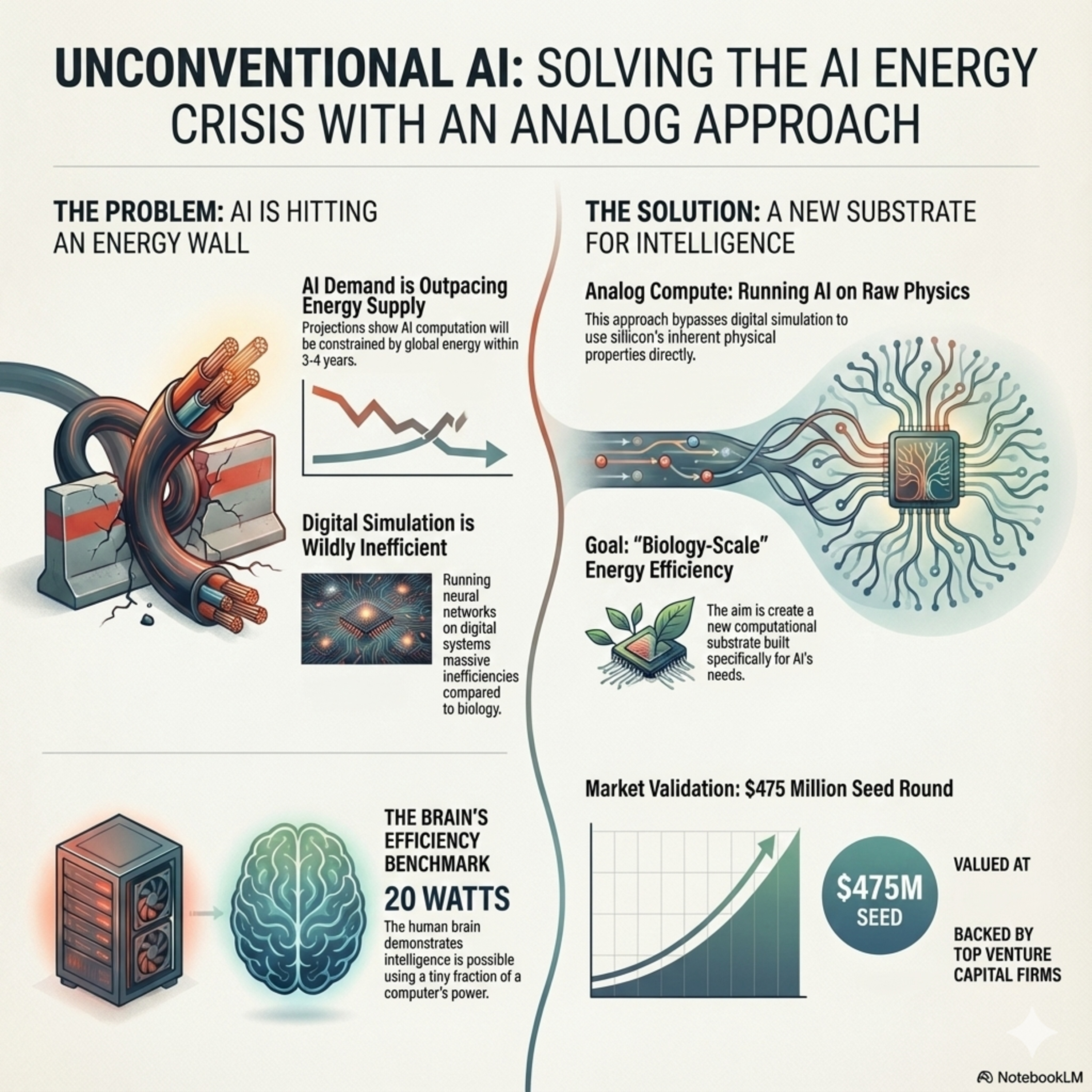 What Is Neuromorphic Computing and Why Does It Matter?
 DeepSeek_3.2_Sparse_Attention_Changes_Agent_Economic
 DeepSeek_3.2_AI_Half_Cost_Breakthrough

