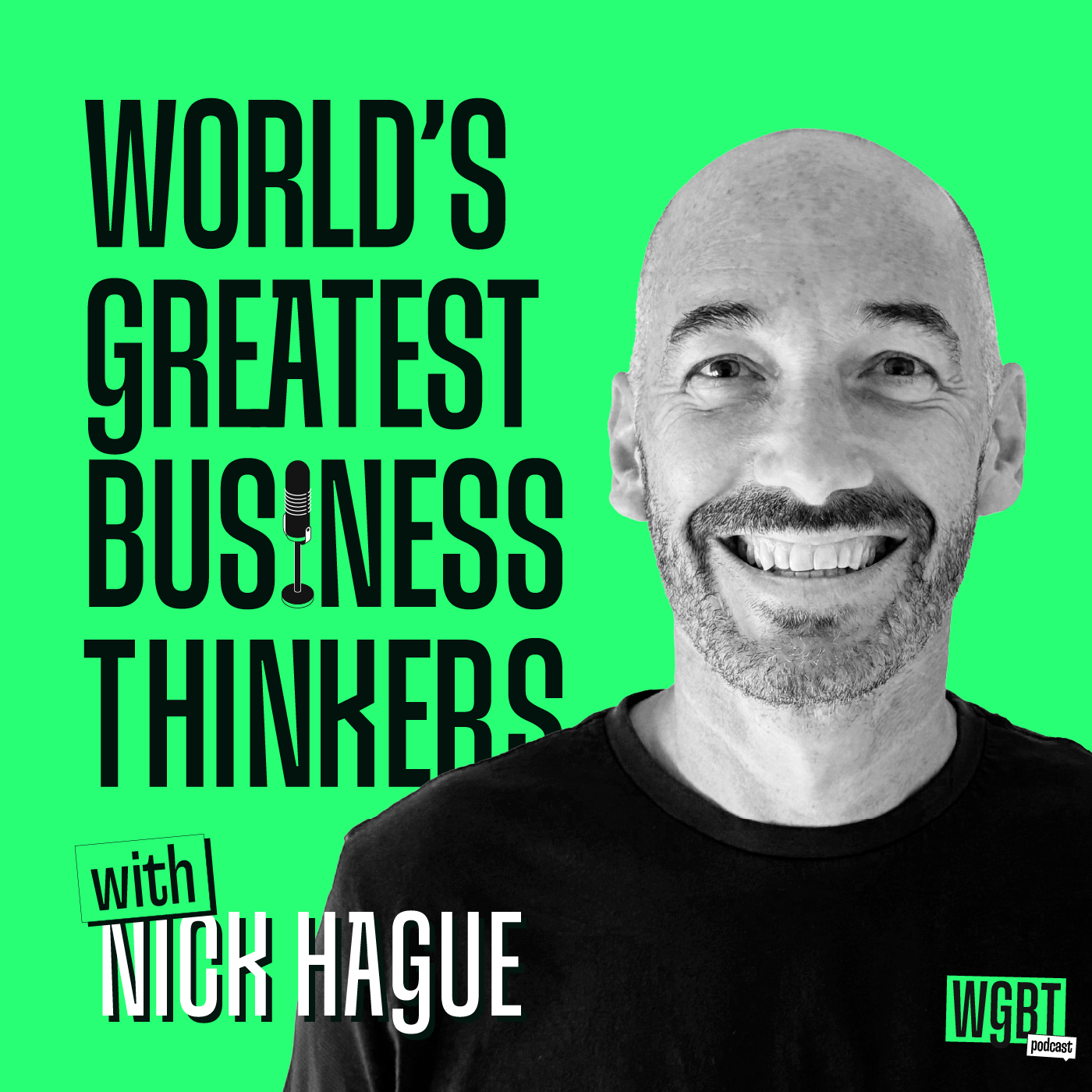
World's Greatest Business Thinkers · 2026-06-17 · 1h 3m
Key moments - from our scoring
Substance score
30 / 100
Five dimensions, 20 points each
Adrienne Adhami, author of Decisions that Matter and director of innovation at a fitness startup, discusses her framework for decision-making in a world of abundance. The core insight: we make 35,000 decisions daily, yet most people treat low-stakes decisions carelessly despite their compounding impact over time. Adhami introduces her concept of differentiating high-stakes decisions (irreversible, long-term impact) from low-stakes ones (reversible, frequently repeated), arguing that small daily choices about team capacity, culture, and ownership accumulate to define organizational success. She unpacks a practical method for uncovering personal values - not by inventing impressive mission statements but by identifying what you admire in others and what frustrates you - and emphasizes that values must be genuinely held to enable confident, aligned decision-making. The episode bridges analytical decision frameworks with the human, emotional, and values-driven elements that leaders actually experience across business and personal life.
The average person makes approximately 35,000 decisions per day, derived from 80,000 total conscious and unconscious thoughts, with 35,000 of those being related to choice and decision-making.
High-stakes decisions are typically irreversible with significant long-term impact affecting others and yourself, while low-stakes decisions can be reversed, feel more mundane, yet occur far more frequently - and their cumulative effect over time can be just as significant to success.
Adhami suggests looking at people you admire and writing down what you value about them, then examining what frustrates or annoys you - emotions highlight values you hold - rather than inventing impressive-sounding mission statements; the values must be genuinely true to you.
Inherited values from culture, parents, or mentors should be questioned consciously; some like loyalty or punctuality may align with who you are and should be upheld, while others may no longer serve you and can be consciously rejected.
Our reviewer’s read on each dimension, with quotes from the episode.
The episode surfaces a handful of useful ideas - distinguishing high-stakes from low-stakes decisions, the compounding effect of small choices, and gut instinct as pattern recognition - but buries them in long biographical passages, sponsor reads, and listener Q&A that generates no actionable content. The frameworks promised (the six rules, the decision matrix) are repeatedly teased but never actually explained, with listeners redirected to buy the book.
Most decisions are. There are very, very, very few decisions that are irreversible. It might be inconvenient, you might not want to reverse it, but is it reversible?
intuition isn't this woo woo thing. That's just a feeling, you know, it's not just like, oh, I had a feeling. It's actually based on pattern recognition in the brain.
Almost every idea here circulates freely in the pop-psychology and self-help space: values as a decision filter, compounding small decisions, regret as a compass, joy being important to performance. The Latin etymology of 'decide' is the sharpest standalone point but is itself a well-worn opener. There is no contrarian or first-principles argument anywhere in the episode.
The word decide actually comes from the Latin word, means to cut away.
nothing is ever as good or as bad as it seems
Adrienne Adhami's primary credentials are as a fitness trainer, brand ambassador, and podcast host who reached Director of Innovation at an ~80-person fitness-app startup. She has authored books on habit formation and decision-making from a wellness lens, but she has not built or led a scaled B2B operation, making her insights largely self-help in character rather than operator-grade.
I was maybe the 12th or 13th employee to join this startup. It then went on to have up to 80, I think, employees by the time I left.
I completed at least 20 different endurance races around the world, including half marathons, marathons.
The episode is almost entirely abstraction and anecdote: the headline 35,000-decisions-per-day statistic is cited with no source, the health-outcome correlation is attributed vaguely to 'research and data', the startup the guest worked at is never named, and the decision matrix scoring system is described but never shown. Named examples are limited to a Japanese friend's punctuality values and a plastic-straw thought experiment.
there is direct correlation. This comes from research and data.
It then went on to have up to 80, I think, employees by the time I left.
The host prepares thoroughly and asks structurally sound topical questions, but consistently validates rather than probes - offering extended personal anecdotes, praising the guest effusively, and never pushing back on vague claims or missing evidence. The interview functions primarily as a book promotion vehicle, with no productive disagreement or follow-up pressure at any point.
That is such a good question.
I thoroughly enjoyed this podcast and can't wait for the next one
Computed from the transcript - who did the talking, and the words that came up most.
Special thanks to Triangle for sponsoring this episode. Triangle's founder, Matt, is offering a complimentary one-hour strategy session for founders seeking to grow their personal brand. I can't recommend this service enough, and get in quick as there are only three remaining slots available this month! Get in touch at matt@mattswain.com or book directly at What if the 35,000 decisions you make daily could actually align with your deepest values and drive real success? In this episode of World's Greatest Business Thinkers, host Nick Hague sits down with Adrienne Adhami, author of Decisions That Matter, and co-founder of Part Two Agency, to explore how leaders can navigate the thousands of decisions they face every day with greater confidence and clarity. Adrienne shares a practical framework for separating high-stakes decisions from low-stakes ones, reducing decision fatigue, and aligning choices with personal values. The conversation examines the role of joy as a meaningful measure of success, the power of intuition as learned pattern recognition, and why uncertainty should be embraced rather than feared.
Transcribed and scored by The B2B Podcast Index.
The word decide actually comes from the Latin word, means to cut away. So when you decide, you cut away. So by choosing one thing, you are cutting away all other options. And you have to almost think about it in that way of, like, commitment.
If you think about marriage, the perfect example, by deciding to commit to one person, you are forsaking everybody else. Or by deciding and committing to one purchase, let's say a house or a car. If you keep looking at all the other houses, if you keep looking at other cars, then essentially you're not committed to that decision and gives that seed of doubt room to grow. Hi, I'm Nick Haig, and welcome to the World's Greatest Business Thinkers podcast.
Today, we're living in the age of abundance with more choice, opportunity and freedom than ever before. This is both a blessing and a curse. Despite the advantages of having multiple options, it often leads to confusion, second guessing and a persistent sense of dissatisfaction in our private lives. We've all been there, staring at crossroads, paralyzed by options, haunted by the fear of a wrong turn.
And for leaders in business, the stakes are infinitely higher. Every call can make or shape careers, move markets, or cost a lot of money. But what if you could strip away the anxiety, cut through the noise, and build a framework for making choices with clarity, confidence and conviction? That's the promise of my guest's powerful new book, Decisions that Matter.
And she's here today to show us how it's done. You will absolutely love this podcast and if you do, subscribe, wherever you listen or watch. But until then, sit back, relax and listen to Adrienne. And as she joins me on the podcast itself.
Welcome to the World's Greatest Business Thinkers podcast. Adrian, thank you for having me. There really is so much to talk about today for those, well, a starting point for those people who haven't come across your work before, can you give some background to who you are and this journey that you've been on in business so far? Absolutely.
I think like many modern entrepreneurs, you know, the path for me has been very diverse and I've been very lucky over the last 15 years to work with a variety of high performing people, from business founders, CEOs to Olympic athletes. And so my background really, I guess, is in the health, wellness and fitness industry. So throughout that, throughout that 15 years, I've, as I said, worked with, I guess if I go all the way back, I worked very much in the fitness industry. So I was a fitness trainer.
I worked with global brands like Adidas and On and Under Armour to either work as a Brand ambassador or to work alongside different campaigns around product launches. So lots of world in. Lots of work in the world of athletics and running. In that time, I completed at least 20 different endurance races around the world, including half marathons, marathons.
So I was very much embedded into that world. But through, along the same time, I also worked at a startup. So this was a fitness app and this was before the pandemic. So before at home, fitness was really taking off.
So it was quite innovative. And I was maybe the 12th or 13th employee to join this startup. It then went on to have up to 80, I think, employees by the time I left. I was there for four years, again working on the fitness, but then working on product and eventually becoming director of innovation.
And alongside that, I've always had a real interest in, I guess, not just the kind of practical elements of achieving goals such as marathons, but actually really looking at habit formation, looking at the science of goal setting, really had an interest in, I guess, the science of motivation, what motivates people to do incredible things, whether that's starting businesses, writing books, running marathons, et cetera. So in that time, I've recorded a lot of podcasts myself. I've published two books.
And yeah, often when I'm on stages now, either giving keynotes or when I'm writing, it's typically looking at three things. Habit formation, goal setting and decision making. I mean, and as you say in business, there's never, it's never a straight line, is it? But you've, you've really pivoted and changed and, and, and, and fitted a lot in, in, in such a young career.
So far, anyway. I mean, we've never met before, but I came across your work in, in loc, along with actually Joe Wicks. So in the uk, you kept our household going in terms of, you know, easy to do workout exercises. We didn't have any gym equipment because no one could get their hands on gym equipment at the time.
So I need to thank you for that and for keeping my two boys fit and on their toes and active during lockdown. Oh, that's great. Your, your first book was called the Power Hour, after the name of your podcast. As you say, you've done hundreds of podcasts and you started that in 2018 and then your book followed.
And then your latest book is called Decisions that Matter, and we're going to talk a bit about that today. You can see it on the shelf for those that are viewing. But when I, when I looked on Amazon, I read a lot of books, but there There are over at least 500 books from the UK, Amazon's perspective, that came up when I typed in decision making. So what, what did you see as missing in the conversation about decision making that compelled you to write this book in the first instance?
Yeah, that is such a good question. And when you, you know, when you just said that 500, I was thinking, wow, let me go and have a look and see. Because I think there's a lot of ebooks and I think there's a lot of kind of decision making through the lens of just a very analytical practical application, which is of course amazing, important, valid. But I think what I was looking for at the time was something that's more universally applicable.
So when we make decisions, which we now in the moder, gosh, we'll go on to talk about how complex it has become for us to make decisions similar to the work that I did around goal setting and habit formation. I always want to really understand processes and structures and frameworks. And I think when it comes to decision making, we're now making decisions across so many different areas of our lives. And I think a lot of people struggle with the overwhelming number that they have to make.
They struggle with trusting themselves and figuring out what's right. So I think what I felt was missing was, yeah, a kind of a book that felt modern, so really written for today's challenges, and a book that really spoke to the, the kind of all the different aspects of an areas of our life. Could it be relationships? That could be family dynamics, that could be career, that could be health and well being.
It could be. There's so much information, there's an abundance in every area now. So I think, yeah, we need new frameworks, new ways to kind of almost filter out and, and make decisions that we have more confidence in. And that, that was a book that I couldn find and when I spoke to people that said, yeah, you know what, I'm really indecisive or I'm really overwhelmed or I've been putting off making this decision for so long.
They also said the same to me. They said, I can't find a book that's not just a very, I guess, yeah, analytical approach. It was kind of missing all of the other elements that make us human. Well, I 100% agree because what you can see from the shelves behind me for this podcast, I read a lot of books and some definitely treat it decision making a bit like a spreadsheet.
You know, they are useful, but they miss the, the heart of people actually make decisions. And there's these other books from CEOs memoirs, presidents behind me, and they talk about how they turned a company around or shaped an industry, but they aren't always replicable for the thousands of decisions that we make daily. And I definitely saw your book as this bridge between the two. I think it's fantastic.
And I think also you say it sometimes we silo ourselves into business decisions and life decisions, but with the same person that makes both. So a leader isn't a role you play, it's the person you are. And this book definitely talks to both of those. So, you know, thank you for writing it.
Oh brilliant. Well, that sounds like I've yeah, achieved what I set out to do, so thank you for that. One of the things I've enjoyed most about building this podcast is that it's opened up conversations I would never have had otherwise. However, I knew that if the podcast was going to go properly, the best ideas had to travel beyond the episode itself and reach the right people on other platforms like LinkedIn.
That was the reason I started working with Triangle. They've helped me use LinkedIn properly, sharing my ideas with founders, CEOs, marketeers, investors and business leaders before they even listen to an episode. The process feels very similar to the podcast itself. I turn up for an hour, we have a proper conversation and they pull out the strongest ideas, stories and angles.
They're taking the time to understand the podcast, my background in B2B, the guests I speak to, the audience I want to reach, and the reputation I want to build. That's why the partnership has worked so well. Over the last eight months. We've seen real momentum across LinkedIn, YouTube and the podcast itself.
More reach, more engagement, more followers, and the more of the right kind of conversations. So if you're a founder, senior leader or entrepreneur who knows your LinkedIn presence could be doing more for you, reach out to the Triangle team. They've agreed to offer podcast listeners a free one hour consultancy and strategy session, and they've also got three spots available for new founder clients this month. So if you're interested, just go to the link that can be found in the episode description.
The title of the book itself is powerful. Again, it staggered me when I read in your book that the average person makes 35,000 decisions each day. So you've created, as you say, frameworks, and specifically you've created the six rules of engagement for making decisions that matter. We probably can't walk through all those six rules here on the podcast, but can you walk us through the difference between what A high stakes business decision and a low stakes takes one.
Because that's the starting point, isn't it, when using those key steps? Yeah, absolutely. And I think even before that, if I can just mention, you know, you said in the title, so decisions that matter. And then it says how to make decisions in a world of endless choice.
And that 35,000 decisions that you mentioned, people think, well, that can't be, that can't be the case. But it's. In total, we have 80,000 conscious and unconscious thoughts a day, and 35,000 of those are related to choice and decision making. So if you think I often like to think about, you know, zoom out.
And I talk about this a little bit in like a, in a timeline in the book. If you think Back to even 50 years ago, the different areas of life in which people had to make decisions or just like daily, you know, mundane choices were, I mean, there was, it's not, you can't even compare what that would have been like compared to now. So things like careers, you know, for many people now, they have hyphenate careers, they have personal brands, they have teams, they have all these different kind of versions of what their career is now, what it could be.
There's just so much more available and options. And the idea of like having a job for life or working in one role for, you know, it doesn't really seem applicable in the modern day. So things like, you know, what to do for a living, how to build your career, where to live, how to live, you know, what to, what to wear, what to eat, what to watch. These might seem like small things, but again, 50 years ago, what to watch, or even 25 years ago, you know, you might have had five channels.
You know, you might have had the idea that our kids could probably even imagine having one. You know, Saturday morning cartoons versus Netflix, which is this abundant entertainment library with thousands and thousands and thousands of options, just highlights one example of why we are in this abundance. So it is, it is really overwhelming. So I just want to kind of touch on that.
If people are thinking, well, you know, yeah, I feel overwhelmed by the amount of decisions I have to make. You've got to really start to identify why, you know, it's not just you that feels like that. Everybody does. So when it comes to, yeah, high stakes and low stakes, why this is so important is because typically we think that the high stakes decisions that we're going to make in life are the important, defining, you know, decisions that are kind of irreversible.
Typically they are decisions that will have potentially a big impact in the short term and long term. And they are decisions that will impact others as well as ourselves. So we tend to give these decisions more weight, we give them more time and attention and we consider them more. But when it comes to low stakes decisions, so this is defined as decisions that we could reverse a decision you could make and then undo it.
A decision that won't necessarily have a huge long term effect. It might feel like a smaller, more mundane decision. But the thing about the small, low stakes decisions is that we make them far more frequently. So when you add something up, you know, think about compounding.
If you think about a little by little, a little becomes a lot. The small, low stakes decisions in personal and professional life, they really, really. So when I think about, in the business context, you know, the small, mundane decisions around ownership of certain things, around team capacity, around culture, around work, like there's so many small, mundane things that, like I said, little by little they really add up. They are what defines the success of the company.
They are what means that a team can achieve a goal or not achieve a goal. So I think the small things that we do every day, the small decisions that we kind of think, you know, maybe we don't give as much importance or as much time to actually it's important sometimes to weigh those things up and say, actually, do we need to think more carefully about the small stuff? The things that if we repeat this same thing a thousand times is going to have a big impact. And actually sometimes just even questioning is this high stakes, is this low stakes can kind of alleviate a little bit of pressure as well.
When we think about a decision that is high stakes, typically we don't make as many of them as we think. So often people treat a lot of things like, oh, this is, this is so, so important. We've got to get this right. Because they haven't really thought that actually is it reversible?
Most decisions are. There are very, very, very few decisions that are irreversible. It might be inconvenient, you might not want to reverse it, but is it reversible? And will I, what will the impact of this decision be in three hours, in three weeks, in three years?
And sometimes when you stop and look at like that, you go, actually, it's not as high stakes as I thought. It's not, it's not as big as I was kind of making out it to be. So that's kind of a bit of a insight there into high stakes and low stakes. Trying to differentiate between the two.
And actually remembering that the low stakes, small decisions over time cumulatively really do matter. Yeah. And, and you start talking about this and then go into. To the other, you know, six rules to set the scene, if you like.
And it's so that we have that as a back cloth, if you like, to some of the other stuff that we're going to talk about today. Because in the book you talk about various different things, but there's a whole chapter dedicated to values and using values as a decision filter. And for a leader that may be listening to this, who's never explicitly defined what their core values are, is there a practical exercise to uncover what truly matters to them? Yes, sure.
And I think it's really great that you highlighted that because sometimes people think values can seem like this big, virtuous, you know, intangible thing, and it's like, oh, what are my values? And it's almost as though, you know, we have to make it up. We have to come up with something fantastic that sounds impressive, when actually we don't. We don't decide necessarily, okay, what do I choose to value?
It's more about uncovering what you already value. So. And then questioning those. So, for example, some people, we have some inherited values, so we sometimes inherit values that could be from our culture, that could be from our parents, it could be from things that we heard, you know, talked around the dinner table, or it could be from other business leaders that we look up to.
And so sometimes we can inherit values. This isn't necessarily good or bad, but it's important to recognize that and to say, okay, if I inherited this value, for example, I have a very good friend of mine who, she's Japanese, she lives in the UK now, but she talks a lot about Japanese culture. And there are certain values that she has that she, she knows are very much aligned with Japanese culture. For example, loyalty and punctuality.
She really values these things. To her, somebody being late to a meeting isn't just inconvenient, it's rude. She sees that as a personal disrespect. So that she knows she's inherited from her culture.
And she knows. So if she questions that value, she thinks, actually this comes from my culture. Do I want to uphold this value? Yes, I do.
But sometimes we can inherit values that we've heard, as I say, from other people. And we've kind of been grown up and it's been ingrained into us, and then when we stop and question it. For example, some people have been brought up in a household that very much values rules and authority. And then when they're older, they might actually question that and say, no, actually, I'm a little bit more.
They rebel a little bit against authority and they say, you know what, I want to have more of a kind of creative free expression. And actually they kind of did kind of push that value away. So I think it's important to question when we, when we, yeah. When we inherit values, do we want to continue and uphold them?
And I also think if someone's thinking, well, I just don't know, you can. We can value many things, not just one thing. We can value many things. But if you think as a, As a practical exercise to do, if you think about somebody in business, someone, a professional leader who you really admire, someone who you aspire to be like, somebody whose work you find impressive and inspiring, what is it about them or their work or, or how they, what, what they've achieved?
What is it about them that you look up to, that you admire? Write the things down. And then in inverse, if you think about someone or something that you, that you don't like, that kind of makes you maybe frustrated, might make you feel. Might be.
Feel annoyed. You know, that's always a. Emotions are a good driver to kind of go when something really just bugs you and bothers you. What is that about that, for example, again, I've got a friend who, you know, she really does value fairness.
And so often she'll see something and she'll go, oh, that's not, you know, it feels really unjust or it feels really unfair. And it'll make her, you know, she'll have a visceral reaction because she's like, this is unjust. So that's highlighting to you that you really value fairness. So looking at those two examples, I think, you know, I can sometimes like, list out, oh, this person.
I see the way that they treat others with respect. I see the way that they're able to listen to their team. I think of a leader that I worked with. They really listened to the team, and even though they're in a leadership position, they often were able to say, oh, you've highlighted something there that I hadn't thought of, or actually, I've made a mistake.
They were very honest about not knowing everything. They didn't have to kind of lead with this. I'm the leader and I've got all the answers. They very much led with a, I'm learning with you, and I'm open to, to acknowledging gaps that you might feel that I can't And I really valued that.
And I thought, wow, that's amazing. That's what I would hope to be like. So I think that's a good way for you to start to uncover your own values. Like, what are the things that make you excited and go, oh, wow, that's impressive.
What's. What impresses you and what kind of greats and frustrates and annoys you? And you'll start to see a list of things that you value and I think a list of things that you don't. Yeah, I.
Well, you say in the book it's about. Oh, it's not about reinventing yourself, is it? It's about rediscovering who you are and, and taking some of those values or, you know, whether they're inherent within you or whether you've learned them along the way, but becoming more, more yourself than ever. And I think, like you say, it's, it's just writing those down.
Creating a personal, personal mission statement helps you identify those values that you can, you know, you can then take on into how you make decisions. And if you're true to yourself, it's easy, easier to. To make those decisions. Therefore, Moving forward, oh, 100% that part you, you know, being true to yourself, as you said, it doesn't have to be.
You know, when you write this personal mission statement and you identify your values, often people are thinking about how other people will perceive that or how good or impressive it sounds. And I always say this to people, it doesn't have to sound impressive, but it has to be true. If you read those words, they can't just be words on the wall. You know, like when you go into a startup and they just have the mission on the wall, but it kind of feels like a.
Just, you know, we're gonna, I don't know, revolutionize education, it's like, okay, great. But if you don't believe it, if you don't believe this, you know, then they're just words on the wall. So even if it's something really clear, like to build wealth, you know, for somebody that might be at the moment in their stage of their career, their life, that might be the mission. That's fine if that's the mission.
You know, just be really honest so that when you are making decisions that align with your goal or align with your values, you can make those decisions with confidence and, and it will feel aligned. You can really, you know, stand by what you're doing and what you're saying with. With integrity. Yeah, I thought of it a bit in context with this podcast because, you know, people say, oh, why can't you throw out a podcast a week nick of which I could, but equal.
I want to get that work life balance as well. But, but you know, I want to, I want to have. I'm very curious as a person and I've got this lifelong learning within me. I was a researcher beforehand.
So, you know, I want to make sure that I have that deep understanding for the guests that I'm going to speak to, you know, so I need to make sure that I've read the books and done the background and the desk research in order to do that and then, you know, I could get guests on to try and you know, I value substance over hype, I suppose in terms of I want guests that have got, you know, full body of thought and commitment to a conversation of integrity as opposed to just looking for likes and, you know, shares and everything else and views.
So yeah, it definitely made me look inside myself when I was reading that section in terms of, you know, looking at values. Well, that's a great example. You, you've also got a chapter dedicated to joy and the importance of factoring joy into making important decisions, which I really do love because in a high pressure work environment, for example, joy can sometimes seem maybe a bit frivolous. How do you define professional joy in the context of the corporate world?
And why do you feel it's a critical metric for long term success in business? Yes, I'm so glad that you highlighted this because people might be surprised to see an entire chapter in a book about decision making focused on joy because you're completely right. It is seen as a frivolous thing or it's seen as a kind of, I guess an optional nice to have, you know, like we've got important things to do, we're all busy, important people. We've all got, you know, lots of work to do and lots of things to achieve.
And joy is often seen as this kind of two weeks in the summer or you know, maybe the weekend or you know, just something to look forward to, something to kind of a scarce. Yeah, a scarce resource essentially. But I think really, you know, this actually comes from speaking to older people. So this comes from speaking to people, you know, in their 80s or 90s.
My father in law comes to mind. He's an incredible man. And I often think when you speak to older people, it's really important to listen to what they have to say because they've lived a life, but they're also, they often say a Similar thing when it comes to happiness and joy and health. You know, they, they rarely say, you know what, you should work harder, you should work more.
You know, don't try and don't worry about spending time with your kids. Get on with your work, work more, build more, build. You know, they often say, you know, enjoy yourself, enjoy this weekend or enjoy that. And it's kind of the word enjoy, like enjoy, enjoy.
I would hear that so much from him, from my father in law, who's 85. And so that was a part of it also working in the world of health, fitness and wellness, as I mentioned, for so long, there is direct correlation. This comes from research and data. There's direct correlation between health outcomes and stress and things like, I suppose the inverse of happiness and joy, but feeling like, you know, we don't have time for those things.
So being stressed, being constant, constantly under pressure, focusing on output and achievement and kind of, yeah, not making space or time for, for joy, for play, for rest, for fun, for laughter, for dancing, for creativity. And actually the direct correlation isn't a good one. So it shows us that when we, when we lack those things, we're more likely to suffer with things like chronic illness, you know, things like heart disease, things like diabetes, strokes. There's a direct correlation there.
So it's really important, if you're someone like me who values data to say, well, if the absence of joy can create these outcomes, then joy really is essential. And it's not a frivolous thing. It's not something that's unimportant, actually, it's, it's essential. And what you find as well is that they're not polar opposites.
So it's not okay. You're either working hard and you're achieving or you're having fun and you're enjoying your life. There is a balance that can be struck which actually can, can amplify the work that you can, that you can do, that you can achieve. It can amplify the energy that you're able to bring to project and to teams and to the way you lead.
When you, when you're vibrant, when you have energy. You know, we probably can all think of those people who, when you spend time with them, they actually just lift the room. They're often like a light bulb in the room in a meeting. They'll bring energy, they'll bring ideas, they bring enthusiasm.
And it's not just hype, you know, but it really, people feel that on a cellular level. And inversely, we all know there's people in the meeting that kind of just drain the room. You know, they've always, they've always got to raise. I don't know, they can't.
They're like a handbrake. I always think about that, like a handbrake in the cards, constantly stopping everybody's progress. And so I think the importance of Joy, of course, in a kind of health and well being perspective is so, so important. And the modern world, being as busy as it is, means that of course, you know, if you're time poor, that's often the first thing to go.
But I think when we consider our leadership styles, when we consider our teams and our work, it's just as important for us to have. Yeah. An energetic and not also for everything to be so serious. The world is incredibly serious.
There's a lot of serious things that's important. But actually what are we doing all this for? What are we creating our businesses for? What are we working for?
What are we trying to achieve if we can't enjoy the process and the journey of doing that? So true. And we do need to remind ourselves that I think age does bring wisdom and through experience. And in the early days of me running my agency, before I stepped away from it, you know, I, it was always nose to the grindstone, you know, putting all the hours in.
And I think too often my younger self in the corporate world was treating Joy as a nice to have, you know, but it, it was about getting the job done, you know, and, and the fact that the pressure comes with it. But now I do see it that, you know, professional joy, and this is only through learning, through experience and through, you know, doing things wrong probably that it's not this constant happiness or fleeting pleasure. I see it as this deep sense of resonance or engagement with what you're doing, that meaningful challenge and purpose that you just, it energizes you in moving forward in that sense too.
And I don't think you can get that maybe without experience and living it. So. But I really did like the chapter that you'd put in there to frame that. Great, thank you.
You urge leaders to ask, what impact do I want this decision to have when they're making these decisions? But a decision can impact shareholders, employees, customers, even the wider community. And sustainability and the environment is always in there around the planet. So how do you weigh these different layers of impact when they do often pull in different directions?
Yeah, they do. That's the challenge, isn't it? Big challenge in life is these kind of contradictory things that we have to hold in Our, in our brains. And I think this is one of them.
So many decisions that we make, of course, will impact us. We're at the center, the self. And even that, I think sometimes is overlooked because you might be, depending on your personality, depending on just the way you've lived your life, you might not even consider actually that, yeah, the decisions I make, the person that's impacted the most is me, is myself. So if some people are people pleasers, if they're used to trying to kind of get the consensus senses of the group, then often people find it very difficult to make decisions that actually benefit them.
So something that's okay, this is going to be best for me and this is going to be, this is why I'm going to decide to, to do that. Of course, outside of that, we don't live in isolation, so our, our decisions do impact others. That could be, as you said, people in our teams within our organizations could be our friends and family. It could be wider than that.
It could be, you know, you know, yeah, society at a whole. And it could also be future. So like you mentioned, you know, climate things that a. People are thinking about decisions they're making today and I think, you know, about policymakers and some of the decisions that we're making are really going to have an impact on future generations.
So it can, there can be a constant conflict of. And it can feel quite pressured actually as well. You know, so that's the first thing to acknowledge is that we can't always get everything right, even with all the information that we have. But we do have to, I think, really consider, yeah, who else is this impacting?
Who else will be impacted now in the short term and also in the long term. And I think again, a really small, I guess, tangible example of that is when, you know, a few years ago there was a huge push to reduce plastics, to reduce plastic consumption. Plastic, use plastic, so much of it, and people. And I don't know if this was the case for everyone, but I felt people were so.
They'd almost become like, like outraged at the idea of someone using a plastic straw. And it kind of became this thing online anyway where it was like, oh my goodness, how dare you? You know, you just use the plastic cup, you know, shame on you. And people kind of almost got divided into two camps where some people were like, you know, this is, this is an irresponsible thing to do.
Don't you care about the planet? Don't you? And other people saying, it's one cup or it's one straw. Come on, like get over it.
And actually I think even though it sounds like a silly small example, again it's quite interesting because if every single person, little by little, little becomes a lot. What if every single person decided this one straw, you know, however many million people there are that just live in London, I think 6, 6.5, 6.7 million Londoners in London.
So if everyone decided okay, I'm not going to use a plastic straw or plastic cup, 6 million plastic straws a day and EFFC across, you know, it could be huge because, you know, especially if it's something that you use every day. But when, when each person thinks oh, it's only one or you know, it's just me, it doesn't matter. Then again, that compounding of that low stakes, seemingly low stakes thing has a huge impact over time. So I think sometimes when we think about again might be a more, a more professional example, it can be hard to say, oh well, you know, I've got to do this today because this is urgent.
Obviously everything's urgent now in the world of work, so everybody's requests are urgent. But I think sometimes thinking about the impact of our decisions immediately, longer term and the other people in our sphere. So for example, when we send out emails to people at 9 o' clock at night or 10 o' clock at night, is that something that doing it once or it's just one email but if the person receiving that says, you know what, I'm really overwhelmed and I'm really burnt out and I'm constantly getting demands from different people and different time zones and different teams, then cumulatively it's adding up.
So that's one small decision where you could decide, I'm going to press schedule, send and send this email. I want to work late in the evening, but I'm going to send this 8am to my colleague rather than sending it to them at 10pm It's a small, small decision, but it compounds into that kind of work culture or that work overload for lots of people because they don't feel capable I suppose of kind of setting digital boundaries. So again, lots and lots of things in there. I'm kind of jumping from one thing to the next as we're, as we're going through this.
But yeah, small things, things add up and the impact adds up as well. It certainly doesn't. It's. We probably is not the right platform to be talking about it, but within the book you talk about this decision making matrix, don't you where it.
And this is definitely where it come into play. So you. You look at the different choices that we have. We talk.
We talked about value, joy, but there's also success, impact. We'll talk about. And when you start to score them out of five, and then it's really simple, but it's really impactful in terms of. Terms of just prioritizing, you know, where.
Where based on those scores, where you should place your decision. So, you know, listeners, you're gonna have to go out and buy the book in order to. To get more detail on that. The.
And if I could. Sorry. If I could say one thing about that as well, because it can. Like you said, it's quite simple when you break it down into.
Into a grid like that. But the reason that. Actually, that was kind of part of the reason I ended up writing this entire book was because I used that grid in the past with friends, I'd used it with colleagues and people trying to make a decision, and they'd said, you know, I've weighed up the pros and cons, or I've been going back and forth on this, and they've got advice, and they kind of didn't have a way of measuring the different things that were contributing to the decision.
Because, yeah, pros and cons doesn't even come close to factoring in all the different things like intuition, which hopefully we'll come on to talk about a little bit as well. But that's why, yeah, I'd use this matrix. And I tried and tested it with. Honestly, must have been hundreds of people that had said to me, oh, my gosh, this helped me to make a really confident and clear decision.
Because once you go through that scoring system, it's almost like the numbers don't lie to you. So you've scored it yourself, and suddenly something comes out as a 20, something comes out as a 11, and you go, decision made. You know, it's a really clear way to feel confident when you make a choice. Yeah, it is writing things down.
It does give that clarity as well, doesn't it? Because you're giving it that thought in terms of, you know, where it sits within your mind. The. The book itself, it concludes with a chapter called Embracing Uncertainty.
And I'm interested, Adrian, in terms of how we can retrain our brain to. To see a mistake not as a source of shame, but as the most valuable source of data for our next better decision. Because we don't always get the decisions right that we make, do we? Yeah.
Yeah. Oh, my gosh. Uncertainty is something that if you're if you're a leader, if you're typically, I'll make some generous assumptions about your listeners, but typically people who are in leadership roles, people who have had, I'd say, a lot of success, who've achieved a lot, they're quite, you know, I call them ambitious, productive people. Then those kind of people don't like uncertainty.
You know, they like to make a plan. They like to feel as though they're, yeah, kind of like bulletproofing their decisions. And unfortunately, it's just not possible. You look at all the things that have happened in the world in the last five or six years.
There are so many macro things that can change our lives, our work, our industries, so many things, and no one can predict them. And no one can make a decision today with 100% certainty in a year's time that's going to be the right choice or that's going to work out well, even if it is the right choice, things can change. So I think embracing uncertainty doesn't mean, oh, well, kind of, what's the point then? And trying to even work it out.
Why don't we just, you know, roll a dice and say, well, leave it to fate. But I think the reality of going with the information that you have with, you know, looking at the different pieces, looking at the values, the kind of the objectives or the kind of the definition of success, looking at all the different elements of this decision and intuition as well, and kind of pattern recognition and experience that you have, you're making that decision today, but the target essentially is a moving target.
So you make the decision with the information that you have, and then that's it. You have to accept that. You have to. You know, the word decide actually comes from.
So the Latin word means to cut away. So when you decide, you cut away. So by choosing one thing, you are cutting away all other options. And you have to almost think about it in that way of like, commitment.
You know, if you think about, if you think about marriage, the perfect example, by deciding to commit to one person, you are forsaking everybody else. Or by deciding and committing to one, by even something as simple as like a purchase, let's say a house or a car, if you keep looking at all the other houses, if you keep looking at other cars, then you essentially, you're not, you're not committed to that decision. And it's kind of gives. It gives that like, seed of doubt, room to grow.
You're watering that seed of doubt. So the word decide means to cut away. And sometimes when we think about that embracing uncertainty means I'm cutting away other options. By committing to this decision, what comes next is out of your control.
But you've made the decision with the information that you have available to you today. It's like almost takes the pressure off as well. You know, we can't be perfect as you said, mistakes. Every single person in the world has made a mistake.
And you think about some of the most incredible high performing people and you ask them, as I have on my podcast over the years, you know, about their lives, about the journey. And nobody says that I've just had 100 success rate, you know, even someone who's got an Olympic gold medal or say this year before this happened and then I, I learned from that mistake and I changed it for the Olympic Games or as you said, you know, a business mistake where someone will go, I learned from that acquisition or I learned from not asking that question question or I learned from you know, maybe having to close that business.
Those mistakes are what kind of signal and signpost us to make better decisions and to move forward. So if it, yeah, if you give yourself like a bit of grace and like that pressure off to say you know what, every person in the world has made some decisions. Why would I be any different? Yeah.
And, and obviously if you make the wrong decision then comes with, that comes with sometimes regret. And you talk about regret in that final chapter as well. In fact, Dan Pink was a guest of mine a few few episodes ago. He, there's lots of his books on the shelf, but the Power of Regrets one of them.
And yeah, he, he talks about this three step process for turning regrets into this progress where I think you treat regrets with kindness rather than contempt. You, you taught, you write them down so to relieve that burden, you know, so similarities of how you taught about writing down, you know, your values and making sense of them and then take a step back, draw a specific lesson from them. And that regret you can then take into the future to serves as a compass if you like to making decisions because you know what, you know if it hurt you or not in terms of the decision that you made.
So lots of similarities there between the Power of Regret and your book too. Oh, I'm glad to hear that because I think his work is absolutely brilliant. And I also want to highlight then you just made me think of this is that I think when we think about regrets and we think about maybe mistakes or poor decisions that we've made, it's very easy to romanticize the alternative and to think oh, if I just Chosen that it. Life would have been perfect.
You know, for example, let's say you get divorced and you think back to things and you kind of, oh, well, you know, if I'd just done this differently. If I'd just done that differently. And I know that for some people, those regrets gets. They almost become very fixed, you know, and you can.
I'm sure you can think of people. I can. Who 10 years later, 15 years later, 20 years later, they still talk about it and they still tell it with that same emotion as if it happened yesterday. And you think, gosh, that was 20 years ago.
They're still, they're still talking about it. And so sometimes it's like regret can. Can go both ways. It can be a good thing because it, like, yeah.
Highlights to you. This is important. It signals to you when you face an opportunity like that that again in the future you're going to do it differently. But you can't let a regret become like a ball and chain.
It can't become this anchor that defines you, that. That makes you almost, maybe bitter or resentful. You know, I think sometimes we have to, yeah. Look at regrets or look at mistakes and let them go, you know, like, really let them go and not.
Yeah. Not have that heaviness weighing on us because it can really hold you back as well. Let's say, for example, I don't know, like I said, in business, you could fail and then go, you know, what mean? I.
I'm never going to do that again. I'm never going to, you know, start anything else. I'm not an entrepreneur. Maybe I'm not cut out for this and just give it up.
But how many entrepreneurs do we know where their first. I know two personally who their first businesses failed. And I often think, wow, they still went out, you know, and got investors and investors believed in them, and they still went out and raised money, and they still went out and their second business because they'd made those mistakes in a way. They had so much more.
So much more experience and network and knowledge. And their second business was the one that was a huge success. That was, you know, and that's what people know them for. But they might not necessarily know that, oh, the first one actually didn't work out.
So you can't let that mistake or that regret hold you back and become, as I say, a ball and chain or an anchor. Such wise words. Definitely 100% agree with that. You regularly write on all manner of different topics, Adrian, but including women in business and, and, you know, we've talked a lot about well being as well.
But I, I love your substack. So listeners, watchers, you know, it's called in the Room, so go and check that out. And you wrote an article on there about the true cost of ambition. You, you're always encouraging ambitious women to play bigger, go bigger, you know, go after those big goals in order to, to build the extraordinary life.
But I'm interested, is, is there a cost to being ambitious? There is a huge cost to being ambitious. And I think specifically in this article and this, you know, why I was talking specifically to women was because I felt like in my generation, so I'm almost 40 and I feel like the generation that I grew up in were lots of ambitious women. But they were kind of told that ambition was a good thing.
But they were never, there was never really. There was no conversation around the cost of ambition and what that can, what the kind of downside I suppose could be or the fact that you can't necessarily have everything that you want in life all the time at the same time. And it was kind of, yeah, this idea that. And also I think ambition can be framed quite negatively for women.
So it can be like, you know, oh, it's relentless or she's kind of, she's. I've heard people talk about ambitious women in a way that, yeah, isn't always as favorable as when they talk about ambitious men and you know, male leaders. So there's a lot to unpack when it comes to ambitious ambition and women. But I think personally there is a big cost and for me that cost has looked different throughout my life.
It might mean that the cost of ambition meant that like on an, on a personal level having to become pretty thick skinned because I think in the world nowadays, you know, to put your ideas out there into the world, to write books, to share articles, to go onto podcasts, to put your ideas out there, you have to be quite thick skinned. You have to able to think, you know what, not everyone's going to agree with me. Not everyone's going to like all the things I say. So I had to become a bit more thick skinned because I think I was quite, you know, I wanted people to like me and know that, oh, I'm, I'm a nice person, I'm a good person.
And if ultimately, if somebody doesn't like you or your idea, they might make a personal, you know, character attack on you. And actually you have to be quite thick skinned, I think on, especially online to just go, you know what, you know, if you're going to play on a big stage, you, there's going to be more critics if you're gonna, you know, yeah, have a big ambition and a big goal to write a book and you know, go out and talk about it to newspapers, magazines, podcasters. Then if you're on a bigger stage, yeah, more critics.
So that's maybe one example. But I think for many people and women in my life, the cost of ambition to them might look like relationships that might suffer in their lives. That might be relationships with friends, relationships with their partner, might be relationships with their, their parents, their children. It's kind of constantly weighing up, I think the cost for you, like what is the cost of ambition for you?
What are you happy with? What are you happy to Kind of. Life is full of trade offs. But where do you draw the line between saying, actually yeah, what I'm willing to give and what I'm not willing to give to achieve my goals and to achieve what you deem as success?
I mean, it's such an important topic that you talk about there and you cover so many other topics on Substack. I totally get it. I mean, I think I set up a company around it for 25 years, stepped away. I filled my boots with this podcast that's, this has kind of grown legs and gone in other places that I didn't know it could.
I'm trying to set up a clothing brand. So it's, it's a bit, I, I think it. And you need to make sacrifices for sure. People don't always see the grind that sits behind it, but it is like a drug and it becomes a bit addictive.
But I think the key to me is that if you, if you really enjoy what you're doing, that's the most important thing. But you're right, you know, you're putting yourself everything on the line when you go bigger. And I remember those first bad reviews for my, my book and it really hurt me. But I'm over it now, honestly.
Well, that's the thing, isn't it? It's like if you think about restaurants, someone goes to a restaurant and how many times have you been out for a meal and you've had a brilliant meal, brilliant time, service good, and you just leave and you just go, oh, that was great. Maybe you go back, back. But you don't necessarily rush home to write a review.
But I often think if somebody goes out and they don't like their food or they maybe I don't know how to fly in their wine, then they'll go I'm going to write a review about this place. And it's like the kinds of people that rush home to write reviews typically are like, you know, so I often think I bear that in mind as an author, which is like, some people will love your book and they might review it, but they might not. Maybe they just tell a friend and pass it on. But I think if somebody doesn't like your work, they're more and the more motivated to tell you.
You unfortunately, yeah, they definitely are right. To conclude, Adrienne, I'd like to finish on a handful of questions I ask all my guests. So my previous guests were Art Yedis and Rick Gehring, who built the revolutionary mail order business known as East Bay that created this cult following for sneakers reach millions of athletes across the world. And their question to you is, when we started, they're talking from themselves.
They had no clue where their idea could go and how it might develop. They had no prior business background. And so a lot of decisions that they made were based on chance and gut instinct. But is there a better way?
Their question is, how do you make decisions when you don't really know what the outcome could be? I love this question because they kind of mentioned the answer in the question, which was gut instinct. So we haven't really talked about this yet, but when they said, oh, we didn't really know, but we made a lot of decisions based on gut instinct. And you have a lot more knowledge than you're giving credit to when you think about intuition and gut instinct.
So intuition isn't this woo woo thing. That's just a feeling, you know, it's not just like, oh, I had a feeling. It's actually based on pattern recognition in the brain. So our brains are incredible and they take in hundreds and thousands and millions of data points and we, we spot patterns and we spot red flags and we recognize patterns that we've seen before lead to outcomes we can expect and predict.
So often, gut instincts, like often saying to people, if you meet someone and you have the feeling, which people often do, and they'll say, oh, I felt something in my gut. Like that wasn't quite. It wasn't quite right. And then, you know, maybe three months, six months, a year or two later, they'll go, okay, that relationship, that work partnership didn't work out, or they weren't the right person for the job, or, you know, the partnership didn't go well.
And you know what? When I met them the first time, my gut told me, but they didn't listen to It So I always say to people like that is pattern recognition. It's not just a feeling. So an inversely can be true as well.
When you go, I had a gut feeling that this was so maybe in their instance, you know, they had a gut feeling. They were guided by experience and intuition and pattern recognition from previous endeavors. So it's not random. Your gut feeling is not random.
Listen to it, pay attention to it. And we started talking about the six rules of engagement up front, didn't we? Of which gut instinct is what of them. By the way, when I was speaking to Rick, he had already sent him through that I was speaking to you next and he gone out and bought your book and loved it.
So there you go. The word of mouth is passing it on. Right? Just a couple of questions from the listeners, firstly from Tanya Ellen.
She's in Harrogate and she asked, when is the Power Hour Modern Wellness podcast coming back? Oh, well, sadly, I mean I've never say never, but the Power Hour podcast was the, the first ever podcast I did. I ran the show for six years as a host interviewing people. So that has kind of been sunsetted for now.
But there are hundreds of episodes there people can still go ahead and listen to. But the Modern Wellness Podcast is the show that I now host. Most weeks we've been on a season break and the show is back next Monday. So Modern Wellness, Yeah.
People who want to learn about the current world of wellness, the trends, the facts, the fads, what to do, what not to do. That show is back next week. Fabulous. Well, I'm delighted and I know that Tanya will be too.
Secondly is Terry Bailey in Cornwall who asks. I'm an ambitious single mom of two who often carries a disproportionate mental load at home and at work. I'm trying to model healthy digital boundaries with my colleagues, but also with my kids. How can I create these boundaries without seeming disconnected or creating anxiety about availability?
This is such a great question. I'm sure many people are challenged by this. And the first thing I want to acknowledge is that being a mum of two, I think she said single mum, mum of two. And working is just incredibly in the modern world, you know, that in itself is just incredibly impressive.
So I want to start by acknowledging that I think when it comes to, yeah, the mental load and trying to separate, you know, work and life and it can feel kind of, I, I, I know when I go in and speak to teams in organizations, which I do frequently, people struggle with this because it's like almost this. There's still this legacy of I want to show that I'm committed, I want to show that I'm, you know, available and that, you know, I'm working really hard and it feels as though if I set a boundary and say, oh, hey, maybe I'm not going to do emails on a Saturday or maybe I'm not going to log on and reply to you at 9pm then it feels as though, yeah, it depends on the culture and like, oh, I won't be seen as, as committed or invested, which is, is we've got to challenge some of these things.
But what I would say is that I really would like to zoom out from the day to day and without being too, I guess, serious. I think when I've ever had to make a decision around, you know, availability to, to say yes to an engagement, say yes to a trip, to go and deliver anything that requires, you know, I guess an investment of time professionally that might take me away from time with my, my son, with my step kids, with my partner, with my husband. I really now consider it in just a different way to maybe how I used to do due to personal experience and friends with who've had health problems.
And where I'm going with this is that what I often think about, save example with my son, driving my son to school. I said to him in the car one day, we were talking about something and he's at an age now where he knows what I do and he was like, you know, talking about something I was doing and he was quite impressed by it and he said, mum, I. Of sort, so cool. And he was like, oh, it's great that you're going.
I was going on to BBC Radio 1 and he thought this was so cool. And I said, yeah, you know what, it is, you know, great. I'm really lucky. I love my work and it's important.
I said, but you know what, Jude, if I, with all the different things that I do professionally, like let's say with the podcast, if I stop doing my podcast tomorrow, maybe some people would hopefully be disappointed but they'd find a new podcast to listen to. But for you, you're not going to go and find another mum. You know, I'm, I'm your mum. And it's the same with your partner, with your kids, with your, you know, you are their mother and they're not going to find another one, but your employer would, sadly, if anything, you know, happened, they would replace you.
And that's the same. You know, I've got friends that, teachers friends that Are nurses friends that jobs where they give so much of themselves. And unfortunately I say this to my teacher friend quite often, the building will still stand and the, the, the world will continue, the school will continue if you're there or not there. But when it comes to our personal relationships, it's not the same.
So I hope that answers the question. Not too much of a. Kind of, not to kind of. I don't know, it doesn't sound very optimistic, but I think it's important sometimes to remember that, yeah, work is, we are replaceable in work, we're not replaceable in our lives.
What I love is that Jude still thinks that your job was cool. I've got a 16 year old and a 20 year old and they don't think my job's cool at all. Yeah, maybe that will come. Yeah, exactly.
What's the best piece of business advice you've ever been given? The best piece of business advice that I have ever been given is that nothing is ever as good or as bad as it seems. And I know that sounds quite simplistic, but really when you think about, let's say something goes terribly wrong, the worst thing that could happen to your business, or maybe it folds, or just anything, just something big and catastrophic in that moment you would be like, this is, is the end of days.
This is the worst thing ever. It's not as bad as it seems. And then you know, life will go on exactly as I said, you know, you will still continue and you know the world will keep spinning and, and opposite to that is when things are going great, when something like you might think something is the best opportunity you have ever had and you just wanted like it has to happen, you know, it's like so, so important. Nothing's ever as good as it seems.
So if you're working towards something or you go for something and you don't get it again, you can romanticize it to being like the thing that would have changed your life. Nothing is ever as good or as bad as it seems. So when things are good, enjoy it. Be, you know, be grateful, take the wins.
And when things are bad, you know, of course it's tough, but I think it just helps you to level out. And I think someone, I think personally I'm someone who, I think it's just my personality to kind of be all or nothing. And actually the middle, the gray, that things aren't black or white, that middle bit and the gray bit, things aren't as good or as bad. They're somewhere probably in the middle.
So Wise again. But I bet you're probably only saying that because you've had time to take that in throughout your life. Because when you're young, you can't reflect on those other decisions, can you? When you see it as the best thing or the worst thing that's ever happened.
Yeah. Yeah, 100%. Who'd you like me to reach out to, Adrian, and invite to come on this podcast in the future? Who would you like to hear?
Oh, you know what? That is a God. So many people, I would say. Unless you've maybe had her already, I should have looked.
So, are you familiar with Helen Tupper? She is the co founder of Squiggly Careers and she's also an author as well. I do know Helen. In fact, I think I'm connected to her on LinkedIn.
I don't know her personally, but she's not been on. Okay. And in fact, I haven't read her book, even though it's popped up on LinkedIn a few times. Terms.
Okay. Well, the reason I would suggest Helen, I'm sure I could think of other people, but the reason that she came to mind is because in a lot of conversations I've had recently, when it comes to the world of work, people obviously talking about change and changes not just in how we work, but how we work and live and things like AI and disruption. And I think Helen's work for a long time has been around, essentially. Yeah, the squiggly being the word.
You know, things changing and adapting and up and down and left and right, and how we adapt and how we evolve as teams and as individuals. And I just think it's a really important thing that more organizations, more teams, more individuals are going to start to go, hey, how do we figure this out? How do we change? How do we adapt?
And so I think she's a brilliant. Well, she is brilliant. Her books are brilliant. She's a brilliant speaker.
So I would suggest that you reach out and if I. If you're connected already, but I can also help to facilitate that introduction. Well, I definitely will. In fact, she's been on my list of people that I should have reached out to already.
But you, you've, you know, know you've made it definitely an issue there that I, I do need to press that button and reach out. So I may need your help, Adrian. But I will, I'll reach out to Helen for the future. Great.
Finally, my next guest is Nick Huber. He's the author of the Sweaty Startup. He's a serial entrepreneur, investor, content creator. That focuses a lot of his content on small business ownership.
So what question would you like to ask to Nick? Okay, so he focuses on small business ownership. The question I would like to ask to Nick, gosh, this is quite a big question actually, as a parent of a young person, is entrepreneurship's not for everyone, but I think it's kind of put on a pedestal at the moment. So the question I would like to ask him is.
If there is one thing, maybe it's not one thing, but if there's one thing that he thinks is the most important kind of character trait that somebody needs to have to go into the world of entrepreneurship or startup world, what is that character trait? Great question. I'm intrigued. Whether I've got that trait or not, I've gone into that world.
But yeah, definitely it's not for everyone, is it? And I think when we, if you're self aware, I think there's some people who actually, you know, like I said, entrepreneurship I think can be put on a pedestal and, you know, go out and build your own thing and do your own thing. But there's also a lot to be said about being in a team and being a brilliant, you know, supporter of a visionary leader or being a somebody who's really great at galvanizing teams or someone that's really organized.
There's so many different skills. And I think, yeah, I often think about, like I said, being an adult to a young person. There's a lot of pressure on them right now to figure out, like, what are they going to do? And I think it's really important for us to go, not everyone's the same.
We're all different. And actually there's, yeah, lots of value in different things. And like I said, I loved when I worked at a startup, I wasn't the founder. I loved being in a team.
I loved being in a team. And you don't have to be the founder. You can get a lot of value from. Yeah, a different path.
Well, I. Jen, this has been a master class in. In clarity for one. I mean, you've given us not just theory, but this toolkit with the book for decision making.
Breaking that silo of cycle of procrastination to align our choices with our deepest values of we're taught the way you've reframed it. Decision making doesn't need to be this moment of stress. You know, we can structure it and use it to our strategic advantage. So for listeners, for the watchers out there who want to act with more purpose, lead with greater alignment the book's called Decisions that Matter and it's.
It's a fantastic book. So do go out and buy it it. If listeners want to learn more about the work that you do, where should they go? They could go to adrienneadamy.
com and you'll find everything there. And also you mentioned the book so kindly. Thank you, Nick. I think for many podcast listeners, they like listening to books on audio and so I actually narrated the book Decisions that Matter and it's on Audible and Spotify.
So if you like listening to books, then I would highly recommend listen to it when you're out, I don't know, walking the dog, when you're driving in the car, when you're commuting to work. Because I know many people are time poor when it comes to sitting down and actually picking up the book. Well, that's great. I didn't know that actually.
And the way that you talk, Adrian, you're very articulate and you come across with such passion and enthusiasm. So I'm sure there'd be, you know, really good downloads too. So you really are what the world needs right now. You bring this energy, you bring this optimism.
Keep doing what you're doing. And I look forward to maybe hopefully catching up in person in the future and sharing a cherry Negroni, because I know that's one of your favorite drinks, so. It is, it is. Thank you so much for having me.
I've thoroughly enjoyed this conversation. I hope the listeners have enjoyed it as much as I have. And I really appreciate the work that you do, Nick, and the how thorough and thoughtful and detailed your questions, your preparation, it really, it really stands out, actually, I think in the world of podcasting. So thank you so much for this conversation today and for having me on your show.
Thank you. Well, thank you for that. But anyway, when you've got content like you've got, then it makes it an easy job for me. So thank you again.
So here are my three key takeaways from speaking with Adrian. First up, we talked about high stakes and low stake decisions. And recognizing where your decision falls is important. Is your decision irreversible or will it have high impact such as a.
A major acquisition, hiring a new person for your board, or entering a new market? If so, then this decision is high stakes and definitely deserves slower thinking. Speaking to others to get their opinions, having the courage to weigh long term integrity over short term gain. If your decision is the opposite, it's reversible, has low impact, like choosing a meeting time, approving a standard vendor selecting a software tool for a small team or or even deciding on where to take lunch for your meeting, then this is definitely a low stakes decision.
Don't spend too much mental energy on this decision. Just make the decision and move on. Secondly, she talks about the importance of values as a filter to make decisions and I see this. This is so important because a values filter means asking this one non negotiable question before you run the numbers, assess the risk and make that decision decision.
And that question is does this path align with who I am and what I stand for? If it doesn't, the rest of the data is just noise. A decision that succeeds on paper but violates your core principles will eventually corrode trust, culture and your own sense of integrity. So it's important that you get that value filter correct in the first instance.
Finally, we talked about embracing uncertainty. And remember what Adrian said, Uncertainty isn't the enemy of good decision making. The illusion of certainty is. And the goal isn't to eliminate uncertainty.
It's to build the skill to move forward with the clarity despite it. The most dangerous leader isn't the one who admits uncertainty, it's the one who doesn't recognize in it. And it's okay as a leader to say I don't have all the answers. I thoroughly enjoyed this podcast and can't wait for the next one because it's aligned.
It's also to do with entrepreneurship and it's. It's Nick Huber and he's talking about what it takes to create a successful startup business. I hope you can join me then. Thanks for tuning in.
Other episodes covering the same guests and topics, from across The B2B Podcast Index.
 Ignite Startups: How Adam Nash Built Daffy Into a $1B Donor-Advised Fund Platform | Ep281Ignite · on LinkedIn87 / 100
 Empowering Teams in Fast-Growing Startups w/ Shan MohtaLeadership Launchpad · on decision-making frameworks83 / 100
 Best of Habit Formation: James ClearCapital Allocators · on decision-making frameworks79 / 100
 He Was the Only Marketer at a Startup Fighting Service Titan - Here's What WonStacking Growth · on LinkedIn78 / 100
 Bonus Episode, with Clint FioreBusiness Broker Growth Show · on LinkedIn76 / 100
 Monetizing Expertise: Kate Strachnyi on B2B Influencer MarketingThe Business Of Marketing · on LinkedIn70 / 100
 #57: From Pressure to Performance: How Great Leaders Find Their Mojo and Flow, with Ben Crowe90 / 100
 #55: Leadership Starts with Respect: Kim Scott on Building Better Teams86 / 100
 #53: The Unsexy Path to Building Wealth: Nick Huber on Why Boring Businesses Beat Tech Startups87 / 100
 #51: How Customer Obsession Built a Sneaker Empire with Art Juedes & Rick Gering, Co-Founders of Eastbay69 / 100
 #50: Why Unreasonable Hospitality Is The Ultimate Competitive Advantage with Will Guidara66 / 100