
Outthinkers · 2026-06-16 · 43 min
Key moments - from our scoring
Substance score
51 / 100
Five dimensions, 20 points each
Carrol Chang, CEO of Andela, examines a critical inflection point in how work itself is being restructured by AI agents and talent decentralization. Rather than simply replacing workers, AI is fragmenting the traditional full-time employee model into discrete, task-based units that can be optimally assigned to humans or machines. Andela, which operates a network of 17,000 vetted technologists and 150,000 learners across 135+ countries, is pioneering this shift as an AI-native organization where developers use agentic coding tools daily. Chang articulates two colliding megatrends: the platformization of work (enabled by Andela's open talent network) and the rise of AI agents as genuine digital coworkers. The real strategic challenge isn't displacement - it's what Chang calls the "birth rate problem." When AI handles junior-level knowledge work that traditionally developed future leaders, who becomes the next cohort of senior decision-makers with judgment and governance authority over these systems? This conversation is essential for organizational leaders, talent chiefs, and strategists grappling with workforce redesign, the economic theory of why firms are moving beyond full-time hiring models, and how to build talent pipelines in an age where the unit of work is the task, not the employee.
When companies deploy AI agents to handle junior-level knowledge work traditionally done by college graduates, they reduce hiring and development costs but create a talent pipeline crisis: mid and senior leaders eventually retire, leaving no trained successors with the judgment and governance skills needed to oversee AI systems, since those skills were built through years of junior-level work experience.
Andela operates as an AI-native organization where all in-house developers use agentic tools for code generation and are expected to continuously adopt new models as they release; the company has found this creates organic enthusiasm rather than resistance, with developers self-teaching and sharing updates across teams.
One is the platformization and decentralization of work enabled by global talent networks, and the second is the shift from purely human labor to hybrid work performed by both humans and machines (agents), fundamentally changing which tasks go to which type of worker.
Instead of planning projects around how many FTEs (full-time equivalents) are needed, organizations increasingly break large projects into component tasks and assign each task to whoever or whatever is best suited - human or machine - based on the specific work required.
Two factors are driving this shift: first, information asymmetry meant companies historically couldn't access specialized global talent, so they hired full-time; second, AI now handles tasks previously requiring 100% human labor, making targeted task-based hiring more efficient than acquiring 40-hour-per-week FTEs for bundled job descriptions.
Our reviewer’s read on each dimension, with quotes from the episode.
The episode contains a handful of genuinely useful ideas - the 'birth rate problem' framing for talent pipelines, the applied-domain-expertise bottleneck, and engineering ceasing to be the organizational chokepoint - but these are spread thinly across 43 minutes padded with conversational affirmations, analogies (the drill, the home construction), and restatements of widely circulating AI-and-work ideas. The ratio of novel ideas to filler is mediocre.
who then becomes the next layer of judgment and governance? And so this is the talent development conundrum.
the bottleneck is the human expert. Because you actually have to have technologists and AI engineers sit right down alongside the person who has been adjudicating insurance claims for 20 years.
The 'birth rate problem' label and the three-bucket decomposition of talent (capacity/skills, applied domain expertise, human EQ/judgment) are reasonably fresh framings, but most of the content - AI disrupting junior knowledge work, the shift from FTE to task, the productivity dividend fork - is already well-circulated in the AI-and-work discourse. The closing discussion on corporate purpose and labor law is high-level and familiar.
there are other people Describe it as a birth rate problem
One is sheer capacity to do knowledge work... Second is... industry expertise... And then the third one is human to human EQ relationship building.
Carol Chang is the CEO of a real operating company (Andela, founded 2014) with verifiable scale across 135 countries and a 17,000-strong vetted talent network; she speaks from genuine deployment experience with agentic tools in her own codebase and client base, which distinguishes her from pure thought leaders. She occasionally drifts into broad societal commentary that dilutes her practitioner credibility.
Andela has been around since 2014... we have a huge talent network in over 135 countries around the world... 17,000 senior and mid level technologists
we at Andela are an AI native shop. We are entirely using ejectic tools for our own code base.
The episode provides some real numbers (17K vetted technologists, 150K learning community, 6M Code Wars users, 135 countries, operating since 2014) and one concrete client vignette (the CTO's best-ever QBR), but there are no productivity metrics, no named clients, no revenue figures, no case study outcomes, and many claims are supported only by hypotheticals or analogies rather than evidence.
the most senior and vetted echelon of Our network is 17,000 senior and mid level technologists... about 150,000 folks in the Adela learning community... Codewars has had about 6 million developers use it
the last Horizon moment that I saw was in February where both OpenAI and Anthropic came out with major updates to their coding models
The host shows occasional preparation - invoking Coase's theory of the firm, asking a legitimately sharp question about what remains as competitive advantage when AI commoditises talent - but the conversation is undermined by repeated sycophantic affirmations, leading questions, and near-total absence of pushback or challenge on any of the guest's claims. The interview ends by drifting into high-level societal philosophy without the host steering it toward actionable depth.
if AI brings down the cost of talent or you know, towards the cost of compute, what becomes the advantage? Is it trust? Is it speed, Is it brand, Is it systems?
I love it. I love it.
Computed from the transcript - who did the talking, and the words that came up most.
New on the Outthinkers Podcast, supported by LHH, host Kaihan Krippendorff speaks with Carrol Chang about why the unit of work is shifting from the full-time employee to the task itself - and what that means for every leader rethinking their workforce in the age of AI. During the conversation they unpack what happens when AI handles all the junior work today, and who develops the senior judgment your organisation will depend on tomorrow. Carrol Chang reflects on watching two of the biggest shifts in the history of work collide in real time at Andela, why the productivity dividend forces every leader to a strategic fork in the road, and why AI collapsing the cost of talent doesn't eliminate competitive advantage, it just moves it. The conversation covers: Why the unit of work is shifting from the full-time employee to the task - and what that means for how you hire, build teams, and plan headcount The "birthrate problem": if AI absorbs all the junior work today, who develops the judgment and governance your organisation will need in five years?
Transcribed and scored by The B2B Podcast Index.
Kian Krippendorf: Welcome to the Outthinkers podcast. Plug into fascinating minds and breakthrough ideas that are transforming industries and the world. I'm your host, Kian Krippendorf, founder of Out Thinker, a global ecosystem comprised of strategy and transformation officers who are shaping the future of business. If this describes you, join us@outthinker.com this episode is sponsored by LHH. The beautiful working world starts with leaders who inspire and elevate others. LHH Executive Solutions partners with boards and senior teams to identify, develop and support executives who drive meaningful transformation. Because when leadership thrives, organizations thrive. Learn more@lhh.com, lHH A beautiful working World. Now let's dive into this week's episode with Carol Chang.
Carol Chang: We are at a moment in time, at the relative be beginning of um, the AI revolution where we see that so much junior level knowledge work today can be done in fact by machines. It can be done pretty well by them. And so let's say you are a company that is hungry to adopt as much AI as possible. And let's say you are able to actually get the machines to perform a lot of the labor that your fresh college grads, let's say, might have done in the past. And you might gain some efficiencies in your um, headcount costs because now you're not having to do as much hiring of the junior level folks. Well then you still have your mid level and your senior folks providing the critical judgment and oversight and governance over these systems. But then what happens when those folks retire and they, they cycle out of the workforce? Who then becomes the next layer of judgment and governance? And so this is the talent development conundrum.
Kian Krippendorf: What if the job, the 40 hour, five day full time role we've built the entire economy around is quietly becoming obsolete? Not because of layoffs or outsourcing, but because AI is breaking work down into something smaller, faster and fundamentally different. Carol Chang is a CEO of Endela, a company built on a simple but radical idea that brilliance is evenly distributed around the world. But opportunity is not. For over a decade, Endela has connected technologists across more than 135 countries with the companies that need them. And now, as an AI native organization building his own platform with agentic tools, Carol is watching two of the biggest shifts in the history of work collide in real time. The decentralization of talent and the rise of AI agents as genuine digital co workers. In this conversation, Carol and I explore why the unit of work is shifting from the full time employee to the task itself. The birth Rate problem. What happens to your future senior talent when AI does all the junior work today? And, um, the strategic fork of the road every leader now faces with the productivity dividend. Do you do the same with less or do you do more with the same? Plus the question underneath it all, if AI collapses the cost of talent, what's actually left as your competitive advantage? If you're rethinking your workforce, your org chart, or your strategy in the age of AI, this conversation will sharpen all three.
Co-host: Carol, it's great to have you here. Thank you for taking time. I know you're very busy, and I appreciate you taking a little time to talk to us.
Carol Chang: Thank you. It's, uh, great to be here. So thank you for having me.
Co-host: Where are you joining us from today?
Carol Chang: New York.
Co-host: Great. Awesome. So I have so much that I want to cover. I'm sort of jump in. But I want to start with the same two questions I always ask. The first is just to help us to get to know you a little bit personally. Could you complete this sentence for me? If you really know me, you know that.
Carol Chang: If you really know me, you know that I'm a mom with three kids and I live in an intergenerational compound with my siblings and my dad and my kids. And it's 11 of us in one house, and it's chaos and it's great.
Kian Krippendorf: Wow.
Co-host: What is like the familial organizational structure there with 11 people? How do you, like, divide up the work?
Carol Chang: I mean, there's no organization or structure. It's just really chaos most of the time. But it is my dad and then it is me and two sisters and a brother, and then my brother and I have kids. So there's four kids. So there's four kids, seven adults. It's 11 of us and one brownstone.
Co-host: Amazing. That could be. I could see that being like, you know, Brady Bunch multiple fold. That could be a really. Could be a show. That's cool. Second question. And we ask all of our guests this, and we never get the same answer. But you have background in strategy. You're a strategist. What's your definition of strategy?
Carol Chang: Strategy is where to play and how to win. And strategy, importantly, is a statement on what you're going to do and what you're not going to do.
Co-host: Great, Great. So the first is where to play, how to win, and then to. To win. There are things that you do or don't do. Got it. Awesome. Great. So you have. You guys have been sort of at the forefront of two long Major trends in, in, in talent. One is kind of like this decentralized market kind of and then also now agentic and AI. So I'd love to like start up, start off with, with agentic. Just tell us a little bit about how you guys have been incorporating agents or AI into work, uh, as a tool and what changes with work.
Carol Chang: I think you correctly are describing these two major shifts in work. One is that, at least from Mandela's Persian, what we've seen is this increasing platformization or decentralization of work, especially knowledge work. And then second is the shift from purely human labor to a mix of work that's done partially by humans and partially by machines, increasingly by agents. And at Endela we have been participating and driving this movement for a while. The first category of knowledge work that we see being disrupted by agents is software development. And that is almost the entirety of what we do at Andela is we have a network of technologists around the world and the vast majority of those technologists are software developers. And so, and we at Andela also have our own technology team where we are building code for our own platform. And so what we have seen is that the shift in capabilities, uh, the kind of pretty spectacular capabilities of agents in writing code start to finish has been amazing to watch. So we at Andela are an AI native shop. We are entirely using ejectic tools for our own code base. All of our developers that we have in house do that and are expected to do that. And, and as the different models come out, we're making sure that people are following that and are teaching each other that we don't actually even have to mandate that they do that. It's like there's a team of enthusiasts who love following the different updates and models and teaching each other. It's very organic and it's folks who are really following this movement and are participating in it. For our technologists and our talent network. This whole moment when you don't have a really plugged in community of peers to work with and ah, to talk to, it can be actually quite a alienating. You can feel scared, you can feel like what's going to happen to my job? Am I going to be replaced by these, you know, coding machines? And so what we try to do and have done for the last couple of years is to help people through that change journey and to say it's not that machines are going to replace you, but your work is going to fundamentally change. You have to know how and you have to know how to use these tools. Because the sooner that you learn the technologies, the less fear we think you're going to feel about what this is going to do to your job. We think that you're going to be better, faster, stronger and more employable as somebody in the workforce if you get trained on these new skills.
Co-host: Just for our listeners to understand the scale of your effort, give us a sense of how many workers talents you have.
Carol Chang: Andela has been around since 2014, so quite a while. And we have a huge talent network in over 135 countries around the world. There are different tiers of, uh, the Andela Talent Network. So the most senior and vetted echelon of Our network is 17,000 senior and mid level technologists. By technologists I really do mean everyone who touches the software development life cycle. So software developers of course, but also product managers, designers, machine learning folks, data scientists, et cetera. And so there's 17,000 in that core vetted talent network. Then we have about 150,000 folks in the Adela, uh, learning community. These are folks who are more junior and they're probably going to be the next echelon of the Adela Talent Network, but they are still more in the learning phase. And so that's the alc. And then we also have a learning platform called Code Wars. It's a really cool platform where if you were just learning to code or maybe you're a senior experienced developer and you want to sharpen your skills, then that's a platform you can join. There are different kata or challenges thrown out there. You can earn honor and rank and different belts in this martial arts theme on that platform. And to date Codewars has had about 6 million developers use it. So Andela has a number of different communities and we differentiate based on how much vetting and how much skill development the folks in the community have.
Co-host: Amazing. So what types of people do you see like really lean into the tools and overcome the fear? And, and where, and why do you see people not lean in as much?
Carol Chang: In the beginning I certainly saw this trend where if you think about a major shock to the system in a major change in someone's job, you'll see people go through this change curve and, or like a grief journey where there's shock and denial. At first you hear people say things like, oh, it's not really going to happen or it's not going to be that big a deal. Right. That's denial. And then when people get past that stage and they really realize the magnitude of what AI can do to their job, they descend into this pit of despair, and that's when they start thinking like, oh, my God, should I learn a new skill? Should I just quit software altogether? Like, what am I going to do with the rest of my life? And you start to hear people say things like this and to start to experience a lot of sadness and grief. And the key is, like, getting people out of that pit of despair into a place where they understand how their job is going to be different. But really seeing themselves thrive in the new world is just going to be a different world. And in the beginning, we saw that initially some of the resistance and shock came from junior developers. Like, whoa, I just graduated university, I just got my CS degree. What does this mean for me? But shortly after that, I think we saw senior developers really go through a period of grief and mourning. I would see a lot of people posting online about how this technology is awe, striking, but I feel both awe and tremendous sadness and grief because the art that I learned, that I honed right over two decades in my career, feels like it's now no longer a thing. It feels like the world will never know this art that I learned over a lifetime. And so initially, I would say that I saw junior developers come with a lot of shock and questions. But then shortly after, it was senior developers. I think that now, though, to be honest, the technology is changing so fast. We have these Horizon events where the models don't just get incrementally better, but they get a step change better. And this is happening, like every couple months. I would say the last Horizon moment that I saw was in February where both OpenAI and Anthropic came out with major updates to their coding models. And so since then, I think most developers know that this is a train that they've got to get on. I don't actually hear a lot of resistance now, but I did as recently as 8 to 12 months ago.
Co-host: So we had a guest on recently, and she's talking about her cto, who, as you said, he loves to code the art of it. And what his conclusion was, after using Vibe coding, or whatever it is called, is that he said, the art that I was passionate about is no longer for me. I'm becoming a QA person. And so that's kind of a negative future to live into. There's also the argument, well, you gotta embrace it. You can't put your head in the sand. But is there another kind of argument to. For coders to lean into it? Is there, like a big, hopeful vision or something?
Carol Chang: I can certainly understand the perspective that one might feel some mourning and sense of loss from a machine doing a lot of the labor that they were trained to do. And I can understand the feeling of someone saying, you know, now I'm just a lowly QA person, I was just checking outputs. But I take a different view to it. I think that because machines are so good now at doing some of the rote and repetitive work of hand of writing the code, that there actually is a lot of higher order thinking and problem solving that software developers are now charged with. And so these are more upstream problems. These are the kinds of things that junior developers weren't really tasked with doing, but more mid and senior level folks. So these are questions about architecture and how systems and technology platforms should be designed and how they should speak to each other. And I really think about it like construction of a home, right? There was a moment when the, the drill was invented and I don't know what year that was, but before the drill was invented, people had to manually screw every single screw. And when the drill was invented, there was probably a group of people who were might have felt a sense of mourning over that. But in reality, you know, what, what is the role that you play? Well, you play a certain role to get something built, right? To get this home built. And that requires many hundreds of moving parts and pieces of work that have to get done. And it may be that you no longer need to manually screw any screws, but what can you do? You can move on to other higher order tasks in this larger project of making a home. And in fact, if machines start to do even more and more of those tasks, there's now a nail gun, there's now, right tools that are going to cut everything. And so if a lot of that work gets automated, then maybe the folks who have handled the building of the house can then focus on things like how to design the house, right? How to plan systems in a very smart way. And if you look at it that way, it can actually be a really exciting time for folks because then the job of the person who's building technology and software, just like the job of someone who's participating in home building can actually be more creative. It uh, can be higher, upstream.
Co-host: I love it. I love it. It's making me think of Thomas Edison, right? We think of him as a tinkerer, but he actually had hundreds of that were working for him, but he was immensely creative and innovative managing those, you know, what might now be agents you talk about. So the job, I guess what I'm Kind of thinking of is like one metaphor is there's a bunch of stuff that is lower level stuff and now you can graduate to uh, higher level stuff. But another way of thinking at it for me is sort of there is this bundle of stuff of tasks that used to be called a job. And I know that you've spoken about this and written about this, but then that gets fragmented. So I'm not sure exactly what my question is. But when that the unit is sort of like the unit is no longer a job. Ah, how do you, how do you think of that? It's like, yeah, disconnected or.
Carol Chang: Tell me, I think phrasing it as the unit and um, thinking about it through the lens of how is the unit of work changing is the right lens. And if we think about the way that knowledge work is done today, the unit is usually translated as the full time employee, the fte. And so if there is a big project that a, and uh, that an organization is trying to get done, let's say it is a large data migration or the company's trying to build a new website or build a new app, then usually today what managers will do is they'll start to plan out how many FTEs do I need to complete this job over X months. And then based on that number of people, they'll go and see if they've got the folks currently available and if not they might open up a, ah, job with the recruiting team to try to get FTEs in house. But the FTE, right, the full time equivalent, the human being has generally been this unit of work. And what we're seeing with AI is that is changing. Because with AI, a large project like a data migration or building an app, uh, or building a new website can be broken down into its component parts. And then the unit of work increasingly is not the fte, but it is the subcomponent task. And then that task you can then say, well, who is best to do the task? For any given task, is human labor the best fit to execute this task or is machine labor best to execute this task? Because many of the subtasks are going to have repetitive and rote patterns that AI is actually exceptionally good at. And so when you do that and you take a larger job and you break it up into component parts, you can then make decisions on which parts need to go to a human for execution and review and which parts actually can go to the machine for execution with layers of human review above it. That's one way in which I think work is shifting, the other way is the general decentralization of work. So we talked about this earlier and Della has been part of this open talent ethos and movement for a while. We believe that brilliance is everywhere in the world, but opportunity is not. And so we have been a mission driven company since our founding in 2014 and we exist to close that gap between brilliant people who live everywhere in the world. There's no zip code for brilliance and how we get those folks connected with life changing economic opportunities in the form of remote work. And if you think about it that way, those folks, right, don't have to actually be FTEs. Full time employees of a given company. If they possess the right skills and expertise in a specific field, then in on a freelance basis, on a contractor basis, if you know that is the right person for a specific task, you and you can connect with them and match with them, then you've got the best minds in the world working on that specific task. But maybe that task didn't require 40 hours a week, you know, 52 weeks a year. You don't have to hire that person as a full time employee. And yet you can still tap into their brilliance if you have access to that kind of open talent network.
Co-host: And you've been, you know, ahead of the curve certainly on this. But it seems like other like firms are starting to open up. And um, it's making me think of the theory of the firm coats that you know, it's just more efficient to negotiate with an employee once and then hire them for a whole year. Now you have an employee and you have a firm that's the kind of centralized versus the marketplace. Why do you think, even like before the much broader adoption of AI, uh, why do you think that firms were starting to uh, why is that economic model becoming more competitive?
Carol Chang: I think the reason why firms would think that the fastest and most efficient path to solving their problems has generally been full time hiring. There's two things behind it. One is information asymmetry. And so when you don't know who in the world possesses the very specific skills that you need to get specific subcomponent tasks done, then you don't see the world as your hiring pool. You don't think that it's accessible to you because all that's accessible to you is talent that is delivered to you via your internal corporate recruiting team. And the way that talent is delivered is you have to articulate a job description. And again, this is all really generally delivered through full time positions where you think, okay, I can get 40 hours a week of Capacity from one person. So what is the, what are the responsibilities I need for them to deliver? That's going to fill a plate of, uh, 40 hours a week from somebody. You write that up and you give it to your recruiting team and then they go out to the market and they try to find that person. They send you people to interview and you hope for the best in that. And, and when you don't have the information or access to, in reality, you need a specific thing done. And actually there's five excellent people to live in Africa, one lives in Latin America, one is in, you know, Eastern Europe, ones in Western Europe or Asia. And in fact, if you knew that these folks existed and you had access to them, then you wouldn't think that your most efficient path is through full time hiring. I think that the second dynamic is simply that in the past we've relied 100% on human knowledge work. And now that is changing because with agentic programming and with agentic tools, more and more of that work actually can be done by a machine. And, and so previously this just wasn't a reality. So I think people just thought that the most efficient path is who are the humans I'm going to hire. But that is changing now. And I think people need to think of it as there is going to be some human employees, of course, and then there are going to be some quote unquote, digital employees who are agents, who are managed and run by your human employees in order to get the job done.
Kian Krippendorf: And that is exactly the shift. Reshaping how organizations are built today. Leading a workforce that's part human, part agent, requires a completely new kind of leadership. Which makes this a perfect moment to thank our sponsor of today's episode, LHH. LHH. Executive Solutions partners with boards, CEOs and senior teams to shape that kind of leadership, helping organizations identify, develop and strengthen the executives who drive meaningful transformation. And now back to the conversation.
Co-host: I love it. Yes. It's almost like on one hand I'm prompting something, a machine. On the other hand I'm drawing a job description and those two things will become kind of one thing. We talked a little bit about the risks and I, uh, know that you, you're partnering with Matt Bean and he was on our podcast as well. And you have these different communities and you have the kind of more junior communities that are learning. Just talk to us a little bit about that risk that we talked about, the, uh, development and mentoring.
Carol Chang: Yeah, I've heard some people describe it as the talent development problem or there are other people Describe it as a birth rate problem, meaning we are at a moment in time, at the relative beginning of the AI revolution, where we see that so much junior level knowledge work today can be done in fact by machines. It can be done pretty well by them. And so let's say you are a company that is hungry to adopt as much AI as possible. And let's say you are able to actually get the machines to perform a lot of the labor that your fresh college grads, let's say, might have done in the past. And you might gain some efficiencies in your headcount costs because now you're not having to do as much hiring of the junior level folks. Well then, um, you still have your mid level and your senior folks providing the critical judgment and oversight and governance over these systems. But then what happens when those folks retire and they cycle out of the workforce? Who then becomes the next layer of judgment and governance? And so this is the talent development conundrum. It is the quote unquote birth rate problem. And so companies have to think about that as they're contemplating how they're going to get AI programmed into the workforce is also what is the talent and the workforce strategy. And so I think this is a solvable problem, but it is something that company leaders have to actively think about. When I think about in software development as an example, and again, software development is the first category of knowledge work to get disrupted by AI. It is true that the job of the junior junior developer is fundamentally different from what it was before. That is indisputable and that future is not hypothetical, it is already here. So then in the past mid level developers you would rely on them for some oversight, right? Code review, perhaps debugging. And senior folks you would rely on for systems thinking and architecture decisions. And so you still need those folks today, right? Even though the agents have gotten very good. But then how do you make sure that people develop those skills? Well, I think that there are ways, right, even honestly with agentic tools that, that you can help people develop that critical thinking and judgment. But this is where I actually think, ironically, that all of the dialogue around what is the role of universities in the future? Will college even be a thing? I think that is sensationalist. I think the role of higher education is to teach critical thinking and judgment and ideally taste to young, um, folks, because those are the skills that you need. As you are a mid and senior level knowledge worker, you still need them as a software developer. And so you can hire in folks at the mid level and the senior level, you can fix that birth rate problem, but you have to make sure that you have the right skills that you're looking for. And I think the role of education in the future has to stress critical thinking, problem solving and judgment.
Co-host: So I'm going to try to replay what I'm hearing is, whereas before you just said that I was thinking the answer is we're going to have to be a little inefficient in order to give humans work that is actually more efficient for a machine to do so that they can develop that judgment. But I hear what you're saying is we can actually kind of detach the development of the judgment from the doing of the work and train people on the judgment, which looks a lot more like, you know, I, uh, don't know what to call it. But you know, that, that type of education.
Carol Chang: Yeah, right, Yes. I don't think that you have to have spent the first three to five years of your career handwriting code in order to exercise and display the mid level developer skills which are around code review and debugging. I think that you can develop those skills in an agentic context. The learning curriculum probably has to be different for your first couple years on the job if you enter the workforce as a developer into what we would call today a mid level role. But the core critical thinking and problem solving skills, like they're not going to be born anew for the first time. When you're 22 years old entering, entering the workforce, you have to have developed them over time from elementary school to junior high to high school and through university as well.
Co-host: Love it. I love that's the kind of education that I personally enjoy anyway. And just to be able to just get just the juice, so to speak, is exciting to me at least. There's so many other topics I have. So I'm just going to move on to another topic which is this productivity dividend. When you get these efficiencies, some companies, they take the efficiencies and they give it to investors, they cut costs, some, um, invested in innovation. What should companies do with those savings?
Carol Chang: So this concept of the productivity dividend is a really hot topic and I think it's probably on the mind of every CEO at C Suite leader. This question of if I can use AI to get more productive, then do I do the same amount with fewer people? So do the same with less or do I do more with the same, do I do more work with the same resources? And while there's no technical right or wrong answer, I would Advise and I take the route of the, uh, do more with the same. Because we are just so early in the AI revolution, I think that companies that are deciding to go and lay off half of their workforce are in. They're opening themselves up to a particular kind of risk that it can be very hard to build themselves back up from. And so let's say you are a technology leader and you decide that, you know of your thousand developers, you're going to lay off 500 of that. Right? What you have to believe is that the remaining 500 developers have gotten at least 2x producted so that they can do the same amount. Right. Even with half the folks. And maybe that is true. Right. But if they're just going to be doing the same amount as before, then do you still have a product backlog right on your roadmap? Are you serving the folks in your business well enough on innovation and thinking about not just the technology that people are around the company are asking you to build, but all of the stuff actually that they're not even asking you to build, that you can be innovative and creative and sandbox, right, to do a whole bunch of pilots and experiments, but you've never had time to really invest in that because you were just trying to get through a backlog in your roadmap earlier. Whereas I think that for folks who are deciding to do more with the same, those are the folks that are going to have enough cushion to get messy and they're going to, they're going to run through these kind of unstructured explorations around what they can do with AI. And that is where I think a lot of future innovation is going to come from. Because there's a core roadmap you got to deliver on and then there's a whole bunch of other stuff that you probably never had the chance to do before. And I think that companies who take that route are going to see also the folks who adopt AI the best, the folks who do really become 10x more productive. And then later on you can make decisions, you know, later on when I think there's more quote, unquote settled law around this. But we're just so early in the journey that I think that companies that are really hungry and a bit foolhardy to go and do a bunch of layoffs, I think are going to miss out on a lot of the innovation that can come by using that productivity dividend to just do more.
Co-host: Yeah, because I get, I imagine there's a feedback loop to the market, which is to say, let's say there are two companies and one decides to cut by half and someone, another one decides to 10x what they can do, their customers are going to start expecting 10x and demanding it. And so that will cause the one that decided to invest in the 10x to win.
Carol Chang: Mhm.
Co-host: You know, there's the risk of what was the competition going to do?
Carol Chang: I spoke with a CTO recently, one of our clients who said that she had the best QBR that she's ever had with her, her leadership team. And she said, you know, for once, engineering is no longer the bottleneck. It's great because, you know, it has always been the case that the engineering team can't build all the things that you want them to build. There's always been a backlog. And she said for the first time ever, that has changed. And so now when you remove engineering as the bottleneck becomes product or it becomes actually the business, right? The partners that are actually thinking of technology features that they want built. And when you remove engineering as the bottleneck and you move it upstream to different areas, then you can really actually start to unlock more efficiencies, deeper efficiencies in your business that can ultimately help to serve your customers. For instance, if you remove engineering as the bottleneck and then now you realize that customer service or financial operations is the bottleneck and then you can actually address those areas again through AI, you can just start to see the customer experience get a lot better. Right. Whereas previously you might have thought of just engineering as a bottleneck in your organization.
Co-host: Yes, Yes. I love it.
Carol Chang: I love it.
Co-host: I mean if we kind of go back to a, uh, prior technological whatever revolution or whatever, you know, that, you know, with mobile and digital, our expectations of being able to get things quickly get immediate responses. When we were kind of optimizing before for current expectations and expectations will rise.
Carol Chang: Oh, now everyone wants, they want to get their stuff in two days.
Co-host: Yes.
Carol Chang: You know what happens?
Co-host: Yes. And now we want it personalized right here, right now. Another question, and we haven't discussed this question, so I don't know if you have a response, but I have a feeling you've been thinking about it is strategy has assumed that the, that the things that are scarce are talent and capital. Question about whether capital is scarce or not. But talent has been a source of advantage. You know, the moat, the resource based view. And if AI brings down the cost of talent or you know, towards the cost of compute, what becomes the advantage? Is it trust? Is it speed, Is it brand, Is it systems? What do you think?
Carol Chang: Yeah, I think this is a really important question for C suite leaders and strategy leaders to be thinking through when we say that talent has been scarce. I actually think that there's three elements that compose talent. One is sheer capacity to do knowledge work and the skills required to do that work. Second is related, but it's different. It is industry expertise. It is knowledge about how the pharma industry works. It's knowledge about marketing and how you get to a customer. It's knowledge about how cars are made if you're working in auto manufacturing. So there's skills, there's a knowledge. And then the third one is human to human EQ relationship building. There's. I would also put judgment, some of these innately human attributes that we assign to relationship building. And so I'd put that in the third bucket with AI. What AI is doing is addressing the first of those three buckets. And I think that we think that AI is going to address the second bucket too, which is the expertise. But it's. There's a debate on this right now, and I think it's actually a bit ironic because the models have more expertise found more fields of human knowledge than have ever been seen before in technology. And yet if you go into a company and you actually try to install AI solutions across the enterprise, what we are seeing increasingly is that the bottleneck is the human expert. Because you actually have to have technologists and AI engineers sit right down alongside the person who has been adjudicating insurance claims for 20 years. And so they know that field of work and that workflow better than anyone else at the company. And there is no way, no model out of the box actually knows that to the extent that this human does, who's been doing that work for 20 years. And that company is never going to see AI reach its full level of productivity and value if you don't somehow get the expertise from that person who knows all of those workflows over years and years. And so that is what is becoming increasingly scarce. Even though a lot of people think that the models have a lot of domain expertise, they do. And yet the domain expertise in an applied way is actually incredibly scarce. And I think for most enterprises trying to deploy AI today, it is the bottleneck. The third element, of course, is the judgment. Right. And I think that, to your original question, I think that judgment, relationship building, trust building, I think that is never really going to be replaced by AI.
Co-host: Gotcha. Yeah. Which then goes links back to the beginning of our conversation, is the companies that can Solve that pipeline development, talent pipeline problem. Can have access to the judgment. Love it. All right, I've got a bunch of questions, but we're reaching the top of our time with you. I just want to kind of like, just step out a little bit and ask you, if you step out and like, look at the overall economy, how do you see this evolution? How does it affect the economy?
Carol Chang: I think that generative AI is going to have tremendous effects throughout the labor economy. I think that the effects are going to be bigger than really the average person is thinking or planning for. Because the whole notion of work that we know today is generally built on norms that are 100 years old. And that started in the industrial revolution 100 years ago. And they started because there was the rise of factories and machines. And then we needed humans to go and work in those factories and operate those machines. And we had companies that were exploiting those workers. And so they companies had to be reined in with regulations and standards around limits of work in a day and safeguards and protections that had to be given to workers. This is where we got the modern concept of paid time off and holidays and hourly pay protections. And, you know, the entire foundation of labor law as we know it today was largely born a hundred years ago in the Industrial revolution and the rise of the labor movement. And what's happening right now with AI is that we probably need a new definition of work and a new work revolution. And I think that if companies alone are tasked with coming up with the policies, you're going to end up getting exploitative policies. Right? And I see this as somebody who leads a for profit company. But the current structures in capitalism, if left unfettered, they're going to result in the same kind of situation that happened 100 years ago, which is workers were exploited and they were in danger. And so what we have to do now is we have to say, as knowledge, work especially is being completely upended category by category, starting with software development. What do we as humans think is the right to dignified work? What do we as humans think as a society is the right way to use capital and to use time? Those are two of the most scarce resources that we have. And I would argue that time is much more scarce and precious than capital is. And today we have these norms that many people work 40 hours a week, five days a week in a job, you've got two days off where you can spend the full day with your family, your loved ones, and doing the things that matter to you or getting rest. But five out of the seven days a week you're expected to work a job. Is that what the future holds? I don't think so. I think that AI is going to taskify a lot of work and there are a lot of people who think that might be a bit unideal or a bit dystopian, but it really doesn't have to be in fact that breaking the norms of a job as this five day a week, 40 hour thing can actually be really liberating and beneficial for workers. But we have to work together from labor and private companies and governments internationally to. In order to make sure that we get to a balanced solution where everyone really can win.
Co-host: I love it. Yeah, I love it. We had Stephen Meyer, he's a Columbia professor and he wrote a book and argument is the employee is the new customer. We had Eric Reese on, he's the lean startup guy and he wrote a great book and he's kind of like argues the whole governance model. That board's only purpose is to represent shareholders when investors are giving something that is fairly commoditized, the capital. But you also have talent and you have society. Right. And those voices just kind of like gets the question of what is the purpose of a corporation. And I think that the idea that a corporation exists to serve shareholders doesn't lead to a future that's going to work, but that meaningful employment, meaningful lives for people is that that's the sustainable future.
Carol Chang: That's right. I think that if you define the role of the corporation as unilaterally to maximize financial return for shareholders, then that is where you end up getting some of these, you know, unfettered and really, you know, worker destructive results. I think that if you define a corporation in fact as an organization that is intended, yes, to return attractive financial returns to shareholders, but also to provide meaningful work and livelihoods that can be family sustaining for workers and also to do, to minimize harmful impact in the world in terms of. In the environment. Right. Than. And many other things. Right. But that you think of really broader society and your shareholders and your workers and your customers all together as your mission is to be able to serve those four groups in a balanced way. You get to something that looks a little bit more like the public benefit corporation. I'm sure it's not. That itself is not even an ideal and perfect structure. There are definitely improvements that we can make on that. And I think that now is the moment when AI is upending work that we should be talking about this and redesign the corporation in the future.
Co-host: I love it. Wow. I thought we were going to be talking about AI adoption and we ended up with what's the purpose of the corporation? And what does the society look like that works for humanity? This is amazing. I have more questions, but I think we've covered a great material. Anything that I didn't ask that you wanted to say?
Carol Chang: We did cover a lot. Yeah. What is the future of humanity? I mean.
Co-host: Yeah, I didn't know we're gonna end there. This is awesome. Carol. Thank you so much for taking the time to share with us and to be with someone who has been thinking about this for a long time and is thinking further in the future and really leading it is a really valuable foresight into the future. So thank you for being on the podcast with us.
Carol Chang: Thank you for having me. I really enjoyed it. Awesome.
Kian Krippendorf: Thank you again to our sponsor of today's episode, lhh. We encourage you to check out their executive solutions and learn more about their beautiful working world@lhh.com thank you to our guest, Carol Chang. Thank you to our executive producer, Zach Ness. Our producer, Nazanin Humayun Jam. Our editor, James Pierce. If you like what you heard, please follow, download and subscribe. I'm your host, Guy Krippendorf. Thank you for listening. We'll catch you next time Time with
Co-host: another episode of Outfitters.
Other episodes covering the same guests and topics, from across The B2B Podcast Index.
 Who Wins When AI Makes Knowledge Work Cheap? With Sangeet Paul ChoudaryHiggle: The B2B Sales Club · on knowledge work automation76 / 100
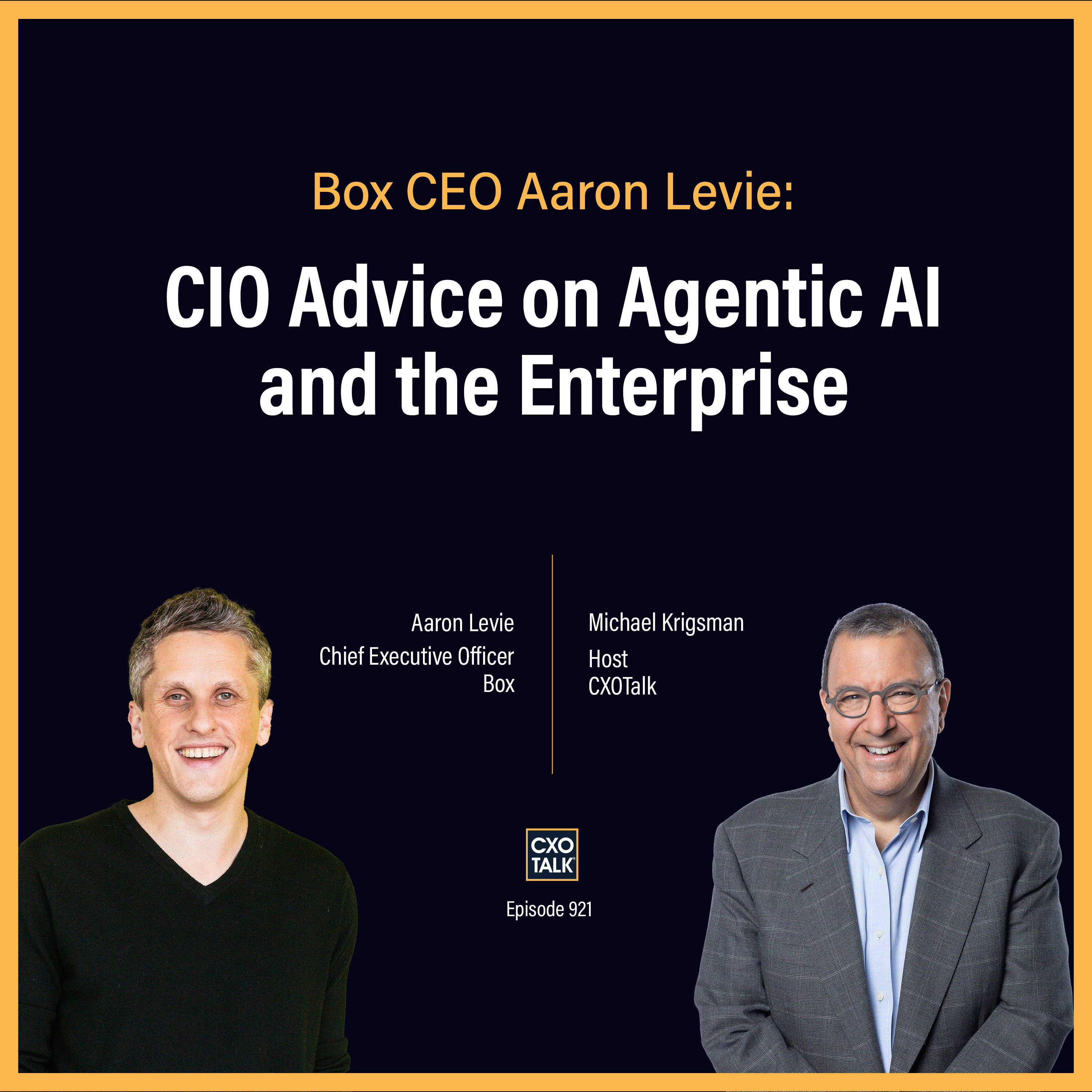 Aaron Levie, Box CEO: Advice for CIOs on AI AgentsCXOTalk · on knowledge work automation71 / 100
 Mission Driven at Startup Speed: A New Playbook for Philanthropic CapitalASU+GSV Summit Sessions · on Andela70 / 100
 360: How do you nurture junior developers in an AI world? (With Barun Singh of Andela)What the Dev? · on Andela63 / 100
 AI Means “Knowledge Work Is Cooked”, How Should Leaders Respond | Mark Rotheram, Rowan GillAI for Business with BCN · on knowledge work automation53 / 100
 #173 - Culture as Competitive Infrastructure: Why Transformation Isn't About Tech: Julie Averill86 / 100
 #171 - Everyone's Blaming AI for Layoffs. Here's What's Actually Happening: Philipp Muelbert89 / 100
 #170 - Why Most Mergers Fail After the Deal Closes: David Fubini92 / 100
 #168 - Why Good Companies Go Bad: Eric Ries80 / 100
 #167 - Your Company's Biggest AI Advantage Is Already Sitting in Your Database: Scott Snyder70 / 100