Knowledgebase Ninjas · 2026-06-04 · 29 min
Key moments - from our scoring
Substance score
39 / 100
Five dimensions, 20 points each
Ramesh Aiyyangar, founder of TechWritePro and four-decade veteran of technical communication, argues that modern tech writers must evolve from documentation creators to content strategists and trusted advisors. The episode covers Aiyyangar's career journey from journalism through ISO documentation and leadership roles, his philosophy that leadership transcends titles and depends on servant leadership and cross-functional influence, and the critical competencies tech writers now need: content strategy, information architecture, structured authoring, API literacy, and AI integration. Aiyyangar emphasizes that customer expectations have fundamentally shifted - users now expect mobile-first content, interactive bots, in-product help, and dynamic FAQs - requiring writers to understand how machines and AI agents consume information. He argues that AI won't replace tech writers but will expand their roles, placing greater responsibility on writers for accuracy, reliability, and ethical content governance. The discussion covers his mentoring program for Indian tech writers, the importance of content auditing and avoiding hallucinations through structured data, and practical advice for writers seeking strategic positioning within organizations. Essential for technical writing leaders, product managers evaluating documentation functions, and writers wanting to influence business decisions.
Aiyyangar identifies four key areas: strategic and content management skills (including content strategy and information architecture), technical competencies (APIs, structured authoring, developer documentation, GitHub), domain expertise and terminology, and project management capabilities. He emphasizes that writers must move from just creating documentation to understanding how content is accessed, structured for machines, and governed for quality and accuracy.
Rather than replacing tech writers, AI expands their roles and responsibility. Writers now draft using AI tools but bear full responsibility for accuracy, editing, reviewing, and ensuring reliability of the output. Aiyyangar notes that poor content structure leads to AI hallucinations, making writers the critical reliability layer between AI-generated drafts and customers who consume content across humans, machines, and bots.
Aiyyangar explains that writers must now 'write for machines, not just humans' - understanding how AI agents and LLMs will access, infer, and interpret information. Without proper content structure and auditing, AI systems retrieve poor results and hallucinate answers. Information architecture, once specialist knowledge, is now essential for all writers to ensure content quality in machine-readable formats.
A trusted advisor role requires consistently adding value and articulating that value to management. Tech writers achieve strategic influence by understanding business and customer needs, developing unified content strategies, building consensus across cross-functional teams, and demonstrating how quality content drives outcomes - not through titles, but through earned credibility and measurable impact.
Users now expect mobile-first access, interactive tools (bots, FAQs), in-product help, dynamic content, and information tailored to how they work - versus static PDF documentation from 20 years ago. Writers must understand these evolving channels and design content architecture that serves humans, mobile devices, chatbots, and AI agents simultaneously.
Our reviewer’s read on each dimension, with quotes from the episode.
There are a handful of genuinely useful observations - particularly around structured content and LLM quality, and the shift from writing for humans to writing for machines - but they are buried under an extremely long career biography, repeated generic platitudes about 'adding value' and 'seat at the table,' and a thin rapid-fire round that adds nothing.
if your LLMs do not have the right kind of data, I mean, I have heard or seen that people are still feeding PDFs to LLMs and structure is so important
Earlier we used to write for humans, but now we have to write for machines and agents and so on
The framing of AI increasing writer responsibility rather than eliminating it is a serviceable counterpoint, and the 'write for machines' angle has some freshness, but the bulk of the episode recycles widely circulated ideas - servant leadership, seat at the table, continuous learning - without adding a novel angle or first-principles reasoning.
AI is to take you to the next level upstream
techcom is a guy who will actually take a lot of responsibility and provide reliability to the customer
Ramesh is a legitimate 40-year practitioner, STC Fellow, and founder of a training and mentoring organisation, giving him real domain credibility; however he is now primarily a trainer and community builder rather than an active operator deploying content strategy at scale in a major product company, which limits the practitioner depth.
it's nearly four decades that I've been in this profession
I was awarded the fellow award in 2019
Concrete evidence is almost entirely absent - no metrics, no client case studies, no before/after comparisons, no named companies beyond a vague first assignment reference; the handful of named authors (Tom Johnson, Ann Rockley) in the rapid-fire round are the only specific anchors in the episode.
I've nearly worked with 12 to 15 companies
Tom Johnson who has written extensively on API documentation and Rockley has written a lot about how to manage your content
The host asks broad, open-ended questions and then largely steps aside, allowing a multi-minute career monologue before the first substantive topic; there is no pushback, no probing follow-up on any specific claim, and the closing exchange is pure compliment with no attempt to extract deeper insight.
Maybe one last question before we move to the rapid fire round.
your number of years in this segment is very much commendable
Computed from the transcript - who did the talking, and the words that came up most.
In this episode of Knowledgebase Ninjas, we have Ramesh Aiyyangar, Founder of Tech Write Pro. He discusses how technical writing is evolving in the age of AI. He emphasizes that modern technical writers must go beyond documentation and develop skills in content strategy, structured authoring, APIs, Docs-as-Code, and cross-functional collaboration. Ramesh highlights that AI is transforming documentation workflows, making content quality, information architecture, and accuracy more important than ever. He argues that technical communicators are becoming the “reliability layer” that ensures AI-generated content remains trustworthy, useful, and customer-focused. Thank you for tuning in! In the meantime, if you're ready to explore Document360, a knowledge base platform that can help your customers and teams get instant answers, we’d love to invite you to try it first-hand. Simply use this link - to start your free trial.
Transcribed and scored by The B2B Podcast Index.
I think it's very important to get this belief in management that you're a trusted advisor for content. We always talk about the seat at the table. You will get a seat at the table or strategic only when you're a trusted advisor of the content. And I think that's what we should aim for.
And that will only happen when we are adding value and articulating the same to them. And that trust will automatically happen. Even the customers are evolving, right? And the way they used to access or relate to content some two decades back versus right now is totally different.
So tech writers cannot continue to just create documentation, but they really need to understand how to manage content. They have to get more strategy. Welcome to the Knowledge Based Ninjas podcast where Gauri Ramkumar of document 360 finds the best SaaS self service knowledge bases in the world and then interviews their creators. Let's get started with today's episode.
Good day everyone. Welcome to Knowledge Base Ninjas podcast. Today with us we have Ramesh Iyengar, founder, TechWrite Pro, one of the leading technical writing providers and trainers in India. Ramesh, welcome to the podcast and I also would like to thank you for being one of the esteemed judges of Global Tech Writer Awards recently organized by document360.
So appreciate all your support in the space. Thank you so much. I would like to thank you for giving me this opportunity to appear on the podcast. It's a great pleasure to be here again.
I do recall that I was here on the podcast earlier and that was a wonderful experience. And through the years it's been a great opportunity to collaborate with you and with your team, including the recent Global Writers Award. I was a judge and it was an extremely satisfying experience as a technical communicator to really look at the amazing work of writers across the globe. So thank you once again and I'm really looking forward forward to an interesting discussion today here at this podcast.
Fantastic. So Ramesh, having been in technical communication for decades and having seen the industry evolve closely, could you now take us back through your journey into technical writing and some of the key experiences that shaped your perspective on the profession that's prevailing today? Absolutely. To begin with, as I reflect on my journey, I must tell you it has been an enriching and rewarding experience for me.
It has been a sense of accomplishment and fulfillment for me because it's nearly four decades that I've been in this profession and I've loved each and every moment of it and I still do. And I think I'll be doing Only tech writing, nothing apart from that. Because it's like my heart is on the line and I love it every moment. So to briefly tell you about my journey, I would rather say it's of two parts.
One is before technical writing and one is post technical writing. The reason why I want to tell you about that is the single thread is communication. So the moment I completed my graduation in journalism and communication, I started working as a reporter editor. I also did stints as copywriter, corporate communications, public relations, and so on.
And then of course, during the early 90s, we had computers coming in and there was computer training and so on. And that's how I acquired my computer skills and software and so on. So that's the first part of it. And the second part, when I actually started my first stint as a technical writer, of course, with very little clue about what deck writing was.
But nonetheless, that's how I started my deck writing. My first stint was with a software company called. My first assignment was more of ISO documentation. And this is the first time.
And because during those days the services companies were vying for the top place and the competitive edge was primarily through ISO certification. And it was a very big eye opener for me, having worked more on the creative side of the communication, like journalism and copywriting and so on, Technical writing was an entirely different domain and I had to learn a lot of things right from day one. So I would say it was more of exploring, learning a lot of things that I've learned.
And I think the expedition of learning continues because I believe even today I have to learn. And as we all know, the technology world and the IT world, learning is continuous and ongoing with all the technology changes and the trends. Talking professionally about the span of three to four decades, I've nearly worked with 12 to 15 companies and I've worked with more of product companies. I've worked with services companies last two decades, more or less.
I've been in leadership positions. But I must tell you, every minute was more of learning. Every minute is thoroughly enjoyable because as technical writer, the art of simplification, as I say, and elevating it and giving joy and enriching customer lives is what has been giving me a lot of satisfaction last two decades. I've also been involved with the organization called as STC.
I was awarded the fellow award in 2019. Earlier than that, of course, I've been doing a lot of mentoring. I've been doing mentoring for more than two decades. The pandemic happened around 2019 and that's when things changed.
A Lot, lot of tech writers felt, you know, I mean, there's not much hope and stuff. And that is the time when I really instituted what I call as technical Communicators mentoring program. And I learned that that program was quite unique and it has been successfully running since then. I have mentored a lot of tech writers in India through that program and even outside the program.
The reason being it's a purely customized program. The focus is more on the problem solving, understanding the tech writer, his needs, his strengths, his aspirations, his dreams. So it's like simplifying your career decisions. It's like enabling the tech writer.
And that's what I focus on in a very focused manner. So that, that's about technical communication mentoring program. While I was doing that, I also realized that I've been working at a global level for more than two decades. But when I look at India, I see that there are a lot of decorators who really need help.
And I felt this is the time I really need to give back. And that's how I incorporated the company called a Tech Lightroom. Earlier, the community was more of a group on the social media called as Institute of Technical Communicators of India. But I officially incorporated the company, Tech right Pro on June 6, 2023.
I'll be completing, or rather the company would be celebrating its third anniversary on June 4 this year. And it gives me a great sense of pride and accomplishment, not only as an individual, but on behalf of all tech writers, the profession, and everybody who has supported me in this journey, not only the last three years, but for the entire four decades, because I just can't take names. There are so many people who have been supportive and helped me through the journey. It would be unfair for me to call out a few names.
So I would like to use this forum to thank all the tech writers, everyone who has really helped and supported me on this journey. And I'll definitely call you out because since we are talking, thank you for all the help and support and provide support, that's in short, about my journey. If you have any specific questions, I can answer that. Great, great, amazing journey, Ramesh.
And yeah, we can see clearly how passionate you are about this profession. And you can't stop talking. I can sense that very clearly. So I'm sorry.
I mean, it just comes. That's okay, that's okay. Let me just talk about the leadership role that you're currently pursuing. So when we talk about leadership in technical writing, Right.
What does that actually mean? It could be to you beyond having a managerial Title. I think leadership for me was never about the title because the way I look at it is it's more about a servant leadership. Anything that you can do to influence your profession, your community or your area of work.
So that's what I really believe and that's what I really do through my organization right now, where I'm trying my best to give back to the community, but primarily to ask me. Leadership is all about long term vision. And leaders have a capacity to strongly influence others. They develop unique vision, they innovate processes and they really don't exile, exercise authority.
I mean, I would say they try to influence and make things happen. Unlike managers who I would say are more focused on getting things done, they are more on the operations side, they are more on the short term goals, you know, and they have to work within certain frameworks or existing systems or maybe they have to follow certain established leadership norms and styles and they have to quickly adapt to changes. Whereas leaders have the ability to be more strategic and be more futuristic.
Also different leaders have different styles that they work. And being empathetic is one of the key things I would say in the current scenario, which is very important because unless you are really empathetic or you will not be really able to influence people because unless you connect, unless you engage, unless you listen, unless you have an open mind, of course you have to define the borders, but without really getting too involved. But I think that's very important. And of course leaders, as I said, they have to think long term because they primarily develop a vision.
They have the ability to create a roadmap for the future. They are in a position to believe in themselves. They are ready to take the risk, they are ready to evaluate what went wrong in the past by studying systems, processes and innovating them. And they are also in a position to influence their team, to be able to take projects or assignments which they can pick up and accomplish, which will advance not only their interests, but even the company's interests, their clients interests and so on.
So this is what I would say is all about leadership. And it's not, it's beyond a title, I would say. I mean it's the conviction, it's the belief, it's the ability to take risks. And nowadays it's all about agility.
You have to really be quick, you have to really quickly take decisions. Because if you're not able to adapt, if you're not, if you're. Because. The reason why I'm saying this is because tech writers sometimes are in an island.
They are Stuck to very old or traditional processes. They are in their own comfort zone. They sometimes don't understand the big picture. They are not able to relate or connect with cross functional teams.
They are not able to relate with clients at times. Now, if there is a gap, I think as a communicator, we should be able to connect and engage with various stakeholders across functions, across clients, across users and so on. To be able to advance not only what you do, but also be able to communicate your value and take it ahead. And you have to be a very strong advocate of what you do is what I feel, which I feel sometimes is lacking in technical communication because there are still areas where people feed, you know, or they do not know much about technical communication.
Or rather technical communicators do add a lot of value, but they are unable to articulate it. So I think it's very important to get this belief in management that you're a trusted advisor for content. We always talk about the seat at the table. You will get a seat at the table or strategic only when you're a trusted advisor of the content.
And I think that's what we should aim for. And that will only happen when we are adding value and articulating the same to them. And that trust will automatically happen is what I feel personally hope that answers your question. Yeah, it did answer some of the other question as well that I had for you, which is around the empathy and understanding the end user before producing a customer centric communication.
Right. So let me just also get some clarification around the other point. So in your view, what separates a good technical writer from someone who can truly influence teams, products and business decisions? Because you spoke very lightly upon this topic, I think one of the reasons a good tech writer will be known for his skills is primarily, as we say, the value that he adds.
Now, when can we really add value? There are different ways that a tech writer can add value. The first and the primary thing, as we always say, is customer centric documentation. And the most important aspect, and now as we see that technology is evolving, even the customers are evolving, right?
And the way they used to access or relate to content some two decades back versus right now is totally different. So tech writers cannot continue to just create documentation, but they really need to understand how to manage content. They have to get more strategy, which is very important because content strategy is the key thing where you can develop a strategy only when you understand your customer or client or the user very well. And that's very important.
And that's also possible only when you understand the business needs or the client needs very well. So I think tech writers have to kind of develop a competency more at a strategic level. And especially with AI coming in, it becomes all the more important because if the volume of content is really high, we really need to know what content you have. Because sometimes content auditing is not done at all, or detailed analysis is not done at all.
Customers are not able to access content, outdated content is delivered. And that's quite a risky thing because we always say that the content is stale or the relevant information is not displayed. Or even with AI, if your LLMs do not have the right kind of data, I mean, I have heard or seen that people are still feeding PDFs to LLMs and structure is so important. I mean if your content is weak, what you're going to retrieve is not going to be as good.
Right. So. And those gaps can't magically change the content. Yes, absolutely.
And the gaps are going to be filled in by the machine or AI. And that's where the hallucination happens. And one of the key areas that has been ignored for quite long is the information architecture aspect or structure, which was definitely restricted to a few experts or specialists who used to do in larger enterprises or companies. And I think it's not going to be that big going forward.
I think every writer really needs to understand the domain very well. He needs to understand what information architecture is all about, what structured authoring is, what XML is, what feature. Unless your content is really structured well, even advanced tool like AI cannot do justice because what it's going to retrieve will not be really good for the customer. So they have to be really strategic.
From a leadership perspective, you need to really do a lot of consensus building, you need to do a lot of mentoring, you need to have cross functional influence, which I think is very important. Because in larger organizations what really happens is there's a lot of gaps in terms of communication, misinformation and stakeholders don't really interact. And that's where technical communicator leaders can bridge this gap. The more your influence across the cross functions, because unless that then you don't have a unified content strategy.
You need to have a unified content strategy that brings in all stakeholders together. They are aware of what is available, what can be delivered, what is good, what's bad and stuff like that. And then of course you also need to build in the consists, what needs to go in, what cannot and stuff like that. So that's very important.
On the technical aspect, I think it's Very critical that writers need to know how they include AI as a tool, how they are able to leverage, because it's going to power. Because as a lot of people think that AI is all about replacing, I would say AI is to take you to the next level upstream, right? So it's going to just take you to the next level because I think it's going to create more roles, more expansion, more growth. It's only how you look at it and how you utilize it that's going to make the difference, right?
So you need to know what AI tools are all about, how you can integrate them with your workflows, how you can really catch up on speed, productivity, of course, but on the other hand, the accuracy aspect, the reviews aspect, the ethics, no. So the entire responsibility lies with the tech writer. So now if you look at it, the draft is being generated by AI, but you have to review it. You are responsible for the accuracy, you are responsible for the trust aspect, lot of other aspects also, right?
So I would say the responsibility is more right now, unlike the earlier days, because you had various experts who could check and so on. But now tech is all about the reliability factor, that is the layer that you're adding in. So techcom is a guy who will actually take a lot of responsibility and provide reliability to the customer. That's the way I look at it.
And I also think that tech writers need to learn about API. A lot of writers really don't understand what are API, what are they created, how are they consumed, and so on. So it's very important that tech writers also, though it's a very specialized and niche area as seen earlier in the current scenario, it's not that everybody's expected to understand and learn how it works, what is code, how to work with developer docs and so on. And of course docsis code is another skill you need to be able to contribute to the open source, you need to understand how GitHub works and so on.
So that's again very critical. And of course as managers or senior writers who are more involved in the operational aspect, you need to know how to learn project management, the scheduling aspect, the resourcing aspect, the planning, vendor management and so on. I think the broadly speaking, these are the four areas, strategic leadership, technical and project. If you really understand well and you do it well, you will be adding a lot of value to the company and advance their interest.
Unless you're doing this, I don't think so. We can really add value and that is where it would differentiate a good writer and versus a normal writer or who is just doing his job. Right. Or even from a leader's perspective, you have to be really quick, you have to be really agile.
Your decision making should be good, you should be able to take this and of course, with the integration of AI, all of that, you should be able to really demonstrate that value for that investment. Otherwise it will not make sense. Right. Maybe one last question before we move to the rapid fire round.
You covered quite a lot of conversations in the last 15 to 20 minutes. But one of the things we often see is many technical writers, they focus on primarily on documentation deliverables. How can writers start thinking more strategically and position themselves more valuable contributors within an organization? Just delivery, other than just delivering the documentation.
True, true. So like I mentioned earlier, it's no more about creating documentation and creating content, it's about managing content. Right. And you have to expand your horizon.
You have to come out of your comfort zone. It's more about systems, it's more about interfaces, it's more about customers, how they're accessing information and so on. Now everything has changed. Right now users are using the content on mobile and they want interactive bots, they want everything within the product, they want everything within the app, they want interactive stuff, they want dynamic frequently asked questions.
Right. Which can actually take you. So things have changed. Yeah.
That is where you need to really understand as a technical communicator, what can I really do? You should not be stuck only on tools or like, you know, typical delivering second hand information. That's not going to really work because we are totally relying on SMEs for all of that. But I think you have to go a step forward and really see how you became very good or adapt at technical skills, your domain skills, your terminology skills.
Because again, as I say, that's very important. Because from a quality perspective, consistency perspective, very important. Information architecture definitely is required. Without that, you will not really able to write for machines, as we say.
Right. Earlier we used to write for humans, but now we have to write for machines and agents and so on. So we really need to understand how they are going to access information, how they are going to infer, interpret it and then be able to deliver that. If we don't understand this aspect, we'll never be able to deliver quality content.
So I think that is the key which writers really need to understand. And of course now with AI coming in, I think we need to explore and learn a lot. There are a lot of tools that enable your productivity, but the fundamentals still remains the same. The core skills have to be good.
You have to be really good at your core skills, which is writing, editing. So you have to be extremely hands on. You need to know what's technical writing all about, right? Especially when you're trying to review the document.
You're going to spend a lot of time reviewing your documents. So it's not like you're creating content now. Now you're reviewing content, right? So you need to be really good at that.
Be it accuracy, be it editing, be it quality, be it standards, be your audience, you know, it structure, you name it, whatever. Like we earlier we used to call it substantive editing. We had special editors who do that. You need to take up that role even as a writer.
So you can imagine the kind of knowledge that would be expected to do that kind of a role. Right? So that is why the reliability aspect comes in. So everybody is going to rely on you to bring in that value for the final draft or the final talk, which can be read not only by humans, but by machines, by bots.
It's a huge responsibility, I would say. Now let's quickly move on to the rapid fire round. Just a couple of questions, one word that comes to your mind when you hear documentation. Love.
I love documentation. And a couple of valuable resources you could point us to, particularly on the documentation space. I have been following up and in the earlier days I've been following authors like Joan Hackers and Rock Lee. Also Tom Johnson who has written extensively on API documentation and Rockley has written a lot about how to manage your content, especially in the world of unified content strategy and so on.
Joan Hackers also talks about similar stuff. I've also interacted with Don D. Who is the chair of oshdita. So when you talk about structured authoring, like IBM used to own it in those days.
So a lot to learn from these folks. And of course the earlier we used to have mailing lists. One of the mailing lists I would say is Tech Word P E C H W R L and it's one of the most popular email groups or mailing lists where a lot of people subscribe. So I think that's one really good.
These are some of the things that I can think of. And of course nowadays if we Google we get a lot of resources, but I would still say the best thing is to interact or connect with your fellow tech writers or colleagues. And the kind of learning that happens through events like webinars, conferences is really good and the learning is really fast because under a single roof you get to interact with People who kind of learn standards, best practices, processes, so many things. Right.
So I think we also need to engage in a community, which is very important. A lot of writers work in islands or don't engage or don't connect or interact. I think for a decorator to grow, you definitely to connect, to be a part of the community and attend events, which is very important because unless you upskill, unless you upgrade is going to be really difficult going ahead. Great.
My final question to you today is a piece of advice you would give to your 20 year old self. I, I think the best advice I can say is I would say it's a journey. We need to keep exploring, we need to keep learning. Learning is ongoing and it's continuous.
That's what I would have done two to three decades back. And that's what I do today and will be doing going ahead also. So it's learning, I would say, because we work, we work in the sector of knowledge. So if you have to really grow in terms of knowledge, the only way you can do is explore, research and learn.
Yeah. Great. Amazing, Ramesh. So, as I said in the beginning of the podcast, your number of years in this segment is very much commendable.
And so all the very best. And I'm sure you're producing great technical writers through your esteemed institution. And all the very best for all the support you've given to this community. And we only hope to get and hear more from you.
Thank you. Take care. Bye Bye. Bye.
Thanks for listening to today's episode of the Knowledge Based Ninjas podcast. Please head to iTunes, rate and provide honest feedback on the podcast. See you next week.
Other episodes covering the same guests and topics, from across The B2B Podcast Index.
 How do you turn AI coding chaos into a repeatable playbook?The Stack Overflow Podcast · on GitHub86 / 100
 Code Review Is a Taste Problem | David Poll @GitHubHangar DX Podcast · on GitHub81 / 100
 Ep. 29- How Integrations Impact Your Pre-Sales and GTM Team with Cristina Flaschen, CEO of PandiumPre-Sales Unplugged: Leadership Playbook · on API documentation80 / 100
 How Finance Teams Are Actually Using AI | Opendoor, Datadog, PwCRun the Numbers · on GitHub78 / 100
 The context engineering playbook (Claire Gouze)The Analytics Engineering Podcast · on GitHub75 / 100
 How a Solopreneur Used One Client Exit to Pivot and GrowSolopreneur Sessions with Fexingo · on Content strategy72 / 100
 Writing Clearly in the Age of AI: Lessons from Stripe’s Ryan Young65 / 100
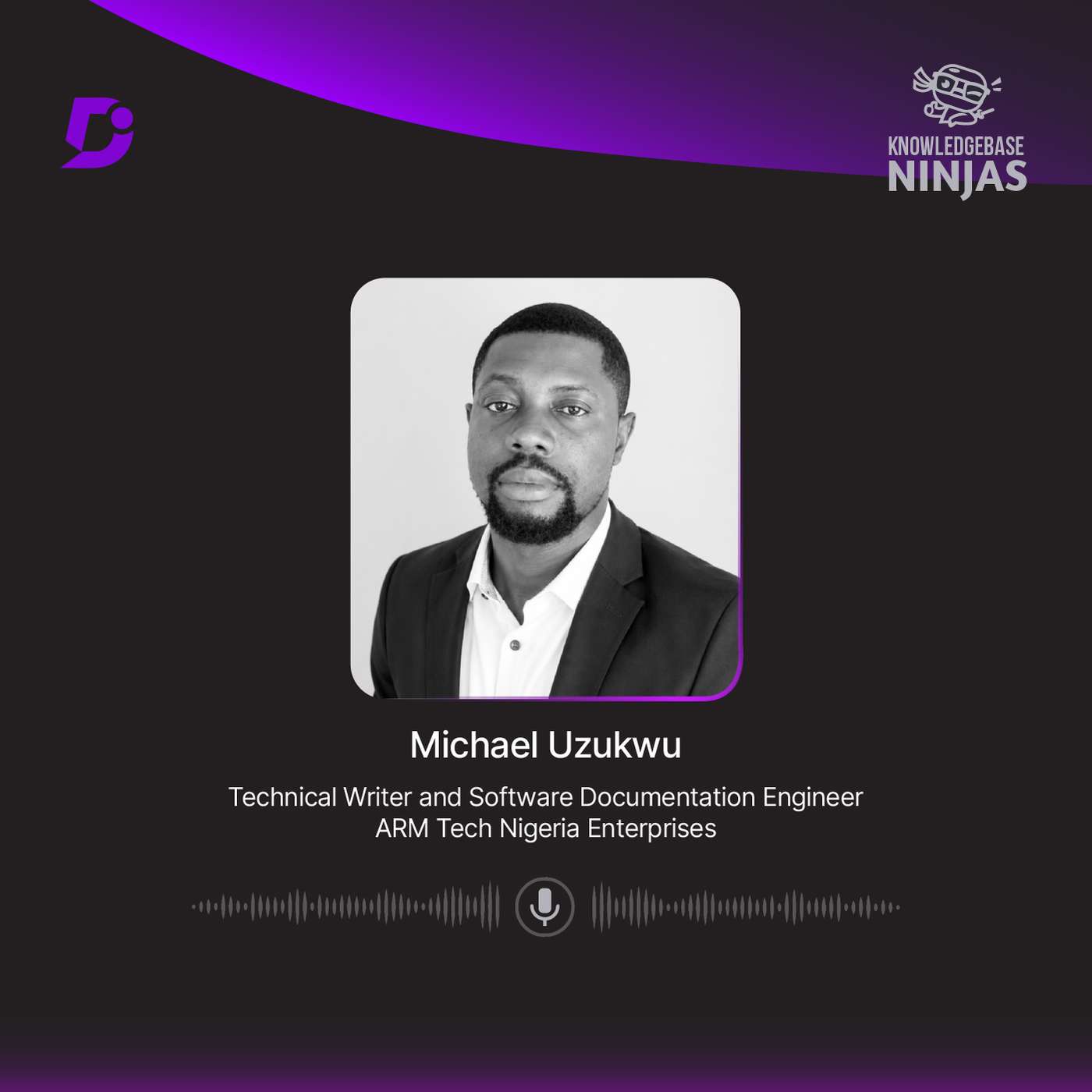 From Python to Technical Writing: A Cloud-Native Documentation Journey with Michael Uzukwu62 / 100
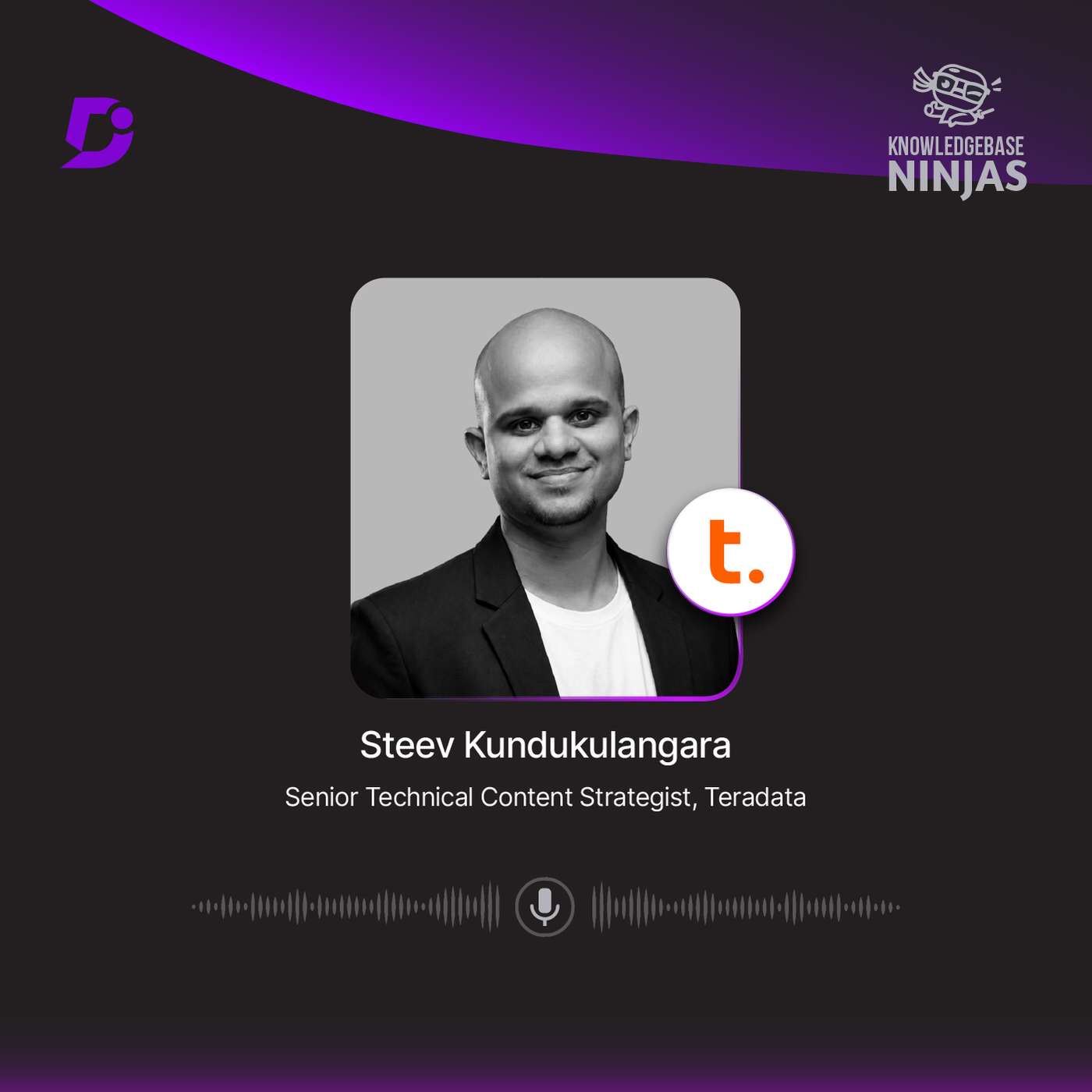 Will AI Replace Technical Writers? The Future of Docs with Steev Kundukulangara75 / 100
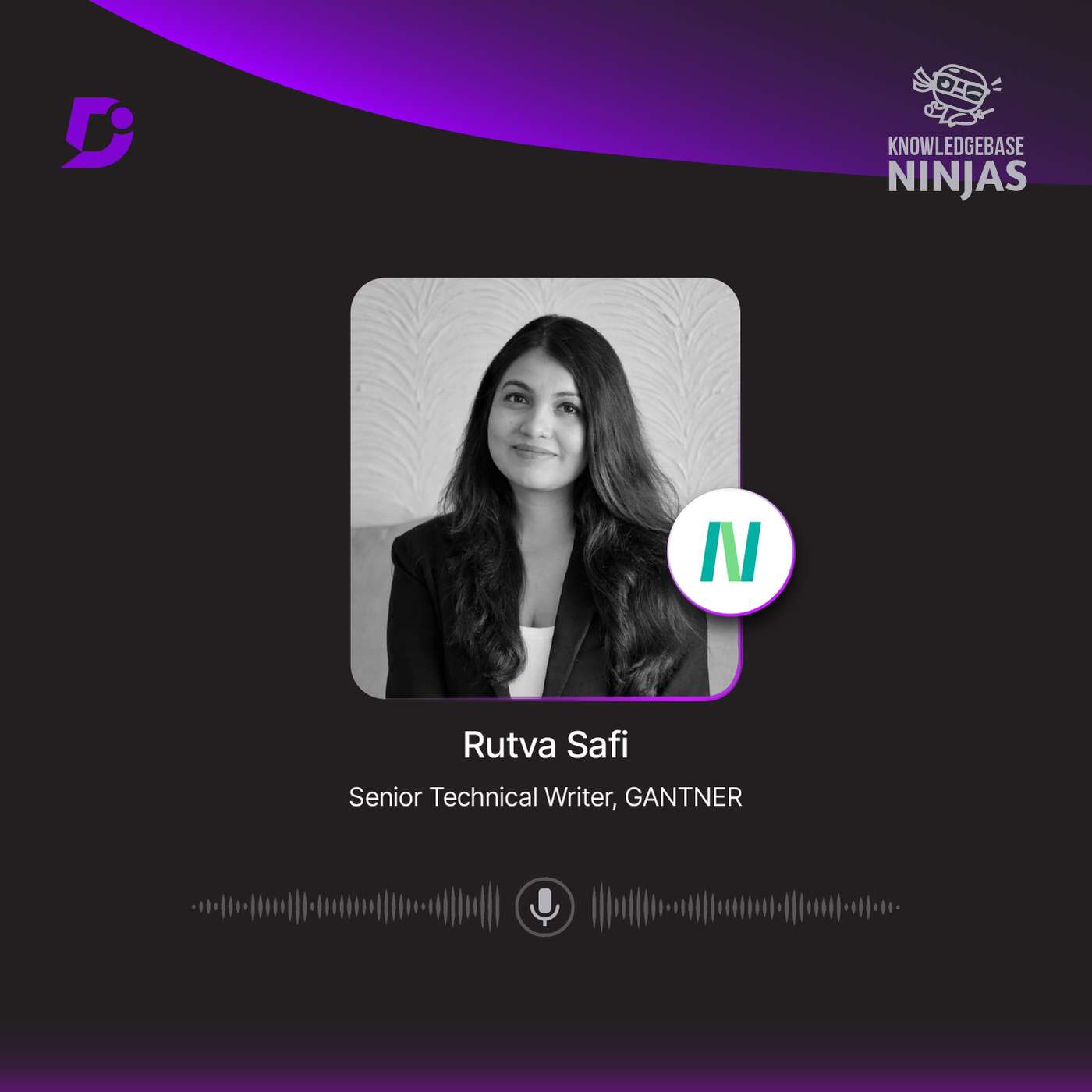 From Developer to Tech Writer: How AI, Empathy & Localization Shape Modern Documentation51 / 100
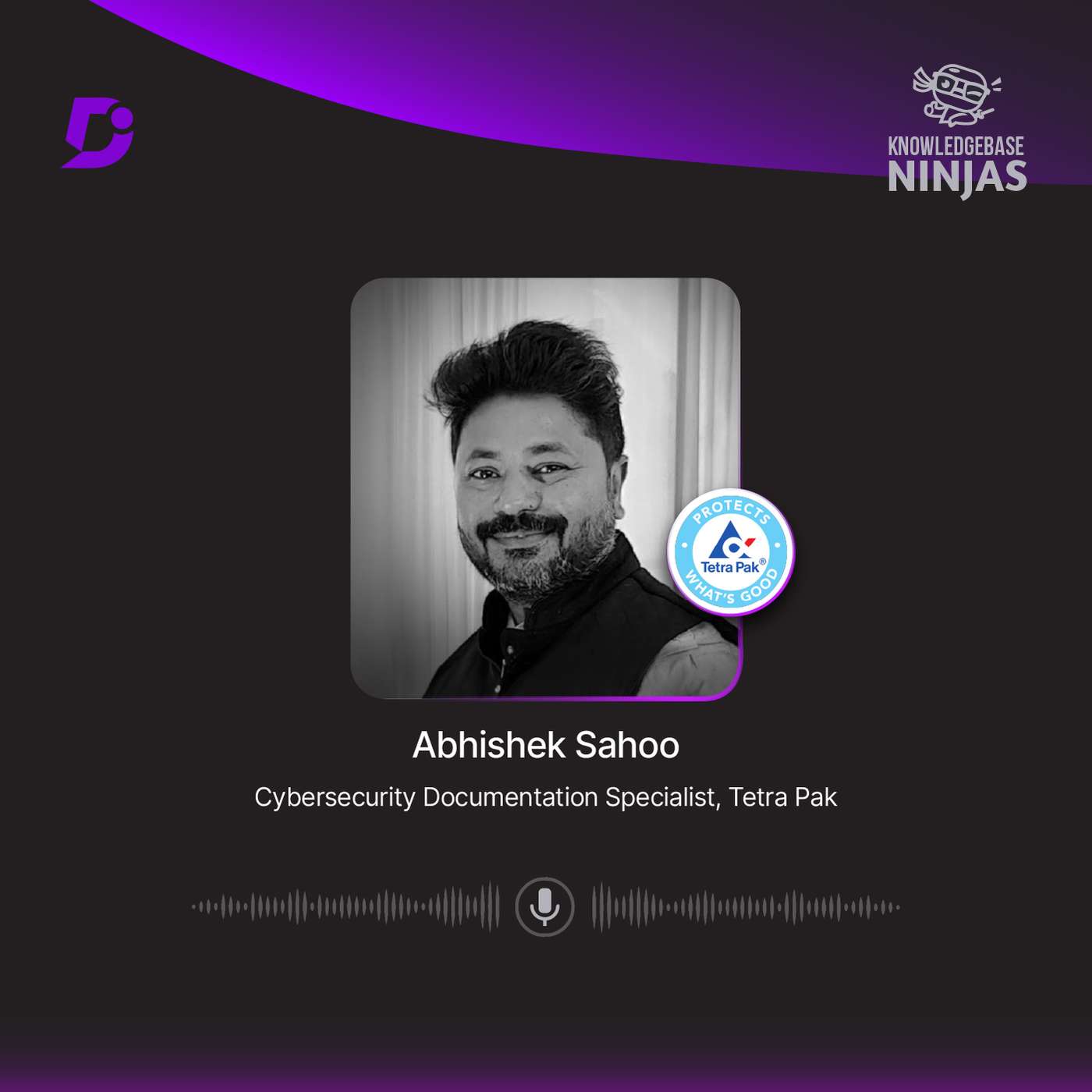 Role of Cybersecurity Documentation: Beyond Compliance with Abhishek Sahoo42 / 100