
SaaS Fuel · 2026-06-25 · 56 min
Key moments - from our scoring
Substance score
55 / 100
Five dimensions, 20 points each
Mohan Muthoo, founder of SpringDrive, a GTM lab for B2B outbound, dismantles the myths constraining modern cold email strategy in this final SaaS Fuel episode. Rather than chasing intent data signals or AI personalization tools, Muthoo argues that most teams are solving the wrong problem - they're applying outdated playbooks (long sequences, generic value props) to an inbox saturated with noise. The core issue isn't the channel; it's that sellers haven't figured out true competitive differentiation or resonance messaging. He walks through why traditional personalization (mentioning someone's company or recent post) fails compared to offers that genuinely solve the buyer's problem, and why segmentation must reflect how prospects actually think and feel, not just industry or alma mater. SpringDrive's track record - $7.9M in pipeline generated and 137 meetings for Blinkist in 5 months - stems from systems-first GTM engineering: analyzing internal sales calls, testing repositioned offers in cold markets, and matching social proof to specific segments. Founders, revenue leaders, and GTM operators struggling with stalled outbound pipelines will learn a practical 60-day reset grounded in data and creativity, not tools.
Cold emails aren't inherently broken; rather, inboxes are overcrowded and buyers have access to information without sales. The real problem is that most teams send generic, salesy messages that sound like every other email. Buyers ignore noise and want differentiated, valuable offers - not traditional seller experiences. If your outbound feels ineffective, it's usually because you haven't figured out true competitive differentiation or repositioned your offer for a cold audience.
Tools like AI personalization and intent signals are useful instruments, but only after you've solved the foundational strategy problem. Adding signals or AI to a generic, non-differentiated message won't work - it's like buying better pans before learning to cook. Mohan's team avoids using AI for copy itself; instead, they use tools like Clay for matching social proof to segments or data enrichment. The real leverage is understanding what actually differentiates you, then deploying tools strategically around that.
Effective messaging requires two approaches: internally, find what you uniquely offer and design more interesting lead magnets and pipeline offers instead of generic demo requests. Externally, build trust by providing value first before asking for time, segment your audience to match relevant social proof (not just slapping in case studies), and ensure your core offer actually solves something the prospect cares about. Resonance - the offer itself - matters far more than personalization gimmicks.
A practical reset takes 60 days to 2-3 months, but it requires heavy lifting: analyzing existing customer data and sales calls, testing repositioned offers in cold markets, and iterating based on actual reply data. It's not a brainstorming-session fix; it demands real thinking and discipline. Teams resist this because it's boring and time-consuming, but it's non-negotiable for sustainable pipeline generation.
The fundamental difference is trust. Inbound buyers already know who you are; outbound prospects haven't heard of you. This means outbound messaging must earn trust through credibility, relevant social proof, and genuinely differentiated offers - not assume the prospect is interested just because they fit a demographic or recently posted something online.
Our reviewer’s read on each dimension, with quotes from the episode.
Contains several useful operator points - offer matters more than personalization, message-market fit precedes PMF, segment by experience not firmographics, deliverability is the enterprise bottleneck - but these are diluted by heavy repetition (the Messi/Ronaldinho analogy is run twice) and a long self-promotional intro/outro.
personalization is really an adjunct to what true resonance is
you have an offer problem, not a is the personalization good enough problem
The reframing of 'personalization vs. offer' and 'message-market fit drives PMF' is a slightly fresher angle than typical outbound advice, but much of the content (creativity beats tools, go back to differentiation, test fundamental angles) is standard GTM-agency talking points circulating widely.
a lot of companies should actually be building based on message market fit because fundamentally that's where PMF then comes from
Being good isn't good enough. It has to be better than the other 10 emails they got
Mohan is a practitioner agency founder (SpringDrive) with real outbound experience and client results, but he is an agency owner/specialist rather than a senior in-house operator who scaled GTM at a notable company, placing him solidly mid-tier.
You started as a BDR breaking cold calling records
Spring Drive has supported Y Combinator companies
Offers a fair amount of concrete detail - named tools (Clay, Proofpoint, Barracuda, Mimecast), client metrics (137 meetings in 5 months, $7.9M pipeline), cost-per-lead figures, TAM thresholds, and the 150-emails-per-month diagnostic - though some claims remain illustrative or hypothetical.
Delivered 137 meetings in 5 months for Blinkist
in a month they'd only sent around 150 emails
The host asks coherent, on-topic questions but rarely pushes back or probes, defaulting to frequent praise ('that is absolute gold,' 'so good') and accepting claims unchallenged; the few moments of tension are challenges the guest reports having made to his own clients, not the host.
Yeah, that is absolute gold
That's really good, and I think that's helpful
Computed from the transcript - who did the talking, and the words that came up most.
This milestone 400th - and final - episode of SaaS Fuel brings clarity to what’s broken with outbound, why most companies blend into the noise, and how founders can actually futureproof their pipeline. Jeff Mains is joined by Mohan Muthoo, founder of Spring Drive - a go-to-market lab for B2B teams in fiercely competitive markets. Together, they break down why more signals, tools, and AI aren’t solving real outbound problems (and might be quietly killing your reply rates). Mohan shares a hard-hitting playbook for rethinking outbound, segmenting intelligently, and crafting messaging with genuine resonance. If you’re still spray-and-praying, this episode hands you the megaphone - with exactly what to say. Jeff Mains also announces the evolution of SaaS Fuel into Futureproof Founder, a show dedicated to helping founder-led companies build and last in a changing world.
Transcribed and scored by The B2B Podcast Index.
Are you an overwhelmed SaaS founder ready to make the leap from leading a team to leading an organization? Join us each week as we refill your think tank with actionable tips and strategies from great business minds you know and those you don't know yet. This is SaaS Fuel with your host, 5-time entrepreneur, SaaS founder, and globetrotting adventurer, Jeff Maines. Welcome to episode 400 of the SaaS Fuel podcast.
Where cold emails are like bad first dates - too long, too salesy, and ending with "let me know your thoughts" instead of an actual plan. I am your host, Jeff Mains. I help SaaS founders like you grow from traction to scale. Here, growth is more than just numbers.
It's about crafting a future-proof company, premium valuation, and leaders who build a business of significance while living epic adventurous lives. Like I said, today is episode 400, and that is not a number I ever expected to reach when I started. Back at the beginning, I made one commitment, and that was I would do 50 episodes whether I loved it or hated it, because I didn't want to be a podcast fail and get to 4 or 6, and 90% don't even make it past 6. So, I committed to 50.
And it turns out it actually became one of the best parts of my week. Every single week, it's absolutely a highlight of what I do. 400+ conversations with people at the absolute top of their game. And every one of them handed me their playbook without hesitation.
I'm a fundamentally different person today than I was when I started. And my mind has been stretched so far, it can never return to its original shape. And I wouldn't want it to even if it did. So I hope that your mind has been stretched along this way as well.
This is also the last episode of SaaS Fuel. And before we close the chapter today, I have a - big announcement, maybe the biggest announcement in the show's history. So stay with me to the end and what comes next is really worth it. But first, one more incredible conversation.
When did you last actually reply to a cold email? Not unsubscribe, not mark it as spam, but genuinely reply because something caught your attention and made you think, okay, I need to hear more. And if you're struggling to remember, you're not alone. I've done it a few times.
But here's the really strange part. Your prospects feel the same way about your outreach and sometimes about my outreach. The Outlook playbook that worked 3 years ago is costing you the pipeline today. Longer sequences, more touchpoints, shinier automation tools, and none of it matters if the message landing in someone's inbox sounds like every other message landing in their inbox, and most of them do.
Buyers have gotten frighteningly good at ignoring noise, and the companies still playing by the old rules are paying for it in silence. No replies, no meetings, no deals at all. In today's episode, we are tearing down the spray and pray approach and rebuilding outbound from the ground up. You'll learn why your messaging strategy matters far more than whatever tool it was you just paid for, and why handing your copy over to AI might actually be the thing quietly killing your reply rates.
We'll get into how to segment your audience in a way that actually reflects how they think and feel, not just what industry they're in or where they went to college 20 years ago. And we'll walk through a practical reset you can start in the next 60 days to turn a stalled pipeline into something that actually converts. So if your outbound motion feels like you're shouting into the void, today's episode is going to hand you a megaphone and teach you exactly what to say in it. Let's get into it.
Our founder on Tuesday was Robin Sims Allen, Agile Consultant, Cultural and Emotional Bottleneck Specialist, and founder of both Phoenix Marcus and TotalHer, a social media platform intentionally designed for women and community-centered engagement. Robin brought a perspective that most business conversations skip entirely, that the biggest obstacles inside organizations aren't strategic, they're human. She unpacked why leaders so often try to fix problems before they've truly understood them, how emotional bottlenecks quietly destroy trust and execution, and why slowing down is sometimes the most strategic move a company can make.
She also shared the philosophy behind TotalHer and what it means to build a community with intention in a world driven by algorithms and vanity metrics. You missed it? It is totally worth going back. And our expert guest last week was Corinne Cavanaugh, founder of CAC Media and Publishing.
And she was here to talk about what it actually takes to move a company out of the messy middle of growth and into something sustainable. Corinne broke down how companies get stuck when founder-led chaos isn't replaced by real systems and AI scales that chaos, why validating demand before building features is non-negotiable, and how fractional leadership is changing the way that companies scale. Her core message? Sustainable growth isn't about doing more.
It's about doing the right things with discipline and intention. Go back and check that one out if you missed it. My guest today, the final episode of SaaS Fuel, is Mohan Mutu, founder of SpringDrive, a go-to-market lab built specifically for B2B teams trying to win in crowded competitive markets. And if anybody is not in a crowded competitive market, Let me know, because I don't know when it isn't.
Mohan's approach is systems-first and strategy-led. While most teams are busy testing new tools and chasing the latest intent signals, he's focused on what actually moves the needle: resonance messaging and strategic go-to-market engineering, terms that you might not be familiar with until today. Well, Spring Drive has supported Y Combinator companies. They generated $7.
9 million in pipeline. Delivered 137 meetings in 5 months for Blinkist, and they have a 4.9 out of 5 rating on Clutch. That's pretty impressive.
Welcome someone who has turned outbound into a science and made results the only metric that matters, Mohan Mutu. Hey Mohan, welcome to SaaSFuel. Hi, Jeff. Thanks for having me.
You started as a BDR breaking cold calling records, pretty awesome, and now you run GTM Lab. And when you look at outbound today, what feels fundamentally broken compared to when you started? Yeah, it's been an interesting few years. So yeah, I run an agency, Spring Drive, which you can both check out springdrive.
co. Very easy to go and check out as well. In the meantime, we do GTM engineering for outbound email, primarily helping B2B companies. And I think one of the big changes that we've seen is that when I started out, there wasn't really a lot of this sort of GTM engineering as a term.
Didn't exist for one thing. And even though AI existed at the time, it was not in the mainstream and it wasn't in the sales world or the sales and marketing world either at that time. And so very much the way that we would do things would be going out there and basically everything was very manual. And one of the things that I remember was that I think a lot of the ways that teams were looking at things like their sequences and so on was very outdated.
There would be like open rates that were just nonexistent reply rates. But I think the mentality was, this is what we're doing. So we're just 17, 18 email long sequences and it wasn't really working. Right.
Cold calling was what everyone just defaulted to. And I had in my mind this frustration with that because I felt, isn't this really wasted that no one's really getting any traction via email? Not in a, what I would describe as a consistent scalable way. Right.
It's not to say that people weren't sending emails that were not getting replies, but it was very small, very, very, very manual. And at the same time that I started to then do my own kind of research, lots of new tools started to come into play. One of those tools was Clay. This was back in 2021, 2022.
Okay. And I started to get into that world and then things snowballed from there. That's pretty cool. I think that it's interesting you said things have changed a lot in the last few years, and I think that is really true.
Why do you think that is with answer rates and people not answering their phones as much and being more hidden when they're looking for a product than just calling up sales and booking a demo? I think there's a few reasons that have all culminated at the same time and logically that's the reason that's happened. I think one of the reasons is general digital channels are more crowded in the last 4 or 5 years, especially since lockdown and how the economy changed during that time period.
The way that things have become crowded just means that people are getting a lot more messaging of all kinds, right? Ads, phone calls, emails, DMs in your LinkedIn inbox and all that kind of stuff, right? That's the, I would say, the sort of core reason to it. I think the second reason, and this follows on from that, is we now live in like a, and you've probably heard this term before, an information overload kind of world.
Yes. And so what I think the buyer presumes, actually, mostly correctly is that they can get the information they need. They don't want to be sold to as such, right? I do think that there's a little bit of a misnomer there.
I think really when buyers are thinking, I don't wanna be sold to, what they're really thinking is I don't want to go through seller experience, which tends to be very conventional, very focused on what they're pitching you and right. That I think is what's changed. And so buyers are saying, look, I can go online and find information. I can go into ChatGPT and weigh you up against the other competitor and all this kind of stuff.
And I think so what that leads to is a world where firstly there's a complete, I would say, misnomer that the conclusion is that these channels don't work anymore when actually what it really has led us to is a space where in order to make them work, you have to be thinking a lot more creatively. You have to be thinking a lot more strategically. And that's where things like GTM engineering and some of the work that we do comes into play. Makes a lot of sense.
I think it's really powerful insight, and there's a lot to unpack there. One, the market being overcrowded, for one. Digital channels being easy. The traditional spray and pray approach not being effective.
And so that, that leads to the channel doesn't work. But it's really that traditionally salespeople have not added value to the conversation, and yeah, that, that's the reason they want to avoid that process. Because it's not fun, it's not helpful, it doesn't add value. How do we get to that point?
How do we convince them that we do want to add value for those that actually do? And I think that's a lot of the companies today. Sales does want to add value. Yeah.
Yeah, for sure. I think the first thing is there has to be a little bit of a mindset shift here. And the first shift that needs to take place is the idea that there is a golden tool out there or a golden tactic that's going to unlock everyone's pipeline, be that Signals or some kind of AI LLM thing. And that's gonna be what makes everything work.
That's just not the case, right? I think these tools are really helpful. These things can supplement what we're doing and form parts of our campaign strategy. The question, or rather the thing that I think these teams need to be doing, and this is why no one does it because it's boring and takes time, is they actually need to go back to the drawing board, look at their the data that they have, particularly those internal sales calls, existing customers, and so on, and try and figure out what actually is, what actually differentiates us competitively today, right?
Because fundamentally all GTM comes down to that very same question. How are you competitively differentiated? That's fundamentally what it is. And then how do you convey that in attractive messaging?
But it comes from that. So one of the things that we see quite a lot is companies will have an offer that's worked really well from an inbound perspective and they haven't tested that out, that offer in a colder market, outbound ads, for example. They want to force that into that market, assuming that it should work the same if you do it in the right way. And some companies die on that hill, so to speak, whereas other companies understand they're a bit more sophisticated in the way they think about it and they say, okay, look, we know that These crop of, or this segment of the market, they have a problem we can solve, but they don't know who we are.
They don't necessarily know how the kind of way that we can solve this problem for them. We need to reposition our offer slightly to make it more attractive to someone who hasn't seen us. That process is not something you can ChatGPT. It's not something that you can fix with a couple of signal data points.
You gotta go back and really think about this, really do some heavy A/B testing and figure that process out and iterate on the data. That's a - well, you can do that process relatively quickly in 2, 3 months, but it takes some time to do, right? It's not something you can do over a brainstorming session. And I think that's why teams are fundamentally reluctant to do it in the first place.
That makes total sense. I know there are times where, you know, I just want to figure out what I want and then I'll engage sales at the last minute, or if I can just do it myself and product-led is the there for a lot of solutions, and that's kind of nice. But at the same time, if it's more complex, if it's something that is - that affects the entire organization, that's different. I want to know that there's a real company behind that.
They'll do a demo. Even recently, trying to get companies to do demos has been difficult. Are you kidding me? But, you know, some of the teams doubling down on tools, whether that is the AI, intent data, personalization - what's your take on that in the sales process?
Is it something that makes it more effective or less, or What do you think? I think that it's fundamentally so. So first, as a disclaimer, we use, I think, over 30 tools at this point in how we put together our campaigns. Wow.
A lot of them are AI-led and all these kinds of different things and not all necessarily on like copy, right, or anything like that. In fact, ironically, by the way, copy is one of the areas that we actually don't use AI fundamentally. There's some exceptions there, but we can talk about that. But smart, I think.
Yeah, I think the way that I see it is that these tools are precisely that, they're tools, so they can't fix problems. I'd like to use this analogy of if you want to go to a, if you want to have a great meal, right? And you have two things that you can do at the moment. You don't know how to put a good meal together.
You can learn to cook or you can get a better pan. Most people will go, I should learn to cook, right? Then I'll make a great meal. And then when I get good at and I figure out how to make a great meal, I can get a better cat, a better pan, better ingredients, and that meal will go from here to here.
But right now what people are doing is saying, let's not try and learn to cook the meal. Let's just get the better pans and let's just get the better ingredients and hope it all comes together. So these kinds of tools are really great if companies understand how and why they're using it. And I think it's backward at the moment.
So what's happening now is companies going, our pipelines are broken. We're putting out this message about what we do. Either people aren't responding or no one's going down the pipeline. Let's just do the same thing, but let's add a signal to it, or let's see if we add some AI personalization to it.
And the problem with that is people aren't - people's response and the response, what I mean by that is it could be their literal response, how they're replying to the message you're putting out there, but their own response when they see the message, right? They might not reply, but what they think when they see it, right, is not really about have you mentioned something that I did? Last week? Have you mentioned a post of mine?
It's not even necessarily about the signal data. And we can talk about signals in a bit more depth. Fundamentally, what they're looking at is, number one, does this look like something I receive all the time? Is it interesting?
And then if it is in that bracket where it's, we are looking for something like this, of all those messages that I get, is it differentiated? Because if the answer is no on both of those fronts, you're not gonna get anywhere by adding signals or personalization. And equally, if you get somewhere where they say, okay, we are looking for this thing, but I got 6 messages today and you look exactly the same as them, why would you be able to scale that channel? So the idea is that these tools are really, really powerful, but they are powerful as tools, as instruments around a team that are thinking and fixing the problems from their data, their experience, their creativity.
First. That's really good, and I think that's helpful just for founders or marketers to think about what that messaging is. Am I standing out, and do I create that trust? Is it something that they're looking for?
And then they're like, you're now in that consideration set because you're, you're different than everybody else. So I think that's interesting. Is there specific messaging or a specific type of messaging that is, is resonating now more than others? Because how do you do that with the messaging and stand out in the inbox?
And not sound like everybody else? Yeah, it's a great question. It's the million-dollar question, right? Essentially.
And there's two sides to this. So the first side is that fundamentally what's gonna work for any particular company shouldn't be the thing that another company should do because the whole point is differentiation. And so one of the things I always say to companies is, look, it's not about go and grab the template that worked for your competitor. The whole point is, Let's say it's working for your competitor, you know, how can you make it work even better?
And so that would be more creative where they aren't being creative, where it's, whether for example, it's can we think about more interesting lead magnets? And we have a whole framework around how we theorize effective lead magnets. How can we think about making our pipeline design, our pipeline offer design more interesting so that when people see what we're saying, they have a real incentive to come and speak with us versus, hey, Do you wanna come to a demo of the tool? Which is what most companies are putting out there and messaging.
The other side to this is that, so the first side is really companies looking at internally, what do they have and what can they do? This other, the other side of this is yes, there are some patterns that we see across the board today. So one example of this is we know, and I think most companies have realized this now, is that we need to be able to go out there and open conversations and provide some interesting value before we ask for time. 2 or 3 years ago, messages going out there that ended in, do you have 30 minutes to chat?
Shall we catch up? It may, maybe it worked. It can work today, by the way, if there's a really exceptional angle, really differentiated market in a very high-intense space. But generally speaking, we know, for example, we need to go in there and offer something first, open up that conversation, and then we can lead them down the pipeline afterwards.
The other thing I would say is that I see this pretty much in every campaign that I've run. The, the, one of the biggest barriers in the outbound space to generating interest and getting those people to come down the funnel essentially is trust. That's the fundamental difference between the inbound and the outbound, right? It's the trust hasn't been built yet.
And so I think companies getting a bit more specific about their social proof and their credibility. And it doesn't just mean slapping a case study in there, but it means thinking a bit more carefully around how do we segment, for example, our audience and match the most relevant social proof to those different segments. And by the way, this is a great example of actually that's something you can do at scale, for example, in a tool like Clay, right? But you've gotta be thinking about that being the right strategy before you know what to go and do in a tool like that.
So that's one example and I think the other side I think that I would see fundamentally, and this leads, this really comes from the first thing that I mentioned there, is that what you're offering is really everything. So I use this and this must, this might segue us a little bit into the topic of personalization. I use this example sometimes. Someone could send me an email that says, hey, I know that you're based in Essex in the UK.
I know that you started your agency in 2023. I know that you love to make cheesy broccoli pasta, and that could all be correct. And then it says, hey, do you wanna see my CRM SaaS for a demo? Now I might look at that email and say, wow, this person knows everything about me, right?
And it's all correct. And I resonated with that and they all that kind of stuff. And then the pitch is, do you want to see my CRM SaaS? Now compare that to the second example that I'll give.
I'm a little bit of a football fan, right? Okay. Someone could email me and say, hey, I don't know who you are. And actually, by the way, I'm a moron.
I know nothing about anything, but I happen to be best friends with Lionel Messi and I can set you up for lunch with him next week. Which of those two emails am I gonna reply to? Number two. Absolutely.
Right? Yeah. Now obviously I've taken, people will look at that and be like, oh, but I've used extremes to make the point. Right.
But the idea that I'm making here is that personalization is really an adjunct to what true resonance is. Which is are you actually offering them something they're interested in? And so too many companies are basically saying, we don't know if people are interested. And the truth is they do know because the campaigns haven't been working.
Saying to them that we know something about them that happens to be true. And if you think about this logically, it quite quickly companies realize like, why should that work actually? Right? And so we have a lot of companies that come and say to us, look, we've actually been doing a lot of this personalization at scale stuff with AI and all the rest of it.
And it's not really worked. What are we doing wrong? And my first question to them is, why did you use the personalization? I guess we know we need to do personalization.
I talk about why, and eventually it comes down to, we saw it on LinkedIn, or someone told us that's what we're supposed to do. But when we do all that and we go, okay, let's actually go back to the basics and ask ourselves, is this something that's really differentiating in the market? Or is everyone else like you selling the same thing? Does it look very similar?
, then we come down to, okay, maybe we need to be looking somewhere else. When we start to put together those more competitive offers, let's say we go out there. I'll give you another example. Let's say we have two, I'll use the football example in this personalization example.
Let's say someone emails me and say, I don't know who you are. I don't know anything about you. Do you wanna have dinner with Lionel Messi? Someone else might message me and say, hey, I know that when you were growing up, you used to love watching videos of Ronaldinho.
Do you wanna have dinner with Ronaldinho, uh, next week? Now in those two examples, I'm probably gonna answer the second one because I like the fact that he knew this thing and it is true that actually I used to love watching those videos of Ronaldinho growing up. But the core thing in both of those cases that the offer is fundamentally something I'm interested in. Companies, SaaS companies need to first be going back to, are we competitively differentiated?
Let's figure that out first. Once we get that, Once we can see we are standing out in the market, we are bringing people down the funnel in a way that is different. They're coming down because of differentiation. We can elevate that then afterwards with bits of personalization and all that kind of stuff.
But most companies are skipping the most fundamental part and going straight to that. The last point I'll just make about to your original question, what works today messaging is that there are stages obviously, as we know, to the funnel. And so it's really important that we understand that they're different. So again, a lot of companies will say, I'll say to a client or a prospect, how do you know that this messaging that they say want us to run, how do you know this is gonna work?
Why are you so confident this is gonna work? And very often I hear the answer that we have had loads of these sales calls and this is the kind of stuff that they say they love, or the clients say they love. Now, the data that you have from sales calls and customer interviews are really important, super, super important, because they're gonna give you the threads to start unraveling and thinking about when it comes to your outbound messaging. But it's also really important to remember that once someone has arrived in a demo, they're in a different state of mind to someone who doesn't know you, is in the middle of lunch, has 10 meetings a day, and gets an email out of nowhere from someone they don't know about.
Companies have to think about that. They should not assume that what people find interesting at that point is necessarily what's going to get them to reply to an email, which is job number one. So we have to think about that in stages. Job number 1 is how can we get the right person to reply for the right reason?
Job number 2 is how can we get that person to be interested enough to come and meet with us? And then obviously so on and so on from there. But they are slightly different ways of thinking. And you can - companies, and I think agencies are sometimes quite guilty of this actually, can be prone to go too far one way or the other.
So a lot of people might know that with some agencies, because they are so desperate to get someone to reply, they often send out emails where, okay, you're getting a reply, but this isn't gonna help you because they're not replying for the right reason, or they're not replying really with any level of interest. And then on the other end of the scale where it's companies will say, we only want people to reply if they're applying and saying, when can we meet to purchase your product?
And that's also not realistic today. So there's a balance to take where we say, look, we wanna put out messaging that get someone to reply because they have the pain that you can solve or they're interested in the benefit that your offer solves. And then once they reply with that interest, and that's usually, hey, send me some more information. I'd like to see more about this.
Then we can say, look, here's a great offer for you to actually come and meet with us and start taking this seriously and really taking it from there. So there's a staged process to how we think about it. And that whole thing really is a creative task as much as anything else. So good.
There's just, again, so much there in taking the message and deciding this is something worth responding to because it does connect. And I get those personalized messages all the time. I can't - what you're saying of, here's the things that nobody - I'm like, great, you can scrape a database, you can use AI. It's not personalized at all because I know where it came from, and it's also not relevant to the solution or really where I went to school 20 years ago.
Who cares? It just, it makes no difference today. But when you can hit a pain and you're like, that is something that I'm interested in. I want to know more.
Now we're actually getting somewhere. And I think that's a fundamental difference in the way you're talking about most companies approaching personalization because they're supposed to and because they're supposed to get those things. And I think we've got this saying, marketers ruin everything. So something works really well for a while and then everybody starts doing it and it stops.
I think that's one of those things that used to work really well. And now, because it's been abused by so many companies, like we're supposed to personalize. And so you get irrelevant stuff in there and it kind of dilutes the overall message. And while we may have product market fit, we talked about this before, not having that message market fit.
And it's easy to confuse those. Tell me more about that and what's the cost of getting it wrong with that message market fit. You know what's really interesting? I heard this a while ago and I've always thought about it since because of what we do since then, which is that a lot of companies should actually be building based on message market fit because fundamentally that's where PMF then comes from essentially, right?
As people say, everything's downstream from lead gen, but a lot of companies are trying to do the other way around. I think the cost really essentially is that you end up with a situation where you may have a product that you are basically hamstrung by because for a couple of channels it works well. And this is usually what we see where basically it works inbound, but then for example, you are not able to scale because you haven't figured out the message-market fit for the other 97% of the market where you can actually consistently start growing.
And so figuring out that message-market fit, I think people sometimes take it a bit too lightly. I think they think about it as if to say someone has the template somewhere. That we need to be using? Do you have the template?
Have you done this before? And really that's not really what it is. Message market fit is about asking the question, what do you do differently in a way that you can convey that the prospect will understand in a 5-second read of a message? And that takes time to formulate, right?
Particularly given that, and this is the fundamental thing that I think people miss when they're thinking about message market fit, is it's not about writing a good message. So a lot of people will do this. They'll write their email and they'll think about the structure of a good email, which is what? There's a pain in there, there's social proof in there, there's what you're offering and like a CTA.
And well, that's a good email. The problem is that you are operating in a competitive environment. Being good isn't good enough. It has to be better than the other 10 emails they got from similar companies that week.
And so the question to be asking isn't so much, is this a good email? Have I done the right things here? But as an example is, I challenged a client on this like a month ago where they showed me some of the copy they wanted us to use that hadn't been working. They said, we think it's gonna work.
And I said, why do you think it's gonna work? They said, we've got everything in there, got the social proof and so on. And I said to them, and I won't give the details out, but I said to them, look, the social proof you've put in there, think about your prospect who are getting similar messages like this. Do you think your social proof is really stand out?.
And after a few minutes they're okay, I guess not. I guess everyone has similar social proof like this. And it's a bit of a zero-sum game. If you are not better, you just don't get the reply.
You don't get a reply saying you look like everyone else, so we'll give you half a shot. Right, right. You don't get that. You just don't get the reply.
It's a 1 or a 0. Yeah. Reply or no reply. Exactly.
Yeah. And so going through that process is so important. And again, thinking about it, not just in terms of the PMF, where, for example, it might be enough to say, look, here is a decent case study of a similar company at the stage of someone being in a meeting with you that can do a huge amount of legwork to closing the deal. But at the cold stage, you've gotta go much higher than that.
Right? Makes sense. And so I think that's, yeah. And so I think that the fundamental difference there can be the, can essentially be the difference between being able to scale through those channels.
Which unlock a massive part of your market for you, and just not being able to do it. Yeah, that is absolute gold. Yeah, as companies are thinking about their messaging, how often should they be iterating and kind of reviewing what that is, especially in an AI world? What does that process look like?
Is there - if message-market fit is the most important thing, how do they make sure that they stay on track as the company grows and as the market shifts? Yeah, that's a fantastic question. I think that, and we can all see this, Markets are changing a lot faster now. Yes.
Are you missing key relationships that could transform your leadership? You know, most leaders are. They just can't see it. And here's what shocked me.
The most successful leaders aren't lone heroes. They're the center of 4 specific relationships that multiply their impact while preserving their sanity. You know, you're probably like everybody else, drowning in connections. But starving for real support.
And it's creating a silent epidemic of leadership burnout among executives just like you. So, you know, take my free assessment at thecaptainskeys.com. Discover which critical relationships you're missing in under 5 minutes, and then grab my new book, The Captain's Keys, part Netflix drama, part game-changing blueprint for leadership that actually sustains you.
One CEO called it the owner's manual I never got. So stop flying blind and see what you're missing. And at the top of the funnel, this happens just as quickly. So very often we'll find in campaigns that we'll come up with messaging and it will smash for 3 months maybe, and then we start to see copy fatigue.
And so what we're doing in that time period is we're doing more A/B testing, more message market A/B testing. How can we put this in a new way that ignites more interest for another stretch of time? I remember back in 2024, we had some some message variants that would do amazingly for a year, like a full year. They would just be going through it and they'll be doing really well.
Now you have to switch up a lot more often. I don't think it's the - I don't think that - what I would say is I don't think it's the same for every company. Some companies can last longer, some companies won't last as long. But my thing for every sales team and every marketing team would be that they should always be doing this.
So it should be an always-on process, should be, okay, we've got this variant, this offer that's working really, really well, let's immediately start thinking about what are the other offers that we can do either as a test against that. Because for example, let's say you have an offer that's running and it's in our cold email language speak, let's say that it's running at around a lead for every $400 or $500. You should always be thinking, can I come up with an offer that's gonna run for a lead at every $200?
Because that might look like, okay, does that really matter? But at a scaled campaign level, that could be literally double your pipeline on a monthly basis. So always be doing that anyway. And particularly as you rightly point out, because at some point there will be copy fatigue, there will be offer fatigue, and you will need to then put that new offer in as quickly as possible to maintain that pipeline.
So when they need it, it's hard to say, but I think teams should always be experimenting and A/B testing behind the offers that are currently working. And are there specific elements you think are better to test? Is it overhauling the entire message or is it specific? Is it the call to action?
Is it the hook? Or should we just test all of those on an ongoing basis and always champion challengers? So you have a winner, use the winner, but you're testing something else along the way. Fantastic question, because I think this is something that also isn't greatly understood.
First, let me say what not to do. And then I'll go into what the best way to approach it is. One thing that we - the one thing that teams shouldn't do is to be A/B testing basically what I would describe as immaterial things in an email. Things like subject lines, things like taking out one word for another word because the word is a bit different, a bit more interesting.
It's not going to make the large difference in a campaign. When you have a variant that is working, fundamentally an offer that is working well. You can absolutely test then small things, but that's not to test two things that one doesn't work and one does work. It's to test something that's already working to see if you can get it a little bit higher on the conversion rate.
So it's slightly different. You've tested, you've found something that works. Now we can try a small personalization line here, a small tweak to the CTA, and maybe then we can get this from a 1 in 300 lead to 1 in 200 lead. What - before companies have figured out an offer that's working, however, what they should be A/B testing is, as you put it there, fundamentally different angles.
And so this means the offer is fundamentally different. And by offer, by the way, I don't just mean the core service or product in question. I'm saying literally, what are you offering them in the email? So if you have, for example, you might have 3 or 4 different lead magnets.
One could be like an interactive quiz where someone gets to test their readiness for your tool. One could be a case study brochure of all the things that could work for them from your past data. Another thing could be something like a video demo. So for example, those 3 different lead magnets are fundamentally different.
Yes. Right? They're being offered something that's like - the other ways that you can do fundamental differences is also in social proof types. So for example, you might have one case study that revolves around a very different kind of benefit.
To another case study depending on what your tool does. That's fundamentally different. And then the final way that you can make things fundamentally different is of course the pain that you're leading with. So one feature of your - and a lot of tools have this where they have multiple features that actually solve different pains.
And so you might look and say, look, let's have one segment where we're going after this feature that we have that solves pain A and a totally different one where feature Z solves pain B. The other, the last thing I'll say about testing is that you have to understand that when you're testing copy, the segment of the market is fundamentally a different test. So for example, the same message, exactly identical message, but one goes out, for example, to CEOs of startups and one goes out to heads of marketing at enterprise companies.
Those are two different variants. Yes. Right. Because they are fundamentally different because the message and offer is the same, But those are two different personas.
They have different pains, they have different things they're doing day to day. And very often you might find that the very same message does amazingly with one segment and actually does very poorly with another. When you break it up like that, teams start to see very quickly how actually you can run 10, 20 A/B tests very easily because there are so many different ways to be fundamentally chopping them up, so to speak. That's really good.
I think the more tests we have going, the faster we get that data and the faster we can iterate and take action. So it's not just testing one thing, let it run for a couple of weeks, and it just - the market's changed in two weeks. But I love that, and really focusing and getting very specific on who am I sending this to, and is this something that is likely to resonate with them, and doing that test. We're thinking that, hey, I sent this email, it didn't perform very well, and so we're going to move on and do something different.
But it may work really well in, in one and not in another. So It's the message has to fit the market. There we go. Message-market fit.
Exactly. Yeah, yeah, absolutely. And I think that's also an interesting, I think, exercise for companies to do because I think sometimes companies make relatively arbitrary delineations within their market. So they might say, got this industry here.
Really what companies should be thinking about doing is segmenting based on the experience that they're having or the problems of the situations they're in. Because you might say, for example, that if we use the example from before, a head of marketing at an enterprise company might be very similar in both a tech company and also a, a big professional firm. You might not need to segment those separately because actually they're fundamentally having the same challenges and going through the same problems.
Whereas, for example, there might be something that's fundamentally different in a pain situation when we're comparing, let's say, the same industry, same head,, but one of them is managing a team of 3 and one of them is managing a team of 50, right? It's not just industry and company size, but it's what's the experience of the persona. And that helps, excuse me, that helps to create the messaging to some extent as well. Because if you understand, and I'm using this as an example, if you understand why you are segmenting the person who's managing a 2-person team versus the person who's managing a 50-person team, you probably fundamentally understand what's more likely to resonate with one versus the other.
And so that has to be part of the message market fit testing as well. Intelligent segmentation. So good. I think that segmentation is really difficult because it's easy just to go, okay, it's gonna be number of employees or it's gonna be revenue, but that's not the full story.
It is, it goes much deeper than that. Really seeing the world through the eyes of our ideal clients and understanding what are their challenges, what are they struggling with, what is fundamentally different at enterprise versus small business. Yeah, yeah, absolutely. And I think particularly one of the, one of the very common ones we see is with revenue, because I don't think revenue data is particularly great.
Whenever we try to use it, it's a bit here and there, but very often as an example, you have companies that if for a certain revenue will say, okay, they need to have at least 20 or 50 employees or whatever that might be. But then you have a company that's got 5 employees, but they've just got a massive round of funding and they have the budget and all that kind of stuff, right? So yeah, got to be a little bit more granular about how we look at that. That makes so much sense.
And with AI now, you can have a 5-person company that's doing $20 or $50 million. Exactly. I know a handful of those today, and we'll see significantly larger companies with fewer people. So employee count is even one of those things that is becoming more and more fuzzy over time.
Yeah, no, I agree. I agree. Absolutely. You said email struggles in enterprise environments, how should outbound strategy change when they're targeting larger companies versus SMBs?
This is a really interesting topic because we're moving into another part of email, which is deliverability. And for those listening, deliverability, if you haven't come across that term before, it essentially means the ability to get your email to land in the inbox of the person you're sending it to rather than it going into the junk folder, for for example. Now over the last 2 years in particular, ESPs, so email service providers, meaning essentially Google and Microsoft, they're the 2 dominant ones.
Pretty much every business is running on one of those 2 platforms. One of those 2. So they are, they have updated a lot of the how they filter emails as they come through, particularly using AI. And one of the big differences, things like, for example, instead of looking at words that might trigger those filters, instead of what they're doing is they're looking at the sentiment of the email.
So these are a lot more sophisticated now as well. Now with enterprise, I would say what's interesting is that, and this is the reason I introduced this topic, the biggest difference actually, biggest difference is actually the deliverability. It's not really the messaging. So we've had a lot of, we've booked a lot of meetings with heads, directors, VPs at enterprise companies, and the messaging is fundamentally similar in terms of the structure, the style to what we do if we're targeting a mid-market company or an SMB.
The reason being that they're still just people. We sometimes forget that, right? I mean, we get daunted like enterprise, oh no, we gotta go in with our tie right to the top, right? But actually they're just people.
And again, it comes down to the fundamental framework that we build any campaign with, which is, is this going to resonate given the kind of experience that this person is having in their day-to-day job? And enterprise doesn't really change that fact, right? The deliverability, however, is very different. And the reason for that is usually enterprise companies tend to have certain security systems in place on top of their ESP.
So these are systems like Proofpoint, Barracuda, Mimecast, very, very difficult to go into those, to crack into those, to crack through those systems. And that's where you have to take a very different strategy to break in there. And you have to be more conscious of things like how many people at the same company are we emailing in a certain time period? Because they can track that across those systems and so on.
But from a messaging perspective, it's really actually very similar. I get this a lot as well, where companies will sometimes say to me, we've been targeting the UK and we don't think we're ready for the US. I'll often say to them, why is that? Right?
Because the company product or offering has nothing to do with geographic location or regulation or anything like that. And very often they will say to me, we just, we don't know the culture yet. We don't know the language yet. I wish the language is the same, but slang and all that kind of thing.
And I always say to them, it's really nothing to do with that. I think that there are some demarcations there. For example, perhaps if you are messaging certain, for example, countries in Asia, it's true that even starting an email with like dear and like Mr. is gonna be perceived much more seriously than if you mention their first name.
So there are some of those kinds of things. But generally speaking, if you're reaching out in Europe and the US, it's the messaging is, It's really the same stuff. It's just, are you resonating? And enterprise has that same kind of difference too.
That's good. For offers that may be a little more complex or have some friction to them, how should we think about doing that outreach different? Or does it perform better on one channel versus another, phone versus email? Yeah.
So if you are using email as a scaled channel, you need to have a large TAM. For sure. Otherwise you need to go out there more multi-channel and so on. But actually the answer to your question is slightly different.
That's just on the channel point. But in terms of the messaging, the thing that's interesting is that, and this covers every, everything that I do in my life, this, this word underlies it all for me, which is simplicity. So good. When we reach out to a prospect, if your product is simple, the offer tends to just do the work for you because it is simple, right?
You're solving a very clear and often thing, but it's really important to realize that simplicity is doing a lot of work for the prospect to get that message and go, oh, I get it. That would be helpful. Yeah, I'm interested. So when we are working with, and we had a situation like this, a Y Combinator company we worked with, quite a complex tool doing all kinds of different features and all these kinds of different things.
And what your first aim is really, how do we How do we convey this in a way that in one sentence is so clear and so simple that there is no confusion for the prospect of what we solve and how the product can deliver that? There's a number of - some advice that I would give to those companies is number one is just literally in a creative sense, can you write that sentence, right? Can you put that into words? How simple it might be.
My advice is always to segment your offering within the product. So for example, usually complex products have a number of different features that do a number of different things. Don't try and send a message that sells or tries to highlight multiple features in one message. Pick one that solves one pain and go in with that.
So you might have, for example, as an example, you might have a CRM company and let's say the CRM, one of your differentiators is that it can automate your call recordings into your updating your pipeline calendar. And at the same time, it also like automatically sends you notifications and does all these different things. Have those as - and this is a great way to do the A/B testing - have those as different fundamental variables that helps you bring about the simplicity. Go out there to someone who - and again, this is a great example where strategy is leading the GTM engineering.
Now you can say, let's go and find the companies that are with CRMs that don't have this very singular feature that we have. So automating call recordings into the notes and just go out there with that one offer. You're with this CRM, which doesn't do this. We do this.
Are you interested? Simple. And then you can do that across different features and go in there like that. The last piece of advice I would give is you can get creative, and this is what we did with this client of ours that we had that we were working with is, so one of the things we did there was we came up with an analogy.
So we knew that our market were aware of these two competitor tools that were very well known in this market. And initially what we were finding was basically companies were like not getting what the, our tool really was. And so we changed the messaging to essentially say that our tool is basically that tool and that tool combined. Oh, nice.
But for, right? And then we just had a little tack on at the end where we said that it was for, and then a different pain that we summarized like 3 words. And then like we, we booked like 10, 20 meetings a month, like easily. So sometimes you gotta be creative in how you bring that about.
, but the thought process that those companies should be going through is how do I simplify this? How do I make it clear, simple, and easy to understand for the prospects? So good. I love that approach.
It's very creative. And that, that is a way to stand out in the inbox. You don't sound like everybody else. Exactly.
That's, that's really good. You're taking something that's known and you're moving them to here's the next generation. Here's, here's something even better. And, and then the pain is very smart.
Yeah, yeah, I think, I think that's what I mean as well when I say that the best outbound plays today are first and foremost, they're creative. They use creativity to then drive and direct where they then go and build out certain data plays or automations rather than just starting with that stuff. So if a founder wants to really fix their outbound motion in the next, we'll say, 60 days, what are the things that they should stop doing and And then what are some things they should start doing to make that happen and do it quickly?
I'll say one thing. In email, essentially you're gonna have, there's a number of different things and there's a lot to get into, but broadly speaking, your messaging is working or you have a deliverability problem. We can talk about other things like listings and so on, but we won't get into all that today. The first thing I would say is if you are basically getting no replies, and that means even negative replies, so Every good campaign still has people replying saying, "Oh, I'm not interested."
If you're getting like no replies, you probably have a deliverability problem. In other words, you're not even landing in the primary inbox. If that's the case, you actually shouldn't draw any conclusions yet about your messaging because you don't know. And so you first need to fix deliverability before you can go and then restart those campaigns to test, is my messaging actually working?
If that's not the problem, so let's say you are getting replies, but hardly anyone's interested. Most people, maybe all of them are coming back and saying, I'm not interested, leave me alone. Then you want to say, okay, it's the messaging that's going out there. One thing I will say is usually if an offer is attractive, even wrong or slightly uninteresting personalization around that won't actually take that offer from working to zero.
Might bring it down slightly, but it won't take it to zero. So if you are finding that nothing's really working in terms of messaging, you have an offer problem, not a is the personalization good enough problem or is the signal data the right thing, the right problem. So the first thing I'd be doing is saying, okay, let me go back and think, how can I make a more interesting offer? And that means go and look into what are my competitors doing?
Let me go and speak to my existing and even my past customers and ask them the fundamental most important question, why did you come and speak with us in the first place? Yes. Right? That question and getting into all that and then coming up with different things to test.
The final thing I mentioned as well, by the way, for a lot of teams, they're just not doing enough. So I actually had this conversation about 2 months ago with a company where they were like, we're not getting any replies. And I was assuming that I was gonna be like, yeah, the messaging is good. But then I looked at their campaign and the messaging was fine.
The actual stats from their campaign were actually okay., but in a month they'd only sent around 150 emails. Oh wow. You have to, so a lot of the times you might have something that's working, but you've got to make that work.
You've gotta put some volume behind it to really get that coming through. I'll say one last point on this, which is, cuz people sometimes get a bit confused about volume and scale and how that works. You have to understand your pipeline economics. You have to understand what is the size of my TAM?
If you have a very, very - if you've got a TAM, and we often work with companies that have TAMs like 400,000 or 500,000 individuals that you can be reaching out to. If you have that kind of TAM, you should already know that if I'm sending 200 emails a month, I'm not touching the surface here, and I should be doing a lot more to figure that out. If you have a TAM that's, let's say, smaller, let's say you only have a few thousand people that you can really be reaching out to, you still need to be doing high volume, but horizontally, which means you might send 500 emails in a month, but you're also gonna make 100 phone calls.
You're also gonna do 100 LinkedIn connection requests. It's still volume. It's just done differently when the TAM is smaller. Right.
But so that's the final thing. A lot of companies, they're just not doing enough and they're drawing conclusions far too early. You've gotta put a lot, it's just essentially it's statistical significance. It's a very, researchers and marketers will know this concept.
You've gotta put enough out there to before you can really clean the data. I would say those 3 things, if you're not getting replies, look at durability. If you're getting replies, but they're just all pretty negative, go back to the offer and then finally make sure you're doing enough. I think that will help solve most cases.
There's a few other things, but I know we haven't got a huge amount of time to cover everything. Maybe we'll do another one. But yeah, that's, I think what can get people to start fixing the pipeline. Outstanding.
That is exactly the kind of wisdom the audience needs. That's really gold there. So Thank you for that. Where can people learn more about you and about Spring Drive online?
Yeah, absolutely. The best place to go is straight to the website, which is springdrive.co. So S-P-R-I-N-G-D-R-I-V-E.
co. And everything is there for you to have a look at. There's case studies and all that kind of stuff. And if anyone's interested, they can always reach out to have a conversation as well.
Outstanding. We'll make sure and link that in the show notes. And it's been such a pleasure. So much wisdom and value today.
I really do appreciate it. Thanks for being on SaaS Fuel. Thanks for having me, Jeff. Yeah, been a pleasure.
Thanks again, Mohan, for coming on the show and sharing your insights and resources. You can learn more about Mohan and Spring Drive at springdrive.co. As always, all links, highlights, resources, and full show notes are available at sasfuel.
com. And of course, be sure to check out our channel on YouTube as well. It's @championleadership, and we've got lots of resources over there for you. And thought leaders share.
Milestone episodes like Milestone 400 deserve milestone shares. So how about share this one with somebody who's been on the journey with you, a co-founder, a mentor, a founder friend who just gets it, or someone you have massive respect for or want to be more like. And everyone who shares Episode 400 gets the rare and deeply satisfying feeling of having been there from the beginning. And if someone shared this with you, you know that you made a huge impact.
At the top of the show, I told you I had an announcement, and here it is. 400 episodes of SaaS Fuel, that ends today. Last one. And on Tuesday, Future Proof Founder begins.
The world has changed. The founders I talk to every week, they're not just navigating SaaS anymore. You're navigating AI disruption, shifting markets, and a pace of change that makes last year's playbook feel ancient. Future Proof Founder is built for that world.
It's for founders like you and executive leaders building companies from startup to $30, $40 million and beyond. The ones who want to stay sharp, stay relevant, and build something that actually lasts, that has value. Over the next 3, 4, 5, 10 years. The format's going to stay the same, twice a week.
Tuesday's series is called Founder-Led, same founder stories, deep, real, and still no filter. Thursday's episode is The Playbook, operators and experts sharing what's actually working right now and how to plug that into your world. On our very first episode on Tuesday, I am breaking down the moats in SaaS and tech. That have collapsed over the last couple of years and exactly what has replaced them and what you need to do to take advantage of that now to get a jump on what's ahead.
We'll also get into the future of pricing, and I'll walk you through step by step a plan to keep your pricing model relevant. And then the skills that you need to develop yourself and your team right now so that your business doesn't survive over the next few years, but you absolutely crush it. And maybe some competitors as well along the way. So same feed, same Tuesday, Thursday episodes, different name and a bigger mission.
So I will see you there. And as always, I've said it 400 times now, and it's one of my favorite phrases, and that is enjoy the journey. See you on Tuesday. Future-proof founder.
Thanks for listening to SaaS Fuel. Full show notes for each episode, which include links includes a summary, key takeaways, quotes, and any resources mentioned, are available at sasfuel.com. Be sure to follow and subscribe wherever you listen to podcasts.
And if you're enjoying the content and getting value from these episodes, please leave us a rating and review at ratethispodcast.com/sasfuel. We'll be sure to read these out on future episodes. Ah, let's go!
Other episodes covering the same guests and topics, from across The B2B Podcast Index.
 How B2B Lead Scoring Kills Pipeline with False PositivesThe Marketing Operator Podcast with Fexingo · on Intent signals69 / 100
 How B2B Brands Use AI for Automated Lead EnrichmentThe Growth Operator with Fexingo · on Intent signals66 / 100
 The Old GTM Playbook is Officially Dead: What Forward-Thinking Founders Are BuildingSaugaTalks · on Intent signals65 / 100
 How AI Is Transforming the Way We SellSales Logic · on Intent signals58 / 100
 Episode 220: Why judgment is your strategic advantage in the age of AI, with Marketbridge and TurtlB2B Marketing Podcast · on Intent signals57 / 100
 Best of LinkedIn: Account-based Marketing CW 24/ 25Best of LinkedIn: Strategic B2B Marketing · on Intent signals56 / 100
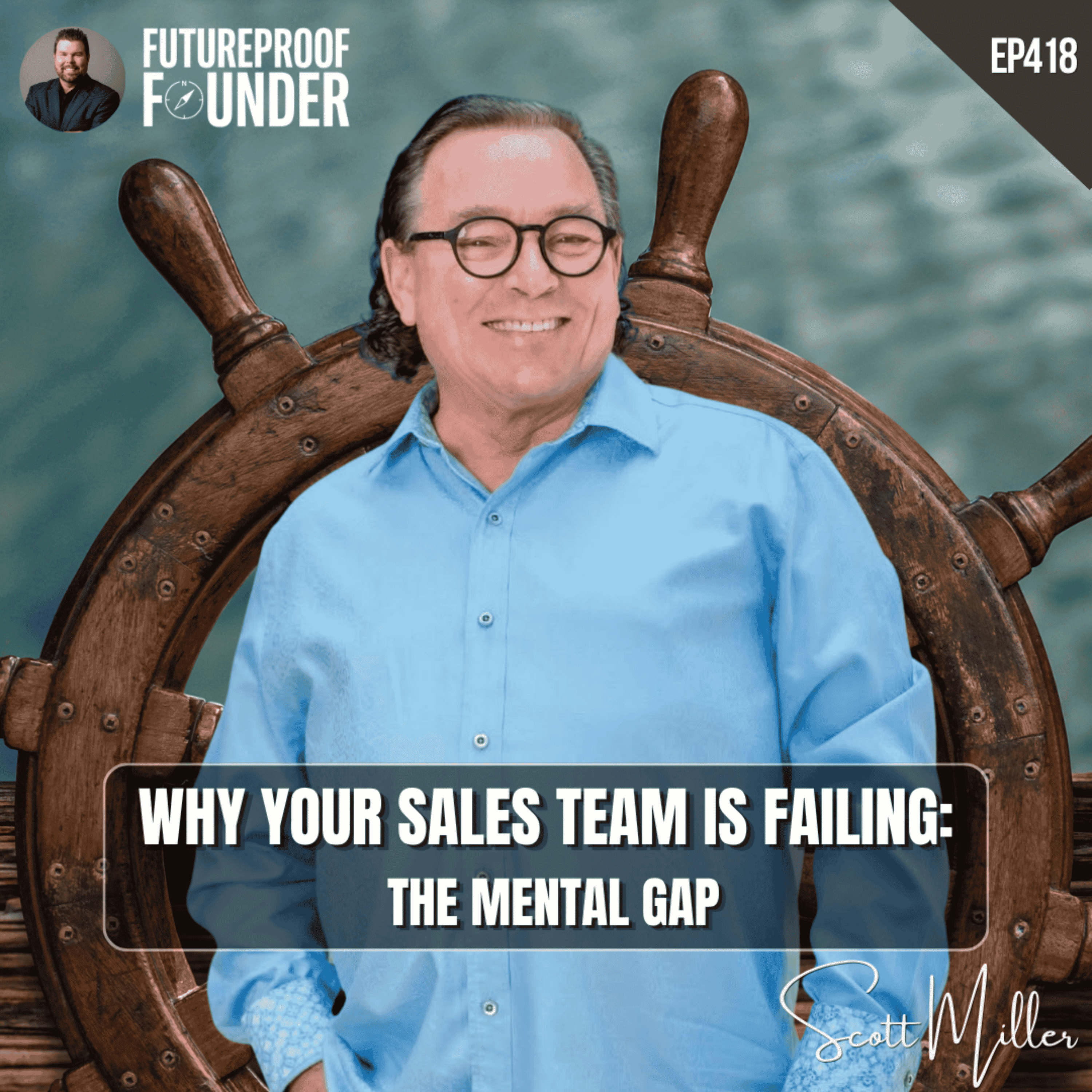 418 | Why Your Sales Team Is Failing: The Mental Gap | Scott Miller62 / 100
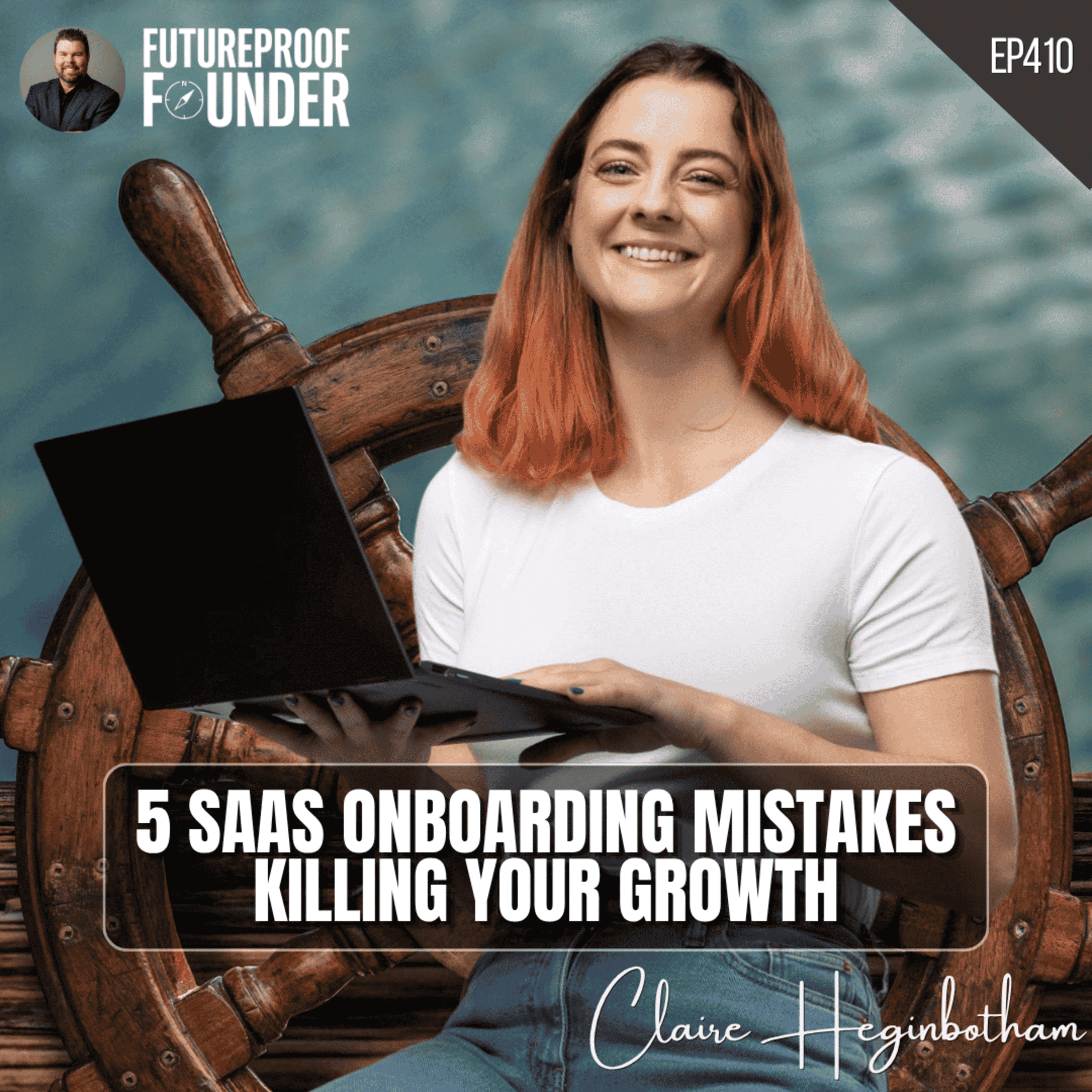 410 | 5 SaaS Onboarding Mistakes Killing Your Growth | Claire Heginbotham71 / 100
 402 | Stop Fixing Broken Employees - Hire Elite Talent Instead | Chris Hallberg64 / 100
 7 Lessons On Scaling A Business Without Burning Out | Robin Sims-Allen | 39956 / 100
 419 | Why Cold Outreach Is Dead and Events Are the New Pipeline | Asaf Katz